

The Smart Buyer's Guide to Wholesale Disinfecting Wipes
Why Smart Businesses Are Switching to Bulk Disinfectant Wipes
In today's competitive commercial landscape, maintaining impeccable hygiene is no longer a background task—it's a core business strategy. For any facility, from a bustling restaurant to a high-traffic gym or a professional office, the pressure to provide a visibly clean and safe environment is immense. This is where wholesale disinfectant wipes emerge as a powerful, practical solution. By shifting from frequent, costly retail purchases to strategic bulk buying, businesses can achieve superior hygiene standards while unlocking significant financial and operational advantages.
This isn't just about cleaning; it's about building trust, protecting your staff and customers, and optimizing your budget. Buying disinfectant wipes in bulk delivers a suite of tangible benefits that directly impact your bottom line, operational flow, and overall safety protocols.
Key Benefits of Buying Wholesale:
- Significant Cost Savings: Expect to save anywhere from 20-50% on per-unit prices compared to standard retail purchasing, freeing up capital for other business needs.
- Enhanced Operational Efficiency: Drastically reduce the frequency of ordering, minimize administrative overhead, and ensure you have a consistent, reliable supply of essential cleaning products.
- Superior Employee and Customer Safety: Uphold rigorous hygiene standards that protect the health of your staff and patrons, reducing illness-related absences and boosting consumer confidence.
- Positive Environmental Impact: Benefit from less packaging waste and fewer carbon-intensive delivery trips, aligning your business with more sustainable practices.
- Improved Budget Control: Lock in prices to protect against market volatility and avoid the high costs associated with emergency purchases at premium rates.
The data paints a clear picture. With a vast majority of Americans expressing ongoing concern about cleanliness in public spaces and U.S. employers losing billions each year to productivity losses from illness, the need for effective, consistent hygiene is undeniable. For the savvy, budget-conscious business owner, wholesale disinfectant wipes are far more than a simple cleaning supply—they represent a strategic investment in workplace health, operational resilience, and long-term financial stability. Businesses that embrace this model often report saving hundreds or even thousands of dollars annually while simultaneously maintaining superior inventory control. This guide will explore how to make this transition seamlessly, transforming how you manage hygiene in your establishment.
Why Go Wholesale? The Strategic Advantages of Bulk Buying
Every decision in business carries weight, and your approach to procuring essential supplies like disinfectant wipes can profoundly influence your budget, efficiency, and even your brand's reputation. Continuing to rely on small-quantity purchases from retail stores is a common but costly habit. It often means you're overpaying, creating logistical friction for your team, and exposing your business to unnecessary risks like stockouts during critical moments.
Making the switch to wholesale disinfectant wipes is a fundamental shift in strategy. It moves the task of maintaining cleanliness from a reactive, day-to-day chore to a proactive, well-managed operational pillar. When you purchase from a retail outlet, the price you pay is inflated by numerous factors: the overhead of prime storefront locations, extensive marketing campaigns, and multiple layers of distribution markup. Wholesale purchasing bypasses these intermediaries, granting you direct access to high-quality products at prices that reflect their true value. This direct-sourcing model is the cornerstone of smart procurement.
The financial implications are immediately compelling. Most businesses that transition to wholesale report savings that range from 20% to 50% on the per-unit cost of their wipes. This is not a marginal improvement; it's a substantial reduction in operational expenses that can be reallocated to fund other improvements, marketing initiatives, or simply flow through to your bottom line. To put it in perspective, a restaurant currently spending $200 per month on retail-priced wipes could potentially save up to $1,200 annually by making the switch. These direct savings are further amplified by dramatically reduced shipping costs. Consolidating your needs into fewer, larger orders spreads the logistical costs far more effectively than paying for frequent, small-scale deliveries.
Beyond the sticker price, wholesale purchasing introduces a level of predictability and consistency that is invaluable for any commercial operation. Ordering in bulk secures your supply for weeks or even months, effectively eliminating the risk of running out of essential products at the worst possible time. There will be no more frantic, last-minute runs to the store or paying exorbitant premium prices for emergency needs. This stability is absolutely crucial for maintaining health and safety standards without interruption. Imagine a busy Friday night service at your restaurant; discovering you're out of disinfectant wipes is not merely an inconvenience—it's a potential health code violation and a risk to your reputation. A well-managed wholesale supply system is your best defense against this scenario.
This consistency also provides a significant boost to cash flow management. Instead of dealing with a constant stream of frequent, unpredictable small expenses, you can budget for larger, planned purchases. This makes it far easier to forecast and control your overall operational costs. Furthermore, buying in bulk acts as a hedge against market instability. You lock in today's prices for tomorrow's needs, protecting your business from sudden price increases caused by supply chain disruptions or inflation.
Here, the conversation elevates from dollars and cents to something even more precious: the health, safety, and confidence of your employees and customers. In the foodservice industry, for instance, cleanliness is not just a preference; it is paramount to your reputation, compliance, and very survival. The statistics are a sobering reminder of the stakes: U.S. employers lose $225.8 billion annually to illness-related absences. While no business can eliminate illness entirely, you can take powerful steps to significantly reduce its spread through consistent, effective, and well-documented cleaning protocols.
Wholesale disinfectant wipes are what make these protocols practical and sustainable. With an ample supply always within reach, your team is empowered to disinfect high-touch surfaces frequently and thoroughly throughout the day—door handles, countertops, payment terminals, restroom fixtures, and shared workstations. High-quality wipes are formulated to eliminate a wide spectrum of harmful pathogens on hard, non-porous surfaces, including dangerous bacteria like E. coli and Salmonella, as well as various viruses. This critical layer of protection is only effective if the tools are readily available when and where they are needed.
Finally, don't underestimate the powerful psychological component. When employees see that management has invested in proper, high-quality cleaning supplies, it sends an unambiguous message that their health and safety are valued. This can lead to a significant boost in morale, increased job satisfaction, and reduced employee turnover. Customers notice, too. A visible and demonstrable commitment to hygiene builds deep-seated trust and can become a key differentiator in a crowded market, helping to convert a one-time visitor into a loyal, returning patron.
A Buyer's Checklist: Choosing the Right Wipes and Supplier
Now that the strategic "why" of wholesale purchasing is clear, it's time to focus on the practical "how." Selecting the right wholesale disinfectant wipes and a dependable supplier is a critical step to maximizing the return on your investment. This decision goes far beyond simply finding the lowest price; it's about ensuring the product you choose is effective, high-quality, and perfectly suited to the unique demands of your business environment. Making the right choice can elevate your hygiene protocols from a necessary expense to a competitive advantage, while the wrong one can result in ineffective cleaning, wasted money, and an unreliable supply chain.

When you begin to evaluate your options, several key factors demand your close attention. A transparent and reputable supplier will be forthcoming with these details, empowering you to make a well-informed decision that protects your budget, your staff, and your customers.
Key Features of High-Quality Wholesale Disinfectant Wipes
Understanding the characteristics that separate premium products from their mediocre counterparts will make your selection process much simpler. Here’s a detailed breakdown of what to look for when browsing high-quality wholesale disinfectant wipes:
- Disinfectant Efficacy and Contact Time: This is the most critical feature. The product label must clearly state which pathogens it is proven to kill (e.g., bacteria, viruses, fungi) and, just as importantly, the required "contact time." Contact time is the duration a surface must remain visibly wet to achieve full disinfection. In fast-paced commercial environments, a shorter contact time (e.g., 2 minutes or less) is highly desirable for efficiency.
- EPA Registration: This is your non-negotiable gold standard for legitimacy and efficacy. An EPA registration number printed on the product label signifies that the U.S. Environmental Protection Agency has rigorously reviewed scientific data and has verified the manufacturer's claims. It is your ultimate assurance that the product performs as advertised and is approved for its intended use.
- Wipe Material, Durability, and Size: The physical wipe matters. Look for robust, non-tearing materials (like spunlace or meltblown fabric) that can effectively trap and remove messes without shredding or leaving behind lint particles. A durable wipe ensures one sheet can handle a significant surface area, which improves cost-effectiveness. Consider the size of the wipe as well; larger wipes are often more efficient for cleaning tables or countertops.
- Formula and Active Ingredients: The chemical formula determines the wipe's properties. Choose one that is best suited to your specific environment. Alcohol-based wipes offer the benefit of fast drying times, making them ideal for electronics or areas needing quick turnover. Bleach-free and quat-based (Quaternary Ammonium Compounds) wipes provide broad-spectrum disinfection with less harsh odors, suitable for general use. Accelerated Hydrogen Peroxide (AHP) is another powerful, modern option that is often considered more eco-friendly and breaks down into harmless water and oxygen.
- Surface Safety and Compatibility: Always verify that the wipes are safe for the various surfaces in your facility. Some aggressive formulas can damage sensitive materials like finished wood, certain plastics, or electronic screens. For any foodservice business, it is absolutely critical to find wipes that are explicitly rated as safe for food-contact surfaces, often indicated by an NSF rating. Using the wrong wipe can lead to costly damage or compliance issues.
Matching Wipes to Your Industry
The ideal wipe is not one-size-fits-all; it depends heavily on your industry's specific operational demands and regulatory requirements. For foodservice businesses, compliance is the top priority. You must seek out wipes that are NSF-rated or clearly state they are safe for food-contact surfaces after a potable water rinse (or without one, if applicable). Versatility is also key, as you need a single product that can safely and effectively clean everything from stainless steel prep areas to front-of-house dining tables. Other industries have their own unique needs: gyms require highly durable wipes that can stand up to abrasive equipment surfaces and handle sweat, while offices and schools benefit from wipes that are safe for shared electronics like keyboards, phones, and tablets.
Selecting the Ideal Wholesale Supplier
Choosing the right supplier is just as important as choosing the right product. A great supplier functions less like a vendor and more like a strategic partner, committed to ensuring you receive high-quality products at genuinely competitive prices with reliable service.
- Reputation and Industry Reviews: Look for suppliers with a strong, established track record and positive, verifiable feedback from other businesses in your specific industry.
- Transparent Pricing and Volume Discounts: The entire point of buying wholesale is to save money. The pricing structure should be clear, straightforward, and offer significant, scaling discounts for larger volume purchases.
- Shipping Reliability and Speed: Fast, dependable shipping is crucial to prevent stockouts and operational disruptions. Inquire about lead times, shipping costs, and whether they offer free shipping thresholds for larger orders.
- Responsive Customer Support: A knowledgeable and accessible customer support team is invaluable. They can guide you through product selection, answer technical questions, and ensure your orders are processed smoothly and accurately.
- Product Variety and Specialization: A supplier with a wide range of cleaning and janitorial supplies can become a convenient one-stop shop, further streamlining your procurement process and consolidating your purchasing power.
At The Restaurant Warehouse, we pride ourselves on being that trusted partner for foodservice and other commercial businesses. For personalized assistance and competitive pricing on your bulk orders, please Contact Us for a Wholesale Quote. Our team is ready to help you find the perfect wholesale disinfectant wipes for your needs.
Mitigating Risks and Environmental Impact
While the advantages of purchasing wholesale disinfectant wipes are compelling, a smart procurement strategy also involves proactively mitigating potential downsides. Addressing challenges such as storage capacity, product shelf life, and environmental responsibility from the outset ensures that you can fully capitalize on the rewards without encountering unforeseen risks. Thoughtful planning transforms potential obstacles into manageable logistics.
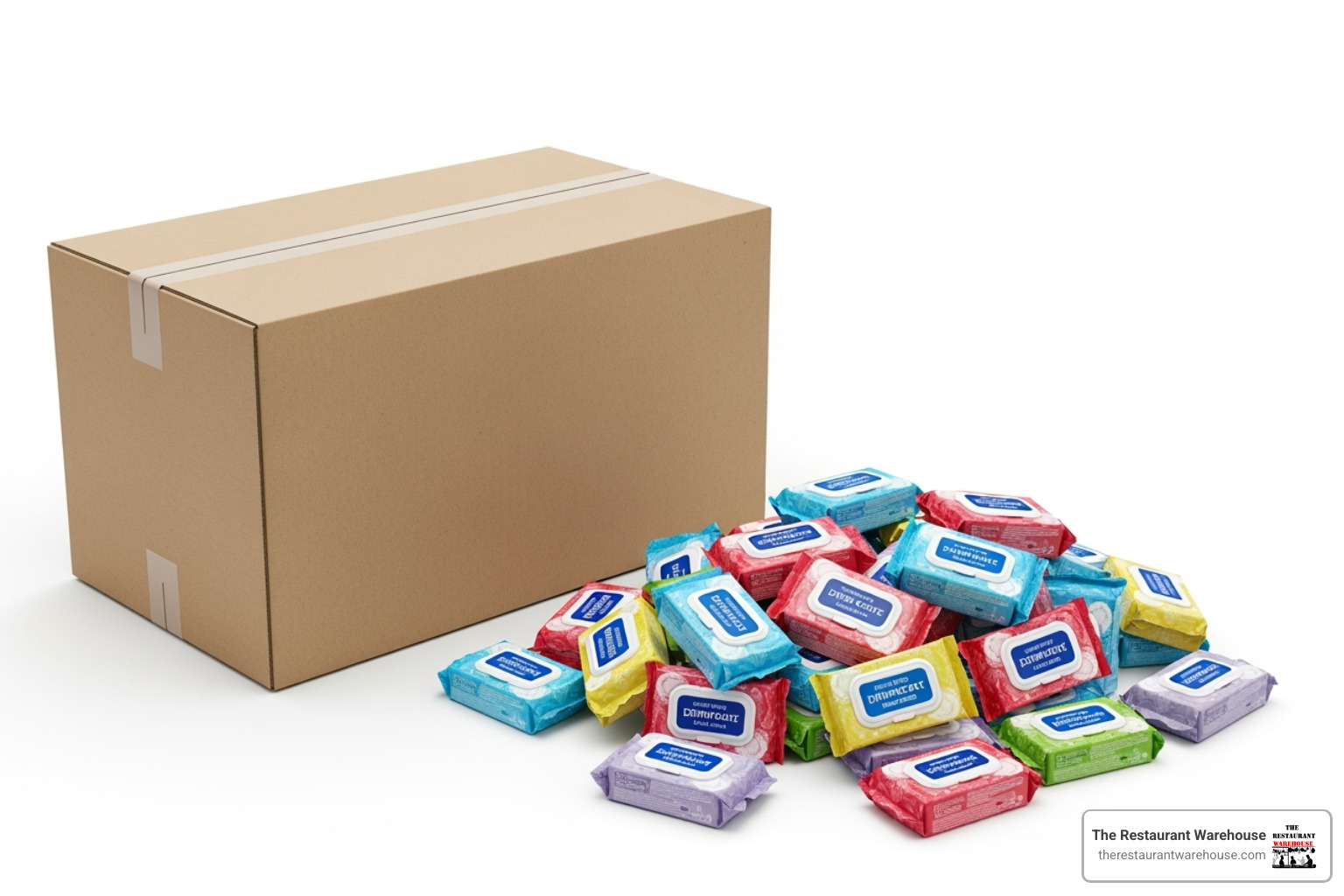
Undeniably, buying in bulk requires more storage space and a larger upfront cash outlay compared to retail purchasing. If you significantly overestimate your needs, you could risk tying up capital and dealing with expired, ineffective products down the line. However, these challenges are entirely surmountable with proper planning, accurate forecasting, and disciplined inventory management. By developing a clear understanding of your actual usage patterns and adhering to best practices for storage, the risks become minimal while the substantial benefits remain firmly in place.
Smart Ordering: How to Calculate Your Needs
Getting your order quantity right is the cornerstone of successful bulk purchasing. Order too little, and you negate the primary benefit of wholesale buying by facing shortages and potential emergency retail runs. Order too much, and you strain your cash flow and storage space. To find that optimal balance, start by conducting a thorough analysis of your usage.
- Conduct a Usage Audit: Walk through your facility and count all the high-touch surfaces that require regular disinfection. This includes tables, chairs, door handles, light switches, payment terminals, countertops, and restroom fixtures. This gives you a baseline for consumption.
- Factor in Traffic and Intensity: A high-volume restaurant will consume wipes at a much faster rate than a small, quiet office. Consider both your average employee and customer traffic to create a realistic estimate of your daily or weekly consumption rate. For example, if you have 20 tables that are turned 5 times a day, and you use one wipe per table turn, that's 100 wipes just for tables.
- Anticipate Seasonal Fluctuations: Usage is rarely static. It often increases during peak seasons, such as the holiday rush for a retail store or the cold and flu season for any public-facing business. It's wise to build in a buffer stock of 15-20% to comfortably handle these variations without risking shortages.
- Plan Your Order Cycle: Determine a cycle that works for your business. Ordering for a full year can maximize volume discounts but may be impractical for businesses with limited space or cash flow. Quarterly or semi-annual orders often represent a good middle ground. Most disinfectant wipes have a shelf life of one to two years, which provides a comfortable window for consumption.
Storage and Handling Best Practices
Proper storage is not just about space; it's essential for maintaining the chemical efficacy and physical integrity of your wholesale disinfectant wipes. Fortunately, the requirements are straightforward and easy to implement.
- Control the Environment: Store your wipes in a cool, dry location, away from direct sunlight and extreme heat sources like furnaces or water heaters. High temperatures can accelerate the evaporation of the disinfectant solution, while freezing can damage the wipe material and degrade the formula.
- Rotate Your Stock with FIFO: Implement the "first-in, first-out" (FIFO) inventory method. When a new shipment arrives, place it behind your existing stock. This ensures that older products are always used first, which is the single most effective way to prevent product expiration and waste.
- Confirm Dispenser Compatibility: Before placing a large order for wipe refills, double-check that the rolls or packs are compatible with your existing dispensers (e.g., wall-mounted units, floor stands, or countertop canisters). Mismatched supplies can lead to waste and frustration.
- Train Your Staff on Proper Use: A well-trained team is your first line of defense against waste. Ensure every staff member understands the importance of properly resealing canisters and soft packs immediately after use to prevent the remaining wipes from drying out and becoming useless.
Environmental Considerations
In an era of increasing corporate responsibility, it's important to note that buying wholesale disinfectant wipes is often a more environmentally conscious choice than relying on retail packaging. Bulk purchasing significantly reduces your environmental footprint in several key ways.
- Drastically Reduced Packaging: A single large case containing multiple canisters or refill rolls generates far less plastic and cardboard waste per unit than the equivalent number of individually wrapped retail packages.
- Lower Carbon Emissions: Consolidating what would have been dozens of small deliveries into one or two large shipments dramatically reduces the number of delivery trucks on the road. This directly translates to lower fuel consumption and a smaller carbon footprint for your supply chain.
- Sustainable Product Options: The market for cleaning supplies is evolving to meet consumer demand for greener choices. Many manufacturers now offer wipes made from biodegradable materials like bamboo or viscose, which break down more quickly in landfills. Additionally, using large refill rolls for permanent dispensers is a highly effective strategy for minimizing plastic waste compared to disposable canisters.
Frequently Asked Questions about Wholesale Wipes
Many business owners have practical, bottom-line questions when they first consider making the switch to wholesale disinfectant wipes. It's a significant change in procurement strategy, and it's natural to want clear, honest answers. Here are our responses to the most common concerns we encounter from businesses just like yours.
How much can a business realistically save by buying disinfectant wipes wholesale?
The savings are both substantial and multifaceted. On direct product cost alone, most businesses can expect their per-unit price to drop by 20% to 50% when they move from retail to a true wholesale purchasing model. The precise savings will depend on the specific product, the volume of the order, and the supplier's pricing structure, but even smaller bulk orders typically deliver meaningful savings over individual retail packs.
However, the financial benefits extend far beyond the unit price. You also save significantly on logistics. Consolidating orders reduces shipping fees and administrative time spent on reordering, often saving an additional 10-20% in associated costs. Another crucial financial benefit is price protection. When you purchase a three-month or six-month supply in bulk, you lock in today's prices, effectively insulating your budget from market volatility, inflation, or sudden supply chain-related price hikes. For a typical small to medium-sized business, these combined savings can easily amount to hundreds or even thousands of dollars annually, money that can be reinvested directly into the business.
Are there risks to buying disinfectant wipes in bulk?
Yes, there are potential risks, but they are entirely manageable with strategic planning and good inventory practices. The three primary risks are storage space limitations, product expiration, and the larger upfront cash outlay.
- Storage: A bulk supply naturally requires more physical space. Before placing a large order, it's essential to identify and designate a suitable cool, dry storage area. Many businesses find they can easily create the necessary space by reorganizing a stock room or installing simple vertical shelving to make more efficient use of their existing footprint.
- Expiration: Most high-quality disinfectant wipes have a stable shelf life of one to two years from the date of manufacture. This risk is easily mitigated by first accurately forecasting your usage (as detailed in the previous section) and then strictly implementing a first-in, first-out (FIFO) inventory system. This simple discipline ensures that older stock is always used first, making expiration a non-issue.
- Upfront Cost: A bulk purchase requires a larger initial investment than a single trip to a retail store. However, this should be viewed through the lens of a lower total cost of ownership over time. If cash flow is a primary concern, you don't have to start with a full year's supply. Consider placing a smaller bulk order (e.g., a three-month supply) to begin realizing savings while keeping the initial investment manageable. Many of our clients start conservatively and progressively increase their order size as they become more comfortable with their usage rates and see the financial benefits firsthand.
What's the difference between a sanitizing wipe and a disinfecting wipe?
This is a critical distinction that directly impacts health and safety. While the terms are often used interchangeably in casual conversation, they have specific regulatory meanings. Sanitizing is a process that lowers the number of germs on a surface to a safe level, as judged by public health standards. It typically reduces bacteria by 99.9%. Disinfecting, on the other hand, is a more powerful process that kills or inactivates nearly 100% of the viruses, bacteria, and fungi listed on the product's label. For commercial settings where the goal is to prevent the spread of illness—especially in foodservice, healthcare, or schools—using a disinfecting wipe is the appropriate choice. Always check the label to ensure the product is an EPA-registered disinfectant.
What does EPA registration mean for a disinfectant wipe?
This is one of the most important factors to consider when purchasing. An EPA registration number on a disinfectant wipe's label is your guarantee that you are buying a legitimate, effective, and legally compliant product. It signifies that the U.S. Environmental Protection Agency has conducted a rigorous review of scientific data submitted by the manufacturer. This review confirms that the product effectively kills the specific pathogens listed on its label when used according to the directions.
EPA registration verifies three crucial things for a commercial buyer:
- The product is genuinely effective against the claimed bacteria and viruses.
- The product is safe for its intended use on the specified surfaces when label instructions are followed.
- The stated contact time (the time a surface must remain wet to achieve disinfection) is accurate and scientifically validated.
In any commercial setting, and especially in foodservice, using EPA-registered disinfectants is essential for complying with local health codes, protecting your patrons, and building customer trust. When shopping for wholesale disinfectant wipes, always make it a priority to look for the EPA registration number on the label. If a supplier is unable or unwilling to provide it, you should consider it a major red flag.
If you have more questions or need guidance on selecting the right product, we're here to help. Contact Us for a Wholesale Quote and let our experts find the perfect, cost-effective solution for your business.
Conclusion: Make the Smart Switch to Wholesale Today
Running a successful and resilient business in the modern era requires making strategic decisions that simultaneously protect your people and your bottom line. Transitioning to wholesale disinfectant wipes is precisely one of those decisions. It offers a powerful, integrated solution that directly enhances workplace hygiene, streamlines operational efficiency, and fortifies your financial health. It’s a move that pays dividends across multiple facets of your organization.
The benefits are too significant to ignore. The immediate 20% to 50% cost savings realized from bulk purchasing can be a game-changer, freeing up vital resources that can be reinvested into growth, staff development, or other critical areas of your business. Establishing a consistent and reliable supply chain for your cleaning essentials eliminates the stress, inefficiency, and inflated costs of panicked retail runs during your busiest and most critical hours. Most importantly, by ensuring your team always has the tools they need, you cultivate a safer, healthier environment where employees feel genuinely protected and customers feel confident in your unwavering commitment to their well-being.
In a world where U.S. employers lose billions of dollars annually to illness-related productivity gaps and a majority of consumers continue to prioritize cleanliness when choosing where to spend their money, investing in high-quality disinfecting solutions is not merely about regulatory compliance—it's about building a durable, reputable, and trustworthy business that can thrive in any environment.
Of course, choosing the right supplier is the key that unlocks all these benefits. You need more than just a vendor; you need a partner who deeply understands the nuances of your industry, offers completely transparent wholesale pricing, and stands unequivocally behind the quality and efficacy of their products. At The Restaurant Warehouse, we have built our entire reputation on doing exactly that. We operate without the high retail overhead that inflates prices at other suppliers, allowing us to bring you true, direct-to-business wholesale pricing on the essential supplies that keep your operation running safely and smoothly.
The added environmental benefits—significantly reduced packaging waste and a lower carbon footprint from consolidated shipping—demonstrate that smart business decisions can and should also be responsible ones. When you buy wholesale, you're not just helping your own bottom line; you're making a more sustainable choice for the planet.
Making the switch is a simple, straightforward process. It begins with a clear understanding of your operational needs and finding a supply partner who is invested in your success. Your team deserves a clean and safe workplace. Your customers deserve to feel completely confident in your establishment. And your budget deserves the relief that comes from smart, strategic, and cost-effective purchasing.
Ready to transform your facility's hygiene protocols while protecting your bottom line? We're here to make it easy. Contact Us for a Wholesale Quote today, and let's work together to find the perfect solution for your business.
About The Author

Sean Kearney
Sean Kearney is the Founder of The Restaurant Warehouse, with 15 years of experience in the restaurant equipment industry and more than 30 years in ecommerce, beginning with Amazon.com. As an equipment distributor and supplier, Sean helps restaurant owners make confident purchasing decisions through clear pricing, practical guidance, and a more transparent online buying experience.
Connect with Sean on LinkedIn, Instagram, YouTube, or Facebook.