

Mastering Cold Food Prep for Your Restaurant
When you hear “cold lunch,” your mind might go to boring sandwiches or sad, wilted salads. But a great cold food prep program is about so much more. It’s your ticket to creating an exciting menu of flavorful, textured, and convenient meals that hold up beautifully in the fridge. Think hearty grain bowls, refreshing noodle salads, and creative bento boxes that look as good as they taste. This guide is here to show you the incredible versatility of no-reheat meals and give you the tools to move far beyond the basics.
Your Guide to Easy, No-Reheat Lunches
Cold food prep is a game-changer for food service operations needing to serve fresh, safe meals without reheating equipment. For businesses with limited kitchen space or those wanting to offer healthier options, mastering cold preparation techniques can transform menu offerings.
Quick Cold Food Prep Solutions:
- Sturdy salads with kale, quinoa, and hearty vegetables.
- Protein-packed wraps using turkey, chicken salad, or chickpea spreads.
- Cold noodle dishes like sesame noodles or pesto pasta salads.
- Grain bowls with quinoa, black beans, and fresh vegetables.
- Bento-style boxes with proteins, vegetables, and healthy snacks.
- Mason jar salads layered to prevent sogginess.
- No-cook sandwiches with quality deli meats and fresh ingredients.
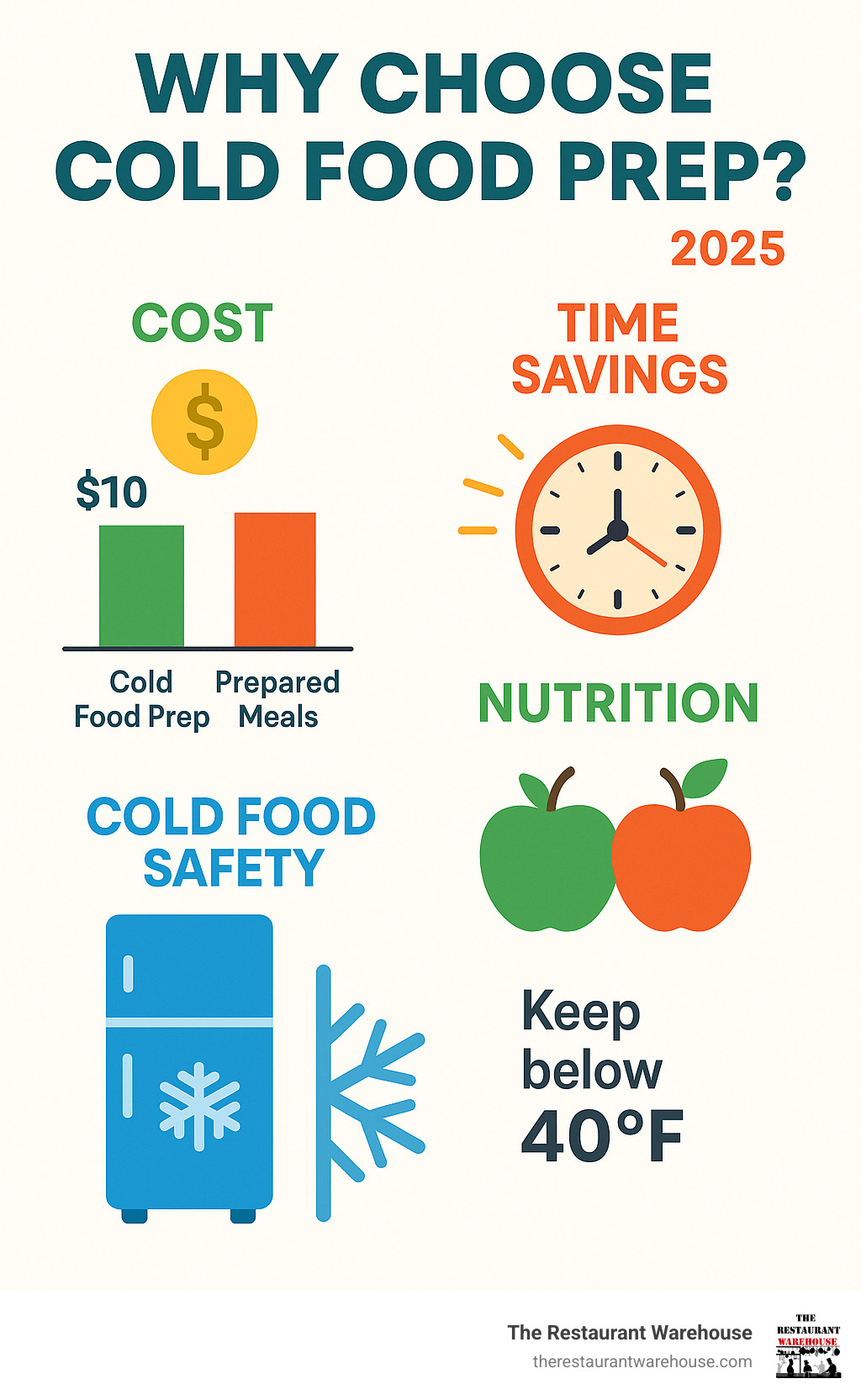
The benefits extend beyond convenience. Cold meal prep can save significant money, with some recipes costing as little as $0.08 per serving. It also reduces food waste, saves prep time during busy periods, and retains more nutrients than reheated foods.
Food safety is critical. The FDA requires that cold foods stay below 40°F and not remain at room temperature for more than two hours (or one hour above 90°F). Properly stored, these meals can safely last up to four days in refrigeration.
What Are the Benefits of Cold Meal Prep?
Cold food prep offers a refreshing solution for busy food service operators. The benefits go far beyond just avoiding the microwave line.
- Time-Saving: Imagine ready-to-serve meals waiting in your prep cooler. Your team can focus on assembly rather than last-minute cooking, eliminating bottlenecks during peak hours.
- Budget-Friendly: Creating satisfying meals for as little as $0.08 per serving is compelling compared to the $8-12 customers typically spend on lunch. It's about smart purchasing and efficient use of ingredients.
- Healthier Habits: Cold prep naturally gravitates toward fresher ingredients and whole foods. Customers notice the difference in crisp vegetables and properly textured proteins.
- Portion Control & Reduced Waste: Prepping meals in advance ensures consistent portions, helping manage food costs and reduce waste.
- Stress-Free Workdays: A predictable workflow means a calmer team, better job satisfaction, and fewer mistakes. Plus, no waiting for the office microwave makes everyone happier.
Save Time and Money on Your Lunch Break
The time and money savings are where cold food prep truly shines.
- Batch Cooking: Dedicate focused time to preparing larger quantities of key components like grains, roasted vegetables, or grilled chicken. This uses equipment efficiently and frees up daily prep time.
- Bulk Purchasing: A natural extension of batch cooking, buying in larger quantities saves money. Suppliers appreciate predictable orders, often leading to better pricing.
- Avoiding Impulse Buys: Having meals ready to go prevents emergency runs to the store for expensive last-minute ingredients.
- Calculating Savings: If a customer spends $50 weekly on lunch, providing a satisfying cold-prepped meal at a fraction of the cost offers significant savings for them and a great value proposition for you.
- Less Daily Cleanup: Concentrated prep sessions mean less constant washing of pots and pans throughout service, improving workflow.
- Grab-and-Go Convenience: Faster service means less time in line for customers and more efficient staff, improving the overall lunch break experience.
Enjoy the Health Perks of No-Reheat Meals
Cold food prep open ups significant nutritional benefits.
- Nutrient Retention: Heat-sensitive vitamins like vitamin C and B vitamins remain intact in raw or lightly cooked vegetables, delivering their full nutritional punch.
- Avoiding Processed Foods: Preparing cold meals from scratch avoids the preservatives, excess sodium, and artificial flavors common in foods designed for reheating.
- Easier Calorie Tracking: Pre-portioned meals make calculating nutritional information straightforward, which health-conscious customers appreciate.
- Incorporating More Whole Foods: Cold meals naturally feature hearty grains, legumes, fresh fruits, and abundant vegetables, which taste better cold than reheated.
- Balanced Macronutrients: Thoughtful prep allows for a good balance of protein, complex carbs, healthy fats, and fiber, keeping customers satisfied longer.
Streamlining Your Meal Prep Process
A smooth service doesn't just happen; it's built on a foundation of smart, efficient preparation. Streamlining your meal prep process is one of the most impactful things you can do for your kitchen's workflow, your team's sanity, and your bottom line. It’s not about working harder or longer hours. It’s about creating a system that turns chaotic prep days into a calm, controlled, and productive part of your week. By focusing on a few key strategies, you can reduce stress, minimize waste, and ensure every dish that leaves your kitchen is consistent and high-quality. This approach allows your team to move from reactive cooking to proactive planning, which is a total game-changer during a busy lunch or dinner rush.
Make Prep Day Less Overwhelming
The key to a manageable prep day is breaking it down into smaller, achievable tasks. Instead of seeing a mountain of work, focus on one category at a time—wash and chop vegetables, then cook grains, then marinate proteins. This assembly-line approach, known as batch cooking, maximizes efficiency and makes the best use of your equipment. It creates a predictable rhythm for your kitchen staff, turning a potentially chaotic day into a calm and productive session. The goal is to create menu building blocks that can be quickly assembled later, saving precious time when orders start rolling in.
Use Convenient, Time-Saving Ingredients
To make batch cooking even more effective, lean on sturdy ingredients that hold up well. Hearty greens like kale and grains like quinoa are perfect for cold dishes because they maintain their texture, ensuring meals stay fresh and appealing in your commercial refrigerators. Combine this with bulk purchasing to lower costs and pre-portioning to control waste and ensure consistency. This system simplifies daily operations and directly impacts your profitability by managing food costs and reducing labor during peak service hours. When you shop restaurant equipment, thinking about how each piece supports this streamlined process can make a huge difference in your kitchen's overall efficiency.
What to Pack (and What to Avoid) for Cold Lunches
The secret to mastering cold food prep is understanding your ingredients. The difference between a vibrant meal and a soggy disappointment comes down to choosing allies that hold up well when chilled.
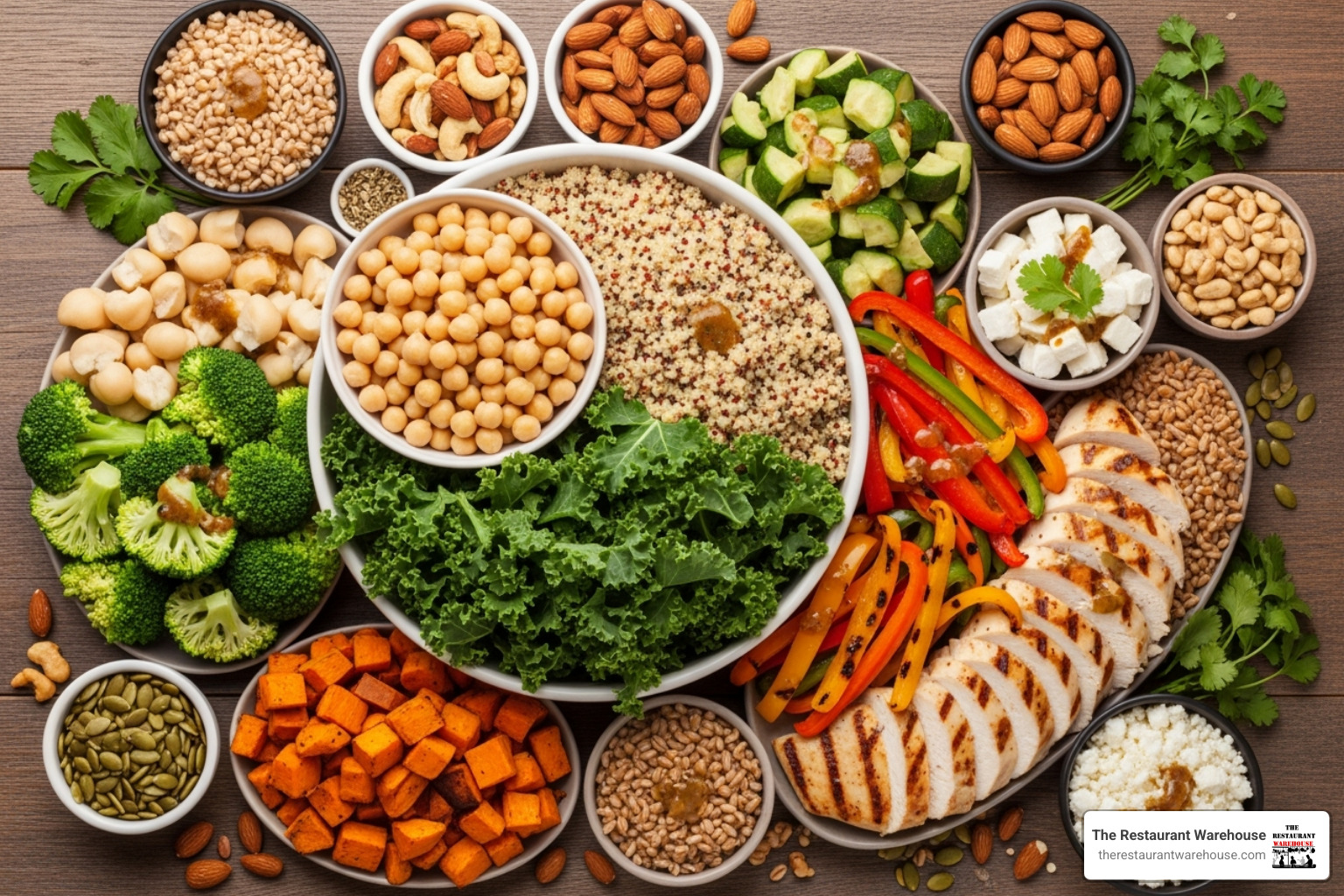
Successful cold meals need a strong foundation: sturdy greens that won't wilt, hearty grains that improve overnight, and lean proteins that stay appealing. Add crunchy vegetables and flavorful dressings, and you have a combination that can meld and develop deeper tastes over time.
Your Go-To Ingredients for Delicious Cold Meals
These ingredients are the champions of cold food prep, thriving in cold storage.
| Sturdy Ingredients (Recommended) | Delicate Ingredients (Use with Caution or Separately) |
|---|---|
| Kale, Cabbage, Spinach | Romaine, Butter Lettuce, Arugula |
| Quinoa, Farro, Brown Rice, Lentils | Cooked Pasta (can get mushy if overcooked) |
| Chickpeas, Black Beans, Edamame | Soft Berries (can get mushy) |
| Carrots, Bell Peppers, Cucumbers | Sliced Tomatoes, Zucchini (high water content) |
| Grilled Chicken, Hard-Boiled Eggs, Tofu, Tuna/Chickpea Salad | Fried Foods, Breaded Items (will get soggy) |
| Nuts, Seeds, Dried Fruit | Ripe Avocado (browns quickly) |
| Hearty Herbs (Parsley, Cilantro) | Delicate Herbs (Basil, Mint - can wilt) |
- Grains: Quinoa, farro, and couscous are excellent bases. They maintain a satisfying chewiness and absorb flavors beautifully without getting mushy.
- Legumes: Chickpeas, black beans, and lentils are versatile, nutritious superstars that hold their texture and add substance to any dish.
- Proteins: Focus on options that taste great cold. Grilled chicken, hard-boiled eggs, firm tofu, and creamy tuna or chickpea salad are reliable choices.
- Sturdy Vegetables: For essential crunch, use carrots, bell peppers, cucumbers, celery, and lightly blanched broccoli florets.
- Hardy Greens: Kale becomes more tender with dressing, while cabbage adds durable crunch. Spinach also holds up well if kept dry until serving.
How to Prevent a Soggy, Sad Lunch
Learning what to avoid is just as important. Some ingredients can quickly turn a great meal into a watery mess.
- High-Water Content Vegetables: Sliced tomatoes and zucchini release moisture over time. Pack them separately or add them just before eating.
- Delicate Lettuces: Romaine, butter lettuce, and arugula wilt and become slimy when dressed in advance.
- Breaded and Fried Foods: The crispy coating on these items becomes a soggy, unappetizing mess in the refrigerator.
- Ripe Avocados: These brown quickly and can become mushy. It's best to pack them whole and slice just before serving or toss cut pieces with citrus juice.
- Cream-Based Sauces: Many creamy dressings can separate or develop an odd texture when chilled. Stick to vinaigrettes or stable sauces like peanut or tahini.
20+ Easy and Delicious Cold Lunch Ideas
The magic of cold food prep comes alive with the incredible variety of meals you can create. These tested combinations stay delicious for days and solve the challenge of keeping meals fresh, flavorful, and visually appealing without reheating.

Many of these recipes get better as they sit, allowing flavors to meld. You can prepare components in large batches, then mix and match them throughout the week to keep your menu fresh and exciting.
Hearty Salads That Stay Crisp All Week
The right salads are better on day three. The secret is using ingredients that work well together over time.
- Vietnamese Chicken Salad: This salad uses shredded chicken, crispy cabbage, and julienned carrots for a texture that stays crunchy for days. The lime-fish sauce dressing adds a tangy kick. A classic Vietnamese Chicken Salad (Goi Ga) serves as an excellent foundation.
- Mason Jar Salads: This layering technique is brilliant food science. Put dressing on the bottom, followed by sturdy veggies, grains, proteins, and finally delicate greens on top to prevent sogginess. A Southwestern quinoa salad with black beans, corn, and a lime vinaigrette is a great example of a layered salad that stays fresh.
- Greek Salad: A classic for a reason. Cucumbers, bell peppers, red onions, and olives improve as they absorb the dressing. Add grilled chicken or chickpeas for a complete meal.
- Black Bean and Corn Salad: A crowd-pleaser with black beans, corn, bell peppers, red onion, and cilantro. The lime-cilantro vinaigrette keeps it fresh and crunchy.
Beyond the Garden Salad: Unique Concepts
Thinking beyond the basic house salad can open up a whole new world of flavor for your customers. The key is to use ingredients that not only hold up but actually improve after a day or two in the cooler. With a solid prep station and reliable commercial refrigerators, you can easily execute these concepts in batches, saving time during the lunch rush. Here are a few ideas that pack a punch and stay fresh.
- Vietnamese Chicken Salad: This one is a texture superstar. It combines shredded chicken, crunchy cabbage, and carrots with a zesty lime-fish sauce dressing. It won’t wilt, and the flavors only get better as they mingle, making it a perfect make-ahead option.
- Layered Mason Jar Salads: This isn't just for looks; it's smart science. By putting the dressing at the very bottom, followed by hearty ingredients like beans and grains, then proteins, and finally the delicate greens on top, you create a barrier that prevents sogginess. When it's time to serve, just shake and pour.
- Classic Greek Salad: There's a reason this one is timeless. The cucumbers, bell peppers, and onions marinate in the vinaigrette, becoming more flavorful over time. You can serve it as a side or add grilled chicken or chickpeas to make it a complete, satisfying meal.
- Black Bean and Corn Salad: This is a vibrant, crowd-pleasing option that holds up beautifully. The combination of black beans, corn, bell pepper, and red onion tossed in a lime-cilantro vinaigrette is both nutritious and full of flavor. It’s a fantastic side dish or a base for a grain bowl.
Satisfying Wraps, Pockets, and Pinwheels
Wraps are portable, customizable, and stay fresh with proper moisture management.
- Turkey Ranch Club Wraps: A simple classic with quality deli turkey, crisp lettuce, and ranch spread on a sturdy tortilla. The classic combination of turkey, bacon, and ranch in a wrap holds up well and is ideal for batch prep.
- Greek Salad Pita Pockets: Keep the salad mixture separate from the pita until serving to maintain a perfect texture. The filling gets more flavorful as it marinates.
- Chickpea Shawarma Sandwiches: A go-to vegetarian option. Mashed chickpeas with shawarma spices, lemon, and tahini are served in fresh pita with crisp vegetables.
- Italian Pinwheels: Layer tortillas with cream cheese, deli meats, provolone, and roasted red peppers, then roll and slice. They hold their shape beautifully. For large quantities, the right prep station is crucial for efficiency.
Simple and Flavorful Wraps and Roll-Ups
Wraps and roll-ups are a fantastic solution for cold meal prep because they're portable, easy to customize, and stay fresh when you manage moisture correctly. They offer a great way to pack a variety of flavors and textures that hold up well in the fridge, making them a reliable choice for grab-and-go menus or catering orders. These options are not only convenient but also allow for endless creativity, suiting a wide range of dietary preferences with simple ingredient swaps.
- Turkey Ranch Club Wraps: You can't go wrong with this classic. It uses quality deli turkey, crisp lettuce, and a creamy ranch spread, all rolled into a sturdy tortilla. As noted in Your Guide to Easy, No-Reheat Lunches, the mix of turkey, bacon, and ranch is a proven winner that holds up exceptionally well, making it perfect for preparing in large batches.
- Greek Salad Pita Pockets: These are a great way to serve up fresh, vibrant flavors. The key to success here is keeping the salad mixture separate from the pita bread until it's time to serve. This simple step prevents the pita from getting soggy and allows the filling to marinate, deepening the flavors without compromising texture.
- Chickpea Shawarma Sandwiches: For a satisfying vegetarian option, these sandwiches are a standout. They feature mashed chickpeas seasoned with shawarma spices, a bit of lemon, and tahini, served in a fresh pita with crisp vegetables. It’s a flavorful and hearty meal that really shows how versatile wraps and pitas can be.
- Italian Pinwheels: These are as visually appealing as they are delicious. Just layer tortillas with cream cheese, your favorite deli meats, provolone, and roasted red peppers, then roll them up tightly and slice. They hold their shape perfectly, which is why they're a go-to for catering and large-scale prep. When you're making big batches, having the right restaurant equipment, like a spacious prep table, makes the entire process smoother and more efficient.
Refreshing Noodle and Pasta Salads
Cold noodle dishes often taste better the next day as they absorb the sauce.
- Udon with Garlicky Peanut Dressing: Thick, chewy udon noodles hold their texture well. Tossed with chicken or tofu, crisp peppers, and a rich peanut dressing, it's a satisfying meal. A recipe for udon noodles with chicken and a garlicky peanut dressing can be a great source of inspiration.
- Pesto Tortellini Salad: Quality tortellini, cherry tomatoes, mozzarella pearls, and pesto create a simple, colorful dish. Don't overcook the tortellini.
- Caprese Pasta Salad: A taste of summer with small pasta, mozzarella pearls, cherry tomatoes, basil, and a balsamic glaze.
- Cold Sesame Noodles: A staple with thin noodles, a soy-ginger-sesame sauce, shredded carrots, and cucumber. The noodles become more flavorful over time. Proper refrigeration, like a well-maintained pizza prep table for pasta prep, is key for safety and efficiency.
Pasta Salads with a Twist
Pasta salads are a cornerstone of cold meal prep for a reason—they’re versatile, satisfying, and can be incredibly creative. You can move beyond the basics with a vibrant Pesto Tortellini Salad, combining cheese-filled tortellini with cherry tomatoes, mozzarella pearls, and a bright pesto dressing. Another great option is a Caprese Pasta Salad, which captures summer with small pasta, fresh basil, and a drizzle of balsamic glaze. For something different, Cold Sesame Noodles with a soy-ginger sauce or chewy Udon noodles in a garlicky peanut dressing offer complex flavors that actually get better overnight. The key to all these dishes is keeping ingredients fresh and the final product properly chilled, which is where reliable refrigerators become essential for any professional kitchen.
Creative Grain Bowls, Bento Boxes, and Protein Packs
This is where cold food prep gets fun, allowing for endless variety.
- Bento Box Combinations: These "Adult Lunchables" are perfect for balanced, portable meals. Popular combos include hard-boiled eggs with cheese, crackers, and grapes; or sliced turkey with hummus, cucumber, and pita.
- Japanese Onigiri (Rice Balls): These compact rice balls, often filled with salmon or tuna, are perfect for grab-and-go service. A recipe for salmon and black sesame onigiri is a great starting point for creating these portable rice balls.
- Quinoa Black Bean Taco Bowls: Get the taco experience without the sogginess. Layer quinoa with seasoned black beans, corn salsa, and shredded lettuce. Pack crema or yogurt separately.
- Tuna Poke Bowls: A premium offering with sushi-grade tuna, seasoned rice, edamame, and cucumber. It's a restaurant-quality meal in a portable format.
Build Your Own "Adult Lunchables" and Snack Boxes
Tap into the appeal of variety and convenience with bento-style snack boxes. These "Adult Lunchables" are perfect for creating balanced, portable meals that customers love. The key is to combine complementary textures and flavors that hold up well. Popular combinations include hard-boiled eggs with cheese, crackers, and grapes, or sliced turkey with hummus, cucumber, and pita. This format is incredibly easy to scale for grab-and-go service, allowing your team to assemble dozens of boxes efficiently. By offering a pre-portioned, visually appealing meal, you cater to busy customers looking for a healthy and satisfying option without the wait.
Creative and Filling Bowls
Grain bowls are a cornerstone of successful cold meal prep because they are hearty, customizable, and travel well. You can get the full taco experience without the sogginess by layering quinoa with seasoned black beans, corn salsa, and shredded lettuce. Just be sure to pack wet toppings like crema or yogurt separately to maintain texture. The same principle applies to Mediterranean bowls with chickpeas and feta or Asian-inspired bowls with edamame and a sesame vinaigrette. Keeping these components fresh and safely chilled in reliable commercial refrigerators is key to a successful bowl program that delivers on quality every time.
Easy Japanese-Inspired Ideas
For a unique grab-and-go offering, consider Japanese onigiri. These compact rice balls, often filled with savory ingredients like salmon or tuna, are perfect for a satisfying and portable meal. Their self-contained nature makes them incredibly easy for customers to eat on the move, and the fillings can be adapted to suit various tastes. Starting with a simple recipe for salmon and black sesame onigiri can be a great entry point for creating these handheld rice balls. They are a fantastic way to stand out from the usual sandwich and salad offerings and introduce a popular international food item to your menu.
Quick Bites: Hummus, Parfaits, and Oats
Sometimes the simplest options are the most effective. Items that require assembly rather than cooking can save significant time and labor. Hummus and pita is a classic, quick option that can be included in snack boxes for a healthy, satisfying bite. Similarly, overnight oats are incredibly simple to prepare in batches and can be customized with endless toppings, making them a nutritious and convenient choice for breakfast or a snack. Layering yogurt with granola and fruit to create parfaits is another visually appealing, no-cook item that is always a customer favorite for a quick and easy meal.
Food Safety Tips for Your Cold Lunches
Food safety is non-negotiable with cold food prep. Without the safety net of reheating to kill bacteria, we must be vigilant about handling, storing, and serving these meals. The principles are straightforward: control temperature, cool foods properly, and store them safely.
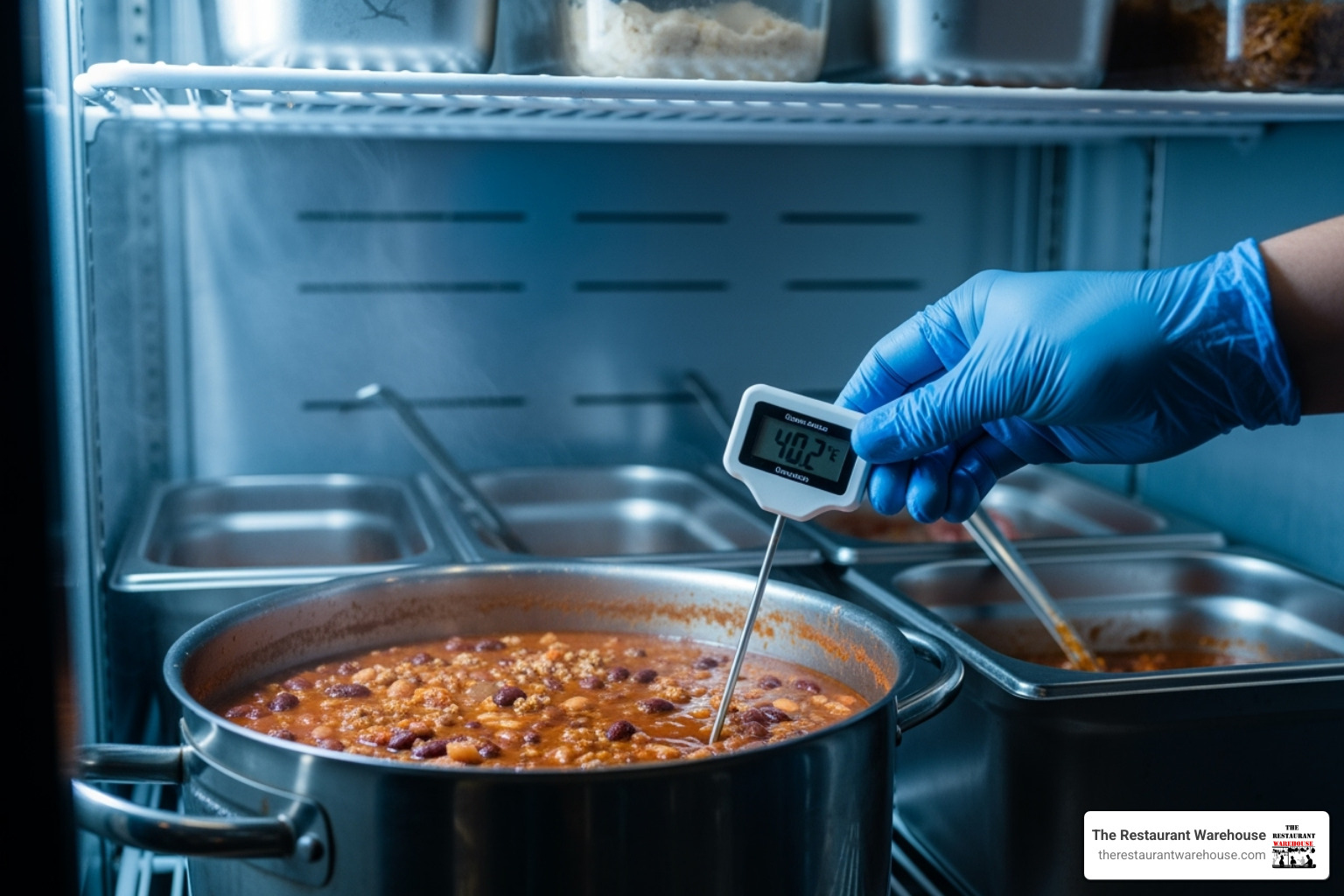
Reliable refrigeration is the backbone of any cold prep operation. Without consistent temperature control, even carefully prepared meals can become unsafe. For those looking to optimize their cold storage, exploring the ultimate guide to commercial fridges can provide valuable insights.
Understanding the 2-Hour Rule and Temperature Danger Zone
The Temperature Danger Zone (41°F to 135°F) is where harmful bacteria multiply rapidly. To prevent foodborne illness, follow the 2-hour rule: any perishable food left in this zone for more than two hours must be discarded. This window shrinks to one hour when ambient temperatures exceed 90°F.
The FDA provides clear guidance on food safety that emphasizes these limits. For cold food prep to work, food must be kept below 40°F at all stages, from prep to transport and service. Use ice packs and insulated containers to maintain safe temperatures.
The Right Way to Cool and Store Prepped Meals
Getting food from hot to cold safely and quickly is critical. The goal is to move through the Temperature Danger Zone as fast as possible.
- Rapid Cooling: The FDA's two-stage process requires cooling hot food from 135°F to 70°F within two hours, then to 41°F or below within another four hours.
- Shallow Containers: Transfer hot food into containers 2-4 inches deep. This increases the surface area and allows heat to escape much faster than in a deep pot.
- Ice Baths: For liquids or stirrable items, place the food container in a larger container of ice water to accelerate cooling.
- Safe Storage: Properly cooled items can be stored for up to four days in the refrigerator. Use airtight containers to prevent cross-contamination and maintain freshness.
- Labeling and Dating: Clearly label every container with the preparation date. This is essential for managing inventory safely and preventing waste.
For high-volume operations, dedicated, temperature-controlled spaces are vital. A guide to restaurant prep tables can help ensure ingredients stay safe throughout assembly.
A Note on Extended Storage
When you're prepping meals in advance, knowing their shelf life is key. The FDA advises that properly stored cold meals can last up to four days in refrigeration. The absolute rule is to keep everything below 40°F throughout its entire lifecycle, from storage to serving. This consistency is where having dependable commercial refrigerators becomes a non-negotiable part of your operation. Remember, any food left at room temperature for more than two hours (or just one hour if it's over 90°F) needs to be discarded. Managing your storage effectively isn't just about safety; it's about protecting your inventory and ensuring every meal you serve is top quality.
Keeping Food Safe on the Go
Taking your cold meals on the road for catering or delivery adds another layer to food safety. Your main goal is to keep food out of the Temperature Danger Zone (41°F to 135°F), where bacteria thrive. This means investing in high-quality insulated containers and plenty of ice packs to maintain a safe, cold environment during transport. But safety starts long before the food leaves your building. Before you even think about packing, make sure cooked components have been cooled rapidly. The FDA recommends a two-stage process: cool food from 135°F to 70°F within two hours, then down to 41°F in the next four. Using shallow pans to let heat escape quickly is a simple but effective technique, and having an organized workflow on a dedicated prep table can make all the difference. Following these steps ensures that the meal arriving at your customer's door is just as safe and delicious as it was when it left your kitchen.
Tips for Packing the Perfect Cold Lunch
The magic of cold food prep truly comes alive in how you package and present your meals. It's one thing to prepare delicious, nutritious food – it's another to ensure it arrives at your customer's table looking as fresh and appetizing as when it left your kitchen. The difference between a soggy disappointment and a vibrant, satisfying meal often comes down to smart packing strategies and thoughtful customization.
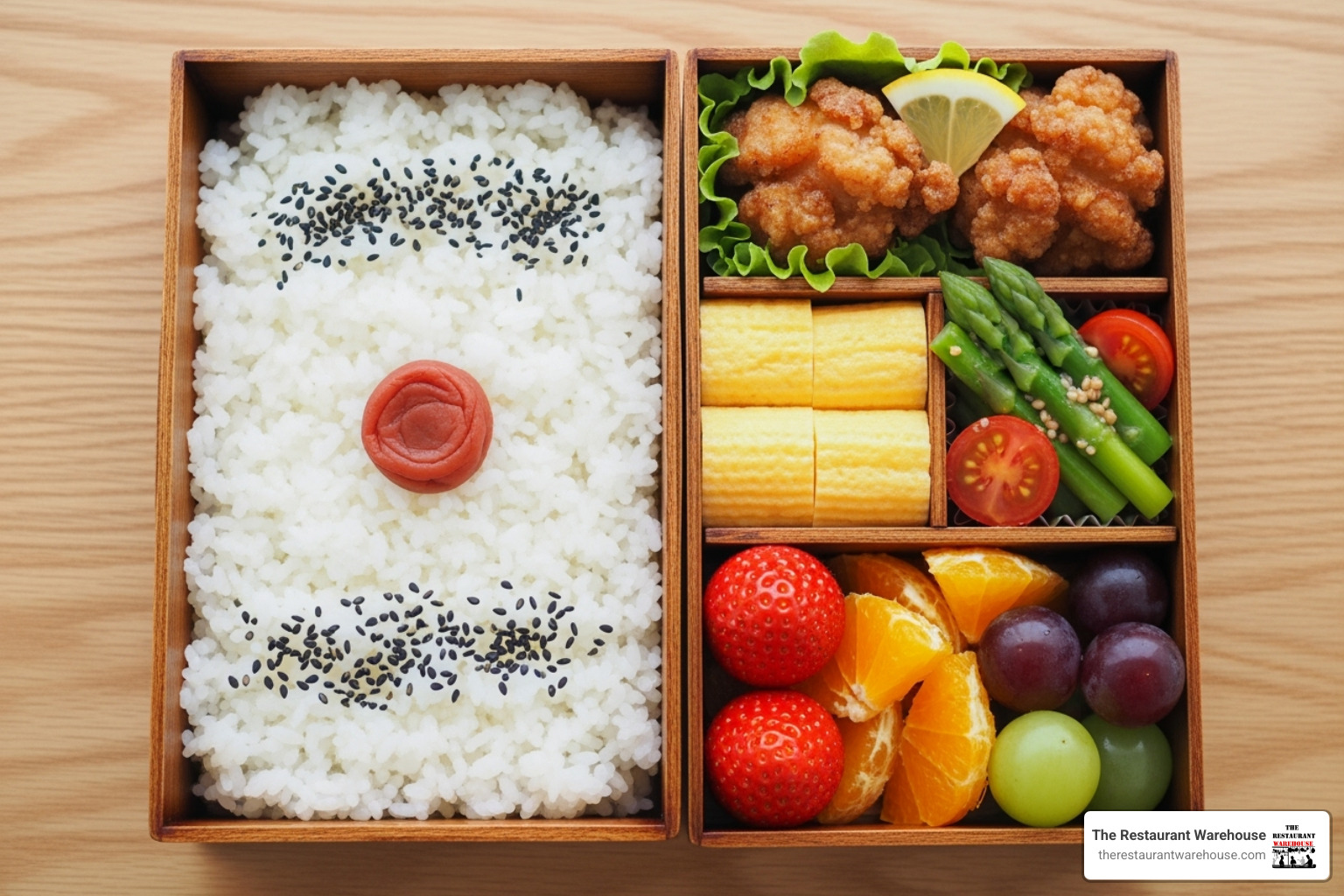
Think of proper packing as insurance for your culinary investment. You've spent time selecting the right ingredients and carefully preparing balanced, flavorful meals. Now you need to protect that effort by preventing the dreaded sogginess that can turn a beautiful salad into a wilted mess or transform crispy vegetables into mushy disappointments.
The secret lies in understanding how different ingredients interact over time and using specialized containers to keep them separated until the moment of consumption. Meal prep containers, bento boxes, and even simple mason jars become your allies in this mission, each serving a specific purpose in maintaining texture and visual appeal.
How to Keep Your Prepped Lunch Fresh and Appealing
The art of packing cold food prep meals is all about strategic separation and timing. Every successful packed meal tells a story of ingredients that complement each other while maintaining their individual integrity.
- Layering mason jar salads represents perhaps the most neat solution to the soggy salad problem. The technique is surprisingly simple yet incredibly effective. Start by placing your dressing at the very bottom of the jar – this creates a protective barrier that prevents it from immediately saturating your greens. Next, add your sturdy vegetables like diced carrots, cucumber chunks, or bell pepper strips. These hardy ingredients can handle some contact with the dressing without losing their crunch.
- Keeping dressing separate is perhaps the most fundamental rule in cold meal packing. Even the heartiest vegetables will eventually surrender to a vinaigrette if given enough time together. We always pack dressings, sauces, and wet condiments like salsa or hummus in small, separate containers. This simple step transforms the eating experience, allowing customers to add these flavor improvers just before consumption, ensuring every bite has the perfect texture contrast.
- Packing wet and dry ingredients in different compartments is essential for maintaining textural variety in complex meals. Consider a deconstructed taco bowl – the seasoned black beans and corn salsa need to stay away from the crispy tortilla strips and fresh lettuce until the last possible moment. Multi-compartment containers make this separation effortless and visually appealing.
- Bento boxes have revolutionized how we think about meal presentation and functionality. These ingenious containers naturally encourage balanced eating by providing distinct spaces for different food groups. A well-packed bento might feature hard-boiled eggs in one compartment, cheese cubes and whole grain crackers in another, and fresh berries or vegetable sticks in a third. The visual appeal is undeniable, but the practical benefits are equally impressive – each component maintains its intended texture and flavor.
- Adding garnishes just before eating. Fresh herbs like basil or cilantro, toasted nuts or seeds, and delicate ingredients like avocado slices should be packed separately and added at the last minute. This ensures they provide maximum visual impact and flavor punch rather than becoming wilted afterthoughts.
The Secret to a Crisp, Not Soggy, Sandwich
Nothing ruins a great sandwich faster than soggy bread. The key to preventing this is moisture management. Your best strategy is to keep 'wet' ingredients like tomatoes or cucumbers separate until you're ready to assemble and serve. Pack them in their own small container to add at the last minute. Another pro move is creating a moisture barrier directly on the bread. A thin layer of butter, cream cheese, or a thick spread like mayonnaise acts as a shield, protecting the bread from the fillings. Lightly toasting your bread also helps it stand up to moisture. For high-volume sandwich making, an organized sandwich prep station is invaluable, keeping all your components chilled and within easy reach for quick, fresh assembly.
How to Keep Fruit From Browning
Cut fruit, especially apples, pears, and avocados, can quickly turn an unappetizing brown due to oxidation. The simplest fix is acid. As one home cook wisely suggests, you can toss apple slices with lemon juice to stop them from turning brown. A little goes a long way, and other citrus juices like lime or even pineapple juice work just as well. The ascorbic acid (Vitamin C) in the juice slows the browning process. If you're concerned about a citrusy flavor, a quick dip in a solution of cold water with a tiny pinch of salt can also be effective. For avocados, press plastic wrap directly onto the cut surface to block air exposure, which is the primary cause of browning.
How to Adapt Cold Meals for Any Diet
The beauty of cold food prep lies in its remarkable adaptability. Unlike hot dishes that might be locked into specific flavor profiles or cooking methods, cold meals can be easily modified to accommodate virtually any dietary preference or restriction. This flexibility makes it possible to serve diverse customer bases from a single menu framework.
- Vegan and vegetarian adaptations are often the most straightforward modifications to make. Plant-based proteins like marinated tofu, seasoned tempeh, and protein-rich lentils are naturally delicious when served cold. A classic chicken salad transforms beautifully when made with mashed chickpeas instead – the texture is remarkably similar, and the flavor possibilities are endless with the right seasonings and mix-ins.
- Gluten-free options align perfectly with cold meal prep philosophy since many of the best ingredients are naturally wheat-free. Quinoa becomes your pasta substitute, offering more protein and a satisfying texture that holds up beautifully in cold salads. Rice noodles work wonderfully in Asian-inspired cold dishes, while corn tortillas can replace wheat wraps without any sacrifice in flavor or satisfaction.
- Low-carb lifestyles, cold meals offer incredible variety and satisfaction. Lettuce wraps become vehicles for all sorts of protein-rich fillings, from tuna salad to seasoned ground turkey. Zucchini noodles or spiralized cucumber provide the satisfying experience of eating pasta without the carbohydrates. The focus shifts to protein-rich combinations featuring cheese, nuts, seeds, and lean meats that are naturally more satisfying and help maintain stable energy levels.
- Dairy-free alternatives require a bit more creativity, but the results can be surprisingly delicious. Tahini-based dressings provide richness without any dairy, while avocado-based creams add luxurious texture to wraps and grain bowls. Nutritional yeast can provide that savory, cheese-like flavor that many dairy-free customers miss, especially when combined with nuts in homemade "cheese" spreads.
- Adding nuts and seeds for texture and nutrition. Whether you're sprinkling toasted almonds over a Mediterranean salad, adding sesame seeds to Asian noodle dishes, or incorporating sunflower kernels into grain bowls, these additions provide satisfying crunch, healthy fats, and protein that improve any meal regardless of dietary restrictions.
Healthier Bases for Creamy Salads
Classic creamy salads like tuna, chicken, or egg salad are staples for a reason, but their traditional mayonnaise base can feel heavy. You can create healthier, more vibrant versions by swapping mayo for alternatives that add both creaminess and nutritional value. Greek yogurt is a fantastic substitute, offering a tangy flavor and a protein punch. For a rich, dairy-free option, try using mashed avocado, which provides healthy fats and a buttery texture. A tahini-based dressing, thinned with a little lemon juice and water, can also create a wonderfully nutty and smooth base for chickpea or lentil salads. These swaps keep the satisfying texture your customers love while introducing new, complex flavors. As a bonus, cold prep naturally gravitates toward fresher ingredients and whole foods, and customers will absolutely notice the difference.
Adapting for Low-Carb and Gluten-Free Diets
One of the greatest strengths of a cold meal program is its flexibility. With a few simple swaps, you can cater to a wide range of dietary needs without overhauling your entire menu. For low-carb customers, cold meals offer incredible variety and satisfaction. Lettuce wraps become vehicles for all sorts of protein-rich fillings, from tuna salad to seasoned ground turkey. Zucchini noodles or spiralized cucumber provide the satisfying experience of eating pasta without the carbohydrates. For gluten-free guests, quinoa and brown rice are excellent grain bases that hold up perfectly when chilled. You can also offer corn tortillas for wraps or create protein-centric bento boxes with hard-boiled eggs, cheese, nuts, and deli meats to ensure everyone has a delicious and fulfilling option.
Customizing Flavors in Classic Dishes
Don't be afraid to put your own creative spin on classic cold dishes. A simple chickpea salad can be transformed with a dash of curry powder and some golden raisins, while a standard tuna salad gets an upgrade with chopped Kalamata olives and fresh dill. The key is to think about how flavors will develop over time in the refrigerator. A squeeze of fresh lemon or lime juice added just before packing can keep flavors bright and prevent oxidation. The secret lies in understanding how different ingredients interact over time and using specialized containers to keep them separated until the moment of consumption. This thoughtful approach to flavor ensures that your prepped meals are not just convenient, but genuinely exciting to eat, even on day three.
No Microwave? No Problem: Hot Lunch Alternatives
While cold meals are incredibly convenient, sometimes nothing beats a hot lunch, especially on a chilly day. The good news is that you don't need a microwave to offer warm, comforting food. With the right equipment and a little planning, you can easily provide hot meal options that are just as simple to serve as their cold counterparts. Of course, whether you're serving meals hot or cold, proper storage is the first and most important step. Reliable refrigeration is the backbone of any cold prep operation. Without consistent temperature control from high-quality refrigerators, even the most carefully prepared meals can become unsafe. Once your storage is sorted, you can explore some simple heating alternatives.
Portable Food Warmers
For staff or customers who have access to an outlet but not a microwave, a portable food warmer is a fantastic solution. Think of it as a personal, miniature slow cooker. It's essentially a heated bag that you plug in. You put your refrigerated lunch inside about 1 to 1.5 hours before you want to eat. It warms your food slowly and evenly, often better than a microwave. This method is perfect for reheating leftovers like casseroles, pasta dishes, or pulled pork without creating rubbery textures or hot spots. It’s a set-it-and-forget-it approach that delivers a perfectly warmed meal right on time, making it a great perk for your team's lunch break.
Insulated Thermoses
The insulated thermos is a classic for a reason—it’s simple, effective, and requires no electricity. This is the ideal solution for serving hot soups, chilis, stews, or even dishes like macaroni and cheese. To get the best results, you should pre-heat the thermos by filling it with boiling water and letting it sit for about ten minutes before emptying it and adding the hot food. This simple step ensures the contents stay piping hot for hours. As a low-tech solution, you can use a thermos to keep food warm if you decide you want a hot meal sometimes. It’s a reliable way to expand your menu to include comforting hot options without investing in additional heating equipment.
Ready to Start Your Cold Food Prep?
Mastering cold food prep is a strategic move that can revolutionize your food service operation. It offers significant financial savings, streamlines kitchen workflow during busy rushes, and provides customers with fresh, healthy, and convenient meal options.
From hearty quinoa salads and satisfying wraps to creative bento boxes, the possibilities are endless. By choosing the right ingredients, prioritizing food safety with rules like the 2-hour rule, and using smart packing techniques, you can deliver consistently delicious meals that hold their quality for days.
This approach naturally steers your menu toward more nutritious offerings, retaining vitamins in raw vegetables and avoiding processed ingredients. It's a flexible system that easily adapts to various dietary needs, including vegan, gluten-free, and low-carb preferences.
For operations ready to scale up, having the right equipment is essential for success. Proper refrigeration and organized prep spaces are not luxuries but necessities. When you're ready to improve your cold preparation capabilities, explore our comprehensive sandwich prep table options designed to maximize efficiency and maintain perfect ingredient temperatures. With thoughtful planning, you can create a menu that boosts profits and keeps customers coming back—no microwave required.
Frequently Asked Questions
How long do these cold-prepped meals actually stay fresh and safe to eat? As a rule of thumb, you can count on most cold-prepped meals lasting up to four days in the refrigerator. The key is strict temperature control. You must cool any cooked components quickly and ensure everything is stored below 40°F. This isn't just about freshness; it's a critical food safety standard that keeps your food out of the temperature danger zone where bacteria can grow.
What's the most common mistake kitchens make when they start a cold prep program? The biggest pitfall is failing to manage moisture. Many kitchens new to cold prep will dress salads too early or use ingredients with high water content without separating them. This leads to soggy, unappealing meals. The secret is to pack dressings and wet ingredients like tomatoes or salsa in separate containers and to build your meals on sturdy bases like quinoa or kale that can hold their texture.
My customers are used to hot lunches. How do I make cold meals appealing to them? It's all about how you frame it. Instead of calling it "cold food," present it as fresh, vibrant, and convenient. Focus on creating meals that are visually exciting with lots of color and texture. A "Mediterranean Quinoa Power Bowl" sounds much more appealing than a "cold grain salad." When you highlight the quality of the ingredients and the convenience of a grab-and-go option, customers will see it as a modern, healthy choice, not a compromise.
Is it really more cost-effective to prep cold meals when you consider the upfront labor? Absolutely. While it feels like a lot of work on prep day, batch prepping is far more efficient than cooking individual meals to order during a busy service. It allows you to consolidate your labor into a focused block of time, reduce food waste with precise portioning, and take advantage of bulk purchasing. This system streamlines your entire workflow, saving you both time and money during your busiest hours.
Besides a good refrigerator, what's one piece of equipment that really helps with a cold prep menu? A quality sandwich or salad prep table is a total game-changer. It keeps all your chopped vegetables, proteins, grains, and toppings perfectly chilled and organized right at your fingertips. This makes assembly incredibly fast and efficient, which is the whole point of a prep-ahead system. It turns a chaotic process into a smooth, assembly-line-style operation.
Key Takeaways
- Use Cold Prep to Streamline Operations: A cold food program is a strategic way to reduce prep time during peak hours, lower food costs through batch cooking, and offer the fresh, convenient meals customers are looking for.
- Build Your Menu Around Sturdy Ingredients: The success of any no-reheat meal depends on ingredients that hold their texture, like quinoa, kale, and beans. Always pack dressings and wet components separately to prevent sogginess and ensure a quality final product.
- Prioritize Temperature Control for Food Safety: Without reheating, you must be vigilant about safety. Keep all cold foods below 40°F and strictly follow the 2-hour rule for anything left in the temperature danger zone to keep your customers safe.
Related Articles
About The Author

Sean Kearney
Sean Kearney is the Founder of The Restaurant Warehouse, with 15 years of experience in the restaurant equipment industry and more than 30 years in ecommerce, beginning with Amazon.com. As an equipment distributor and supplier, Sean helps restaurant owners make confident purchasing decisions through clear pricing, practical guidance, and a more transparent online buying experience.
Connect with Sean on LinkedIn, Instagram, YouTube, or Facebook.