

What's the Buzz About Open Air Merchandisers? Everything You Need to Know
Why Open Air Merchandisers Are Changing Retail Food Display
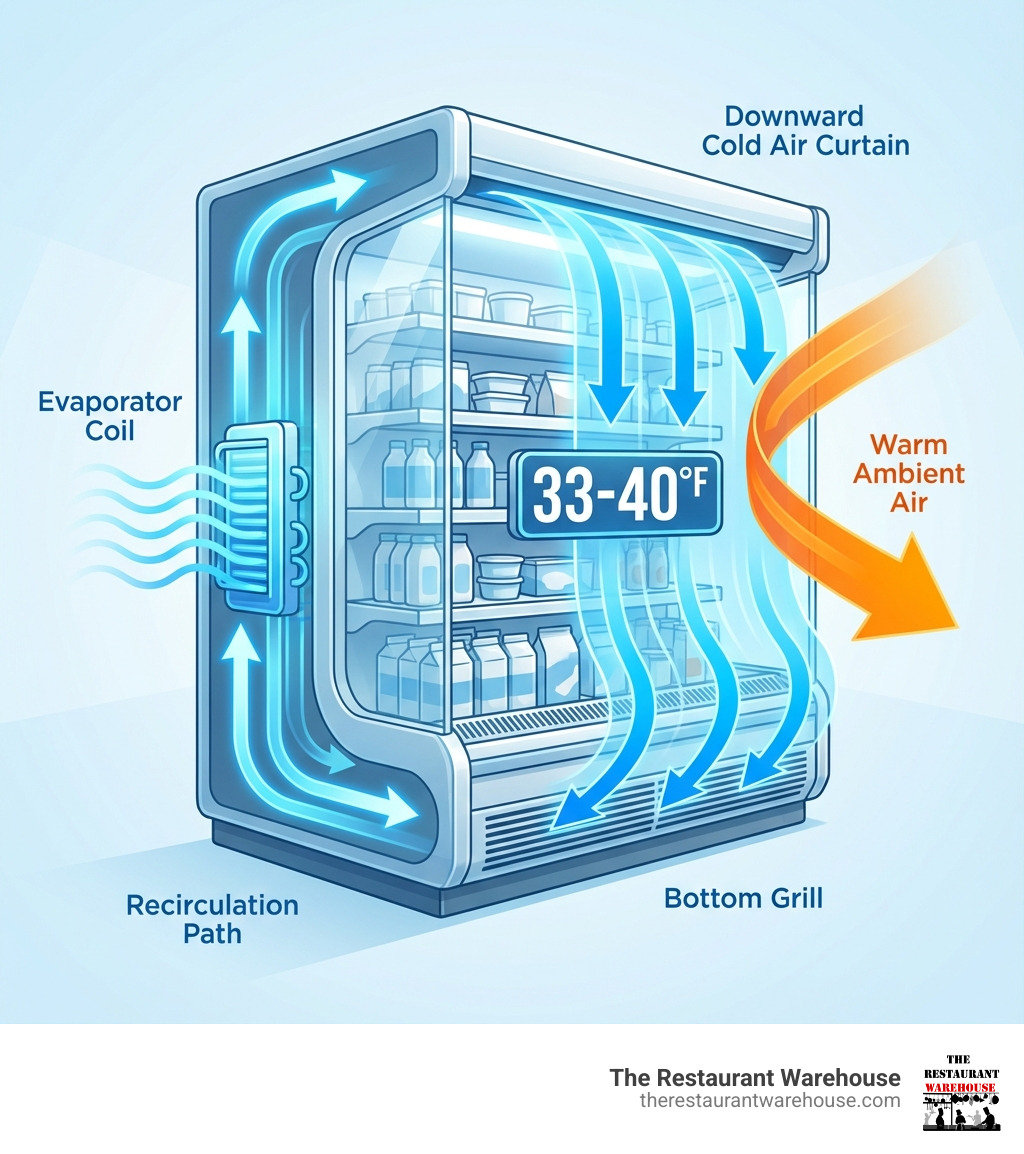
An open air merchandiser is a refrigerated display unit that uses an air curtain—a controlled flow of cold air—to keep products chilled while allowing customers to grab items without opening a door. These units are designed specifically for pre-packaged, pre-chilled items like bottled beverages, pre-made sandwiches, salads, and dairy products.
Key Features of Open Air Merchandisers:
- Air Curtain Technology - Creates an invisible barrier of cold air flowing across the front opening
- No Physical Doors - Customers access products instantly, encouraging impulse purchases
- Temperature Range - Maintains products between 33°F and 40°F
- Self-Contained or Remote - Available as plug-in units or connected to external refrigeration systems
- LED Lighting - Bright, energy-efficient illumination improves product visibility
- Glass Side Panels - Improves visibility from multiple angles while containing cold air
Walk into any convenience store, cafe, or modern supermarket and you'll see them—those sleek, well-lit refrigerated cases where you can grab a cold drink or pre-made lunch without opening a door. That's the magic of open air merchandisers at work. They've revolutionized how retailers display chilled products, making it easier than ever for customers to browse and buy.
But there's more to these units than meets the eye. The science behind that invisible curtain of cold air, the placement strategies that maximize sales, and the energy considerations that affect your bottom line all play crucial roles in whether an open air merchandiser becomes a profit driver or an expensive mistake for your business.
I'm Sean Kearney from The Restaurant Warehouse, and I've spent years helping restaurant owners and retailers find the right equipment to grow their businesses efficiently. Having guided countless operators through the process of selecting open air merchandisers that match their specific needs and budgets, I've seen how the right unit can transform grab-and-go sales while the wrong choice can drain energy and profits.
How Open Air Merchandisers Boost Sales and Improve Customer Experience
In today's retail and food service environments, every second counts. Customers are looking for convenience, speed, and visually appealing options. This is where the open air merchandiser truly shines, turning casual browsing into quick, profitable sales.
The Psychology of the Impulse Purchase
One of the primary benefits of using open air merchandisers is their remarkable ability to drive impulse purchases. We've all been there: you grab a basket, walk past a display of chilled beverages, and suddenly, that sparkling water or cold brew coffee seems like a brilliant idea. This isn't accidental; it's a carefully orchestrated retail strategy.
The magic lies in the barrier-free access these units provide. Unlike a traditional Commercial Glass Door Merchandiser where customers must physically open a door, an open air merchandiser allows for a seamless "grab-and-go" experience. This ease of access significantly reduces the psychological friction associated with making a purchase. When products are readily available, neatly displayed, and require no extra effort to access, customers are far more likely to make an unplanned purchase.
The increased product visibility offered by open air merchandisers plays a huge role here. Our research shows that these units display a variety of cold foods attractively within easy reach, directly increasing customer impulse buying. When customers can clearly see all their options, their decision-making process is faster, leading to more spontaneous purchases. This is especially effective for high-margin items like bottled drinks, snacks, and pre-made meals. For businesses like convenience stores, cafes, and institutional cafeterias, leveraging this grab-and-go culture can lead to a significant boost in sales and overall profitability.
Maximizing Product Appeal and Visibility
Beyond just accessibility, open air merchandisers are masters of presentation. They are designed to make your products look their absolute best, drawing customers in and encouraging them to take a closer look.
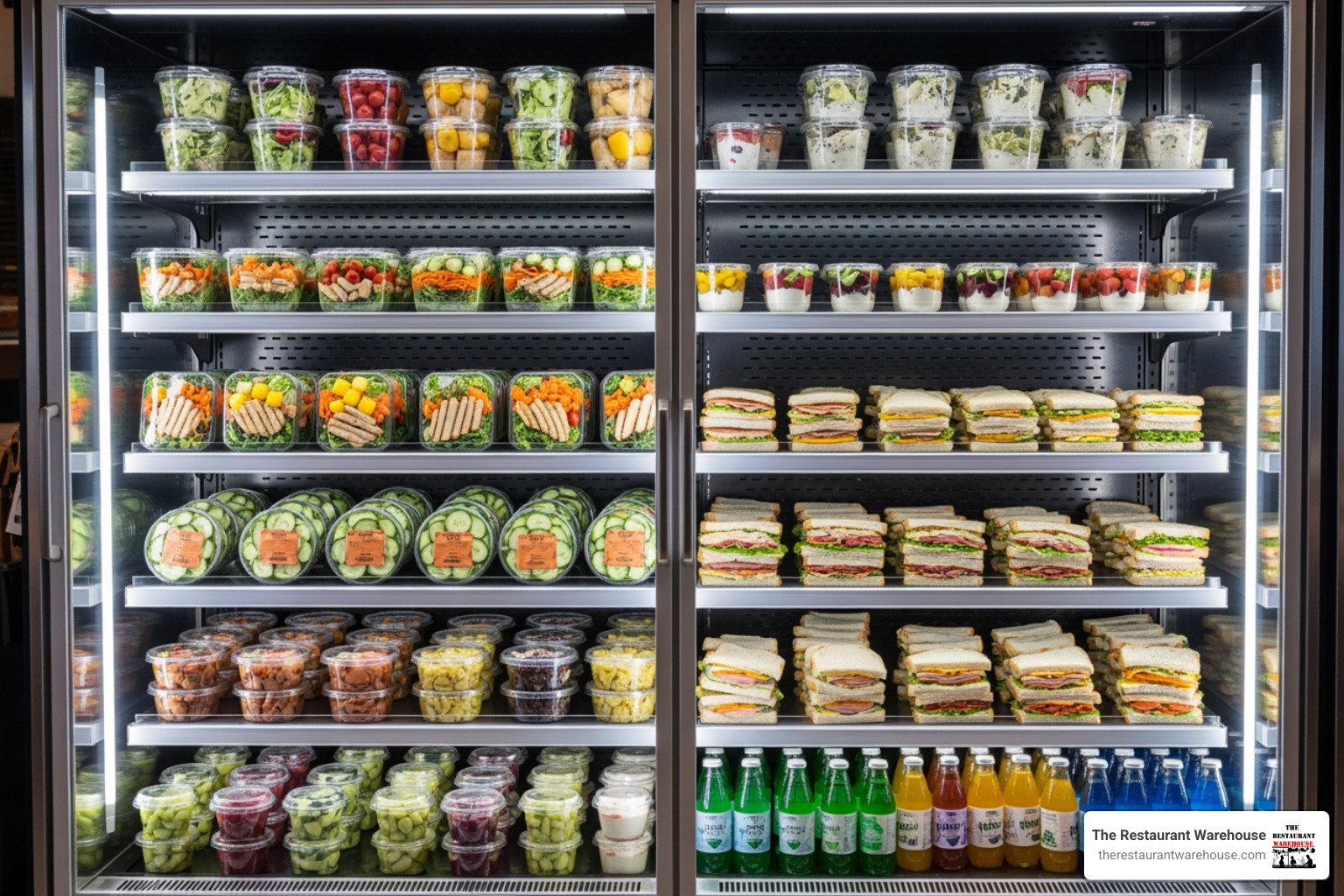
Open air merchandisers leverage several key features to maximize product appeal:
- Bright LED Lighting: Modern open air merchandisers are equipped with brilliant LED lighting. This isn't just for illumination; it improves the natural colors of your products, making fresh produce look fresher and beverages more enticing. LED lighting is also energy-efficient and generates very little heat, which is crucial for maintaining consistent temperatures.
- Adjustable Shelving: Flexibility is key in retail. Adjustable shelves allow you to customize your display to accommodate various product sizes and types, from tall beverage bottles to short snack containers. This ensures every product is presented at its optimal height and angle, maximizing visibility and making it easy for customers to browse. Many units also feature price tag rails, making it simple to clearly label items.
- Mirrored Interiors and Glass Side Panels: Many open air merchandisers come with mirrored interiors or sleek glass side panels. These features create an illusion of abundance, making your selection appear larger and more enticing. The glass side panels are not just for aesthetics; they also help improve product visibility from multiple angles while contributing to the air curtain's effectiveness in containing cold air.
Effective merchandising in these units goes beyond just placing products. A well-thought-out planogram—a visual diagram showing where products should be placed—can significantly impact sales. By strategically arranging items, perhaps cross-merchandising complementary products (like sandwiches next to drinks), you can further encourage those profitable impulse buys. Our open air product line offers a diverse array of different models that can bring flexibility and help promote your products, ensuring you can showcase your offerings while keeping them at safe temperatures.
Choosing the Right Open Air Merchandiser for Your Business
Selecting the perfect open air merchandiser is a crucial decision for any business aiming to improve its grab-and-go offerings. It's not just about aesthetics; it's about functionality, efficiency, and how well the unit integrates into your operational flow.
Key Features to Evaluate Before You Buy
When we help our clients choose an open air merchandiser, we always emphasize a few critical features:
- Size and Capacity: This is perhaps the most obvious consideration. You need a unit that fits your available footprint and offers sufficient cubic feet of display area for your product volume. Models vary widely, from compact units with around 4.1 cu. ft. of capacity perfect for smaller spaces, to much larger units exceeding 20 cu. ft. Consider both the exterior dimensions (width, depth, height) and the internal capacity.
-
Cooling System: Most open air merchandisers are either self-contained or remote.
- Self-contained units are plug-and-play, meaning the refrigeration system is built directly into the unit. They're easier to install and move but can generate more heat and noise.
- Remote refrigeration systems connect to an external compressor and condenser unit, often located away from the sales floor. This reduces heat and noise in the display area but requires professional installation and plumbing. Our research highlights that self-contained units are common and eliminate the need for plumbing, simplifying setup.
- Regardless of type, the core is the air curtain technology. A curtain of air blows down the front of the unit, keeping cold air in and hot air out.
- Lighting Type: As discussed, LED lighting is standard for its energy efficiency, low heat output, and ability to make products pop. Look for units with LED top and interior lighting for maximum visibility.
- Adjustable Shelves and Price Tag Rails: These features are essential for flexible merchandising and clear pricing. Adjustable shelves allow you to customize the display for different product heights, while price tag rails ensure customers can easily identify product information.
- Construction Materials: Durability and hygiene are paramount. Look for units with stainless steel interiors, which are easy to clean and resist corrosion. Features like ABS bump guards and powder-coated steel exteriors ensure the unit can withstand the rigors of a busy commercial environment.
- Certifications: Always check for certifications like ETL Sanitation, which indicates compliance with safety and sanitation standards for food service equipment in the US and Canada. NSF-listed designs are also critical for food safety compliance.
- Refrigerant Type: Increasingly, manufacturers are using environmentally friendly refrigerants like R290 Hydrocarbon. These refrigerants have a lower environmental impact and are becoming the industry standard. For example, many modern units use R290.
Matching the Merchandiser Type to Your Store Layout
The layout of your store significantly influences the type of open air merchandiser that will best serve your needs. We offer a diverse array of models that can bring flexibility and help promote your products.
| Merchandiser Type | Footprint | Capacity | Best Use Case | Product Type |
|---|---|---|---|---|
| Vertical | Slim, tall, space-efficient | Medium to High | High-traffic aisles, wall placements, end-caps | Beverages, pre-packaged meals, dairy, sandwiches |
| Horizontal | Wider, lower profile, often deeper | Medium to High | Checkout counters, deli sections, produce areas | Grab-and-go snacks, fresh produce, specialty items |
| Island | Freestanding, accessible from all sides | High | Center-store displays, promotional areas | Seasonal items, featured products, impulse buys |
- Vertical Multidecks: These are the most common type, often seen lining walls or at the end of aisles. Their tall, narrow design is excellent for maximizing display area in a smaller footprint. They are ideal for a wide range of grab-and-go items.
- Horizontal/Low-Profile Cases: These units are wider and shorter, often used near checkout counters or in specialized sections like delis or bakeries. They are perfect for showcasing items like pre-packaged salads, sandwiches, or even baked goods that need to stay cool.
- Island Displays: As their name suggests, these are freestanding units designed to be placed in the center of a store, accessible from all sides. They are fantastic for creating focal points, promoting seasonal items, or driving major impulse purchases in high-traffic areas.
Understanding your store's flow and customer pathways is key to effective placement. For instance, placing a compact open air merchandiser (e.g., one that is approximately 37” W, 24” D, and 61” H) near a checkout can significantly boost impulse purchases of drinks or small snacks.
Critical Operational Considerations: Energy, Safety, and Maintenance
While open air merchandisers are powerful sales tools, their unique design introduces specific considerations regarding energy consumption, food safety, and ongoing maintenance. Addressing these proactively ensures your investment pays off.
Understanding Energy Efficiency in an Open Air Merchandiser
The "open" aspect of an open air merchandiser is its greatest strength for sales but can be its biggest challenge for energy efficiency. The air curtain, while ingenious, is susceptible to external factors.
- Air Curtain Integrity: The effectiveness of the air curtain depends on maintaining a stable, unbroken flow of cold air. Drafts from HVAC vents, open doors, or even heavy foot traffic can disrupt this curtain, allowing warmer ambient air to seep in and forcing the refrigeration system to work harder.
- Ambient Conditions: Our research indicates that open air merchandisers perform optimally when ambient temperatures are below 24 °C / 75 °F and humidity is below 55% RH. High ambient temperature and humidity levels make it much more challenging for the unit to maintain its internal temperature, leading to increased energy consumption. Therefore, proper placement away from direct sunlight, heat sources, and drafts is crucial.
- Night Curtains: These are perhaps the most critical accessory for energy savings. Manual retractable night curtains, often included with many vertical models, can be pulled down after business hours to seal off the display area. This significantly reduces heat gain and energy consumption overnight, leading to substantial savings.
- Modern Technologies: Newer open air merchandisers incorporate energy-efficient components like EC (electronically commutated) fans and inverter compressors, which adjust their speed based on cooling demand, further reducing power usage. The use of R290 Hydrocarbon refrigerant also contributes to overall efficiency and a lower environmental footprint.
While open air merchandisers are less energy-efficient than their glass-door counterparts due to their open design, strategic placement and the use of night curtains can mitigate much of this difference. For a deeper dive into the energy efficiency of traditional units, you can Explore the pros of a standard Glass Door Fridge Freezer for energy comparison.
Ensuring Food Safety and Optimal Temperatures
Maintaining food safety is non-negotiable in any food service operation. For open air merchandisers, this means understanding their specific role as "holding units" and adhering to strict operational guidelines.
- NSF-Listed Design: Always look for NSF-listed designs. This certification ensures the equipment meets rigorous public health and safety standards, particularly concerning material safety, design, construction, and product performance. The open air merchandisers from leading manufacturers, for example, are built with NSF-listed designs.
- Safe Temperature Zones: Open air merchandisers are designed to maintain products within a safe temperature range, typically between 33°F and 40°F. Our research emphasizes that these units are ideal for showcasing offerings while keeping them at safe temperatures. Digital temperature controls and thermometers, like those with a solar-powered digital thermometer, allow for precise monitoring and adjustments.
- Pre-Chilling Products: This is a golden rule: open air merchandisers are designed for holding pre-chilled products, not cooling warm items down. All products must be pre-chilled to their safe temperature before being placed in the unit. Placing warm items in an open air merchandiser will compromise the temperature of surrounding products and strain the refrigeration system.
- Proper Stocking Techniques: Avoid overfilling the unit, as this can impede the air curtain's circulation and lead to warm spots. Stock products evenly and ensure they don't block the air vents or extend beyond the load line. Well-designed units, with their adjustable shelving, make this easier.
Operators often face challenges with space and food safety compliance, but these merchandisers provide ample cubic feet of display area while allowing for easy cleaning and maintenance. For authoritative guidance on proper food handling and temperature control, we recommend consulting Authoritative guidance on safe food handling from the FDA.
To ensure you're making the best choices for food safety and efficiency, we encourage you to Contact Us directly. Our experts can help you steer the options and find an open air merchandiser that meets all your operational needs.
Simple Maintenance for Long-Lasting Performance
Like any piece of commercial equipment, open air merchandisers require regular maintenance to operate efficiently and extend their lifespan.
- Daily Cleaning: A quick daily wipe-down of all accessible surfaces, including shelves and the interior, is essential to maintain hygiene and product appeal.
- Weekly Cleaning Schedule: A more thorough weekly cleaning should include wiping down side panels (especially glass or plexiglass), cleaning price tag rails, and checking for any debris that might obstruct airflow.
- Checking Air Vents: Regularly inspect and clean the air intake and discharge vents to ensure unobstructed airflow. Blocked vents can compromise the air curtain and lead to temperature fluctuations.
- Condenser Coil Maintenance: The condenser coil is the heart of the refrigeration system. Dust and grime can accumulate, reducing efficiency. Many modern units feature self-cleaning condensers, which significantly reduce maintenance effort. For those without, regular cleaning (e.g., monthly or quarterly, depending on environmental conditions) is crucial.
- Professional Servicing: Schedule annual professional servicing to ensure all components are functioning correctly, refrigerant levels are optimal, and the unit is operating at peak efficiency. This proactive approach can prevent costly breakdowns and extend the life of your open air merchandiser.
By adhering to these simple maintenance routines, you can ensure your open air merchandiser continues to operate effectively, keeping your products safely chilled and your customers happy.
Frequently Asked Questions about Open Air Merchandisers
We often get asked similar questions about open air merchandisers. Here are some of the most common inquiries and our expert answers.
What's the difference between an open air merchandiser and a glass door refrigerator?
The fundamental difference lies in accessibility and energy efficiency.
- Accessibility vs. Energy Efficiency: An open air merchandiser offers barrier-free, instant access, making it a champion for impulse purchases and grab-and-go convenience. However, this comes at the cost of energy efficiency compared to a glass door refrigerator, which seals products behind a physical barrier. The glass door provides superior insulation, leading to lower energy consumption and often more stable temperatures.
- Impulse Buys vs. Planned Purchases: Open air merchandisers are designed to encourage spontaneous, unplanned purchases. Glass door units still display products effectively but require the customer to take an extra step (opening the door), which can slightly deter pure impulse buying.
- Air Curtain vs. Physical Barrier: The open air merchandiser relies on an invisible air curtain to maintain temperature, which can be affected by ambient conditions. A glass door refrigerator uses a solid, insulated barrier, offering more consistent temperature stability regardless of external drafts or humidity.
- Product Visibility: Both offer excellent product visibility. However, the open air merchandiser provides an unobstructed view and direct reach, enhancing the "shopability" of items.
Can I put any type of product in an open air merchandiser?
No, and this is a critical point for food safety and operational efficiency. Open air merchandisers are specifically designed for:
- Pre-packaged items only: Products must be sealed to prevent contamination and moisture loss.
- Sealed products: This includes bottles, cans, and items in sealed plastic containers or wrappers.
- Pre-chilled products: As holding units, they are not designed to cool warm items. All products must already be at their safe serving temperature (33°F to 40°F) before being placed in the unit.
Suitable items typically include:
- Bottled and canned beverages (sodas, water, juice, iced coffee)
- Pre-packaged salads and sandwiches
- Yogurts, milk, and other dairy products
- Pre-cut fruits and vegetable cups
- Grab-and-go snack packs
Unsuitable items include:
- Raw meat or seafood
- Open, uncovered food items
- Hot food items
- Products that are not pre-chilled
Using an open air merchandiser for unsuitable items can lead to food safety risks, temperature fluctuations, and increased energy consumption.
What are the typical price ranges for an open air merchandiser?
The price of an open air merchandiser can vary significantly based on its size, brand, features, and whether it's a self-contained or remote system. Our research shows prices ranging from approximately $2,000 for smaller, entry-level models to over $15,000 for large, high-end island displays or remote systems.
Here's a general breakdown:
- Entry-level models: Small, self-contained countertop units or compact vertical merchandisers might start around $2,200 - $5,000.
- Mid-range units: Larger vertical or horizontal units with more features (e.g., self-cleaning condensers, advanced digital controls) typically fall into the $5,000 - $10,000 range. Many mid-range models, for instance, are in this range, from $5,000 to $10,000+.
- High-end systems: Large island displays, multi-deck remote units, or models with specialized features and premium finishes can exceed $10,000, sometimes reaching $12,000 - $15,000 or more.
Factors affecting the price include:
- Dimensions and capacity: Larger units naturally cost more.
- Brand reputation: Established brands with advanced technology often command higher prices.
- Cooling system: Remote systems typically have a higher initial installation cost due to external components and professional setup.
- Special features: LED lighting, adjustable shelving, night curtains, and specific refrigerant types can influence the price.
The initial cost is an investment. Considering the potential for increased impulse sales and the long-term energy efficiency (especially with night curtains and modern components) can help justify the upfront expense.
Conclusion
The open air merchandiser is far more than just a refrigerator; it's a strategic retail tool designed to captivate customers and drive sales. From leveraging the psychology of impulse purchases with barrier-free access to maximizing product appeal through brilliant LED lighting and flexible displays, these units are changing how businesses sell chilled grab-and-go items.
We've explored the critical features to consider when choosing a unit, from size and cooling systems to construction materials and certifications. We've also highlighted the importance of operational considerations, emphasizing how proper placement, adherence to food safety protocols, and diligent maintenance are essential for energy efficiency and longevity.
By understanding the nuances of open air merchandisers, businesses can open up their full potential, turning casual browsers into happy customers with ease. With impulse purchasing holding significant importance nowadays, our grab and go display designed solution is sure to meet your needs. We believe that equipping your business with the right tools is key to success, and an open air merchandiser can be a game-changer for your grab-and-go offerings.
To find the perfect unit for your needs, explore our complete Commercial Refrigerators Buyer's Guide for in-depth information and options. Or, if you prefer a more personal touch, don't hesitate to Request a Quote from our team at The Restaurant Warehouse. We're here to help you make the best choice for your business!
About The Author

Sean Kearney
Sean Kearney is the Founder of The Restaurant Warehouse, with 15 years of experience in the restaurant equipment industry and more than 30 years in ecommerce, beginning with Amazon.com. As an equipment distributor and supplier, Sean helps restaurant owners make confident purchasing decisions through clear pricing, practical guidance, and a more transparent online buying experience.
Connect with Sean on LinkedIn, Instagram, YouTube, or Facebook.