

Explore what is a salamander in cooking: The powerful overhead broiler guide
So, what exactly is a salamander in a kitchen context?
Right off the bat, let's get to the core of it. A salamander is a high-powered, overhead broiler that blasts intense, top-down heat onto a dish. Think of it as your kitchen's dedicated finishing artist, the tool you grab to get that perfectly browned, bubbly top on a French onion soup or to perfectly caramelize the sugar on a crème brûlée.
Decoding the Kitchen Salamander
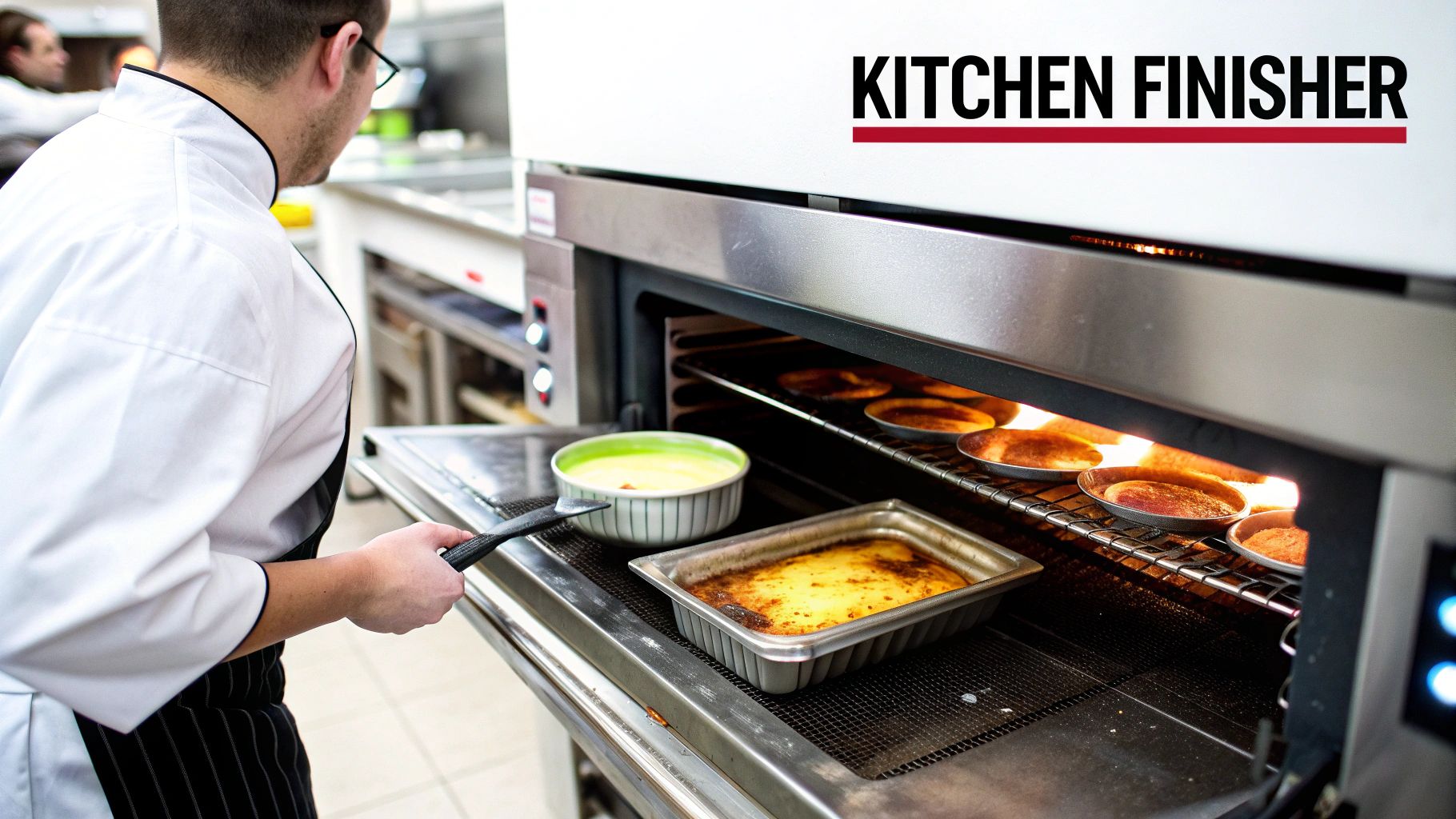
Unlike the broiler you might find tucked away inside a standard oven, a salamander is usually its own piece of equipment. It’s open, easy to get to, and works incredibly fast, making it an absolute must-have in commercial kitchens for putting on those final, crucial touches.
Its main job isn't to cook food from start to finish but to apply a final, intense blast of heat. That focused power is what really sets it apart from other cooking gear, letting chefs nail specific textures and appearances in just a matter of seconds. For any busy restaurant or food truck operator, this compact powerhouse is a game-changer for elevating dishes and speeding up service.
An Essential Tool for Modern Kitchens
The salamander has become a staple in professional kitchens all over the world. Its knack for quickly melting, browning, and finishing dishes is vital for handling high-volume service without ever compromising on quality.
This efficiency is why the global salamander broiler market has seen some serious growth, pushed by demand from restaurants and cafés that need powerful equipment without taking up a ton of space. You can read more about the salamander broiler market's expansion on dataintelo.com.
Here are a few of its key jobs on the line:
- Browning: Giving casseroles and gratins that beautiful golden-brown crust.
- Melting: Perfectly melting cheese over a plate of nachos or a hot sandwich.
- Caramelizing: Creating that signature crisp, sugary top on desserts like crème brûlée.
- Finishing: Putting a final sear on a steak or a piece of fish right before it goes out to the customer.
How Salamanders Deliver Intense Heat
The real magic of a salamander lies in how it generates and blasts heat. Unlike a regular oven that circulates hot air all around, a salamander uses powerful, direct overhead heating elements to do its job. Getting a handle on the two main technologies—infrared and radiant heat—is the key to figuring out which kind of salamander makes the most sense for your kitchen.
Think of an infrared salamander like a high-powered spotlight. It uses infrared burners to create an intense, focused heat that gets to work almost instantly. These models are prized for their speed and can hit their full temperature in as little as 90 seconds. That kind of on-demand power is perfect for putting the finishing sear on a steak or browning a dish right as an order is heading out the door.
A radiant salamander, on the other hand, is more like the steady, glowing warmth you'd get from hot coals. It uses elements that heat up and radiate a broader, gentler heat downward. While it takes a bit longer to get up to temperature, this method is fantastic for more delicate jobs, like slowly melting cheese without scorching it or warming up a stack of plates so they're perfect for service.
Infrared vs Radiant Technology
The choice between these two heating methods directly shapes your kitchen's workflow and what you can pull off with your menu. High-volume spots that need to finish dishes in a flash almost always lean toward infrared models for their raw speed and efficiency.
For a busy kitchen, every second counts. An infrared salamander heats up on demand, which means no wasted energy or time spent waiting for the equipment to preheat between orders. That has a direct impact on ticket times and how many covers you can turn.
The market backs this up. The global salamander broiler industry is growing fast, and infrared models are leading the charge precisely because of their quick heat-up times and top-notch performance in fast-paced kitchens. You can dig into more stats on the salamander broiler market's growth on growthmarketreports.com. This trend really shows how critical speed and precision have become in today's professional kitchens.
To make the choice a bit clearer, let's break down the core differences between these two heating technologies.
Infrared vs Radiant Salamander: A Quick Comparison
This table highlights the key distinctions between infrared and radiant salamanders, helping you decide which model is the right fit for your kitchen's unique demands.
| Feature | Infrared Salamander | Radiant Salamander |
|---|---|---|
| Heat-Up Time | Very fast (often under 90 seconds) | Slower (requires preheating) |
| Heat Type | Intense, focused, and direct | Broad, consistent, and gentle |
| Best For | Searing, browning, caramelizing, high-volume finishing | Melting cheese, warming plates, holding, delicate dishes |
| Energy Use | More efficient for on-demand use | Can be less efficient if left on between uses |
| Ideal Kitchen | Fast-paced, high-volume restaurants | Kitchens with more delicate finishing needs |
Ultimately, whether you go for the lightning-fast infrared or the steady radiant heat depends on your menu and pace. Infrared is the sprinter, perfect for quick bursts of intense heat, while radiant is the marathon runner, offering consistent warmth for tasks that need a gentler touch.
Salamander vs. Broiler vs. Oven: What's the Real Difference?
It’s easy to get these pieces of kitchen equipment mixed up in your head, but on the line, they play completely different roles. Think of the broiler inside your standard oven—it’s tucked away in an enclosed box, and its heat takes a while to build up. A salamander, on the other hand, is all about open access and delivering an incredible blast of power for those quick, crucial finishing touches.
This design difference is everything. It changes your workflow and the final product on the plate. A chef can slide a dish under a salamander for a quick 30-second sear, something you just can't do with an oven broiler that makes you open a huge door and kill the ambient temperature inside.
It's All About Specialized Heat
Another common mix-up is comparing a salamander to a cheesemelter. Sure, a cheesemelter is great for, well, melting cheese. But it just doesn't have the raw power to actually cook anything. It provides a gentle, radiant heat that’s perfect for melting but not much else.
A salamander is the versatile workhorse that can do both. It will give you that perfectly melted topping, but it also has the high-temperature muscle to cook thin proteins like fish fillets all the way through.
This diagram helps visualize the two main types of heat these tools use.

As you can see, infrared heat acts like a spotlight—it's fast and incredibly focused. Radiant heat is more like the glow from hot coals, spreading out more broadly and gently.
To see how these principles apply across different appliances, it can be helpful to look at various cooking methods. For more context, this BBQ Rubs Oven Air Fryer guide offers some useful insights.
Key Takeaway: A salamander's secret weapon is its intense, direct, top-down heat delivered in an open format. It’s built for speed and precision finishing, putting it in a completely different league than the slow, enclosed heat of a regular oven or the gentle warmth of a cheesemelter.
Ultimately, picking the right equipment always comes back to your menu. For a high-volume kitchen that needs speed and versatility—from browning a gratin to searing a scallop—the salamander is a true game-changer. But for bigger jobs like roasting a whole chicken, a commercial convection oven is still the right tool for the job.
Unlocking Your Menu's Potential with a Salamander
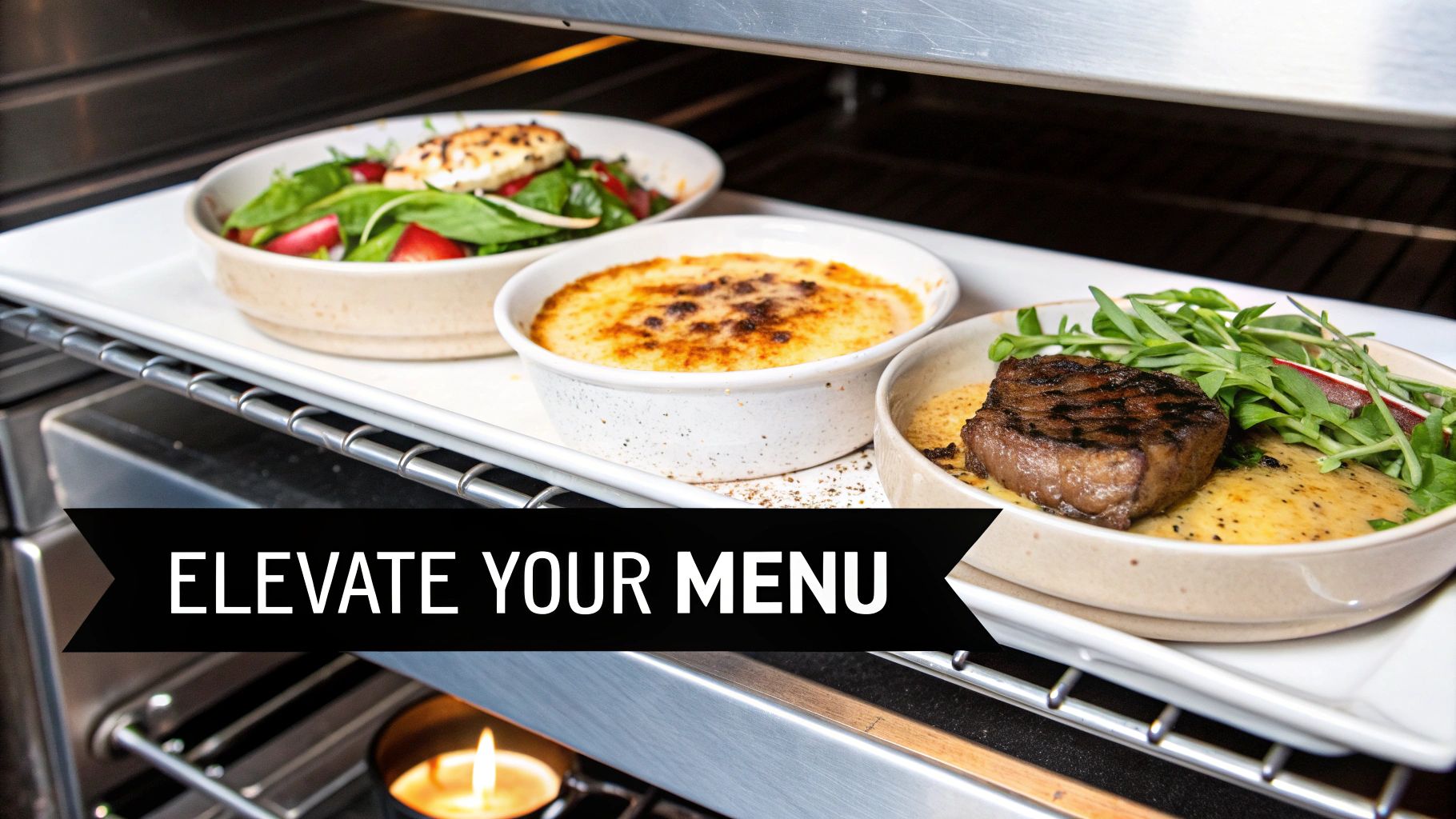
Let’s move past the technical specs and get to what really matters: what can a salamander actually do for your menu? This piece of equipment is so much more than a simple cheesemelter. Think of it as the ultimate finisher—a tool that delivers a final blast of heat to add texture, color, and flavor that other gear just can't match for speed or precision.
Ever wonder how the best kitchens get that perfectly bubbly, golden-brown crust on a French onion soup every single time? This is how. Or picture caramelizing the sugar on a crème brûlée in seconds, giving your guests that satisfying "crack" of the spoon. The salamander is built for creating these moments of culinary perfection.
Elevating Everyday Dishes
The magic of a salamander isn't just for fancy desserts; its applications stretch across the entire menu, boosting both savory and sweet dishes. This high-powered broiler can turn an ordinary plate into a signature item with one last, expertly applied touch of intense, direct heat.
Here are just a few ways a salamander can drive excellence on your line:
- Perfect Browning: Give gratins, mac and cheese, and casseroles a beautifully uniform, golden-brown top that looks as incredible as it tastes.
- Rapid Toasting: Evenly toast an entire tray of bruschetta or crostini, making sure every single piece is perfectly crisp right before it goes out.
- Final Sear: Put a quick, final sear on a sous-vide steak or fish fillet to create a delicious crust without overcooking the perfectly tender interior.
- Plate Warming: Use its powerful radiant heat to warm plates just before service, ensuring every dish gets to the table piping hot.
The salamander is all about fiery precision. Named for the mythical fire-proof amphibian, this powerful broiler has been a secret weapon for finishing techniques in top European kitchens since the 1600s.
This centuries-old concept is still a cornerstone of the modern professional kitchen. Today, its essential role is underscored by global exports from over 200 countries, a fact you can dig into by reviewing Volza's export data for electrical salamanders. Its unique ability to deliver superior results in a flash makes it an invaluable asset for any chef looking to up their game.
How to Choose the Right Salamander
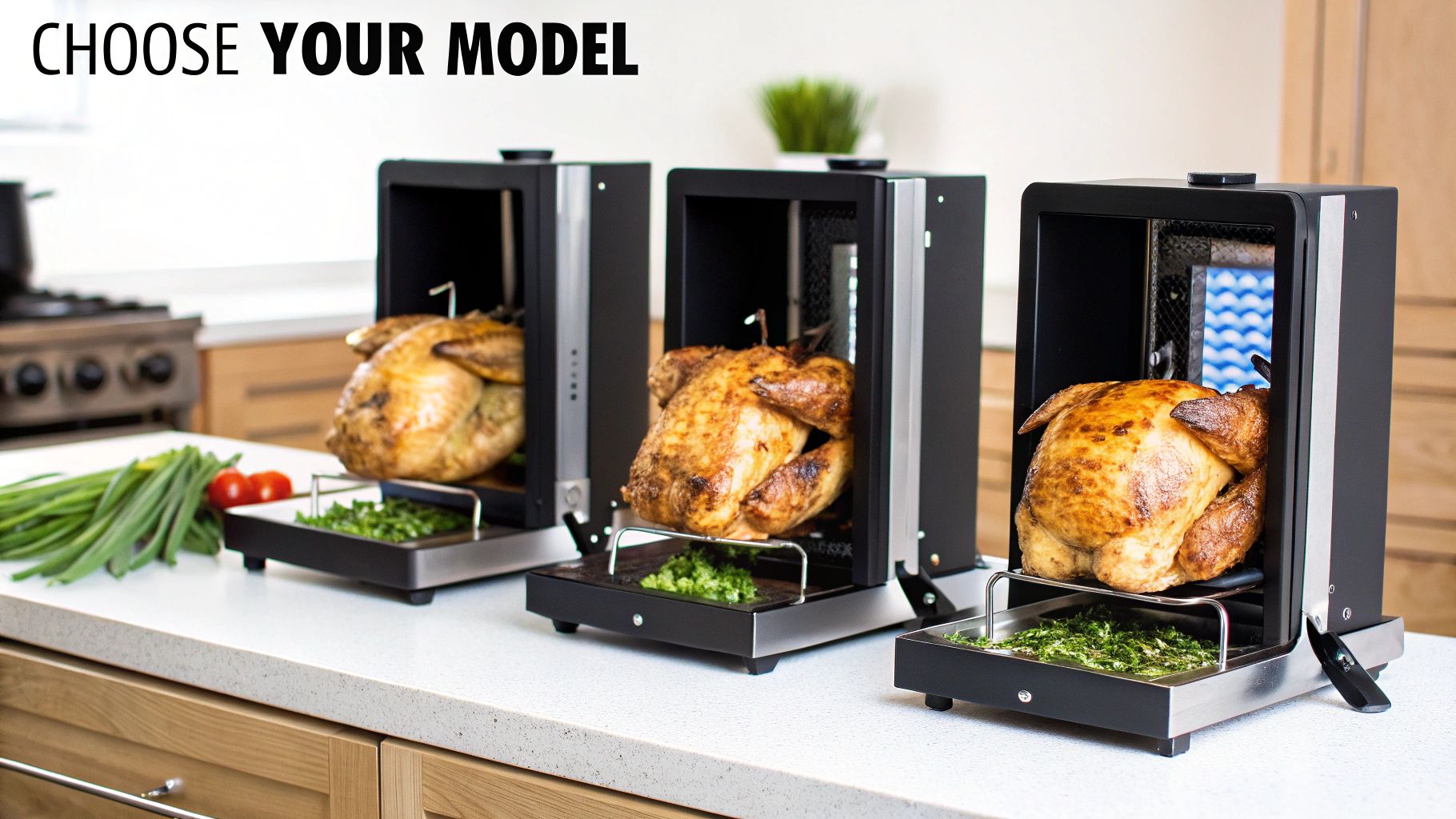
Ready to bring this finishing powerhouse into your kitchen? Picking the right salamander is about more than just finding a model you like. It’s about matching the equipment to your kitchen’s unique layout, your menu, and your team's workflow. Getting this decision right upfront means you’ll have a tool that boosts efficiency instead of causing a bottleneck.
The first big question is where it’s going to live. How you mount the unit directly impacts your precious kitchen space and the flow of service.
- Countertop Models are the most flexible, perfect for smaller operations or kitchens where you’re short on wall space. You can always move them later if your layout changes.
- Range-Mounted Units sit right on top of your existing range, turning that area into one consolidated, super-efficient cooking station.
- Wall-Mounted Salamanders are fantastic for freeing up counter and range space entirely, keeping the unit handy but out of the immediate workflow.
Proper placement isn’t just about convenience—it’s a critical safety and compliance issue. Your installation has to follow local fire codes and will likely require specific ventilation. To get a handle on what’s needed, it’s a good idea to review the essentials of commercial kitchen ventilation systems to make sure your setup is both safe and effective.
Power Source and Sizing
Next, you’ve got to decide between gas and electric power. Gas salamanders are often the top pick for chefs who love rapid heat-up times and incredibly responsive, precise temperature adjustments—it feels a lot like cooking over a live flame.
On the other hand, electric models deliver exceptional consistency and are usually simpler and cheaper to install, especially if your kitchen isn't already plumbed for gas.
Pro Tip: Think hard about your menu. If you need that intense, on-demand searing power for a high-volume service, a powerful infrared gas model is probably your best bet. But for more delicate work like melting cheese perfectly, the steady, even heat of an electric unit might be the smarter choice.
Finally, think about size and controls. The width of the salamander should make sense for your production needs and the size of the range it might sit over. Controls can be as simple as manual high-low dials or as sophisticated as programmable settings that nail the perfect result every single time.
Operating Your Salamander Safely and Efficiently
To get the most out of your salamander, you’ve got to use it right. This isn't just about results; it's about safety and keeping the machine in good shape for years. Always preheat your salamander so that intense heat is ready to go the moment you need it—this is the secret to consistent browning and searing. Get comfortable adjusting the rack position for each task. Bring it up high for a super-fast sear, or lower it down for a more gentle melt.
The single most important rule when using this beast of a machine is to never leave it unattended. Seriously. The high heat can take a dish from perfectly caramelized to a burnt mess in just a few seconds, which is not only a waste of food but a serious fire risk.
Essential Maintenance Checklist
A little bit of regular upkeep will prevent dangerous flare-ups and dramatically extend the life of your unit. It’s simple stuff, but it makes a huge difference.
- Daily: Clean the grate and make sure you empty the crumb tray. This gets rid of grease and any food bits that could smoke or catch fire later.
- Weekly: Give the exterior a good wipe-down. This keeps your kitchen looking professional and sanitary.
- Periodically: Take a quick look at the gas lines or electrical cords. You’re just checking for any signs of wear, cracks, or damage that could become a problem.
Consistent cleaning is absolutely fundamental to safe operation. For some more detailed advice, you can learn about the best practices for cleaning a broiler, as a lot of the same principles apply here.
Don't forget about the air in your kitchen. Proper ventilation is also crucial for managing the intense heat and fumes that salamanders pump out. It’s worth taking the time to explore more about selecting and maintaining effective commercial kitchen ventilation systems to ensure your workspace stays safe and comfortable for your crew.
Your Top Questions About Salamander Broilers
When you're thinking about adding a salamander to your kitchen lineup, a few key questions always seem to pop up. Getting straight answers is the best way to make sure you're investing in the right piece of equipment and can put it to work with confidence from day one.
Can a Salamander Just Replace My Oven's Broiler?
In a commercial kitchen? Absolutely, and it's a major upgrade. A dedicated salamander is a world apart from a standard oven broiler—it's significantly faster, way more powerful, and gives you a level of precision you just can't get otherwise. For most home kitchens, though, the built-in broiler is probably all you need for the occasional job.
How Much Space Do I Need to Install It Safely?
This is one area where you can't guess. Always, and I mean always, check the manufacturer's specific guidelines before you install anything. Requirements can vary, but the golden rule is to ensure there's adequate clearance from all combustible surfaces. Proper spacing isn't just a suggestion; it's non-negotiable for preventing a fire hazard.
Are the Infrared Models Really Worth the Extra Cash?
For a high-volume spot, they often are. The incredible speed and energy efficiency you get from an infrared salamander can easily justify the higher upfront cost. What does that look like in practice? Faster ticket times during a busy rush and lower utility bills over the long haul.
A salamander is a finishing tool, not a primary cooking appliance. It excels at applying intense, direct heat for short periods—perfect for browning, melting, and searing.
Could I Cook Something Like a Whole Chicken in a Salamander?
Nope, that's not what it's built for. A salamander is all about the finishing touches, not roasting big items from scratch. It’s the perfect tool for getting a beautiful crust on thinner cuts of protein or melting cheese to bubbly perfection. For roasting a whole chicken, a convection oven is still the right tool for the job.
For all your commercial kitchen needs, from powerful salamanders to reliable refrigeration, The Restaurant Warehouse provides top-tier equipment with flexible financing to help your business thrive. Equip your kitchen for success by visiting us at https://therestaurantwarehouse.com.
About The Author

Sean Kearney
Sean Kearney is the Founder of The Restaurant Warehouse, with 15 years of experience in the restaurant equipment industry and more than 30 years in ecommerce, beginning with Amazon.com. As an equipment distributor and supplier, Sean helps restaurant owners make confident purchasing decisions through clear pricing, practical guidance, and a more transparent online buying experience.
Connect with Sean on LinkedIn, Instagram, YouTube, or Facebook.