

From Pop-Up to Pro: Finding Your Perfect Seattle Commercial Kitchen
Why Seattle Commercial Kitchens Are the Smart Path for Food Entrepreneurs
A Seattle commercial kitchen provides licensed, shared-use cooking space for food businesses—from food trucks to ghost kitchens—without the million-dollar buildout. These facilities are the launchpad for culinary innovation in the Pacific Northwest, offering a practical and affordable alternative to the immense financial and logistical challenges of opening a standalone restaurant. Here's what you need to know to get started.
Quick Answer for Finding a Seattle Commercial Kitchen:
- Types Available: The primary models include commissary/shared-use kitchens for general production, ghost kitchens designed exclusively for delivery, and incubator kitchens that bundle business support with kitchen access.
- Typical Costs: Entry-level memberships can start around $350/month for off-peak access, with more comprehensive plans ranging from $800 to $2,500+. Hourly rates are also available for businesses with sporadic needs.
- Required Permits: You will need a Washington State business license, a City of Seattle business license, a Food Worker Card for all staff, and a King County Food Business Permit. Wholesalers will also need a WSDA license.
- Key Benefits: Major advantages include drastically lower startup costs (often under $30,000 compared to $1M+ for a traditional restaurant), 24/7 access to professional-grade facilities, included storage options, and built-in health department compliance.
- How to Find One: Start by searching King County's official list of approved commissary kitchens, schedule tours of your top choices, and meticulously verify their health department approval and membership terms before signing any agreements.
Seattle's food scene is a vibrant, ever-evolving ecosystem, with hundreds of new food concepts launching annually. This boom, however, exists alongside the harsh reality of sky-high operational costs. A traditional brick-and-mortar restaurant buildout in the city can easily eclipse $1 million when you factor in prime real estate leases, extensive construction, architectural plans, permitting fees, and furnishing a dining room. Commercial kitchens offer a radically different, more accessible path to market. These shared, licensed facilities provide access to professional-grade cooking spaces, secure storage, and essential amenities for a fraction of the upfront investment and ongoing overhead.
Whether you're launching a catering company specializing in Pacific Northwest cuisine, testing recipes for a Pike Place Market booth, or running a delivery-only virtual brand, Seattle's robust network of commissary spaces can help you get your business operational in weeks, not the years it can take to build from scratch. The data highlights the power of this model, especially for modern concepts. Ghost kitchens in Seattle, for example, average a remarkable 1,200 deliveries per week with a $25 average basket size and rapid 39-minute delivery times. These facilities are purpose-built for the contemporary food economy—designed for speed, flexibility, and an unwavering focus on the quality of your food.
However, securing the right kitchen involves more than just finding the lowest monthly rent. It requires a strategic approach. You must understand the nuances between different kitchen models, successfully steer King County's stringent permitting requirements, and ensure the facility's features align perfectly with your business's unique operational needs. A food truck operator has different priorities—like vehicle parking and water access—than a baker who needs dedicated prep space and reliable baking facilities. A ghost kitchen, meanwhile, demands seamless integration with a complex web of delivery platforms.
This comprehensive guide will break down everything you need to know about navigating the Seattle commercial kitchen landscape. We will walk you through the main types of facilities, provide a clear explanation of the essential permits and associated costs, and give you a step-by-step framework for how to evaluate and choose the ideal space for your culinary concept.
I'm Sean Kearney with The Restaurant Warehouse, and I've dedicated my career to helping food entrepreneurs make the critical facility and operational decisions that determine the success or failure of a new venture. Whether you're exploring your first Seattle commercial kitchen rental or planning to scale up your existing operation, a deep understanding of your options is the bedrock of a resilient and profitable food business.
Why Rent a Commercial Kitchen in Seattle? The Key Benefits
The dream of owning a successful food business often collides with the daunting reality of startup capital. This is precisely where a Seattle commercial kitchen emerges as a strategic game-changer, offering a vital lifeline to culinary entrepreneurs in the Emerald City. The benefits go far beyond simple cost savings, creating a foundation for sustainable growth, compliance, and innovation. Let's dig into the compelling advantages that make these shared spaces an indispensable resource.
First and foremost, the financial leverage is staggering. Consider the traditional path: launching a brick-and-mortar restaurant in Seattle. The average cost, including a long-term lease, construction, and outfitting, can easily soar past $1 million. Now, contrast that with launching a business from a commercial kitchen. A ghost kitchen concept, for instance, can be up and running for around $30,000. This represents a potential 97% reduction in initial capital outlay. This dramatic difference is transformative, freeing up precious funds to be invested in what truly matters: high-quality ingredients, impactful marketing, talented staff, and brand development, rather than being sunk into real estate and construction debt.
Beyond the initial investment, these kitchens drastically slash your ongoing operational overhead. By renting, you gain access to a professional-grade cooking environment without the crushing weight of property taxes, long-term lease liabilities, extensive utility bills (which are often included or shared), or the constant, costly maintenance of a standalone building. This lean operational model means you can focus your energy, time, and financial resources on perfecting your craft, innovating your menu, and growing your customer base.
Health department compliance is one of the biggest hurdles for any new food business. Operating from a licensed Seattle commercial kitchen ensures you are automatically aligned with the stringent standards set by the King County Health Department and, for wholesalers, the Washington State Department of Agriculture (WSDA). These facilities are designed, built, and pre-approved for commercial food preparation, saving you countless hours and thousands of dollars in navigating complex building codes, plan reviews, and inspections. It's a built-in safety net that provides peace of mind and allows you to operate legally and confidently from day one.
Flexibility and scalability are crucial for a growing business. A commercial kitchen provides the perfect environment to scale your operations in response to demand. Whether you're a burgeoning food truck needing a reliable home base, a caterer expanding your client list from small parties to large corporate events, or a baker whose wholesale orders are rapidly increasing, a shared kitchen provides the space and resources to grow without the risk of committing to a massive, long-term lease. You can often adjust your membership level or hourly usage as your business evolves, a level of agility a private kitchen simply cannot offer.
A less tangible, but equally valuable, benefit is the unparalleled networking and community aspect. Many Seattle commercial kitchen spaces cultivate a vibrant, collaborative ecosystem of food professionals. You'll be working alongside fellow entrepreneurs who are facing the same challenges and celebrating similar victories. This environment fosters organic mentorship, shared knowledge about reliable suppliers, and even potential business collaborations. Some of Seattle's largest commissaries are home to dozens of local food producers, creating a dynamic hub of culinary creativity and mutual support that is impossible to find when working in isolation.
Renting a commercial kitchen ultimately allows you to focus on what you do best: creating delicious food that people love. You are liberated from the immense distractions of facility management, regulatory battles, and building maintenance. This singular focus is vital for achieving the level of quality and innovation needed to stand out. To join the ranks of the Seattle Best Restaurants, starting in a licensed, professional kitchen is your first and most important step. Contact The Restaurant Warehouse today to learn how our affordable food service supplies can support your new venture.
Types of Seattle Commercial Kitchens Explained
The landscape of Seattle commercial kitchen spaces is diverse, with different models designed to cater to the specific needs of a wide array of food business concepts. Understanding the distinctions between these types is the first step in finding the perfect operational home for your venture. This section breaks down the main models available to food entrepreneurs in the Emerald City.
Commissary & Shared-Use Kitchens
Commissary kitchens, often referred to interchangeably as shared-use kitchens, are the foundational workhorses of the food startup world. At their core, they are fully licensed and inspected commercial kitchen facilities that are available for rent by multiple food businesses simultaneously. Think of it as a co-working space, but instead of desks and conference rooms, you have access to stainless steel prep tables, large-scale sinks, and walk-in refrigeration.
These facilities operate on a variety of flexible membership models. This is a huge advantage for businesses with fluctuating production schedules or those just starting out on a tight budget. Common structures include:
- Hourly Rates: Ideal for occasional use, like a monthly pop-up or small-batch production run.
- Monthly Memberships: Often sold in tiers, such as a basic plan with a set number of off-peak hours (e.g., 20 hours/month) or an unlimited plan with 24/7 access.
- Dedicated Space: Some kitchens offer the option to rent a dedicated prep station or private kitchen suite within the larger shared facility for a higher monthly fee.
Entry-level plans can start as low as $350 per month, providing an incredibly accessible entry point into the market. The most prominent providers in the greater Seattle area not only offer space but also foster a true community atmosphere, hosting dozens of local food producers and creating a collaborative environment.
Shared-use kitchens are the perfect solution for a broad spectrum of food ventures:
- Food Trucks and Food Carts: These businesses are legally required to operate from a licensed "home base" or commissary for all food prep, storage, and warewashing. These kitchens also provide essential services like fresh water tank filling and grey water disposal.
- Caterers: The expansive prep areas and massive cold storage capacity in these kitchens are essential for preparing food for large-scale events.
- Bakers: From small-batch artisanal bread to wholesale pastry production, these spaces offer the necessary infrastructure. A baker needs dedicated prep space and reliable access to professional baking facilities.
- Farmers Market Vendors: Preparing jams, sauces, baked goods, and other products for sale at local markets requires a certified kitchen, and the flexibility of a shared facility is a perfect match.
- Wholesale Food Producers: Businesses creating packaged goods for retail (like sauces, snacks, or frozen meals) need a licensed production space that meets WSDA standards.
The benefits extend beyond just the physical space; these kitchens facilitate invaluable resource sharing and create a supportive community. Imagine having access to a range of professional-grade workstations and the collective wisdom of dozens of other food entrepreneurs who can offer advice on everything from permitting to packaging.
Ghost Kitchens (Delivery-Only Kitchens)

Ghost kitchens, also known as dark kitchens or virtual kitchens, represent a significant and powerful evolution in the food service industry. Their model is simple yet revolutionary: they are professional cooking facilities built exclusively to fulfill orders for a delivery-only customer base. Crucially, they have no attached dining rooms, no public-facing signage, and no storefront for customer walk-ins. Their entire operation is optimized for digital orders and third-party delivery services.
This delivery-centric model dramatically reduces the two biggest expenses of a traditional restaurant: real estate and labor. Without the need for front-of-house staff, elaborate decor, or a prime retail location with heavy foot traffic, ghost kitchens enable incredible speed to market. A new food concept can be launched in a matter of weeks, a stark contrast to the many months or even years required for a traditional restaurant build-out. The model is so efficient that a ghost kitchen can be launched for as little as $30,000, compared to the $1 million-plus investment for a brick-and-mortar establishment.
Seattle is a prime market for ghost kitchens, thanks to its dense, tech-savvy population and deeply ingrained delivery culture. The statistics from local operations are compelling:
- Seattle dark kitchen locations average 1,200 deliveries per week.
- The average basket size at these locations is a healthy $25.
- The average delivery time is a speedy 39 minutes, meeting customer expectations for fast service.
- 60% of orders occur on weekdays, indicating a consistent and reliable demand beyond just weekend treats.
- There are typically 6 delivery platforms available for use, offering broad market reach to customers on their preferred apps.
Ghost kitchens are ideal for:
- Virtual Brands: Launching entirely new food concepts that exist only online, allowing for rapid experimentation and market testing.
- Delivery Expansion: Existing restaurants can use a ghost kitchen to expand their delivery radius into new neighborhoods without the cost and risk of opening a full-service satellite location.
- Menu Testing: Experimenting with new cuisines or menu items in a low-risk, low-cost environment before rolling them out to a primary restaurant.
The focus here is entirely on culinary execution and logistical efficiency, making ghost kitchens a powerful tool for modern food entrepreneurs looking to capitalize on the booming delivery market.
Incubator & Non-Profit Kitchens
Beyond the purely commercial rental models, Seattle is also home to several incubator and non-profit kitchens. These mission-driven facilities go a step further than just providing cooking space; they integrate comprehensive business support services designed to nurture and accelerate the growth of budding food entrepreneurs, often with a focus on underrepresented communities.
Some non-profits, for example, partner with established commissary facilities to offer their program graduates affordable, subsidized kitchen access. This model provides much more than just four walls and a roof; it includes a full suite of wraparound services:
- Mentorship and Business Coaching: Program participants are paired with experienced industry professionals for one-on-one guidance on everything from menu costing and financial planning to operational efficiency and scaling strategies.
- Workshops and Technical Training: These programs offer a curriculum of educational sessions on critical business skills, such as marketing and branding, social media management, food safety certification, and navigating legal requirements.
- Networking Opportunities: They provide invaluable connections to a broader community of entrepreneurs, wholesale buyers, retail partners, and potential investors.
- Reduced Rates: A key feature is often discounted access to kitchen facilities, especially during the critical first year of business. Some programs offer introductory rates with a lower monthly minimum to ease the financial burden during the startup phase.
These kitchens act as a launchpad for startups, providing a safe and supportive environment where new businesses can refine their products, gain market traction, and build a sustainable foundation for long-term success. They are particularly beneficial for entrepreneurs who need not only affordable kitchen access but also structured guidance and a robust resource network to steer the complexities of the food industry.
Navigating the Essentials: Permits, Costs, and Regulations
Embarking on your culinary journey in Seattle is an exciting prospect, but before you can fire up the burners, it's imperative to get your administrative house in order. Navigating the world of permits, costs, and regulations is a crucial, non-negotiable step for operating a legal, safe, and reputable food business in King County. A thorough understanding of this landscape will prevent costly delays and save you significant headaches down the line.
Your Essential Seattle Commercial Kitchen Permits and Licenses
Operating any food business in Washington State, and particularly within Seattle, requires adherence to a specific, multi-layered set of licenses and permits. These are not mere bureaucratic formalities; they are legal requirements designed to ensure your business meets all public health and safety standards.
Here's a detailed breakdown of what you'll typically need:
- Washington State Business License: This is the foundational license for conducting any business in the state. It registers your business with multiple state agencies (like the Department of Revenue) for tax purposes. It's a relatively low-cost but essential first step, typically costing around $20 to acquire.
- City of Seattle Business License: If your business operations are based within Seattle city limits—which includes using a Seattle commercial kitchen—you will also need a separate business license from the city. This license generally costs around $110 per year and is required for local tax and regulatory compliance.
- Washington State Food Worker Card: This is mandatory for every single person in your operation who handles food, from the head chef to a part-time prep cook. It involves a short online food safety course and test, ensuring a baseline knowledge of safe food handling practices. The card costs approximately $10 and must be renewed every few years.
- King County Food Business Permit: This is arguably the most critical permit for any food entrepreneur in the region. The King County Health Department's Food Protection Program oversees all food establishments, ensuring they comply with the local health code. Using a pre-approved commercial kitchen greatly simplifies the application process, as the facility itself is already permitted. You can find detailed information and application forms for this crucial King County Food Business Permit. As of April 1, 2025, the county's Food Safety Program directly permits Commercial Commissary Kitchens, making their oversight even more central to your operation.
- WSDA Food Processor License: This license is required if your business model involves processing and packaging food for wholesale distribution—for example, if you plan to sell your bottled sauces, packaged snacks, or frozen meals to grocery stores, coffee shops, or other retailers. This license is issued by the Washington State Department of Agriculture (WSDA) and involves stricter standards for processing, packaging, and labeling than a standard retail permit. You can learn more about the requirements on the WSDA Food Processor license page.
Understanding the Costs
Beyond the permit fees, the financial planning for renting a Seattle commercial kitchen involves several key components. It's important to get a clear, itemized list of all potential charges from any kitchen you consider.
- Application Fees: Most kitchens charge a one-time, non-refundable application fee to process your paperwork and vet your business. This fee is often around $100.
- Membership Rates: This is your primary recurring cost and can vary widely. Basic, off-peak plans might start around $350 per month, while plans offering more hours, peak-time access, or dedicated space can range from $800 to $2,500 or more. Hourly rates are also common for those needing less consistent access, typically ranging from $25 to $50 per hour.
- Hourly vs. Monthly Plans: Hourly plans offer maximum flexibility for very small or occasional operations. Monthly plans provide better value for businesses with regular production schedules and often come with additional perks like guaranteed prep space or included storage.
- Security Deposits: Similar to renting an apartment, a security deposit is standard practice. This is typically equivalent to one month's membership fee and is refundable at the end of your contract, provided you leave your space in good condition.
- Utility Fees: While many kitchens bundle basic utilities (water, gas, electricity) into their membership rates, others may charge separately. It's especially important for food truck operators to clarify fees for services like vehicle power hookups.
- Liability Insurance Costs: You will be required to carry your own general liability insurance. This is an ongoing operational cost that can range from $50 to $200 per month, depending on your coverage and business type.
- Storage Fees: Dry, cold, and freezer storage is a critical need. Some high-tier memberships may include a certain amount of storage, but it's often offered as an à la carte add-on service, priced per shelf or per rack on a monthly basis.
The Role of Health Departments
The King County Health Department plays a pivotal and ongoing role in regulating all food businesses operating within its jurisdiction, including every single business using a Seattle commercial kitchen. Their primary mission is to ensure that food is prepared, stored, and served safely to the public. They conduct plan reviews for new operations, perform regular, unannounced inspections of facilities and tenants, and issue the necessary food business permits. Maintaining full compliance with their regulations is paramount for your business's legality, reputation, and longevity.
Similarly, the WSDA steps in for businesses engaged in food processing and wholesale. If you are packaging products to be sold by other retailers, the WSDA's regulations ensure that your facility, processes, and labeling meet stringent state-level food safety standards designed for shelf-stable and packaged goods. The importance of using a pre-approved facility cannot be overstated. A licensed commercial kitchen is specifically designed and maintained to meet these rigorous standards, providing a compliant foundation upon which you can build your business legally and safely.
How to Choose the Right Kitchen for Your Food Business
Finding the right commercial kitchen is about more than just securing four walls and a roof; it's about finding a strategic partner in your business's success. The right facility will not only meet your current production needs but also support your future growth. As you plan your launch, consider how you'll Stock Your Seattle Kitchen: The Best Stores for Supplies, Dinnerware, and More. The perfect Seattle commercial kitchen should feel like a seamless extension of your brand, providing the infrastructure, community, and support you need to thrive.
Key Features and Amenities to Look For
When you evaluate a potential Seattle commercial kitchen, it's crucial to look beyond the surface-level appeal. The specific amenities and operational features offered can have a profound impact on your day-to-day efficiency, profitability, and overall experience.
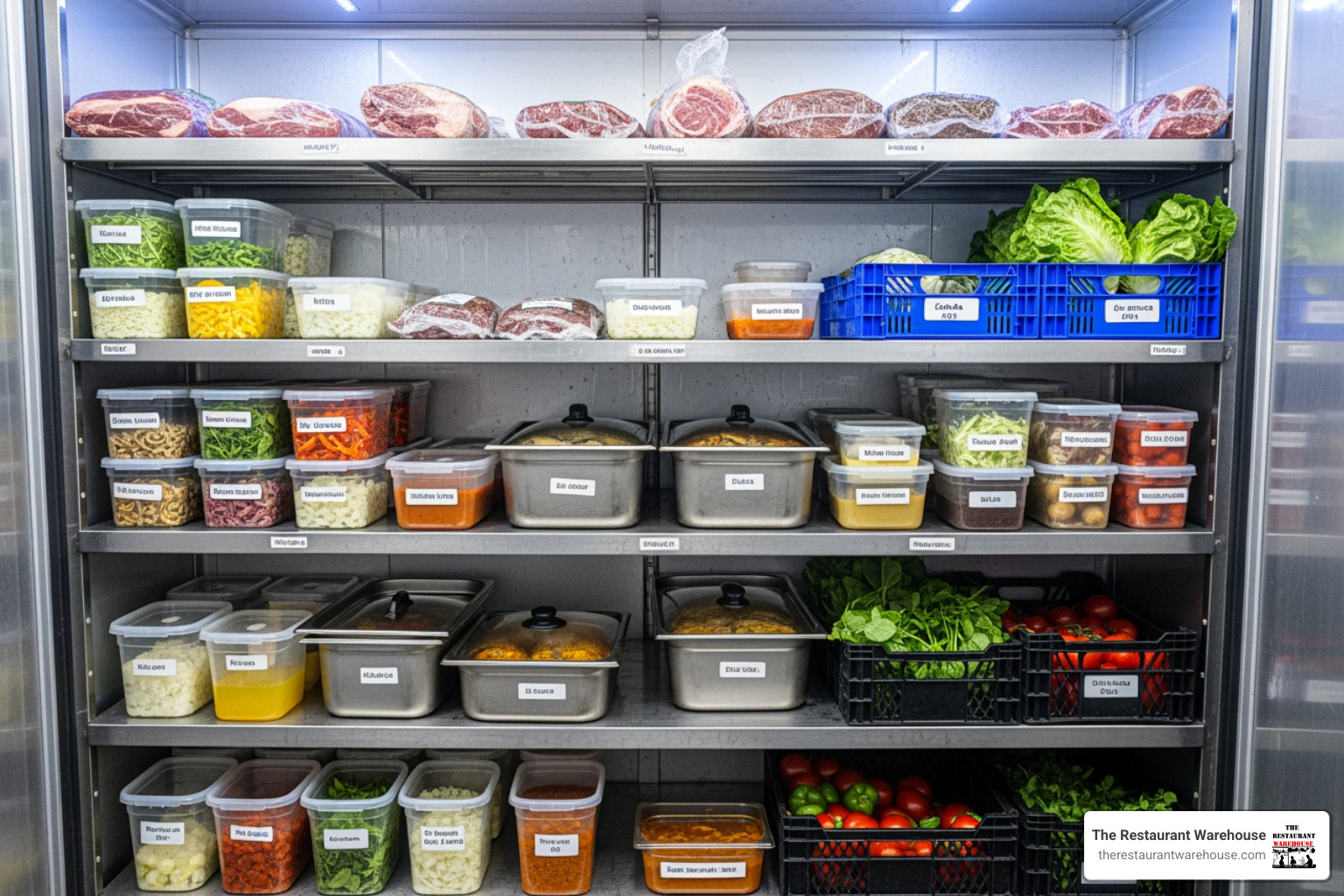
Here are some of the most important features and amenities to prioritize during your search:
- 24/7 Access: For many food businesses—especially bakers who start in the early morning, caterers returning late from events, or businesses with tight production deadlines—round-the-clock access is non-negotiable. Many leading kitchens provide 24/7 member access via key fobs or codes, coupled with comprehensive security monitoring.
- Robust Security Systems: A secure facility with surveillance cameras, controlled access points, and good lighting is essential for ensuring the safety of your products, proprietary recipes, supplies, and staff, especially during off-peak hours.
- Ample and Organized Storage: This is one of the most critical components. Meticulously assess the availability and condition of dry storage for non-perishables, as well as cold and freezer storage. Ask about how storage is allocated and if you can scale your storage space as your inventory grows. Well-managed facilities have multiple walk-in coolers and freezers to accommodate diverse needs.
- Dedicated Parking and Loading Areas: If you operate a food truck, catering van, or delivery service, dedicated, convenient parking is a massive logistical advantage. Look for facilities with designated parking for commercial vehicles, easy-to-access loading docks, and clear pathways for moving goods in and out.
- Food Truck Servicing Infrastructure: For mobile food businesses, on-site services are a game-changer. The availability of a fresh water filling station and a certified grey water disposal unit saves an incredible amount of time and hassle, eliminating the need to find these services elsewhere.
- Included Utilities and Waste Management: Clarify exactly what is included in your membership fee. All-inclusive pricing that covers electricity, gas, water, trash, and recycling can greatly simplify your monthly budgeting and prevent unexpected costs.
- High-Speed Wi-Fi Access: In today's digital world, reliable internet is not a luxury; it's a necessity for managing online orders, communicating with customers, processing payments, and handling administrative tasks.
Matching the Kitchen to Your Business Model
Your business model is unique, and your Seattle commercial kitchen should be a perfect match for your specific operational workflow. A one-size-fits-all approach rarely leads to efficiency.
- Food Trucks: Beyond parking and servicing, food truck operators need efficient loading and unloading zones, ample prep space to stock their mobile units for a busy service, and ideally, secure overnight parking with power access to keep refrigeration running.
- Caterers: Large-scale catering operations require significant staging areas for plating and assembling orders, robust and expansive refrigeration, and sometimes even a client-facing area or tasting room for consultations.
- Bakers: Bakers should prioritize kitchens with large, durable work tables (preferably marble or stainless steel), ample dedicated prep space to avoid cross-contamination, and flexible scheduling to accommodate early morning baking schedules.
- Online Vendors and Ghost Kitchens: These digitally native businesses thrive on speed, efficiency, and technology. Look for kitchens with integrated delivery handoff systems, dedicated pickup areas for couriers to minimize disruption, and technology suites for streamlining and aggregating online orders. Leading ghost kitchen providers often integrate their own software for managing orders from multiple delivery platforms via a single interface and provide dedicated staff to manage driver hand-offs, ensuring a smooth customer experience.
By carefully aligning the kitchen's specific offerings with your operational needs, you can ensure maximum productivity and minimize potential friction points that could hinder your growth.
Finding and Vetting Your Space
The search for the perfect Seattle commercial kitchen should begin with thorough research and be followed by diligent, in-person vetting.
- Online Directories and County Resources: Websites that list commercial kitchens in Seattle can be a great starting point. However, your most authoritative source is the King County Health Department, which often provides maps or lists of approved commissary kitchens in the area. This ensures you are only considering legally compliant facilities.
- Questions to Ask on a Tour: When you visit a potential kitchen, come prepared with a detailed list of questions. Don't be shy! Ask about peak usage times, scheduling rules and software, cleaning protocols and responsibilities, the process for reporting a broken fixture, availability and cost of storage, and the specific terms of use. Inquire about the community: is there a shared communication channel like Slack or a forum? Are there networking events?
- Talk to Current Members: If possible, discreetly and politely ask a current member about their experience. They can provide invaluable, unfiltered feedback on the management, cleanliness, and overall culture of the kitchen.
- Verifying Health Department Approval: Always independently confirm that the kitchen holds all necessary permits and is in good standing with the King County Health Department and, if applicable, the WSDA. You can often look this up on the county's public health website.
- Reviewing Membership Agreements: Before you sign anything, read the contract meticulously. Understand the term length, cancellation policies, fee structures, and exactly what is included in your membership. Pay close attention to clauses regarding liability, insurance requirements, and rules of conduct.
As you plan your launch, understanding all the components of a professional setup is key. Get more insights on building your Seattle food enterprise from the ground up. Taking these actionable steps will help you secure a space that not only meets your needs today but also supports your culinary ambitions for years to come.
Frequently Asked Questions about Seattle Commercial Kitchens
We understand that you might have more questions as you explore the world of Seattle commercial kitchen spaces. This is a significant decision, and it's wise to gather as much information as possible. Here are detailed answers to some of the most common queries we encounter from aspiring food entrepreneurs.
Do I need my own insurance to use a shared kitchen?
Yes, absolutely. This is a standard, non-negotiable requirement for virtually all Seattle commercial kitchen facilities. Every member business is required to obtain and maintain its own general liability insurance policy. This policy is crucial as it protects your business from financial loss in the event of potential claims related to your products or operations, such as a customer alleging foodborne illness. The required coverage amount is typically at least $1 million per occurrence. Furthermore, you will almost certainly be required to name the kitchen facility itself, and often its landlord, as an 'Additionally Insured' party on your policy certificate. This is a standard practice that extends your liability coverage to protect the kitchen in case an incident arises from your activities on their premises. You must provide proof of this insurance before you are given access to the kitchen.
Can I sell directly to customers from a commissary kitchen?
This is a critical question, and the answer depends heavily on the specific facility's design, location, and local zoning regulations. Traditionally, commissary kitchens were strictly back-of-house production spaces with no public access. However, with the rise of direct-to-consumer business models and the influence of ghost kitchens, many modern commissaries are adapting. Some newer facilities are now intentionally designed with dedicated customer-facing sales windows, integrated digital ordering systems, and designated pickup areas for both customers and delivery drivers. For example, some facilities explicitly advertise a sales window with a custom-built ordering system and tech support, allowing their members to capture valuable direct-to-consumer sales. If direct sales are a core part of your business model, you must confirm this capability with the kitchen provider and also verify with the city that the location is zoned for retail activity.
How many people will I be sharing the kitchen with?
The number of businesses and individuals you'll be sharing a Seattle commercial kitchen with can vary greatly depending on several factors: the physical size of the kitchen, its total number of members, the time of day, and the day of the week. During peak hours (typically late mornings and afternoons on weekdays), it's reasonable to expect anywhere from 5 to 10 other members to be actively working in the kitchen at any given time. Experienced kitchen managers often advise new members to anticipate this level of activity. To manage traffic, many kitchens use sophisticated scheduling software and may offer different shift structures (e.g., morning, afternoon, graveyard) or tiered memberships with access limited to off-peak hours. While you might occasionally find the kitchen mostly to yourself during a late-night or very early morning shift, you should always operate with the expectation that it is a shared space. If you require more privacy or dedicated space, inquire about renting a private prep station or a fully enclosed kitchen suite, which some larger facilities offer at a premium price.
What kind of facilities are typically provided?
While you must bring your own smallwares (like knives, bowls, and cutting boards), a commercial kitchen provides the core, heavy-duty infrastructure that is expensive and difficult to install yourself. You can expect to find stainless steel food preparation tables, multi-compartment sinks for washing, rinsing, and sanitizing, separate hand-washing and food-prep sinks, and commercial-grade dishwashing machines. Crucially, they provide ample refrigerated and frozen storage in the form of large walk-in coolers and freezers. They also provide the basic framework for cooking, including access to gas lines and professionally installed ventilation hoods that meet fire and health codes. The specific cooking hardware available varies by kitchen, so you must confirm they have what your specific process requires during your tour.
What is the onboarding process like?
Getting started in a commercial kitchen involves a structured onboarding process to ensure safety and compliance. After your application is approved and you've signed the membership agreement, you'll typically go through several steps. First, you'll need to submit all required documentation, including your business licenses, food handler permits, and certificate of insurance. Next, you'll attend an orientation session. This usually involves a detailed tour of the facility, training on how to use the scheduling software, a review of all safety and sanitation rules (including cleaning protocols), and instructions on how to operate any shared fixtures. You'll be shown where your designated storage is and how to properly label all of your products. This process ensures that all members operate safely and respectfully within the shared environment.
Conclusion
Seattle's dynamic and demanding food scene offers immense opportunity for passionate entrepreneurs, and commercial kitchens are the key to unlocking that potential without the prohibitive cost and risk of a traditional restaurant build-out. By understanding the distinct advantages of the different types of kitchens available—from bustling shared commissaries that foster community, to hyper-efficient delivery-only ghost kitchens that maximize reach, and supportive incubator programs that nurture new businesses—you can find a space that perfectly aligns with your culinary vision and business plan.
Navigating the web of regulations, permits, and costs might seem daunting at first, but it is a manageable process. With a clear understanding of what's required by the King County Health Department and the WSDA, you can confidently establish a fully compliant and legal business. Securing your Washington State business license, a City of Seattle business license, a Food Worker Card for your team, and the appropriate food business permit are the foundational, non-negotiable steps on your path to success.
Choosing the right Seattle commercial kitchen is one of the most critical strategic decisions you will make. It's about more than just rent; it's about matching the facility's specific features—like 24/7 access, ample and organized storage, and specialized infrastructure—to your unique business model, whether you're a caterer preparing for large events, a baker perfecting your artisan loaves, or a food truck operator serving the city's neighborhoods.
For entrepreneurs ready to take the next step and turn their culinary dream into a reality, having a reliable partner for all your operational needs is crucial. The Restaurant Warehouse is dedicated to supporting the growth of food businesses with affordable, high-quality solutions. We are here to help you equip your new venture for success. Contact us today for a quote on all your food service supply needs. You can also explore more resources and insights for your Seattle food venture to ensure you start strong.
About The Author

Sean Kearney
Sean Kearney used to work at Amazon.com and started The Restaurant Warehouse. He has more than 10 years of experience in restaurant equipment and supplies. He graduated from the University of Washington in 1993. He earned a BA in business and marketing. He also played linebacker for the Huskies football team. He helps restaurants find equipment at a fair price and offers financing options. You can connect with Sean on LinkedIn or Facebook.
Leave a comment