

Supplies for an Ice Cream Shop: Your Complete Guide
So you're dreaming of opening an ice cream shop. That's fantastic. But turning that dream into a sweet, scoopable reality starts with having the right tools for the job. We're talking about everything from the heavy-duty batch freezers that will churn your signature flavors to the everyday essentials like spoons and cups. A solid checklist should really cover four key areas: the big equipment for making the magic happen, the front-of-house gear for serving happy customers, the back-of-house smallwares that keep things running smoothly, and all the consumables that actually make up your product.
Your Essential Ice cream Shop Supply Checklist
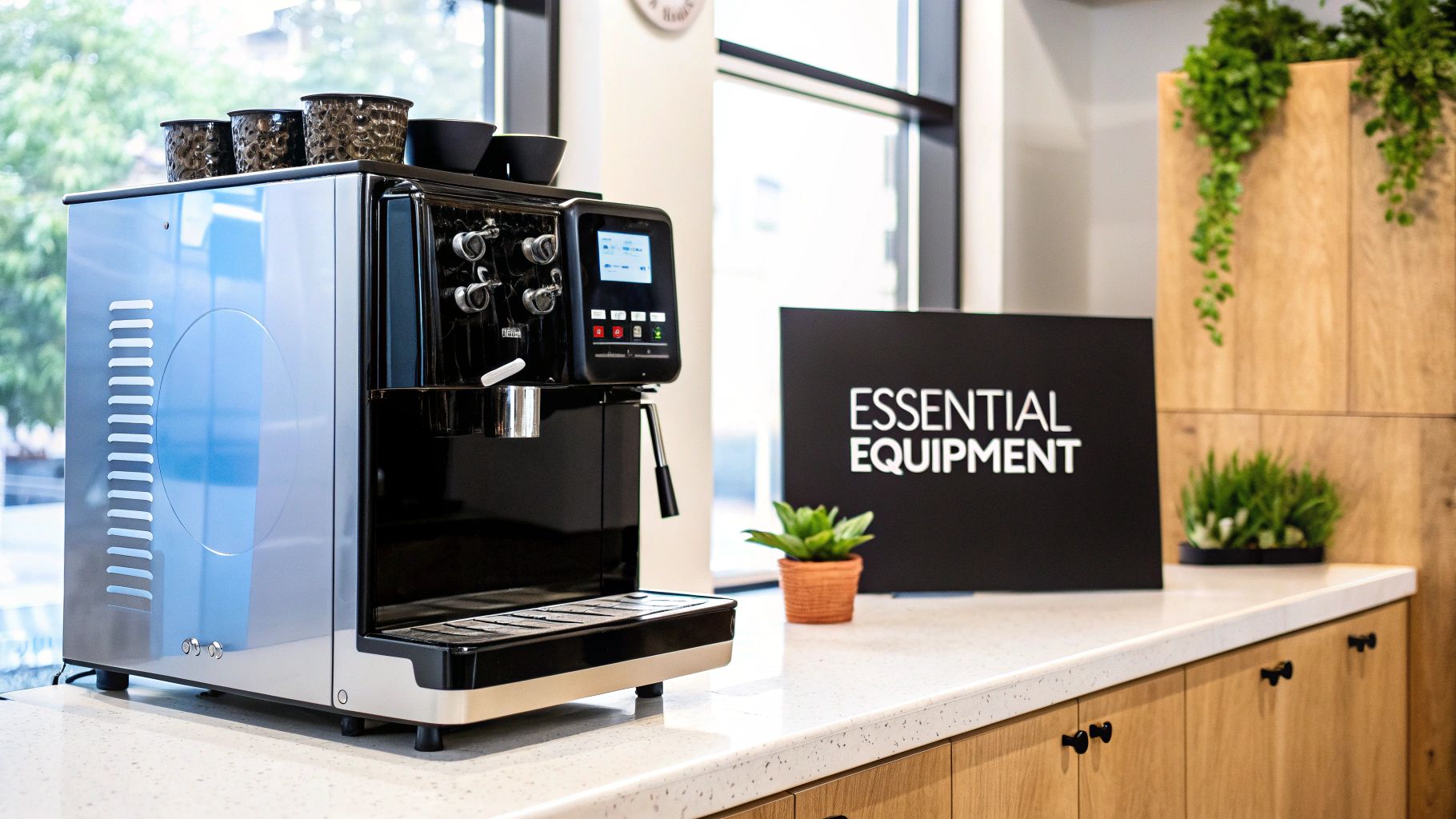
Bringing an ice cream shop to life takes more than just a killer recipe—it demands a smart plan for getting all the right supplies. Think of it like building a house: you have to pour a solid foundation long before you start picking out paint colors. In this business, your equipment and supplies are that foundation. Without the right tools, even the most amazing ice cream recipe won't ever reach its full potential.
This guide is your blueprint. We'll break down all the essentials into easy-to-digest categories, going way beyond a simple shopping list to explore how each piece of the puzzle contributes to your shop's success. The goal here is to help you strike that perfect balance between quality, budget, and function, so you're ready to rock from day one.
Understanding the Market Opportunity
Jumping into the ice cream business is a genuinely exciting move, especially when you look at how much the industry is growing. The global ice cream market is expected to balloon by about USD 31.7 billion between 2025 and 2029, which works out to a compound annual growth rate of roughly 6.1%. That kind of growth points to a real and rising demand for frozen treats, making this a great time to get in the game with a well-outfitted shop. You can discover more insights about these market trends and growth projections.
"A well-equipped shop is the difference between keeping up with demand and falling behind. Your initial investment in quality supplies directly impacts your efficiency, product consistency, and ultimately, your profitability during peak hours."
This checklist is designed to give you clarity and a clear path forward, helping you make decisions you can feel good about. We're going to cover:
- Foundational Heavy Equipment: The big machines that will produce and store your ice cream.
- Front-of-House Items: The tools for creating a fantastic customer experience.
- Back-of-House Smallwares: The nitty-gritty essentials for efficient prep and sanitation.
- Consumables and Ingredients: The recurring purchases that will define your menu.
Let's dive into the core components that will help you build a thriving business.
Investing in Your Heavy Equipment Foundation
Stepping into the world of heavy equipment is where your dream for an ice cream shop really starts to take shape. This is easily the biggest financial commitment you'll make, but it's also the very foundation of your entire operation.
Think of these machines as the heart and lungs of your business—without them, you simply can't churn out the high-quality, delicious ice cream your customers will be lining up for. Making smart choices here isn't just about buying shiny new gear; it's a strategic move that will directly impact your efficiency, product consistency, and bottom line for years to come.
Comparing Essential Heavy Equipment Costs and Functions
When you start budgeting for the big-ticket items, it helps to see everything laid out. This table breaks down the core machines you'll need, what they do, how much you can expect to spend on new models, and what to think about before you pull the trigger on a purchase.
| Equipment Type | Primary Function | Estimated New Cost Range | Key Purchase Consideration |
|---|---|---|---|
| Batch Freezer | Churns and freezes ice cream base into a smooth, finished product. | $12,000 – $30,000 | Your production capacity. Match the machine's output (in quarts or liters) to your projected daily sales volume. |
| Pasteurizer | Heats and rapidly cools your ice cream base to kill bacteria and improve texture. | $10,000 – $25,000 | A must-have for food safety and a premium texture if you're making your base from scratch with raw ingredients. |
| Blast Chiller | Rapidly freezes freshly churned ice cream to harden it and prevent ice crystal growth. | $4,000 – $15,000 | Crucial for locking in that perfect, just-churned texture. Speed is key to a superior final product. |
| Dipping Cabinet | Displays and holds ice cream at the ideal scooping temperature for serving. | $2,500 – $10,000 | This is your main sales tool. Prioritize good lighting, visibility, and frost shields to make your flavors irresistible. |
| Walk-In Freezer | Provides bulk, long-term storage for tubs of ice cream and other frozen ingredients. | $5,000 – $20,000+ | Essential for holding back stock. Size it based on your ingredient delivery schedule and production volume. |
| Soft-Serve Machine | Dispenses soft-serve ice cream or frozen yogurt on demand. | $5,000 – $20,000 | Consider a twin-twist model to offer two flavors plus a swirl, which can significantly boost sales. |
Each of these machines plays a vital role. Choosing wisely means balancing your budget with the demands of your menu and the volume you expect to serve. This is where you lay the groundwork for a smooth-running and profitable shop.
Production: The Art and Science of Making Ice Cream
Creating exceptional ice cream from scratch is a beautiful blend of art and science. The right machinery handles the science for you, ensuring you can replicate that perfect, creamy texture batch after batch. This lets you focus on the fun part—the art of crafting amazing flavors.
The absolute workhorse of your production line is the batch freezer. This isn't just a freezer; it's a specialized machine that simultaneously freezes and churns your ice cream base. This constant motion is what prevents large, gritty ice crystals from forming, giving you that smooth, premium mouthfeel everyone loves. The capacity you choose—measured in quarts or liters—should directly line up with your projected sales.
If you're making your base from scratch (which I highly recommend for quality), a pasteurizer is non-negotiable for food safety. This machine gently heats your mix of milk, cream, and sugar to a specific temperature to eliminate harmful bacteria before rapidly cooling it down. This process not only makes your product safe but also helps the fats emulsify, leading to a richer, more stable final product.
The final step in production is the blast chiller or hardening cabinet. After coming out of the batch freezer, your ice cream is still pretty soft. A blast chiller "shocks" it by rapidly dropping the temperature, freezing it solid in a fraction of the time a regular freezer would. That speed is crucial for keeping ice crystals tiny and locking in that perfect, just-churned texture.
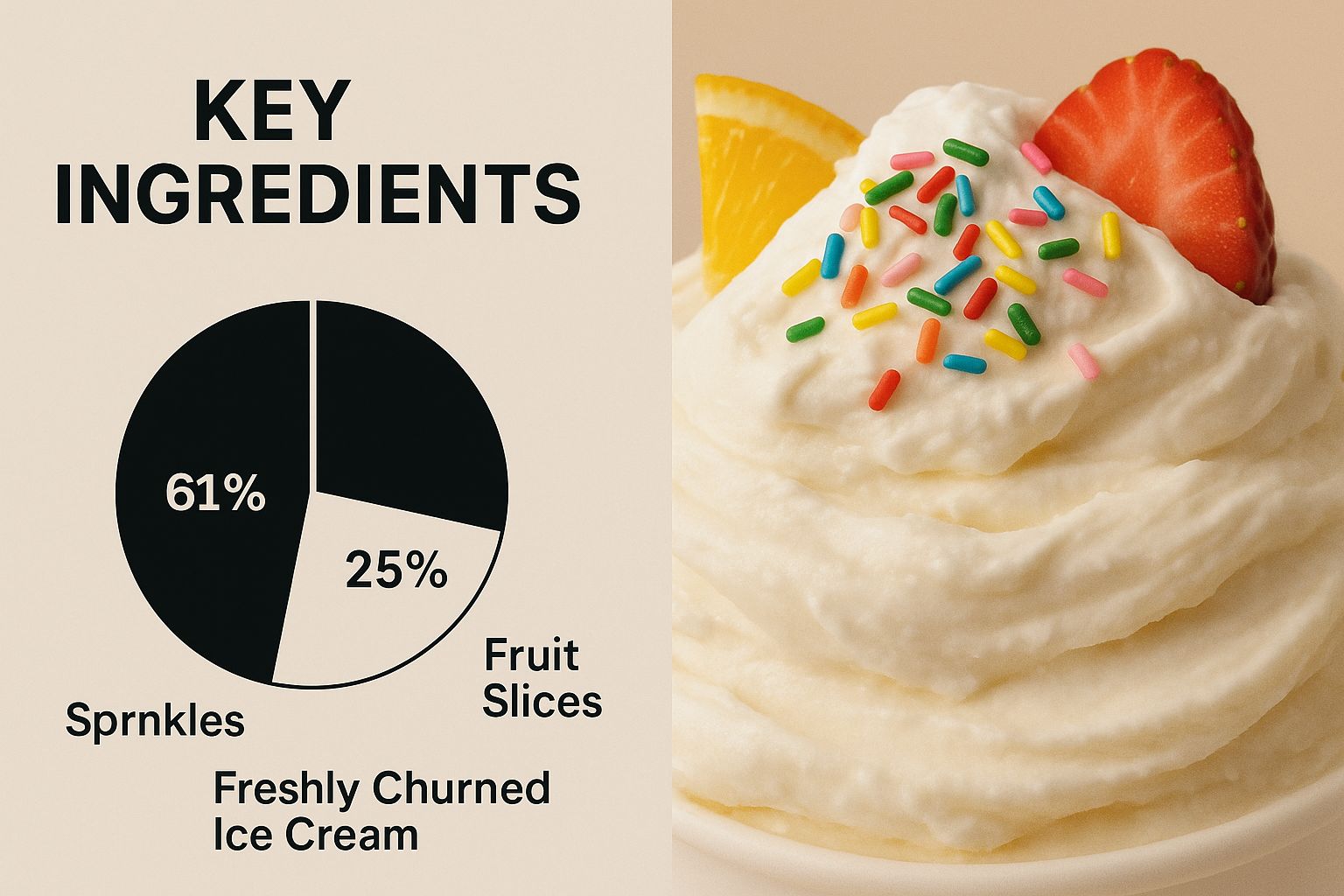
As you can see, the quality of your machinery directly impacts how well these fresh, simple ingredients are transformed into an unforgettable scoop.
Serving: Displaying and Delivering Your Creations
Once your ice cream is perfected, you need the right setup to store it, show it off, and serve it up. This is the customer-facing side of your machinery, where presentation and speed are everything.
The centerpiece of your front-of-house is the dipping cabinet. This is so much more than a freezer; it’s engineered to hold your ice cream at the ideal scooping temperature—cold enough to stay firm, but not so frozen that it’s a workout to serve. Look for models with great visibility and frost shields to keep your product looking vibrant and delicious.
Planning to offer the swirly stuff? A dedicated soft-serve machine is a must. These units freeze the product to a warmer, softer consistency and dispense it on demand. You can go for a single-flavor model or a twin-twist, which lets you offer two separate flavors plus a combination swirl.
A reliable dipping cabinet isn't just for storage; it's your primary sales tool. It's the first thing customers see, and a well-lit, clean display of vibrant ice cream flavors can significantly drive impulse purchases.
A few other key pieces for serving include:
- Milkshake Spindles: Absolutely essential for whipping up classic milkshakes and malts. They quickly blend ice cream with milk and flavorings into a smooth, drinkable treat.
- Walk-In Freezer: You'll need a walk-in for bulk storage to hold your back stock of ice cream tubs, ingredients, and other frozen goods.
- Commercial Ice Machine: It’s easy to forget, but even an ice cream shop needs a steady source of ice for drinks. You can explore options for commercial ice machines to find one that fits your needs.
New vs. Used Equipment: A Strategic Decision
One of the biggest questions you'll face is whether to buy your equipment new or used. Honestly, there are solid arguments for both paths. New equipment comes with a manufacturer's warranty, the latest tech, and the peace of mind that it's in perfect working order. Of course, it requires a much higher upfront investment.
On the other hand, used equipment can save you a massive 40-70% on initial costs, freeing up capital for other parts of your business. The trade-off is the risk of inheriting someone else's maintenance problems and the lack of a warranty. If you go this route, always buy from a reputable restaurant supply dealer who has inspected and refurbished the gear. Never buy a complex machine like a batch freezer "as-is" without getting a professional assessment first.
Crafting the Perfect Customer Experience
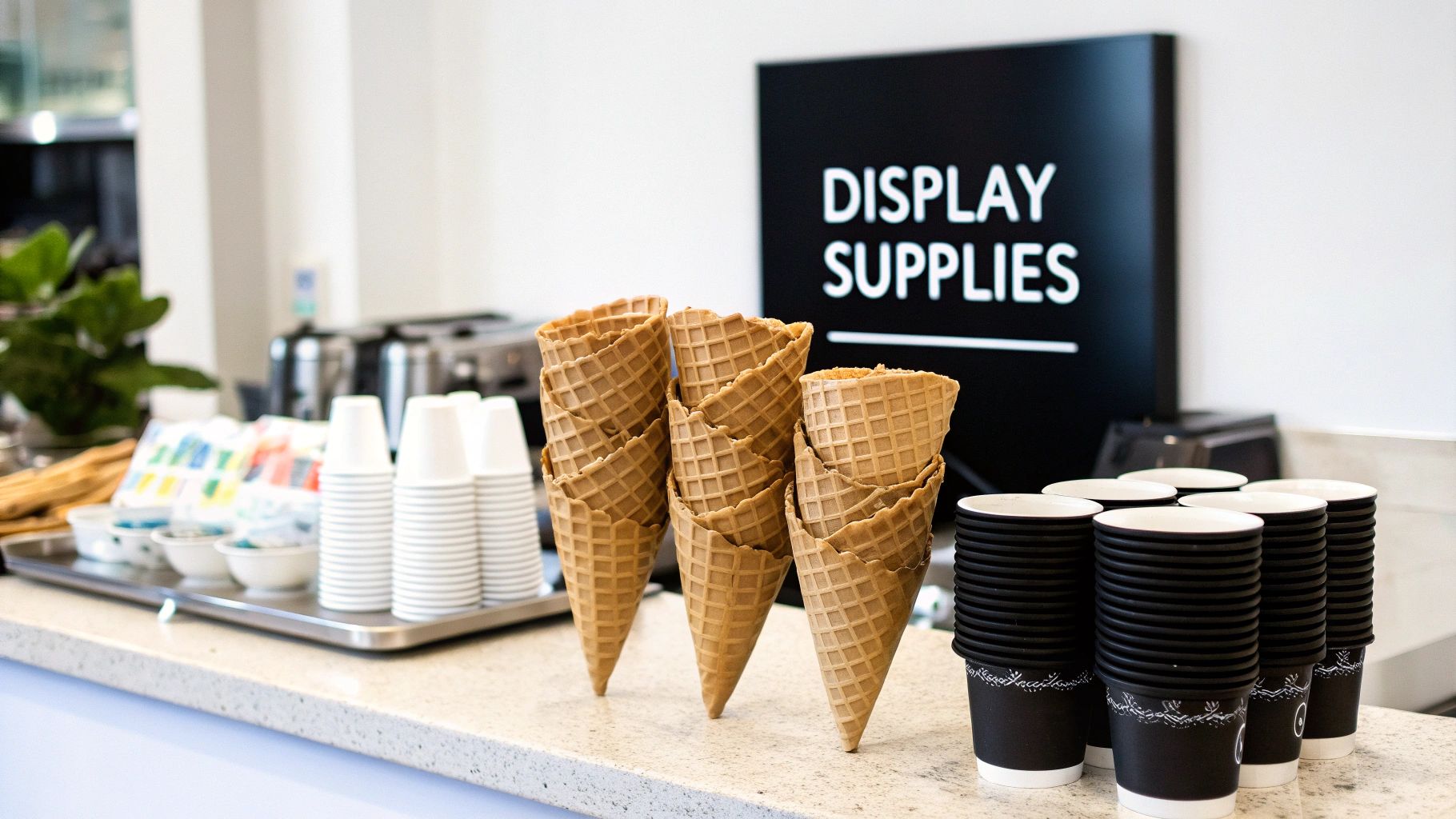
While the back of your shop is where the ice cream gets made, the front of the house is where the magic really happens for your customers. This is where your delicious creations meet an eager public, and having the right supplies for an ice cream shop makes all the difference in turning a simple transaction into a memorable experience.
Think of your front-of-house setup as the entire customer journey, from the moment they walk in to their last satisfying bite. Every little detail matters. A clunky ordering process, a messy topping bar, or a hard-to-read menu can create friction. A smooth, efficient system, on the other hand, creates happy regulars who can't wait to come back.
The Modern Point of Sale System
The days of a simple cash drawer are long gone. Today’s Point of Sale (POS) system is the digital heart of your entire operation, and it does a lot more than just take money. A modern, cloud-based POS is a powerful tool that helps you run a smarter business.
When you're shopping for a POS, look for features that go beyond the basic transaction:
- Inventory Tracking: The best systems can track every scoop and every sprinkle sold, giving you real-time data on what's flying out the door and when you need to reorder.
- Customer Relationship Management (CRM): Many platforms have built-in loyalty programs, making it easy to reward your regulars with points or special deals.
- Sales Analytics: Get your hands on detailed reports showing your peak hours, best-selling flavors, and average sale amount. This is how you make smarter decisions.
- Employee Management: Track staff hours and see who your top performers are, which simplifies scheduling and payroll.
This kind of data is gold. Knowing that your salted caramel outsells vanilla three-to-one on Saturdays helps you prep accordingly so you never have to disappoint a customer.
Building an Efficient Serving and Topping Station
Once an order is in, it's all about speed and accuracy. A well-organized serving station is your team's best friend during a summer rush. You want to create an intuitive, ergonomic flow that cuts down on wasted movement and gets those cones out fast.
Start with the essentials that keep the line moving. Key items include:
- Cone Holders and Dispensers: These keep all your cone types—waffle, sugar, cake—neatly organized, safe from breakage, and ready to go.
- Topping Dispensers and Pumps: For sauces like hot fudge or caramel, metered pumps give you consistent portions every time. For dry toppings like nuts and sprinkles, clear dispensers with easy-pull levers keep things tidy and tempting.
- Dipper Wells: A dipper well with a continuous flow of water is essential for rinsing scoops between flavors. This prevents cross-contamination and makes sure every customer gets the pure, clean taste they're expecting.
A thoughtfully designed topping station isn't just about looking good—it's a core component of your operational efficiency. During your busiest hours, an organized station can reduce order times by 15-20%, improving throughput and customer satisfaction.
The goal is a setup where everything an employee needs is within arm's reach. This ergonomic design isn't just less stressful for your team; it directly translates to a faster, better experience for the person on the other side of the counter.
Setting the Scene with Menus and Signage
Finally, think about how you're communicating with customers before they even get to the counter. Your menu board is one of the most important supplies for an ice cream shop you'll buy—it's both a sales tool and a huge part of your brand's personality. It has to be clear, easy to read, and visually appealing.
Whether you go with a classic chalkboard, a sleek digital display, or a professionally printed menu, make sure it’s organized logically. Group your flavors, list all the toppings clearly, and make your specials or signature sundaes pop. Good signage helps customers decide quickly, which is crucial for keeping a long line moving.
In a market projected to hit nearly USD 136.03 billion by 2032, standing out with a clear brand and speedy service is everything. You can learn more about this growing market in this detailed industry report.
Equipping Your Back of House for Efficiency
If the front of the house is the stage, then the back of the house is the engine room. This is where the magic really happens—where consistency, efficiency, and safety are everything. Stocking this space with the right smallwares and tools is a huge part of gathering the right supplies for an ice cream shop. These items are the workhorses that let your team nail recipes every time and keep the workspace spotless and organized.
Think of your BOH tools like a chef’s knife set. Sure, you could probably get by with just one, but having the right tool for each specific job makes the whole process faster, safer, and produces a much better result. From mixing bowls to thermometers, every single piece plays a vital role in turning your raw ingredients into those perfect scoops.
Precision Tools for Recipe Consistency
Making the exact same delicious salted caramel ice cream day in and day out isn’t magic—it’s science. Recipe consistency is what builds trust with your customers, and it all comes down to precise measurements. This is where your investment in quality measuring tools pays for itself almost immediately.
The most important tool here is a commercial digital scale. For professional results, measuring ingredients like sugar, cocoa powder, and stabilizers by weight instead of volume is non-negotiable. It gets rid of the guesswork between a loosely packed cup and a densely packed one, guaranteeing your ice cream base is perfect every single time.
Beyond the scale, a few other precision instruments are essential:
- Food Thermometers: Absolutely crucial for pasteurizing your base. A reliable, quick-read digital thermometer ensures you hit the exact temperatures needed for food safety without scorching your mix.
- Measuring Cups and Spoons: You'll still need a full set of sturdy stainless steel measuring cups and spoons for smaller additions like vanilla extract and spices.
- Timers: Digital timers are a lifesaver, helping your team juggle multiple tasks at once—from steeping flavor infusions to keeping an eye on the churn time in the batch freezer.
These tools are your quality control. They're the guarantee that the flavor a customer falls in love with on Monday is the exact same one they get on Friday. If your shop also serves coffee, versatile equipment like an Aeropress coffee brewer can also add to your back-of-house efficiency.
Workhorse Utensils for Daily Prep
Alongside your precision tools, you need a solid collection of everyday utensils built to handle the demands of a commercial kitchen. These are the items your team will be reaching for constantly throughout the day for mixing, scraping, and prepping.
Commercial-grade stainless steel mixing bowls in various sizes are a must-have. They’re durable, won’t hold onto odors or stains, and can be chilled quickly to help keep your ice cream base cold while you work. Pair these with heavy-duty whisks for emulsifying ingredients and flexible, heat-resistant silicone spatulas for scraping every last drop from pots and freezer bowls.
Investing in high-quality smallwares is not an area to cut corners. A cheap spatula that melts or a whisk that rusts can compromise a whole batch of product, costing you far more in the long run than the initial savings.
Keeping track of these smaller but vital items is a key part of daily operations. For a deeper dive into controlling your stock, our guide on choosing a restaurant inventory management system provides excellent strategies for tracking everything from spatulas to sprinkles.
Scoops, Spades, and Allergen Management
The humble ice cream scoop is one of the most important tools in your entire shop. The right one not only creates a beautiful, rounded portion but also plays a role in your speed and safety. There are a few different types to consider:
- Trigger Scoops: These are the classic scoops that use a spring-loaded lever to release the ice cream. They're fantastic for portion control.
- Heat-Conductive Scoops: Filled with a special fluid that transfers heat from your hand, these scoops glide through hard-packed ice cream with ease, which really helps reduce wrist strain.
- Spades: These flat, paddle-like spades are perfect for folding in mix-ins and are often used in shops that mix custom flavors on a frozen slab.
A critical point here is allergen management. Using a color-coded scoop system is a simple yet incredibly effective way to prevent cross-contamination. For example, you could have a designated purple scoop that is only used for dairy-free or nut-free flavors. This gives a clear visual cue to employees and huge peace of mind for customers with severe allergies. This isn't just good service; it's a vital safety practice.
Sanitation: The Non-Negotiable Foundation
Finally, your back of house must be built on a foundation of impeccable sanitation. The right supplies aren't just an expense; they're a crucial investment in protecting your customers and your reputation.
The centerpiece of your cleaning operation is a 3-compartment sink, which is a legal requirement in most places for properly washing, rinsing, and sanitizing your dishes. You'll also need commercial-grade, food-safe sanitizing solutions, dedicated handwashing stations, and clearly labeled spray bottles. Stock up on color-coded cutting boards—one for fruit, another for allergens like nuts—to prevent dangerous cross-contact. These supplies are the silent heroes that ensure your shop is a safe, clean, and trustworthy place to enjoy a treat.
Keeping Your Shelves Stocked: Ingredients and Disposables
Beyond the big-ticket machines, your daily operations live and die by the constant flow of ingredients and consumables. These are the supplies you'll be ordering over and over again. Getting this part right is the key to consistent quality, keeping your costs in check, and making sure customers leave happy and come back for more.
Think of it like running the pantry for a world-class chef. You need a steady stream of the basics, but also those special, high-quality items that make your ice cream yours. We'll break this down into two key areas: the disposables that carry your creations out the door, and the core ingredients that define every single scoop.
The Unsung Heroes: Essential Disposables
Disposables might not seem glamorous, but they're the unsung heroes of the customer experience. After all, they’re the first thing a customer touches after you hand over their order. The right cups, spoons, and containers don't just serve a purpose—they also say something about your brand.
Here’s a quick rundown of the must-have disposable supplies for any ice cream shop:
- Ice Cream Cups and Lids: You'll want a few different sizes (small, medium, large) to hit different price points. Lids are a non-negotiable for takeout orders; nobody likes a soupy, spilled mess in their car.
- A Variety of Cones: Waffle, sugar, and classic cake cones are the holy trinity. Offering options caters to every preference, from the simple crisp of a cake cone to the sweet, crunchy waffle cone experience.
- Spoons and Tasting Spoons: Sturdy spoons are a must. But don't sleep on the small tasting spoons—they're a fantastic tool for upselling, letting a curious customer try a new flavor before they commit to a full scoop.
- Napkins and Dispensers: Ice cream can get messy. This one’s a no-brainer. Keep dispensers stocked and easy for customers to find.
- Takeout Containers: For those pint and quart sales, you’ll need insulated paper or plastic containers that can keep the ice cream frozen on the journey home.
When you're choosing these items, think about the materials. While standard paper and plastic are easy on the wallet, offering compostable or biodegradable alternatives can be a huge selling point for environmentally-minded customers. It’s a small detail that says a lot about your shop's values.
Sourcing Ingredients That Make People Say "Wow"
This is where your reputation is made. The quality of your ingredients is directly tied to the quality of your ice cream, period. It can be tempting to shave a few bucks off the basics, but trust me, customers can taste the difference between real vanilla bean and imitation extract, or between fresh local berries and a frozen puree.
Your ingredient list really falls into two camps: the base and the fun stuff.
- Core Components: This is your dairy base (milk and cream), sweeteners (like cane sugar, corn syrup, or honey), and the stabilizers and emulsifiers that are crucial for creating that perfectly smooth, creamy texture and preventing ice crystals.
- Flavorings and Inclusions: This is where you get to play. We're talking high-quality cocoa powder, vanilla extract, fruit purees, nuts, cookie dough chunks, brownie bites, and swirls of caramel or fudge.
"The link between ingredient sourcing and final product quality is absolute. A shop that invests in premium, traceable ingredients isn't just selling ice cream; they are selling a story of quality and care that customers are willing to pay more for."
Getting a handle on the supply chain for these items requires some planning. Price swings are a real challenge in this industry. For example, between 2018 and 2025, the price of key materials like sugar shot up by around 67.1%, while cocoa prices surged. These fluctuations mean building relationships with a few different reliable suppliers is a smart move to protect your profit margins. You can explore more about these industry trends to get a better feel for the market.
Finding Suppliers and Managing Your Stock
Finding the right suppliers is like building a great team—you need partners you can count on for consistency, quality, and fair pricing. A great place to start is looking for local dairy farms or fruit producers. This lets you create a unique "farm-to-cone" story that customers love. For your dry goods and specialty items, look for wholesale distributors with a solid reputation in the food service world.
Always, always ask for samples before you place a big order. Test their chocolate, taste their vanilla, and see how their caramel holds up once it's frozen. Don't be shy about negotiating prices based on how much you plan to order. Building a good long-term relationship can lead to better deals and more reliable service when you're in a pinch.
Finally, smart inventory management is what ties it all together. You have to prevent waste and spoilage. Use the First-In, First-Out (FIFO) method—that just means you use your older stock before cracking open the new stuff. Keep a close eye on your sales data to get a feel for which flavors are selling, so you’re not left with tubs of an unpopular special at the end of the week. This careful balance ensures every scoop you serve is fresh, delicious, and profitable.
Building Your Smart Supply Strategy
Moving from a simple shopping list to a real, strategic plan is what separates the thriving ice cream shops from the ones that are constantly struggling. The goal isn’t just to tick boxes and acquire the right supplies for an ice cream shop; it’s about building a solid system that supports your business from day one and can adapt as you grow.
This all comes down to creating a realistic budget that covers both the big-ticket items you need to open and the everyday expenses that will pop up month after month.
Think of your supply strategy as a three-legged stool: budgeting, sourcing, and storage. A smart budget stops you from overspending before you even open your doors, while smart sourcing gets you quality goods at a fair price. Finally, a dialed-in storage plan protects those investments by keeping spoilage and waste to an absolute minimum.
From Checklist to Action Plan
Your journey starts by figuring out what to buy first based on your specific business model. A shop making its own ice cream from scratch is going to invest heavily in things like batch freezers and pasteurizers right away. On the other hand, a location serving pre-made tubs can put more of that initial cash into beautiful front-of-house displays and a top-notch POS system.
A smart supply strategy is a living document, not a one-time checklist. It should be reviewed quarterly to adapt to sales trends, supplier price changes, and new opportunities, ensuring your shop remains agile and profitable.
Finding reliable suppliers is the next make-or-break step. You’ll want a mix of national distributors for your bulk staples and maybe some local farms for those unique, seasonal ingredients that can become your signature flavors. Building strong relationships here is everything. For a deeper dive, learning the fundamentals of the restaurant supply chain will show you just how critical these partnerships are to your success.
Finally, you need to map out your storage. You need a crystal-clear system for organizing dry goods, refrigerated ingredients, and of course, your valuable frozen products. Getting this right minimizes waste, makes prep way faster, and ensures you have exactly what you need when that inevitable evening rush hits. This guide gives you the blueprint—now it's time to build your dream shop, fully equipped for a killer launch and long-term growth.
Frequently Asked Questions
Jumping into the world of ice cream shop ownership is exciting, but it definitely brings up a lot of questions—especially when you're trying to figure out what you actually need to buy. We get it. Here are some of the most common questions we hear from aspiring shop owners about getting the right supplies.
How Much Should I Budget for Initial Supplies?
This is the big one, right? While the number can swing quite a bit, a good ballpark for a small to mid-sized shop is anywhere from $25,000 to $75,000 for all your equipment and initial stock. The final figure really depends on your shop’s size and whether you decide to buy new or used gear.
The lion's share of that budget—often 50-60%—is going to be eaten up by the heavy hitters like your batch freezer and dipping cabinets. The rest will cover your front-of-house essentials, back-of-house smallwares, and that first big order of ingredients and disposables to get you rolling.
Should I Buy New or Used Equipment?
This is a classic dilemma, and it's all about balancing upfront cost with long-term peace of mind. Buying new gets you a warranty, the latest tech, and the comfort of knowing you're the first one to use it. But that peace of mind comes with a much bigger price tag.
On the other hand, opting for used equipment can slash your initial machinery costs by a massive 40-70%. That’s a huge chunk of cash you can free up for marketing or just to have as a safety net. The trade-off? You're taking on the risk of higher maintenance costs down the road and you won't have a warranty to fall back on.
If you go the used route, make sure you're buying from a reputable dealer who inspects and refurbishes their equipment. Try to avoid "as-is" private sales for your core machinery unless you can have a professional technician give it a thorough once-over first.
What Are the Absolute Must-Have Supplies for a Small Startup?
If you’re launching on a shoestring budget, keep it simple. Focus on the core items that let you make and sell your ice cream. You can always add the fancy stuff later as you grow.
- A Solid Batch Freezer: This is the heart and soul of your operation. Don't skimp here.
- A Quality Dipping Cabinet: This is your main sales tool and display case, all in one.
- A Basic POS System: You need a way to take money and track sales from day one.
- Essential Smallwares: This means scoops, mixing bowls, a digital scale, and your sanitizing supplies.
- Initial Inventory: Get enough cups, cones, spoons, and key ingredients to carry you through the first few weeks.
How Do I Find and Vet Quality Suppliers?
Start your search by looking at both local and national distributors. For things like dairy and fresh fruit, local suppliers can be amazing—they often offer better freshness and give you a great story to tell your customers. For dry goods and disposables, the big wholesale distributors usually have better pricing on bulk orders.
Before you commit to a big order, always ask for samples so you can test the quality yourself. Do a little homework, too. Check references and read online reviews from other shop owners to see what they say about a supplier's reliability and customer service. Building a few strong, trusted relationships with your suppliers is one of the keys to making your life easier in the long run.
At The Restaurant Warehouse, we know that outfitting your dream shop is a massive step. We offer a huge selection of new and used equipment at unbeatable prices, plus flexible financing to help you get started on the right foot. Explore our full catalog and find everything you need at The Restaurant Warehouse.
About The Author

Sean Kearney
Sean Kearney is the Founder of The Restaurant Warehouse, with 15 years of experience in the restaurant equipment industry and more than 30 years in ecommerce, beginning with Amazon.com. As an equipment distributor and supplier, Sean helps restaurant owners make confident purchasing decisions through clear pricing, practical guidance, and a more transparent online buying experience.
Connect with Sean on LinkedIn, Instagram, YouTube, or Facebook.