

Unveiling the Power of Planetary Mixers: From 10-Quart to Commercial Giants
Why Planetary Dough Mixers Are Essential for Modern Kitchens
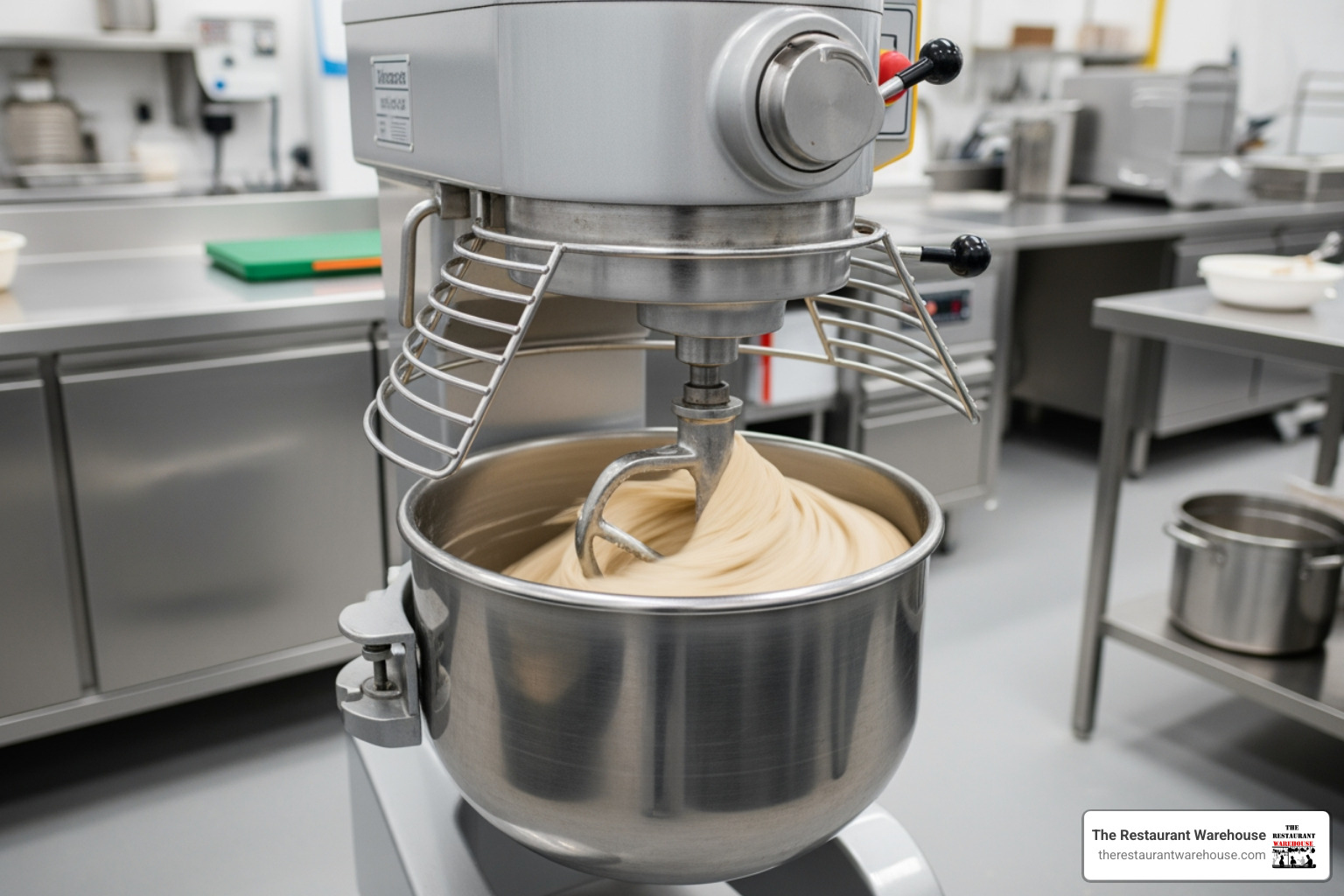
A planetary dough mixer is a versatile mixing machine where the mixing attachment rotates on its own axis while simultaneously orbiting around a stationary bowl—mimicking the way planets orbit the sun. This dual action delivers consistent, thorough results across a wide range of recipes.
What single piece of machinery can whip potatoes, mix dough, make batter, slice vegetables, shred cabbage, grate cheese, and grind meat? With the right attachments, a planetary mixer can handle all these tasks at high volume and high speed, making it one of the most versatile tools in any food operation.
Planetary mixers are currently among the most popular mixers on the market, and for good reason. They offer plenty of options for operators who need to prepare different kinds of foods at high volume—from mixing salad dressing in a 5-quart model to kneading pizza dough in an 80-quart powerhouse.
The name "planetary" comes from how the mixer works: the beaters revolve around the center of the bowl like planets around the sun while the bowl stays put. This unique motion ensures consistent mixing with no unmixed pockets, whether you're working with stiff bread dough or light meringue.
Key Advantages of Planetary Dough Mixers
- Versatility: Can mix dough, whip cream, beat batter, and even grind meat with compatible attachments.
- Capacity Range: Available from compact countertop models to high-capacity floor units.
- Popularity: Widely used across bakeries, pizzerias, schools, and institutional food programs.
- Speed Options: Typically offers multiple speeds for different mixing tasks.
- All-in-One Potential: Handles numerous tasks with interchangeable attachments and optional accessory hubs.
For budget-conscious restaurant owners and startup restaurateurs, understanding planetary mixers means making a smart investment in productivity and consistency. These machines range from affordable 12-quart models perfect for small bakeries to industrial units built for high-volume dough production—and knowing which features matter helps you avoid overpaying for capacity or power you don't need.
If you want help matching mixer size and features to your menu and volume, contact us to discuss your planetary dough mixer needs and get tailored recommendations before you buy.
Planetary dough mixer vocab to learn:
How a Planetary Mixer Works: The Mechanics of Versatility
At the heart of a planetary dough mixer lies its unique mixing action, an engineering marvel that ensures thorough and consistent results. Unlike other mixer types, the planetary mixer's design is specifically crafted to cover every inch of the bowl, leaving no ingredient untouched. This sophisticated mechanism is why it has earned its reputation as the most versatile mixer in the foodservice industry.
The core principle is simple yet ingenious: the mixing attachment (or agitator) is mounted on an offset shaft. This shaft rotates on its own axis while simultaneously revolving around the inside perimeter of a stationary bowl. This dual motion gives the mixer its "planetary" designation, as the agitator moves like a planet orbiting the sun. This orbital action, combined with the agitator's self-rotation, creates a powerful and comprehensive mixing pattern that ensures all ingredients are fully incorporated.
The drive systems within planetary mixers are engineered for durability. Many high-quality models feature gear-driven transmissions, which are renowned for their strength and ability to deliver high torque, especially when dealing with dense doughs. This contrasts with belt-driven systems, which may not offer the same robust power for heavy-duty tasks. Modern planetary mixers often incorporate electronic controls that allow for customized speed adjustments and protect the motor from overloads, extending the life of your investment.
Beyond the primary mixing function, many planetary mixers come equipped with a Power Take-Off (PTO) hub. This feature is an auxiliary power outlet on the mixer's head, designed to connect specialized attachments. With a PTO hub, your planetary mixer transforms into a multi-functional powerhouse, capable of grinding meat, slicing vegetables, or shredding cheese. This increased functionality significantly boosts productivity and streamlines operations.
The Core Action of a Planetary Dough Mixer
The core action of a planetary dough mixer is defined by its stationary bowl and the unique movement of its agitator. With a stationary bowl, operators can easily add ingredients during the mixing process without stopping the machine. The agitator's dual rotation—spinning on its axis while orbiting the bowl—is key to achieving thorough incorporation. This movement effectively mimics hand-kneading, where dough is continuously folded and stretched. The result is a consistent mix where every ingredient is evenly distributed, with no unmixed pockets left behind.
For doughs, this constant action is vital for gluten development. Gluten provides elasticity and structure to baked goods. The planetary motion encourages the formation of this network, leading to doughs that are smooth, pliable, and capable of producing light breads or chewy pizza crusts. This precise action ensures your dough achieves its optimal texture every time.
The Ultimate Guide to Planetary Mixer Attachments
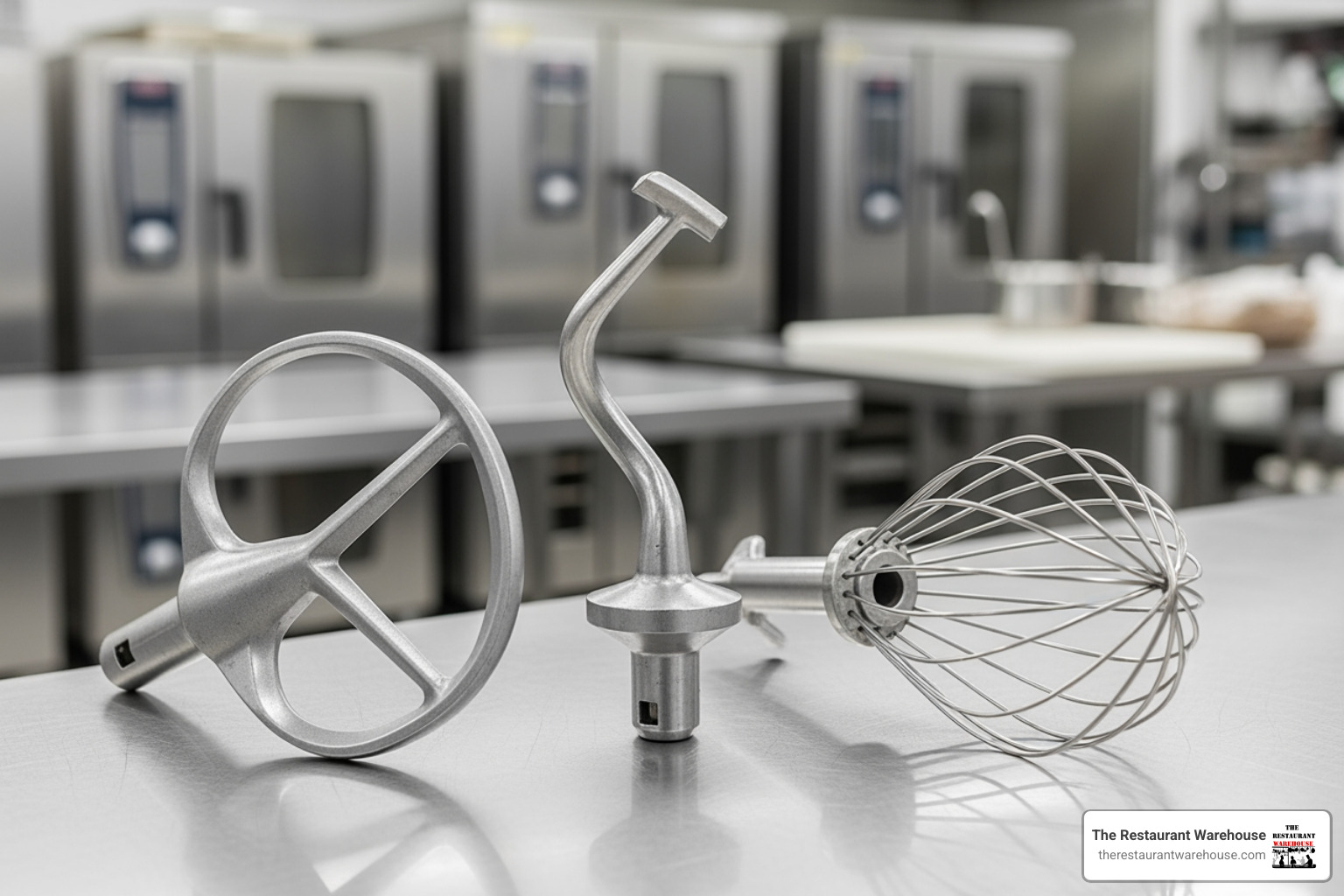
One of the most compelling aspects of a planetary dough mixer is its adaptability, largely due to its range of interchangeable attachments. These tools are designed to tackle different mixing tasks, turning a single machine into a versatile workhorse capable of handling a multitude of preparations. Understanding each attachment's purpose is key to unlocking your mixer's full potential.
Dough Hook
The spiral dough hook is engineered for kneading and is the go-to attachment for any recipe requiring significant gluten development. Its shape allows it to effectively pull, stretch, and fold dough, mimicking the action of hand-kneading. This process develops the gluten structure essential for the elasticity and texture of breads, pizzas, and other yeast-leavened products.
We use the dough hook for:
- Pizza dough: Achieving a balanced chew and crispness.
- Bread dough: From crusty artisan loaves to soft dinner rolls.
- Bagels: Creating their dense, chewy structure.
When using a dough hook, it's crucial to operate the mixer at low speeds. Most manufacturers recommend not exceeding the second speed for dough mixing. Higher speeds can overwork the dough, generate excessive heat, and potentially strain the mixer's motor over time.
Flat Beater (Paddle)
Often called the paddle, the flat beater is the all-purpose workhorse of the planetary mixer. Its broad, flat design is ideal for general mixing tasks where you need to combine ingredients thoroughly without incorporating too much air or developing gluten excessively.
The flat beater excels at:
- Cake batter: Creating smooth, uniform batters.
- Cookie dough: Blending butter, sugar, and flour to the right consistency.
- Frosting: Whipping up creamy, fluffy icings.
- Mashing potatoes: Achieving smooth, lump-free mashed potatoes.
- Creaming butter and sugar: The essential first step for many baking recipes.
Its versatility makes it indispensable for a wide array of recipes, from delicate pastries to hearty side dishes.
Wire Whip (Whisk)
The wire whip, or whisk attachment, is designed for aerationincorporating air into mixtures to create light, fluffy textures. Its numerous thin wires efficiently cut through liquids and batters, introducing air bubbles that expand during baking or chilling.
The wire whip is ideal for:
- Whipping cream: Producing airy, stable whipped cream.
- Meringues: Creating soft or stiff peaks from egg whites.
- Mayonnaise and emulsions: Bringing oil and eggs together into a smooth sauce.
- Light batters: Such as those for pancakes or waffles.
For optimal aeration, the wire whip is typically used at medium to high speeds. This allows the wires to move rapidly through the mixture, maximizing air incorporation.
Accessory Hubs and Specialized Tools
Many planetary dough mixers include an accessory or power hub. With compatible attachments, you can:
- Grind meat for sausages or burgers.
- Slice or shred vegetables for salads and garnishes.
- Grate cheese for pizzas, casseroles, and sauces.
Consolidating these tasks into one machine can simplify workflow and free up counter space.
If you want a deeper dive into how attachments affect performance and which are worth investing in for your menu, explore our guide to commercial mixers and accessories before you finalize your setup.
Choosing Your Perfect Mixer: Capacity, Power, and Features
Selecting the right planetary dough mixer is a critical decision that can impact your kitchen's efficiency and bottom line. It's about investing in a machine that aligns with your production needs and can adapt to future growth. When guiding clients, we emphasize evaluating your current production volume, assessing your available space, and anticipating future expansion.
If you prefer one-on-one guidance, you can book a strategy call with our team to review your menu, batches, and budget and get a custom mixer recommendation.
Sizing and Capacity: From Countertop to Floor Models
Planetary mixers are sized by the volume their bowls can hold, measured in quarts (qt.). This capacity ranges from compact 5-quart countertop models to very large floor units.
- Countertop mixers (typically 5 to 20 quarts): These smaller units are suitable for cafes, small bakeries, or restaurants preparing small-batch recipes like whipped cream, meringues, frosting, or sauces. Their compact footprint makes them ideal for operations with limited space.
- Bench mixers (typically 10 to 25 quarts): Slightly larger than countertop models, these sit on a workbench and offer increased capacity for growing operations.
- Floor mixers (typically 30 quarts and up): These robust, floor-standing machines are the workhorses of high-volume bakeries and pizzerias. For instance, pizzerias often find a 60-quart model to be the sweet spot for handling daily dough demands.
When sizing, consider:
- Your largest single batch of dough, batter, or filling.
- How many batches you produce at peak times.
- Whether you need flexibility to run half-batches without compromising mixing quality.
Understanding Power and Speed Controls
Motor power, measured in horsepower (HP), is a crucial indicator of a planetary dough mixer's capability, especially with stiff doughs. A more powerful motor handles heavier loads without straining, which supports longevity.
Power ratings can range from under 1 HP for smaller models to over 2 HP for larger, heavy-duty units. Match the motor strength to the density and frequency of your dough production:
- Light tasks (whipping, light batters): Lower HP is usually sufficient.
- Frequent dough mixing (bread, pizza, bagels): Look for higher HP and a heavy-duty rating.
Speed control is another vital feature. Planetary mixers generally offer two types:
- Discrete speeds: These mixers have a set number of speeds, often 3 or 4, selected via a switch.
- Variable speed dial: Found on more advanced models, this allows for continuous adjustment across a range of speeds.
Helpful features include:
- Soft start: Gradually brings the mixer up to speed, reducing splashes and mechanical stress.
- Overload protection: Automatically shuts off the mixer if it detects excessive strain, helping protect the motor.
Essential Features for a High-Performing Planetary Dough Mixer
Beyond capacity and power, several key features contribute to performance, durability, and safety:
- Stainless Steel Bowl: Durable, non-reactive, and easy to sanitize.
- Safety Guards and Bowl Interlocks: Prevent operation unless the bowl is secured and the guard is in place.
- Timers: For precise, repeatable mixing. Many 30-quart and larger mixers include timers that shut the mixer off after a set duration.
- Bowl Lifts: On larger floor models, a mechanical or powered bowl lift reduces physical strain when raising and lowering loaded bowls.
- Ingredient Chutes: Allow operators to safely add ingredients while the mixer is running.
Taking the time to evaluate these features up front can save money and downtime later. For a curated overview of mixer options and feature sets, you can browse our commercial mixer collection and compare models side by side.
Planetary vs. Spiral Mixers: Which is Right for Your Dough?
When it comes to mixing dough, the choice between a planetary dough mixer and a spiral mixer is a fundamental one. It comes down to your primary production focus, the desired dough quality, and the balance between versatility and specialization. Both types are excellent, but they excel in different arenas.
How a Planetary Dough Mixer Compares to a Spiral Mixer
| Attribute | Planetary Mixers | Spiral Mixers |
|---|---|---|
| Best Use | Versatile, general-purpose mixing, batters, creams, light to heavy doughs. | Specialized for dough production, especially artisan breads and high-hydration doughs. |
| Mechanism | Agitator rotates on its axis and orbits a stationary bowl. | Spiral hook remains in place while the bowl rotates. |
| Versatility | High; can perform many tasks beyond dough mixing with various attachments. | Lower; primarily designed for dough mixing. |
| Dough Temperature | Can generate more friction and heat. | Typically generates less friction, helping maintain lower dough temperatures. |
| Batch Size Flexibility | Good for varying batch sizes. | Excellent for large, consistent batches of similar doughs. |
| Footprint | Available in both countertop and floor models. | Generally floor-standing models aimed at higher volumes. |
When to Choose a Spiral Mixer
While the planetary dough mixer is a champion of versatility, there are specific scenarios where a spiral mixer is the preferred choice. If your operation is heavily focused on dough productionparticularly for artisan breads, bagels, or high-volume pizzaa spiral mixer can be advantageous.
Spiral mixers are designed to mimic gentle, consistent kneading, which supports robust gluten development without overworking the dough. They often perform especially well with high-hydration doughs, which are common in artisan bread formulas.
A notable advantage of spiral mixers is their tendency to keep dough temperatures lower because of reduced friction. This can be important when you need longer, controlled fermentation times and want to avoid premature yeast activity.
When a Planetary Dough Mixer Makes More Sense
For most operations that produce a mix of doughs, batters, fillings, and whipped products, a planetary dough mixer remains the best all-round choice. You gain:
- Broad menu flexibility.
- The ability to handle dough, but also creams, meringues, and mixes.
- Support for accessory attachments via hubs on many models.
If you’re uncertain which direction to go, gather details on your highest-volume products and preferred batch sizes, then reach out to our team for mixer selection support so you can compare planetary and spiral options in the context of your actual menu.
Maximizing Your Mixer's Performance and Lifespan
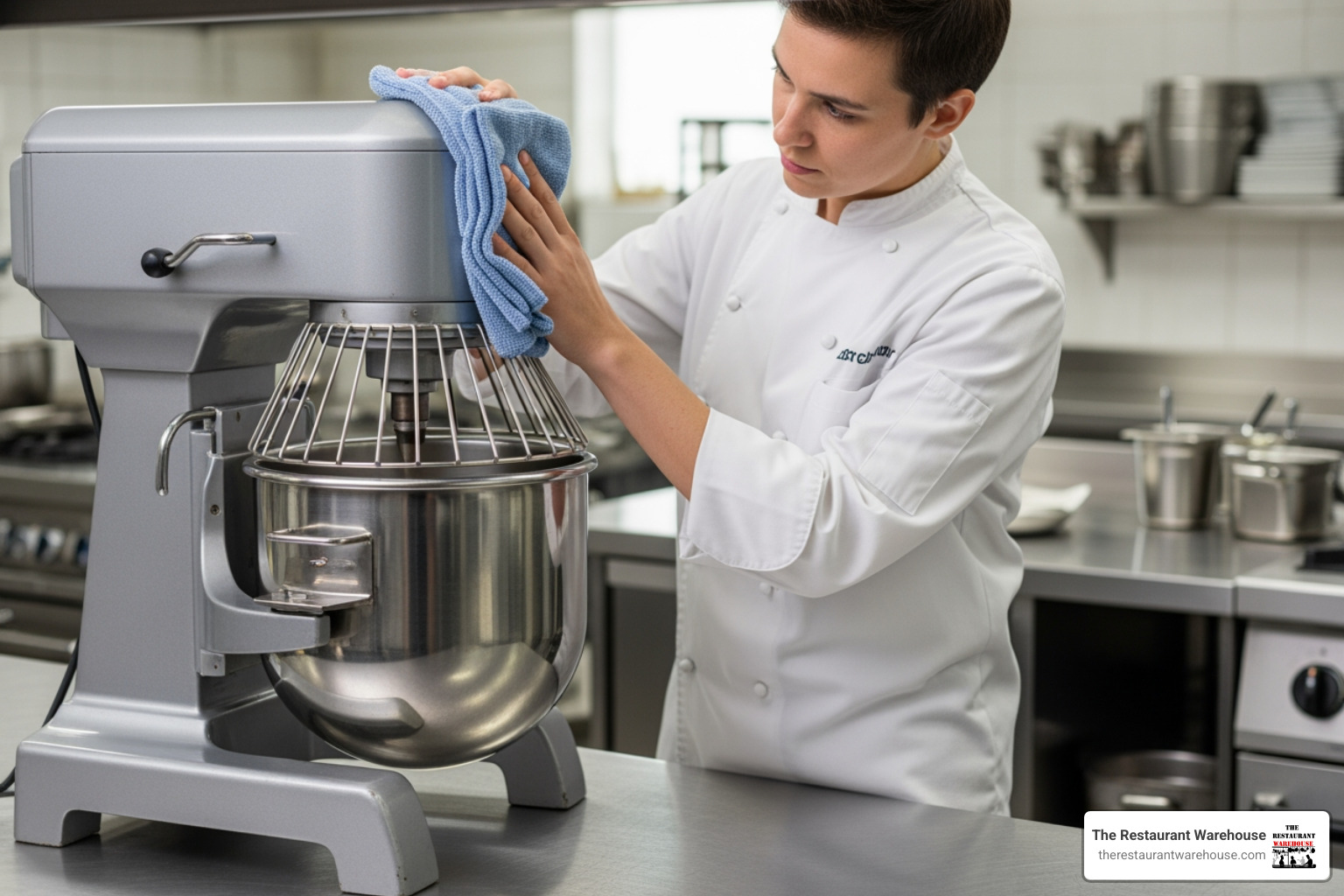
A planetary dough mixer is a significant investment, and its longevity and performance depend heavily on proper use, diligent maintenance, and regular cleaning. By understanding how ingredients affect batch size and adhering to best practices for care, you can help ensure your mixer operates efficiently for years.
The Impact of Ingredients on Batch Size
Understanding the science behind your dough is crucial for maximizing your mixer's performance. The absorption ratio (AR) of a mix—the ratio of the weight of wet ingredients to dry ingredients—plays a significant role in determining how much dough your mixer can handle.
Several factors influence dough stiffness, which in turn dictates the appropriate batch size:
- Flour Protein Content: Higher protein flours tend to create stiffer doughs. If you're using a high-protein flour, consider reducing your batch size to protect the motor.
- Water Temperature: Colder water results in stiffer dough. If your recipe calls for colder water, you might need to reduce your batch size by at least 10 percent.
- Water Percentage: Doughs with a lower water percentage will be much stiffer. For such doughs, consider reducing your batch size by a third or more.
- Mixing Speed Limits: For dough, it's critical to stick to low speeds. Most manufacturers advise against mixing dough in anything higher than the second speed.
Always consult your mixer's capacity chart and adjust batch sizes accordingly. Overloading the mixer is a common cause of motor and gear wear.
Essential Cleaning and Maintenance
Maintaining your planetary dough mixer is straightforward but requires consistency. Proper cleaning and periodic maintenance extend the life of your appliance and support food safety.
- Daily Cleaning: After each use, disassemble the attachments and bowl for thorough cleaning. The bowl and stainless steel attachments can be washed with warm, soapy water. For the mixer body, use a mild detergent and a soft cloth, avoiding abrasive materials.
- Aluminum Attachments: Do not put aluminum attachments in a dishwasher. The detergents and high heat can cause discoloration and pitting. Hand-wash and air-dry these items.
- Lubrication: Periodically, apply a light coating of food-grade mineral oil to the bowl yoke slide and the attachment hub. This helps ensure smooth operation and prevents corrosion.
- Professional Service: While routine cleaning can be done in-house, internal repairs should be handled by factory-trained service personnel.
For additional guidance on safe cleaning and handling practices, resources from the USDA Food Safety and Inspection Service provide neutral, authoritative information you can reference when building your procedures.
If you're ready to standardize your mixing workflow and extend the life of your equipment, contact us today to get help choosing a planetary dough mixer and accessories that match your production, budget, and long-term maintenance plan.
Frequently Asked Questions about Planetary Mixers
We often hear similar questions from our clients about planetary dough mixers. Here are some of the most common inquiries, clarified to help you make informed decisions for your operations.
What are the main advantages of a planetary mixer?
The primary advantage of a planetary dough mixer is its unparalleled versatility. This single machine can perform a vast array of tasks that would otherwise require multiple appliances. With its various attachments, a planetary mixer can efficiently knead dough, whip cream, and beat batter. With the addition of a Power Take-Off (PTO) hub and specialized attachments, it can even grind meat, slice vegetables, or shred cheese. This makes it an all-in-one solution for many foodservice operations, from general-purpose restaurants to specialized bakeries. Its ability to handle diverse tasks at high volume and high speed significantly boosts kitchen productivity and streamlines workflow.
What size planetary mixer do I need?
The ideal size of your planetary dough mixer depends entirely on your specific batch volume, the type of products you'll be making, and your anticipated production needs.
- Small operations (e.g., cafes, small pastry shops): A 5-quart to 20-quart countertop model is usually sufficient for small-batch recipes like sauces, dressings, and light batters.
- Medium operations (e.g., mid-sized bakeries, general restaurants): Mixers in the 20-quart to 40-quart range are popular, offering a good balance of capacity and footprint.
- Large operations (e.g., pizzerias, high-volume bakeries): You'll likely need a floor model ranging from 60-quart to 80-quart, or even larger. Pizzerias often find a 60-quart model ideal for handling large quantities of pizza dough. It's always wise to consider your busiest day's production needs and factor in potential future growth to ensure your investment serves you well.
Can you use a planetary mixer for bread dough?
Absolutely. Planetary dough mixers are commonly used for bread dough, especially in general-purpose kitchens, restaurants, and bakeries that produce a variety of baked goods. With a spiral dough hook attachment, a planetary mixer is highly effective for kneading most types of bread dough, including pizza dough, sandwich bread, and rolls. The unique planetary action ensures thorough mixing and good gluten development, leading to consistent and well-textured bread.
While it's true that spiral mixers are often preferred by artisan bakers for optimal dough development, particularly for very high-hydration doughs, a planetary mixer remains a robust and reliable choice for the vast majority of bread and pizza dough recipes. Its versatility means you can knead dough and then switch attachments to whip cream or mix batter, making it an efficient multi-tasker in any busy kitchen.
Conclusion
The planetary dough mixer remains one of the most effective ways to achieve reliable, repeatable mixing performance across a wide variety of products. Its ingenious mechanics, flexible attachment options, and broad range of capacities make it suitable for everything from small-batch pastry work to high-volume dough production.
By understanding how planetary motion works, selecting the right capacity and motor strength, choosing the appropriate attachments, and following sound maintenance practices, you can unlock the full value of your mixer and support consistent food quality.
Whether you're refining an existing operation or planning a new concept, a well-chosen planetary dough mixer can streamline production, reduce labor time on repetitive tasks, and help maintain the texture and structure your recipes demand.
At The Restaurant Warehouse, we focus on pairing mixers with real-world menu and volume needs so you invest in the right model the first time. To compare options and plan your purchase, explore our selection of commercial mixers or reach out to our team for personalized assistance so you can choose the planetary dough mixer that best supports your culinary goals.
About The Author

Sean Kearney
Sean Kearney is the Founder of The Restaurant Warehouse, with 15 years of experience in the restaurant equipment industry and more than 30 years in ecommerce, beginning with Amazon.com. As an equipment distributor and supplier, Sean helps restaurant owners make confident purchasing decisions through clear pricing, practical guidance, and a more transparent online buying experience.
Connect with Sean on LinkedIn, Instagram, YouTube, or Facebook.