

Score a Deal: Your Guide to Discount Stand Mixers
Why Budget-Friendly Stand Mixers Make Sense for Your Kitchen
Affordable stand mixer options are more accessible than ever, with quality models available across a wide range of prices. You don't need to spend a fortune to get great performance. Here’s a quick guide to what you can expect:
- Under $100: Basic but capable units, often hand/stand mixer combos, are ideal for casual bakers. They typically feature motors around 300W and 4-quart bowls.
- $130-$200: This is the sweet spot for many, offering full-featured models with powerful motors (often 600W+) and large-capacity bowls (6+ quarts) that can handle bread dough and big batches.
- $250-$350: In this range, you'll find entry-level models from premium brands, often featuring excellent build quality and design in a more compact size.
While you could mix batters and knead dough by hand, an electric stand mixer is a game-changer for almost any kitchen. It saves time and physical effort, delivering consistent results for everything from whipped cream to bread dough. For serious home bakers and those who bake in large volumes, it's an essential tool.
The good news is that you don't need to spend $500 to get a quality machine. Today’s affordable stand mixers offer impressive power and features. Testing shows that many budget models can handle a wide variety of tasks, performing comparably to expensive counterparts for most home baking needs.
The reality is simple: a quality stand mixer can be found for under $300, and many solid performers cost even less. The key is understanding which features matter most for your needs and which trade-offs are acceptable. Value isn't about the lowest price—it's about getting the right tool for your specific requirements.
What to Prioritize in an Affordable Stand Mixer
Shopping for an affordable stand mixer can feel overwhelming. The good news is you only need to focus on a few core elements to find a machine that delivers real value. We're looking for that sweet spot where solid performance meets a sensible price—a mixer that makes baking easier, not one that collects dust because it can't handle the job.
Motor Power and Performance
The motor is the heart of a stand mixer. While wattage is a useful starting point, it doesn't tell the whole story. For lighter tasks like whipping cream or mixing cake batters, a motor around 250-300 watts is perfectly adequate. It proves that bigger isn't always better; matching the motor to your needs is what counts.
If you plan to tackle bread dough or thick cookie batters, you'll want something more robust. A motor in the 500-600 watt range provides the muscle for frequent use without strain. This power translates into better torque—the twisting force that keeps attachments moving through dense mixtures. Higher torque prevents the motor from bogging down or overheating when kneading stiff dough.
Beyond power, look for planetary mixing action. This is where the attachment spins on its own axis while orbiting the bowl, ensuring all ingredients are thoroughly incorporated. This feature is standard on quality affordable stand mixers and is something you should expect.
Speed versatility is also important. Look for at least 6-7 speeds. Lower speeds gently add dry ingredients without a floury mess, medium speeds are for general mixing, and high speeds are for whipping. A pulse function adds extra control for delicate tasks. While premium models might have more speeds, six well-calibrated options are sufficient for virtually all home baking.
Bowl Size and Capacity
Your mixer's bowl capacity determines how much you can make in one go, so consider your typical baking habits.
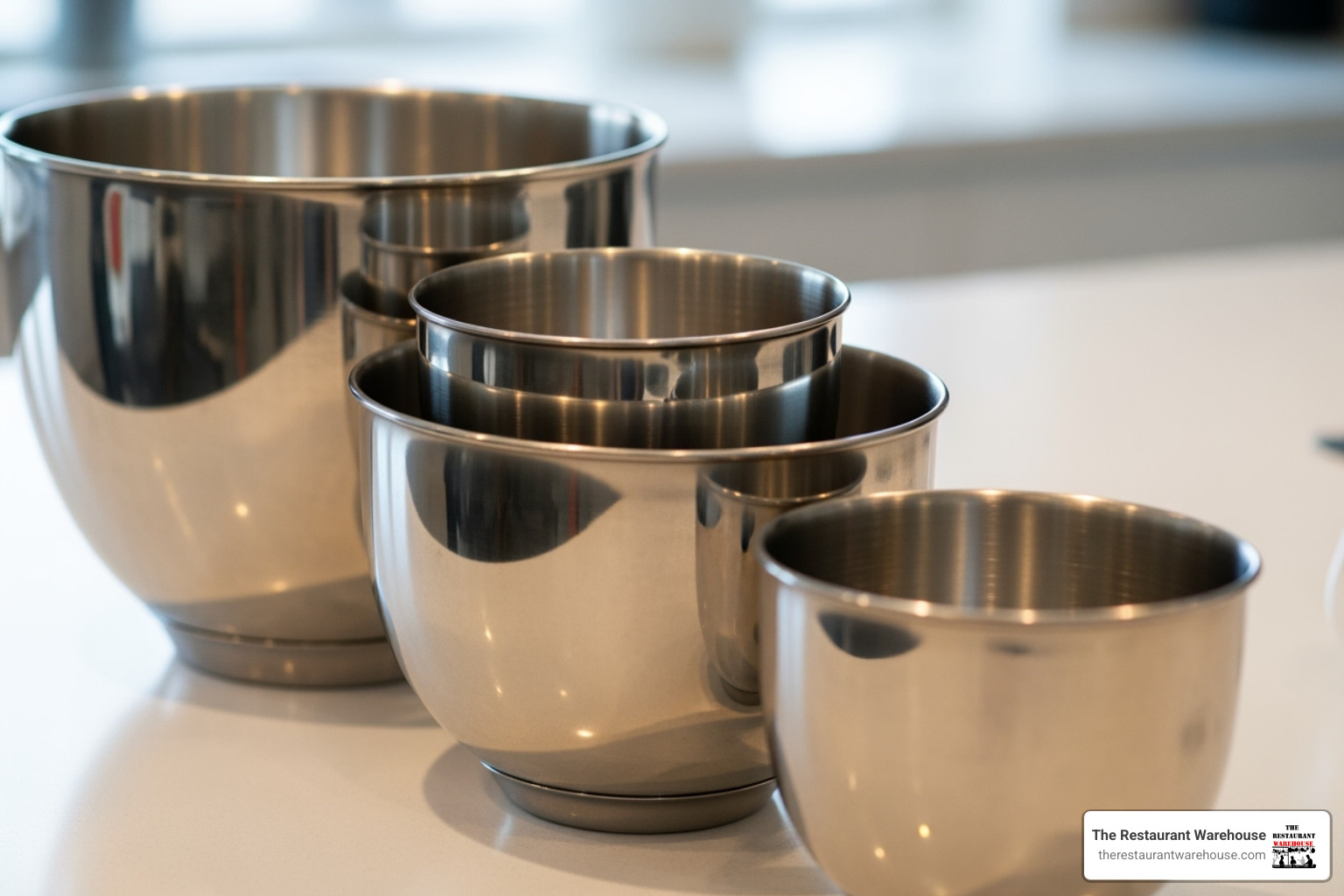
A 3.5-quart bowl is great for occasional bakers or those with limited space. It can handle a single batch of cookies or one loaf of bread.
Most home bakers find their sweet spot with a 4.5- to 5-quart bowl. This size can comfortably mix batter for a standard cake or a few dozen cookies.
For larger batches, a 6.5- to 7-quart bowl is ideal. It allows you to mix double batches of cookie dough or multiple loaves of bread at once. These larger mixers often feature a bowl-lift design for better stability with heavy loads.
Stainless steel bowls are the standard for a reason: they are durable, easy to clean, and don't retain odors. Some mixers offer glass bowls, which are aesthetically pleasing but heavier and more fragile. A bowl with a handle is a simple but significant feature that makes lifting and pouring much easier.
Essential Attachments and Build Quality
Even an affordable stand mixer should come with three essential attachments.
The dough hook kneads yeast doughs for bread and pizza, developing gluten without the arm workout.
The flat beater (or paddle) is the workhorse for creaming butter and sugar, mixing cake batters, and tackling cookie dough.
The wire whip (or whisk) incorporates air into mixtures, perfect for whipping egg whites for meringues or making fresh whipped cream.
A splash guard with a pour spout is a highly useful accessory that keeps ingredients in the bowl and your counter clean. It lets you add ingredients while the mixer is running, streamlining your workflow.
When it comes to build quality, you'll see two main designs. Tilt-head models are common for home use, allowing easy access to the bowl. Bowl-lift models are more stable for heavy doughs and are typically found on larger mixers. While premium mixers often have all-metal bodies, many affordable models use sturdy ABS plastic. The most important factor is the internal gears. Metal gears are crucial for durability and longevity, as they take the most punishment during mixing.
Finally, consider the mixer's weight and stability. It needs to be heavy enough or have anti-slip features to stay put during operation. Many models include suction cup feet to grip the counter, which is invaluable for keeping the machine stable during vigorous mixing. A stable mixer is safer, more pleasant to use, and will likely last longer.
If you're wondering which features matter most for your specific baking needs, contact us and we'll help you find the right fit.
Budget vs. Premium Mixers: Understanding the Trade-Offs
When choosing an affordable stand mixer, it's about balancing cost with capability. The gap between budget and premium mixers has narrowed, but there are still trade-offs. Knowing what they are helps you make a decision you'll be happy with long-term.
Performance on Tough Jobs: Can an Affordable Stand Mixer Handle Dough?
This is a common concern: will a budget mixer handle heavy tasks like bread dough? The answer is often yes. Many affordable mixers with robust motors (500W+) and quality internal gears can handle demanding jobs like kneading sourdough or dense cookie dough. For most home baking, these models perform remarkably well.
However, performance can vary. Wattage alone isn't the only indicator of power. The efficiency of the planetary mixing action and the quality of the internal engineering are just as important. When shopping for an affordable stand mixer for bread, it's wise to look for models specifically praised by users for their dough-kneading capabilities.
Practical trade-offs might include more noticeable motor strain or warmth from the housing. The mixer might also vibrate or "walk" on the counter if it's lightweight. These aren't necessarily deal-breakers for occasional bread making. The bottom line is that a well-chosen affordable stand mixer can absolutely handle common baking tasks, including kneading bread. For regular home use, they are more than capable.
Lifespan, Durability, and Warranty
While premium brands are known for longevity, affordable stand mixers are not disposable appliances. Many are built to last for several years of regular home use. The key is the internal construction. A mixer with a plastic exterior but full metal gears can withstand considerable stress and offer excellent durability for the price.
Realistically, getting five to ten years of reliable service from a sub-$200 mixer represents fantastic value. For most home bakers, this lifespan is more than adequate. Warranty coverage is also important. Most affordable brands offer a standard one-year warranty. It's always a good idea to check the availability of replacement parts, as common attachments are usually easy to find, but more specialized components might be harder to source.
Regardless of price, proper care dramatically extends a mixer's life. This means following cleaning instructions, not overloading the motor, and storing it correctly. Safe food handling is also paramount in any kitchen. For example, raw flour can contain bacteria, so it's important to handle it properly. The FDA's guidelines on handling flour safely offer crucial information for all bakers.
If you have questions about choosing equipment that matches your expected usage, don't hesitate to contact us—we're here to help you make the right choice for your kitchen.
Noise, Stability, and User Experience
How pleasant a mixer is to use day-to-day is a significant factor in whether it becomes a beloved tool or a cabinet-dweller.
Operating noise levels are often more noticeable with budget mixers. While some are described as only slightly louder than premium models, this is subjective. If you bake early in the morning or have an open-concept home, noise might be a more important consideration.
Countertop stability is another practical concern. Lighter mixers are more prone to "walking" across the counter during heavy tasks. Many affordable models use suction cup feet to combat this, which is a crucial safety and convenience feature.
Ease of cleaning is generally consistent across price points. Most bowls and attachments are dishwasher-safe, and the mixer body can be wiped down. A smooth design with few crevices makes this job easier. Splash guards are also a great feature for minimizing mess.
Intuitive controls are an area where many budget mixers excel. Simple knobs and switches are often more user-friendly than complex digital interfaces, especially when your hands are covered in flour.
Aesthetic considerations are personal. While budget mixers may not come in dozens of colors, many now offer sleek, modern designs that look great on any countertop. The user experience ultimately comes down to your priorities. An affordable stand mixer might be a bit louder or require more attention to stability, but it can still provide a highly functional and satisfying baking experience.
Where to Find the Best Deals on Stand Mixers
Finding an affordable stand mixer is about more than just picking a low-cost model—it's about shopping strategically to maximize value. With a little patience and planning, you can find a fantastic mixer at a great price.
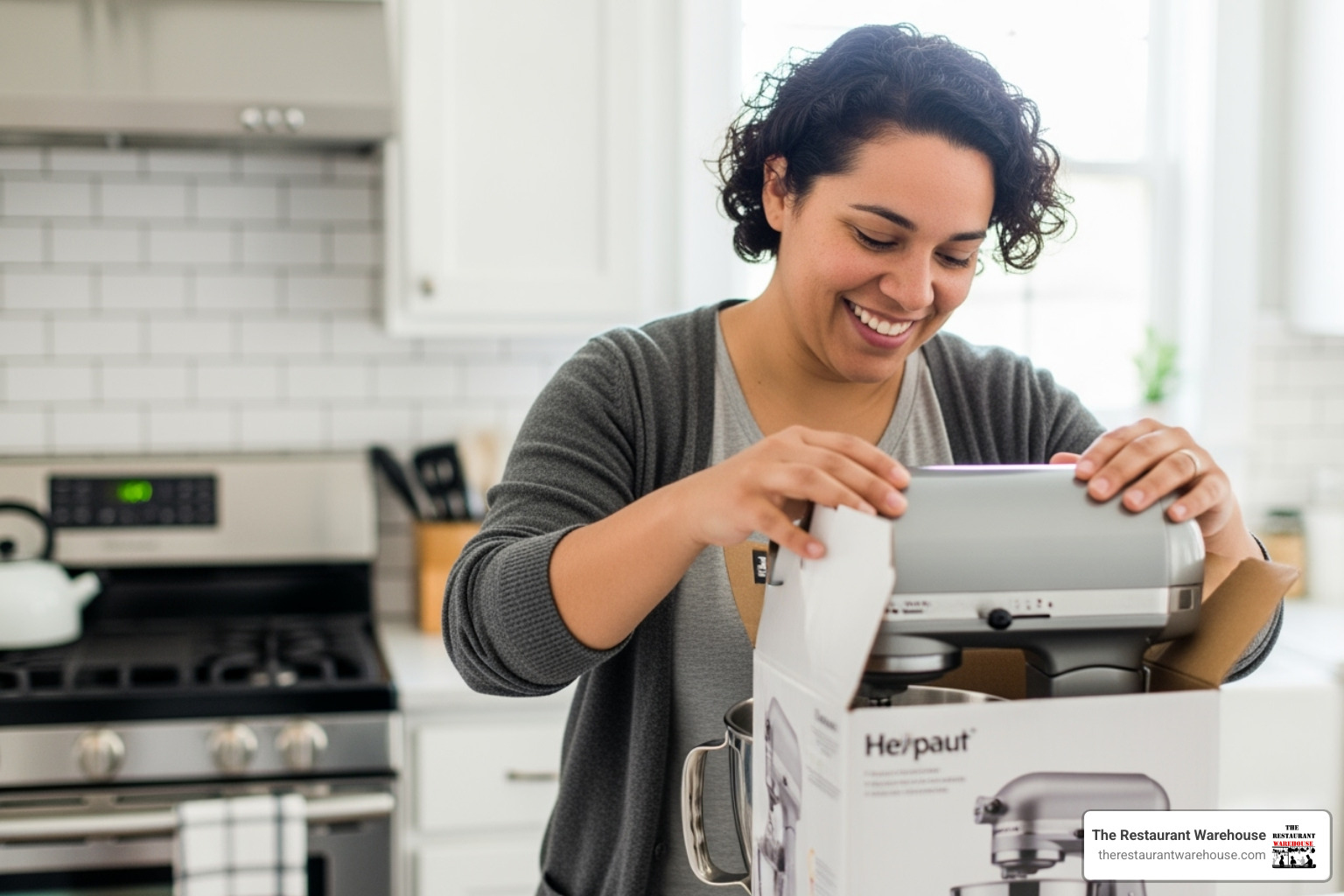
Seasonal sales and holiday promotions are goldmines for kitchen appliances. Keep an eye out during Black Friday, Cyber Monday, and other major sales events. We've seen impressive price drops during these periods, with some popular mixers being discounted by $100 or more. Marking these dates on your calendar and setting up price alerts can lead to significant savings.
Major online and big-box retailers consistently offer competitive pricing. It's worth browsing their websites, as they often run sales and feature curated collections like "Mixers Under $200," which can help you quickly compare options.
Don't overlook refurbished models. Some manufacturers and retailers offer certified refurbished appliances at a deep discount. These are not used or damaged goods; they have been professionally inspected, repaired, and tested to meet original performance standards. Many even come with a warranty, offering peace of mind along with savings. This can be a smart way to get a higher-end model's build quality for the price of a new budget mixer.
Reading recent reviews is crucial before you buy. A low price is no bargain if the mixer fails quickly. Customer feedback helps distinguish between a genuine deal and a product that's cheap for a reason. Sometimes spending a little extra upfront gets you a model with significantly better durability, making it a smarter long-term investment.
The key to successful deal-hunting is combining patience with preparation. By knowing what features you need, setting a realistic budget, and watching for the right moment to buy, you can confidently find an affordable stand mixer that will serve you well. And remember, we're committed to helping you find quality kitchen solutions at prices that make sense. If you have questions, don't hesitate to contact us—we're here to help.
Frequently Asked Questions about Affordable Stand Mixers
When shopping for an affordable stand mixer, it's natural to have questions. Here are straightforward answers to some of the most common ones to help you feel confident in your purchase.
How much can I expect to spend on a quality affordable stand mixer?
You can find a decent affordable stand mixer for anywhere between $50 and $350, but what you get varies by price.
In the under $100 range, you'll find entry-level models perfect for casual bakers. These typically have smaller bowls (around 4 quarts) and less powerful motors, but they handle basic mixing, whipping, and light dough tasks well.
The $100 to $200 sweet spot offers a significant jump in performance. Here you'll find workhorse mixers with powerful motors and large-capacity bowls (6+ quarts) that can confidently tackle bread dough and big batches. This range is ideal for regular bakers who want reliability without a premium price tag.
In the $200 to $350 range, you're entering the territory of entry-level premium brands. You're paying for improved build quality, design, and brand reputation, often in a more compact package.
While a quality mixer can be found for under $300, be wary of ultra-cheap models. Spending a little more for a reputable budget option is often a better investment than buying a flimsy machine that will only lead to frustration.
Can a stand mixer replace a food processor?
This is a common question, but a stand mixer and a food processor are fundamentally different tools. A stand mixer is designed for mixing, beating, whipping, and kneading. Its dull attachments combine and aerate ingredients. A food processor is a chopping, slicing, shredding, and pureeing machine. Its sharp blades cut and break down ingredients at high speed.
While there can be some overlap with special attachments, they don't truly replace one another. A food processor can't whip egg whites with the same volume as a stand mixer, and a stand mixer can't chop vegetables. If you have to choose one, decide based on your primary activity: baking or food prep.
How do I properly care for my stand mixer to extend its life?
Proper care is simple and will keep your affordable stand mixer running smoothly for years.
First, always read the manual for specific care instructions, especially regarding which parts are dishwasher safe. Clean attachments and the bowl right after use to prevent food from drying on them. Most are dishwasher safe, but if hand washing, use warm, soapy water.
To clean the base, always unplug the mixer first. Wipe it down with a damp cloth and never use abrasive cleaners or submerge the base in water, as this will destroy the motor. Respect your mixer's limits; if you hear the motor straining, it's working too hard. Divide large batches if necessary to avoid burning out the motor. Finally, store your mixer and its attachments in a clean, dry place.
By following these practices, you protect your investment and ensure countless successful bakes. If you ever have specific questions about caring for your mixer, please don't hesitate to contact us for appliance questions.
Conclusion
There's something truly satisfying about finding quality that doesn't demand a premium price. This guide has shown how an affordable stand mixer can genuinely transform your kitchen experience without breaking the bank.
The reality is encouraging: you don't need to spend a fortune to get a mixer that performs reliably. Today's market offers genuine value at multiple price points. The key isn't just finding the lowest price—it's about understanding which features truly matter for your baking style and making smart trade-offs.
We've learned that motor power, bowl capacity, and essential attachments are the foundation of a capable mixer. A planetary mixing action ensures thorough blending, while adequate wattage prevents motor strain. Yes, budget models might be a bit louder or have plastic housing, but with proper care—regular cleaning and avoiding overloads—these mixers can serve you faithfully for years.
Smart shopping amplifies that value. Timing your purchase around major sales or considering a certified refurbished model can lead to even better deals. Always check recent reviews to ensure you're getting a reliable performer.
We believe quality kitchen tools shouldn't be a luxury. Whether you're a home baker perfecting your craft or someone who frequently bakes for large gatherings, the right equipment at the right price makes all the difference. We've structured our business to provide you with access to quality tools at great prices.
An affordable stand mixer is more than an appliance—it's an invitation to bake more freely and experiment more boldly. It turns "I wish I could make that" into "Let's try this today."
Ready to find the mixer that fits your baking dreams and your budget? We invite you to check out our full range of kitchen solutions. If you have questions about which mixer best suits your needs, don't hesitate to reach out—we're here to help you make the right choice. Contact us and let's find your perfect mixing companion together.
About The Author

Sean Kearney
Sean Kearney used to work at Amazon.com and started The Restaurant Warehouse. He has more than 10 years of experience in restaurant equipment and supplies. He graduated from the University of Washington in 1993. He earned a BA in business and marketing. He also played linebacker for the Huskies football team. He helps restaurants find equipment at a fair price and offers financing options. You can connect with Sean on LinkedIn or Facebook.
Leave a comment