


What to Look For in a Stainless Steel Stand Mixer
Food safety is the foundation of any successful food business. While you focus on fresh ingredients and clean prep surfaces, the material of your equipment plays a critical role you can't afford to overlook. Plastic mixers have microscopic pores that can harbor bacteria and absorb odors, while coated metal attachments can chip and contaminate food. A stainless steel stand mixer eliminates these risks entirely. Its non-porous surface is incredibly easy to clean and sanitize, which is why it’s the standard for health code compliance. This article explains why the hygienic properties of stainless steel are just as important as motor power for professional kitchens.
Does the Material of Your Stand Mixer Really Matter?
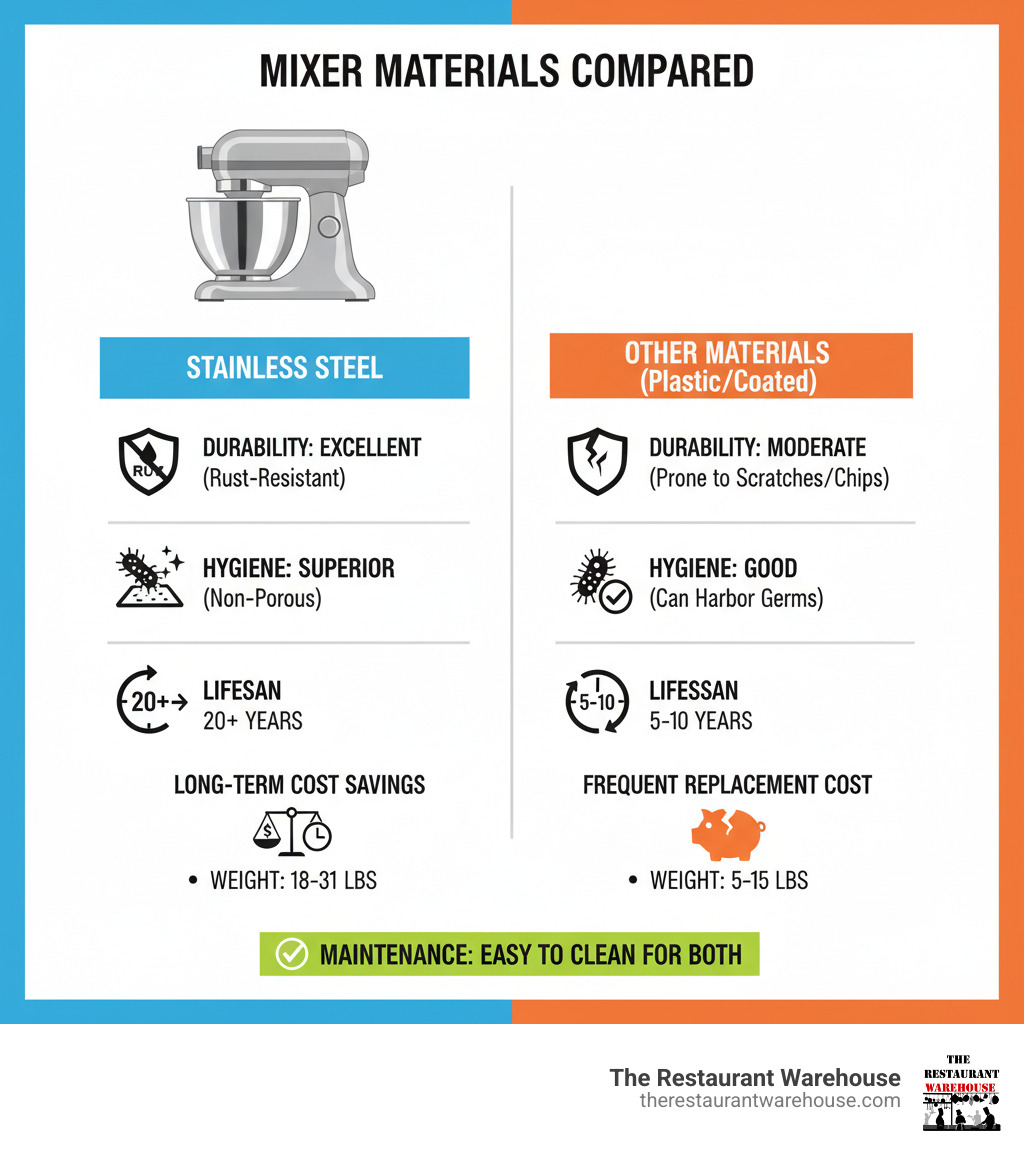
A stainless steel stand mixer offers superior durability, hygiene, and longevity compared to mixers made from plastic or coated metals. When evaluating mixer materials for your professional kitchen or home bakery, stainless steel stands out for several key reasons:
- Durability: Scratch-resistant, dent-resistant, and rust-proof construction that can last 20+ years.
- Hygiene: Non-porous surface prevents bacteria growth and is easy to sanitize.
- Performance: Heavy construction provides stability during heavy-duty mixing.
- Value: Higher upfront cost is justified by exceptional longevity and reliability.
- Versatility: Non-reactive surface won't affect flavors or odors.
Walk into any professional bakery or restaurant kitchen, and you'll notice a common thread: stainless steel dominates. From mixing bowls to attachments to the mixer body itself, this material has become the industry standard for good reason. The material of your stand mixer directly impacts its performance, longevity, and even the safety of your food preparation. High-quality stand mixers can last up to 20 years or longer with proper use and maintenance, and this exceptional lifespan is largely due to their robust construction materials.
For restaurant owners and serious home bakers, choosing the right mixer material means balancing upfront costs against long-term value. A stainless steel mixer might carry a higher price tag initially, but when you factor in replacement costs, maintenance, and food safety considerations, the math often favors quality construction.
In this guide, we'll break down what makes stainless steel the superior choice for stand mixers. We'll compare it against other common materials, examine the specific features that separate high-quality models from budget alternatives, and help you understand the different types of mixers available. Whether you're outfitting a professional kitchen or upgrading your home baking setup, you'll learn how to identify a mixer that will serve you reliably for decades.
Beyond Steel: A Look at Glass and Ceramic Bowls
While a stainless steel bowl is the go-to for its sheer durability, don't overlook what glass and ceramic options bring to the table. Glass bowls are a great choice when you're working with acidic ingredients like lemon juice, as the material is non-reactive and won't alter the flavor of your dish. The clear view they provide is also a huge plus for monitoring your mix without stopping the machine. Their main weakness is fragility; a sudden temperature shock or an accidental drop can cause a shatter, so careful handling is key. Ceramic bowls offer both versatility and visual appeal. Many high-quality ceramic bowls are safe for the freezer, microwave, and oven, making them useful for a range of kitchen tasks beyond just mixing. They also add a touch of personality to your kitchen, which is a welcome feature in an open-concept restaurant or a home bakery.
Why Stainless Steel Mixers Win in the Kitchen
When you're choosing equipment for your kitchen, the material matters more than you might think. A stainless steel stand mixer represents a serious upgrade over plastic or coated metal alternatives, and the reasons go far beyond just looking professional on your countertop.
While plastic mixers might seem like a budget-friendly choice, they often crack, discolor, and wear out within a few years. Coated metals present their own problems—the coating can chip away with regular use, potentially contaminating your food and exposing the base metal to rust. Stainless steel sidesteps these issues entirely.
What makes stainless steel truly stand out is its non-reactive surface. This means your mixer won't interact chemically with acidic ingredients like lemon juice or tomato-based sauces. There's no metallic taste transferred to your recipes, and no unwanted reactions that could affect the quality of your baked goods. For professional kitchens where consistency is everything, this reliability is non-negotiable. A gleaming stainless steel stand mixer also signals quality, maintaining a polished appearance year after year, while plastic alternatives can yellow and fade.
According to research from the British Stainless Steel Association, the hygienic benefits of stainless steel in food preparation make it the material of choice for food contact surfaces in professional settings. This is about food safety and performance that lasts.
A Kitchen Workhorse That Lasts for Years
A stainless steel stand mixer with all-metal construction can handle the demands of a busy kitchen. Its scratch resistance makes a huge difference. While every accidental scrape from a metal spatula can create grooves in plastic where bacteria hide, stainless steel resists these surface scratches, maintaining a smooth, cleanable surface. Dent resistance is also crucial in busy environments where equipment gets bumped. A solid stainless steel body absorbs impacts without permanent damage.
The rust-proof nature of quality stainless steel is particularly important in kitchen environments where moisture is constant. With proper care, you're looking at a 20-year lifespan or longer. When you consider the cost per year of ownership, the higher upfront price tag makes perfect sense. This is an investment piece that pays for itself many times over. Compared to replacing a plastic mixer every five to seven years, the math becomes crystal clear. You're not just buying a mixer—you're buying decades of reliable service.
Easy to Clean, Safer for Your Food
Food safety is paramount, and this is where the hygienic properties of a stainless steel stand mixer truly shine. The secret lies in its non-porous surface. Unlike plastic or wood, which have microscopic pores that can harbor bacteria and food particles, stainless steel's smooth, sealed surface offers no place for contaminants to lurk. This fundamentally prevents bacteria growth.
This means after mixing raw ingredients, you can be confident that a proper cleaning removes everything. The material is also incredibly easy to sanitize, which is why health inspectors approve of stainless steel in professional kitchens. Furthermore, stainless steel is naturally odor-resistant and flavor-neutral. It won't absorb strong smells from ingredients like garlic or impart a metallic taste to delicate batters. Professional bakers depend on this consistency to ensure their equipment won't interfere with their carefully developed recipes.
What to Look For in a Stainless Steel Stand Mixer
When you're ready to invest in a stainless steel stand mixer, it's important to look beyond the gleaming exterior. The features under the hood are what determine performance and longevity. A truly high-quality mixer handles demanding tasks like kneading dense bread dough or whipping heavy cream without breaking a sweat. It's engineered to deliver consistent results, whether you're making a single batch or running it for hours. For more in-depth information on heavy-duty mixers, you can check out More info about our heavy-duty mixer guide.
The difference between a frustrating experience and a joy to use often comes down to a few key features: motor power, weight and stability, and bowl capacity. Get these right, and you'll have a workhorse for decades.
Power: Can It Handle Heavy-Duty Mixing?
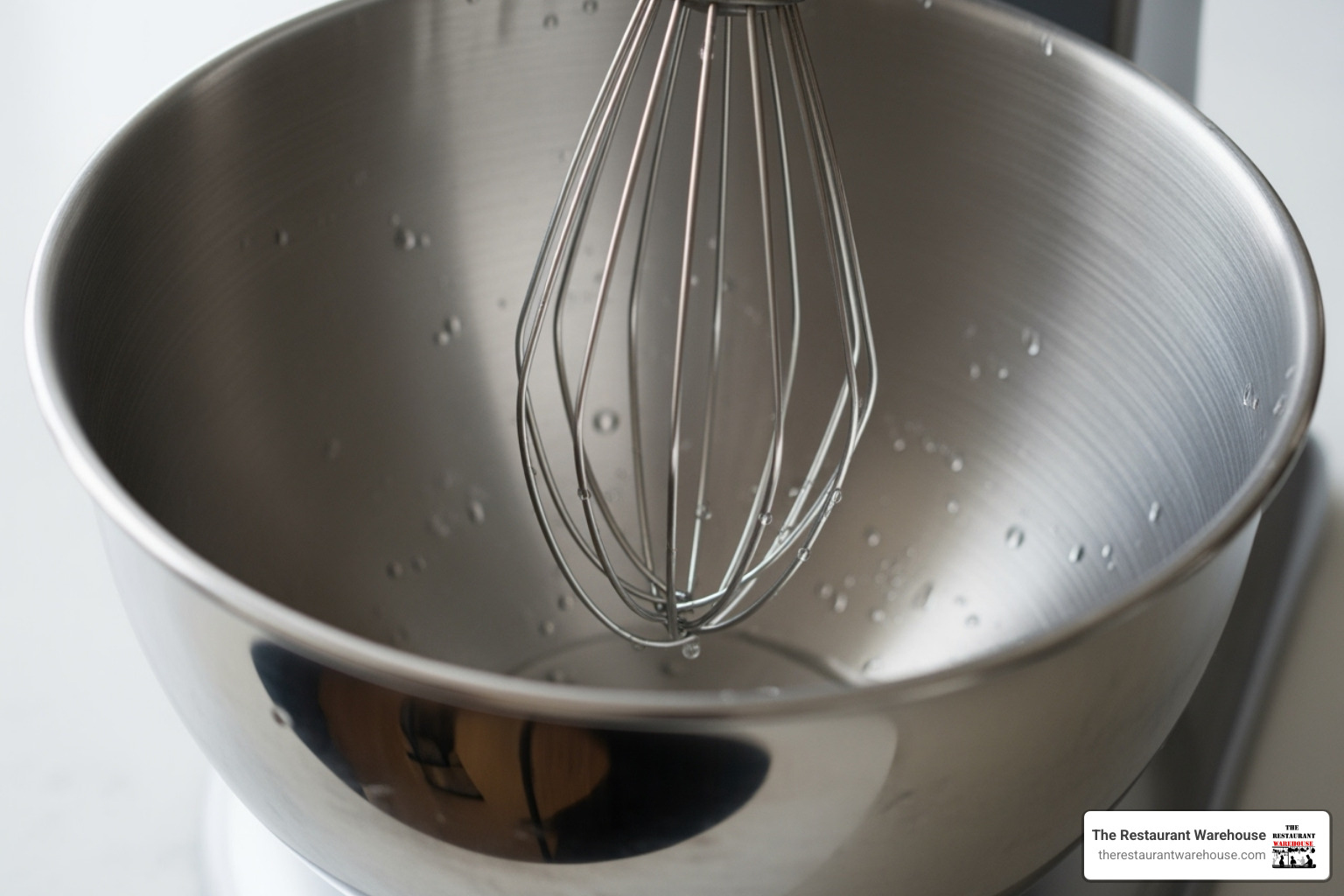
The motor is the heart of your stainless steel stand mixer. High-quality models often feature high-efficiency DC motors, which are designed to run longer without overheating. This is crucial for tackling extended mixing sessions without worrying about burnout.
When looking at specifications, it's important to understand what they mean. A powerful motor, such as one rated at 500 watts or higher, can easily handle stiff bread and pizza doughs, providing more than enough muscle for most demanding tasks. The true test of motor quality is how that power translates to consistent performance. A top-rated motor won't bog down when working with heavy ingredients. The mixing action remains smooth and efficient from start to finish, with less heat buildup that could affect temperature-sensitive recipes.
Understanding Wattage: What the Numbers Mean
When you're comparing mixers, wattage is one of the first numbers you'll see, and it’s a good indicator of the motor's raw strength. Think of it this way: a higher wattage, typically 500 watts or more, suggests the motor has enough muscle to handle tough jobs like dense bread dough without overheating. However, a higher number doesn't automatically mean it's a better machine. The real secret to a great mixer is how efficiently the motor uses that power. A well-designed motor will maintain a consistent speed and torque even when it's working hard, ensuring your ingredients are mixed evenly. The true test is how that power translates to performance under a heavy load, so look for a balance of high wattage and quality motor design.
A Sturdy Build for a Stable Mix
Have you ever had a mixer "walk" across your counter while kneading dough? This is a sign of poor construction. The substantial weight of a quality stainless steel stand mixer is your best friend. These machines are built with a heavy base and die-cast metal body for one simple reason: stability.
High-capacity models can weigh a solid 31 pounds, while even compact versions can be around 18 pounds. This isn't accidental—it's intentional engineering. When you're kneading a stiff dough, that heavy base acts as an anchor, keeping your mixer firmly planted. This also reduces vibration, which means quieter operation and more consistent mixing. The die-cast metal construction doesn't just add heft; it's fundamental to what makes these mixers so durable.
Design Features for Enhanced Stability
Beyond sheer weight, several key design features contribute to a mixer's rock-solid performance. Look for models with a wide, sturdy base and non-slip rubber feet that grip the countertop, preventing any movement even during the most intense mixing jobs. Internally, all-metal gears are a hallmark of quality construction. Unlike nylon gears that can strip under pressure, metal gears provide smooth, reliable power transfer, which reduces jerky movements and vibrations. You'll also find that many commercial-grade mixers use a bowl-lift design instead of a tilt-head. This fixed-head construction provides superior stability, especially when working with large, heavy batches, ensuring the mixer's power is focused directly into the bowl. These are the kinds of thoughtful engineering details you should expect from high-quality restaurant equipment.
Choosing the Right Bowl Size and Shape
Choosing the right bowl capacity can streamline your workflow. For many home bakers, a 5-quart bowl is perfect, handling around 9 dozen cookies in a single batch. But if you're baking for a crowd or running a small catering operation, larger capacities are very attractive.
A 7-quart or 8-quart bowl changes the game, allowing you to make dough for 13 dozen cookies or multiple loaves of bread at once. For serious bakers, this is a time-saver that streamlines your entire workflow. If you're considering these larger options, you might want to Check out our 8 quart mixer comparison.
Design details also matter. Look for bowls with ergonomic handles, which make it much easier to lift, pour, and scrape. And because we're talking about stainless steel bowls, you get all the material benefits: they won't stain, scratch, or retain odors, and they are typically dishwasher-safe. Getting the capacity right from the start means you'll enjoy using your mixer instead of working around its limitations.
Ready to find the perfect powerhouse for your kitchen? Contact us at The Restaurant Warehouse for wholesale pricing on professional-grade stand mixers that are built to last.
Attachments and Versatility: More Than Just a Mixer
A great stand mixer is more than just a one-trick pony. Its true value lies in its versatility, which is unlocked through a wide range of attachments. Think of the mixer as a power hub for your kitchen. With the right accessories, it can transform from a dough kneader into a vegetable shredder, a meat grinder, or even a pasta maker. This multi-functionality is a game-changer in a commercial kitchen where counter space is prime real estate. Instead of cluttering your prep area with multiple single-use appliances, a single, powerful mixer can do the work of several machines, streamlining your workflow and saving you money on equipment.
Common Attachments for Commercial Kitchens
Every professional-grade mixer comes with a core set of tools designed for specific tasks. The dough hook is essential for kneading heavy bread and pizza doughs, developing gluten with minimal effort. The wire whisk is perfect for aerating ingredients, whipping cream, and creating light meringues. For general-purpose mixing, like creaming butter and sugar or making batters, the flat beater is your go-to. Beyond these basics, you can find attachments that expand your mixer's capabilities even further. A bowl scraper attachment, for example, continuously scrapes the sides of the bowl, ensuring all your ingredients are thoroughly incorporated. You can also find shredders perfect for prepping cheese and vegetables, saving valuable time during prep.
A Note on Attachment Materials
Just as the mixer's body should be durable, so should its attachments. Opting for a mixer with all-metal construction, particularly for its accessories, is a smart move for any busy kitchen. Stainless steel attachments are the gold standard because they resist scratches, won't chip, and can handle the rigors of daily, heavy-duty use. Some lower-cost mixers come with coated attachments, but these can pose a problem over time. The coating can flake off into your food, creating a safety hazard, and the exposed metal underneath can rust. Investing in solid stainless steel attachments ensures they remain hygienic and perform reliably for years, protecting both your food quality and your equipment investment.
Modern Features and Safety Certifications
While raw power and durable construction are the foundation of a great stand mixer, modern models offer advanced features and safety certifications that are essential for today's professional kitchens. These aren't just fancy add-ons; they are practical innovations that improve efficiency, protect your investment, and ensure you meet critical health and safety standards. From motors that can run for hours without overheating to official seals of approval from health organizations, these details separate the professional-grade workhorses from the home-use appliances. Understanding these features will help you choose a machine that not only performs well but also operates safely and reliably under pressure.
Smart Technology in the Kitchen
The best commercial mixers are engineered for endurance. High-quality models often feature high-efficiency DC motors, which are specifically designed to run for longer periods without overheating. This is a critical feature when you're producing large batches day in and day out. A motor that can maintain consistent power without straining is less likely to burn out, saving you from costly downtime and repairs. Many modern mixers also include overload protection, which automatically shuts the machine off if the motor is under too much strain, preventing permanent damage. This kind of smart technology ensures your mixer can handle the toughest jobs while extending its operational lifespan.
The Importance of ETL and FDA Certifications
In a professional foodservice environment, using equipment that meets health and safety standards is non-negotiable. Look for mixers with certifications like ETL or NSF. These marks indicate that the mixer has been tested by a third-party organization and complies with safety and sanitation standards required for commercial use. This certification often relates directly to the materials used, as the non-porous, easily sanitized surface of stainless steel is a key factor in meeting these stringent requirements. Using certified equipment is not just about compliance for health inspections; it’s about a fundamental commitment to food safety for your customers. When you shop for restaurant equipment, always check for these certifications to ensure you're getting a product that's truly built for a professional setting.
A Quick Guide to Stand Mixer Types
When you're shopping for a stainless steel stand mixer, you'll find that not all mixers are built the same way. The design and mechanics can vary significantly, and these differences directly impact how you'll use your mixer and what recipes it can handle best. Understanding these distinctions upfront saves frustration later. The key is matching the mixer's design to your baking needs and kitchen setup.
Tilt-Head or Bowl-Lift: Which One to Choose?
The most visible difference between stainless steel stand mixers is how you access the bowl: tilt-head and bowl-lift models.
Tilt-head mixers are a common design where the entire motor head tilts backward on a hinge, giving you wide-open access to the bowl. This makes adding ingredients and scraping down the sides incredibly easy. These models typically handle bowl capacities up to 5 quarts, which is plenty for most home baking projects. The main consideration is that you need several inches of vertical clearance to tilt the head back, which can be an issue under low cabinets.
Bowl-lift mixers take a different approach. The motor head is stationary, and the bowl locks onto arms that raise and lower it with a lever. This design offers rock-solid stability, especially when working with heavy, dense doughs. There's no tilting mechanism that could potentially wear out, and the entire structure feels more robust. These mixers typically start at 5.5 quarts and go up to 8 quarts or larger. The bowl-lift design handles heavier loads without wobbling, making it invaluable for stiff doughs. The trade-off is that these mixers are generally heavier and require more permanent counter space.
If you're primarily making cakes and cookies and value easy access, a tilt-head model will serve you well. But if you're regularly tackling bread doughs or working with large quantities, the stability and capacity of a bowl-lift design are worth the investment.
How It Mixes: Planetary vs. Spiral Action
Another important distinction is the mixing action itself. Most stand mixers you'll encounter use planetary mixing action. The beater, whisk, or dough hook spins on its own axis while simultaneously traveling in a circular path around the bowl. This dual motion ensures the attachment reaches virtually every part of the bowl, making contact at dozens of points. This comprehensive coverage is what makes planetary mixers so versatile, ensuring ingredients are incorporated evenly with less need for scraping. It's the standard for all-purpose mixing, from whipping cream to kneading bread. For a deeper dive into this mechanism, you can learn more about planetary mixers.
Spiral mixing action is different and typically found in specialized or high-volume settings. A spiral dough hook rotates in the center while the bowl itself spins. This creates a gentler, more controlled kneading action that closely mimics hand-kneading. This is ideal for artisan breads where gluten development is critical, as it develops the gluten structure without generating excessive heat. For most kitchens, a planetary mixer is perfectly sufficient for bread dough. But if bread is your primary focus, a spiral mixer offers superior results. The choice comes down to specialization versus versatility.
Considering Other Electric Mixers
While a stainless steel stand mixer is an indispensable tool for serious baking and high-volume mixing, it's not the only electric mixer out there. Sometimes, a different tool is better suited for the job. Before you commit to a stand mixer, it's worth knowing the alternatives. This ensures you're investing in the right piece of equipment for your specific needs. A stand mixer is a significant purchase, and being confident in your choice means understanding what other options can and can't do.
Hand Mixers for Lighter Tasks
Think of a hand mixer as the stand mixer's nimble, lightweight cousin. According to KitchenAid, "Hand mixers are ideal for lighter tasks such as whipping cream or mixing cake batter." They are perfect for quick jobs where you don't need the heavy-duty power of a stand mixer. Their portability and easy storage make them a convenient choice for tasks that require mobility or for kitchens with limited counter space. However, they lack the power to handle dense doughs and require you to hold and guide them, which can be tiring for longer mixing sessions.
Immersion Blenders for Soups and Sauces
An immersion blender, or stick blender, serves a completely different purpose. As Cuisinart notes, these tools are "perfect for pureeing soups directly in the pot or blending sauces." Their compact, wand-like design allows you to blend ingredients right in the cooking vessel, which means less cleanup. While excellent for creating smooth textures in liquids, they are not designed for aerating, whipping, or kneading. An immersion blender is a specialist for sauces, soups, and smoothies, not a replacement for a stand mixer's baking capabilities.
Top Stand Mixer Brands for Professionals
When you're ready to invest in a high-quality stainless steel stand mixer, a few brands consistently rise to the top for their performance, durability, and reliability in professional settings. These are the names you'll see in restaurant kitchens and bakeries because they're built to withstand rigorous, daily use. While many companies make stand mixers, these brands have earned a reputation for engineering machines that deliver consistent results. Choosing from one of these trusted manufacturers means you're not just buying an appliance; you're investing in a piece of equipment that will be a cornerstone of your kitchen for years to come. If you're looking to make a significant investment, exploring restaurant equipment financing can make top-tier models more accessible.
Ankarsrum: The Swedish Powerhouse
Ankarsrum is a name that commands respect among serious bakers. Made in Sweden, this brand is known for its unique design and incredible power. According to the company, "The Ankarsrum stand mixer is a powerful, versatile, and well-designed kitchen tool." Unlike many mixers that have a top-down drive shaft, the Ankarsrum features an open-bowl design with a motor in the base that rotates the bowl. This allows it to handle exceptionally heavy loads of dough without straining. Backed by a 7-year warranty, an Ankarsrum mixer is a testament to quality craftsmanship and is built to last a lifetime.
KitchenAid: The Industry Standard
For many, KitchenAid is synonymous with the term "stand mixer." It's the brand that set the standard, and for good reason. KitchenAid mixers are praised for their "durability and performance, making them a staple in both home and professional kitchens." Their iconic design is backed by powerful motors and a planetary mixing action that ensures thorough ingredient incorporation. One of their biggest strengths is the vast ecosystem of attachments available, which can transform the mixer into a pasta maker, meat grinder, or ice cream machine. This versatility makes it a true multi-purpose workhorse in any kitchen.
Cuisinart: A Reliable Choice
Cuisinart has built a strong reputation for producing dependable kitchen appliances, and its stand mixers are no exception. As noted by retailers like Williams Sonoma, Cuisinart offers a range of mixers "known for their reliability and performance." They provide a great balance of power, features, and value, making them a popular choice for both professionals and passionate home bakers. With robust motors and large-capacity stainless steel bowls, Cuisinart mixers can easily handle everything from delicate meringues to heavy bread doughs, proving themselves to be a solid and reliable addition to any kitchen's lineup of essential restaurant equipment.
How to Keep Your Stand Mixer in Top Shape
When you invest in a stainless steel stand mixer, you're making a commitment that should last for decades. The beauty of stainless steel is that it rewards minimal effort with maximum longevity. The secret isn't complicated—it's simply about proper care and consistent habits.
Simple Cleaning Tips for Daily Care
Cleaning a stainless steel stand mixer is one of the easiest kitchen tasks. After use, the exterior typically needs just a quick wipe with a soft, damp cloth and soapy water. For a showroom shine, a dedicated stainless steel cleaner works wonders; just be sure to wipe with the grain of the steel to avoid streaks. You can find more helpful Tips for caring for stainless steel appliances that apply perfectly to your mixer.
The real convenience comes with the bowls and attachments. Stainless steel mixing bowls and attachments (like wire whips, dough hooks, and flat beaters) are generally dishwasher-safe. There's no concern about coatings chipping off or rust developing. A quick clean after each use prevents dried-on batter from becoming a problem. This inherent cleanliness is part of what makes these mixers reliable partners in professional kitchens where sanitation is key. With a simple routine, your mixer will look and perform like new for years.
Is It Worth the Investment? A Look at Price vs. Value
Let's talk numbers. A stainless steel stand mixer is an investment. When you see the price tags, it's natural to feel some sticker shock compared to plastic alternatives.
However, it's important to shift perspective from purchase price to actual value. With that higher price, you're paying for a motor engineered for longevity, die-cast metal construction, and genuine stainless steel—materials that won't crack, chip, or corrode. When you see an NSF certification on a model, it means the equipment has met rigorous standards for hygiene and durability that restaurants depend on daily.
The math becomes compelling when you consider the timeline. A well-maintained stainless steel stand mixer can easily serve you for twenty years or more. Compare that to replacing a budget mixer every five to seven years, and the initial investment looks quite reasonable. In a professional setting, where downtime means lost revenue, this reliability is invaluable. You're not just buying a mixer; you're eliminating future replacement costs.
Of course, there are trade-offs. These machines are heavy, which is great for stability but makes them difficult to move. If you have limited counter space, this weight is a real consideration. But for those who can make the investment, a stainless steel stand mixer delivers exceptional long-term value. The reliability alone brings a peace of mind that's hard to quantify but impossible to overlook.
Ready to find the perfect powerhouse for your kitchen? Explore our selection of powerful mixers today, and let us help you find a mixer that matches your needs. Contact us for wholesale pricing on top-tier stand mixers.
Frequently Asked Questions about Stand Mixers
Why is a stainless steel mixer better for kneading dough?
A stainless steel stand mixer is superior for kneading dough due to a combination of power, stability, and durability.
First, high-quality mixers feature powerful motors that deliver consistent energy to handle dense, stiff doughs without overheating or straining. Second, their substantial weight—often over 25 pounds—provides critical stability, anchoring the mixer to the counter and preventing it from "walking" during use. This ensures a consistent kneading action. Finally, the durable stainless steel dough hook can withstand the force of kneading batch after batch without bending or breaking. The non-reactive stainless steel bowl also ensures the dough's flavor remains pure.
How do I know what size stand mixer I need?
Choosing the right size stainless steel stand mixer depends on your baking habits and typical batch sizes.
For most families and casual bakers, a 4.5 to 5-quart mixer is ideal. This capacity handles everyday tasks like mixing cake batters and preparing a standard batch of cookies (around 9 dozen). It's versatile for regular use without taking up excessive counter space.
If you frequently double recipes, bake for large gatherings, or prepare multiple loaves of bread at once, stepping up to a 7-quart or 8-quart model is a wise investment. These larger mixers are built to handle significant volumes—think dough for over 13 dozen cookies or several loaves of bread in one go. They are the natural choice for small bakeries, caterers, or serious home bakers. Consider not just what you bake now, but what you might want to tackle in the future.
Are the attachments for these mixers also made of stainless steel?
Yes, premium stainless steel stand mixer models typically include attachments crafted from the same durable material. This consistency is a hallmark of a well-built machine designed for longevity.
Stainless steel wire whips, dough hooks, and flat beaters are common and offer compelling advantages over coated aluminum. Their superior durability means they won't chip, peel, or flake over time, which is a critical food safety consideration. They maintain their structural integrity through years of rigorous use.
These stainless steel attachments are also almost always dishwasher-safe, making cleanup effortless. They resist staining and odor absorption, so your equipment remains fresh for each new recipe. When shopping, always check the product specifications to confirm the material of the included attachments, as this is a reliable indicator of overall quality.
Finding the Right Stainless Steel Mixer for You
When deciding whether to invest in a stainless steel stand mixer, it comes down to three fundamental pillars: durability, hygiene, and performance. These mixers stand head and shoulders above alternatives made from plastic or coated metals.
The durability is best. We're talking about equipment that can serve you faithfully for two decades or more thanks to its scratch-resistant, rust-proof, all-metal construction. The hygienic properties of the non-porous surface actively prevent bacteria growth and are easy to sanitize, ensuring your food is always safe. Performance-wise, the combination of powerful motors and substantial weight for stability creates an experience that makes baking feel effortless.
The initial investment might seem high, but when you consider the value over a 20-year lifespan, it becomes a clear and logical choice for anyone serious about baking. A quality stainless steel stand mixer handles every task with the kind of consistency that builds confidence in your kitchen.
Here at The Restaurant Warehouse, we've built our reputation on understanding what foodservice professionals and serious home bakers truly need. We supply professional-grade equipment and foodservice supplies at prices that make sense because we've cut out the middlemen and retail overhead. When you're ready to equip your kitchen with a mixer that won't let you down, we're here to help.
A stainless steel stand mixer isn't just another appliance; it's a cornerstone of your operation, whether you're running a busy bakery or perfecting your craft at home. Contact us for wholesale pricing on top-tier stand mixers that deliver the durability, hygiene, and power your kitchen deserves.
Decoding Price Points
It's true that a high-quality stainless steel stand mixer comes with a higher price tag than its plastic counterparts. It’s easy to feel a bit of sticker shock at first, but it’s helpful to think about what you’re actually paying for. This isn't just an appliance; it's a long-term investment in your kitchen's efficiency. That higher price covers a powerful motor built for continuous use, a heavy-duty die-cast metal body, and genuine stainless steel components that are engineered to resist cracking, chipping, and corrosion. You're paying for reliability that you can count on day after day, which is essential in any professional or serious home kitchen. When you shop for restaurant equipment, you're choosing tools that need to perform under pressure, and a solid mixer is no exception.
The Value of a Good Warranty
A strong warranty is more than just a piece of paper; it's a manufacturer's vote of confidence in their own product. When a brand offers a multi-year warranty covering parts and labor, they are signaling that they've built a machine to last. For a busy restaurant or bakery, this is your safety net. If something goes wrong, you know you have support to get your equipment back up and running without unexpected costs. This peace of mind is a crucial part of the overall value. When you're making a significant purchase, exploring options like restaurant equipment financing can make the initial cost more manageable, and a solid warranty protects that investment for years to come, ensuring it pays for itself many times over.
Finding Deals and Sales
While quality comes at a price, you don't always have to pay the full retail amount. Timing your purchase around major sales events like Black Friday or other holiday promotions can lead to significant savings. Another smart strategy is to buy directly from a supplier like The Restaurant Warehouse. By cutting out the retail markup, you can often access wholesale pricing on top-tier equipment. When you consider that a well-maintained stainless steel mixer can last for 20 years, the cost-per-year of ownership becomes incredibly low. Finding a good deal on a durable machine like a commercial deep fryer or mixer makes the long-term value even better.
Considering Brand Reputation and Expert Reviews
In the world of kitchen equipment, reputation is earned, not given. Established brands have built their names on decades of consistent performance and reliability. Before you buy, take the time to read reviews from other chefs, bakers, and trusted culinary sources. They often provide real-world insights into how a mixer holds up under the demands of a professional environment. A quality stainless steel stand mixer should handle every task with a consistency that builds confidence in your kitchen. Choosing a brand known for its durability, like the ones that supply commercial refrigerators and freezers, ensures you're getting a piece of equipment that won't let you down when you need it most.
Key Takeaways
- Prioritize Stainless Steel for Food Safety and Longevity: A stainless steel mixer's non-porous surface is your best defense against bacteria and makes cleanup simple. Its durable, all-metal construction means you're buying a workhorse that will last for 20 years or more, unlike plastic models that can crack and stain.
- Invest in Value, Not Just a Low Price: The higher upfront cost of a quality mixer pays for itself over time. You're investing in a reliable machine that won't need to be replaced every few years, saving you money and the headache of equipment failure.
- Match Key Features to Your Kitchen's Needs: Focus on the essentials that impact performance. Choose a mixer with a motor powerful enough for your toughest recipes, a heavy base that provides stability, and a bowl size that fits your typical batch to make your workflow seamless.
Related Articles
About The Author

Sean Kearney
Sean Kearney used to work at Amazon.com and started The Restaurant Warehouse. He has more than 10 years of experience in restaurant equipment and supplies. He graduated from the University of Washington in 1993. He earned a BA in business and marketing. He also played linebacker for the Huskies football team. He helps restaurants find equipment at a fair price and offers financing options. You can connect with Sean on LinkedIn or Facebook.
Leave a comment