

What Causes fridge making loud noise in a Commercial Fridge? Quick Fixes
That strange new noise coming from your commercial refrigerator isn’t just an annoyance—it's your equipment trying to tell you something important. A fridge that's suddenly rattling, buzzing, or grinding is often giving you the first warning sign of a component failure. Ignoring it is a gamble that can lead to spoiled food, angry customers, and a massive emergency repair bill.
Decoding the Sounds: What Is Your Fridge Trying to Tell You?
Think of your refrigerator's noises as a language. You’re used to its normal, gentle hum, but a sudden buzz, rattle, or grind is a clear signal that something is wrong. Listening closely and identifying the type of sound is the first step to figuring out what’s going on and how quickly you need to act.
Different noises point to different problems. For example, a rattling sound often means something is loose—maybe a fan blade is hitting a bit of ice, or the drain pan is vibrating. A loud, persistent buzzing, on the other hand, could signal a more serious issue with the compressor or the condenser fan motor.
How Urgent Is It?
Not all sounds are created equal. The occasional click from the defrost timer is usually part of its normal cycle. But a high-pitched squeal from the evaporator fan? That's a five-alarm fire.
Learning to tell the difference between normal operational sounds and genuine warning signs lets you take control of the situation. In a commercial kitchen, where your equipment’s reliability is directly tied to your revenue, this skill is priceless.
Key Takeaway: Any change from your refrigerator's normal operating sound is almost always a sign that a part is strained, loose, or about to fail. Acting fast can be the difference between a quick, minor fix and a catastrophic system failure.
To help you get a head start, I’ve put together a quick diagnostic chart. Use it to match the noise you're hearing to its most likely cause so you can make a fast, informed decision.
Quick Sound Diagnostic Chart for Commercial Refrigerators
This table is your first line of defense. Use it to quickly link a specific noise to its probable cause and determine your immediate next steps. It helps you figure out if you're dealing with a simple fix or if it's time to bring in a professional.
| Type of Noise | Most Likely Cause | What to Do First | Urgency Level |
|---|---|---|---|
| Rattling or Vibrating | Loose drain pan, fan obstruction, or the unit is unlevel. | Check that the unit is level and not touching walls. Inspect the fan area for debris. | Low to Medium |
| Loud Buzzing or Humming | Dirty condenser coils, failing compressor, or faulty fan motor. | Unplug and clean the condenser coils thoroughly. Listen to isolate the noise source. | Medium to High |
| Grinding or Scraping | Failing evaporator or condenser fan motor; fan blades hitting ice. | Unplug immediately. Check for ice buildup around the fan inside the freezer. | High |
| Clicking Repeatedly | Faulty start relay on the compressor or a malfunctioning defrost timer. | Listen closely to the compressor area. Note if the clicking is constant. | Medium |
| Squealing or Chirping | Worn out evaporator or condenser fan motor bearings. | Pinpoint if the noise is coming from inside the freezer or from the back of the unit. | High |
By understanding these alerts, you can protect your investment, prevent inventory loss, and keep your kitchen running without a hitch.
How to Pinpoint the Source of the Noise
Once you’ve got a hunch about what that racket might be, it’s time to play detective. Figuring out the exact source of the noise is really just a process of elimination, and getting it right can save you a ton of time and money. We’ll start with the easy stuff first and work our way to the core components.
Before you even think about unplugging the unit, just take a look and a listen from the outside. Sometimes, the fix is surprisingly simple. A commercial refrigerator that isn’t perfectly level can vibrate like crazy, sending a rattling or humming sound through the whole kitchen. Grab a level, check it from all sides, and adjust the feet until it’s rock solid on the floor.
While you’re at it, give the unit some breathing room. These refrigerators need space. If it’s jammed up against a wall or another piece of equipment, the normal vibrations from the compressor can get amplified into a constant, annoying hum. Just pulling it out a few inches can make all the difference.
This flowchart is a great visual for starting your diagnosis, helping you narrow things down right away.
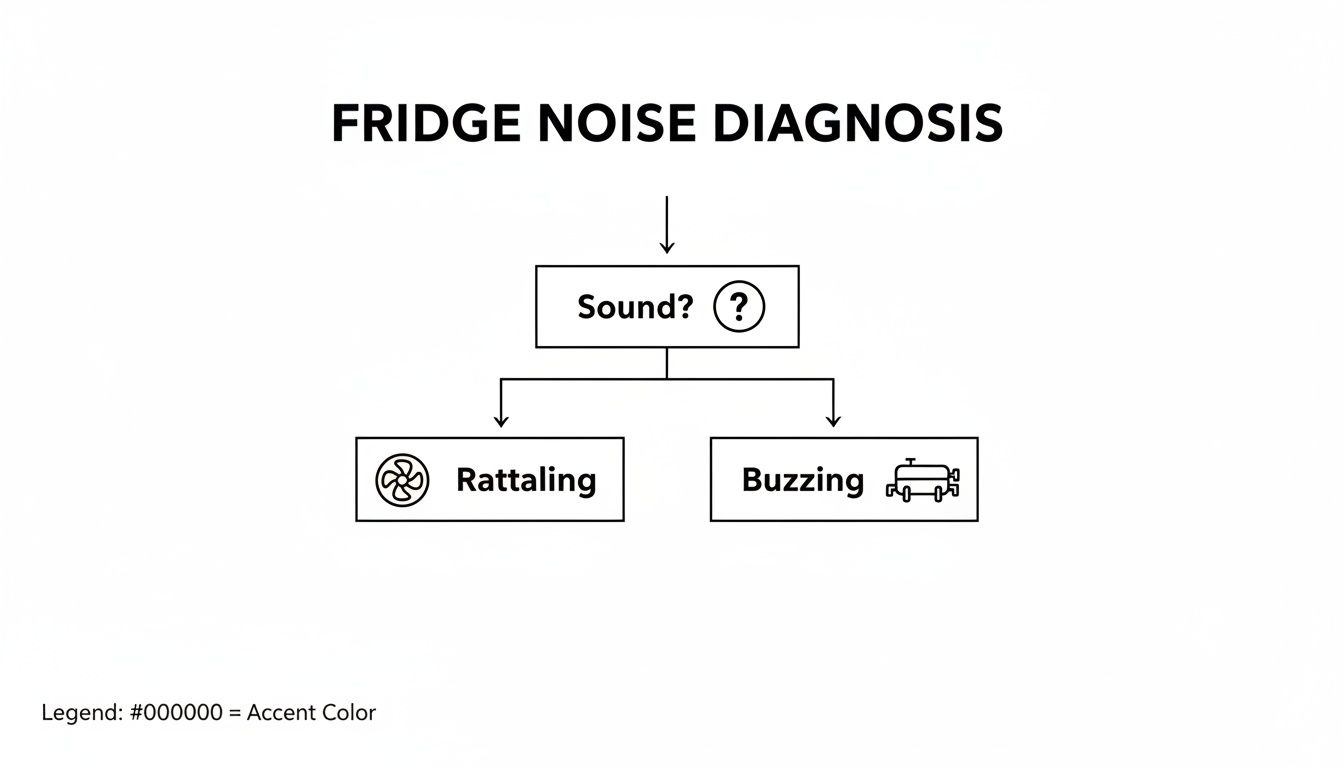
As you can see, the sound itself is your biggest clue. A rattling noise will almost always point you toward a fan, while a deep buzz is usually tied to the compressor.
Listening Like a Pro
To really zero in, you need to listen closely to different parts of the unit. You don’t need fancy equipment for this; a simple tool you already have can make a huge difference.
Pro Tip: Grab a long screwdriver. Place the metal tip against different spots on the refrigerator (like the compressor housing or near the fan motors) and press the handle firmly against your ear. It works like a makeshift stethoscope, amplifying the internal sounds and helping you isolate the noise with surprising accuracy.
This trick is incredibly effective. You might be convinced it's the compressor making all that noise, only to find out it's actually a rattling condenser fan right next to it.
Inspecting the Fans First
Fans are, by far, the most common source of noise in commercial refrigerators. The good news? They’re often the easiest to fix. Your unit will have two main ones: the evaporator fan inside the freezer and the condenser fan near the compressor at the back or bottom.
To Check the Evaporator Fan:
- Safety first. Always unplug the refrigerator completely before you start.
- Open the freezer door and find the back panel inside. You’ll usually need to remove a few screws to get it off.
- Ice buildup is the number one culprit here. If the fan blades are scraping against a wall of frost, you’ll hear a grinding or whirring noise. This usually means you have a problem with your defrost system.
- Gently wiggle the fan blades. If they feel loose or the motor mount is wobbly, you’ve likely found your rattle.
To Check the Condenser Fan:
- Again, make sure the unit is unplugged.
- You’ll need to pull the refrigerator away from the wall to get to the back access panel, which is typically near the bottom.
- This area is a magnet for dust, grease, and grime. A dirty, unbalanced fan gets noisy. Use a brush and a vacuum to give the blades and the surrounding coils a good cleaning.
- While you’re there, look for any cracked blades or loose wires that might be getting hit by the spinning fan.
This is a perfect example of why routine maintenance is so important. Keeping these components clean helps prevent these issues from ever starting. For more detailed steps, check out our guide on Atosa refrigerator and freezer maintenance.
Zeroing In on the Compressor
If both fans look good, it’s time to turn your attention to the compressor. This is the heart of your cooling system, and noises from here are generally more serious. The sound is usually a loud, steady buzzing or humming coming from that big, black, tank-like component in the back.
While most compressor problems are a job for a professional, you can do a quick check. Look at the compressor’s mounting bolts and the rubber grommets they sit in. If these have worn out or loosened over time, the compressor’s vibrations can transfer directly to the fridge’s frame, creating a heck of a racket.
Don’t ignore a noisy compressor. In fact, compressor failures account for over 30% of all refrigeration system breakdowns in commercial kitchens. That loud buzz could be an early warning that it’s about to fail, and ignoring it could lead to a complete system shutdown.
When the Noise Isn't Mechanical
It's rare, but sometimes the noise isn't from the refrigerator at all. If you hear scratching or scraping sounds, especially from the back or underneath the unit, it’s worth considering pests. If the sounds just don’t match up with any of the typical mechanical failures, you might want to look into identifying signs of rodent activity, including unusual noises.
By following these steps, you can go from hearing a mysterious, frustrating noise to confidently identifying the source. This empowers you to either handle a simple fix yourself or give a technician the exact info they need for a quick and effective repair.
Fixing Common Noises in Your Commercial Fridge
Alright, you've done the detective work and have a solid lead on where that racket is coming from. Now it's time to roll up your sleeves. Tackling a noisy commercial fridge is often a simple matter of maintenance, but it’s absolutely critical to know which fixes are safe for you to handle and when to pick up the phone and call a pro. Let’s walk through the most common culprits and what you can do about them.
Addressing a Rattling Fan
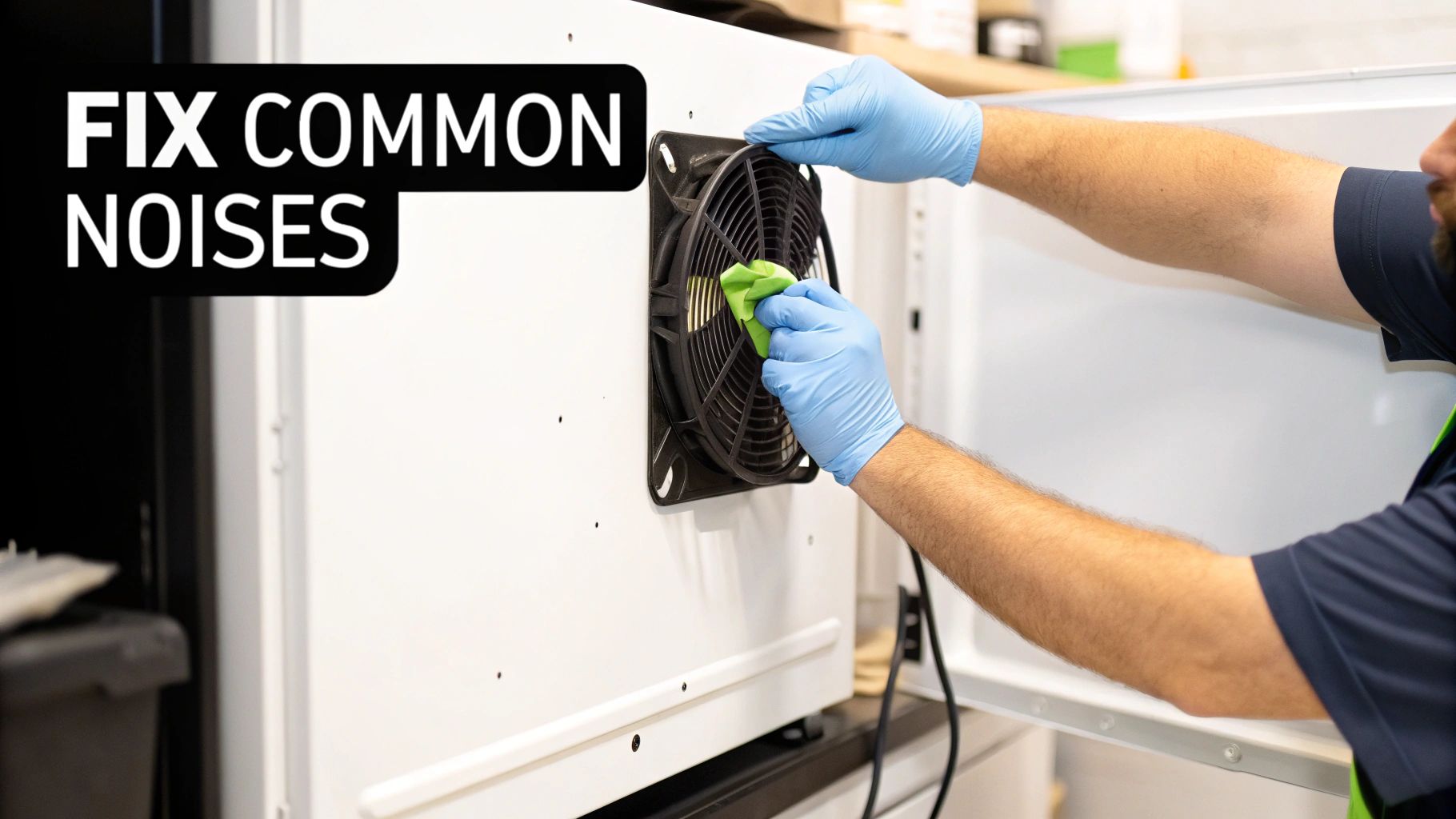
A rattling or scraping sound is, by far, the most common complaint we hear. In almost every case, it points to either the evaporator fan (inside the freezer) or the condenser fan (usually at the back, near the floor).
If the noise is coming from inside, it’s likely the evaporator fan. The usual suspect here is ice buildup. If you opened the freezer panel and saw the fan blades hitting a chunk of frost, you've found your problem. This typically means the defrost system is failing—a bad timer, heater, or thermostat—which is a job for a technician. You can, however, perform a manual defrost to quiet the noise temporarily and save your food while you wait for service.
The condenser fan, located near the compressor, is another story. Its noise is usually caused by something much simpler: debris or a loose part.
- Clean the Fan Blades and Coils: After unplugging the unit, get in there with a stiff brush and a vacuum. Thoroughly clean any dust, grease, or debris from the fan blades and the condenser coils around it.
- Check for Obstructions: Look for any loose wires, bits of insulation, or other debris that might have fallen into the fan’s path and are getting hit by the blades.
- Tighten Mountings: Gently check the fan motor's mounting screws. Years of vibrations can cause them to loosen, leading to a serious rattle. A quick tightening can often solve the issue instantly.
A clean fan is a quiet fan. Honestly, more than half of all "fan noise" service calls can be fixed with a thorough cleaning. It's the cheapest, easiest fix in the book.
Managing a Buzzing Compressor
If you've traced a loud buzzing noise to the compressor, your DIY options are more limited, but still important. The compressor is the heart of the refrigeration system, and while any internal repairs are strictly for professionals, you can definitely address external issues causing the racket.
The most common culprit is the compressor's mounting hardware. It sits on rubber grommets or feet designed to absorb its natural vibrations. Over time, these can dry out, crack, or work themselves loose.
Just unplug the unit, locate the compressor, and take a close look at these mounting points. If a bolt is loose, tighten it. If a rubber grommet looks visibly degraded or has fallen apart, replacing it is a simple parts swap that can dramatically cut down on that buzzing.
When to Call a Professional Technician
Knowing your limits is the key to avoiding a much more expensive repair bill. While cleaning fans and tightening bolts are safe DIY tasks, some noises are clear warning signs to stop what you're doing and call for help.
Call a professional immediately if you hear:
- A Loud Grinding or Squealing: This often indicates failing motor bearings in either the condenser or evaporator fan. The motor is on its last legs and running the unit will only cause more damage.
- Persistent Clicking from the Compressor: If you hear a click, then a buzz for a few seconds, then another click—and this cycle repeats without the fridge cooling—you likely have a bad start relay or a failing compressor.
- Any Signs of an Electrical Issue: This is a big one. If you see sparks, smell burning plastic, or notice frayed wiring, do not attempt a repair. Unplug the unit and call an expert.
Attempting complex electrical or sealed-system repairs without proper training is not only dangerous but can also void your warranty. When in doubt, getting professional advice is the smartest move you can make. For more insights on making smart service decisions, our guide to https://therestaurantwarehouse.com/blogs/restaurant-equipment/restaurant-equipment-repair provides a deeper look.
Repair vs Replace Cost and Time Estimates
Making an informed decision often comes down to money and downtime. A noisy fridge can be a simple fix or a major expense. This table provides a practical breakdown to help you weigh your options.
It's all about balancing the cost and hassle. A $50 fan motor on a five-year-old unit is an easy decision to repair. However, when you're staring down a $1,500 compressor replacement on an eight-year-old fridge, you have to seriously start weighing that cost against buying a new, more efficient model.
To keep all your equipment running quietly and efficiently, it’s worth exploring the benefits of adopting proactive cleaning and maintenance strategies for your whole kitchen. A little regular upkeep prevents many of these noisy headaches from ever starting.
| Component | DIY Fix Feasibility | Estimated Part Cost | Professional Repair Cost (Labor + Part) | Estimated Downtime |
|---|---|---|---|---|
| Condenser Fan Motor | High | $40 - $120 | $200 - $400 | 1-3 Hours |
| Evaporator Fan Motor | Medium | $30 - $100 | $250 - $450 | 2-4 Hours |
| Compressor Start Relay | Medium | $20 - $60 | $150 - $300 | 1-2 Hours |
| Defrost Timer | Medium | $25 - $75 | $180 - $350 | 1-2 Hours |
| Compressor | None (Pro Only) | $300 - $800+ | $800 - $2,000+ | 4 Hours - 2 Days |
Why a Quiet Kitchen Is a More Productive Kitchen
That constant, nagging drone from a struggling refrigerator isn't just background noise. It's a direct hit to your kitchen's productivity. When your crew has to yell orders over a loud hum or gets constantly sidetracked by a rattling fan, communication starts to crumble. It’s a recipe for mistakes, delayed tickets, and a workflow that just can't find its rhythm.
This problem gets even bigger in today's restaurants, especially with the popularity of open-concept layouts. What starts as a back-of-house headache can quickly spill over into the dining room, wrecking the very atmosphere you've worked so hard to build.

The Hidden Costs of a Noisy Environment
A loud kitchen isn't just annoying—it's stressful. That constant auditory strain ratchets up the pressure in an already high-stakes environment, leading to staff fatigue and burnout. This has a very real impact on your bottom line, showing up as lower efficiency and higher employee turnover.
Just think about these impacts:
- Impaired Communication: Orders get misheard, leading straight to food waste and slower service times.
- Increased Staff Stress: An endlessly noisy workplace spikes stress levels, hurting both focus and team morale.
- Negative Customer Perception: Unwanted noise bleeding from the kitchen can make your dining area feel chaotic and less relaxing.
This isn't just a hunch; the entire industry is waking up to this. Noise from commercial refrigeration has become a major pain point for operators, especially in cities with strict noise regulations. The global market for this equipment is on track to hit $50.3 billion by 2032, and you can bet that noise reduction is a huge factor steering those purchasing decisions. For a deeper dive, you can read the full market research on this trend.
Key Insight: Viewing a quieter refrigerator as a strategic investment—not just another repair—can fundamentally improve your kitchen's operational flow and overall atmosphere.
Investing in a Calmer, More Efficient Workspace
Deciding to fix that noisy fridge, or even replace it with a quieter model, is an investment in your kitchen's health. A calmer environment fosters clearer communication, better concentration, and a more professional vibe for both your staff and your guests.
Ultimately, it creates a space where your culinary team can zero in on what they do best: creating incredible food. By tackling that loud fridge, you're actively removing a roadblock to productivity and taking a step toward a more professional, efficient kitchen. It’s a smart decision that pays off in a smoother workflow, happier staff, and a better experience for everyone who walks through your doors.
Deciding Between Repairing or Replacing Your Fridge
When your commercial refrigerator starts screaming at you, it’s easy to feel the pressure. It's more than just an annoying noise; it's a critical moment for your business. You’re suddenly stuck between a potentially hefty repair bill and the major expense of a brand-new unit. Making the right call means taking a breath, stepping back from the panic, and looking at the situation like a business owner, not just a frustrated operator.
A sudden grinding sound doesn't automatically mean your fridge is toast. But it is a clear signal that you need a game plan for making a smart financial decision, not just a knee-jerk reaction to the noise.
The 50 Percent Rule
In the world of equipment repair, there's a handy guideline that technicians and seasoned operators swear by: the 50 percent rule. It’s a simple piece of math that cuts right through the indecision.
If a repair is going to cost you more than 50% of what it would take to buy a new, comparable refrigerator, it’s almost always time to replace it. Pouring a huge chunk of cash into an aging machine is often a losing game, because it's usually just a matter of time before the next part gives out.
This rule is your best defense against throwing good money after bad. Let's say you get a quote for a $1,500 compressor repair on a unit that would cost $2,500 to replace. That's a classic example of when buying new is the smarter long-term move.
Key Factors to Consider
The 50 percent rule is a great starting point, but the immediate cost is only one piece of the puzzle. A few other factors should carry a lot of weight in your decision.
- Age of the Unit: A commercial refrigerator’s typical lifespan is about 8-12 years. If your unit is creeping past that eight-year mark, justifying a major repair gets a lot tougher.
- Repair History: Is this fridge a repeat offender? If you and your repair tech are on a first-name basis because of this one machine, that's a huge red flag. It’s telling you the unit is no longer reliable.
- Energy Efficiency: Older refrigerators are energy hogs. A brand-new, ENERGY STAR certified model can easily save you hundreds of dollars a year in electricity, helping the investment pay for itself over time.
- Type of Repair: The specific problem matters—a lot. A dead $50 fan motor is an easy fix. A failing compressor, the heart of the entire system, is a much more serious diagnosis that often signals the unit is nearing the end of its useful life.
A Real-World Scenario
Let's put this into practice. Imagine your trusty 10-year-old reach-in cooler starts making a loud, angry buzzing sound. A technician comes out and confirms your fears: the compressor is on its last legs. The repair quote is $1,600. A shiny new, more energy-efficient model would run you $3,000.
Using the 50 percent rule, the repair cost ($1,600) is more than half the replacement cost ($1,500). In this situation, pulling the trigger on a new unit is the clear winner. You’re not just getting a quiet, reliable machine with a warranty; you're also getting lower energy bills and ditching the stress of wondering what will break next. For a detailed breakdown of different models, our comprehensive guide to commercial refrigerators can help you find the perfect replacement.
It's also worth noting that the industry is shifting. According to market research from Technavio, things like operational noise and compressor types are now major factors in purchasing decisions as more operators look to create quieter, more pleasant workplaces. Choosing a new model isn’t just about fixing a problem; it’s an opportunity to upgrade to a more modern and productive kitchen environment.
Questions We Hear All the Time About Noisy Fridges
Even after you've done some digging, a few questions might still be nagging you. That’s completely normal. In the middle of a chaotic kitchen, a refrigerator making a racket is the last thing you need. Here are some of the most common questions we get from operators, with clear, straightforward answers to help you handle the situation.
Is It Normal for a Brand New Commercial Fridge to Be Loud?
A new commercial refrigerator will definitely make some noise as it gets settled in. It's working hard to reach its ideal operating temperature for the very first time, so you should expect to hear the compressor and fans cycling on and off. Honestly, that’s a good sign—it means it's doing its job.
That said, it shouldn't be excessively loud. Any sharp grinding, loud rattling, or intense vibrations are immediate red flags. Before you pick up the phone, give the unit a full 24 hours to stabilize. In the meantime, double-check that it’s perfectly level and not jammed up against any walls or other equipment, which can amplify totally normal operating sounds.
If the strange, loud noises are still there after a day, get in touch with your supplier right away. It could be a sign of damage from shipping or a faulty part that should be covered by your warranty.
Key Takeaway: A new unit has a "break-in" period. Normal humming and whooshing are fine, but harsh mechanical noises are not. Document any weird sounds and report them quickly to protect your warranty.
How Can I Temporarily Quiet My Fridge While Waiting for a Technician?
If you’re stuck with a noisy fridge while waiting for a service call, there are a few things you can try to reduce the racket, especially if it's a vibration or rattle.
First, make sure the fridge is stable and level. An unlevel unit is probably the number one cause of rattling. Next, look for any loose items on top of or inside the unit that might be vibrating along with the motor.
You can also do a quick visual check of the condenser fan area (after unplugging the unit, of course). Sometimes a piece of paper or other light debris gets sucked in and is just tapping against the fan blades. Gently clearing that out can be an instant fix.
But for internal mechanical noises like a grinding compressor or a squealing motor, there really isn't a safe temporary fix. Avoid the temptation to pile blankets or other materials against the unit to muffle the sound. This can block essential airflow, cause the system to overheat, and turn your noise problem into a much, much bigger one.
Does the Type of Refrigerant Affect How Loud a Fridge Is?
This is a great question. While the refrigerant chemical itself doesn't make any noise, the systems built around different refrigerants can have totally different sound profiles.
Modern, energy-efficient refrigerants like R-290 (propane) operate at different system pressures than the older chemicals we used to use. This means the compressors and other parts have to be engineered specifically for those pressures. As manufacturers have shifted to these more environmentally friendly options, they've also put a huge focus on designing quieter overall systems.
So, while the refrigerant isn't the direct source of the sound, a commercial fridge using a newer refrigerant is often part of a more modern, and typically quieter, system design.
When you need reliable, quiet, and efficient refrigeration for your business, The Restaurant Warehouse has you covered. Explore our selection of top-tier commercial refrigerators and find the perfect fit for your kitchen.
About The Author

Sean Kearney
Sean Kearney is the Founder of The Restaurant Warehouse, with 15 years of experience in the restaurant equipment industry and more than 30 years in ecommerce, beginning with Amazon.com. As an equipment distributor and supplier, Sean helps restaurant owners make confident purchasing decisions through clear pricing, practical guidance, and a more transparent online buying experience.
Connect with Sean on LinkedIn, Instagram, YouTube, or Facebook.