

Freeze Frame! Our Favorite Commercial Ice Makers Reviewed
Why Your Business Needs a Reliable Commercial Ice Maker
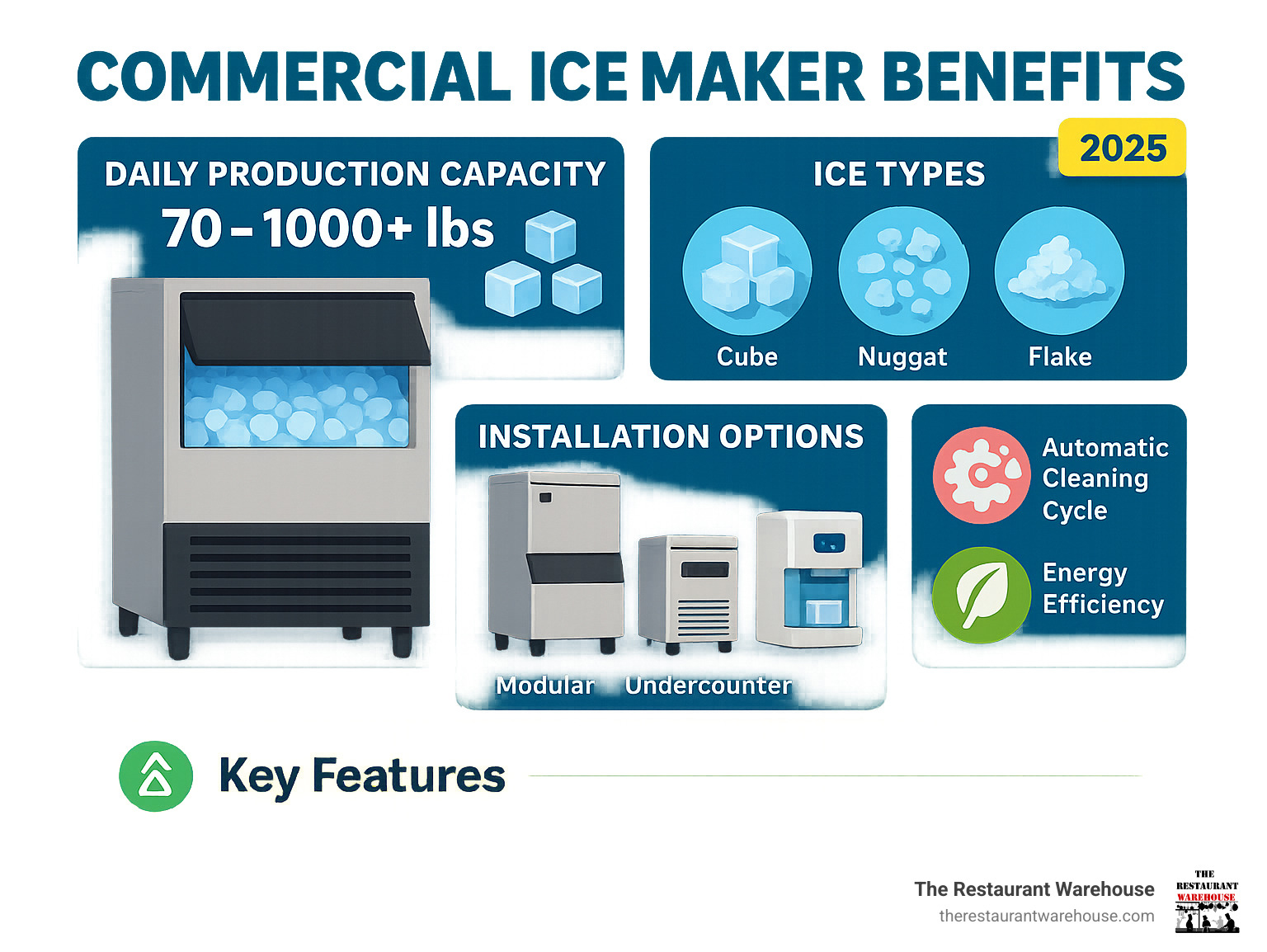
A commercial ice maker is essential equipment for any foodservice business - from restaurants and bars to hotels and healthcare facilities. These machines produce large quantities of ice daily, ensuring you never run out during peak service hours.
Key Benefits of Commercial Ice Makers:
- High Production Capacity: 70-1000+ lbs of ice per day
- Consistent Ice Quality: Clear, uniform cubes or specialty shapes
- Food Safety Compliance: Meets FDA standards for ice as food
- Cost Savings: Eliminates expensive bagged ice purchases
- Operational Efficiency: Automated production and storage
Quick Buying Guide:
- Small cafes/bars: Undercounter models (70-100 lbs/day)
- Restaurants: Modular systems (300-650+ lbs/day)
- Healthcare/offices: Countertop nugget ice dispensers
- Budget range: $300-$4,500+ depending on capacity
Whether you're serving ice-cold cocktails at a busy bar or keeping a salad bar fresh, the right ice machine keeps your customers happy and your business running smoothly. Commercial ice machines should be cleaned 2-4 times per year minimum, as the FDA treats ice as a food product requiring proper hygiene standards.
The key is matching your daily ice needs with the right machine type, ice shape, and cooling system. This ensures you get maximum value from your investment while maintaining the quality your customers expect.
Relevant articles related to commercial ice maker:
- Troubleshooting Tips for a Commercial Ice Machine Not Making Ice
- The Ultimate Guide to Launching Your Ice Machine Business
- Crystal Clear Ice Awaits: Best Ice Machine Cleaning Solutions Reviewed
Decoding the Ice: Types of Commercial Ice Makers
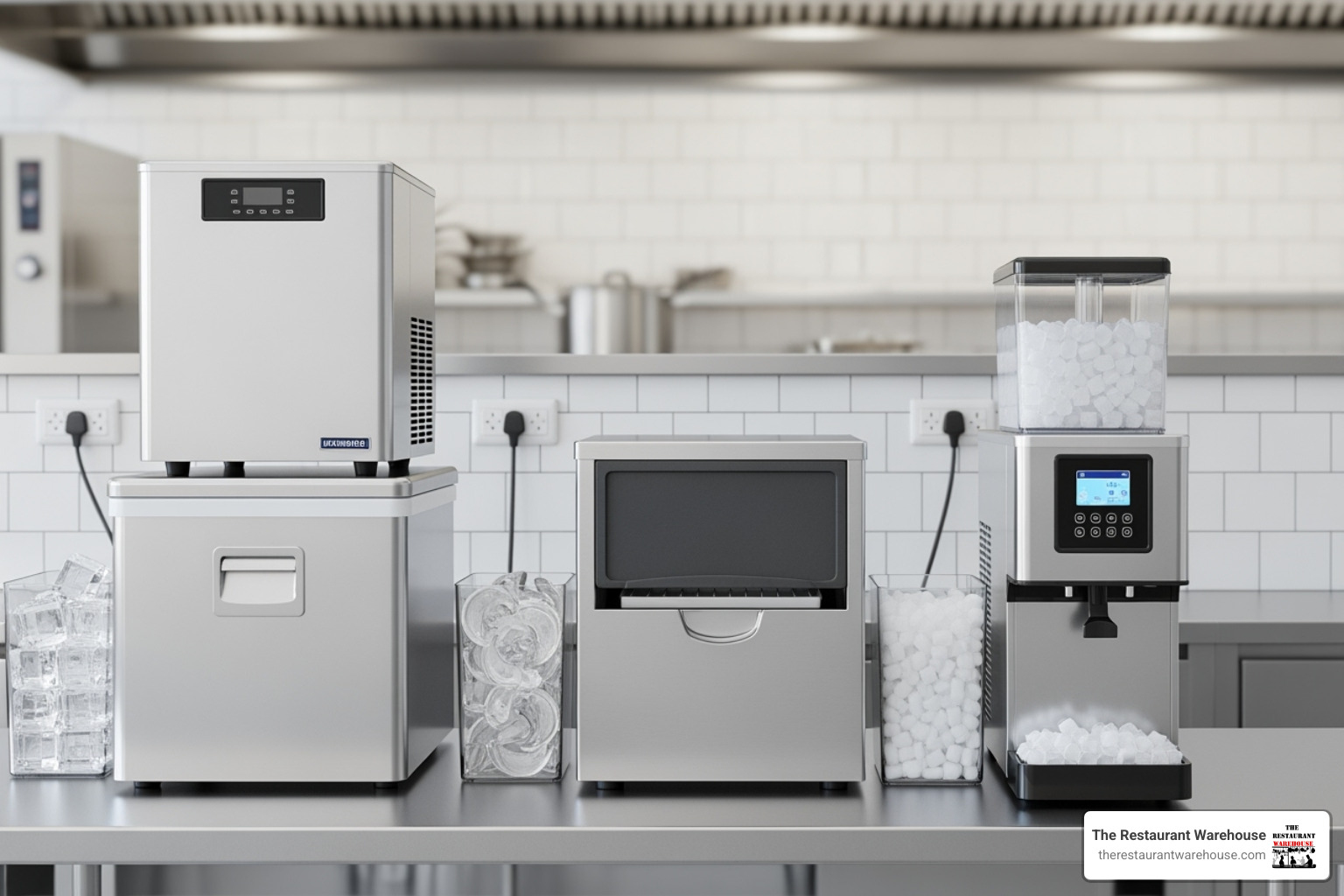
Not all ice machines are created equal. Just like choosing the right knife for different kitchen tasks, selecting the perfect commercial ice maker depends on your space, volume needs, and how you'll use it. Let's break down the three main types so you can find your perfect match.
Modular Ice Machines for Ultimate Flexibility
Picture this: you're running a busy restaurant during dinner rush, and you need tons of ice - fast. That's where modular ice machines shine. These workhorses come in two parts: a separate ice-making head and a storage bin that you can mix and match like building blocks.
This customizable capacity approach is brilliant for high-volume operations. You might pair a powerful head that cranks out 1,000 pounds of ice daily with a 400-pound storage bin. Or scale up even bigger - some setups can produce nearly 2,000 pounds per day! That's enough ice to keep even the busiest restaurants and hotels running smoothly.
The beauty of modular units lies in their flexibility. Need more storage? Swap in a bigger bin. Want higher production? Upgrade just the head. Plus, when maintenance time comes around, you can service each component separately without shutting down your entire ice supply.
For businesses serious about their ice game, check out our 1000 Pound Ice Machine Guide to see what these powerhouses can do.
Undercounter Ice Makers for Compact Spaces
Working with limited space? We get it. That's why undercounter commercial ice makers are perfect for small cafes, bars, and tight kitchens. These clever all-in-one designs slip right under your counter, saving precious floor space while still delivering fresh ice all day long.
Don't let their compact size fool you - these machines are mighty efficient. Most produce between 70-100 pounds of ice daily with built-in storage bins holding 12-33 pounds. That's plenty for a cozy coffee shop's iced drinks or a neighborhood bar's cocktail service.
The best part? Many come with self-contained condensers and even self-cleaning functions. Less hassle, more ice, and your counter space stays clear for actual work. It's a win-win-win situation.
Ready to find the perfect compact solution? Our guide to 2025s Best Commercial Undercounter Ice Makers To Keep Things Chill has all the details you need.
Countertop and Dispenser Models
Sometimes you need ice that's not just cold, but convenient and clean too. That's where countertop and dispenser commercial ice makers excel. These specialized units are stars in healthcare facilities, breakrooms, and self-service areas where hygiene and easy access matter most.
Many feature nugget ice dispensing - that soft, chewable ice that patients love and customers can't get enough of. Some even offer touchless dispensing options, which is a game-changer for busy environments where cleanliness is crucial.
These machines often combine ice and water dispensing in one unit, making them perfect for employee break areas or patient care stations. While they might not produce as much ice as their bigger cousins, they're unbeatable for specialized applications.
Thinking a dispenser might be right for your space? Our Commercial Ice Dispenser Guide covers everything you need to know.
The Ultimate Checklist for Choosing Your Machine

Beyond the main type, several factors determine which ice maker is right for you. Consider your daily ice needs, the kind of ice that best suits your menu, and the operational costs to find a machine that works as hard as you do. Choosing the wrong commercial ice maker can become a headache you don't want or need, so let's make sure you get it right!
Understanding Ice Types and Their Best Uses
Here's something that might surprise you: not all ice is created equal! The type of ice your commercial ice maker produces can make or break your beverage quality and customer satisfaction. Think about it – would you want chunky nugget ice in your premium whiskey or slow-melting cubes in your smoothie? Each ice type has its perfect match.
| Ice Type | Characteristics | Ideal Applications |
|---|---|---|
| Cube Ice | Hard, dense, slow-melting, crystal clear | Cocktails, soft drinks, iced coffee, fine dining, bagging ice |
| Half-Cube | Smaller, more compact than full cubes, still dense and slow-melting | Soft drinks, blended drinks, cocktails (especially in high-volume settings) |
| Nugget Ice | Soft, chewable, porous, absorbs beverage flavors, cools quickly | Blended drinks, smoothies, fountain beverages, healthcare facilities, patient care |
| Flake Ice | Soft, malleable, cools rapidly, forms tightly around products | Food displays (seafood, salad bars), therapeutic uses, packing and shipping, blended drinks |
Cube ice is your classic choice – those beautiful, crystal-clear cubes that melt slowly and look fantastic in any glass. They're perfect for cocktails where you want to chill without diluting too quickly. Half-cube ice gives you similar benefits but in a more compact size, making it ideal for high-volume operations where you need efficient cooling.
Nugget ice is the crowd favorite for its chewable texture. Customers love munching on it, and it's especially popular in healthcare settings where patients appreciate the soft, easy-to-consume texture. Flake ice is your go-to for food displays – it molds perfectly around seafood and produce, keeping everything fresh and visually appealing.
For those special occasions, there's also gourmet ice – those large, perfectly clear cubes that make premium spirits shine. Crescent ice prevents clumping and displaces liquid well, while top hat ice offers a unique visual appeal for specialty cocktails.
If you're curious about elevating your ice game, check out our guide to Gourmet Ice. The FDA considers ice a food product, so quality matters just as much as your ingredients!
Air-Cooled vs. Water-Cooled Condensers
The condenser is like the heart of your commercial ice maker – it's what removes heat during the ice-making process. Your choice between air-cooled and water-cooled systems can significantly impact your operating costs and kitchen environment.
Air-cooled condensers are the most popular choice, and for good reason. They're generally less expensive to install and use minimal water, which can save you serious money if you're in an area with high water costs. They're also simpler to maintain – no complex water lines to worry about. However, they do have a trade-off: they blow hot air into your space, which can make your kitchen warmer and force your HVAC system to work harder. They also need adequate clearance for airflow and tend to be a bit noisier.
Water-cooled condensers use a continuous flow of water to remove heat, making them more efficient in hot environments. They produce less ambient heat and operate more quietly than their air-cooled counterparts. This makes them excellent for enclosed spaces where heat discharge is a concern. The downside? They can use significant amounts of water – some high-capacity units consume up to 128 gallons per 100 pounds of ice! This can lead to higher utility bills, especially if the water isn't recirculated.
For larger operations, remote-cooled systems offer another option. These allow you to place the condenser outside your building, keeping both heat and noise out of your kitchen and dining areas. It's like having the best of both worlds!
Understanding these differences helps you make a choice that fits your specific environment and budget. Our Ice Machine Commercial Guide dives deeper into cooling systems if you want more technical details.
How Much Does a Commercial Ice Maker Cost?
Let's talk numbers – because nobody likes budget surprises! The cost of a commercial ice maker varies widely based on production capacity, features, and brand. You're looking at anywhere from $1,000 for smaller units to $4,500+ for high-capacity models, with some specialized machines going even higher.
Smaller units producing 70-100 lbs per day are your most budget-friendly option, often ranging from $234.99 to $319.99. These compact machines are perfect for small cafes or bars that need a steady but modest ice supply. A typical 100 lb/24hr unit with 33 lbs storage capacity might run you around $319.99.
Mid-range units producing 200-300 lbs per day step up both in capacity and price. A 200 lb/24hr machine with 50 lbs storage could cost around $499.99, while a more robust 300 lb/24hr unit with 100 lbs storage might be priced at $799.99.
High-volume units producing 650+ lbs per day are designed for serious commercial use. A 650 lb/24hr machine with 400 lbs storage capacity typically runs around $1,599.99. Premium models with advanced features can reach $4,860.00 or more.
Several factors influence the final price: production capacity (more ice = higher price), ice type (specialty shapes sometimes cost more), cooling method (water-cooled units may cost more upfront but save energy long-term), advanced features (self-cleaning, electronic controls, antimicrobial protection), and brand reputation (established brands often command higher prices but offer better reliability and warranty support).
The purchase price is just the beginning. Factor in operational costs like water consumption, electricity usage, and maintenance. Investing in quality now can save you headaches and money down the road.
Looking for great deals? Check out our Cool Deals On Commercial Ice Makers For Sale to find the perfect machine for your budget.
Keeping It Cool and Clean: Essential Maintenance Guide
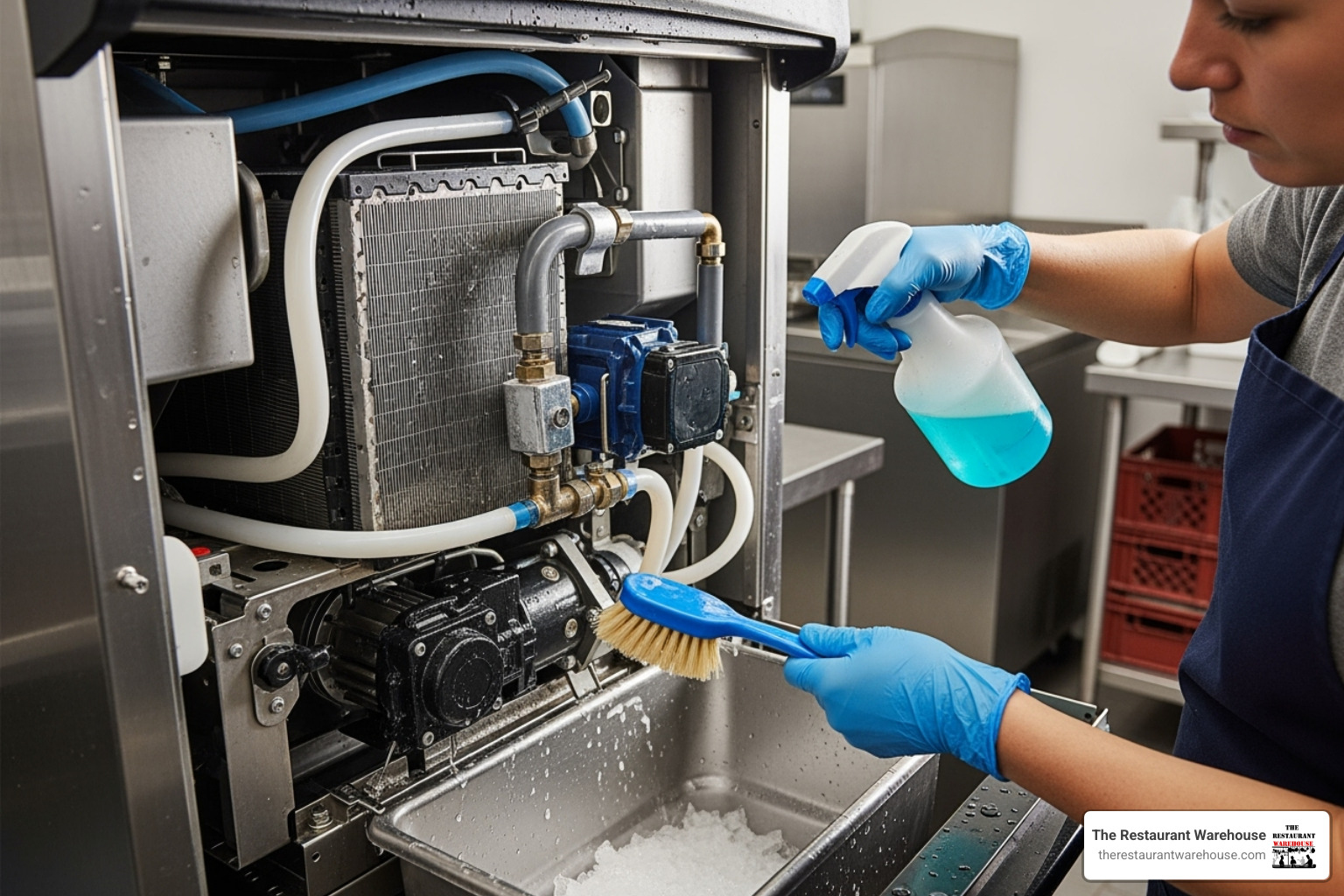
Here's something that might surprise you: the FDA actually classifies ice as a food product. That means your commercial ice maker needs the same level of hygiene attention as your kitchen equipment. Think about it - your customers are putting this ice directly into their drinks, so keeping it clean isn't just good practice, it's essential for food safety.
Regular cleaning does more than just keep your ice safe and great-tasting. It extends your machine's lifespan, prevents expensive breakdowns, and keeps your operation running smoothly. Most commercial ice maker units should be professionally cleaned at least 2-4 times per year, though high-volume operations or machines in hot environments might need more frequent attention.
The good news? Your ice machine will tell you when it needs care. Learning to recognize these signs can save you from bigger problems down the road.
Telltale Signs Your Ice Machine Needs Cleaning
Your commercial ice maker isn't subtle when it's crying out for attention. These warning signs are your machine's way of saying "help me help you."
Small ice cubes are often the first red flag. When mineral deposits and slime build up in your machine, they restrict water flow and prevent proper ice formation. You'll notice your cubes looking smaller and taking longer to form.
Cloudy ice is another dead giveaway. Clear ice means clean ice - when it starts looking foggy or opaque, mineral buildup or other contaminants are likely the culprit. This isn't just an appearance issue; it affects taste and quality too.
Watch out for poorly formed ice that feels soft, melts unusually fast, or has irregular shapes. This usually points to problems with the evaporator plate or water system that need immediate attention.
The most serious warning sign is bad taste or smell. If your ice has any noticeable odor - whether moldy, musty, or metallic - or tastes off, stop using it immediately. This typically indicates mold, mildew, or bacteria growth, which is a serious health hazard.
Finally, reduced production is your machine's way of telling you it's struggling. When buildup restricts internal components, your ice maker can't work at full capacity, leaving you short on ice during busy periods.
If you're experiencing production issues beyond cleanliness, our guide on Troubleshooting Tips For A Commercial Ice Machine Not Making Ice can help identify other potential causes.
Step-by-Step Cleaning Process
Cleaning your commercial ice maker might seem intimidating, but breaking it down into manageable steps makes it straightforward. Always check your manufacturer's specific instructions first, but here's the general process that works for most machines:
Safety comes first - always turn off both the power and water supply before starting any cleaning. This protects both you and your machine from damage.
Empty everything out by removing all ice from the bin and draining water from the machine through the drain valve. This gives you a clean slate to work with.
Prepare your cleaning solution using an approved commercial ice machine cleaner. The typical ratio is 3 parts water to 1 part cleaner, but always follow the product's specific instructions for best results.
Remove and clean components like the water curtain, evaporator plate, and pump. Soak these parts in your cleaning solution and scrub away mineral deposits, mold, or slime with a soft brush. For interior surfaces, spray or wipe down everything that touches water or ice.
Rinse thoroughly - this step is absolutely critical. Any cleaning product residue left behind can contaminate your ice and affect taste. Use clean water to rinse all components and surfaces multiple times.
Sanitize after cleaning using a food-grade sanitizer to eliminate any remaining bacteria or mold. Follow the product's contact time requirements, then rinse again.
Reassemble and test by putting everything back together, turning on water and power, and letting the machine make its first batch of ice. Discard this first batch completely - it helps flush out any lingering cleaning solution. Test the second batch for quality before serving to customers.
Regular cleaning keeps your ice safe, delicious, and your machine running efficiently for years to come. For specific cleaning products that work best, check out our review of Crystal Clear Ice Awaits Best Ice Machine Cleaning Solutions Reviewed.
Each manufacturer has specific requirements, so you can always find manufacturer-specific instructions in their document catalog for the most detailed guidance.
Our Favorite Commercial Ice Maker Models Reviewed
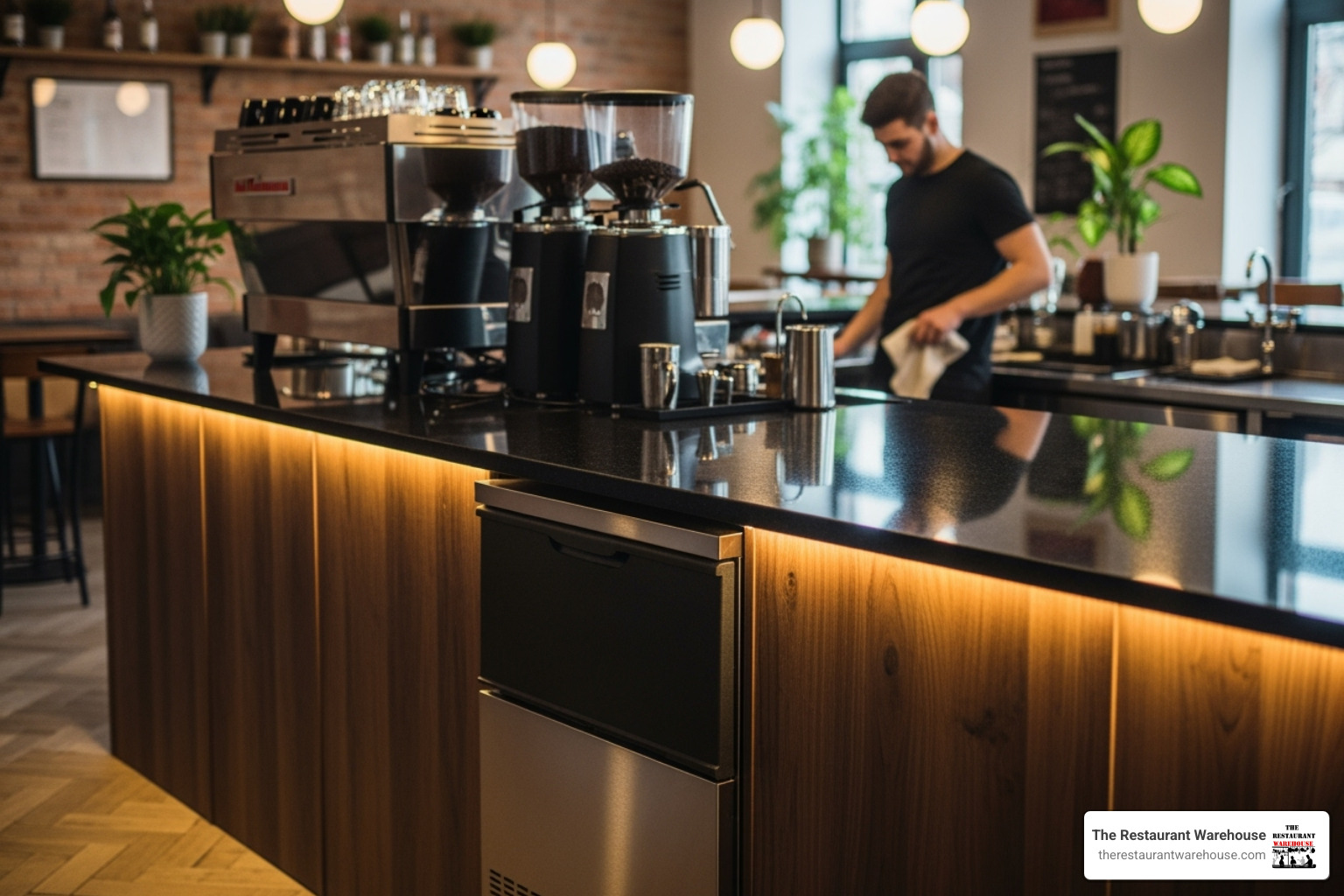
With a clear understanding of types, features, and maintenance, let's dive into our top picks based on common business needs. These selections focus on providing the best value, performance, and reliability for different commercial environments. After helping thousands of businesses choose the right equipment since 2006, we've learned what really works in the real world.
Best for Small Bars & Cafes: The Compact Undercounter Commercial Ice Maker
When space is tight but your need for fresh ice is constant, a compact undercounter commercial ice maker becomes your best friend. These clever machines tuck neatly under your counter while delivering a steady 70-100 lbs of ice per day - perfect for busy coffee shops, intimate bars, and cozy cafes.
What makes these units so appealing is their space-saving all-in-one design. The ice maker and storage bin are combined into one compact unit, typically holding 12-33 lbs of ice at a time. This means you're not constantly running back and forth to refill - the machine keeps a steady supply ready for your rush periods.
Most undercounter models produce bullet or crescent-shaped cubes, which work beautifully in everything from iced lattes to craft cocktails. The price point of $300-$800 makes them accessible for small businesses just starting out or looking to upgrade from buying bagged ice. For example, a unit producing 70lbs/24H with 12lbs storage might cost around $234.99, while a more robust 100lbs/24H model with 33lbs storage could be about $319.99.
Installation is typically straightforward since most use air-cooled condensers - no complicated water lines for cooling. Just plug it in, connect the water supply, and you're ready to serve perfectly chilled drinks.
For detailed guidance on choosing the right size for your establishment, check out our Bar Ice Machines Guide.
Best for High-Volume Restaurants: The Modular Commercial Ice Maker
When your restaurant is slammed and you need ice by the hundreds of pounds, a modular commercial ice maker is your heavy-duty solution. These workhorses can produce 300-650+ lbs of ice per day, with some models reaching nearly 1000 lbs when you really need to keep up with demand.
The beauty of modular systems lies in their flexibility. The ice-making head sits on top of a separate storage bin, so you can mix and match based on your specific needs. Maybe you need a high-production head that makes 650 lbs daily paired with a 400 lb storage bin for your weekend rushes. Or perhaps a 300 lb production unit with a 100 lb bin works perfectly for your steady weekday service.
These machines typically produce dice or half-dice cubes - the versatile workhorses of the ice world. They're perfect for water glasses, soft drinks, and even food displays. Most high-volume units use air-cooled condensers for efficiency, though water-cooled options are available if your kitchen runs particularly hot.
The price range of $800-$1,600+ reflects their robust construction and high capacity. A 300lbs/24H machine with 100lbs storage might run around $799.99, while a powerhouse 650lbs/24H unit with 400lbs storage could be about $1,599.99. Yes, it's an investment, but when you consider the alternative of running out of ice during your dinner rush, it pays for itself quickly.
For help sizing your restaurant's ice needs, our Ice Machine Restaurant Guide walks you through the calculations.
Best for Healthcare & Quick Service: The Nugget Ice Dispenser
Sometimes it's not just about making ice - it's about making the right ice for your specific needs. Nugget ice dispensers shine in healthcare facilities, quick-service restaurants, and anywhere that chewable, soft ice is preferred over traditional hard cubes.
Nugget ice has a unique porous, chewable texture that makes it incredibly popular with patients in healthcare settings. It's easier to chew and swallow, making hydration more comfortable for those who might struggle with hard ice. But it's not just for hospitals - many customers specifically seek out restaurants that serve nugget ice because of its satisfying crunch and ability to absorb drink flavors.
These countertop units combine ice production and dispensing in one convenient package. Many offer touchless dispensing options, which is a huge advantage in medical facilities or high-traffic areas where hygiene is paramount. The hands-free operation reduces contamination risks while keeping the ice supply sanitary.
The convenience factor is hard to beat. Instead of staff scooping ice from a bin, customers or employees can simply press a button (or wave their hand) and get exactly the amount they need. This reduces waste and maintains better ice quality throughout the day.
Ready to explore your nugget ice options? Our Ice Dispenser For Sale Guide covers everything you need to know about these specialized machines.
Conclusion: Making the Smartest Investment for Your Business
Choosing the right commercial ice maker is one of those decisions that quietly shapes your entire operation. It's not just about having ice—it's about having the right ice, in the right amounts, at the right time. When you nail this choice, your bartenders aren't scrambling during happy hour, your kitchen staff can keep the salad bar perfectly chilled, and your customers enjoy that satisfying clink of crystal-clear cubes in their drinks.
We've walked through the landscape together: modular systems that flex with your growing business, undercounter units that maximize every square inch, and specialty dispensers that deliver exactly what healthcare facilities and quick-service spots need. Each type serves a purpose, and understanding that purpose is half the battle won.
The ice itself tells its own story. Cube ice for those premium cocktails, nugget ice for the chewable satisfaction patients crave, flake ice for keeping your seafood display looking fresh—every shape has its moment to shine. Getting this match right between your menu and your ice can be the difference between a good drink and a great one.
Here's something that can't be overlooked: regular cleaning isn't optional. The FDA treats ice as food, which means your commercial ice maker needs the same attention as your grill or prep station. Those telltale signs we discussed—cloudy ice, strange tastes, reduced production—they're your machine's way of asking for help. Listen to it, and it'll serve you faithfully for years.
Budget-wise, we've seen the range from $300 for compact undercounter models to $4,500+ for high-capacity powerhouses. But remember, the cheapest option isn't always the smartest. Factor in your daily ice needs, energy costs, and maintenance requirements. A slightly higher upfront investment often pays dividends in reliability and efficiency.
At The Restaurant Warehouse, we've been helping businesses like yours since 2006, and we've learned that the best equipment decisions come from understanding your specific needs—not just following what everyone else does. We provide top-quality machines at wholesale prices because we believe reliable equipment shouldn't break the bank.
Your customers might not notice when everything runs smoothly, but they'll definitely notice when it doesn't. Don't let your business run out of the coolest commodity. Find your perfect ice maker today and keep your operation running as smoothly as ice-cold perfection.
About The Author

Sean Kearney
Sean Kearney is the Founder of The Restaurant Warehouse, with 15 years of experience in the restaurant equipment industry and more than 30 years in ecommerce, beginning with Amazon.com. As an equipment distributor and supplier, Sean helps restaurant owners make confident purchasing decisions through clear pricing, practical guidance, and a more transparent online buying experience.
Connect with Sean on LinkedIn, Instagram, YouTube, or Facebook.