

Cool Storage Solutions: Finding Your Perfect Commercial Reach-In Refrigerator
Why Commercial Reach-In Refrigerators Are Essential for Food Service Success
When shopping for a reach in fridge commercial unit, you need reliable refrigeration that keeps food at safe temperatures while fitting your kitchen layout and budget. Here's a quick overview of what to look for:
Key Commercial Reach-In Options:
- Single-door units: 12-28 cu. ft. capacity, ideal for smaller kitchens ($1,200-$2,500)
- Double-door units: 47-55 cu. ft. capacity, most popular choice ($2,500-$4,500)
- Triple-door units: 72+ cu. ft. capacity, for high-volume operations ($4,500-$6,500)
- Glass vs. solid doors: Glass offers visibility, while solid provides better insulation.
- Top vs. bottom-mount compressors: Bottom-mount is often easier for maintenance.
Essential Features to Consider:
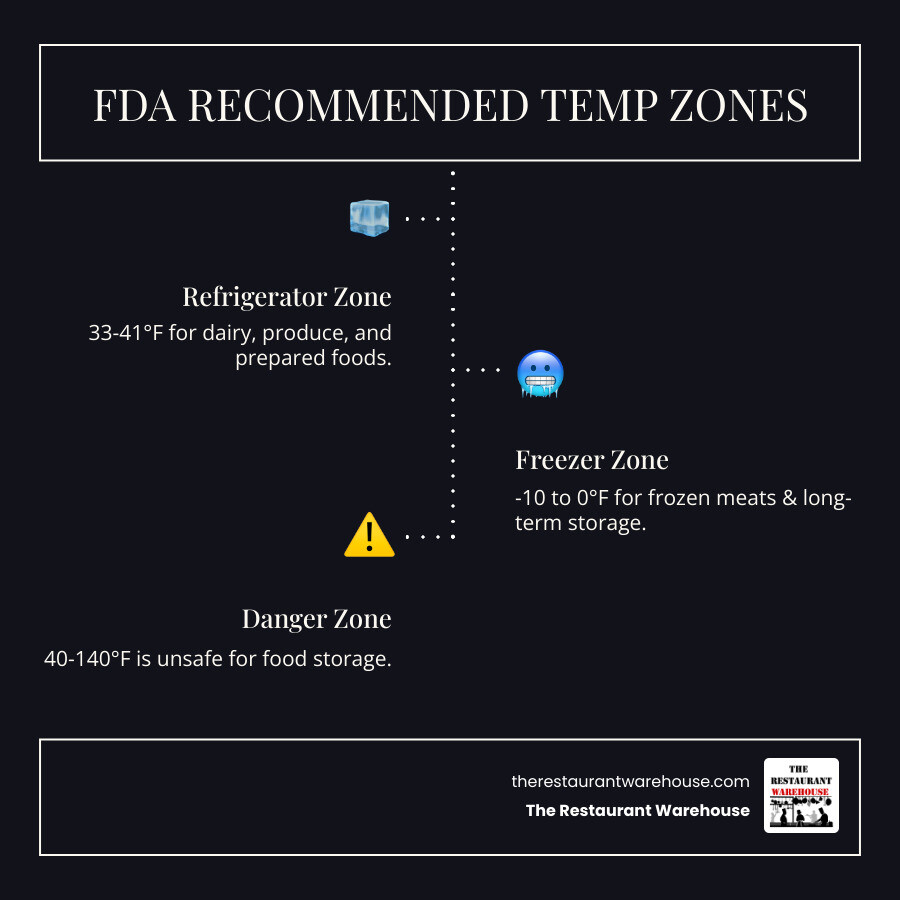
- Temperature range (+33°F to +41°F for refrigerators, -10°F to 0°F for freezers)
- Energy Star certification for lower utility bills
- NSF listing for health code compliance
- Stainless steel construction for durability
In the food service industry, dependable commercial refrigeration is critical for keeping food fresh and safe. A single equipment failure can cost thousands in spoiled inventory and lead to health code violations that could shut down your operation. Today's reach-in refrigerators are designed for the demands of a modern kitchen, focusing on bulk storage, energy efficiency, and consistent temperatures.
As the most popular refrigeration units for commercial kitchens, reach-ins are designed to accept standard 12" x 20" sheet pan racks and 10" x 20" hotel pan racks, fitting seamlessly into your workflow. Modern units with forced-air systems and digital controls maintain uniform temperatures while using up to 40% less energy with eco-friendly R290 refrigerant.
Decoding the Options: Types of Commercial Reach-In Units
When you're shopping for a reach in fridge commercial unit, the variety of options can seem overwhelming. However, understanding the different types is straightforward. Each type of reach-in unit serves specific needs, acting as a reliable workhorse to keep food at safe temperatures in a busy food service environment.
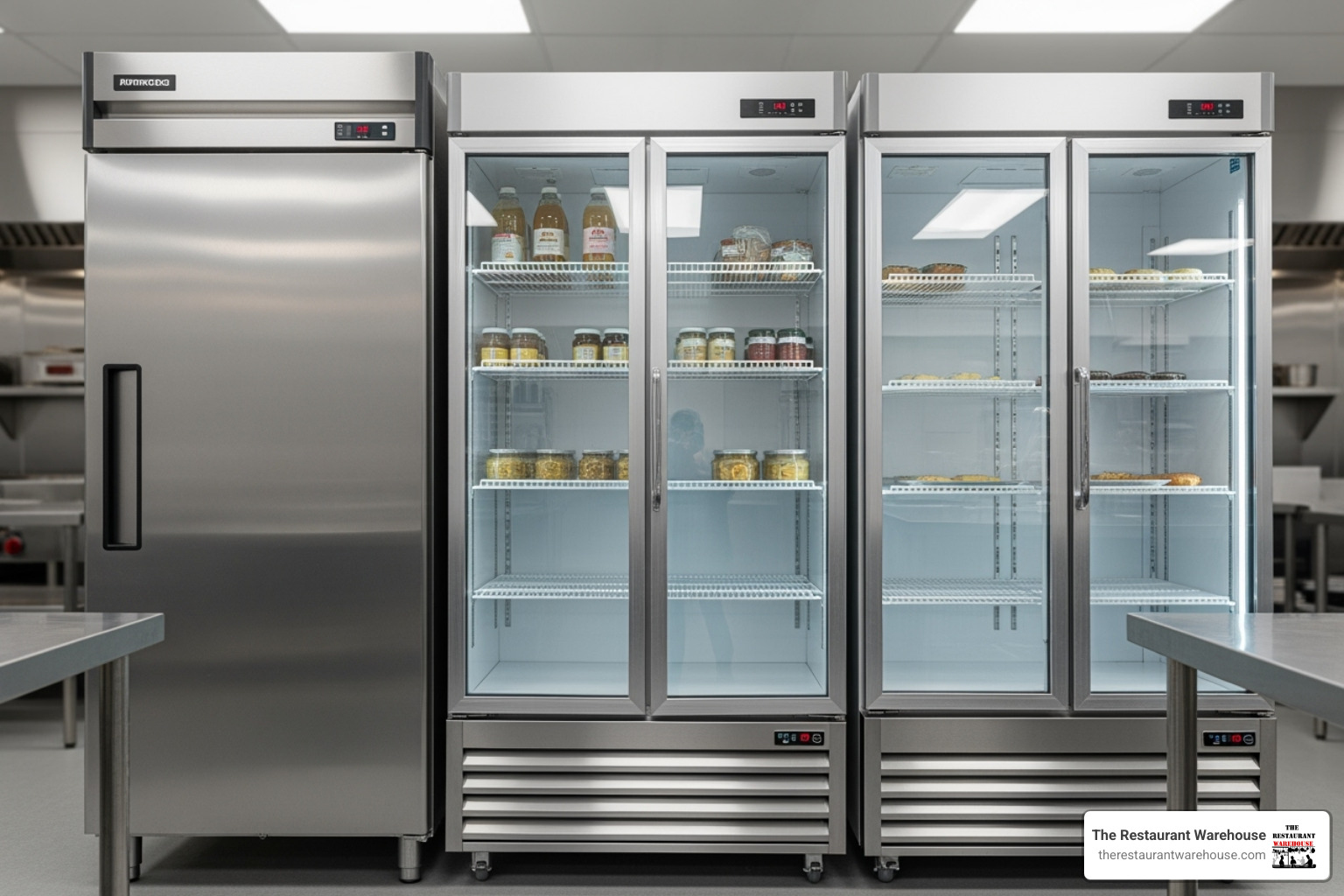
Modern reach-in units are versatile, available as refrigerators and freezers with various door configurations and storage solutions to improve kitchen efficiency. Let's break down the options to help you make the best choice for your operation.
By Door Count and Style
The door configuration of your reach in fridge commercial unit impacts storage capacity and workflow efficiency.
Single-door units are ideal for smaller operations or specialized storage. With capacities from 12 to 28 cubic feet, these compact units fit a lot of storage into a small footprint, perfect for quick access to frequently used ingredients.
Double-door units are the most popular choice for commercial kitchens. Offering 47 to 55 cubic feet of storage, they provide the flexibility to organize different food categories. The wider opening simplifies loading and unloading sheet pans, allowing staff to access sections without disrupting the entire unit.
For high-volume operations, triple-door units deliver maximum storage power. With capacities over 72 cubic feet, they are built for establishments that buy ingredients in bulk or need to store a wide variety of products.
Door style also affects functionality and energy efficiency. Solid doors, typically made of durable stainless steel, offer superior insulation and maintain stable temperatures, leading to energy savings. Glass doors are perfect when visibility is key for checking inventory or displaying products. Modern glass doors use multiple panes and special coatings to minimize heat transfer while providing a clear view, which can reduce unnecessary door openings.
Innovative designs include half-door models, allowing you to open just the top or bottom section to minimize cold air loss, and pass-through models with doors on both sides. This design creates a smooth workflow, allowing prep teams to load from one side while line cooks access from the other, reducing cross-contamination risks.
By Functionality
The core function of your reach in fridge commercial unit—whether it keeps items cold or frozen—is a primary consideration.
Reach-in refrigerators are the backbone of most kitchens, maintaining temperatures between +33°F and +41°F. They keep produce, dairy, and prepared foods at optimal quality using forced air systems that circulate cold air evenly, eliminating hot spots.
Reach-in freezers are essential for long-term storage, keeping ingredients at -10°F to 0°F. They are crucial for storing frozen proteins, prepared items, and seasonal ingredients, often featuring auto-defrost systems to manage humidity and optimize energy use.
Combination refrigerator/freezer units offer both functions in a single cabinet. With separate, independently controlled compartments, they are perfect for smaller operations with limited space.
Convertible units provide the ultimate flexibility, allowing you to switch between refrigerator and freezer functions based on changing menu needs. This adaptability is invaluable for seasonal businesses or operations with evolving menus.
Key Features to Consider When Buying a Reach In Fridge Commercial
Selecting the right reach in fridge commercial unit is a significant decision. It's not just about budget; it's about choosing features that will improve your daily operations, improve efficiency, and ensure food safety. Let's review the most important considerations to help you make a smart investment.

Choosing the Right Size for Your Reach In Fridge Commercial
Getting the size right is crucial. A unit that's too small creates constant storage issues, while one that's too large wastes money on the purchase and energy costs.
Cubic feet (cu. ft.) capacity indicates storage power. A small café might only need a 12-15 cu. ft. single-door model, whereas a busy restaurant may require a 72+ cu. ft. triple-door unit. Always plan for your peak storage needs.
Beyond capacity, consider the interior and exterior dimensions. Ensure the interior accommodates your standard sheet pan racks (12" x 20") and hotel pan racks (10" x 20"). For the exterior, measure your space carefully, accounting for door swing, ventilation clearance, and access for maintenance. Don't forget to measure your doorways to ensure the unit will fit upon delivery.
Pan compatibility is a game-changer for kitchen efficiency. A refrigerator that works seamlessly with your existing 18" x 26" sheet pans or hotel pans streamlines workflow from storage to service.
Compressor Placement: Top-Mount vs. Bottom-Mount
The compressor is the heart of your refrigerator, and its location matters.
Top-mount compressors sit atop the unit, drawing in cooler, cleaner air from above, which can be more efficient in hot kitchens. This placement also keeps the compressor away from floor-level grease and debris. However, maintenance may require a step ladder.
Bottom-mount compressors are increasingly popular due to their accessibility for maintenance and cleaning. The raised bottom shelf is also more ergonomic for staff, reducing bending. While they may draw in more dust, most modern designs include easy-to-clean filters to mitigate this.
The choice depends on your kitchen's conditions. Top-mount is often better for high ambient temperatures, while bottom-mount excels in ease of maintenance and ergonomics.
Construction and Durability: The Stainless Steel Advantage
In a busy commercial kitchen, your reach in fridge commercial unit must be tough.
Stainless steel construction is standard for a reason. It resists dents, scratches, corrosion, and the general wear and tear of a environment. Its durability ensures your investment lasts for years.
From a food safety perspective, stainless steel is easy to clean and maintain, which is essential for hygiene. This brings us to the NSF Listing, a certification indicating the unit meets strict public health standards for materials and construction. An NSF-listed unit is a signal to health inspectors that you prioritize food safety, which can make inspections much smoother.
Practical features like caster wheels are also important. They make it easy to roll the unit away from the wall for essential monthly coil cleanings, which extends the equipment's life and maintains peak energy efficiency.
Modern Marvels: Innovations in Commercial Refrigeration
Commercial refrigeration has transformed in recent years, with today's reach in fridge commercial units being sophisticated machines designed to save money and be kinder to the planet. These modern units blend smart technology with eco-friendly innovations, allowing your kitchen to operate at peak performance while reducing its environmental impact.
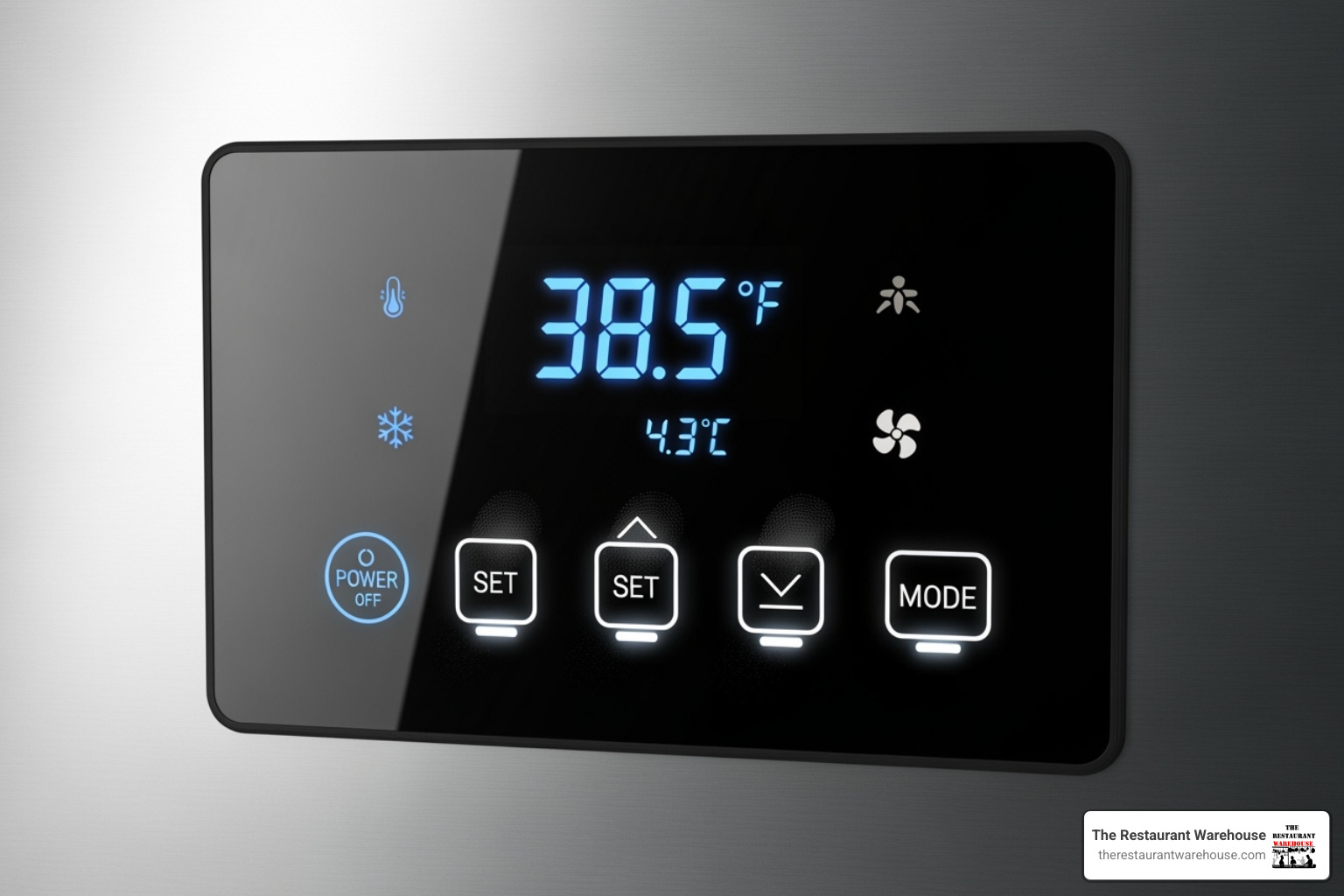
These innovations aren't just fancy features; they are practical solutions to real-world challenges like rising energy costs and stricter environmental regulations.
Energy Efficiency and Eco-Friendly Refrigerants
Commercial refrigeration can be a major energy expense, but modern technology is changing that.
Energy Star Qualified models should be a priority. This certification means the unit meets strict EPA efficiency guidelines, leading to significant long-term savings on your utility bills.
A key innovation is R290 refrigerant. This natural, non-toxic hydrocarbon is not only better for the environment with a low global warming potential, but it can also deliver up to 40% energy savings compared to older refrigerants. This helps reduce both your carbon footprint and your operating costs.
Forced air refrigeration systems are now standard, actively circulating cold air to maintain consistent temperatures throughout the cabinet. This prevents hot spots and ensures uniform cooling, even when the unit is full.
Variable fan systems take efficiency a step further by automatically adjusting fan speed based on cooling demand. This saves energy during quieter periods and helps manage humidity levels, keeping ingredients in optimal condition.
Smart Controls and Maintenance Features
Today's reach in fridge commercial units are loaded with intelligent features that simplify food storage and maintenance.
Digital temperature controls offer precision that analog dials can't match. You can set and monitor exact temperatures to ensure food stays within the critical safe zones: +33°F to +41°F for refrigerators and -10°F to 0°F for freezers.
Temperature alarms act as a safeguard, alerting you if the internal temperature moves outside the set range. Some units also have door open alarms to prevent spoilage and energy waste. These features can prevent thousands of dollars in lost inventory.
Self-closing doors are a simple but crucial feature in a busy kitchen. They automatically seal the unit if left ajar, maintaining temperature and preventing the compressor from overworking. For easier loading, the 90° hold-open feature keeps the door open when needed.
Caster wheels make routine maintenance, like monthly coil cleaning, much simpler. By easily rolling the unit away from the wall, you can access the coils for cleaning, which is vital for efficiency and longevity. Many units also feature easily removable front grilles to make this task even more straightforward.
A Look Back: The Evolution of the Refrigerator
To appreciate today's reach in fridge commercial units, it's fascinating to look at how far refrigeration technology has come. The journey from the household fridges of the past to the commercial workhorses of today tells a story of innovation driven by changing needs.
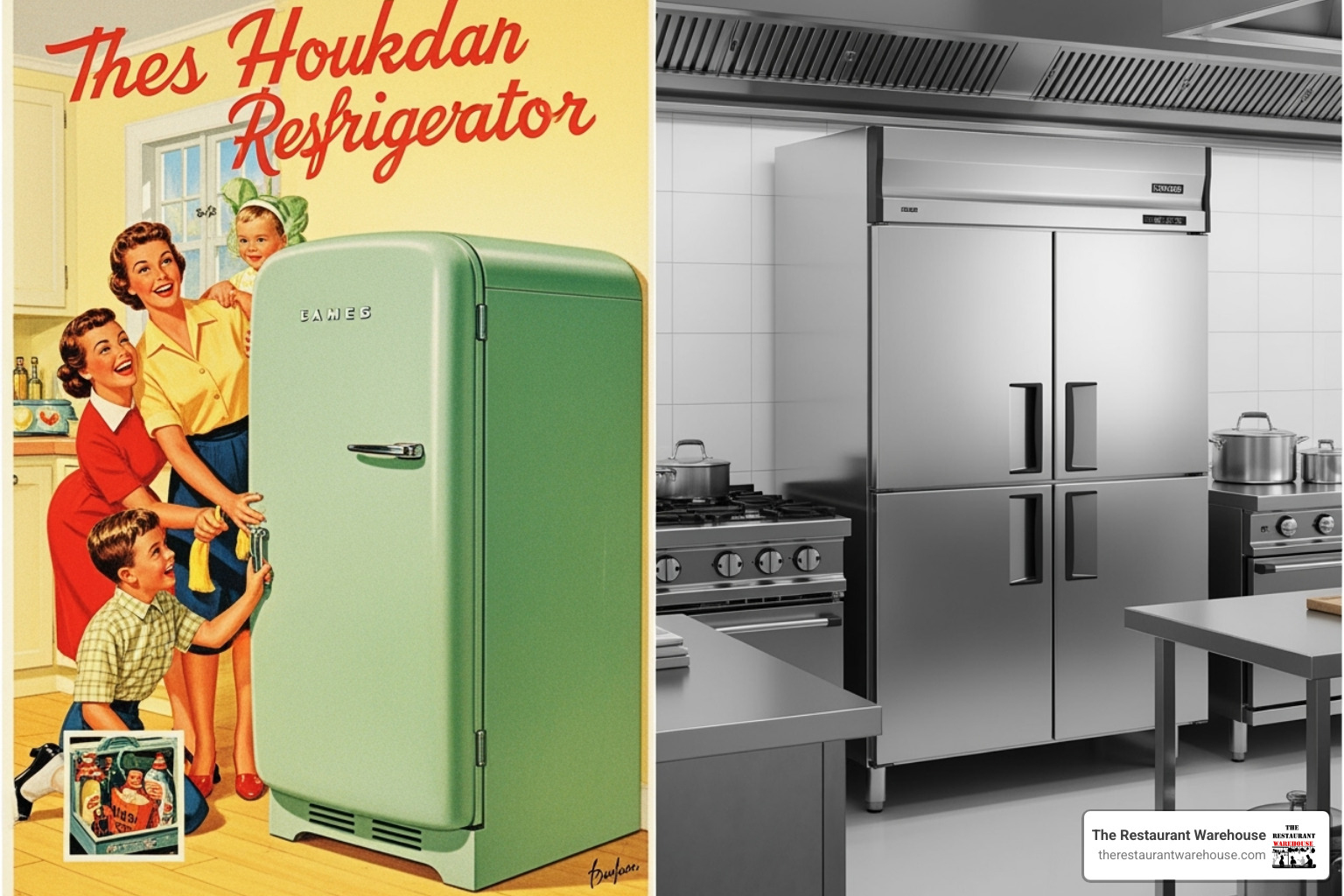
Vintage refrigerator commercials from the mid-20th century reveal a fascinating design philosophy. Some models from that era were surprisingly advanced, featuring 'cold pantry' designs with specialized compartments for everything. The contrast with modern units is striking, highlighting a shift in priorities from compartmentalization to bulk efficiency.
From Compartmentalized Pantries to Bulk Storage Powerhouses
The 1950s design philosophy was about having a perfect place for everything. A popular refrigerator from 1956, for example, featured a removable picture window hydrator for produce, built-in butter keepers, and dedicated egg trays. These specialized compartments were designed for the home cook of the era.
In contrast, the modern focus of a reach in fridge commercial unit is on bulk storage. Restaurant kitchens don't need a butter compartment; they need space for cases of produce, large containers of prep, and full-sized sheet pans. Today's units are designed for kitchen workflow efficiency, with wide, deep shelves and robust construction to handle heavy loads.
Then and Now: Functionality and Design
Those vintage features, like pull-out shelves and an automatic ice-ejector, were genuinely practical for their time and can still seem impressive today.
However, modern practicality has prioritized features that are far more critical for food service. The most important gain has been precise temperature control. Modern units use forced-air systems and digital controls to maintain temperature consistency throughout the cabinet, eliminating the hot spots common in older models.
This shift was driven by evolving food safety standards. Features like NSF Listing, easy-to-clean stainless steel, and temperature alarms are now essential for meeting health codes and protecting a business. We've moved beyond simple convenience to critical compliance, making today's units infinitely better suited for the demanding world of modern food service.
Making the Investment: Budget, Warranty, and Service
Investing in a reach in fridge commercial unit is a major decision that impacts your daily operations, food safety, and bottom line. With the right approach to budgeting and understanding the long-term value, this can be one of the smartest moves you make for your business.

At The Restaurant Warehouse, we believe in transparency to help business owners avoid hidden costs and unreliable equipment. We back our products with warranties that provide real protection.
Understanding the Price Tag
The price of a reach in fridge commercial unit is driven by specific factors. Understanding them helps you make a smarter purchase.
Size is the biggest factor.
- Single-door units (12-28 cu. ft.) typically run between $1,200 and $2,500.
- Double-door units (47-55 cu. ft.), the most popular choice, range from $2,500 to $4,500.
- Triple-door units for high-volume operations start at $4,500 and can go up to $6,500 or more.
While it's a bigger upfront investment, larger units often deliver better value per cubic foot.
Features and material quality also affect the price. Energy Star certification, R290 refrigerant, and digital controls may increase the initial cost but pay for themselves through energy savings and spoilage prevention. Higher-quality stainless steel costs more but offers greater durability.
We strongly advise against used equipment. While tempting, used units often come with no warranty, an unknown maintenance history, and outdated technology. A "bargain" can quickly become a costly headache. New equipment provides the latest energy-efficient technology and full warranty protection.
Warranty and Service for Your Reach In Fridge Commercial
A warranty is your safety net against unexpected repair costs. When evaluating options, the warranty terms are as important as the unit's specifications.
The compressor warranty is critical, as the compressor is the most expensive component. Reputable manufacturers offer long compressor warranties, often 5 years, which signifies confidence in their product. A compressor failure out of warranty can be extremely costly.
Parts and labor warranties cover other issues, typically for 1 to 3 years. This protects you from unexpected repair bills for things like faulty door seals or controls.
At The Restaurant Warehouse, we offer a "no headaches, no fine print, and no questions asked warranty" for our equipment. Our commitment is to get you back up and running as quickly as possible, without complicated claims processes.
Service availability is also key. Before buying, ensure the manufacturer has a reliable service network in your area with certified technicians. A strong warranty and good service network provide long-term reliability and the peace of mind that your investment is protected. The cheapest option upfront isn't always the most economical. A quality unit with a comprehensive warranty is often the smartest financial move.
Conclusion
Choosing the right reach in fridge commercial unit comes down to understanding your kitchen's needs and making a smart, long-term investment. Your refrigeration system works 24/7 to keep ingredients fresh and your operation compliant, making it the foundation of your kitchen.
We've covered the variety of options, from compact single-door units to massive triple-door powerhouses. The choice between solid and glass doors or top-mount and bottom-mount compressors depends on your specific workflow and maintenance preferences.
Modern refrigeration is smarter than ever. Energy Star qualified models with R290 refrigerant save you money on utility bills, while digital temperature controls and alarms provide peace of mind that your food is stored safely. The evolution from vintage novelty to modern workhorse reflects the serious demands of today's food service industry.
This is an investment in your business's future. Choosing a unit with robust stainless steel construction, NSF listing, and compatibility with standard sheet pan and hotel pan racks sets your kitchen up for success. Whether you're budgeting for a single-door unit ($1,200-$2,500) or a triple-door model ($4,500-$6,500), you're investing in equipment built to last. A strong warranty, like our 5-year compressor coverage, protects that investment.
At The Restaurant Warehouse, we understand what food service professionals need: reliable equipment at an affordable price. By eliminating middleman markups, we offer wholesale pricing without sacrificing quality or support. Our "no headaches, no fine print, and no questions asked" warranty is our promise to you. When your reach in fridge commercial unit is running smoothly, we know we've done our job right.
Ready to find the perfect refrigeration solution for your kitchen? We're here to help.
Explore our full range of commercial refrigeration solutions
About The Author

Sean Kearney
Sean Kearney is the Founder of The Restaurant Warehouse, with 15 years of experience in the restaurant equipment industry and more than 30 years in ecommerce, beginning with Amazon.com. As an equipment distributor and supplier, Sean helps restaurant owners make confident purchasing decisions through clear pricing, practical guidance, and a more transparent online buying experience.
Connect with Sean on LinkedIn, Instagram, YouTube, or Facebook.