
Griddles
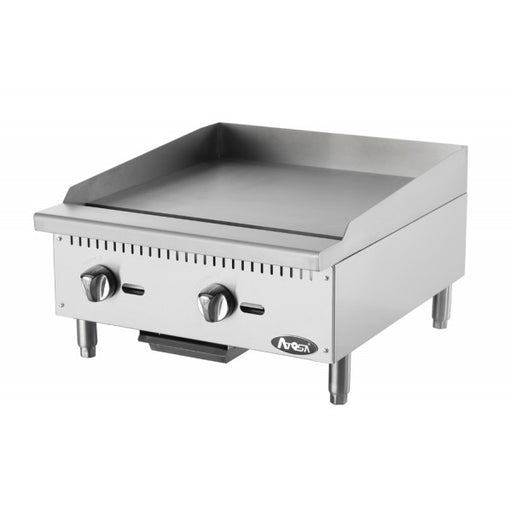
Atosa USA ATMG-24 Heavy Duty Stainless Steel 24-Inch Manual Griddle - Natural Gas
Atosa
Original price
$1,164.00
Original price
$1,164.00
-
Original price
$1,164.00
Original price
$1,164.00
Current price
$839.00
$839.00
-
$839.00
Current price
$839.00
Atosa USA ATMG-24 24-Inch Heavy Duty Manual Griddle – Natural Gas The Atosa ATMG-24 Natural Gas Manual Griddle is a compact, commercial-grade coun...
View full details
Original price
$1,164.00
Original price
$1,164.00
-
Original price
$1,164.00
Original price
$1,164.00
Current price
$839.00
$839.00
-
$839.00
Current price
$839.00
Save 28%
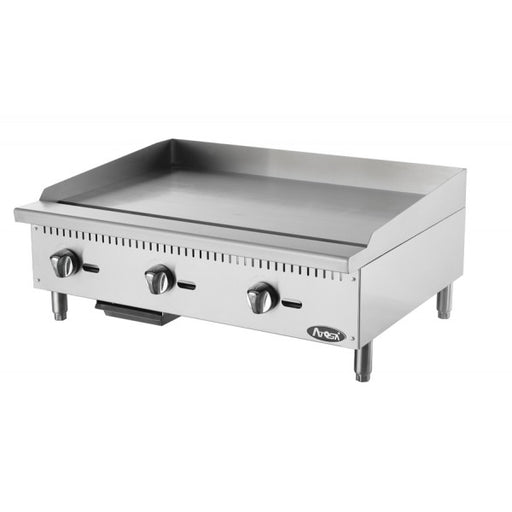
Atosa USA ATMG-36 Heavy Duty Stainless Steel 36-Inch Manual Griddle - Natural Gas
Atosa
Original price
$1,543.00
Original price
$1,543.00
-
Original price
$1,543.00
Original price
$1,543.00
Current price
$1,112.00
$1,112.00
-
$1,112.00
Current price
$1,112.00
Atosa USA ATMG-36 36-Inch Heavy Duty Manual Griddle – Natural Gas The Atosa ATMG-36 Natural Gas Griddle is built for busy commercial kitchens that...
View full details
Original price
$1,543.00
Original price
$1,543.00
-
Original price
$1,543.00
Original price
$1,543.00
Current price
$1,112.00
$1,112.00
-
$1,112.00
Current price
$1,112.00
Save 28%

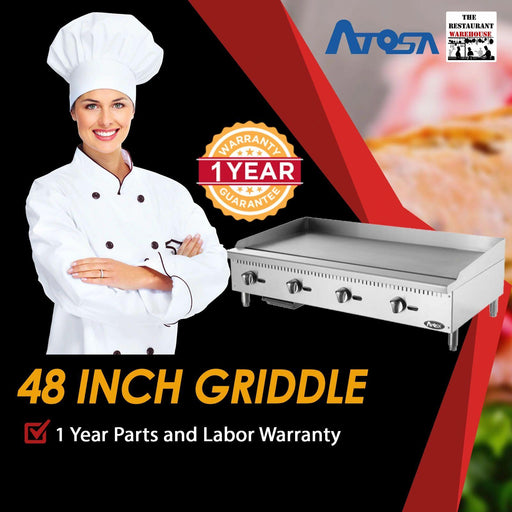
Atosa USA ATMG-48 Heavy Duty Stainless Steel 48-Inch Manual Griddle - Natural Gas
Atosa
Original price
$2,038.00
Original price
$2,038.00
-
Original price
$2,038.00
Original price
$2,038.00
Current price
$1,469.00
$1,469.00
-
$1,469.00
Current price
$1,469.00
Atosa USA ATMG-48 Heavy Duty 48-Inch Manual Griddle – Natural Gas The Atosa ATMG-48 Natural Gas Manual Griddle delivers the professional perf...
View full details
Original price
$2,038.00
Original price
$2,038.00
-
Original price
$2,038.00
Original price
$2,038.00
Current price
$1,469.00
$1,469.00
-
$1,469.00
Current price
$1,469.00
Save 28%
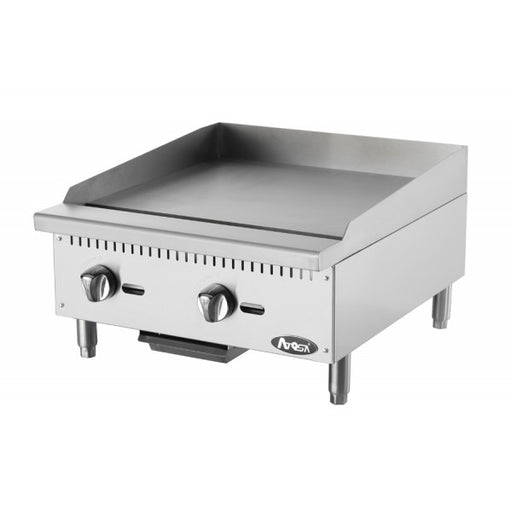
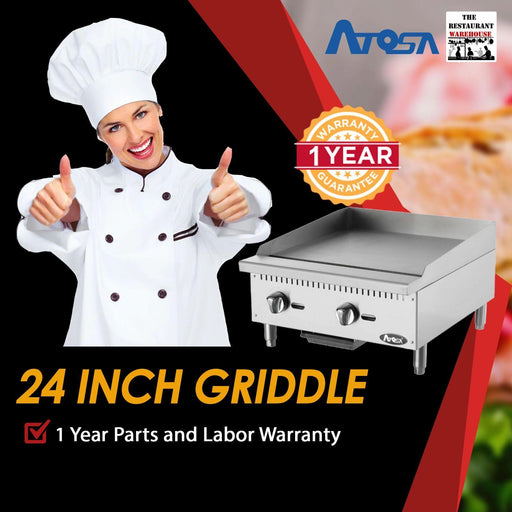
Atosa USA ATMG-24 Heavy Duty Stainless Steel 24-Inch Manual Griddle - Propane
Atosa
Original price
$1,164.00
Original price
$1,164.00
-
Original price
$1,164.00
Original price
$1,164.00
Current price
$839.00
$839.00
-
$839.00
Current price
$839.00
Atosa USA ATMG-24 Heavy Duty 24-Inch Manual Griddle – Propane The Atosa ATMG-24 Commercial Manual Griddle delivers reliable propane-powered p...
View full details
Original price
$1,164.00
Original price
$1,164.00
-
Original price
$1,164.00
Original price
$1,164.00
Current price
$839.00
$839.00
-
$839.00
Current price
$839.00
Save 28%
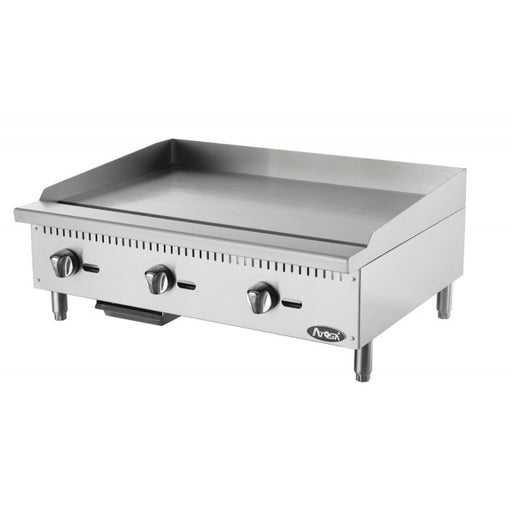
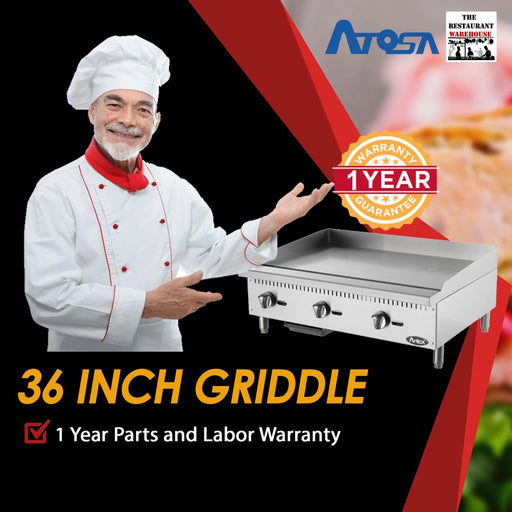
Atosa USA ATMG-36 Heavy Duty Stainless Steel 36-Inch Manual Griddle - Propane
Atosa
Original price
$1,543.00
Original price
$1,543.00
-
Original price
$1,543.00
Original price
$1,543.00
Current price
$1,112.00
$1,112.00
-
$1,112.00
Current price
$1,112.00
Atosa USA ATMG-36 Heavy Duty 36-Inch Manual Griddle – Propane The Atosa ATMG-36 Commercial Manual Griddle is built for kitchens that demand durabi...
View full details
Original price
$1,543.00
Original price
$1,543.00
-
Original price
$1,543.00
Original price
$1,543.00
Current price
$1,112.00
$1,112.00
-
$1,112.00
Current price
$1,112.00
Save 28%
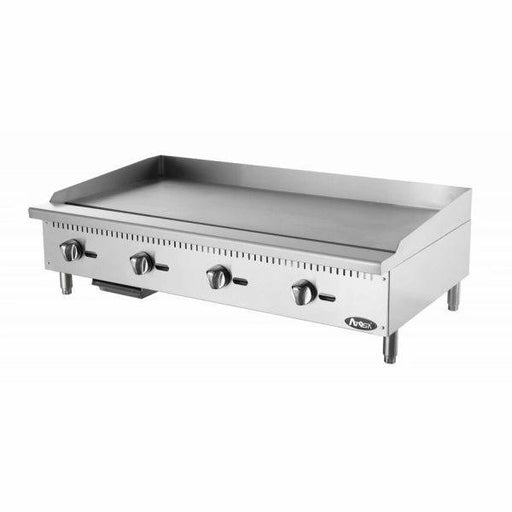
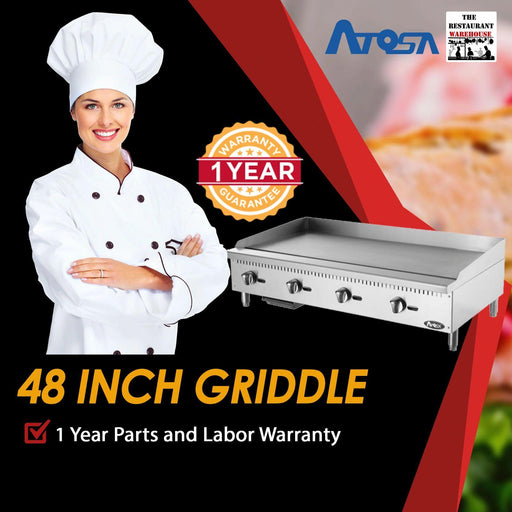
Atosa USA ATMG-48 Heavy Duty Stainless Steel 48-Inch Manual Griddle - Propane
Atosa
Original price
$2,038.00
Original price
$2,038.00
-
Original price
$2,038.00
Original price
$2,038.00
Current price
$1,469.00
$1,469.00
-
$1,469.00
Current price
$1,469.00
Atosa USA ATMG-48 Heavy Duty 48-Inch Manual Griddle – Propane The Atosa ATMG-48 Manual Griddle is a commercial-grade propane griddle engineered fo...
View full details
Original price
$2,038.00
Original price
$2,038.00
-
Original price
$2,038.00
Original price
$2,038.00
Current price
$1,469.00
$1,469.00
-
$1,469.00
Current price
$1,469.00
Save 28%
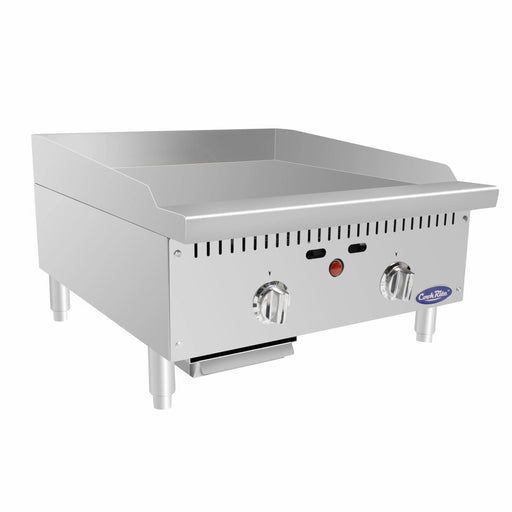
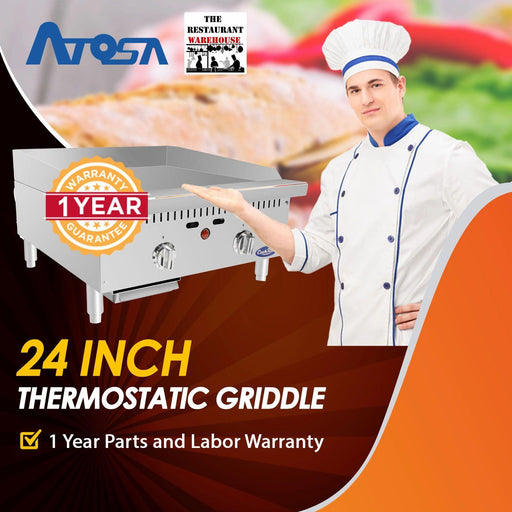
Atosa USA ATTG-24 24-Inch Thermostatic Controlled Griddle Natural Gas, NG
Atosa
Original price
$2,045.00
Original price
$2,045.00
-
Original price
$2,045.00
Original price
$2,045.00
Current price
$1,474.00
$1,474.00
-
$1,474.00
Current price
$1,474.00
Atosa USA ATMG-24T 24-Inch Thermostatically Controlled Griddle - Natural Gas Fast, consistent, dialed-in heat—without babysitting the knobs. The...
View full details
Original price
$2,045.00
Original price
$2,045.00
-
Original price
$2,045.00
Original price
$2,045.00
Current price
$1,474.00
$1,474.00
-
$1,474.00
Current price
$1,474.00
Save 28%
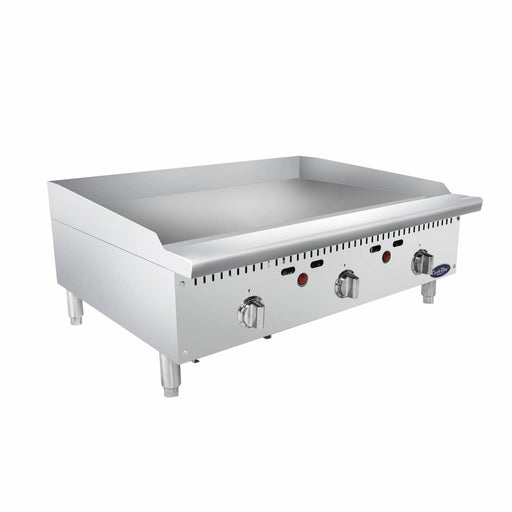
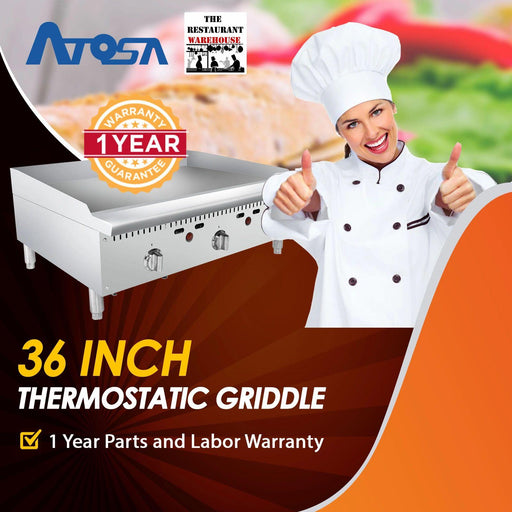
Atosa USA ATTG-36 36-Inch Thermostatic Controlled Griddle LP
Atosa
Original price
$2,938.00
Original price
$2,938.00
-
Original price
$2,938.00
Original price
$2,938.00
Current price
$2,117.00
$2,117.00
-
$2,117.00
Current price
$2,117.00
Atosa USA ATTG-36 / ATMG-36T 36-Inch Thermostatically Controlled Griddle - Propane The Atosa ATMG-36T Propane Thermostatic Griddle delivers precis...
View full details
Original price
$2,938.00
Original price
$2,938.00
-
Original price
$2,938.00
Original price
$2,938.00
Current price
$2,117.00
$2,117.00
-
$2,117.00
Current price
$2,117.00
Save 28%
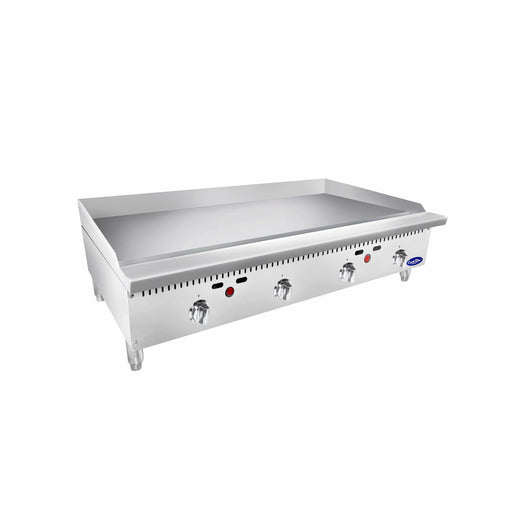
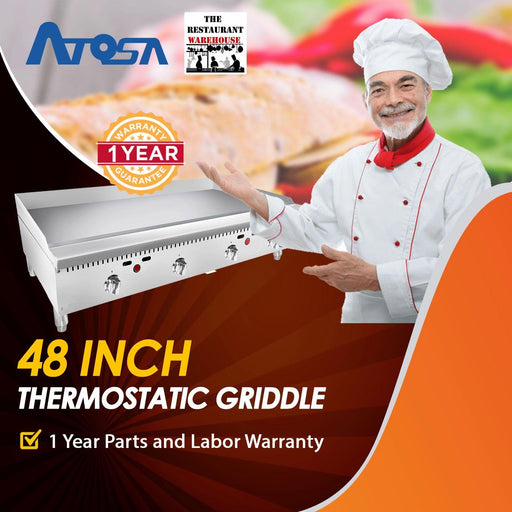
Atosa USA ATTG-48 48-Inch Thermostatically Controlled Griddle NG
Atosa
Original price
$3,450.00
Original price
$3,450.00
-
Original price
$3,450.00
Original price
$3,450.00
Current price
$2,486.00
$2,486.00
-
$2,486.00
Current price
$2,486.00
Atosa USA ATMG-48T 48-Inch Thermostatically Controlled Griddle – Natural Gas The Atosa ATMG-48T Natural Gas Thermostatic Griddle is built for high...
View full details
Original price
$3,450.00
Original price
$3,450.00
-
Original price
$3,450.00
Original price
$3,450.00
Current price
$2,486.00
$2,486.00
-
$2,486.00
Current price
$2,486.00
Save 28%
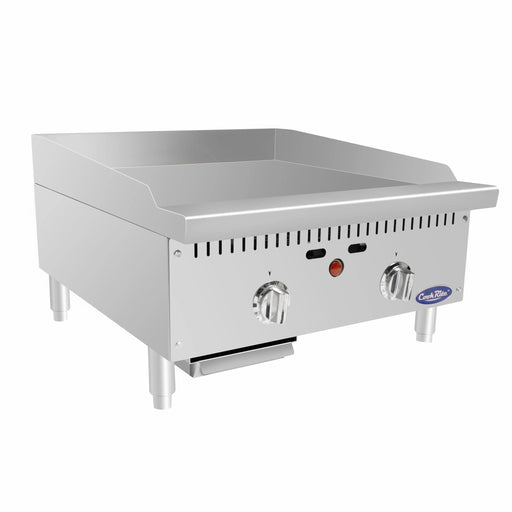
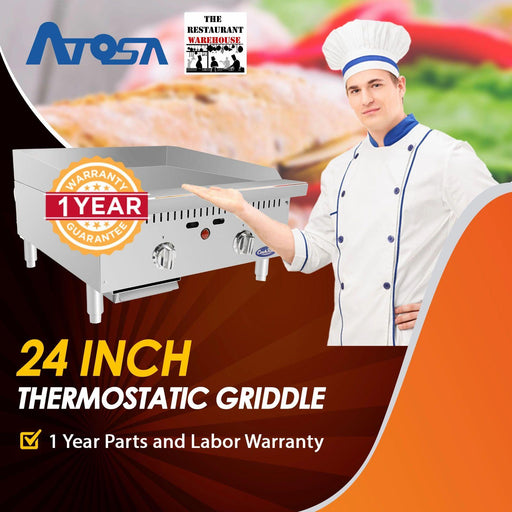
Atosa USA ATTG-24 24-Inch Thermostatic Controlled Griddle Propane, LP
Atosa
Original price
$2,045.00
Original price
$2,045.00
-
Original price
$2,045.00
Original price
$2,045.00
Current price
$1,474.00
$1,474.00
-
$1,474.00
Current price
$1,474.00
Atosa USA ATTG-24 / ATMG-24T 24-Inch Thermostatically Controlled Griddle - Propane The Atosa ATMG-24T Propane Thermostatic Griddle delivers prec...
View full details
Original price
$2,045.00
Original price
$2,045.00
-
Original price
$2,045.00
Original price
$2,045.00
Current price
$1,474.00
$1,474.00
-
$1,474.00
Current price
$1,474.00
Save 28%
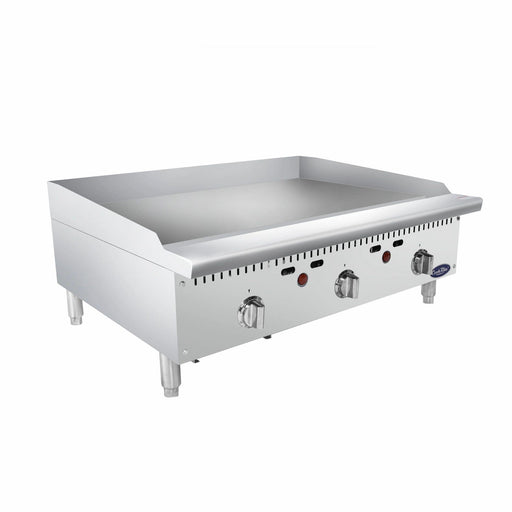
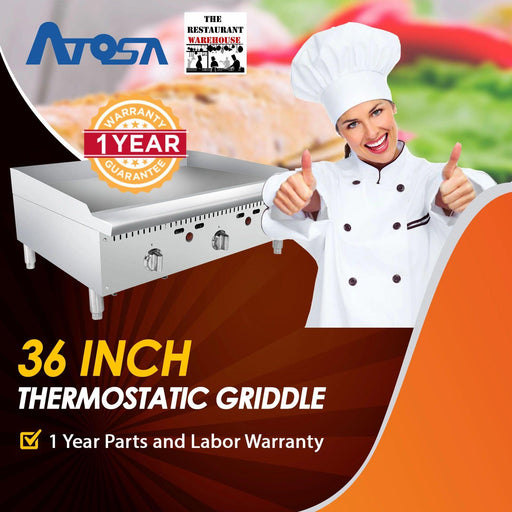
Atosa USA ATTG-36 36-Inch Thermostatic Controlled Griddle NG
Atosa
Original price
$2,938.00
Original price
$2,938.00
-
Original price
$2,938.00
Original price
$2,938.00
Current price
$2,117.00
$2,117.00
-
$2,117.00
Current price
$2,117.00
Atosa USA ATTG-36 / ATMG-36T 36-Inch Thermostatically Controlled Griddle – Natural Gas The Atosa ATMG-36T Natural Gas Thermostatic Griddle deliver...
View full details
Original price
$2,938.00
Original price
$2,938.00
-
Original price
$2,938.00
Original price
$2,938.00
Current price
$2,117.00
$2,117.00
-
$2,117.00
Current price
$2,117.00
Save 28%
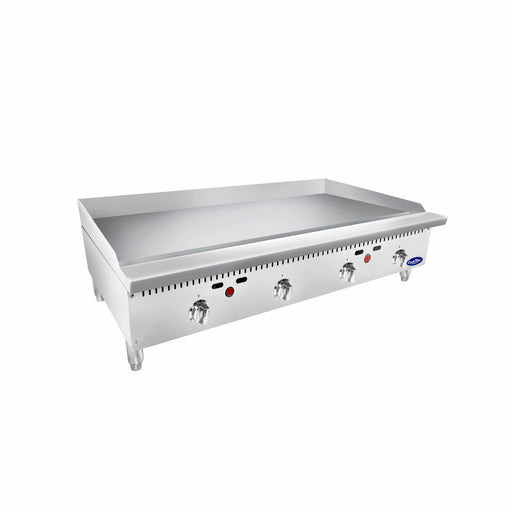
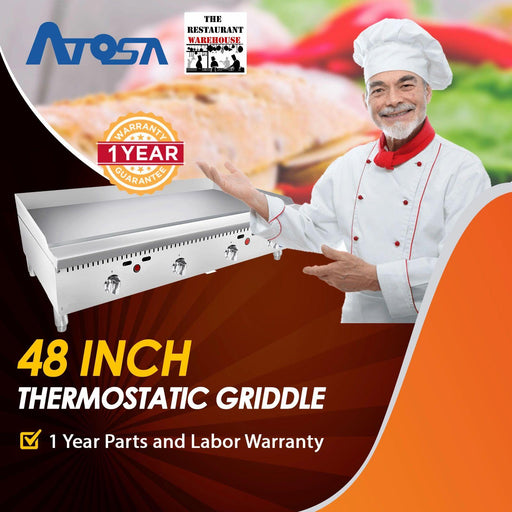
Atosa USA ATTG-48 48-Inch Thermostatically Controlled Griddle LP
Atosa
Original price
$3,450.00
Original price
$3,450.00
-
Original price
$3,450.00
Original price
$3,450.00
Current price
$2,486.00
$2,486.00
-
$2,486.00
Current price
$2,486.00
Atosa USA ATTG-48 / ATMG-48T 48-Inch Thermostatically Controlled Griddle - Propane The Atosa ATMG-48T Propane Thermostatic Griddle is built for hi...
View full details
Original price
$3,450.00
Original price
$3,450.00
-
Original price
$3,450.00
Original price
$3,450.00
Current price
$2,486.00
$2,486.00
-
$2,486.00
Current price
$2,486.00
Save 28%

Winco SCRP-12 Griddle Scraper
Winco
Original price
$21.01
-
Original price
$21.01
Original price
$21.01
$21.01
-
$21.01
Current price
$21.01
Winco SCRP-12 Griddle Scraper - Economy Compact Tool for Light-Duty Griddle Cleaning The Winco SCRP-12 is a compact economy griddle scraper built ...
View full details
Original price
$21.01
-
Original price
$21.01
Original price
$21.01
$21.01
-
$21.01
Current price
$21.01

Atosa ATGC101 High Temp Griddle Cleaner (40 x 5oz/Case)
Atosa
Original price
$350.00
-
Original price
$350.00
Original price
$350.00
$350.00
-
$350.00
Current price
$350.00
Atosa ATGC101 High Temp Griddle Cleaner – Case of 40 (5oz Bottles) The Atosa ATGC101 High Temp Griddle Cleaner is specially formulated for pro...
View full details
Original price
$350.00
-
Original price
$350.00
Original price
$350.00
$350.00
-
$350.00
Current price
$350.00

Winco SCRP-14 Griddle Scraper
Winco
Original price
$90.51
-
Original price
$90.51
Original price
$90.51
$90.51
-
$90.51
Current price
$90.51
Winco SCRP-14 Griddle Scraper - Heavy-Duty 6 Inch Blade for 36 and 48 Inch Griddles The Winco SCRP-14 is a heavy-duty commercial griddle scraper b...
View full details
Original price
$90.51
-
Original price
$90.51
Original price
$90.51
$90.51
-
$90.51
Current price
$90.51

Winco SCRP-16 Griddle Scraper
Winco
Original price
$79.66
-
Original price
$79.66
Original price
$79.66
$79.66
-
$79.66
Current price
$79.66
Winco SCRP-16 Griddle Scraper - Stainless Steel Blade Precision Tool for 60 and 72 Inch Griddles The Winco SCRP-16 is a heavy-duty commercial grid...
View full details
Original price
$79.66
-
Original price
$79.66
Original price
$79.66
$79.66
-
$79.66
Current price
$79.66

Winco GBK-348 Griddle Brick - 12 count
Winco
Original price
$106.49
-
Original price
$106.49
Original price
$106.49
$106.49
-
$106.49
Current price
$106.49
Winco GBK-348 Grill Brick - 8 Inch Abrasive Cleaning Block for Commercial Griddles The Winco GBK-348 is a sacrificial abrasive cleaning block desi...
View full details
Original price
$106.49
-
Original price
$106.49
Original price
$106.49
$106.49
-
$106.49
Current price
$106.49

Winco SCRP-5B Grill Scraper Blade Only 5" blade for SCRP-16 aluminum
Winco
Original price
$12.94
-
Original price
$12.94
Original price
$12.94
$12.94
-
$12.94
Current price
$12.94
Winco SCRP-5B 5 Inch Replacement Blades - 6 Pack for SCRP-16 Griddle Scraper The Winco SCRP-5B is a 5-inch high-strength tempered steel replacemen...
View full details
Original price
$12.94
-
Original price
$12.94
Original price
$12.94
$12.94
-
$12.94
Current price
$12.94

WInco SCRP-4B Grill Scraper Blade Only 4" blade for SCRP-12 Aluminum - 10 pack
Winco
Original price
$13.76
-
Original price
$13.76
Original price
$13.76
$13.76
-
$13.76
Current price
$13.76
Winco SCRP-4B 4 Inch Replacement Blades - 10 Pack for SCRP-12 Griddle Scraper The Winco SCRP-4B is a 4-inch hardened stainless steel replacement b...
View full details
Original price
$13.76
-
Original price
$13.76
Original price
$13.76
$13.76
-
$13.76
Current price
$13.76

Winco SCRP-6B Replacement 6" Blade for SCRP-14 - 6 count
Winco
Original price
$56.64
-
Original price
$56.64
Original price
$56.64
$56.64
-
$56.64
Current price
$56.64
Winco SCRP-6B 6 Inch Replacement Blades - 6 Pack for SCRP-14 Griddle Scraper The Winco SCRP-6B is a 6-inch heavy-duty stainless steel replacement ...
View full details
Original price
$56.64
-
Original price
$56.64
Original price
$56.64
$56.64
-
$56.64
Current price
$56.64

Winco GSH-1 Griddle Screen Holder, 5" x 2-3/4"
Winco
Original price
$11.15
-
Original price
$11.15
Original price
$11.15
$11.15
-
$11.15
Current price
$11.15
Winco GSH-1 Griddle Screen Holder - Cast Aluminum Pad Holder for Commercial Griddle Cleaning The Winco GSH-1 is a reusable cast aluminum griddle s...
View full details
Original price
$11.15
-
Original price
$11.15
Original price
$11.15
$11.15
-
$11.15
Current price
$11.15

Winco GSN-4 Griddle Screen - 20 ct
Winco
Original price
$6.94
-
Original price
$6.94
Original price
$6.94
$6.94
-
$6.94
Current price
$6.94
Winco GSN-4 Griddle Cleaning Screens - 20 Pack Silicon Carbide Pads for Commercial Flat Tops The Winco GSN-4 is a resin-bonded silicon carbide gri...
View full details
Original price
$6.94
-
Original price
$6.94
Original price
$6.94
$6.94
-
$6.94
Current price
$6.94

Winco GBH-2 Griddle Brick Holder, 7" x 3-1/2"
Winco
Original price
$12.36
-
Original price
$12.36
Original price
$12.36
$12.36
-
$12.36
Current price
$12.36
Winco GBH-2 Grill Brick Holder - Cast Aluminum Handle for GBK-348 Brick Compatibility The Winco GBH-2 is a reusable cast aluminum grill brick hold...
View full details
Original price
$12.36
-
Original price
$12.36
Original price
$12.36
$12.36
-
$12.36
Current price
$12.36

Winco EGD-16M Electric Griddle - set
WincoWinco EGD-16M Electric Griddle, Cooking Equipment, Grills & Griddles - 1 SET per case Spectrum Griddle delivers professional cooking performanc...
View full details
Winco EGD-24M Electric Griddle - set
WincoWinco EGD-24M Electric Griddle, Cooking Equipment, Grills & Griddles - 1 SET per caseSpectrum Electric Griddle, 24.240 Volts, with Plug and Lea...
View full details
Winco EGD-36M Electric Griddle - set
WincoWinco EGD-36M Electric Griddle, Cooking Equipment, Grills & Griddles - 1 SET per caseSpectrum Electric Griddle, 36.240 Volts Spectrum Electric...
View full details

Atosa CookRite ATG-2424-S 24-Inch Thermostatic Polished Steel Griddle - Natural Gas, 60,000 BTU
Atosa
Original price
$2,800.00
Original price
$2,800.00
-
Original price
$2,800.00
Original price
$2,800.00
Current price
$2,018.00
$2,018.00
-
$2,018.00
Current price
$2,018.00
Atosa CookRite ATG-2424-S 24" Thermostatic Polished Steel Griddle — Natural Gas, 60,000 BTU The Atosa CookRite ATG-2424-S is a 24" countertop comm...
View full details
Original price
$2,800.00
Original price
$2,800.00
-
Original price
$2,800.00
Original price
$2,800.00
Current price
$2,018.00
$2,018.00
-
$2,018.00
Current price
$2,018.00
Save 28%


Atosa CookRite ATG-3624-S 36-Inch Thermostatic Polished Steel Griddle - Natural Gas, 90,000 BTU
Atosa
Original price
$4,150.00
Original price
$4,150.00
-
Original price
$4,150.00
Original price
$4,150.00
Current price
$2,991.00
$2,991.00
-
$2,991.00
Current price
$2,991.00
Atosa CookRite ATG-3624-S 36" Thermostatic Polished Steel Griddle — Natural Gas, 90,000 BTU The Atosa CookRite ATG-3624-S is a 36" countertop comm...
View full details
Original price
$4,150.00
Original price
$4,150.00
-
Original price
$4,150.00
Original price
$4,150.00
Current price
$2,991.00
$2,991.00
-
$2,991.00
Current price
$2,991.00
Save 28%


Atosa CookRite ATG-4824-S 48-Inch Thermostatic Polished Steel Griddle - Natural Gas, 120,000 BTU
Atosa
Original price
$5,350.00
Original price
$5,350.00
-
Original price
$5,350.00
Original price
$5,350.00
Current price
$3,855.00
$3,855.00
-
$3,855.00
Current price
$3,855.00
Atosa CookRite ATG-4824-S 48" Thermostatic Polished Steel Griddle — Natural Gas, 120,000 BTU The Atosa CookRite ATG-4824-S is a 48" countertop com...
View full details
Original price
$5,350.00
Original price
$5,350.00
-
Original price
$5,350.00
Original price
$5,350.00
Current price
$3,855.00
$3,855.00
-
$3,855.00
Current price
$3,855.00
Save 28%


Atosa CookRite ATG-6024-S 60-Inch Thermostatic Polished Steel Griddle - Natural Gas, 150,000 BTU
Atosa
Original price
$7,080.00
Original price
$7,080.00
-
Original price
$7,080.00
Original price
$7,080.00
Current price
$5,102.00
$5,102.00
-
$5,102.00
Current price
$5,102.00
Atosa CookRite ATG-6024-S 60" Thermostatic Polished Steel Griddle — Natural Gas, 150,000 BTU The Atosa CookRite ATG-6024-S is a 60" countertop com...
View full details
Original price
$7,080.00
Original price
$7,080.00
-
Original price
$7,080.00
Original price
$7,080.00
Current price
$5,102.00
$5,102.00
-
$5,102.00
Current price
$5,102.00
Save 28%


Atosa CookRite ATG-2424-C 24-Inch Thermostatic Chrome Plated Griddle - Natural Gas, 60,000 BTU
Atosa
Original price
$3,450.00
Original price
$3,450.00
-
Original price
$3,450.00
Original price
$3,450.00
Current price
$2,486.00
$2,486.00
-
$2,486.00
Current price
$2,486.00
Atosa CookRite ATG-2424-C 24" Thermostatic Chrome Plated Griddle — Natural Gas, 60,000 BTU The Atosa CookRite ATG-2424-C is a 24" countertop comme...
View full details
Original price
$3,450.00
Original price
$3,450.00
-
Original price
$3,450.00
Original price
$3,450.00
Current price
$2,486.00
$2,486.00
-
$2,486.00
Current price
$2,486.00
Save 28%


Atosa CookRite ATG-3624-C 36-Inch Thermostatic Chrome Plated Griddle - Natural Gas, 90,000 BTU
Atosa
Original price
$5,100.00
Original price
$5,100.00
-
Original price
$5,100.00
Original price
$5,100.00
Current price
$3,575.00
$3,575.00
-
$3,575.00
Current price
$3,575.00
Atosa CookRite ATG-3624-C 36" Thermostatic Chrome Plated Griddle — Natural Gas, 90,000 BTU The Atosa CookRite ATG-3624-C is a 36" countertop comme...
View full details
Original price
$5,100.00
Original price
$5,100.00
-
Original price
$5,100.00
Original price
$5,100.00
Current price
$3,575.00
$3,575.00
-
$3,575.00
Current price
$3,575.00
Save 30%


Atosa CookRite ATG-4824-C 48-Inch Thermostatic Chrome Plated Griddle - Natural Gas, 120,000 BTU
Atosa
Original price
$6,600.00
Original price
$6,600.00
-
Original price
$6,600.00
Original price
$6,600.00
Current price
$4,756.00
$4,756.00
-
$4,756.00
Current price
$4,756.00
Atosa CookRite ATG-4824-C 48" Thermostatic Chrome Plated Griddle — Natural Gas, 120,000 BTU The Atosa CookRite ATG-4824-C is a 48" countertop comm...
View full details
Original price
$6,600.00
Original price
$6,600.00
-
Original price
$6,600.00
Original price
$6,600.00
Current price
$4,756.00
$4,756.00
-
$4,756.00
Current price
$4,756.00
Save 28%


Atosa CookRite ATG-6024-C 60-Inch Thermostatic Chrome Plated Griddle - Natural Gas, 150,000 BTU
Atosa
Original price
$8,700.00
Original price
$8,700.00
-
Original price
$8,700.00
Original price
$8,700.00
Current price
$6,269.00
$6,269.00
-
$6,269.00
Current price
$6,269.00
Atosa CookRite ATG-6024-C 60" Thermostatic Chrome Plated Griddle — Natural Gas, 150,000 BTU The Atosa CookRite ATG-6024-C is a 60" countertop comm...
View full details
Original price
$8,700.00
Original price
$8,700.00
-
Original price
$8,700.00
Original price
$8,700.00
Current price
$6,269.00
$6,269.00
-
$6,269.00
Current price
$6,269.00
Save 28%
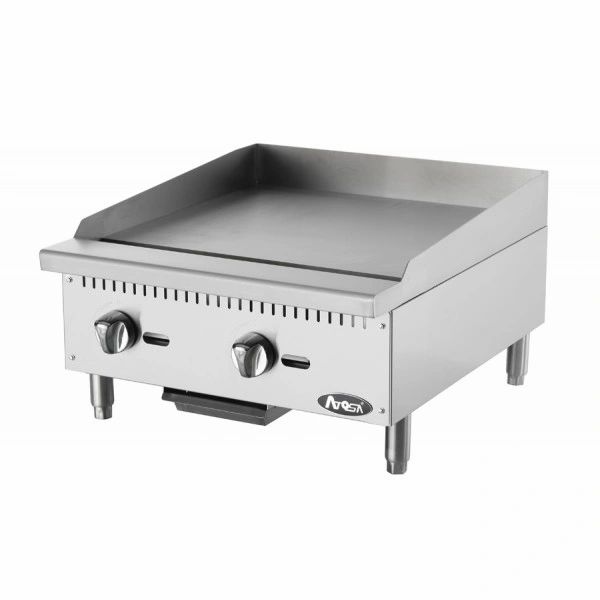
Commercial Griddles: The Complete Buyer's Guide
A commercial griddle, also called a flat top grill, gives restaurants a continuous cooking surface for eggs, burgers, pancakes, bacon, hash browns, and sandwiches. Choose the plate, controls, size, and utility configuration around the food you cook and the pace of your busiest service.
This guide brings together griddle selection, Atosa model comparisons, natural gas and propane planning, electric options, sizing, installation, and cleaning. Use the product selection above and the buying sections below to compare equipment without moving between separate brand and fuel collections.
What "Stainless Steel Griddle" Actually Means
Read the body and cooking-plate specifications separately. A stainless steel cabinet does not mean that food cooks on stainless steel: the Atosa ATMG and ATTG models featured here use polished steel cooking plates. Chrome-plated and other specialty surfaces have different care requirements, so match your scraper, cleaner, and maintenance routine to the actual plate rather than the appearance of the cabinet.
Body, Plate, and Sanitary Construction
The plate receives the food and stores heat; the cabinet, splash guards, grease trough, and drawer manage the surrounding work area. When comparing construction, look for smooth, accessible seams and a grease path that can be cleaned without dismantling the cook line. Ask which components use which stainless alloy rather than assuming the whole appliance is a single grade.
Check the rear and side splashes, front ledge, and drawer opening as carefully as the cooking surface. A large advertised plate can still be awkward to work around if neighboring equipment blocks the controls or the drawer cannot slide out fully. Easy access matters every service, not just during installation.
Commercial Griddle Plate Thickness and Heat Recovery
Plate thickness is a thermal-mass decision, not a stand-alone production rating. With comparable material and surface area, a thicker plate stores more heat and can reduce the initial temperature drop when cold food is loaded. Preheat and recovery also depend on burner or element output, control design, the amount of food, and how closely batches follow one another.
- Lighter plates: consider for supplemental stations and intermittent cooking, but evaluate the complete appliance and expected load.
- 3/4-inch plates: the Atosa ATMG manual series combines this plate thickness with direct burner adjustment.
- 1-inch plates: the Atosa ATTG thermostatic series adds plate mass and automatic temperature regulation for repeatable production.
Do not choose from a promised covers-per-hour figure alone. A small batch of eggs and a full load of cold burger patties place very different demands on the same surface. Plate thickness also does not make a unit immune to damage from improper cleaning or thermal shock.
Thermostatic Griddles vs Manual Controls
Manual and thermostatic controls solve different operating needs. Neither automatically makes a griddle faster or better for every menu, and cooks still need to check food temperatures and follow established recipes.
Manual Controls: Atosa ATMG
A manual control adjusts burner input; the cook manages the resulting plate temperature. This suits operators who prefer hands-on zone adjustment and a straightforward control arrangement. Use an appropriate surface-temperature instrument and consistent cooking procedures rather than relying only on knob position or touch.
Thermostatic Controls: Atosa ATTG
A thermostat responds to plate temperature and regulates heat toward the selected setting. This is useful for pancakes, eggs, grilled sandwiches, and other items where repeatability across shifts matters. Separate zones let cooks organize different tasks, but heat still travels through the shared plate and a dial setting is not a guarantee of identical temperature at every point.
| Buying question | Manual | Thermostatic |
|---|---|---|
| How is heat adjusted? | Cook adjusts burner input | Control responds to temperature |
| Who manages consistency? | Experienced operator and repeatable technique | Operator supported by temperature regulation |
| Mixed breakfast and lunch menu? | Possible with active zone management | Useful for repeatable zone settings |
| Smash burgers? | Compare plate and recovery under your load | Compare plate and recovery under your load |
Compare the actual model price and service requirements. Do not assume every thermostat uses the same components, temperature range, or accuracy, or that thermostatic controls are unnecessary for high-volume burger service.
Sizing a Commercial Griddle for Your Menu
Start with the busiest service period and the items that actually use the flat top. Count how many patties, pancakes, sandwiches, or breakfast components need to cook at once, then allow room for turning, scraping, and separate cooking tasks. Nominal appliance width is not always the same as usable cooking width or depth.
- 24-inch griddles: a compact station for a focused menu, supplemental production, or a space-limited line. Confirm that the usable surface supports your batch, not simply that the cabinet fits.
- 36-inch griddles: more working room for breakfast and lunch menus without taking the full counter run of a larger model.
- 48-inch griddles: useful when several items need space at once or one station needs larger batches. Check operator reach, ventilation coverage, and utility capacity.
- 60- and 72-inch formats: larger-format planning options when the menu and installation justify them. Check the current product selection and specifications rather than assuming all brands offer every width.
Why Working Zones Matter as Much as Width
A breakfast line may need one area for eggs, another for pancakes, and another for bacon or hash browns. A sandwich station needs space for bread and fillings without crowding proteins. A wider plate helps only if the burner or element layout, controls, and staff workflow support those tasks.
Plan raw-food handling and ready-to-eat work to avoid cross-contamination; adjacent heat zones are not a food-safety barrier. Leave enough counter space for landing pans and plating so increasing griddle width does not move the bottleneck to the next station.
Countertop, Stand, and Drop-In Planning
Check the counter or stand load rating, installed height, required legs, and manufacturer-specified clearances. A refrigerated chef base needs to be approved for the appliance load and heat exposure. A drop-in installation requires a model intended for that application, with its specified cutout, ventilation, and service access; a countertop griddle should not simply be enclosed in cabinetry.
BTU Per Inch, Recovery, and Why It Matters
BTU/h describes gas input, not guaranteed food output. Compare it alongside plate area, thickness, burner arrangement, and controls. A lower-input model is not automatically inadequate, and a higher-input model will not compensate for insufficient cooking space or a restricted gas supply.
Atosa lists the ATMG-24, ATMG-36, and ATMG-48 at 60,000, 90,000, and 120,000 BTU/h respectively. The ATTG-24, ATTG-36, and ATTG-48 are listed at 50,000, 75,000, and 100,000 BTU/h. These are different families and should not be assigned the same ratings. See the Atosa model reference and confirm the current specification for the exact unit ordered.
Evaluate recovery with a realistic batch and service rhythm where a demonstration is available. Cold or frozen food, plate loading, and the interval between batches all matter. Avoid relying on a universal seconds-to-recovery promise or covers-per-hour claim that does not describe the food and test conditions.
Gas vs Electric Commercial Griddles
Choose fuel around the building, menu, and installed cost. Gas requires an approved gas supply and installation. Electric avoids a gas connection but may require substantial electrical work. Both can produce grease-laden vapors, so electric should not be treated as automatically ventless.
- Natural gas griddles suit sites with an appropriate utility supply.
- Propane griddles suit approved LP installations, including some mobile kitchens.
- Electric griddles suit sites where the specified electrical service is available or practical to install.
- For open-grate cooking alongside flat-top work, compare charbroilers rather than assuming a flat plate gives the same cooking result.
Atosa CookRite Griddles: ATMG and ATTG
The Atosa collection's useful buying distinction is the choice between ATMG manual controls and ATTG thermostatic controls in 24-, 36-, and 48-inch formats. Compare the family first, then the width and fuel suffix. Choose NG for the specified natural gas installation or LP for propane; similar-looking cabinets do not make the fuel configurations interchangeable.
| Model family | Plate | 24-inch input | 36-inch input | 48-inch input |
|---|---|---|---|---|
| ATMG manual | 3/4-inch polished steel | 60,000 BTU/h | 90,000 BTU/h | 120,000 BTU/h |
| ATTG thermostatic | 1-inch polished steel | 50,000 BTU/h | 75,000 BTU/h | 100,000 BTU/h |
These family specifications are listed in Atosa's reference guide. Confirm current dimensions, gas requirements, certifications, and warranty terms for the exact model before ordering. The linked product pages below let you compare the individual NG and LP configurations without navigating separate brand and fuel collections.
Match Atosa to the Service Pattern
For a breakfast menu, think about eggs, pancakes, hash browns, bacon, and sausage competing for plate space at the same time. A lunch station may prioritize burgers, cheesesteaks, and toasted sandwiches instead. Manual controls suit cooks who want direct adjustment; thermostatic controls add repeatability when recipes or staff change across shifts. Neither eliminates the need to leave working room and check food doneness.
A compact model may be enough for a focused menu or secondary station, while a larger unit can divide production into more tasks. Evaluate your busiest batch rather than choosing solely from the number of seats in the dining room. Confirm that utensils, ingredient pans, and the plating area remain within a practical workflow after the appliance is installed.
Natural Gas Griddles
Natural gas is a practical starting point for a fixed kitchen already served by a suitable gas line. It can support an all-day flat-top menu, from breakfast items to burgers and grilled sandwiches, without the cylinder-management work of an LP installation. Compare the griddle's input with the total demand of the connected cook line, not the griddle in isolation.
Before ordering, have a qualified installer verify available capacity, the required regulator and connection, and the applicable ventilation layout. An existing outlet near the counter does not prove that it can support a replacement or wider model. Buy the correct NG configuration and confirm any conversion restrictions in the manufacturer's documentation.
Propane Griddles for Approved LP Installations
Propane can be useful where utility gas is unavailable or for a mobile kitchen designed around LP. The same buying questions still apply: usable plate area, peak batch size, manual or thermostatic controls, and space for preparation and plating. A compact footprint is valuable only if it does not crowd the cook or block the grease drawer and shutoff.
For a truck or trailer, have the installer size and approve the entire LP system, including storage, regulation, total appliance demand, connections, and ventilation. An LP label does not make an indoor commercial appliance outdoor-rated or suitable for every vehicle. Confirm manufacturer approval and local requirements for the intended location before purchase.
Commercial Electric Griddles
Electric griddles provide flat-top cooking without a gas connection. They can serve a focused sandwich or breakfast station, supplemental production, or a primary line when the model's power and cooking area fit the job. Compare the actual heating capacity and control arrangement rather than assuming every electric model has the same output or temperature uniformity.
Check the Electrical Service Before Delivery
Record the exact voltage, phase, rated current or wattage, and plug or hardwiring requirement from the selected model's specification. Have a licensed electrician confirm circuit capacity, protection, disconnects, and receptacle compatibility. A 208-volt supply should not be treated as interchangeable with a 240-volt specification without manufacturer confirmation, and a familiar-looking outlet is not proof of adequate capacity.
For mobile operations, include refrigeration and other simultaneous loads when evaluating shore power or a generator. Do not select an electric griddle on the assumption that an extension cord or a shared circuit will solve an installation mismatch. Check ventilation separately: cooking bacon, burgers, and other grease-producing foods still creates exhaust and fire-safety considerations.
Electric Countertop Options
Compare the Winco EGD-16M, Winco EGD-24M, and Winco EGD-36M alongside the other electric models in this collection. Read each product's usable cooking area and electrical specifications; the model name alone is not an installation plan.
Look at the placement of the controls, access to the grease drawer, splash containment, and cleaning instructions. A small appliance that is easy to fit can still be undersized for repeated cold-food batches, while a larger unit may require utility work that should be included in the budget.
Commercial Panini Grills and Sandwich Presses
A flat-top griddle gives cooks an open surface for turning and moving food. A panini or contact grill closes a heated upper plate over the food, making it a different option for pressed sandwiches, wraps, and other menu items suited to contact cooking. Choose around your actual bread, filling thickness, and busiest order sequence rather than assuming every sandwich fits the same press.
Smooth vs. Grooved Panini Grill Plates
Grooved plates create the familiar grill-marked finish on pressed sandwiches. Smooth plates provide a flat contact surface for foods where grill marks are not the goal, and avoid the channels that can collect crumbs and melted cheese. Some models combine plate styles, but check the actual configuration rather than assuming the plates reverse or interchange.
Look beyond appearance to the plate material and cleaning requirements. Cast iron, coated plates, and other surfaces can require different tools and care. A smooth contact press is not automatically a substitute for an open griddle: confirm which foods and cooking methods the manufacturer permits.
Single vs. Double Panini Presses
A single press is worth considering for a focused sandwich menu, supplemental station, or limited counter space. A double press provides two lid positions for managing separate batches, but verify whether the model also has independent temperature controls. Two lids alone do not establish separate heat zones or guarantee twice the hourly output.
Measure the usable plate against the sandwiches you actually sell. Large rolls, thick fillings, and the space needed to load and remove food all affect practical capacity. Include the lid’s opening clearance, handle movement, grease-tray access, and space to assemble and plate orders when measuring the station.
Floating Hinges, Controls, and Service Workflow
A floating or adjustable upper plate can help accommodate different sandwich thicknesses within the model’s specified range. Compare how the lid moves and how much pressure it applies; do not assume that every hinge keeps every sandwich perfectly level or prevents fillings from escaping.
Adjustable temperature controls and timers can help staff repeat a recipe, but a browned exterior does not prove that the filling has reached the required temperature. Establish procedures for the ingredients you use and check food temperatures as appropriate.
Before choosing a press, confirm its electrical requirements and the ventilation arrangement for the intended menu. Check that the crumb or grease tray can be removed safely and that the manufacturer permits any proposed plate removal, soaking, or dishwasher cleaning. Treat cleanup time and counter workflow as part of the buying decision, not as an afterthought.
Commercial Hot Dog Roller Grills
A hot dog roller grill uses rotating heated rollers rather than a flat cooking plate. It can provide a dedicated service station for compatible hot dogs or sausages while leaving the griddle available for other orders. Check the appliance instructions and food supplier’s directions for the products you intend to serve; not every roller is designed to cook raw sausage or handle every specialty item.
Roller Capacity and Counter Space
Compare the manufacturer’s stated capacity with the actual size and length of your hot dogs. The number of pieces that fit on the rollers is not the same as an hourly sales or cooking rate. Starting temperature, heating time, replenishment, holding practices, and staff workflow all affect practical service capacity.
Plan around the busiest service window without loading more food than you can manage safely and sell in good condition. Leave counter space for buns, toppings, packaging, utensils, and payment or order handoff. Include guard height and opening clearance in the measurements, not just the machine’s footprint.
Controls, Holding, and Product Protection
Some roller grills offer separate control zones that can help organize heating and service. Verify the model’s controls and operating instructions rather than assuming the rear rollers cook while the front rollers hold. A dial setting or roller temperature is not a substitute for checking the food itself.
Use a documented procedure for heating, hot holding, replenishment, and discarding food under applicable food-safety requirements. Keep newly loaded product identifiable so staff do not serve it before it is ready. Do not treat a holding appliance as automatically suitable for reheating or cooking every product.
For customer-facing service, check the required food protection with the local authority and choose a compatible guard. Confirm the guard’s dimensions, mounting, loading access, and cleaning requirements. A bun warmer or storage accessory should also be checked for compatibility instead of being assumed to fit.
Roller Surfaces and Cleaning Access
Compare roller finish, access around the rollers, and the drip tray’s removal path. Use the manufacturer-approved cleaning method for chrome, non-stick, or other surfaces; abrasive tools can damage finishes that require gentler treatment. Do not assume the rollers detach for washing.
Follow shutdown and cleaning instructions, protect electrical components from water, and keep food residue and grease from accumulating. A machine that is easy to wipe around, drain, and inspect can make the closing routine more manageable than one chosen only for its advertised capacity.
Flat-Top Griddle, Panini Press, or Roller Grill?
| Equipment format | Buying focus | Main questions |
|---|---|---|
| Flat-top griddle | Open cooking area for a varied menu | How much usable plate space, heat input, and zone control does the busiest batch need? |
| Panini/contact grill | Upper and lower plate contact for suitable sandwiches and other foods | Do the plate style, lid clearance, hinge, and usable surface fit the actual menu? |
| Hot dog roller grill | A dedicated station for compatible cylindrical products | Do capacity, controls, guards, and safe replenishment procedures fit the service pattern? |
Start with the cooking task rather than the broad word “grill.” A press can take sandwich work off the flat top, and a roller can establish a separate concession station, but neither replaces all the functions of a griddle. Check utility capacity, ventilation, cleaning access, and total station space before choosing the combination.
Charbroiler vs. Griddle: Which Does Your Menu Need?
A charbroiler and a griddle can both cook burgers, chicken, and vegetables, but they do not give every food the same cooking surface or finish. Choose around the menu items you want to produce, the working space available, and the result customers expect rather than treating the words “grill” and “griddle” as interchangeable.
Open Grates vs. a Solid Cooking Plate
A charbroiler supports food on open grates above its heat source. It is worth considering when grill marks and a charred exterior are part of the presentation, as with steaks, burgers, and suitable cuts of meat or vegetables. Food size and handling matter because small or loose ingredients can fall between the grates.
A flat-top griddle provides a continuous plate heated from below. It supports pancakes, eggs, chopped sandwich fillings, and other foods that need a solid surface. The plate also gives the cook room to move and turn food with a spatula. A griddle can brown and sear food, but it does not reproduce the grate pattern of a charbroiler.
| Menu or workflow | Griddle consideration | Charbroiler consideration |
|---|---|---|
| Breakfast and loose ingredients | Continuous plate supports eggs, pancakes, and chopped fillings | Open grates are not a direct substitute for a solid plate |
| Burgers and other suitable proteins | Broad plate contact for browning and flat-top cooking techniques | Grate contact for a grill-marked finish |
| Vegetables and sandwiches | Useful for small pieces, fillings, and toasted bread | Consider foods large and firm enough for the grates |
| Station planning | Allow space for turning, scraping, and grease-drawer access | Allow space for grate handling, grease management, and cleaning access |
When It Makes Sense to Use Both
A kitchen serving breakfast and a grill-focused lunch or dinner menu may benefit from separate stations. The griddle can handle breakfast items and sandwich fillings while the charbroiler handles foods selected for a grill-marked finish. This is a menu and workflow decision, not a requirement to buy two appliances: confirm that demand justifies the extra counter space, utilities, ventilation, and cleaning work.
Compare the commercial charbroiler selection with the griddles on this page. For either format, check the exact appliance’s installation instructions, clearances, ventilation requirements, and approved location. An indoor commercial appliance should not be assumed suitable for outdoor cooking simply because it uses gas.
Before You Order: A Commercial Griddle Checklist
- Menu and batch: list the foods cooked together and the largest realistic rush load.
- Usable surface: compare cooking width and depth, not just exterior dimensions.
- Controls and plate: decide how much operator adjustment and temperature repeatability the menu needs.
- Fuel or power: confirm the exact NG, LP, voltage, and phase configuration before ordering.
- Installation: approve supporting weight capacity, clearances, hood coverage, utilities, and service access.
- Grease and cleanup: check drawer access, drainage, compatible tools, and plate-care requirements.
- Delivered project cost: include utility work, stand or base, ventilation, accessories, and installation along with the appliance.
Send us the menu, available counter space, and fuel or electrical service you are working with. We can help narrow the equipment options; your qualified installer should confirm the final installation requirements before you order.
Featured Commercial Griddle Models
- Atosa ATMG-24 Natural Gas 24 inch Manual Griddle - 60,000 BTU, 2 zones, 3/4 inch plate
- Atosa ATMG-24 Propane 24 inch Manual Griddle
- Atosa ATMG-36 Natural Gas 36 inch Manual Griddle - 90,000 BTU, 3 zones
- Atosa ATMG-36 Propane 36 inch Manual Griddle
- Atosa ATMG-48 Natural Gas 48 inch Manual Griddle - 120,000 BTU, 4 zones
- Atosa ATMG-48 Propane 48 inch Manual Griddle
- Atosa ATTG-24 Natural Gas 24 inch Thermostatic Griddle
- Atosa ATTG-24 Propane 24 inch Thermostatic Griddle
- Atosa ATTG-36 Natural Gas 36 inch Thermostatic Griddle
- Atosa ATTG-36 Propane 36 inch Thermostatic Griddle
- Atosa ATTG-48 Natural Gas 48 inch Thermostatic Griddle
- Atosa ATTG-48 Propane 48 inch Thermostatic Griddle
Hood Sizing and Gas Line Requirements
Have the installer and local authority confirm ventilation and fire-suppression requirements for the actual appliance and menu before purchase. Grease-producing cooking generally calls for a Type I hood system; an electric appliance does not remove the grease-vapor issue. Any ventless arrangement must be specifically listed and accepted for the proposed use.
Gas Supply and Installation
A connection size on the appliance is not a gas-pipe sizing instruction for the building. A qualified gas professional must account for the fuel, total connected load, pressure, pipe length, fittings, and other equipment served. Have supply and operating pressure checked against the current installation manual rather than copying a generic pressure or line-size rule.
Include the hood, makeup air, suppression, utility work, approved connectors, and installation in the purchase budget. A lower-priced appliance can be a more expensive project if the existing infrastructure cannot support it.
Clearance Requirements
Use the exact model's installation manual for rear, side, overhead, and combustible-surface clearances. Do not assume a stainless panel over a combustible wall changes its classification, or that every countertop griddle permits the same spacing.
Confirm the supporting surface and legs, room to remove the grease drawer, access to shutoffs or disconnects, and service access around the appliance. Coordinate the full footprint and clearances with the hood design; measuring the cooking plate alone is not enough.
Certifications and What They Cover
Verify the actual appliance label and listing against your local plan-review requirements. Safety listing and sanitation certification address different questions; one is not a substitute for the other. A certification statement about a brand should not be assumed to cover every appliance or configuration.
Provide the installer and health or fire reviewer with the model-specific specification sheet before ordering. Keep the model, serial number, installation documentation, and warranty terms for service. Ask about local parts and service support without assuming a particular repair response time.
Daily and Weekly Cleaning
End-of-Shift Routine
Follow the appliance manual and cleaner label for shutdown, safe cleaning temperature, dilution, rinsing, and protective equipment. Remove food debris, clean the grease path and drawer, and wipe the surrounding cabinet. Use only tools approved for the plate finish; polished steel, chrome, and coated surfaces do not necessarily accept the same abrasives.
A griddle scraper and griddle cleaner may be useful, but confirm compatibility before use. Avoid cold-water shock on a hot plate and protect electrical controls from water. Dry and oil or season a steel plate only as directed by its manufacturer.
Grease Management During Service
Keep the drain path clear and inspect drawer fill during long services, not just at closing. Remove grease safely before overflow, allow for hot-liquid hazards, and make sure the drawer is correctly seated before restarting. If grease pools, check setup and obstructions against the installation instructions rather than tilting the appliance by guesswork.
Deep Cleaning and Surface Care
Set cleaning frequency around actual use and the manufacturer's instructions. A griddle screen or brick is not universally appropriate, especially on chrome or specialty coatings. Do not attempt burner, thermostat, or electrical repairs as part of routine cleaning; use qualified service personnel.
Heat Tint on Stainless Griddle Bodies
Heat exposure can discolor stainless panels near a cooking surface, but color alone does not identify every problem. Clean with a manufacturer-approved stainless cleaner and follow its directions, including wiping with the grain where appropriate.
Do not use aggressive chemicals or abrasives merely to make a working appliance look new. If discoloration accompanies pitting, unusual heat, a gas odor, electrical damage, or a change in performance, stop using the appliance when unsafe and have it assessed rather than assuming it is harmless heat tint.
Griddle Accessories and Consumables
- Winco SCRP-14 Griddle Scraper
- Winco SCRP-12 Griddle Scraper
- Winco SCRP-16 Griddle Scraper
- Winco GSN-4 Griddle Screens
- Atosa ATGC101 High-Temp Griddle Cleaner
Griddle Buying Resources
- Griddle sizing and working zones
- Atosa ATMG and ATTG comparison
- Electric griddle buying and installation checklist
- How to Clean a Commercial Griddle
- Bricking the Griddle
Use model-specific care instructions first; a general cleaning guide does not override the manufacturer's directions for your plate finish.
Frequently Asked Questions About Commercial Griddles
What size commercial griddle do I need?
Choose by peak batches, usable plate dimensions, menu mix, and working space. A width alone cannot guarantee a particular number of meals per hour.
What is the difference between manual and thermostatic griddle controls?
Manual controls adjust heat input; the operator manages plate temperature. Thermostatic controls respond to plate temperature and regulate heat toward the selected setting. Both require appropriate cooking procedures.
How thick should a commercial griddle plate be?
Compare plate thickness together with heating capacity and production needs. Atosa ATMG models use a 3/4-inch polished steel plate and ATTG models use a 1-inch plate. A thicker plate stores more heat, but thickness alone does not establish output.
Is a commercial griddle really stainless steel?
The description may refer to the body rather than the cooking plate. Check both specifications and use cleaning tools approved for the actual plate material or finish.
Gas vs electric commercial griddle: which is better?
Choose the model that fits the menu, required output, and available utilities. Electric avoids a gas connection but may need electrical upgrades. Neither fuel type eliminates ventilation planning.
How much BTU do I need for a commercial griddle?
Compare input with plate area, controls, and expected cooking load. There is no universal minimum that applies to every griddle. Verify the exact model's rating and have an installer confirm supply capacity.
Do I need a hood over a commercial griddle?
Grease-producing griddle cooking generally requires a Type I ventilation system. Electric is not automatically ventless. Have the local authority and qualified installer approve the appliance, menu, and ventilation arrangement.
How often should a commercial griddle be cleaned?
Remove food residue and manage grease during service, then clean at shutdown according to the manufacturer and cleaner instructions. Deep-cleaning frequency and acceptable abrasives depend on usage and plate finish.
How long does a commercial griddle last?
Service life depends on construction, workload, installation, maintenance, and parts support. Avoid choosing from a fixed life-expectancy promise; compare warranty terms and service availability.
Can I convert a natural gas griddle to propane?
Only where the manufacturer approves conversion for the exact model, using the specified parts and a qualified gas professional. Ordering the correct fuel configuration initially avoids unnecessary conversion work.