


How to Choose the Best Ice Machine Near Me
Nothing stops a busy service faster than an empty ice bin. When the bar is slammed and the kitchen is in the weeds, the last thing your team needs is to run out of ice. This single point of failure can lead to warm drinks, unhappy customers, and a stressed-out staff. Your search for the right ice machine near me is about preventing that chaos. It’s about ensuring your operation has the capacity to handle peak demand without a hitch. This guide focuses on the practical side of choosing your equipment. We’ll help you accurately calculate your daily ice needs, select a machine built for reliability, and understand the simple maintenance that prevents costly breakdowns.
How the Right Ice Machine Can Grow Your Business
Searching for an ice machine near me often leads to confusing results—franchise vending machines, big-box stores with limited selection, or industrial suppliers with sky-high prices. Finding the right machine requires a clear strategy. You need to identify your daily ice production needs, choose the right machine type (like modular, undercounter, or countertop), select the proper ice shape for your application, and find a reputable supplier offering transparent, wholesale pricing and post-sale support.
The ice machine market in the United States is worth over a billion dollars annually, and for good reason. Ice isn't just a convenience—it's essential infrastructure for restaurants, bars, hotels, healthcare facilities, and convenience stores. The right ice machine can support hundreds of customers per day, while the wrong one creates bottlenecks, customer complaints, and lost revenue.
The business impact is real. A single undercounter ice machine producing 85 pounds per day might be perfect for a small cafe, but it would cripple a busy bar on a Friday night. A modular unit producing 500 pounds per day paired with proper storage can handle peak demand without running out. Understanding production capacity, ice types, condenser options, and maintenance requirements helps you avoid expensive mistakes.
This guide breaks down everything you need to know—from machine types and ice shapes to maintenance schedules and supplier vetting. We'll cover the technical specifications that matter, the real costs of ownership, and how to find reliable suppliers who offer wholesale pricing without the markup.
I'm Sean Kearney from The Restaurant Warehouse, and I've spent years helping restaurant owners and foodservice operators find the right solutions at honest prices, including helping dozens of businesses select the perfect ice machine near me for their specific needs. My background in sales and deep understanding of the foodservice industry means I know exactly what questions to ask and which features actually matter for your bottom line.
Which Type of Ice Machine Do You Need?
When you start your search for an ice machine near me, you'll quickly find that not all ice is created equal, and neither are the machines that produce it. The type of ice you need, how much you need, and where you plan to use it will dictate the best machine for your business. Let’s break down the common types of ice and the machines designed to make them.
First, let's talk about the ice itself. The shape and consistency of ice cubes play a significant role in their application:
- Full-Cube Ice: These large, solid cubes melt slowly, making them ideal for soft drinks, cocktails, and other beverages where dilution needs to be minimized. They look great in a glass and are a staple in bars and restaurants.
- Half-Cube Ice: Smaller and more versatile than full cubes, half-cube ice cools drinks quickly and packs tightly into glasses. It's excellent for blended drinks, soda fountains, and general beverage service.
- Nugget Ice (or Chewblet Ice): This soft, chewable ice is a favorite in healthcare facilities, convenience stores, and fast-food restaurants. Its porous nature makes it gentle on teeth and perfect for dispensing with soft drinks.
- Flake Ice: With its soft, moldable texture, flake ice is perfect for displaying seafood, produce, or cold buffet items. It surrounds products gently, keeping them chilled without bruising. It's also used in healthcare for cold therapy.
Now, let's look at the machine styles:
- Modular Ice Machines: These are the workhorses of high-volume ice production. They consist of a head unit that produces ice, which then drops into a separate storage bin. This modular design offers flexibility, allowing you to pair different head sizes with various bin capacities.
- Undercounter Ice Machines: Designed to fit neatly under a standard countertop, these compact machines are perfect for businesses with limited space, such as small cafes, bars, or breakrooms. They are self-contained units, meaning the ice maker and storage bin are all in one.
- Countertop Ice Dispensers: Often seen in healthcare settings or office breakrooms, these machines dispense ice and sometimes water directly into a cup. They are designed for self-service and convenience.
- Ice Vending Machines: These are standalone units that sell bagged ice directly to consumers, often 24/7. They represent a business opportunity, with many entrepreneurs finding them to be recession-resistant and profitable.
Foodservice Staples: Modular & Undercounter Units
For many foodservice businesses, modular and undercounter units are the go-to choices. They balance production capacity with practical space considerations. Modular ice machines are built for high-volume needs. If your restaurant, bar, or hotel goes through hundreds of pounds of ice daily, a modular unit is likely what you need. These machines can produce anywhere from 200 to over 1,000 pounds of ice per day. Since the ice machine head sits atop a separate storage bin, you can size your production and storage independently, ensuring you always have enough ice on hand, even during peak hours.
Undercounter ice machines offer a space-saving design, perfect for establishments where every square inch counts. Imagine a busy bar in Seattle where space is at a premium; an undercounter unit can provide a steady supply of ice without taking up valuable floor space. They typically produce between 50 and 300 pounds of ice per day, making them ideal for smaller restaurants, cafes, or as supplementary ice makers in larger operations.
For Easy Access: Countertop & Vending Machines
Beyond traditional foodservice, countertop and vending machines serve specific needs, prioritizing customer-facing access and convenience. Countertop ice dispensers are common in environments like healthcare facilities, where patients need easy access to ice and water, or in office breakrooms. They are designed for self-service, providing a hygienic and accessible ice source without the need for scooping.
Ice vending machines are a unique segment, offering 24/7 availability and automated payment systems. These machines allow customers to purchase bagged ice at any time, day or night. This convenience is a huge draw, especially for last-minute party planners or campers. The ice and water vending business is often called recession-resistant because access to clean ice is always in demand. Industry data shows average monthly sales from ice vending machines can be over $3,500, with average daily sales over $115.
Commercial vs. Consumer Countertop Models
It’s easy to get tripped up here. You’ve seen those stylish countertop ice makers in big-box stores and might wonder if one could work for your small cafe or office breakroom. Let’s be clear: there’s a world of difference between a consumer model and a commercial one. Consumer units are designed for occasional home use—think a handful of drinks for a dinner party. They are typically made with less durable materials and can't handle the constant demand of a business environment. A commercial countertop dispenser, however, is built for continuous operation. It prioritizes hygienic, self-service access and can keep up with dozens of users an hour. Investing in true commercial-grade equipment from the start saves you from the inevitable breakdowns and customer complaints that come with using a machine that isn't up to the task.
What to Look For When Choosing an Ice Machine
Choosing the right ice machine isn't just about picking one that looks good. It's a strategic decision that impacts your operational efficiency, costs, and customer satisfaction. When considering an ice machine near me, several critical factors come into play.
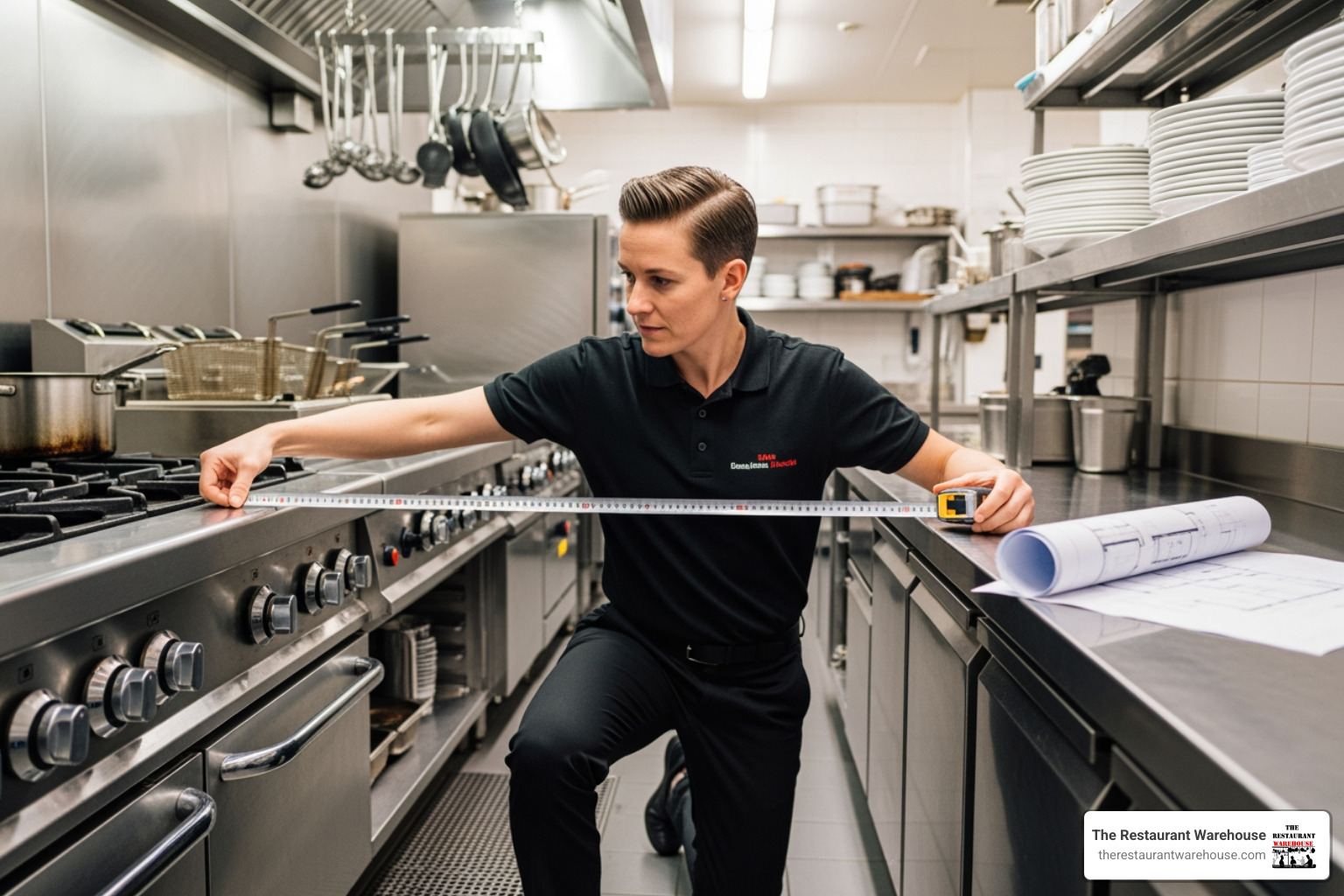
Here’s what we always advise our clients to think about:
- Production Capacity: This is how much ice the machine can make in a 24-hour period, usually measured in pounds. It's crucial to match this to your peak demand, not just average usage.
- Storage Capacity: How much ice can the machine's bin hold? For modular units, this is separate from production. Running out of ice during a busy shift is a nightmare you want to avoid.
- Machine Dimensions: This might seem obvious, but accurately measuring the available space – height, width, and depth – is paramount. Don't forget clearance for air circulation and maintenance access.
- Condenser Type: Air-cooled, water-cooled, or remote-cooled? Each has implications for cost, energy use, and heat dissipation.
- Energy Efficiency: An ENERGY STAR certified machine can significantly lower your utility bills over its lifespan.
- Water Usage and Filtration: Ice machines consume a lot of water. Efficient models can help reduce water waste, and proper filtration is non-negotiable for ice quality and machine longevity.
How Much Ice Do You Actually Need?
One of the most common mistakes we see businesses make is underestimating their ice needs. When you're searching for an ice machine near me, calculate your daily ice requirements accurately. This isn't just about how much ice you think you'll use; it's about how much you will use during your busiest periods. As a general rule, restaurants need about 1.5-2 lbs of ice per seat, bars need 3 lbs per seat, hotels require 5 lbs per room, and healthcare facilities should plan for 7-10 lbs per bed. Once you have your estimated daily production, consider your storage. The storage bin should be large enough to hold at least 50% of your daily production, ideally more, to cover peak business hours. It's always better to have a little extra capacity than to run out.
The Tech Specs That Actually Matter
Understanding the technical aspects of an ice machine can save you a lot of headaches and money down the line.
Condenser types are a big one:
- Air-cooled condensers are the most common and generally the least expensive to purchase. They use ambient air to cool the refrigerant but need good air circulation and can add heat to your kitchen.
- Water-cooled condensers use water to cool the refrigerant. They are more efficient in hot environments and don't add heat to the room, but they consume a significant amount of water.
- Remote condensers separate the condenser from the ice machine head, allowing it to be placed outside or on the roof. This keeps heat and noise out of your operational space but is more complex to install.
Energy efficiency is another key consideration. Look for models with an ENERGY STAR certification. These machines are designed to use less energy and water, translating into lower operating costs. Finally, water filtration systems are non-negotiable. High-quality water filtration improves the taste and clarity of your ice, improves machine performance, and extends the life of your unit by reducing scale buildup. Many manufacturers even offer extended warranties on their evaporators if you use their recommended filtration systems.
How to Find the Best "Ice Machine Near Me"
Searching for an "ice machine near me" can feel like a scavenger hunt, but with the right approach, you can find a reliable supplier who offers quality equipment and excellent service. Whether you're looking at local distributors or online wholesalers, the goal is to secure a machine that meets your needs without breaking the bank.
A reliable supplier should offer more than just a product. They should provide expert advice, competitive pricing, warranty considerations, and installation support. These factors are crucial for a smooth purchase and long-term satisfaction.
What to Ask Your Local Ice Machine Supplier
While our primary focus at The Restaurant Warehouse is online wholesale, we recognize the value of local resources, especially for immediate needs or hands-on support. When you're looking for an ice machine near me from a local supplier, here’s how to vet them:
- Check Local Reviews and Reputation: Look at online reviews for feedback on their product quality, customer service, and post-sale support.
- Showroom Visits: If they have a showroom, it’s an excellent opportunity to see machines in person and ask questions.
- Ask About Post-Sale Support: What kind of technical assistance do they offer? Do they have in-house technicians or a network of service providers?
- Understand Warranties and Service: Clarify what their service contracts entail and compare their warranty offerings with manufacturer warranties.
- Parts Availability: Can they quickly source replacement parts? Downtime for an ice machine can be costly.
Should You Buy Your Ice Machine Online?
Online wholesalers like us at The Restaurant Warehouse offer significant advantages, especially when it comes to pricing and selection. We cut out the middleman, avoiding high commissions and retail overhead, which allows us to offer affordable, wholesale pricing directly to you.
When considering an online purchase for an ice machine near me:
- Compare Prices: Online platforms make it easy to compare prices across a wide range of models and brands.
- Wholesale Benefits: We provide wholesale pricing that’s often difficult to match locally.
- Direct Shipping: We can ship directly to your business, simplifying logistics.
- Review Product Specifications: Our detailed product pages provide all the specifications you need to make an informed decision.
- Customer Service Access: While online, we pride ourselves on personalized, hands-on service. Our team is always ready to answer your questions.
The goal is to find a partner who understands your needs and can provide the right solution. Explore our selection of ice makers to see our competitive offerings. If you have any questions, don't hesitate to reach out. We're here to help you find the perfect ice machine near me for your business. Contact Us for a quote on your next ice machine.
Is an Ice Machine a Smart Investment?
Understanding the financial aspects of an ice machine—from upfront costs to long-term revenue potential—is crucial for any business owner. It's not just an expense; it's an investment that can significantly impact your bottom line. When evaluating an ice machine near me, we encourage our clients to look beyond the sticker price.
Commercial ice machines vary widely in cost based on their type, production capacity, and features. Undercounter units might range from a few thousand dollars, while high-capacity modular units can run significantly higher. These costs are just the beginning; you also need to factor in installation, water filtration, ongoing maintenance, and utility consumption.
The good news is that for many businesses, particularly those considering ice vending, the revenue potential can be substantial. The ice and water vending business is famously recession-resistant, meaning people always need ice, regardless of economic ups and downs. This steady demand contributes to a reliable income stream.
Should You Buy or Lease Your Ice Machine?
Deciding whether to buy or lease your ice machine near me is a significant financial decision. Each option has its pros and cons:
Buying an ice machine is a capital expenditure. You own the asset outright, which can be more cost-effective in the long run. However, it requires a larger initial investment and you are responsible for all maintenance and repairs.
Leasing, on the other hand, allows you to acquire an ice machine with a smaller upfront cost and predictable monthly payments. This frees up capital for other business needs. Many lease agreements also include maintenance and service, which can simplify budgeting and ensure your machine is always running optimally. The flexibility of leasing can be a huge benefit for businesses that need to adapt to changing demands.
When considering financing options, traditional bank loans, equipment financing companies, and even in-house programs from suppliers like us can be explored. We aim to provide accessible options that work for your budget.
How to Turn Ice Into Profit
While most businesses use ice machines for internal operations, the ice vending business model offers significant revenue potential as a standalone venture. The statistics are compelling:
- Average monthly sales of $3,530.32 from ice vending machines.
- Average daily sales of $115.98 from ice vending machines.
- Average weekend sales of $324.01 from ice vending machines.
- The average price for a 20 lbs bag of ice is $2.94.
With low overhead – primarily electricity, water, and minimal weekly maintenance – ice vending machines can generate substantial passive income. The recession-resistant nature of the business ensures consistent demand for basic necessities. Many entrepreneurs find this an attractive way to build a scalable business, potentially growing from a single unit to multiple machines.
Exploring the Ice Vending Business Model
For entrepreneurs searching for an ice machine near me not just for their restaurant but as a business venture itself, the ice vending model is a compelling option. It offers a relatively passive income stream with low overhead. These standalone units operate 24/7, providing a valuable service in various locations like gas stations, campgrounds, and apartment complexes. Let's look at how this business works, from the major players to the tools that help you succeed.
An Introduction to Major Vending Brands
The ice vending landscape is shaped by established brands like Twice the Ice and Kooler Ice. These companies have refined the model, offering machines that are essentially automated convenience stores for ice. They feature 24/7 availability and simple payment systems, accepting cash, cards, and mobile payments. This setup is a huge draw for customers who need ice outside of typical retail hours, whether they're heading out for a fishing trip at dawn or hosting a late-night gathering. The core appeal is pure convenience, providing clean, filtered ice and water on demand without any human interaction needed.
Investment Paths: From Ownership to Land Leasing
Getting into the ice vending business is often called recession-resistant because clean ice is a constant need. The numbers back this up, with industry data showing that a single machine can generate over $3,500 in average monthly sales. The initial investment involves purchasing the machine, but the path to ownership is flexible. You can buy a machine outright and place it on land you own, or you can lease a small plot of land in a high-traffic area. This versatility lowers the barrier to entry. For those needing help with the initial purchase, options like restaurant equipment financing can make acquiring your first machine more manageable.
Driving Sales with Mobile Apps and Promotions
Modern ice vending isn't just about placing a machine and hoping for the best; it's about smart marketing. Brands in this space leverage technology to connect with customers directly. For example, companies like Twice the Ice and Kooler Ice offer mobile apps that do more than just show machine locations on a map. These apps can offer promotions, like a free bag of ice for first-time users, which is a great way to build an initial customer base. By making it easy for people to find your machine and giving them an incentive to try it, you can significantly increase foot traffic and sales.
Tools for Managing Your Vending Business
Running an ice vending business is streamlined with modern management tools. Owners aren't left guessing about their sales or inventory. Many brands provide dedicated owner-facing apps that offer a real-time dashboard for their business. From a smartphone, you can track ice purchases, monitor sales data across multiple locations, and even grant access to employees for maintenance or cash collection. This technology transforms a simple vending machine into a sophisticated, data-driven enterprise, making it easier to manage operations, identify trends, and scale your business efficiently from one machine to a whole network of them.
Keep Your Ice Machine Running Smoothly
An ice machine is a critical piece of equipment for many businesses, and like any valuable asset, it requires proper care and attention. Ignoring maintenance can lead to costly breakdowns, reduced ice quality, and even health code violations. When you invest in an ice machine near me, you're also investing in its upkeep.
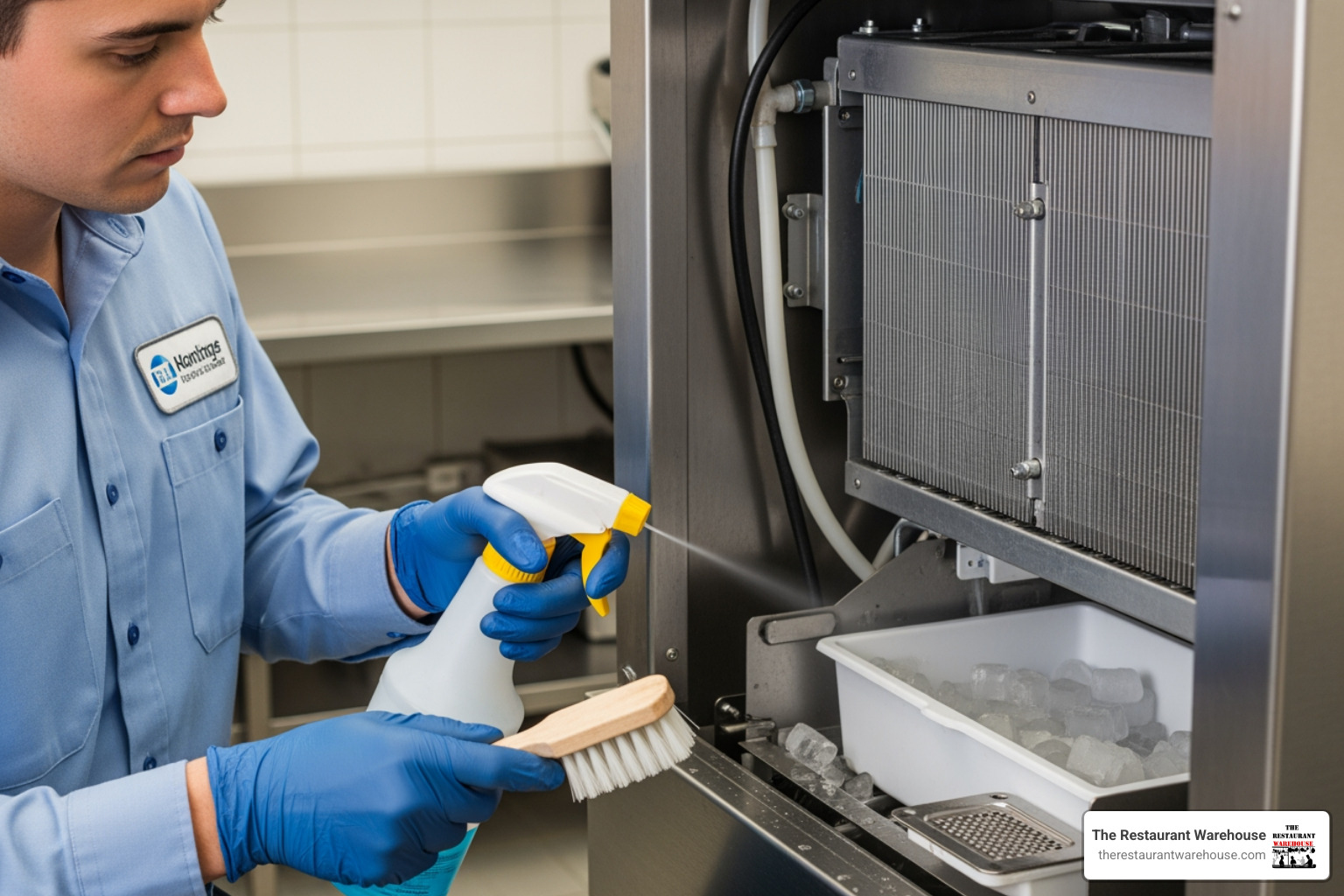
Proper maintenance ensures your ice machine operates at optimal performance, produces clean, fresh ice, and adheres to hygiene standards. We've seen how a well-maintained machine can run efficiently for years, while a neglected one quickly becomes a headache.
Your Weekly & Monthly Cleaning Checklist
Hygiene is paramount when it comes to ice. An ice machine's damp, cold environment can be a breeding ground for mold, slime, and bacteria if not cleaned regularly. This not only affects the taste and safety of your ice but can also damage the machine's components.
We always recommend establishing a comprehensive cleaning and sanitizing schedule:
- Daily: Visually inspect the ice bin and scoop. Keep the exterior clean and ensure the ice scoop is stored hygienically outside the bin.
- Weekly: Wipe down the interior of the ice bin and the machine's door seals with a food-safe sanitizer.
- Semi-Annually (or more often in high-use areas): This is the deep clean. It involves using an approved ice machine cleaner to remove mineral buildup (lime scale) from the water system. After descaling, a food-safe sanitizer is circulated through the machine to kill bacteria and mold. For air-cooled units, the condenser fins must also be brushed or vacuumed to remove dust and debris, ensuring proper airflow and efficiency.
It's crucial to use cleaners and sanitizers specifically designed for ice machines and to follow the manufacturer's instructions carefully. This ensures compliance with food safety regulations. The FDA provides comprehensive guidelines on equipment sanitation, which we strongly recommend reviewing to ensure your operation meets all necessary standards. Adhering to these guidelines protects your customers and your business. Read the FDA's guidelines on equipment sanitation.
Why Water Filters & Pro Service Are a Must
Water filters are the unsung heroes of ice machine longevity and ice quality. Good filtration extends machine life by preventing mineral buildup (scale), which is a leading cause of breakdowns. It also significantly improves the taste and odor of your ice, making your beverages more enjoyable for customers. Filters should be replaced regularly, typically every six months, but this can vary based on water quality and ice production volume.
While daily and weekly cleaning can be handled by your staff, we often advise professional servicing at least once or twice a year. A qualified technician can perform a thorough inspection, identify potential issues before they become major problems, and ensure all components are functioning correctly. They can also perform the deep descaling and sanitizing procedures that might be too complex for in-house staff. This preventative maintenance approach minimizes downtime, extends the life of your ice machine near me, and ultimately saves you money in the long run.
Ready to Choose Your Ice Machine?
Navigating commercial ice machines doesn't have to be a frosty endeavor. We've covered the essentials of finding the perfect ice machine near me, from understanding the different types of ice and machines to the critical factors of sizing, technical specifications, and maintenance. We've also explored the financial side, from purchase costs to the revenue potential of ice vending.
At The Restaurant Warehouse, we pride ourselves on being your trusted partner in sourcing foodservice solutions. We bypass the inflated costs of high commissions and retail overhead to bring you affordable, wholesale pricing without compromising on quality or service. Our expertise ensures you get not just an ice machine, but the right ice machine, customized to your business needs in the USA, China, or Seattle, Washington.
Don't let the search for an ice machine near me leave you out in the cold. Equip your business with the best, ensure a steady supply of crystal-clear ice, and keep your customers happy. Explore our full range of affordable ice machines today!.
Frequently Asked Questions
How do I figure out the right size ice machine without overspending? The best approach is to calculate your ice needs for your absolute busiest day, not an average one. Use the general guidelines—like 1.5 lbs per restaurant seat or 3 lbs per bar seat—as a starting point. Then, add a 20% buffer to be safe. This ensures you won't run out during a rush. Buying a machine that's slightly bigger than you need is smart, but getting one that's excessively large just means you're paying for capacity and energy you'll never use.
What's the most common mistake people make when buying an ice machine? The biggest oversight is focusing only on ice production while ignoring storage capacity and physical space. A machine that makes 500 pounds of ice is useless if the storage bin only holds 100 pounds during your dinner rush. Similarly, people often forget to measure for clearance. Ice machines need space around them for air to circulate, so make sure you account for an extra few inches on the sides and back.
Air-cooled or water-cooled condenser – which one is actually better for my kitchen? It really depends on your kitchen's environment. Air-cooled machines are the most common and are generally more affordable upfront. They work great in spaces with good ventilation and moderate temperatures. However, they do release heat into the room. If your kitchen is already hot or cramped, a water-cooled unit might be a better fit because it's more efficient in high-heat areas and doesn't add to the ambient temperature, though it will increase your water bill.
How important is a water filter, really? Think of it as non-negotiable. A good water filter is the single best thing you can do to protect your investment. It prevents mineral scale from building up inside the machine, which is the number one cause of costly breakdowns. It also guarantees your ice tastes clean and fresh, which your customers will definitely notice. Skipping the filter to save a little money upfront will almost certainly lead to expensive repair bills down the road.
Is it risky to buy a big piece of equipment like an ice machine online? It's a valid concern, but the experience is very different now. Reputable online wholesalers provide the same detailed specifications and warranty information you'd get in a showroom, but often at a much better price because they have lower overhead. The key is to choose a supplier that offers strong customer support. You should be able to easily call and speak with an expert who can answer your questions and guide you to the right model for your specific needs.
Key Takeaways
- Choose strategically based on ice type and volume: Your choice of ice machine should be a practical decision. First, determine the right ice shape for your drinks and displays, then select a machine style—like a high-capacity modular unit or a compact undercounter model—that fits your space and can handle your busiest service.
- Size your machine for peak demand, not average use: The most common mistake is underestimating ice needs. Calculate your required daily production based on your busiest shifts to ensure you never run out, and pair it with a storage bin that can hold enough ice to get you through a rush.
- Protect your investment with consistent maintenance: An ice machine's performance and lifespan depend on regular care. A simple schedule for cleaning, sanitizing, and changing water filters is the best way to prevent expensive repairs, ensure ice quality, and keep your machine running efficiently for years.
Related Articles
About The Author

Sean Kearney
Sean Kearney is the Founder of The Restaurant Warehouse, with 15 years of experience in the restaurant equipment industry and more than 30 years in ecommerce, beginning with Amazon.com. As an equipment distributor and supplier, Sean helps restaurant owners make confident purchasing decisions through clear pricing, practical guidance, and a more transparent online buying experience.
Connect with Sean on LinkedIn, Instagram, YouTube, or Facebook.