

Decoding the Depths: Everything About 3-Bay Wash Sinks
Why Food Safety Starts at the Sink
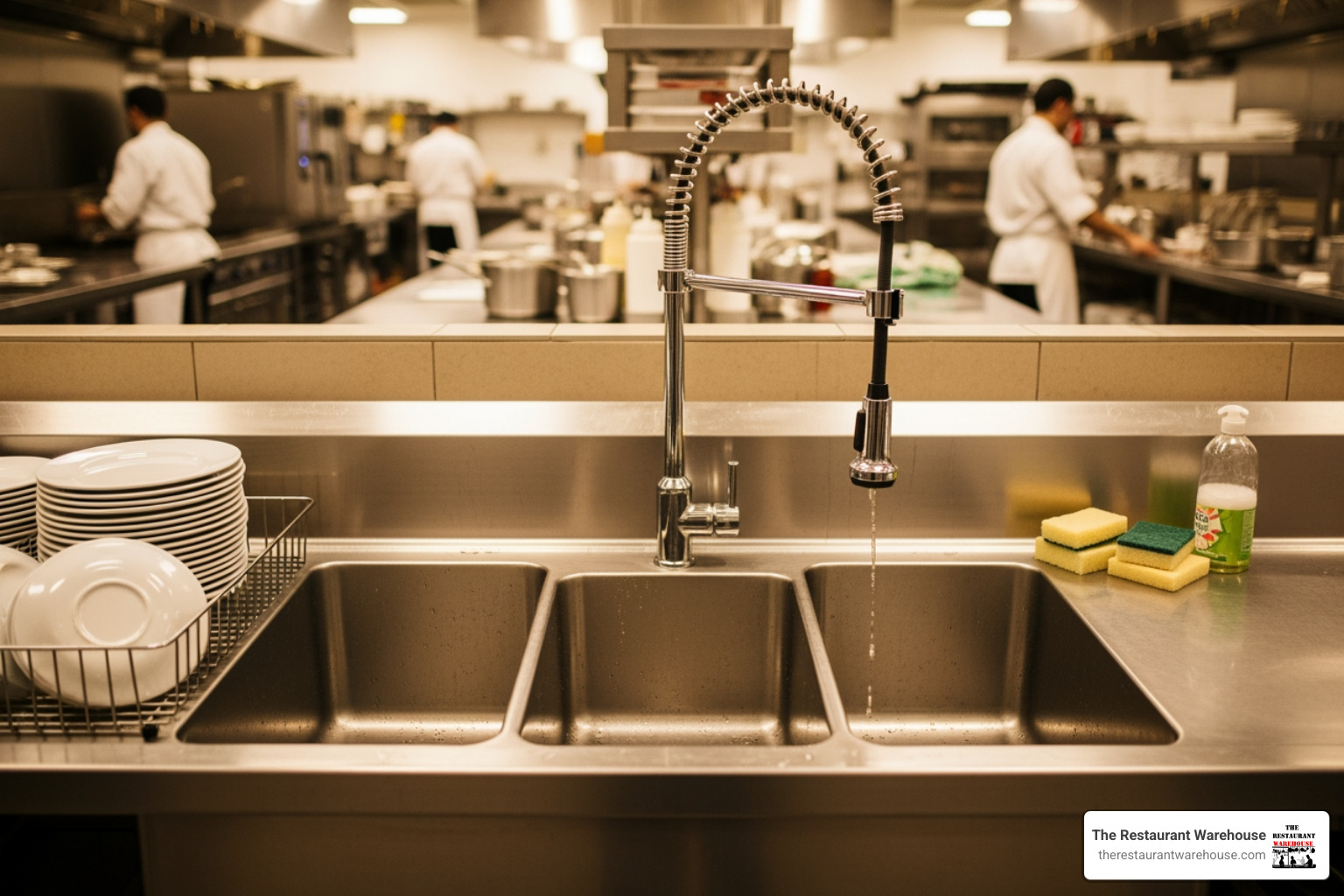
A 3 bay wash sink is a three-compartment stainless steel sink system designed for commercial kitchens, where each basin serves a specific purpose in the warewashing process:
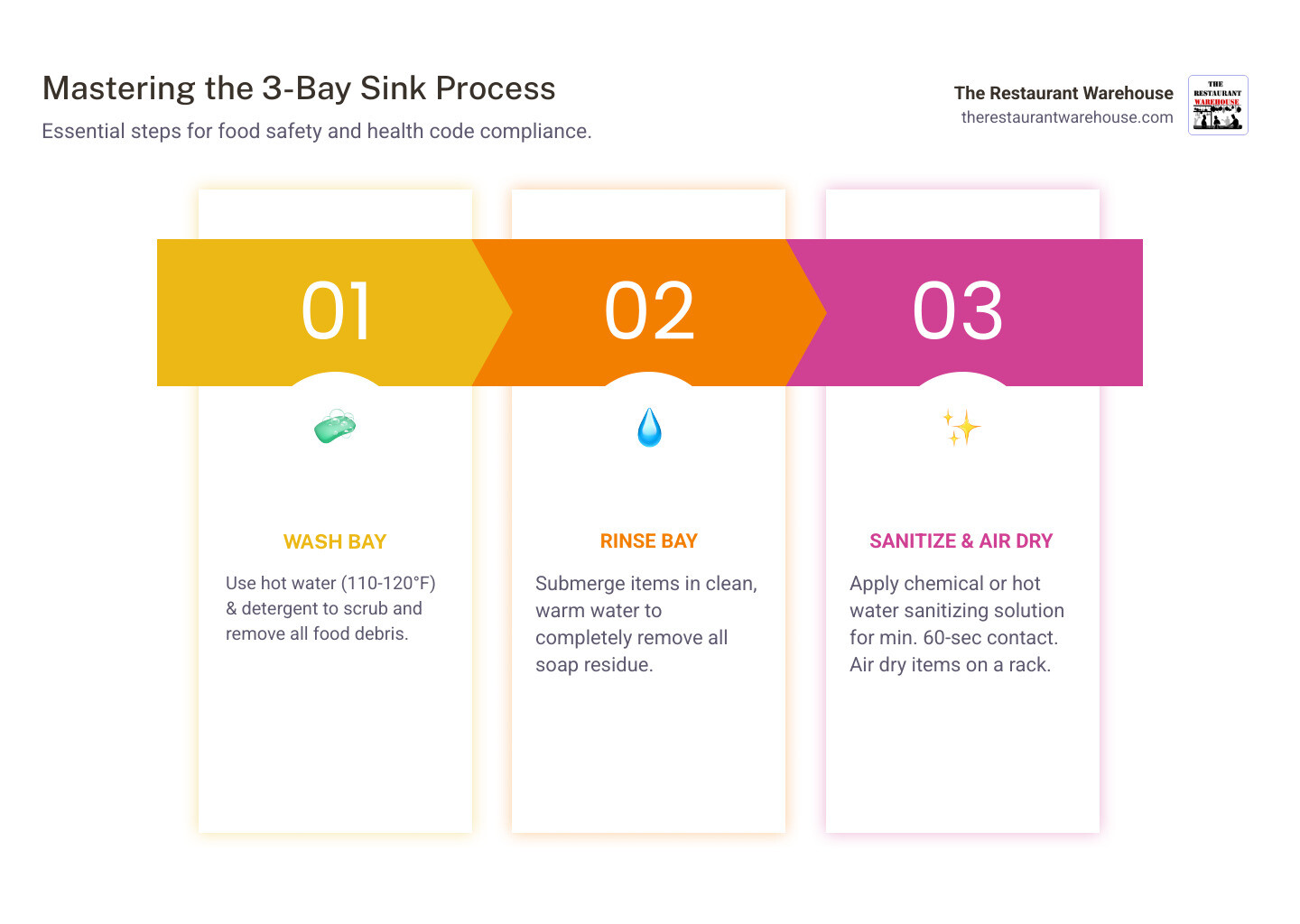
- First Bay (Wash): Hot water (110°F-120°F) + detergent for scrubbing and removing food debris
- Second Bay (Rinse): Clean, warm water to remove soap residue
- Third Bay (Sanitize): Chemical or hot water sanitizing solution with minimum 60-second contact time
After sanitizing, items must air dry on a clean rack—never use towels.
In commercial kitchens, ensuring that utensils, dishes, and cookware are clean, sanitized, and safe for use is essential. If not, the risk of cross-contamination and the spreading of germs becomes possible and can negatively affect your consumers.
The three-bay sink isn't just a fixture—it's your first line of defense against foodborne illness. Health departments require proper warewashing procedures, and the 3 bay wash sink is the cornerstone of compliance for restaurants, food trucks, bars, and healthcare facilities that don't rely solely on automated dishwashers.
Understanding water temperatures, sanitizer concentrations, and contact times isn't optional. It's the difference between passing inspection and shutting down.
Whether you're launching a new restaurant on a tight budget or upgrading your existing setup, knowing how to select, use, and maintain a 3 bay wash sink will save you money, keep your customers safe, and help you avoid costly health code violations.
I'm Sean Kearney from The Restaurant Warehouse, and I've spent years helping restaurant owners find affordable, reliable solutions for their kitchens. Through my work with foodservice operators of all sizes, I've seen how the right 3 bay wash sink setup can transform a kitchen's efficiency while keeping costs down. Let's break down everything you need to know.
Simple 3 bay wash sink glossary:
What is a 3 Bay Wash Sink and Why is it Essential?
At its core, a 3 bay wash sink is a specialized commercial sink system designed to facilitate the mandated three-step process of manual warewashing: washing, rinsing, and sanitizing. This setup is a non-negotiable requirement for many foodservice establishments across the USA, including busy restaurants in Seattle, Washington, and efficient food trucks, ensuring the highest standards of hygiene and food safety.
The primary components of a typical 3 bay wash sink include:
- Three Compartments (Bays): These are the individual basins, each dedicated to one step of the cleaning process. They are often generously sized to accommodate large pots, pans, and batches of dishes, with common bowl dimensions like 18x24x14 inches or 20x30x14 inches.
- Drainboards: Many 3 bay wash sinks come equipped with one or two drainboards, which are flat, sloped surfaces adjacent to the sink compartments. These are crucial for air-drying dishes after sanitization and for staging dirty dishes before washing. Drainboards can range from 12 to 30 inches in length, and their design often includes a slight dip (e.g., 1/4 inch) to facilitate proper drainage back into the sink or a separate drain.
- Backsplash: A raised panel at the rear of the sink, typically 9 1/2 inches high, with an 8-inch faucet center, helps prevent water splashes from reaching walls and other surfaces, maintaining a cleaner and safer work area.
- Faucets: Commercial-grade faucets, often with an 8-inch center, are installed to provide hot and cold water to the wash and rinse bays.
- Stainless Steel Construction: The vast majority of commercial 3 bay wash sinks are constructed from high-quality stainless steel, typically Type 304, known for its corrosion resistance and durability. This material choice is vital in a busy kitchen environment where sinks are constantly exposed to water, detergents, and sanitizers.
- Material Gauge: The thickness of the stainless steel is measured in gauge, with lower numbers indicating thicker, more durable steel. For instance, 16-gauge stainless steel is thicker and more robust than 18-gauge, offering superior resistance to dents and corrosion, making it a popular choice for heavy-duty commercial use. Some sinks might be 20-gauge, suitable for lighter applications.
- NSF Certification: This certification is a hallmark of quality and compliance. NSF-certified sinks meet rigorous public safety, health, and environmental standards, ensuring they are designed and constructed to facilitate proper sanitation and are safe for use in food service settings. This is a crucial consideration for health department inspections in the USA.
The Three-Step Process: Purpose of Each Compartment in a 3-bay wash sink
The genius of the 3 bay wash sink lies in its methodical approach to hygiene. Each compartment plays a distinct, non-negotiable role in ensuring dishes are not just clean, but truly sanitized.
Wash Bay Purpose: This is where the heavy lifting happens. The first bay is filled with hot water and an appropriate commercial detergent. Here, food particles, grease, and grime are physically removed from dishes, utensils, and cookware through scrubbing. The water temperature here is critical, needing to be at least 110 degrees Fahrenheit but no more than 120 degrees Fahrenheit to effectively cut through grease and activate detergents without scalding staff. Without proper washing, subsequent steps are rendered ineffective.
Rinse Bay Purpose: After a thorough wash, items move to the second bay, which is filled with clean, warm water – and nothing else. The sole purpose of this bay is to rinse away all traces of soap and detergent from the washed items. Skipping this step or not rinsing adequately means sanitizer in the next bay will be diluted by residual soap, reducing its efficacy. A clean rinse ensures that chemicals can do their job properly.
Sanitize Bay Purpose: This third bay is the final frontier in germ elimination. Here, dishes are submerged in a sanitizing solution (either chemical or hot water) to kill any remaining bacteria and microorganisms. This step is what truly makes dishes safe for reuse. The specific requirements for temperature and chemical concentration are stringent and dictated by health codes, varying based on the sanitizing agent used.
This structured workflow is paramount for preventing cross-contamination. By separating washing, rinsing, and sanitizing, we ensure that dirty water doesn't contaminate clean items and that sanitizers aren't prematurely neutralized. It's a system designed for maximum efficiency and, more importantly, maximum safety. For a deeper dive into the importance of sink types in commercial settings, check out our guide on Wash Up: A Buyer's Guide to Restaurant Sinks.
Choosing the Right Sink for Your Operation
Selecting the perfect 3 bay wash sink for your establishment is more than just picking one that fits. It's about optimizing your workflow, ensuring compliance, and investing in durability.
Material Types: While stainless steel (primarily Type 304) is the industry standard for its hygiene, durability, and corrosion resistance, it's the specific grade and gauge that truly matter. Type 304 stainless steel is highly recommended for its superior resistance to rust and corrosion, which is crucial in a wet, chemical-rich environment.
-
Gauge Thickness: This refers to the thickness of the stainless steel. The lower the gauge number, the thicker and more durable the steel.
- 16-gauge: This is considered heavy-duty, offering excellent resistance to dents and impacts. Ideal for high-volume kitchens with heavy pots and pans.
- 18-gauge: A very common and robust option, suitable for most commercial kitchen applications. It offers a good balance of durability and cost-effectiveness.
- 20-gauge: Lighter duty, often found in less demanding settings or for sinks that see less frequent use.
Bowl Sizes: Sink compartments come in various dimensions, often expressed as width x front-to-back x depth (e.g., 18x18x14 inches, 20x30x14 inches). Consider the largest items you'll be washing. Can your biggest pot fit comfortably and be fully submerged?
-
Drainboard Configurations: Drainboards are invaluable for air-drying and staging.
- No Drainboards: Suitable for very tight spaces, but requires external drying racks or adjacent counter space.
- Single Drainboard: Offers a dedicated space for either pre-scraping or post-sanitization drying.
- Double Drainboards: Provides maximum utility, allowing for both pre-washing staging and air-drying. This is often the most efficient setup for busy operations.
-
Freestanding vs. Drop-in:
- Freestanding Sinks: These are self-contained units with their own legs, offering flexibility in placement. They are easy to install and move if needed. For guidance on these, see our Choosing Your Perfect Freestanding Utility Sink: What to Look For.
- Drop-in Sinks: Designed to be installed into a countertop, offering a more integrated and seamless look. They require precise countertop cutouts.
When choosing, also consider your available space, the volume of dishes you process daily, and specific local health department regulations. For unique setups like mobile operations, our Food Truck Sinks Guide offers custom advice. Ready to find the right sink for your kitchen? Shop our collection of 3-bay sinks today!
The Correct 3-Bay Sink Procedure: A Step-by-Step Guide
Mastering the 3 bay wash sink procedure is fundamental to food safety and operational efficiency. It's a simple, yet critical, process that every food service employee must know by heart.
Step 1: The Wash Bay
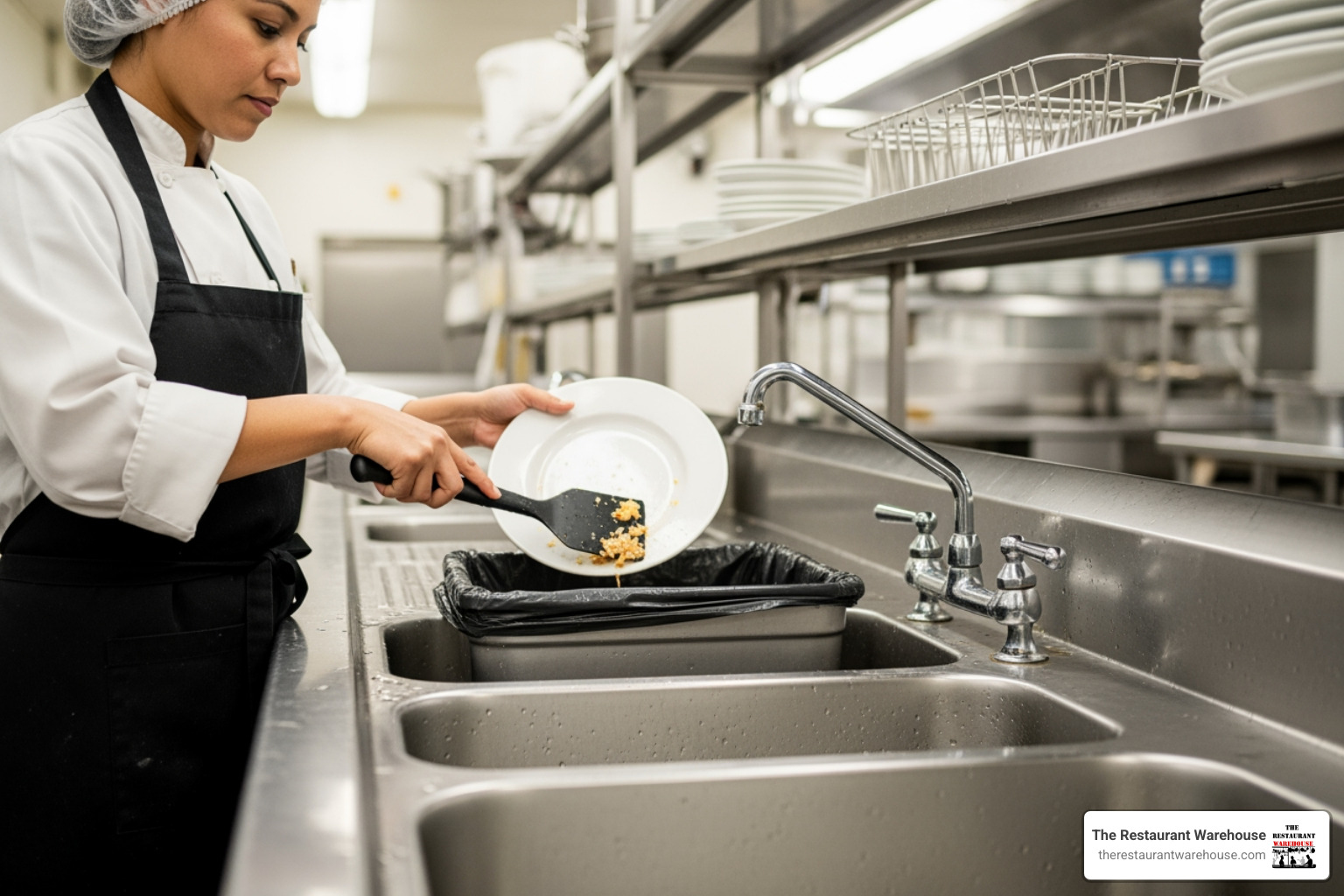
Before you even turn on the water, always begin by scraping and pre-soaking dishes. This removes large food particles, making the washing process much easier and preventing excessive debris from contaminating your wash water. Think of it as the pre-game warm-up for your dishes.
Next, prepare the first bay:
- Fill the sink: Fill the first compartment with hot water.
- Water temperature: The water temperature in Bay 1 needs to be at least 110 degrees Fahrenheit but no more than 120 degrees Fahrenheit. This range is crucial for effectively breaking down grease and activating your detergent. We recommend using a thermometer to verify the temperature regularly.
- Approved detergents: Add an appropriate commercial-grade dishwashing detergent according to the manufacturer's instructions. Avoid household detergents, as they may not be effective enough for commercial soil loads or approved by health authorities.
- Scrubbing technique: Submerge dishes and scrub them thoroughly using a brush, sponge, or scouring pad. Pay attention to all surfaces, ensuring no food residue remains.
- Changing wash water: The wash water should be changed frequently. If it becomes excessively dirty, greasy, or cools below 110°F, it's time for a fresh batch. A good rule of thumb is to change it every two hours, or sooner if it looks visibly soiled.
Step 2: The Rinse Bay
Once items are sparkling clean from the wash bay, they move to the second compartment.
- Purpose of rinsing: The sole purpose of the rinse bay is to remove all soap and detergent residue. Any soap left on the dishes will neutralize the sanitizer in the next bay, rendering the sanitization step ineffective.
- Clean, warm water: Fill this bay with clean, warm water. No soap, no chemicals – just water.
- Rinsing technique: Submerge each item completely in the rinse water, ensuring that all surfaces are thoroughly rinsed. You may need to gently agitate items to remove all suds.
- Preventing detergent carryover: If you see excessive suds in your rinse water, it's a sign that either your wash water is too soapy, or you're not rinsing effectively. Adjust your process to prevent this, as it directly impacts the sanitization step.
Step 3: The Sanitizing Bay
This is the most critical step for killing harmful microorganisms. There are two primary methods for sanitization in a 3 bay wash sink: hot water or chemical.
Hot Water Sanitization: This method relies on extremely hot water to kill germs. For hot water sanitization, the water in the third bay must reach a minimum of 171°F (77°C) and items must be submerged for at least 30 seconds. This usually requires a booster heater to maintain the temperature.
-
Chemical Sanitization: This is the more common method for manual warewashing due to its practicality. Several types of chemical sanitizers are approved for food service:
-
Chlorine-based (e.g., Bleach):
- Water temperature: Between 75 and 120 degrees Fahrenheit.
- Solution concentration: Maintain between 50-200 ppm (parts per million).
-
Quaternary Ammonium (Quats):
- Water temperature: Between 75 and 90 degrees Fahrenheit.
- Solution concentration: Maintain between 200-400 ppm.
-
Iodine-based:
- Water temperature: Around 75 degrees Fahrenheit.
- Solution concentration: Maintain between 12.5-25 ppm.
-
Chlorine-based (e.g., Bleach):
PPM concentrations and Test Strips: It is absolutely vital to use chemical test strips specifically designed for your chosen sanitizer to regularly check the concentration of the solution. Concentrations can drop due to dilution from rinsed items or evaporation. If the concentration falls below the minimum requirement, you must refresh the sanitizing solution.
- Contact time: Dishes MUST be submerged in the sanitizing solution for a MINIMUM of 1 minute (60 seconds). This contact time is essential for the sanitizer to effectively kill pathogens. Ensure items are fully submerged.
For comprehensive guidelines on sanitization, we recommend consulting the FDA guidelines on sanitization. You can also learn more about the complete process in our 3-Tier Sink Guide.
Step 4: Air Drying
This final step is often overlooked but is just as crucial as sanitization.
- Mandatory air-drying: After sanitizing, dishes, utensils, and cookware must be allowed to air dry completely. This prevents recontamination that can occur if items are dried with towels.
- Prohibiting towel use: Never use towels or cloths to dry sanitized items. Even "clean" towels can harbor bacteria and transfer them back to the freshly sanitized surfaces, undoing all your hard work.
- Using sanitized drainboards: Place items on a clean, sanitized drainboard or a clean utensil rack. Ensure these surfaces are also regularly cleaned and sanitized. Many 3 bay wash sinks come with integral drainboards designed to slope, allowing excess water to drain away.
- Proper storage post-drying: Once completely air-dried, store items in a clean, dry, and protected area to prevent recontamination before their next use.
This meticulous air-drying process is a cornerstone of food safety. For more insights into optimizing your warewashing process, explore our article on Using 3-Tier Sinks.
Maintenance, Compliance, and Efficiency
A well-maintained 3 bay wash sink isn't just a matter of cleanliness; it's a critical component of health code compliance, operational efficiency, and the longevity of your investment. Proper care ensures your sink functions optimally, passing inspections with flying colors and contributing to a smooth workflow.
Daily and Weekly Maintenance Requirements
Just like any other essential tool in your kitchen, your 3 bay wash sink needs regular attention to remain effective and hygienic.
- Cleaning the sink basins: At the end of each shift or day, thoroughly clean all three basins. Drain any remaining water and scrub the interior surfaces with hot water and detergent to remove food debris, grease, and soap scum. Rinse thoroughly.
- Descaling: Over time, hard water can lead to mineral buildup (limescale) in your sinks, especially in the hot wash bay. Regularly descale your sinks using an appropriate commercial descaler or a vinegar solution to prevent buildup and maintain efficiency.
- Checking drains and gaskets: Daily, check drain stoppers and overflows for any blockages. Weekly, inspect gaskets and seals around drains and faucets for wear and tear. Worn gaskets can lead to leaks, which are not only messy but can also be a health code violation.
- Polishing stainless steel: While stainless steel is durable, it can develop water spots or a dull appearance. Regularly clean and polish your stainless steel surfaces with a non-abrasive stainless steel cleaner to maintain its luster and hygienic appearance. Avoid harsh chemicals or abrasive pads that can scratch the surface.
For more tips on caring for your stainless steel, our guide on Stainless Steel Sinks for Restaurants provides excellent advice.
Common Mistakes to Avoid When Using a 3-bay wash sink
Even with the best intentions, mistakes can happen. Being aware of common pitfalls can save you from health code violations and operational headaches.
- Incorrect temperatures: Failing to maintain the required water temperatures in the wash (110-120°F) and sanitize bays (as per sanitizer type or 171°F for hot water) is a frequent error. This compromises cleaning and sanitization effectiveness.
- Wrong sanitizer levels: Not using test strips to verify chemical sanitizer concentrations, or using incorrect dilution ratios, means your sanitizing solution might be too weak (ineffective) or too strong (potentially harmful and wasteful).
- Insufficient contact time: Items MUST be submerged in the sanitizing solution for a minimum of 1 minute. Pulling them out too soon means germs haven't had enough time to be killed.
- Towel drying: As emphasized, never towel dry sanitized items. This reintroduces bacteria and negates the sanitization step. Air drying is the only acceptable method.
- Skipping steps: Trying to combine rinsing and sanitizing, or not pre-scraping, will lead to ineffective cleaning and potential cross-contamination. Every step in the three-bay process is vital.
- Overloading basins: Stuffing too many dishes into a bay at once prevents proper washing, rinsing, and sanitizing. It also causes water temperatures and sanitizer concentrations to drop quickly.
- Not changing water: Using dirty wash water or diluted rinse/sanitize water for too long is a recipe for disaster. The water in all bays needs frequent changing.
Understanding the proper use of your 3 bay wash sink and avoiding these common errors is key to maintaining a safe and efficient kitchen. For insights into various sink applications, our Industrial Sink Types article can be helpful.
Alternatives and Efficiency Boosters
While the 3 bay wash sink is a manual warewashing powerhouse, it's important to consider its place within the broader landscape of kitchen operations and how to maximize its efficiency.
- Manual vs. Automated Warewashing: For high-volume establishments, automated washing systems offer significant advantages in speed, consistency, and often, water and energy efficiency. However, a 3 bay wash sink remains essential for items that cannot be machine-washed (e.g., certain delicate items, oversized pots), during peak hours when automated systems can't keep up, or as a backup. Many smaller operations, like food trucks or cafes, rely solely on the 3 bay wash sink due to space or budget constraints.
- When to use a 3-bay sink: It's the cornerstone for manual cleaning of pots, pans, utensils, and dishes, especially in establishments that either don't have automated washing capabilities or have items unsuitable for machine washing. It’s also crucial for maintaining food safety during power outages or when other systems are unavailable.
- Automated chemical dispensers: These systems can vastly improve the accuracy and efficiency of chemical sanitization. Instead of manually measuring sanitizer, an automated dispenser ensures the correct dilution ratio every time, maintaining optimal PPM levels and reducing chemical waste. This is particularly useful for busy staff to ensure consistency.
- The role of separate hand and utility sinks: A 3 bay wash sink is strictly for warewashing. Health codes in the USA mandate separate, dedicated hand sinks for staff handwashing to prevent cross-contamination. Similarly, a separate utility or mop sink is required for disposing of dirty mop water and cleaning supplies, preventing these contaminants from entering your warewashing system. For more on handwashing stations, explore our Sink Smart: Choosing the Perfect Hand Wash Sink.
Ensure your establishment meets all health codes by exploring our range of compliant sinks on our Restaurant Sinks Made Simple page. Ready to upgrade your warewashing station? Contact Us to find the perfect sink for your needs.
Frequently Asked Questions about 3-Bay Sinks
We hear a lot of questions about 3 bay wash sinks, and for good reason! Getting these details right is crucial for health and efficiency.
How often should I change the water in a 3-bay sink?
This is a critical question for maintaining hygiene. The water in all three bays needs frequent changing, but the triggers vary:
- Wash Bay: Change the wash water when it becomes visibly dirty, greasy, or if the water temperature drops below 110°F. A good operational practice is to change it at least every two hours, or more frequently during peak periods.
- Rinse Bay: Change the rinse water if it becomes cloudy, soapy, or visibly contaminated. Like the wash bay, changing it every two hours is a solid guideline.
- Sanitize Bay: The sanitizing solution needs to be refreshed when its temperature falls below the required minimum (for hot water sanitization) or when its chemical concentration drops below the minimum PPM, as indicated by test strips. Dilution from rinsed items will inevitably reduce concentration over time, so regular testing (e.g., every 1-2 hours) is a must.
Always err on the side of caution. Dirty or ineffective water compromises the entire warewashing process and can lead to health code violations.
What is the best way to prevent backflow in a three-compartment sink?
Preventing backflow is essential to protect your potable water supply from contamination. Backflow occurs when contaminated water flows back into the clean water lines.
- Air gap installation: The most effective and commonly required method is installing an air gap. This is a physical separation between the water supply outlet and the flood level rim of the sink. It ensures that there's always an open space of air, preventing any siphoning of dirty water back into the supply.
- Backflow prevention devices: These mechanical devices are installed directly on the water line to prevent reverse flow. While effective, they must be properly installed and regularly maintained and tested according to local plumbing codes.
- Plumbing codes: Always consult your local plumbing codes and health department regulations. They will specify the exact requirements for backflow prevention in your area, which are strictly enforced to safeguard public health.
Can I use a 3-bay sink for handwashing?
Absolutely not! This is a common misunderstanding that can lead to serious health code violations and foodborne illness.
- Health code prohibition: Health departments strictly prohibit using a 3 bay wash sink for handwashing. These sinks are designated solely for washing, rinsing, and sanitizing dishes and utensils.
- Cross-contamination risk: Using a warewashing sink for handwashing introduces bacteria from hands (and potentially other contaminants) into the very water used to sanitize food contact surfaces. This creates a high risk of cross-contamination.
- Requirement for dedicated hand sinks: All commercial food service establishments in the USA are required to have separate, dedicated hand sinks equipped with hot and cold running water, soap, and single-use towels or an air dryer. These sinks must be easily accessible to all staff.
For detailed information on proper handwashing facilities and requirements, refer to our Handwash Sink Guide.
Conclusion
The 3 bay wash sink is more than just a fixture in your commercial kitchen; it's a vital tool for ensuring food safety, maintaining health code compliance, and contributing to the overall operational efficiency of your business. From the meticulous process of washing, rinsing, and sanitizing to the crucial step of air drying, every stage plays a pivotal role in protecting your customers and your reputation.
We've explored the components that make these sinks durable and effective, the precise temperatures and concentrations required for sanitization, and the common pitfalls to avoid. Proper procedure is key. Regular maintenance, adherence to health codes, and understanding the nuances of chemical versus hot water sanitization are not just best practices—they are necessities.
At The Restaurant Warehouse, we understand the challenges of running a foodservice operation. That's why we're committed to supplying foodservice operations with affordable, wholesale-priced solutions, helping you get the reliable sinks and supplies you need without breaking the bank. Investing in a high-quality 3 bay wash sink and ensuring your team knows how to use it correctly is an investment in your business's success and your customers' well-being.
About The Author

Sean Kearney
Sean Kearney is the Founder of The Restaurant Warehouse, with 15 years of experience in the restaurant equipment industry and more than 30 years in ecommerce, beginning with Amazon.com. As an equipment distributor and supplier, Sean helps restaurant owners make confident purchasing decisions through clear pricing, practical guidance, and a more transparent online buying experience.
Connect with Sean on LinkedIn, Instagram, YouTube, or Facebook.
Leave a comment