

Wash Up: A Buyer's Guide to Commercial Kitchen Sinks
The Heart of Every Commercial Kitchen Operation
Commercial kitchen sinks are the unsung heroes of any foodservice operation. They are the central hub for washing, rinsing, and sanitizing everything from delicate glassware to heavy-duty pots and pans. These workhorses handle the critical tasks that keep a kitchen running smoothly, safely, and in compliance with health codes.
The market for these essential items is growing, projected to expand from USD 1.2 billion in 2022 to USD 1.8 billion by 2030. This reflects an increasing demand for durable, sanitation-focused solutions in the foodservice industry. Stainless steel is the dominant material, holding over 70% of the market due to its non-porous surface, durability, and hygienic properties.
Understanding the different types and features is key to making an informed decision. Key types include:
- Compartment Sinks: Available with one to four basins for washing, rinsing, and sanitizing.
- Specialized Sinks: Includes hand sinks, mop sinks, and underbar sinks for specific tasks.
This guide will walk you through everything you need to know to choose the right commercial kitchen sinks for your operation, ensuring you select a unit that maximizes efficiency and meets all sanitation standards for years to come.
Decoding the Types: Which Commercial Sink Fits Your Needs?
Choosing the right commercial kitchen sinks is about more than just finding something that holds water; it's about understanding your kitchen's workflow, your team's needs, and health code requirements. The right configuration can significantly improve your operation's efficiency and safety.
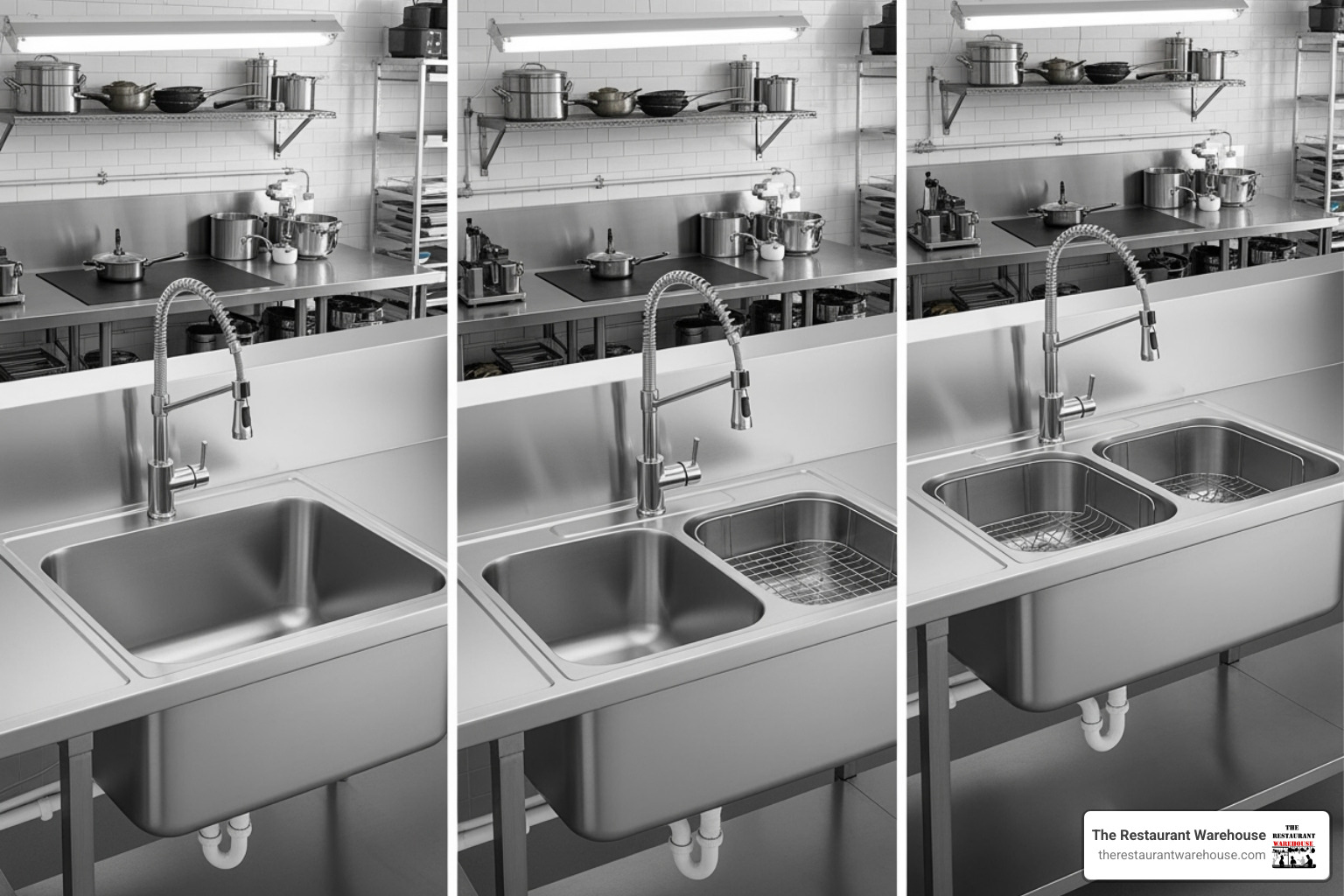
Compartment Sinks: The Workhorses of Warewashing
Compartment sinks are the backbone of any warewashing station, designed to support the essential "wash, rinse, and sanitize" process that ensures food safety.
- Single-compartment sinks are ideal for smaller kitchens with limited space or for dedicated tasks like vegetable washing or pre-rinsing dishes before they enter a dishwasher. While useful, they do not meet health code requirements for full manual dishwashing on their own.
- Two-compartment sinks offer greater flexibility, providing separate areas for washing and rinsing or for keeping raw and clean food prep items apart. They are a popular choice in smaller operations that need more workspace without a large footprint.
- Three-compartment sinks are the industry gold standard and are required by most health departments for manual dishwashing. Each compartment serves a specific purpose: one for washing in hot, soapy water; a second for rinsing with clean water; and a third for sanitizing. We offer a wide selection of NSF Approved 3-Compartment Sinks that meet strict health standards. For more details, our 3-Tier Sink Guide offers best practices.
- Four-compartment sinks are designed for high-volume establishments like large restaurants or cafeterias. The extra compartment provides much-needed space for pre-soaking heavily soiled items or managing a continuous flow of dishes.
Specialized Sinks for Every Task
Beyond warewashing, specialized sinks are necessary to maintain a smooth and sanitary workflow.
- Hand sinks are a non-negotiable requirement by health codes for food safety. These dedicated stations must be placed strategically throughout the kitchen for frequent handwashing. Our Commercial Hand Sinks guide can help you with placement and model selection.
- Utility sinks, also known as mop sinks, are built for heavy-duty janitorial tasks. They are designed to handle harsh cleaning chemicals and accommodate large mop buckets, keeping cleaning activities separate from food prep areas. Our Restaurant Mop Sink Guide provides more insight.
- Underbar sinks are compact units that fit neatly under counters in bars or coffee shops, providing convenient washing stations for glassware and tools without sacrificing valuable workspace.
- Food truck sinks are specialized multi-compartment units designed to maximize functionality within the tight constraints of a mobile kitchen, meeting the same health codes as traditional restaurants. Our Food Truck Sinks Guide covers these unique requirements.
Key Features to Consider When Choosing Commercial Kitchen Sinks
Picking the right commercial kitchen sink involves evaluating features that will impact your daily routine, durability, and health code compliance. Your sink will handle everything from massive stockpots to harsh chemicals, so understanding its key features is essential for making a successful long-term investment.
Material and Durability: The Foundation of a Great Sink
The material of your sink is critical. Stainless steel is the industry standard, capturing over 70% of the market because its non-porous surface is hygienic and easy to sanitize. However, not all stainless steel is the same.
-
Steel Gauge: This refers to the thickness of the steel; a lower number means thicker, more durable steel.
- 14-gauge is the thickest and most robust option, ideal for heavy-duty use as it resists denting and reduces noise.
- 16-gauge offers an excellent balance of durability and cost, making it the most popular choice for general commercial use.
- 18-gauge is a lighter, more budget-friendly option suitable for less demanding applications like hand sinks.
-
Stainless Steel Type: The type of steel affects its corrosion resistance.
- Type 304 stainless steel is the recommended choice for commercial kitchens. Its chromium-nickel composition provides superior resistance to rust and corrosion from acids, salts, and detergents.
- Type 430 stainless steel is a less expensive alternative that lacks nickel, making it more prone to corrosion and less suitable for the demanding environment of a commercial kitchen.
Design and Functionality: Maximizing Your Workspace
The design of your sink directly affects workflow efficiency and sanitation.
- Number of Compartments: Choose based on your needs. A single compartment is great for prep, but a three-compartment sink is typically required for manual dishwashing.
- Drainboards: These slanted surfaces provide essential space for air-drying dishes—the most sanitary method—and ensure water drains back into the sink. They can be configured on the left, right, or both sides.
- Backsplashes: A built-in backsplash protects your walls from splashes and grease, preventing moisture damage and simplifying cleanup. Many include pre-punched holes for easy faucet installation.
- Installation Type: Freestanding sinks offer placement flexibility, while wall-mount options save floor space. Drop-in and undermount styles integrate with countertops for a seamless look.
- Bowl Dimensions: Ensure the sink bowls are deep and wide enough to accommodate your largest pots and pans. Deeper bowls also help control splashing.
Ready to find the perfect commercial kitchen sink for your operation? Our team at The Restaurant Warehouse combines years of foodservice experience with wholesale pricing to help you make the right choice. Contact us today for personalized recommendations that fit both your needs and your budget.
The Gold Standard: Why Stainless Steel Dominates
Walk into any professional kitchen and you'll see gleaming commercial kitchen sinks made from stainless steel. This material's dominance, with over 70% market share, is not a matter of aesthetics but a testament to its ability to withstand the relentless demands of a foodservice environment.
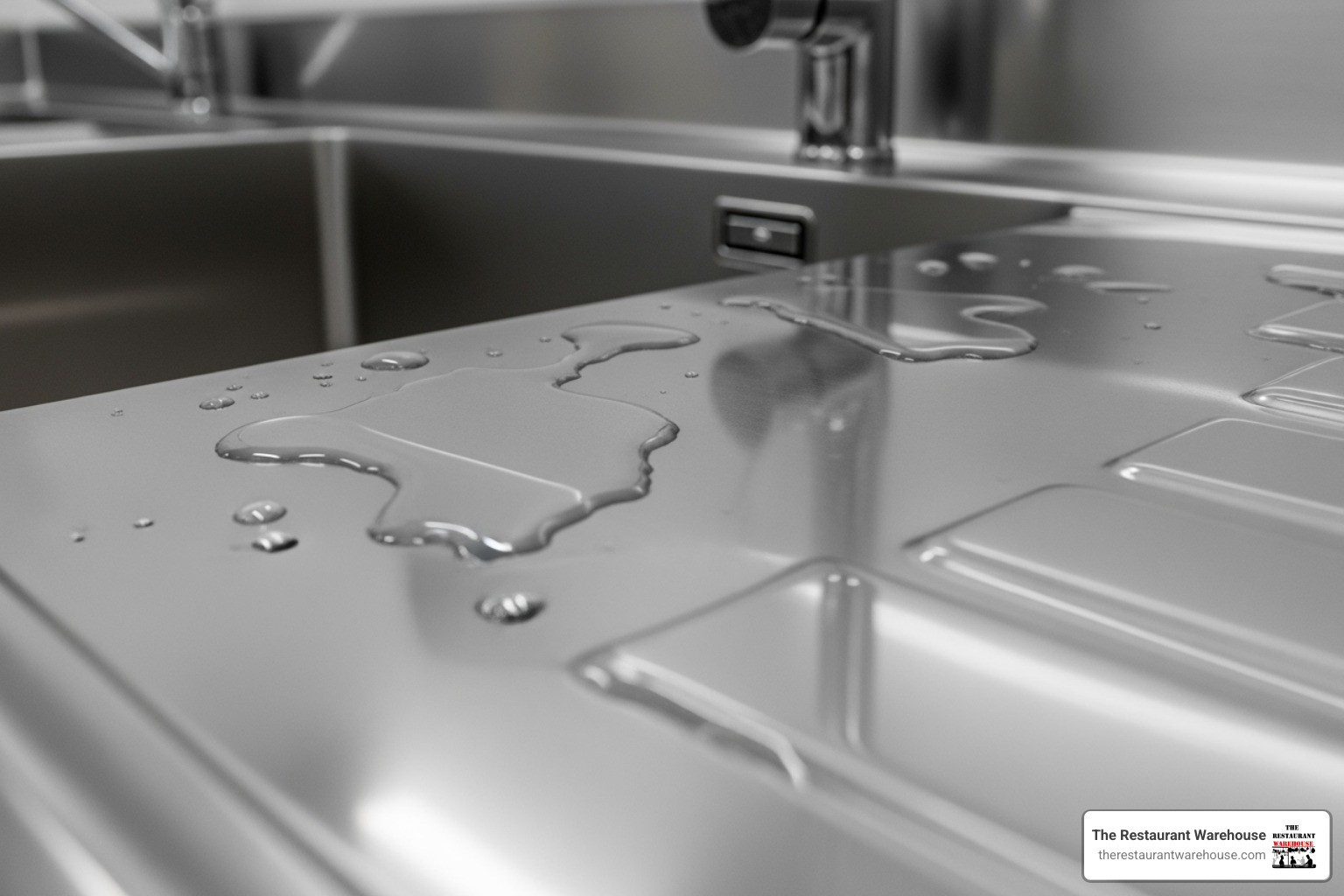
Unpacking the Advantages of Stainless Steel
Stainless steel offers a combination of benefits that make it the ideal choice for commercial kitchens.
- Sanitation: Its non-porous surface resists bacteria, mold, and mildew, making it easy to clean and sanitize to meet health code standards.
- Durability: It is highly resistant to heat, impact, and corrosion. It won't warp from boiling water, dent easily from dropped pots, or degrade from exposure to acidic foods and harsh cleaning chemicals.
- Cost-Effectiveness: While the initial investment may be higher than other materials, its exceptional longevity and low maintenance requirements make it a cost-effective choice in the long run.
- Professional Appearance: The clean, bright look of stainless steel contributes to a professional aesthetic, which is especially important in open-kitchen concepts.
Understanding Stainless Steel for commercial kitchen sinks
To make the best choice, it's important to understand the key specifications of stainless steel.
- Gauge: As a reminder, a lower gauge number indicates thicker, stronger steel. A 14-gauge sink offers maximum durability and noise reduction, while 16-gauge provides a great balance for most uses. Lighter 18-gauge steel is suitable for less intensive tasks.
- Type: Type 304 stainless steel is the industry standard for sinks due to its high chromium and nickel content, which provides excellent protection against rust and corrosion. Type 430 is a more budget-friendly option but lacks nickel, making it less resistant to the harsh conditions of a commercial kitchen.
Ready to invest in stainless steel sinks that will serve your operation for years to come? Contact our team for expert guidance on selecting the perfect commercial kitchen sink for your specific needs and budget.
Installation, Maintenance, and Sanitation Compliance
Your commercial kitchen sink is only as effective as its installation and maintenance. Proper setup and care are essential for ensuring food safety, operational efficiency, and the longevity of your investment.
Proper Installation for Lasting Performance
A correct installation prevents future problems like leaks, structural damage, and health code violations.
- Plumbing: Ensure your sink has robust connections to hot and cold water lines with adequate pressure. The drainage system must be sized to handle high volumes of wastewater without backing up.
- Securing the Unit: Freestanding sinks must be leveled using their adjustable feet to ensure proper drainage and stability. Wall-mount sinks require a reinforced wall and heavy-duty brackets to safely support their weight during use.
- Professional Installation: Hiring a qualified plumber experienced with commercial foodservice environments is crucial. They understand local codes and proper sealing techniques, ensuring the job is done right the first time.
Maintenance and Cleaning for a Hygienic Kitchen
Consistent maintenance is fundamental to food safety and protecting your sink's finish.
- Daily Cleaning: After each shift, clean all sink surfaces, including bowls, drainboards, and faucets, with a mild detergent and a soft cloth. Rinse thoroughly to remove any soap residue.
- Avoid Damage: Do not use abrasive cleaners, steel wool, or concentrated bleach, as they can scratch or pit the stainless steel surface. Protective sink grids can help minimize scratches from heavy pots.
-
The Three-Sink Method: For manual warewashing, this process is a food safety requirement.
- Wash: In the first compartment, use hot water (at least 110°F) and detergent.
- Rinse: In the second compartment, use clean, hot water to remove all soap.
- Sanitize: In the third compartment, submerge items in an approved chemical sanitizer or hot water (at least 171°F) for the required time.
- Air-Dry: Always air-dry sanitized items on a clean drainboard or rack. Never towel-dry, as this can reintroduce bacteria. This process is detailed in official guidelines like Oregon's guide to Three Compartment Sinks.
For more maintenance tips, our Industrial Sink Guide offers comprehensive advice. When you're ready to invest in a sink that's built to last, contact our team for expert guidance and wholesale pricing.
Frequently Asked Questions about Commercial Kitchen Sinks
After helping countless restaurant owners steer commercial kitchen sinks, we've noticed the same questions come up again and again. Here are answers to some of the most common questions we hear.
What's the difference between a residential and a commercial kitchen sink?
While they serve the same basic function, commercial and residential sinks are built for vastly different environments. The key differences are:
- Durability: Commercial kitchen sinks are made from thicker-gauge stainless steel (typically 14 or 16-gauge) to withstand heavy use, while residential sinks use lighter materials.
- Size and Capacity: Commercial sinks have deeper, larger bowls to accommodate oversized pots, pans, and high volumes of dishes.
- NSF Certification: Commercial sinks must be NSF certified, which guarantees they meet public health standards for material safety and cleanability. Residential sinks are not held to this standard.
- Design: Commercial sinks are designed for function, often featuring multiple compartments, large drainboards, and integrated backsplashes to optimize workflow and sanitation.
Why is NSF certification important for a commercial sink?
NSF certification is a critical requirement for any commercial kitchen sink. It is not just a recommendation; it is your assurance of safety and compliance.
- Public Health and Safety: The NSF mark verifies that the sink's materials will not leach harmful substances and that its design is free of crevices where bacteria could grow.
- Design for Cleanability: NSF standards mandate features like coved corners and smooth surfaces to ensure the sink can be easily and effectively cleaned and sanitized.
- Health Department Compliance: Most health departments require NSF-certified foodservice supplies. An inspector will look for the NSF mark, and not having it can lead to fines or operational delays. The FDA Food Code outlines many of these foundational safety requirements.
How do I choose the right number of compartments for my sink?
The ideal number of compartments depends on your kitchen's size, workflow, and local health regulations.
- One or Two Compartments: These are best for specific tasks like food prep or for pre-rinsing dishes in kitchens that use an automatic dishwasher for sanitizing.
- Three Compartments: This is the industry standard and often a legal requirement for manual dishwashing. The three bowls facilitate the wash-rinse-sanitize process essential for food safety. Ensure the bowls are large enough to fully submerge your biggest items.
- Four Compartments: These are beneficial in high-volume kitchens that need an extra basin for pre-soaking or to handle a continuous flow of dirty dishes without creating a bottleneck.
Always confirm your local health department's specific requirements before making a purchase. Ready to find the perfect commercial kitchen sink? Contact us today for expert guidance and wholesale pricing.
Conclusion
We've covered the essential aspects of commercial kitchen sinks, from the hardworking three-compartment models to the durable stainless steel they're made from. Choosing the right sink is a foundational decision for your food safety program and daily workflow. When you select the correct type, material, and size, you invest in years of reliable performance that supports your staff and protects your customers.
The growing market, projected to reach USD 1.8 billion by 2030, shows that operators increasingly recognize that quality pays for itself through durability and compliance. Stainless steel's dominance, with over 70% market share, is proof that nothing beats its combination of hygiene and strength in a professional kitchen. Whether it's a three-compartment sink for manual dishwashing or a dedicated hand sink for compliance, each unit plays a crucial role in your success.
At The Restaurant Warehouse, we understand that every dollar counts. That's why we've built our reputation on providing foodservice supplies at wholesale prices, cutting out the middleman markups that strain your budget. We know that behind every great meal is a kitchen with reliable, professional-grade items that perform day after day.
Ready to upgrade your kitchen with a sink that'll serve you for years to come? Our team of foodservice experts is standing by to help you steer our extensive selection and find the perfect match for your needs.
For expert guidance and wholesale pricing that respects your bottom line, explore our complete collection at The Restaurant Warehouse. Let's find the commercial kitchen sink that transforms your operation.
About The Author

Sean Kearney
Sean Kearney is the Founder of The Restaurant Warehouse, with 15 years of experience in the restaurant equipment industry and more than 30 years in ecommerce, beginning with Amazon.com. As an equipment distributor and supplier, Sean helps restaurant owners make confident purchasing decisions through clear pricing, practical guidance, and a more transparent online buying experience.
Connect with Sean on LinkedIn, Instagram, YouTube, or Facebook.
Leave a comment