

Why Every Restaurant Needs a 2-Bay Sink
Why a 2-Compartment Restaurant Sink is Essential for Kitchen Efficiency
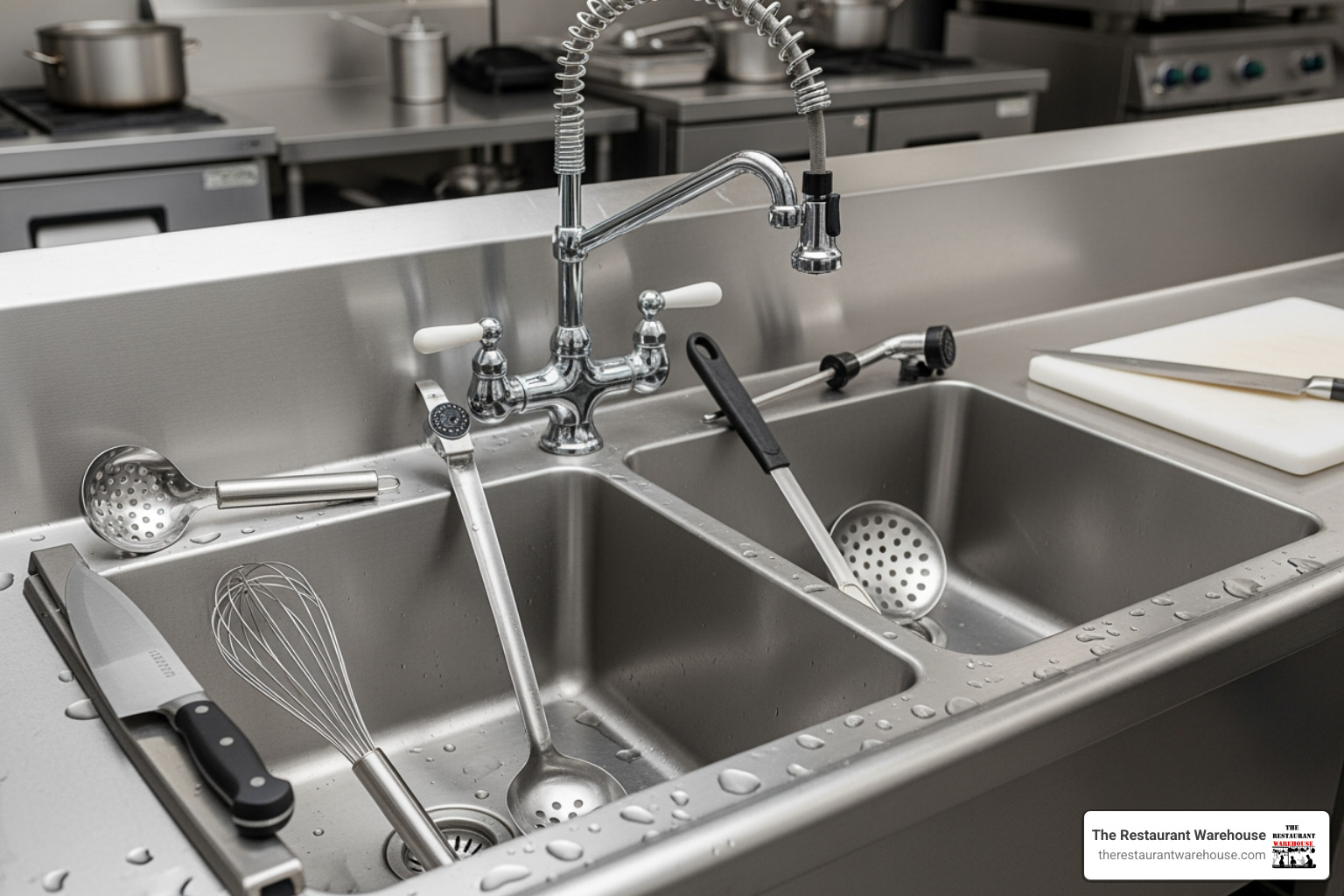
A 2 compartment restaurant sink is a versatile workstation that serves multiple critical functions in any professional food service environment. Far more than just a place to rinse vegetables, it is a key component for optimizing kitchen workflow, upholding stringent food safety standards, and maximizing the utility of every square foot of available space. In the fast-paced world of commercial food preparation, efficiency is paramount, and this sink configuration is specifically designed to facilitate a smooth, logical, and safe operational flow.
Primary Uses:
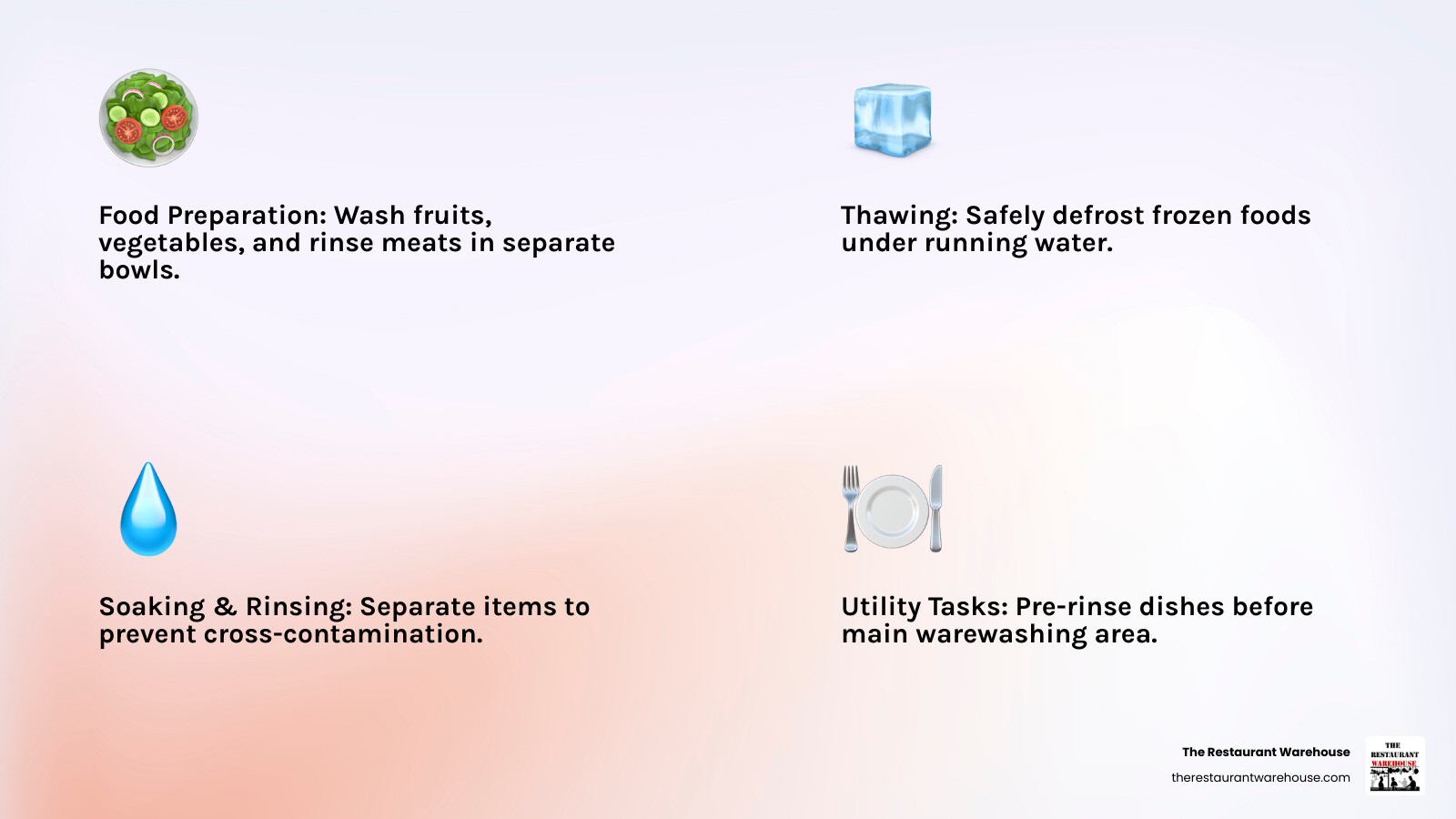
- Dedicated Food Preparation: The dual-basin design is perfect for washing fruits, vegetables, and other produce in one bowl while rinsing proteins or other ingredients in the second. This separation is fundamental to preventing flavor transfer and, more importantly, cross-contamination.
- Safe Thawing Procedures: A dedicated basin can be used for safely defrosting frozen foods under cold, running water, a method recommended by food safety experts to keep items out of the temperature danger zone. This frees up other areas for active prep work.
- Soaking and Rinsing: The ability to separate tasks is a major advantage. One bowl can be used for soaking heavily soiled cookware or utensils to loosen food debris, while the other remains free for rinsing clean items or produce. This prevents dirty water from splashing onto ready-to-eat foods.
- General Utility Tasks: These sinks are workhorses for countless other kitchen duties, such as pre-rinsing items before they are sent to the main warewashing area, filling stockpots, or performing other cleaning and prep-related activities that are essential to daily operations.
Key Benefits:
- Space Optimization: Its compact footprint makes it an ideal choice for smaller kitchens, cafes, food trucks, and concession stands where space is at a premium. It provides double the functionality of a single-bowl sink without a significantly larger footprint.
- Enhanced Workflow: With two separate bowls, each with its own individual drain, staff can perform two distinct tasks simultaneously. This parallel processing capability dramatically reduces bottlenecks and wait times for sink access during busy service periods.
- Improved Organization: A 2-compartment sink helps maintain an organized and efficient workspace by creating designated zones for specific tasks, reducing clutter on countertops and promoting a cleaner, more professional environment.
- Flexible Configurations: Many models are available with optional drainboards, which provide valuable extra space for air-drying freshly washed items or for staging ingredients before they are used.
Important Note: It is crucial to understand the specific role of this sink type in the context of health regulations. While 2-compartment sinks are masters of food preparation and utility work, the vast majority of health codes across the country mandate a 3-compartment sink for the complete manual wash-rinse-sanitize process for dishes, glassware, and cookware.
Understanding which sink configuration best fits your operational needs is a critical decision, especially for new restaurant owners or those operating on a tight budget. Making the right choice from the outset can save you significant money, prevent costly renovations, and help you pass your first health inspection with confidence. A 2 compartment restaurant sink offers incredible value and flexibility for its intended purposes, dramatically increasing workflow efficiency within a compact and manageable footprint.
When you pair the right 2-compartment sink with an efficient floor plan and clear standard operating procedures, you can significantly reduce delays and improve productivity in your kitchen. For instance, many successful operators position a 2-bay sink near their preparation surfaces and cold storage units. This strategic placement allows staff to quickly wash produce, portion proteins, and stage ingredients without needing to cross into the main warewashing zone, minimizing foot traffic and the potential for accidents.
A carefully selected sink is also a cornerstone of your food safety plan. By dedicating one bowl to raw proteins and the other to produce or ready-to-eat foods—combined with rigorous cleaning and sanitizing protocols between tasks—you directly align your operation with the guidance provided in the FDA Food Code on preventing cross-contamination, one of the leading causes of foodborne illness.
Need help mapping out your sink setup for an upcoming project? Contact us today and our team can walk you through layout options and code considerations.
Before you dive into specific models, it helps to understand a few related terms and options you'll encounter while browsing:
- Commercial sinks overview
- 3-compartment sinks for warewashing
- Commercial sink suppliers and buying tips
The Versatile Workhorse: Primary Uses and Benefits
The 2 compartment restaurant sink is a strategically designed workhorse that maximizes efficiency and hygiene, particularly in environments where every inch of space counts. Its dual-bowl design is not just a feature but a foundational element for segregating tasks, streamlining kitchen operations, and upholding the highest standards of food safety. By enabling parallel workflows, it serves as a force multiplier for productivity.
Key Uses and Workflow Advantages
This sink's primary strength lies in food preparation. With two distinct, separate bowls, chefs and prep cooks can perform multiple actions without interference. For example, in a busy cafe, one person can be washing a large batch of fresh produce like lettuce and tomatoes in one compartment while another rinses thawed chicken breasts in the other. This simultaneous activity is crucial for preventing bottlenecks and is invaluable for cafes, snack bars, and concession stands that depend on rapid, continuous food prep to meet customer demand. The physical separation of the bowls is a critical barrier against cross-contamination between raw animal proteins and fresh, ready-to-eat vegetables—a cornerstone of any effective food safety program.
Beyond washing, these sinks are the designated station for safely thawing frozen foods. Using the cold-running-water method in one of the basins keeps the main warewashing area free and prevents raw food juices from contaminating other surfaces. You can also implement a multi-stage cleaning process for delicate produce; for instance, use one bowl to soak leafy greens or berries to gently loosen dirt and sediment, and the other to give them a final, thorough rinse.
A well-placed 2 compartment restaurant sink can transform potential chokepoints into areas of smooth, continuous operation. For example, one bowl can be designated for soaking heavily soiled cookware before it moves to the main warewashing area, while the other remains available for rinsing freshly chopped vegetables for a salad bar. This clear division of labor prevents delays and confusion.
You can further enhance efficiency by assigning each compartment to a specific category of tasks during peak hours, creating a clear, intuitive system for your staff:
- Compartment 1: The 'In' Zone. This basin can be used for all incoming items that require cleaning. This includes soaking produce to remove pesticides and dirt, performing an initial rinse of bulk containers, or giving a quick pre-clean to lightly soiled items that need to be reused quickly.
- Compartment 2: The 'Out' Zone. This basin is for tasks related to items that are ready for the next stage. This could involve a final rinse of cleaned ingredients, holding washed produce in a cold water bath to maintain crispness, or temporarily staging items before they are moved to storage or cooking stations.
For specialized operations like bar programs or bakeries, a 2-compartment sink often becomes the central hub of all preparation. Bartenders can rinse fresh herbs, citrus fruits, and essential barware in one compartment while using the other to thaw frozen garnishes or pre-rinse pitchers and shakers between batches of drinks. In a bakery, one side might be for washing fruit for fillings, while the other is used for rinsing mixing bowls.
Core Benefits for Your Kitchen
The advantages of a 2-compartment sink extend far beyond simple task separation. The most commonly cited benefit is its compact footprint, which is a game-changer for smaller kitchens, food trucks, or established operations needing to add extra sink capacity without undertaking a major renovation. This space-saving design inherently promotes organizational efficiency by containing specific tasks within designated bowls, which helps reduce clutter across other work surfaces and improves the overall flow and safety of the kitchen.
Additional core benefits include:
- Enhanced Staff Accountability and Training: When each sink compartment has a clearly defined and labeled role (e.g., 'Produce Wash' vs. 'Thawing/Rinsing'), it becomes significantly easier to train new staff and reinforce proper food safety procedures. This clarity minimizes mistakes, especially during high-pressure service rushes.
- Improved Ergonomics and Reduced Fatigue: A dual-basin sink allows staff to stand in one place and complete multiple steps of a process without needing to walk back and forth across the kitchen. This reduction in movement not only saves time but also minimizes physical strain and the risk of slips, trips, and falls over a long shift.
- Simplified Health Inspections: Health inspectors look for clear, logical systems that prevent cross-contamination. A well-maintained and clearly designated 2-compartment prep sink demonstrates a commitment to food safety, making it easier to explain your procedures and pass inspections.
According to the FDA Food Code and the supporting guidance from state and local health agencies, implementing physical barriers and procedural steps to minimize cross-contamination and ensure adequate washing and rinsing are two of the most powerful defenses against the spread of foodborne illness. A 2-compartment sink is a physical tool that helps you execute these principles flawlessly.
Book a quick layout review with our team to identify where a dedicated prep or utility sink would have the most significant positive impact on your specific concept and workflow.
A Buyer's Guide to the Perfect 2-Compartment Restaurant Sink
Choosing the right 2 compartment restaurant sink is a decision that will impact your daily operations, your budget, and your ability to comply with health codes for years to come. To make an informed purchase that delivers lasting value, it's crucial to understand the key features and materials that separate a high-performance sink from a low-quality one.
Explore our complete guide to commercial sinks
Material Matters: 304 vs. 430 Stainless Steel
The type of stainless steel used in a sink's construction is the most critical factor in its durability and longevity. The two most common grades you will encounter in commercial settings are 304 and 430 stainless steel.
- 304 Stainless Steel: This is widely considered the premium, industry-standard choice for commercial kitchens. Its key advantage is a higher nickel content (typically 8-10.5%). This addition of nickel provides superior resistance to corrosion, rust, and pitting. In a demanding, constantly wet environment filled with water, detergents, sanitizers, and acidic food residues (like tomato sauce or citrus juice), 304 stainless steel will maintain its integrity and appearance far longer. It is the preferred material for any sink that will see heavy, daily use.
- 430 Stainless Steel: This is a more budget-friendly alternative that contains a higher percentage of chromium but has a negligible amount of nickel. While it still offers good corrosion resistance in many applications, its lack of nickel makes it more susceptible to rust and pitting over time, especially in humid conditions or when exposed to corrosive chlorides found in some cleaners and water sources. 430 stainless can be a smart, cost-effective choice for light-duty prep stations, secondary utility sinks, or in very dry environments, but it may not hold up as well under the rigors of a primary prep sink.
For most food service operations, investing in 304 stainless steel for a prep sink is a wise long-term decision that pays for itself in durability and lower replacement costs.
Understanding Steel Gauge for Maximum Durability
Gauge refers to the thickness of the stainless steel sheet used to make the sink. It's a counterintuitive measurement: a lower gauge number means thicker, stronger, and more durable steel.
- 14-Gauge: This is the thickest and most robust option available for commercial sinks. It is built for the most demanding, heavy-duty environments where the sink may be subjected to significant abuse. It offers maximum resistance to dents, warping, and vibration.
- 16-Gauge: This is often considered the industry standard for good-quality commercial sinks. It provides an excellent balance of durability, performance, and cost, making it the most popular choice for a wide range of restaurants and food service businesses. It can withstand the daily impacts of a busy kitchen without issue.
- 18-Gauge: This is the thinnest gauge typically used for commercial-grade sinks. While more affordable, it is best suited for light-duty applications where it won't be subjected to heavy impacts, such as a handwashing station or a rarely used utility sink. It is more prone to denting and can be noisier when water is running.
When choosing a gauge, be realistic about how your team treats its tools. If staff are likely to drop heavy cookware or frozen items into the sink, the added investment in a 14- or 16-gauge model will prevent dents and ensure a much longer service life.
How Drainboards Improve Your 2-Compartment Restaurant Sink
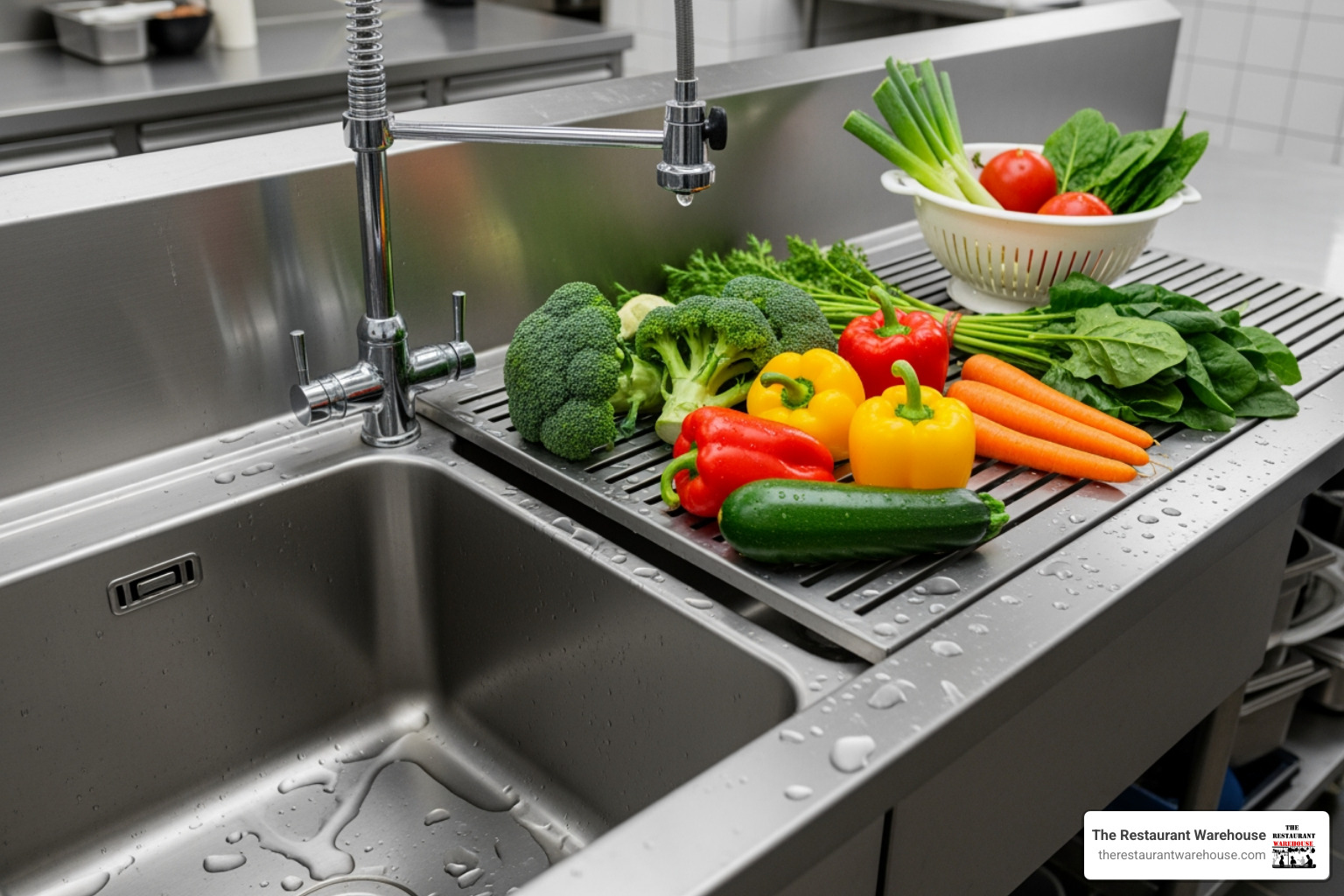
Drainboards are not just an accessory; they are a valuable extension of your workspace that can dramatically streamline operations. Their primary function is to provide a dedicated, sloped surface for air-drying washed items. This allows water to drain directly back into the sink bowl, keeping your surrounding countertops and floors dry, clean, and sanitary.
When evaluating drainboards, consider these critical aspects:
- Size and Slope: A larger drainboard provides more usable space for staging or drying. Crucially, it must have a proper slope or crease to ensure water drains efficiently back into the bowl and doesn't pool on the surface.
- Surface Design: Many drainboards feature a ribbed or grooved surface. This design helps elevate items slightly, allowing for better air circulation underneath and promoting faster, more complete drying.
- Edge Type: Look for a 'marine edge' or raised lip around the perimeter of the drainboard. This feature is designed to contain spills and prevent water from running off the sides onto the floor.
- Location: Sinks are available with left-side, right-side, or dual drainboards. Choose the configuration that best matches your kitchen's workflow. For example, if your prep area is to the right of the sink, a right-side drainboard would be most ergonomic.
Sizing Up Your Needs: A Pre-Purchase Checklist
Before you buy, take careful measurements and consider the following features to ensure the sink is a perfect fit for your space and your tasks:
- Bowl Dimensions: Measure the required length, width, and depth. Are the bowls deep enough to prevent splashing when washing large produce? Are they wide enough to accommodate your largest mixing bowls or containers?
- Overall Footprint: Carefully measure the total length and width of the space where the sink will be installed, accounting for the drainboards. Leave enough clearance for staff to move around it safely.
- Backsplash Height: A tall, integrated backsplash is essential for protecting the wall behind the sink from water damage and mold growth. Most commercial sinks have a backsplash of 8-10 inches.
- Faucet Configuration: Most commercial sinks are drilled with standardized 8-inch faucet centers (the distance between the hot and cold water inlets). Ensure the faucet you purchase matches this specification.
- Legs and Bracing: Look for sturdy, adjustable bullet feet. These allow you to level the sink on uneven floors, ensuring stability and proper drainage. Robust cross-bracing between the legs is also critical to prevent wobbling.
Reach out to our specialists through our contact page for custom recommendations based on your floor plan, menu style, and operational volume.
2-Bay vs. The Rest: Comparing Sink Configurations
Choosing the right sink configuration is a foundational decision for any commercial kitchen, directly impacting workflow, space utilization, and, most importantly, health code compliance. While the 2 compartment restaurant sink is an incredibly versatile tool for preparation, it's essential to understand how it fits within the broader ecosystem of sink types to build a fully functional and compliant workspace.
Here is a detailed breakdown of the different sink configurations and their designated roles:
| Sink Type | Primary Use | Ideal Environment | Footprint | Typical Health Code Role |
|---|---|---|---|---|
| 1-Compartment | Single, dedicated tasks like handwashing, filling buckets, or small-scale food rinsing. | Small cafes, bars (as a secondary sink), janitorial closets, or dedicated handwash stations. | Smallest | Strictly for utility or handwashing; not for warewashing or extensive food prep. |
| 2-Compartment | Segregated food prep, thawing, and soaking/rinsing tasks. | Snack bars, cafes, concessions, or as a supplemental prep sink in larger kitchens. | Compact | Designated for food preparation and utility. NOT permitted for the manual wash-rinse-sanitize process. |
| 3-Compartment | The complete manual warewashing process (Wash-Rinse-Sanitize). | All restaurants that do not use a high-temperature mechanical warewasher for all items. | Medium to Large | MANDATORY for manual warewashing of all food-contact surfaces, including dishes, utensils, and cookware. |
| 4-Compartment | High-volume manual warewashing, often with a dedicated pre-rinse/scraping basin. | Large institutions, high-volume commissaries, universities, hospitals, and banquet facilities. | Largest | Designed for high-volume manual warewashing, allowing for a continuous, assembly-line-style process. |
As the table clearly illustrates, a 2 compartment restaurant sink is a powerhouse for preparation and utility functions but is not a substitute for a 3-compartment sink when it comes to manual warewashing. Health codes nationwide are nearly unanimous in mandating a three-compartment sink for this purpose in any establishment that doesn't rely on an approved mechanical warewashing system for sanitizing. Attempting to use a 2-bay sink for washing dishes is one of the fastest ways to fail a health inspection.
In practice, the most efficient and compliant kitchen layouts utilize a combination of sink types, each assigned to a specific zone. A 3-compartment sink becomes the dedicated warewashing station, while a 2-compartment sink serves as a flexible and independent prep or pre-rinse station elsewhere in the kitchen.
A thoughtful kitchen workflow designed around this principle might look like this:
- Receiving and Storage Zone: Raw ingredients arrive and are immediately moved into their appropriate dry, cold, or frozen storage areas to maintain the cold chain and prevent contamination.
- Preparation Zone with 2-Compartment Sink: As needed, ingredients are brought from storage to the prep zone. Here, the 2-bay sink is used for all initial cleaning tasks: washing vegetables in one basin, thawing proteins in the other, and rinsing canned goods. This zone is physically separate from the main cooking and warewashing areas.
- Cooking and Assembly Line: Prepped ingredients move from the preparation zone to the cooking line, where they are cooked, assembled, and plated for service.
- Warewashing Zone with 3-Compartment Sink: Soiled dishes, utensils, and cookware from the dining room and cooking line are brought to this dedicated area. Here, they cycle through the three distinct stages: a hot, soapy wash in the first basin; a clean water rinse in the second; and a chemical or hot water sanitizing soak in the third.
By keeping your 2 compartment restaurant sink focused exclusively on food preparation and utility functions, you create a clear and defensible separation between raw/unclean items and clean/sanitized wares. This operational design directly aligns with the core principles of the FDA Food Code framework, significantly reducing the risk of cross-contamination and making it simple to demonstrate full compliance during health inspections.
Installation, Maintenance, and Health Code Compliance
Proper installation, a consistent maintenance schedule, and a clear understanding of health codes are essential to maximizing the value and lifespan of your 2 compartment restaurant sink. A sink is only as good as its setup and upkeep, and overlooking these areas can lead to operational headaches, premature wear, and compliance issues.
Installation and Setup Best Practices
Correct installation is the foundation for a stable, functional, and leak-free sink. While it may seem straightforward, following a methodical process is key. Faucets and drain baskets are often sold separately, so ensure you have all necessary components before you begin.
A step-by-step installation guide:
- Inspect for Damage: Before assembly, carefully unbox and inspect all parts of the sink, including the bowls, legs, and drainboards, for any shipping damage like dents or deep scratches.
- Assemble Legs and Bracing: Securely attach the legs to the sockets at each corner of the sink. Install the adjustable bullet feet but leave them loose for now. Fasten the cross-bracing between the legs. This bracing is critical for preventing the sink from wobbling and is not an optional component.
- Position and Level: Move the sink into its final position. Use a level on the top edges of the sink and adjust each bullet foot until the unit is perfectly level both front-to-back and side-to-side. A level sink ensures proper drainage and stability.
- Install Faucet and Hardware: Install the faucet into the pre-drilled holes on the sink's deck or backsplash. Most commercial sinks use standard 8-inch faucet centers. This is also the time to install the drain baskets into each bowl, using plumber's putty to create a watertight seal.
- Connect Water Supply: Connect the hot and cold water supply lines to the faucet. Turn the water on slowly and check carefully for any leaks at the connection points.
- Connect Drainage: Assemble and install the P-traps for each drain, connecting them to the main drain line in the wall or floor. Run water into the bowls and check all drain connections for leaks.
- Seal and Caulk: Apply a bead of silicone caulk along the edge where the backsplash meets the wall to prevent water from seeping behind the unit. If the sink is against a side wall, caulk that edge as well.
Maintenance for a Lifetime of Service
Regular, disciplined maintenance is the secret to prolonging the life of your stainless steel sink and keeping it looking professional. A simple daily cleaning routine using warm water, mild soap, and a soft cloth or sponge is essential. It's crucial to avoid abrasive materials like steel wool or harsh scouring pads, as they will scratch the protective surface of the steel and can lead to corrosion.
Daily Maintenance:
- Wash with soap and water, rinse thoroughly with clean water, and wipe dry with a soft cloth to prevent water spots and mineral deposits.
Weekly Maintenance:
- For a deeper clean, use a non-chloride, food-safe cleaner specifically formulated for stainless steel. Always rinse thoroughly after using any cleaning chemicals, as leftover residue can be corrosive.
- Check drain baskets and remove any accumulated food debris to prevent clogs and odors.
As-Needed Maintenance:
- To restore the shine and protective layer, periodically polish the sink with a stainless-safe polish, always rubbing in the direction of the metal's grain.
- Passivation: If you notice minor rust spots (often from contact with other metal items), you can use a mild oxalic acid-based cleaner to remove them and restore the steel's passive layer.
Equally important is training staff on what not to do. Never leave highly acidic or salty solutions (like pickle brine or marinades) sitting in the bowls for extended periods, and avoid using the sink for cutting or chopping.
Navigating Health and Safety Regulations
Understanding and adhering to health regulations is non-negotiable. The single most important distinction to remember is the designated role of a 2 compartment restaurant sink versus a 3-compartment sink. As outlined in the FDA Food Code, which serves as the model for most local health departments, a 3-compartment sink is mandatory for the manual wash-rinse-sanitize process in any facility that does not use an approved high-temperature mechanical warewasher.
A 2 compartment restaurant sink is not only permitted but highly recommended for food preparation and utility use only. This includes tasks like washing produce, thawing frozen food under running water, or pre-rinsing soiled items before they enter the main warewashing stream. Using the sink for these designated purposes demonstrates a clear separation of processes, which is a key principle of HACCP (Hazard Analysis and Critical Control Points) systems.
Always consult your local health department during the planning phase of your kitchen. Regulations can have minor variations from one jurisdiction to another, and getting their approval on your layout and intended use for each sink beforehand can save you from costly changes down the line.
Get in touch through our contact page if you're unsure whether a specific sink configuration will satisfy your local inspector's requirements.
Frequently Asked Questions about 2-Compartment Sinks
Here are detailed answers to some of the most common questions that restaurant owners and kitchen managers have about choosing, using, and maintaining a 2 compartment restaurant sink.
What is the typical price range and value proposition for these sinks?
The price for a 2 compartment restaurant sink can vary significantly, typically ranging from a few hundred dollars for a basic, light-duty model to over a thousand dollars for a heavy-duty, feature-rich unit. The final cost depends on several key factors: steel gauge (thicker 14- or 16-gauge is more expensive), steel type (premium 304 stainless costs more than 430), overall size, and the inclusion of features like large drainboards.
The value proposition, however, is excellent, especially for smaller operations or as a supplementary prep sink in a larger kitchen. When evaluating price, it's critical to consider the total cost of ownership, not just the upfront purchase price. A slightly more expensive 16-gauge, 304 stainless steel sink will likely outlast a cheaper 18-gauge model by many years, saving you money on repairs and replacement. Furthermore, integrated drainboards can eliminate the need to purchase separate, costly drying racks and worktables, adding to the overall value.
Can I legally use a 2-compartment sink for washing dishes in my restaurant?
For the full, manual dishwashing process, the answer is almost universally no. Health departments across the country, following guidance from the FDA Food Code, require a 3-compartment sink for the three-step manual wash-rinse-sanitize process. This is a critical, non-negotiable food safety regulation designed to ensure that all pathogens are effectively removed from food-contact surfaces.
However, a 2-compartment sink is perfectly legal and highly functional for a wide range of other essential kitchen tasks. Its legal and intended uses include:
- Washing, rinsing, and crisping fresh produce.
- Safely thawing frozen foods under cold running water.
- Pre-rinsing or soaking soiled cookware and utensils before they are moved to a 3-compartment sink or a mechanical warewashing system.
- General utility tasks such as filling stockpots or cleaning buckets.
What are the most common customer complaints or pain points?
Understanding common issues can help you select a better model and avoid frustration down the line. Some frequent pain points include:
- Poor Drainage: Some budget models may have an almost perfectly flat bottom in the bowls, causing water to pool in the corners instead of draining completely. Look for sinks with clearly defined creases or slopes leading to the drain.
- Flimsiness and Wobbling: This is a common complaint with lighter, 18-gauge sinks, especially if they lack adequate cross-bracing between the legs. The unit may feel unstable, which is a safety hazard. Investing in a heavier gauge with robust leg support is key.
- Surface Scratches: While some scratching is normal wear and tear in a commercial kitchen, lower-quality stainless steel can be more susceptible. Following proper cleaning procedures (no abrasive pads) can minimize this.
- Rust Spots: This issue is more common with 430-grade stainless steel. While 304 stainless is highly corrosion-resistant, rust can still appear if the sink is not properly maintained or if carbon steel items (like cans or cheap utensils) are left in it for long periods. Proper cleaning and periodic polishing are essential preventative measures.
How do I decide where to place my 2-compartment sink?
Strategic placement is crucial for maximizing the sink's efficiency and maintaining a safe kitchen workflow. Placement should be dictated by your menu, your kitchen layout, and your operational processes. Key considerations include:
- Proximity to Prep Areas: Locate the sink as close as possible to your main preparation surfaces to minimize the steps staff need to take when washing ingredients.
- Path from Storage: Ensure there is a clear, unobstructed path between your cold and dry storage areas and the prep sink. This streamlines the process of gathering ingredients for preparation.
- Separation from Warewashing: Avoid placing the 2-bay prep sink directly in the main warewashing zone. This helps prevent cross-contamination between soiled dishware and fresh food.
- Access to Drains and Utilities: Ensure the chosen location has convenient access to hot and cold water lines and a floor drain to simplify installation and maintenance.
Is a 2-compartment sink worth it if I already have a 3-compartment sink?
In almost any medium-to-high-volume kitchen, the answer is a resounding yes. While you have the mandatory sink for warewashing, adding a dedicated 2-compartment prep sink provides several powerful advantages:
- Unlocks Your 3-Compartment Sink: It frees up your 3-compartment sink to be used exclusively for its intended purpose—warewashing. This prevents bottlenecks where prep cooks are waiting for dishwashers to finish, and vice versa.
- Improves Food Safety: It creates a physically separate, dedicated space for handling raw ingredients, drastically reducing the risk of cross-contamination with clean dishes.
- Creates Specialized Zones: A second sink allows you to create dedicated prep zones. For example, you could designate the 2-bay sink as an allergen-free zone for preparing gluten-free or nut-free menu items, further enhancing safety for your customers.
Contact us for help choosing the right 2-compartment model to complement your existing layout and boost your kitchen's overall productivity.
Conclusion
The 2 compartment restaurant sink is a truly versatile and essential fixture for any commercial kitchen that prioritizes efficiency, organization, and food safety. Its intelligently designed dual-bowl configuration and relatively compact footprint make it an invaluable asset for optimizing the daily workflow, from the critical first steps of food preparation and thawing to the ongoing tasks of soaking and rinsing. For any operation needing flexible utility without the significant cost or space requirements of larger, more specialized units, this sink configuration delivers an exceptional return on investment through increased productivity and a more orderly workspace.
When you take the time to select the right combination of materials—such as durable 16-gauge, 304-grade stainless steel—and features like properly sloped drainboards and a tall backsplash, your 2-compartment sink transforms from a simple basin into a core component of your food safety and preparation strategy. This thoughtful selection, combined with professional installation, a consistent routine maintenance schedule, and clear staff training on its designated role, will help you consistently uphold the rigorous standards outlined in resources like the FDA Food Code, ensuring your day-to-day operations run smoothly and your inspections go flawlessly.
At The Restaurant Warehouse, our focus is on providing practical, budget-conscious solutions that are built to withstand the demands of real-world food service environments. Whether you are designing your first kitchen from the ground up, expanding your business into a new location, or simply looking for a cost-effective way to eliminate bottlenecks in an existing layout, a well-chosen 2 compartment restaurant sink can be one of the most impactful upgrades you make.
By investing a small amount of time upfront to choose and configure the right 2-compartment sink for your needs, you will earn back that time many times over in the form of faster prep cycles, smoother health inspections, and a safer, more organized, and more professional kitchen environment for your entire team.
Ready to find a sink that perfectly matches your menu, volume, and available space? Browse our selection of commercial sinks to compare sizes, materials, and configurations.
If you would like personalized guidance before you place an order, reach out through our contact page. Our experienced team can help you analyze your needs, interpret technical spec sheets, and choose a 2-compartment sink that will support both your current workflow and your long-term growth plans.
About The Author

Sean Kearney
Sean Kearney is the Founder of The Restaurant Warehouse, with 15 years of experience in the restaurant equipment industry and more than 30 years in ecommerce, beginning with Amazon.com. As an equipment distributor and supplier, Sean helps restaurant owners make confident purchasing decisions through clear pricing, practical guidance, and a more transparent online buying experience.
Connect with Sean on LinkedIn, Instagram, YouTube, or Facebook.
Leave a comment