

Why Smart Commercial Kitchen Equipment Will Change the Way You Run Your Business

The High-Tech Revolution in Your Back-of-House
When you hear the word "smart," your mind probably jumps to your smartphone or maybe a thermostat that knows when you're home. But in the world of professional food service, "smart" can be a mixed bag. Some features genuinely help your operation. Others mostly help justify a higher price tag.
If you're opening a smaller restaurant, running a startup, or watching every dollar like you should, over-investing in flashy "smart" extras is not always the wisest move. You do not need your refrigerator trying to impress you with bells and whistles if what you really need is dependable temperature control, solid construction, and low operating costs. Running a kitchen is a game of margins. Between rising food costs and the constant struggle to find reliable labor, every percentage point of efficiency counts.
That is exactly why Atosa refrigerators are such a strong value. They give you the practical features that matter most, like digital temperature control, energy-efficient R290 refrigerant, and durable stainless steel construction, without loading the machine up with expensive extras that do not meaningfully improve your ROI. Think of it like buying a reliable work truck instead of a luxury SUV. One helps you make money. The other just costs more.
If you’re still nursing along that 15-year-old reach-in or a fryer that has "character" (meaning it drops temperature if you look at it wrong), you’re leaving money on the table. But that does not mean you need the most feature-heavy unit on the market. Here is how modern equipment, especially value-driven options from Atosa, can improve your business without saddling you with an unnecessary price tag.
Digital Precision in Cooling: More Than Just a Temperature Reading
In the old days, you’d hang a manual thermometer inside your fridge and hope for the best. If the compressor died at 2:00 AM on a Saturday, you wouldn’t find out until you walked into a swamp of spoiled proteins on Sunday morning.
Modern Atosa Refrigerators have changed that game entirely. Units like the Atosa MBF8004GR or the Atosa MBF8505GR come standard with Dixell digital temperature controllers. These are useful, practical controls, not bloated tech for the sake of tech. That distinction matters. For a smaller operation, the goal is not to buy the most futuristic box in the room. The goal is to keep product safe, reduce energy waste, and avoid service headaches.
That is where Atosa earns its value reputation. You get the brains you actually need without paying luxury-equipment pricing.
Key Benefits of Digital Controls:
- Constant Monitoring: These controllers maintain a tight temperature range (typically 33°F to 40°F), ensuring your ingredients stay in the "safety zone" without freezing your lettuce.
- Automatic Evaporation & Defrost: Smart systems know exactly when to run a defrost cycle, preventing ice buildup on the coils that forces the motor to work harder and use more juice.
- Self-Diagnostics: If a door is left ajar or a fan motor fails, the digital display tells you exactly what’s wrong, often before the temperature even begins to climb.
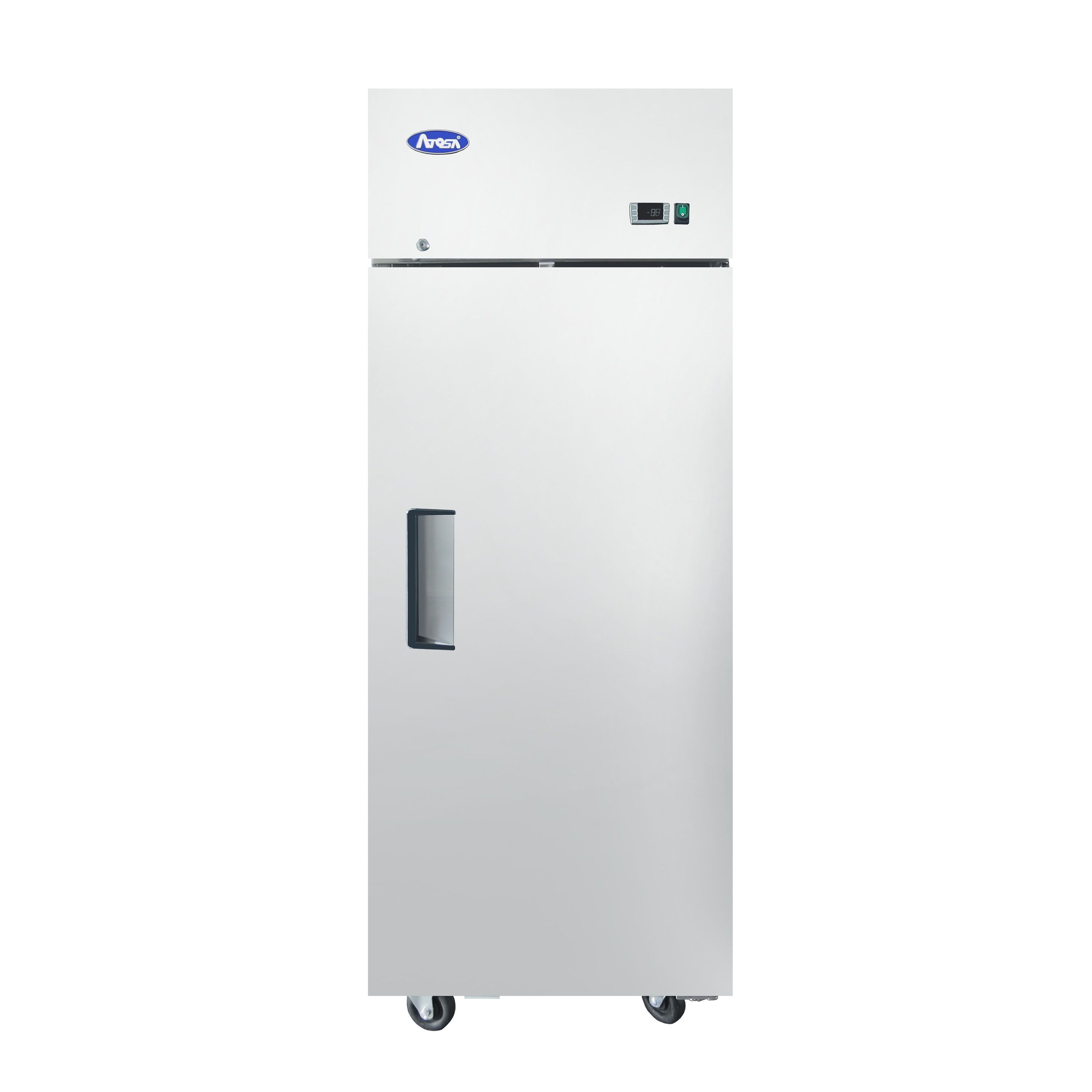 The Atosa MBF8004GR features a top-mount compressor and smart digital controls for maximum efficiency.
Commercial Ice Machines: Consistency is King
A commercial ice machine is often the most finicky piece of equipment in a kitchen. It requires the perfect balance of water flow, temperature, and timing. Older units would often "freeze up" or produce hollow, watery cubes that melt the second they hit a soda.
Smart ice machines now use sensors to monitor water quality and harvest cycles. This means they can adjust their production based on the ambient temperature of your kitchen. On a 100-degree summer day, a smart machine knows it needs to work a little differently than it does in the dead of winter. This level of automation reduces the labor needed for manual cleaning and descaling, as many units now feature "auto-clean" cycles that alert you when it's time for maintenance.
High-Performance Frying: Recovery Time and Oil Life
If you’re running a high-volume pub or a chicken joint, your commercial deep fryers are the heart of your production. The biggest enemy of a fryer isn't just the heat, it’s the "recovery time." That’s the time it takes for the oil to get back up to temperature after you drop a basket of frozen fries.
Modern units like the CookRite ATFS-50 use high-efficiency burners and smart tank designs with "cold zones" to extend oil life. While these might use milivolt controls rather than a computer screen, the "smart" design lies in the engineering.
Why Recovery Time Matters for Your ROI:
- Crispier Food: When oil stays at the correct temperature, food seals instantly rather than soaking up grease.
- Faster Throughput: If your fryer recovers in 30 seconds instead of 2 minutes, you can push out more orders during a rush.
- Oil Savings: Smart tank designs keep sediment in a cooler zone at the bottom, preventing it from carbonizing and spoiling your expensive oil.
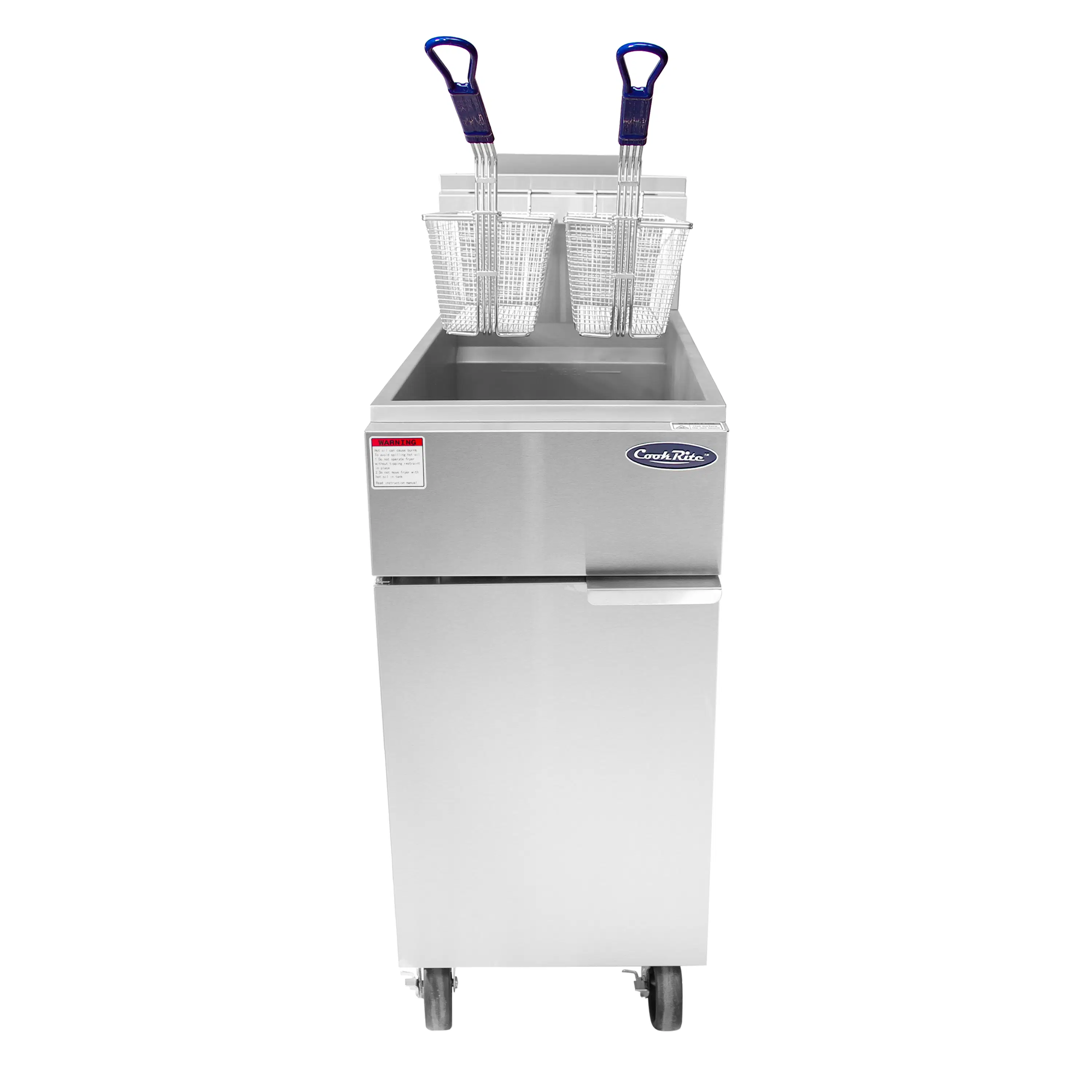 The CookRite ATFS-50 is built for high-capacity performance and rapid temperature recovery.
The Hidden ROI: Energy and Environment
We can't talk about modern equipment without mentioning R290 Hydrocarbon refrigerant. If you see "R290" on a spec sheet, that’s a signal of a "smart" investment. This is a natural, non-toxic refrigerant that is significantly more efficient than the old R134a or R404a gases.
Because R290 is so efficient at absorbing heat, the compressors in units like the Atosa MBF8505GR can be smaller and run for shorter periods. This results in:
- Lower Utility Bills: Upgrading to an Energy Star-rated unit can save hundreds of dollars a year in electricity.
- Longer Equipment Life: A compressor that runs less is a compressor that lasts longer.
- Eco-Friendly Branding: You can tell your customers you’re using the greenest tech available.
Safety and Sanitation: The Non-Negotiables
Smart design also means "easier to clean." Every piece of equipment we sell at The Restaurant Warehouse is NSF-certified. This means they are designed without hard-to-reach nooks and crannies where bacteria can hide.
For example, look at the stainless steel interior and exterior of the Atosa line. It’s not just for looks; it’s about durability and sanitation. Smart features like self-closing doors (with a "stay open" feature for loading) mean your staff doesn't have to worry about accidentally leaving the freezer open during a busy prep session.
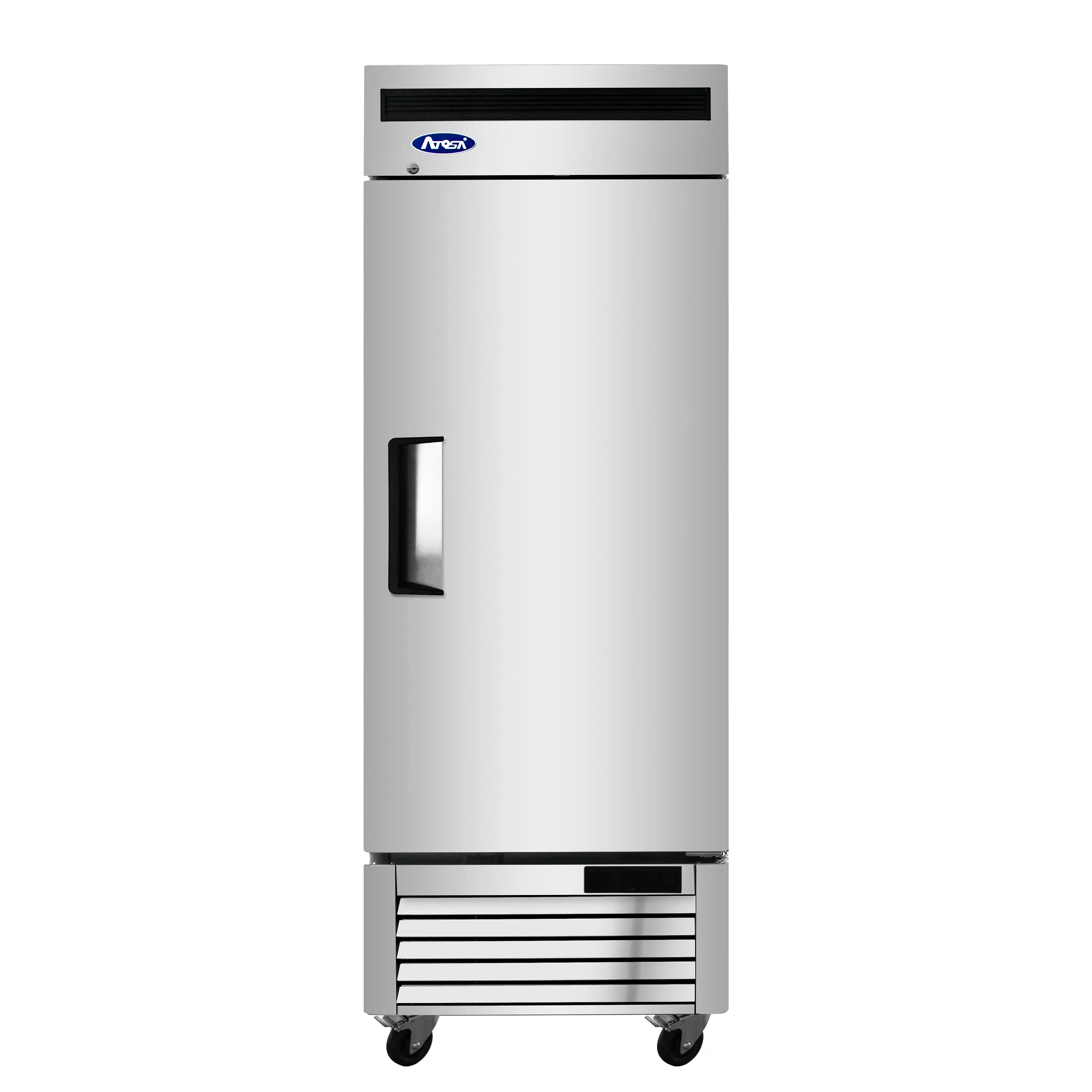 Bottom-mount units like the MBF8505GR allow for easier cleaning and keep the compressor in a cooler area of the kitchen.
How to Pay for the Upgrade
We know that "smart" often sounds like "expensive." And sometimes it is. The problem is that many smaller restaurants get pushed toward premium equipment packages loaded with features they may never fully use. That is money that could go toward inventory, payroll, marketing, or a backup cash cushion.
Here is the reality: the best investment is usually equipment that is reliable, efficient, and easy to operate. That is the sweet spot Atosa hits. You are not paying for a bunch of unnecessary add-ons. You are paying for dependable performance, food-safe holding temperatures, and components built to handle the daily grind.
To help you get the equipment you need without draining your bank account, we offer flexible restaurant equipment financing and a 12-month rental program. These programs allow you to pay for the equipment as it earns you money. For many operators, that makes a value-driven brand like Atosa even more attractive because you keep your upfront costs lower while still upgrading to equipment that works hard from day one.
Key Takeaways
- Not every "smart" feature is worth paying extra for, especially if you are running a smaller restaurant or startup.
- Atosa delivers strong value by focusing on reliable performance, practical controls, and energy efficiency instead of expensive gimmicks.
- R290 Refrigerant helps reduce utility costs and supports long-term ROI.
- Financing and leasing make it possible to upgrade your kitchen without a massive upfront capital hit.
Frequently Asked Questions
Does "smart" equipment require special training for my staff? Not at all. Most "smart" features are automated. The digital controllers are designed to be "set it and forget it." Your staff will actually find it easier to use because the equipment does the monitoring for them.
Is it really worth replacing a unit that is still working? If your unit is more than 10 years old, it’s likely using double the energy of a new R290 model. Add in the cost of potential repairs and the risk of food loss, and the "ROI" on a new unit usually hits within 18–24 months.
What is the benefit of a top-mount vs. bottom-mount compressor? Top-mount units (like the MBF8004GR) don't get clogged with floor dust and grease as easily, which is great for longevity. Bottom-mount units (like the MBF8505GR) are easier to service and don't require a ladder to reach the "brains" of the machine.
Do you offer fast shipping? Yes! We ship from 12 distribution centers across the US, meaning we can usually get equipment to you in 1-3 days. When your old machine dies, we know you need a replacement now.
About The Author

Sean Kearney
Sean Kearney is the Founder of The Restaurant Warehouse, with 15 years of experience in the restaurant equipment industry and more than 30 years in ecommerce, beginning with Amazon.com. As an equipment distributor and supplier, Sean helps restaurant owners make confident purchasing decisions through clear pricing, practical guidance, and a more transparent online buying experience.
Connect with Sean on LinkedIn, Instagram, YouTube, or Facebook.