

What Is a Tilting Skillet and Why Does Your Kitchen Need One
A tilting skillet is one of those pieces of commercial cooking equipment that, once you use one, you'll wonder how your kitchen ever survived without it. It can braise, sauté, simmer, grill, and fry, all in a single unit. Think of it as the ultimate Swiss Army knife for a professional kitchen, built to merge multiple cooking stations into one high-volume powerhouse.
Its design is brilliantly simple: a large, heated pan that tilts. That simple mechanism is what allows chefs to manage massive batches of food with surprising ease.
Your Kitchen's Most Versatile Player
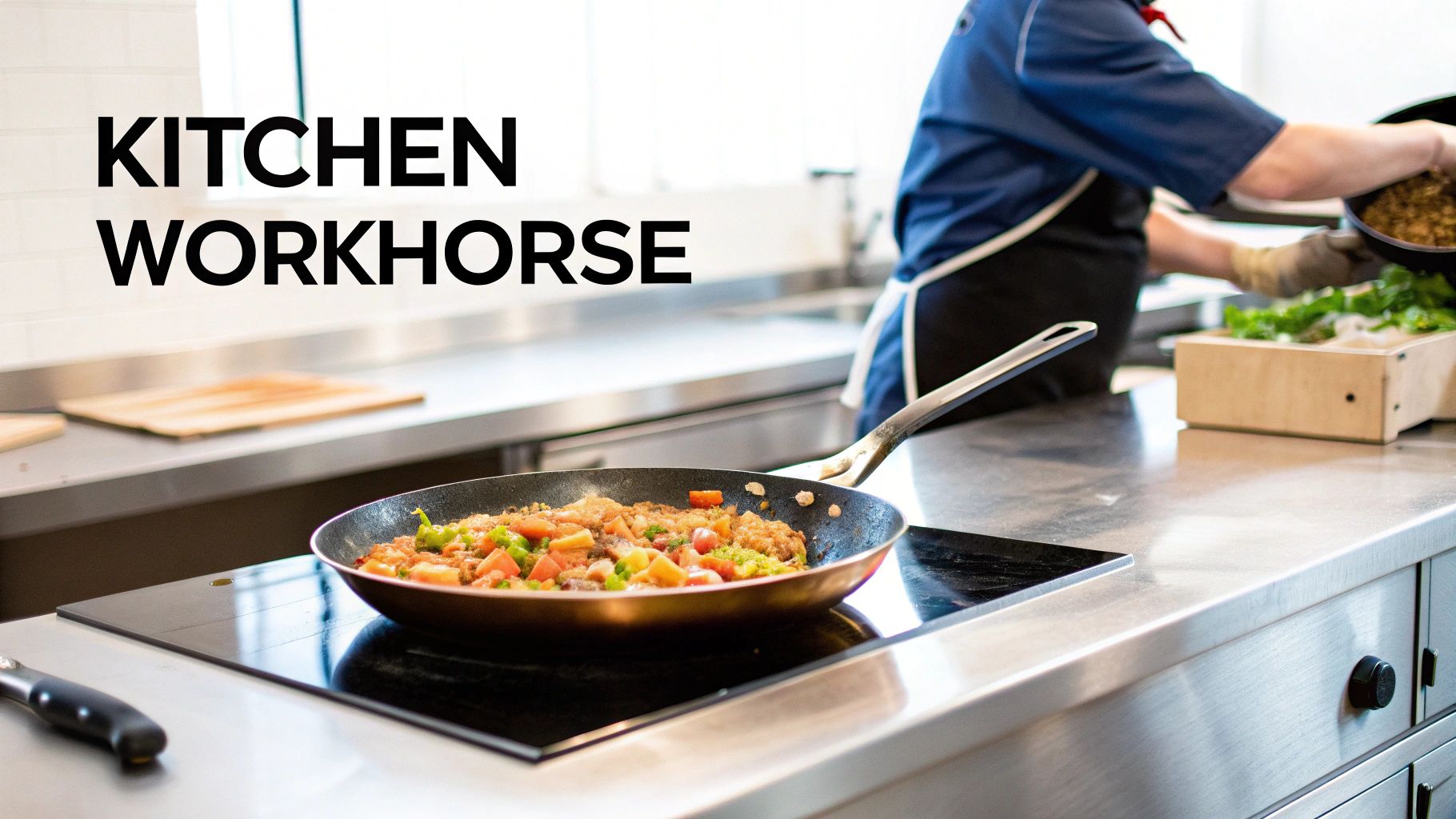
Picture this: you need to make hundreds of servings of chili for the lunch rush. In a traditional setup, you’d have multiple giant stockpots bubbling away, hogging every single burner on your range. With a tilting skillet, you can brown all the ground beef, sauté the onions and peppers, and then simmer the entire batch right in the same expansive pan.
And when it’s serving time? No more wrestling with heavy, sloshing pots or messy ladling. You just turn a crank or push a button, and the whole skillet gently tilts forward, smoothly pouring the finished chili into serving pans or storage containers. It’s that simple yet game-changing function that gives the equipment its name.
A Multifunctional Powerhouse
The real magic of a tilting skillet, sometimes called a braising pan, is its incredible versatility. It just flat-out eliminates the need for a cluttered collection of pots, pans, and other specialized appliances. In kitchens where every square foot is prime real estate, that’s a huge win.
A single chef could use the same unit to:
- Grill up pancakes and bacon for the breakfast crowd.
- Simmer gallons of soup for the lunch special.
- Braise huge cuts of meat for the dinner menu.
This chameleon-like ability to adapt throughout the day is why it's a cornerstone among the essential restaurant equipment you can't cook without.
The core benefit is consolidation. A tilting skillet doesn't just cook food; it streamlines workflow, cuts down on the number of cooking stations you need, and lets a single chef manage tasks that would otherwise tie up a whole team.
Maximizing Kitchen Productivity
So what does this look like in practice? Let’s put some real-world context around this.
Tilting Skillet vs. Traditional Equipment at a Glance
A single tilting skillet can truly do the job of several different pieces of equipment. This table breaks down just how much ground one of these units can cover compared to a traditional kitchen line.
| Cooking Method | Done by a Tilting Skillet? | Traditional Equipment Needed |
|---|---|---|
| Braising | Yes | Multiple large ovens or braising pans |
| Sautéing/Frying | Yes | Numerous frying pans and sauté pans |
| Grilling/Griddling | Yes | A dedicated flat-top griddle |
| Simmering/Boiling | Yes | A multi-burner stock pot range |
| Steaming | Yes | A dedicated steamer or combi oven |
As you can see, the ability to consolidate is pretty dramatic. By doing the work of several appliances, it frees up priceless floor space, cuts down on energy use, and reduces the time your staff spends cleaning multiple stations. For any high-volume operation—from a hotel kitchen to a university cafeteria—this translates directly into major savings in time, labor, and operational costs.
How a Tilting Skillet Actually Works
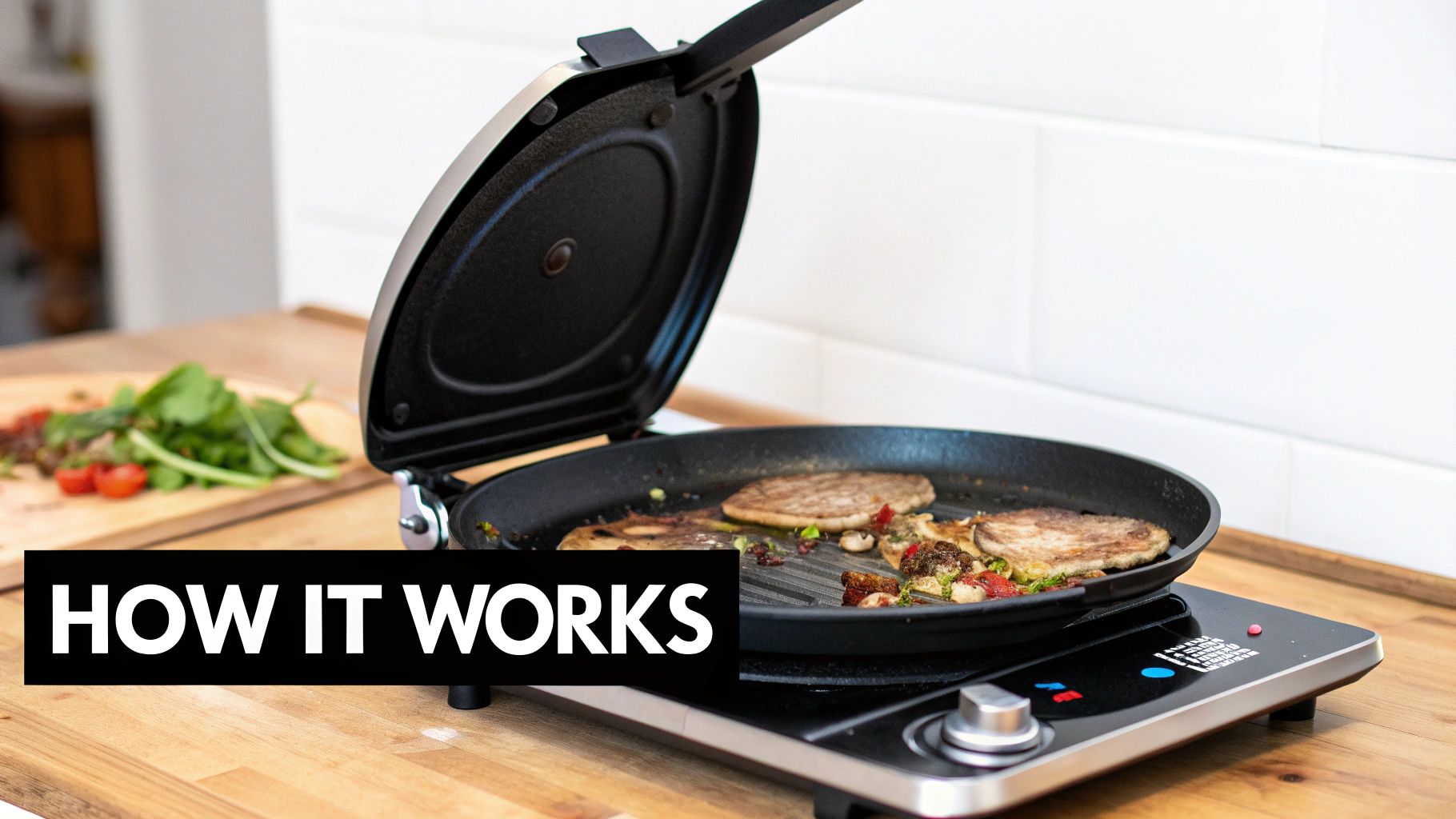
To really get what a tilting skillet is all about, you have to look past its stainless-steel exterior and see how its core parts work together. It’s less like a single appliance and more like a beautifully coordinated system designed for cooking huge batches with incredible precision. The real magic is in the seamless way all its pieces interact, turning it from a simple pan into a true kitchen workhorse.
At its heart, a tilting skillet’s power comes from four key components working in perfect harmony. Each part has a critical job, from generating the heat to safely pouring out the final product. Let's break down how this powerful machine gets it all done.
The Pan and Heating Elements
The first thing you notice is the massive braising pan. This isn't just any pan; it's a deep, rectangular basin engineered for a massive cooking area. Think about it: a round stockpot concentrates all its heat at the bottom, but a skillet’s huge, flat surface ensures every single burger patty or piece of vegetable gets direct contact with the heat source. This guarantees a perfect, even sear across the entire batch.
Underneath that surface is a powerful heating element, which can be either gas or electric. This system is designed to spread heat quickly and evenly across the entire pan, getting rid of the hot and cold spots you’d fight with on a regular stovetop. That uniform temperature is exactly why a tilting skillet can brown 20 pounds of ground beef perfectly without you needing to constantly stir and scrape.
A tilting skillet's design is brilliant in its simplicity. The large pan offers cooking surfaces on both the bottom and the side walls, allowing large quantities of food to cook thoroughly from all directions without being overcrowded.
Controls and Tilting Mechanism
Precision is everything in a commercial kitchen, and a skillet’s thermostatic controls deliver just that. Simple dials or digital displays let a chef lock in an exact temperature, whether it’s a gentle simmer for a delicate sauce or a ripping high heat for searing meat. It completely takes the guesswork out of the equation, making sure your recipes come out perfectly every single time.
Finally, we get to the part that gives the skillet its name: the tilting mechanism. This is what makes handling enormous batches of food not just possible, but incredibly safe and easy. The mechanism might be a manual hand crank on smaller models or a simple push-button power-tilt system on the bigger ones.
When the chili is ready or the stew is simmered to perfection, the chef just activates the tilt. The entire pan pivots smoothly forward, locking into place at whatever angle you need. This allows gallons of hot food to be poured neatly and safely into serving pans or storage containers—no splashing, no spills, and no back strain from trying to lift a ridiculously heavy stockpot. It’s this final, elegant step that truly defines the skillet’s genius.
The Core Benefits for Foodservice Operations
Beyond its impressive versatility, the real value of a tilting skillet hits you when you see its impact on your bottom line. Investing in one of these units is about more than just adding a new piece of equipment; it's a strategic move to tackle the biggest headaches in any commercial kitchen. Smart operators see real, measurable advantages that lead directly to a more efficient, productive, and profitable business.
These benefits aren't just theoretical. They show up in lower labor costs, a less crowded kitchen, smaller utility bills, and happier customers who enjoy consistently delicious food. Let's break down the four key benefits that make a tilting skillet such a game-changing asset.
Dramatic Labor Savings
In any restaurant, labor is one of the biggest and toughest expenses to manage. A tilting skillet attacks this head-on by acting as a powerful force multiplier for your kitchen crew. Its ability to cook enormous batches of food in a single, controlled environment frees your chefs from having to constantly juggle a dozen pots and pans on the range.
Imagine one chef browning 50 pounds of ground beef for chili, then sautéing the vegetables and simmering the final sauce—all in one piece of equipment. Traditionally, that process would demand constant attention across several burners and a stack of heavy stockpots. With a tilting skillet, one person can manage the entire process, freeing up the rest of the team for other prep work.
This consolidation of tasks leads to some serious gains:
- Less Babysitting: The precise temperature control means less hovering and stirring, which allows chefs to multitask way more effectively.
- Faster Cleanup: Cleaning one large pan is exponentially faster than scrubbing a mountain of different pots, pans, and burners.
- Simpler Training: Staff only need to master one versatile machine instead of learning the quirks of several different appliances.
Reclaiming Valuable Kitchen Space
Kitchen real estate is incredibly expensive, and every square foot needs to earn its keep. A tilting skillet is a master of spatial efficiency, effectively replacing a whole lineup of bulky, single-task equipment. Just think about the space eaten up by a large stockpot range, a separate griddle, multiple big fry pans, and a braising oven.
A single 40-gallon tilting skillet can do the job of all that equipment while taking up a fraction of the footprint.
By consolidating multiple cooking functions into one unit, a tilting skillet can free up 20-30% of the space on a traditional cookline. This reclaimed area can be used for much-needed prep space, extra storage, or simply to create a less congested, safer place to work.
This is a massive advantage for smaller operations like food trucks, cafes, or kitchens with awkward layouts where making the most of every inch is absolutely critical for a smooth workflow.
Improved Energy Efficiency
In an era of rising utility bills, energy consumption is a major concern for any operator. Tilting skillets are engineered for efficiency, offering faster preheat times and much better heat retention than many traditional appliances. Their enclosed design and well-insulated build mean that more energy goes directly into the food, not into just heating up the kitchen.
Compared to running multiple burners on a range for hours, a single, efficient heating element in a skillet uses significantly less gas or electricity. Some models preheat in as little as 15 minutes, letting kitchens respond quickly to service demands without wasting energy. Over a year, these energy savings really add up, directly lowering your monthly operating costs and making your kitchen more sustainable. Beyond frying and simmering, tilting skillets excel at preparing a wide array of items, including versatile large-batch pasta dishes for your menu.

Unwavering Food Quality and Consistency
Finally, a tilting skillet helps you deliver the one thing that keeps customers coming back: consistently high-quality food. Its precise, thermostat-controlled temperature ensures that recipes are executed perfectly every single time, getting rid of the guesswork that often leads to burnt sauces or undercooked meats.
The large, flat cooking surface provides incredibly even heat distribution, which is essential for getting a perfect sear on hundreds of chicken thighs or uniformly caramelizing onions for a soup base. Achieving that level of control is nearly impossible across multiple pans on a standard range. The result is a more reliable and delicious final product, batch after batch, which protects your brand's reputation and keeps your customers happy.
Choosing The Right Tilting Skillet
Picking the right tilting skillet isn’t just about buying another piece of equipment; it’s about choosing a new nerve center for your kitchen's workflow. The right decision means matching the unit's capacity, power source, and features directly to your menu, production volume, and the unique rhythm of your kitchen.
A small café has completely different needs than a massive university dining hall. The perfect skillet for one would be a terrible fit for the other. This guide will walk you through the key things to consider, helping you find a model that will become a true workhorse for your team.
Sizing Up Your Needs
The first and most important factor is the skillet's capacity, which is measured in gallons. Choosing one that’s too small will create frustrating bottlenecks during a rush, while an oversized unit just wastes energy and precious floor space. Your decision should be guided by your typical batch sizes and the number of people you serve daily.
To help you get started, here's a quick guide to matching skillet capacity to different types of operations.
Introducing our sizing guide designed to help you select the ideal tilting skillet capacity for your specific business needs, ensuring efficiency and optimal performance.
Tilting Skillet Sizing Guide for Different Operations
| Business Type | Typical Daily Covers | Recommended Skillet Capacity (Gallons) |
|---|---|---|
| Small Café / Food Truck | 50 - 150 | 10-15 Gallons (Countertop) |
| Full-Service Restaurant | 150 - 300 | 20-30 Gallons (Mid-Size Floor) |
| Small School / Catering Co. | 200 - 400 | 30 Gallons (Mid-Size Floor) |
| Hospital / University | 500+ | 40+ Gallons (High-Volume Floor) |
| Correctional Facility | 800+ | 40-60 Gallons (High-Volume Floor) |
This table provides a solid starting point for determining the skillet size that will best support your kitchen's output and prevent operational bottlenecks.
-
10-15 Gallons (Countertop Models): These compact units are perfect for smaller operations like cafes and food trucks, or for specialized, small-batch tasks in a larger kitchen. They're great for cooking sauces, gravies, or small batches of soup without tying up a full-sized floor model.
-
20-30 Gallons (Mid-Size Floor Models): This is the sweet spot for many full-service restaurants, smaller schools, and catering businesses. A 30-gallon skillet is large enough to handle a serious amount of chili, pasta sauce, or braised meats for a busy dinner service.
-
40+ Gallons (High-Volume Floor Models): These are the titans of the tilting skillet world, built for institutional kitchens like hospitals, large universities, and correctional facilities. A 40-gallon unit can prepare hundreds of servings of scrambled eggs or stew in a single batch, making it essential for mass feeding operations.
Gas Versus Electric Power
Once you've figured out the right size, the next big decision is the power source. Both gas and electric tilting skillets offer excellent performance, but they have distinct advantages and installation requirements that might make one a better fit for your kitchen.
Electric skillets are known for their incredibly precise temperature control and even heating, which is ideal for delicate sauces or long simmers. They are often easier and cheaper to install, especially in spots where running a new gas line would be a major headache.
Gas skillets, on the other hand, typically heat up faster and can offer more raw power. This is great for high-temperature searing and browning large quantities of meat. While installation can be more involved, gas is often a cheaper utility, which could lead to lower operating costs over time.
A good starting point is to look at the utility hookups you already have. Retrofitting your kitchen for a different power source can add significant cost and complexity to the installation.
Must-Have Features And Ergonomics
Beyond size and power, a few key features can dramatically improve how easy and efficient a tilting skillet is to use. One of the most critical is the tilting mechanism itself. Manual hand-cranks are reliable and cost-effective, but for larger skillets or those used for heavy, thick products like stews, a power-tilt mechanism is a must-have for safety and ease of use.
Other key features to look for include:
- A Pouring Lip: A well-designed pouring lip ensures a smooth, splash-free transfer of hot liquids. It’s a small detail that makes a huge difference.
- Etched Measurement Marks: Gallon or liter markings etched right into the pan make it easy to add ingredients without grabbing extra measuring cups.
- Attached Faucet: A swing spout faucet mounted on the unit saves countless trips to a sink, streamlining both the cooking and cleaning process.
The flowchart below shows how a well-chosen skillet can directly benefit your operation, from saving labor to boosting food quality.
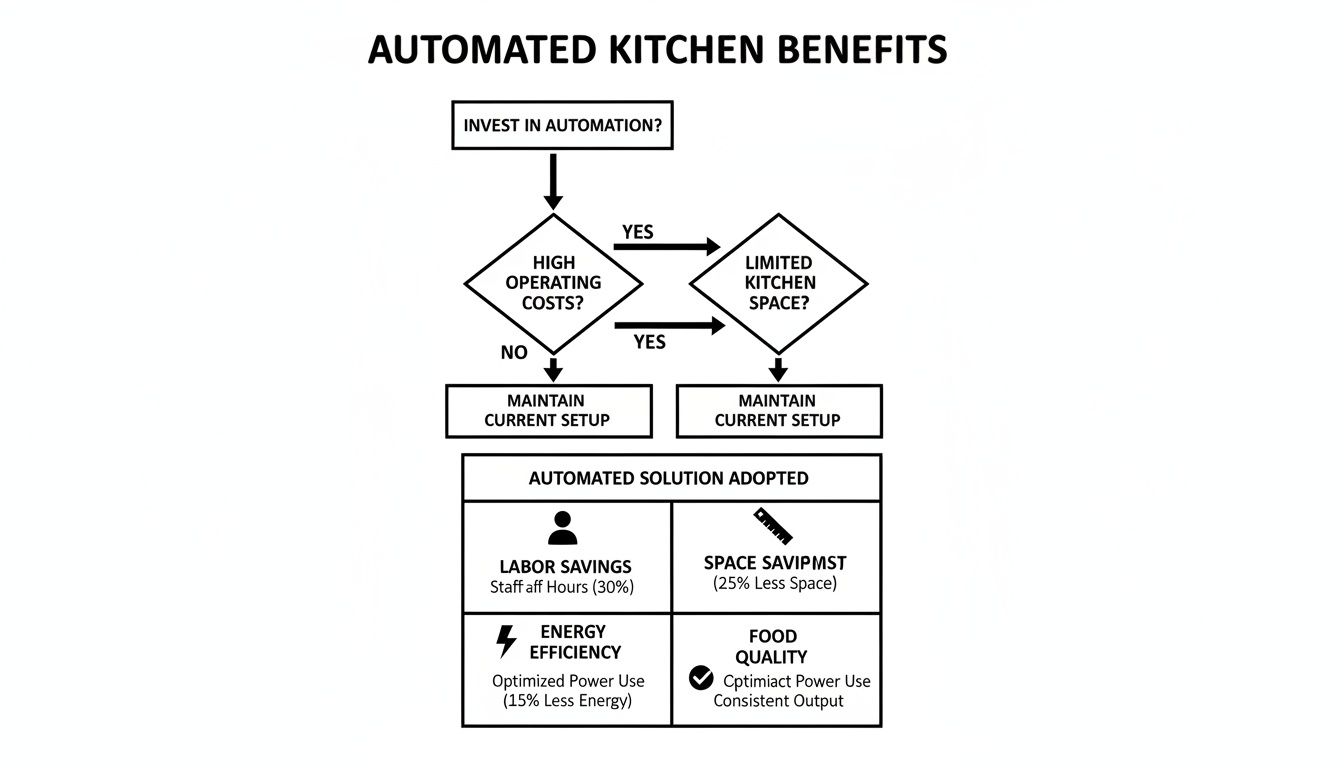
This visual guide emphasizes how the right features contribute to major gains in labor, space, and energy efficiency, along with overall food quality. These aren't just theories; they are the direct result of picking a model that fits your kitchen's needs perfectly.
Modern tilting skillets offer complete installation flexibility, with countertop, stand-mounted, or floor installation options to fit nearly any kitchen layout. With preheat times as short as 15 minutes for griddling, these units allow your team to switch gears quickly and respond to changing customer demand.
Ultimately, selecting the right tilting skillet is a key part of your kitchen strategy. For more guidance on outfitting your space, check out our comprehensive commercial kitchen equipment checklist to make sure you have all the essential tools for success.
Mastering Daily Operation and Maintenance
A tilting skillet is a serious investment, and just like any other workhorse in your kitchen, its performance and lifespan really come down to how well you take care of it day-to-day. Getting the hang of its operation and maintenance isn't just about ticking boxes on a checklist; it's about building confidence so this machine remains a reliable asset for years to come.
Putting simple, consistent routines in place for both operation and cleaning is the secret to getting the most out of your skillet. We'll walk through the best practices for everything from preheating safely to cleaning effectively. These straightforward habits will keep food from building up, protect the cooking surface, and ensure the tilting mechanism works flawlessly.
Safe and Effective Daily Operation
Using a tilting skillet is pretty intuitive, but sticking to a clear process every time is key for both safety and getting the best cooking results. The goal is to make these steps second nature for your entire kitchen crew.
Always start by making sure the skillet is locked in the upright position before you turn it on. Preheat it to your target temperature, but keep an eye on it—some models heat up incredibly fast. When you're adding ingredients, especially liquids or foods with high moisture content, do it carefully to avoid any dangerous splashing of hot liquid or oil.
When the cooking's done, that tilting function becomes your best friend. Just follow these steps for safe and clean pouring:
- Clear the Path: Make sure the area in front of the skillet is totally clear. Get your receiving container, like a hotel pan, set up and stable before you even think about tilting.
- Tilt Slowly: Whether you're using a hand crank or a power-tilt button, start tilting the pan smoothly and gradually. Jerky, sudden movements can cause hot food to surge over the side.
- Use the Pour Lip: Every skillet has a pouring lip for a reason. Let it do its job and guide the food cleanly into your container. This is what prevents messy, time-consuming spills.
- Lock if Needed: If you have to step away for a second mid-pour, make sure the tilting mechanism is securely locked in place.
These habits are fundamental. They don't just protect your staff from nasty burns; they also prevent spills that waste both product and precious time.
Crucial Cleaning and Maintenance Routines
More than anything else, consistent cleaning will extend the life of your tilting skillet. Daily upkeep prevents that nasty buildup of carbonized grease and food bits that can ruin a cooking surface and become a breeding ground for bacteria. The good news? The design of a tilting skillet actually makes this whole process pretty simple.
After you're done cooking, let the skillet cool down just a bit. Tilt it to drain any leftover grease or liquids into a proper disposal container. Next, add some warm water and a mild detergent, using a soft-bristled brush or a non-abrasive pad to gently scrub the surface. For more great tips on keeping your whole kitchen spotless, our guide on cleaning restaurant equipment has you covered.
Maintaining cleanliness is vital for the longevity and efficiency of your tilting skillet. Many principles of commercial deep fryer cleaning can be applied to ensure your tilting skillet remains spotless and functional, especially when dealing with stubborn grease.
Beyond the daily scrub-down, you'll want to do a few quick checks periodically. Once a week, give the tilting mechanism a look to make sure it's moving smoothly. Check the lid's seals for any signs of wear and tear that could cause heat to escape. Proper care is a long-term game. Depending on how heavily they're used and maintained, tilting skillets can have a service life anywhere from 6 to 25 years, making them a truly durable investment. By making these simple routines part of your kitchen's DNA, you'll ensure your skillet stays in prime condition for a long, long time.
Alright, so after digging into what this powerhouse piece of equipment is and how it works, we get to the most important question: Does a tilting skillet actually make sense for your kitchen? To figure that out, you have to connect its core identity—a high-volume, do-it-all workhorse—to the real-world hustle of your menu, your space, and your daily output.
At its heart, a tilting skillet is the ultimate master of consolidation and scale. It’s built for kitchens that need to pump out a serious amount of food efficiently, all while making every square inch of the cookline count. This isn't just another appliance; it's a strategic move to make your entire workflow smoother.
Scenarios for Different Businesses
Let's look at a few common kitchen scenarios to see where it really shines. What works for a small café is obviously worlds apart from what a massive hospital kitchen needs, but the core benefits—versatility and efficiency—are the same across the board. The trick is matching the skillet's power to the size of your operation.
Take a cozy café with a diverse menu, for example. They're likely struggling with not having enough burner space. A compact, 15-gallon countertop tilting skillet could be a total game-changer. In that single unit, they can sauté a huge batch of vegetables for morning omelets, let the daily soup simmer away for lunch service, and even braise a small batch of short ribs for a dinner special. It does the job of multiple pots and pans, all in one efficient footprint.
The right tilting skillet isn't just about cooking more food; it's about cooking smarter. By matching the unit's size and features to your business model, you can unlock new levels of productivity and menu creativity, regardless of your kitchen's size.
Now, picture a completely different world, like a huge university cafeteria or a hospital kitchen that feeds hundreds of people, multiple times a day. In that environment, a massive 40-gallon floor model becomes the central hub of production. We're talking about cooking hundreds of pounds of pasta, simmering gallons of chili, or browning an enormous batch of ground meat all at once.
For these high-volume operations, the skillet isn't just a nice-to-have—it's absolutely essential. It lets them streamline their entire production schedule, cut down on the labor needed for batch cooking, and deliver consistent quality across thousands of meals. And when you're dealing with that much hot, heavy food, the power-tilt function on a big unit like that makes transferring it safely a simple, one-person job.
By seeing how a tilting skillet fits into these different kitchens, you can start to visualize how it would slot into your own. Whether you're trying to expand the menu in a tight space or manage massive-scale food production, there’s a model out there designed to solve your exact challenges. Once you have a clear picture of its potential impact, you can decide with confidence if this versatile beast is the right investment for your business.
Frequently Asked Questions About Tilting Skillets
To wrap things up, let's tackle some of the most common questions operators have before deciding if a tilting skillet is the right move for their kitchen. Getting clear, straightforward answers can help you resolve any final doubts and make a confident, well-informed investment. This FAQ covers the practical concerns about costs, capabilities, and day-to-day use.
The goal here is to provide the last pieces of the puzzle. By addressing these specific points, you can feel fully prepared to choose a piece of equipment that will genuinely benefit your operation for years to come.
Can a Tilting Skillet Replace a Deep Fryer?
While a tilting skillet is incredibly versatile, it's not a one-for-one replacement for a dedicated commercial deep fryer. You can certainly shallow-fry foods like breaded chicken cutlets or pan-sear fish beautifully. However, it lacks the deep, contained oil vat and basket system needed for true deep-frying of items like french fries or battered foods.
Think of its frying capability as being similar to an oversized, high-powered frying pan rather than a specialized fryer. For operations that do a lot of deep-frying, a separate unit is still essential for safety and efficiency.
What Is the Price Range for a Commercial Tilting Skillet?
The cost of a tilting skillet varies widely based on several key factors. Your final price will depend on its capacity, power source (gas or electric), and whether you opt for extra features like a power-tilt mechanism.
Here’s a general breakdown of what you can expect:
- Countertop Models (10-15 gallons): These smaller units typically range from $5,000 to $10,000. They are perfect for small-scale operations or as a secondary unit in a larger kitchen.
- Mid-Size Floor Models (20-30 gallons): This is a popular category for many restaurants and catering businesses, with prices generally falling between $10,000 and $20,000.
- Large Floor Models (40+ gallons): Built for high-volume institutional cooking, these can cost anywhere from $20,000 to over $35,000, especially with advanced features.
Remember that the initial purchase price is only part of the equation. A tilting skillet's ability to save on labor, energy, and space often provides a significant return on investment over its lifespan.
How Much Space Do I Need for Installation?
Even large-capacity models are designed to have a surprisingly small footprint compared to the multiple pieces of equipment they replace. A standard 40-gallon floor model generally requires a space about 48 inches wide and 40 inches deep. However, it is crucial to account for clearance.
You must leave adequate space around the unit for safe operation, cleaning, and maintenance. Most importantly, ensure there is ample clear space—at least a few feet—in front of the skillet to accommodate the full tilt and a large container for safely transferring food. Always consult the manufacturer's spec sheet for exact dimensions and clearance requirements before you buy.
Ready to discover how a tilting skillet can transform your kitchen's efficiency and output? Explore a wide selection of top-quality commercial cooking equipment at The Restaurant Warehouse and find the perfect fit for your operation. Visit us at https://therestaurantwarehouse.com to get started.
About The Author

Sean Kearney
Sean Kearney is the Founder of The Restaurant Warehouse, with 15 years of experience in the restaurant equipment industry and more than 30 years in ecommerce, beginning with Amazon.com. As an equipment distributor and supplier, Sean helps restaurant owners make confident purchasing decisions through clear pricing, practical guidance, and a more transparent online buying experience.
Connect with Sean on LinkedIn, Instagram, YouTube, or Facebook.