

Used but Useful: Quality Second Hand Catering Sinks Reviewed
Why Second Hand Catering Sinks Are Smart Business Investments
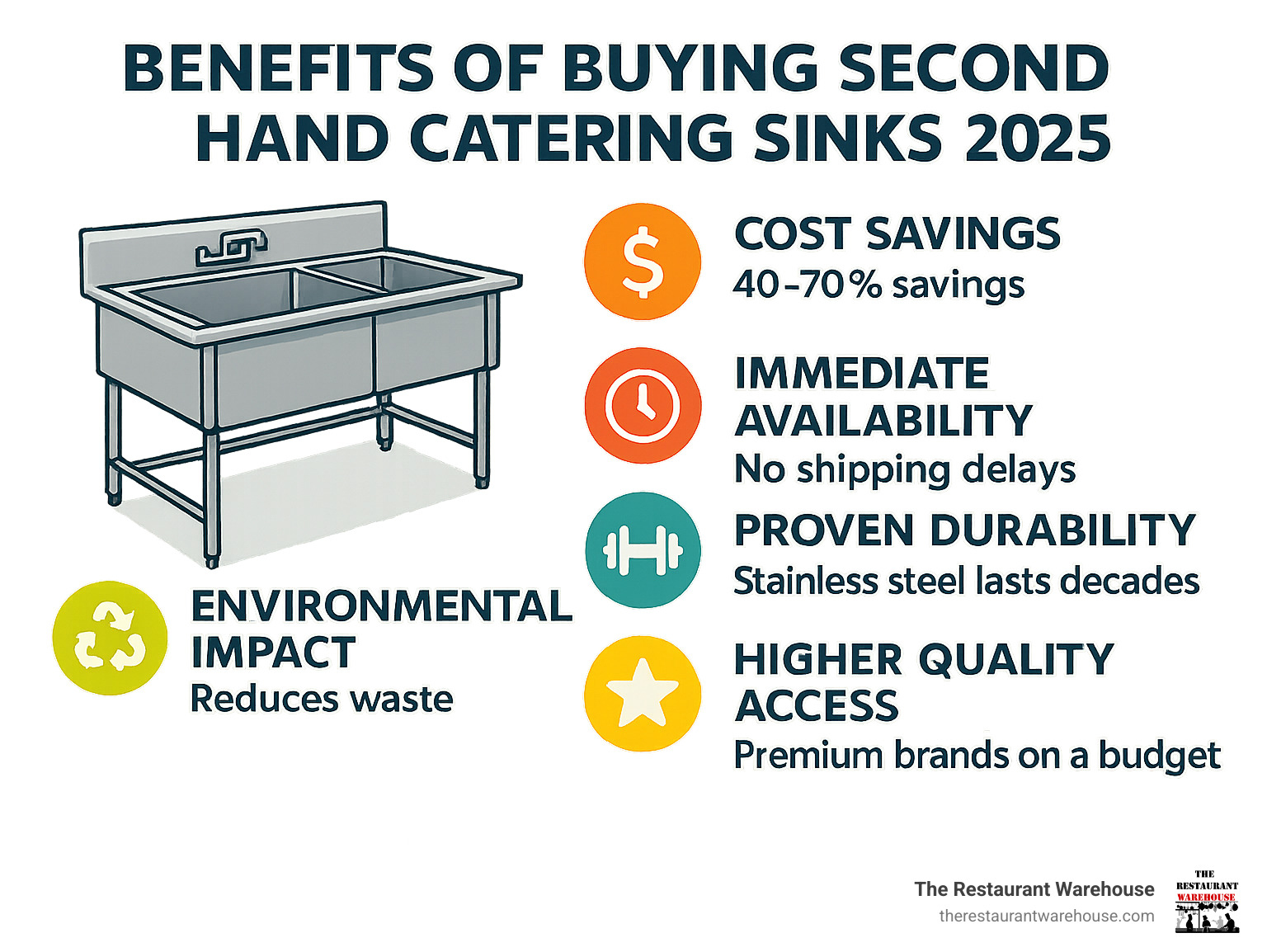
A second hand catering sink can save your restaurant thousands of dollars while delivering the same commercial-grade performance as new equipment. With prices ranging from $100 to $2,000 depending on size and condition, used sinks offer immediate availability and proven durability for budget-conscious foodservice operations.
Key Benefits of Buying Used Catering Sinks:
- Cost Savings: Save 40-70% compared to new equipment
- Immediate Availability: No waiting for manufacturing or shipping delays
- Proven Durability: Stainless steel construction lasts decades with proper care
- Environmental Impact: Reduces waste and manufacturing footprint
- Higher Quality Access: Afford premium brands within tight budgets
The commercial kitchen equipment market offers plenty of quality used options. From single-compartment utility sinks to three-compartment wash stations required by health codes, the second-hand market provides reliable solutions for every kitchen need.
Well-maintained used sinks perform just as effectively as new ones. As one chef notes: "I thoroughly recommend the use of Kitchen soak tanks. We use ours daily. They save on kitchen costs and our cooking equipment is always clean and ready."
The key is knowing what to look for and how to evaluate condition. With proper inspection, a used catering sink becomes one of the smartest investments for your commercial kitchen.
Key second hand catering sink vocabulary:
- commercial kitchen stainless steel tables
- heavy duty kitchen equipment
- restaurant equipment wholesale
Why Choose a Used Sink? The Surprising Benefits
When setting up a commercial kitchen, a second hand catering sink is a smart choice that saves money, time, and benefits the environment. The most obvious advantage is cost. While new commercial sinks can cost thousands, used options range from just $15 to $2,000. This significant saving can be redirected to other essential needs, which is critical for new restaurant owners.
Beyond upfront savings, commercial sinks are built from durable stainless steel to handle the daily abuse of a busy kitchen. A well-maintained used sink often has decades of reliable service left in it. Buying used also provides access to premium brands that might otherwise be out of budget.
Another key benefit is immediate availability. New equipment often has long lead times that can delay your opening. Used sinks are typically ready for pickup or quick delivery, keeping your kitchen on schedule.
Choosing a second hand catering sink is also an eco-friendly decision. It keeps equipment out of landfills, reduces waste, and appeals to environmentally conscious customers.
For more flexibility, rent-to-own programs offer 12-month rental agreements with manageable weekly payments, helping maintain healthy cash flow. Up to 60% of rental payments can often go toward the purchase price, and payments are typically 100% tax deductible. You can learn more by exploring how to Buy Used Restaurant Equipment.
The Financial Edge
Capital preservation is crucial in the restaurant business. Buying used frees up startup funds for other needs like quality cookware or marketing. Used equipment also avoids the steep depreciation of new items, meaning your investment holds its value better. The return on investment is often superior, as you get the same functionality at a fraction of the cost.
The Sustainability Angle
Choosing a second hand catering sink shows your commitment to environmental responsibility. By participating in the circular economy, you reduce demand for new manufacturing, which cuts down on energy consumption and emissions. This approach to green business practices can be a selling point for your establishment, proving that being eco-friendly can be a smart financial decision.
A Roundup of Common Second Hand Catering Sink Types
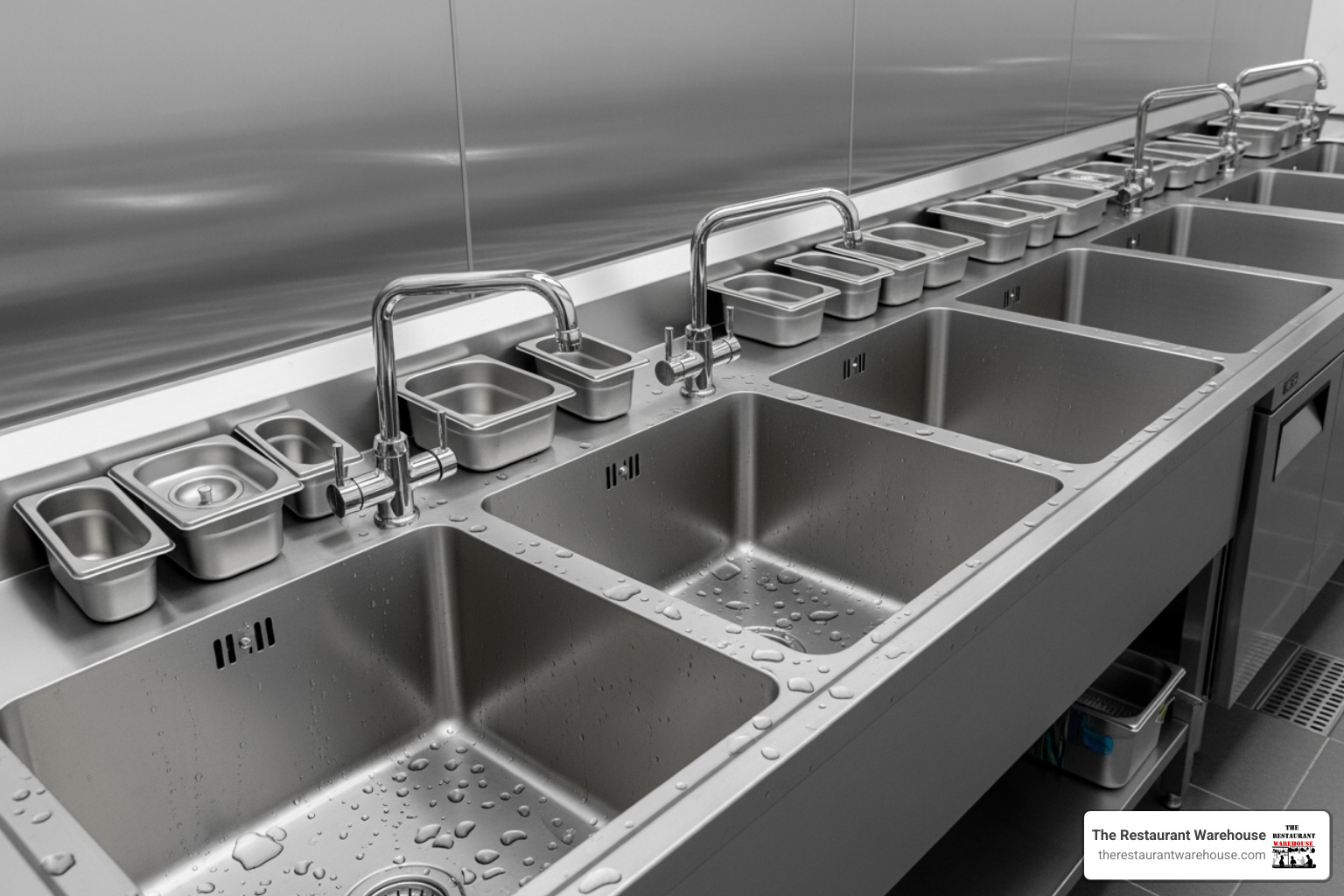
Understanding the basic types of commercial sinks makes choosing the right second hand catering sink much simpler. Each type serves a specific function in your kitchen's workflow. The used market has a steady supply of all types due to restaurant closures and renovations. For a deeper dive, our guide on Commercial Sinks For Restaurants Made Simple breaks down everything you need to know.
One-Compartment Sinks

Single-compartment sinks are versatile and ideal for smaller operations or specialized tasks. They excel at food preparation, such as washing vegetables, or as dedicated pot washing stations. Many kitchens use them as general utility stations. Their compact size is perfect for small kitchens, food trucks, or cafes where space is limited. For mobile-specific advice, see our Food Truck Sinks Guide. Their simple design makes them easy to inspect when buying used.
Two-Compartment Sinks
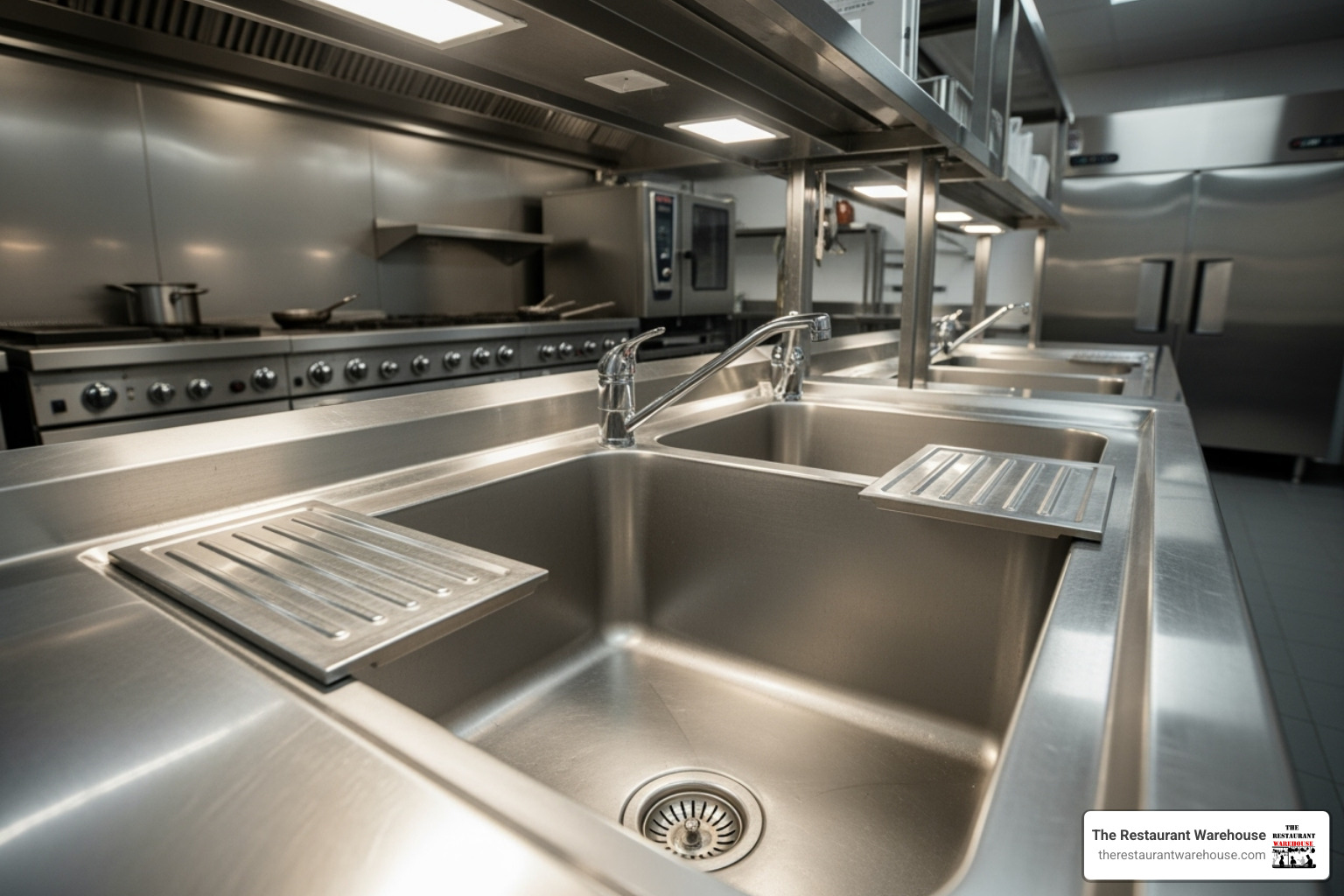
Two-compartment sinks are a great fit for many medium-sized operations, offering a dedicated wash and rinse process without the large footprint of a three-compartment unit. This dishwashing workflow—washing in the first bowl and rinsing in the second—improves efficiency and prevents bottlenecks during busy periods. They are the perfect middle ground for kitchens that need more than a single sink but don't require a full three-compartment setup.
Three-Compartment Sinks
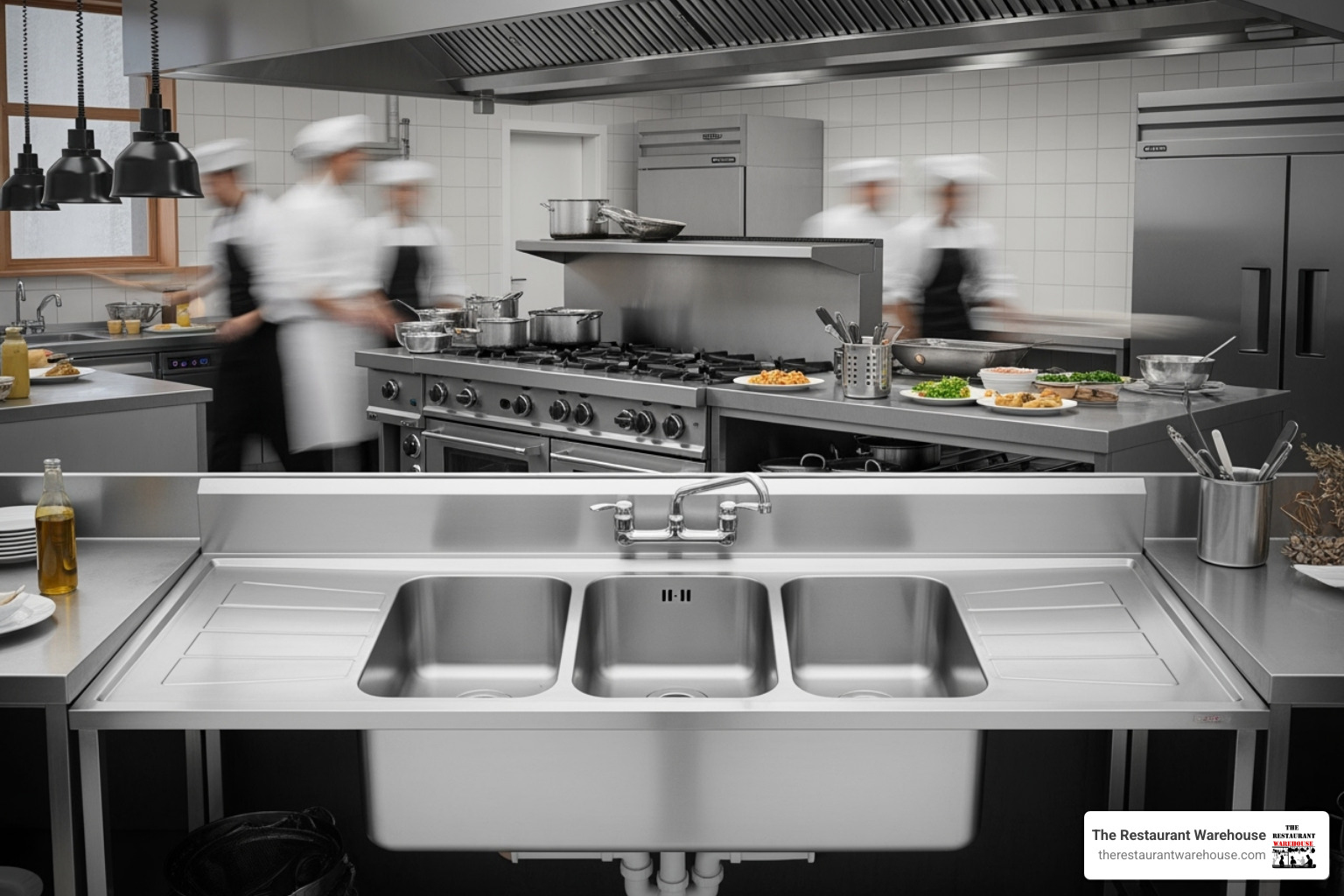
For most full-service restaurants, a three-compartment sink is a legal requirement. These sinks are designed for health code compliance and the industry-standard wash, rinse, sanitize method. The first compartment is for washing, the second for rinsing, and the third for sanitizing. This system is essential for manual dishwashing in high-volume kitchens to ensure dishes are safe for service. Finding a quality second hand catering sink of this type is a smart investment, as they are built to last for many years.
Hand Wash Sinks
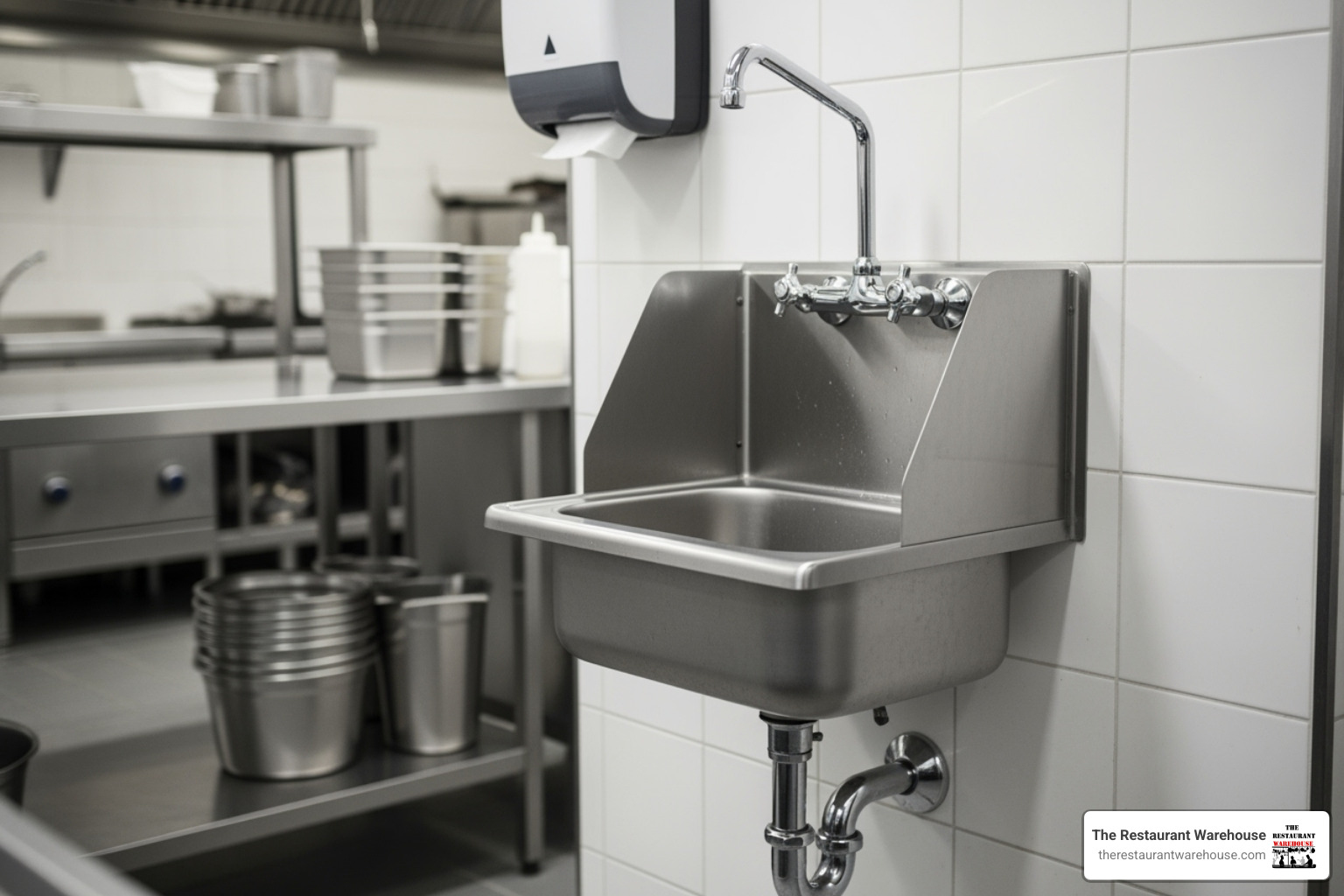
Hand wash sinks are critical for food safety. These dedicated hygiene stations for employee use are required by health codes to be placed in strategic locations. Their compact design, often wall-mounted with splashguards, saves floor space. They are essential near food prep areas and dish pits to encourage frequent hand washing, the first line of defense against foodborne illness. Our Handwash Sink Guide covers everything you need to know about these crucial stations.
Your Pre-Purchase Inspection Checklist: Key Features to Scrutinize
A thorough inspection of a second hand catering sink is crucial to avoid costly surprises and ensure you get reliable equipment. A proper inspection covers material quality, current condition, and key specifications that determine functionality. Getting these right means you'll walk away with a reliable workhorse. For a broader perspective, our Catering Supplies Checklist can help you think through all your needs.
Material and Construction
Not all stainless steel is equal. The two main types are 304 and 430, with different characteristics affecting performance.
| Feature | 304 Stainless Steel | 430 Stainless Steel |
|---|---|---|
| Durability | Excellent; highly resistant to corrosion and rust | Good; less resistant to corrosion and rust than 304 |
| Corrosion Resistance | Superior, especially against acids and chlorides | Moderate; can be susceptible to rust in harsh environments |
| Cost | Higher | Lower |
| Common Use | Food contact surfaces, high-moisture areas | Backsplashes, less critical surfaces |
For a second hand catering sink, 304-grade stainless steel is the best choice for its superior longevity. Also, check the steel gauge; lower numbers mean thicker, more durable steel. 14 or 16 gauge is ideal for sink bowls. Examine the welds for smoothness and consistency, avoiding any with cracks. Ensure the leg bracing is sturdy with adjustable feet for stability.
Condition and Wear
Distinguish between minor cosmetic wear and major deal-breakers.
- Dents and scratches: Minor cosmetic damage is normal. However, large dents in the bowls can affect drainage and structural integrity.
- Rust spots: Small surface rust spots may be treatable, but extensive pitting or rust that goes through the steel is a major red flag.
- Leaks: Check carefully for any signs of current or past leaks around seams, drains, and faucet connections. If possible, test with water before buying.
- Drain integrity: Ensure drain openings are intact and free from significant corrosion. Check if the drain basket is present and in good condition.
- Faucet: If a faucet is included, test it for leaks and smooth operation. Factor in replacement costs if it's faulty.
- Overall cleanliness: A reasonably clean sink suggests good maintenance. Excessive grime may indicate neglect.
Look for "certified used" options from reputable suppliers. These sinks are tested and refurbished, reducing your risk.
Key Considerations for a second hand catering sink
Finally, assess the practical details to ensure the sink fits your kitchen's needs.
- Dimensions: Measure the sink's overall length, width, and height, plus bowl dimensions, to ensure it fits your space and is ergonomic for staff.
- Bowl depth: Deeper bowls (14+ inches) are essential for washing large pots. Shallower bowls may suffice for prep work.
- Drainboard size and placement: Ensure drainboards match your workflow and provide enough space for drying dishes.
- Backsplash: A high backsplash (9-3/4+ inches) improves hygiene by preventing splashes on walls.
- Faucet holes: Check the number and spacing to ensure compatibility with the faucet you plan to install.
- NSF certification: Look for marks indicating the sink was designed to meet health department standards.
Where to Find Your Perfect Second Hand Catering Sink
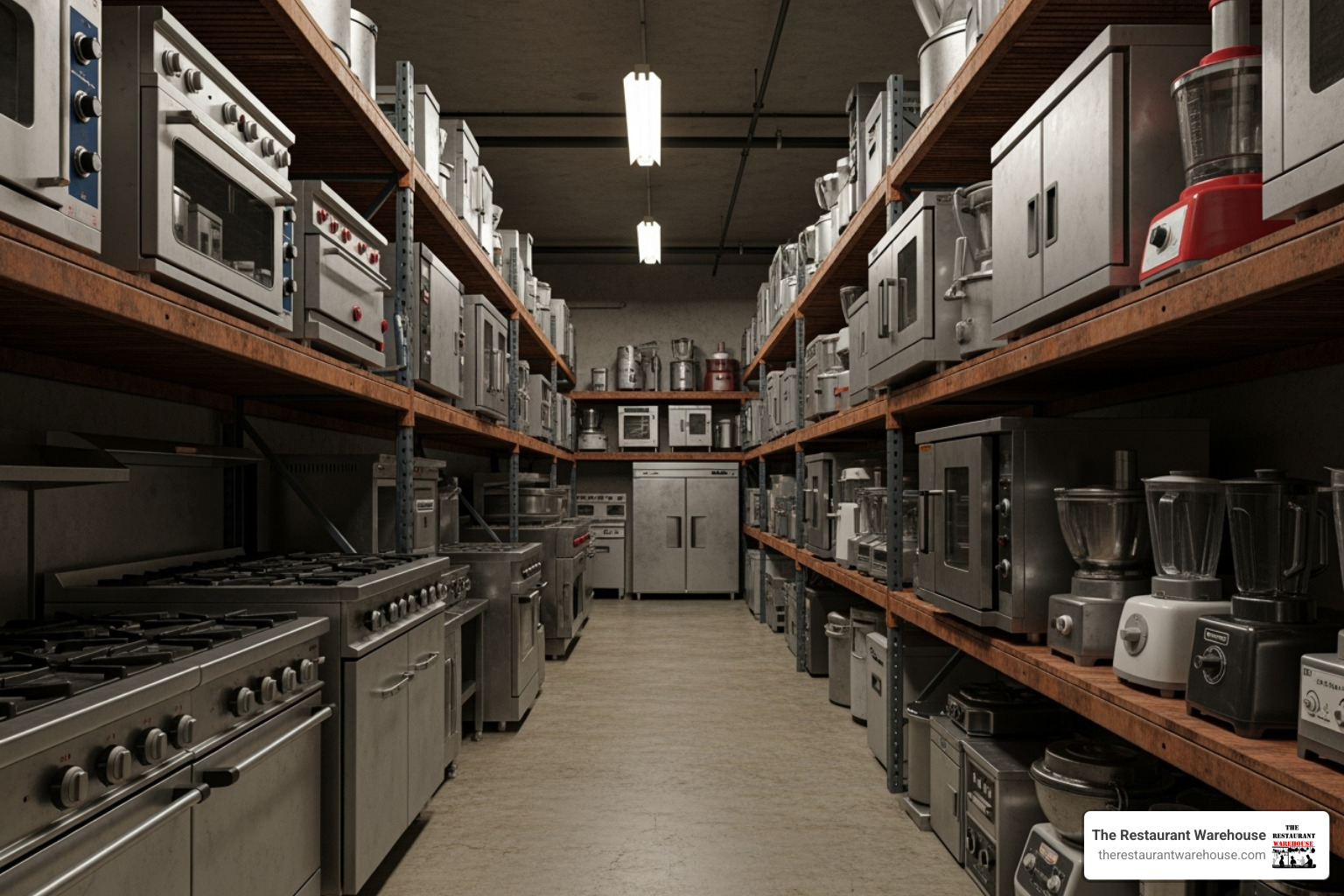
The used commercial kitchen equipment market is robust, with plenty of options for savvy buyers. The key is knowing which sources offer the best combination of quality, price, and reliability.
Online and Local Sellers
Your search should blend online convenience with in-person inspection opportunities.
- The Restaurant Warehouse should be your first stop. We specialize in quality commercial restaurant equipment at wholesale pricing. Our Used Commercial Stainless Steel Sinks | Used Restaurant Sinks section features carefully selected equipment.
- Local restaurant equipment suppliers often have showrooms where you can inspect sinks and may offer warranties on certified used stock.
- Online marketplaces and classified ad sites are treasure troves for finding equipment from individual sellers and businesses. You can often filter by condition and features, and some platforms offer buyer protection.
- Foodservice auctions present fantastic opportunities for competitive pricing on liquidated restaurant inventories, but items are typically sold "as-is."
- Community bulletin boards and local online groups can yield unexpected gems from culinary schools or industry peers.
When dealing with private sellers, be prepared to negotiate and handle pickup. Always request detailed photos and ask specific questions if you can't inspect the sink in person.
Typical Price Range for a second hand catering sink
The price for used commercial sinks varies based on several factors. Size and compartment count are the biggest drivers, followed by condition, brand reputation, and material grade (304-grade steel costs more). Prices also vary by geographic location.
Based on market research, individual used sinks can range from under $75 to over $2,000. A typical two or three-compartment second hand catering sink in good condition usually runs $300-$800, a substantial saving over new models. Kitchen soak tanks typically fall in the $1,000 to $1,600 range.
Financing and Rental Options
Flexible financing and rental options can help manage cash flow when purchasing equipment.
Rent-to-own programs like 'Rent–Try–Buy' work with both new and certified used equipment. These programs offer 12-month rental periods with manageable, tax-deductible weekly payments. A significant portion of your rental payments (up to 60%) can often be applied toward the purchase price.
Certified used equipment available through these programs has been fully tested and refurbished by qualified technicians, adding a layer of confidence to your purchase.
Our Rent-to-own Sinks & Dishwashers program provides flexible solutions to get the equipment you need now while managing payments in a way that works for your business.
Staying Compliant: Hygiene and Safety Standards for Used Sinks
A second hand catering sink must meet all health and safety standards to ensure customer safety and business compliance. Your sink is a critical defense against contamination, and meeting health codes and food safety regulations is essential. Before use, ensure your sink is not only functional but also easily cleanable and capable of supporting proper sanitization procedures.
A compliant sink protects your business from shutdowns and reputation damage. For insights on hand hygiene, check our Clean Hands Happy Guests Catering Hand Wash Sink Buying Guide.
Cleaning and Refurbishing Your Used Sink
Getting your second hand catering sink ready for service requires a deep cleaning to create a food-safe environment.
- Initial Cleaning: Start with a heavy-duty degreaser and stiff brush, paying close attention to corners and seams.
- Rust Removal: Use a specialized stainless steel rust remover for minor surface rust. A mild abrasive pad can be used, but always rub with the grain of the steel. Avoid harsh abrasives that can create scratches where bacteria can hide.
- Polishing: Polishing the stainless steel restores its shine and creates a protective barrier.
- Replacing Worn Parts: Inspect and replace old gaskets, O-rings, and drain assemblies. If the faucet is old or leaky, replace it. A new faucet is an affordable upgrade that can boost efficiency.
- Sanitizing: The final step is to sanitize the entire sink with a commercial-grade sanitizer approved for food contact surfaces.
Meeting Health Department Requirements
Compliance involves how the sink fits into your kitchen's overall food safety system.
- Local Regulations: Always check with your local health department for specific requirements on sink compartments, hot water access, and drainage.
- Installation Standards: Ensure proper plumbing integration, including correct water supply lines, effective drainage, and a grease trap if required. Grease traps are essential for preventing blockages and environmental issues.
- Proper Drainage: The sink must drain efficiently without leaving pools of standing water where bacteria can grow.
Passing your health department inspection is the ultimate test. By being proactive with cleaning, refurbishment, and proper installation, you set yourself up for a smooth inspection process. A compliant kitchen is a confident kitchen.
Conclusion
Choosing a second hand catering sink is a smart business decision that offers significant value. You can achieve 40-70% savings compared to new equipment, gain immediate availability, and benefit from the proven durability of commercial-grade stainless steel. It is also an environmentally responsible choice that reduces waste.
From compact single-compartment units to essential three-compartment wash stations, the used market has a reliable solution for every kitchen. The key to a successful purchase is a thorough inspection of the material grade (look for 304-grade stainless steel), condition, and dimensions. With proper cleaning and refurbishment, a used sink can perform like new and meet all health code compliance standards.
Finding the right sink is straightforward with online resources, local suppliers, and flexible rent-to-own programs that help manage cash flow.
At The Restaurant Warehouse, we are committed to offering quality commercial restaurant equipment at wholesale pricing. A second hand catering sink represents the kind of smart investment that successful owners make—maximizing value and performance while preserving capital for other critical business needs.
Ready to outfit the rest of your kitchen? For a complete overview, explore our Commercial Kitchen Equipment Guide.
About The Author

Sean Kearney
Sean Kearney is the Founder of The Restaurant Warehouse, with 15 years of experience in the restaurant equipment industry and more than 30 years in ecommerce, beginning with Amazon.com. As an equipment distributor and supplier, Sean helps restaurant owners make confident purchasing decisions through clear pricing, practical guidance, and a more transparent online buying experience.
Connect with Sean on LinkedIn, Instagram, YouTube, or Facebook.
Leave a comment