

Unleash the Heat: Everything You Need to Know About Commercial Gas Appliances
Why Commercial Gas Appliances Are the Backbone of Every Successful Kitchen
Commercial gas appliances are the workhorses of professional kitchens, powering everything from high-volume cooking to hot water production. If you're trying to understand what makes these appliances essential for your foodservice operation, here's what you need to know:
Key Types of Commercial Gas Appliances:
- Gas Ranges - Feature open burners, griddles, or charbroilers with standard or convection heating compartments
- Gas Fryers - Available in tube-type or open-pot designs for high-volume frying
- Countertop Equipment - Includes griddles, charbroilers, and hot plates for space-saving cooking
- Gas Water Heaters - Tank or tankless models that provide hot water for cleaning and food prep
Why Gas Matters:
- Instant, precise heat control that responds immediately to adjustments
- Lower operating costs compared to electric alternatives
- Continues working during power outages
- Faster cooking times mean higher productivity during rush periods
The numbers tell the story. The global market for professional cooking appliances reached $22.5 billion in 2022 and is projected to hit $34.9 billion by 2030. Gas ranges dominate this space, accounting for over 60% of the market share. This isn't just industry preference—it's restaurants voting with their wallets for appliances that deliver consistent results under pressure.
But here's the problem many restaurant owners face: choosing the wrong appliance or overpaying for it. Traditional suppliers load up prices with hidden commissions and unnecessary markups. When you're launching a new restaurant or upgrading your kitchen on a tight budget, every dollar counts. The right commercial gas appliances can make or break your operation, affecting everything from food quality to energy bills to how quickly you can serve customers during your busiest hours.
Beyond the financial side, the choice of commercial gas appliances impacts staff workflows, safety, and your long-term expansion plans. A line that's underpowered will struggle to keep up with weekend rushes or catering orders; a line that's overpowered and poorly configured can waste gas, overheat the workspace, and create unnecessary safety risks.
This guide breaks down everything you need to know about commercial gas appliances—from understanding BTU ratings and burner configurations to navigating installation requirements, local codes, and maintenance schedules. You'll also learn how to compare natural gas and propane, what to look for in warranties, and how staff training ties into safety and profitability.
If you want personalized help matching equipment to your menu and budget, you don't have to figure it out alone. Contact The Restaurant Warehouse to talk through your commercial gas appliance needs and get recommendations custom to your concept.
I'm Sean Kearney, and I've spent years helping restaurant owners find the right appliances for their kitchens. My background in sales taught me that understanding customer needs is everything, especially when it comes to choosing commercial gas appliances that will perform reliably for decades.
The Core of the Kitchen: Primary Types of Commercial Gas Appliances
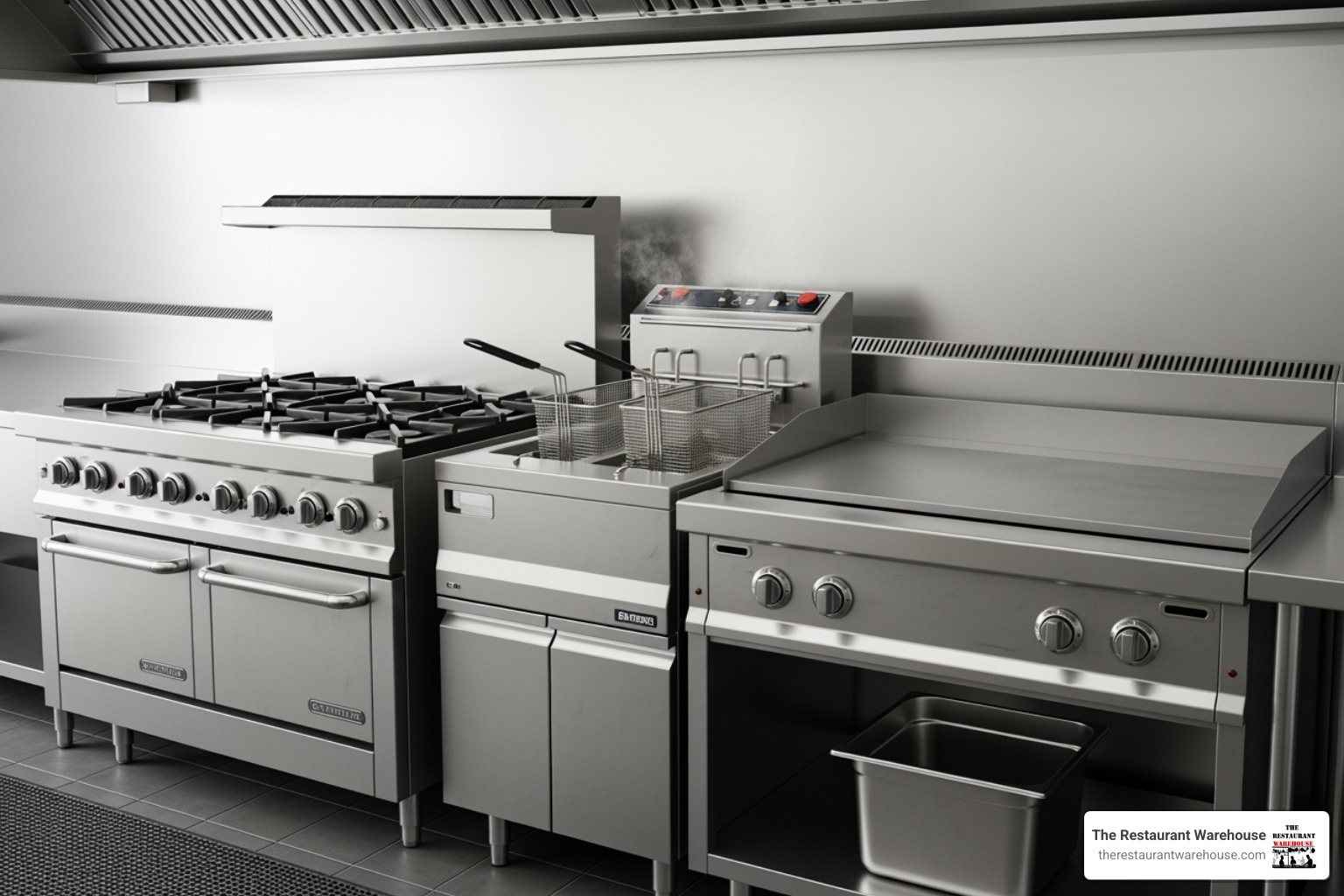
When we talk about commercial gas appliances, we're discussing the very heart of a professional kitchen. These powerful machines dictate what you can cook, how quickly you can serve, and ultimately, the quality of the food you offer. The versatility they bring can significantly impact your menu and operational efficiency. Let's explore the primary categories.
Commercial Gas Ranges
A commercial gas range is often the centerpiece of any busy kitchen. It's where much of the magic happens, from sautéing delicate sauces to searing hearty steaks. These appliances come in various configurations to suit diverse culinary needs. You'll find models with open top burners that deliver intense, direct heat, perfect for wok cooking or boiling large pots. Many ranges also feature integrated griddle tops, ideal for breakfast items, sandwiches, or sizzling fajitas. For those smoky flavors, charbroiler tops are a must, giving meats and vegetables that distinctive grill mark and taste.
Beyond the cooktop, the base of a commercial gas range is just as crucial. You can choose between a standard base, which provides consistent heat for baking and roasting, or a convection base, which uses a fan to circulate hot air for faster, more even cooking—a boon for high-volume baking. Sizing is also a key consideration, with common widths like 24", 36", and 60" available to fit different kitchen layouts and production volumes.
When planning your line, think in terms of stations rather than individual appliances. A sauté station might pair several open burners with a small griddle, while a grill station might combine charbroiler tops and a single high-BTU burner for sauces. Configuring your ranges this way reduces bottlenecks and shortens ticket times because cooks have every tool they need within arm's reach.
Commercial Gas Fryers
What's a restaurant without crispy fries, perfectly golden chicken, or delicious donuts? Commercial gas fryers are indispensable for many menus. They come in two main types: tube-type and open-pot. Tube-type fryers have heating elements (tubes) running through the oil, which can be easier to clean but might have cooler zones. Open-pot fryers have heating elements directly beneath the oil pot, offering more even heating and often better recovery times.
Key specifications to consider include oil capacity, typically measured in pounds (e.g., a 40 lb gas fryer is common), and BTU power, which determines how quickly the oil heats up and recovers temperature after food is added. A good recovery time is crucial during peak hours to maintain consistent product quality.
Also account for filtration. Built-in filtration systems can extend oil life, improve flavor consistency, and reduce labor. While they add to upfront cost, they often pay back quickly in reduced oil usage and faster cleaning.
Countertop Griddles, Charbroilers, and Hot Plates
For kitchens with limited space or specific cooking needs, countertop commercial gas appliances offer incredible flexibility. Flat top grills, or griddles, are excellent for high-volume cooking of items like pancakes, burgers, and eggs, often featuring manual or thermostatic controls for precise temperature management across different zones.
Charbroilers, another popular countertop option, come in radiant or lava rock configurations. Radiant charbroilers use metal plates to transfer heat, while lava rock models use ceramic briquettes or lava rocks to simulate charcoal grilling, imparting a distinct flavor. Both are fantastic for giving meats and vegetables that desirable char.
Finally, commercial hot plates provide additional burner space without the footprint of a full range. These space-saving solutions are perfect for smaller operations or as supplemental cooking surfaces during busy periods.
Commercial Gas Water Heaters
While not directly used for cooking, commercial gas water heaters are vital commercial gas appliances that keep your operation running smoothly. They ensure a constant supply of hot water for dishwashing, sanitization, handwashing, and other essential cleaning tasks. Unlike residential models, commercial water heaters are designed for much higher demand and continuous use.
We typically differentiate between tank and tankless models. Tank water heaters store and heat a large volume of water, offering a ready supply. Tankless models heat water on demand, providing an endless supply but sometimes with a slightly lower flow rate. Key specifications to look for include capacity (in gallons), recovery rate (Gallons Per Hour, or GPH, at a specific temperature rise), and thermal efficiency.
Many modern commercial gas water heaters are condensing models, which are highly energy-efficient. All ENERGY STAR Certified gas water heaters are condensing models, and they require special considerations for condensate drainage due to the acidic nature of the condensate. For a neutral, in-depth overview of water heater efficiency, you can review guidance from the U.S. Department of Energy, which explains efficiency ratings, venting considerations, and common sizing approaches in detail.
If you're unsure which mix of ranges, fryers, countertop units, and water heaters makes the most sense for your concept, book a strategy call with The Restaurant Warehouse team. We'll help you prioritize what to buy now and what can wait for phase two of your build-out.
Decoding the Specs: Key Features for Performance and Efficiency
Choosing the right commercial gas appliance is about more than just fitting it into your kitchen layout. It's about assessing your specific kitchen needs, understanding your menu requirements, and anticipating your volume of service. Let's break down the technical features that truly matter.
Power and Precision: Understanding BTU and Burner Configuration
BTU, or British Thermal Unit, is the measure of heat output for gas appliances. Simply put, the higher the BTU, the more powerful the burner and the faster it can heat up or cook. For commercial gas ranges, BTU output per burner can range from 25,000 to 35,000 BTUs/hr, significantly higher than residential models. This raw power translates directly into faster cooking times and better recovery during busy rushes.
High BTU burners are essential for tasks like searing, boiling large stockpots, or achieving rapid temperature changes. However, precision also matters. Many high-end commercial gas appliances feature dual-stacked, sealed gas burners, offering both immense power for rapid boiling and a delicate low simmer for melting chocolate or reducing sauces.
Burner configurations also play a role. Open burners provide direct flame contact and are easy to clean, while sealed burners are designed to contain spills, making cleanup even easier. Star-shaped burners, like those found in some premium models, are engineered to distribute heat more evenly across the bottom of a pan.
When comparing models, pay attention not only to maximum BTU but also minimum turndown—how low the burner can go while maintaining a stable flame. A wide turndown ratio lets you transition from hard sear to gentle simmer on the same burner without moving pans around, which streamlines your workflow.
Built to Last: Construction and Durability
In a commercial kitchen, durability isn't a luxury; it's a necessity. Commercial gas appliances endure constant use, high temperatures, and frequent cleaning. That's why construction materials and design are paramount. We always recommend appliances built with heavy-gauge stainless steel. Stainless steel is not only resistant to corrosion and staining but also incredibly easy to clean, meeting stringent hygiene standards.
Components like grates and burner heads often feature thickened cast iron for superior heat retention and stability. Cast iron is robust, can withstand intense heat without warping, and provides a stable surface for heavy pots and pans. Leading manufacturers rigorously stress-test their appliances to perform for over 20 years of daily use, demonstrating the commitment to longevity in the commercial sector.
The small construction details matter too: welded seams instead of riveted joints, reinforced corners, cool-touch handles, and drip-edge designs that keep spills from running down into gas valves. Spending a little time evaluating these details up front can save thousands of dollars in repairs and downtime over the life of your equipment.
The Gas vs. Electric Debate
The choice between gas and electric appliances is a foundational decision for any commercial kitchen. While electric induction cooktops have their merits, commercial gas appliances often hold a significant edge, especially for traditional cooking methods.
The primary advantage of gas is instant and precise temperature control. When you turn a gas burner up or down, the heat response is immediate. This allows chefs to adjust cooking temperatures with unparalleled speed and accuracy, crucial for preventing scorching or achieving perfect caramelization. Electric elements, especially traditional coil or ceramic tops, tend to heat up and cool down more slowly.
Furthermore, gas appliances often boast faster cooking times due to their high BTU output and direct heat. They can bring water to a boil quicker and sear foods more effectively. From an operational cost perspective, natural gas can be significantly cheaper than electricity in many regions, leading to lower utility bills over time. Finally, in the event of a power outage, many commercial gas appliances (those with manual ignition or battery-powered igniters) can continue to operate, ensuring your kitchen doesn't grind to a halt.
Energy management should be part of your decision. Choosing models with high efficiency ratings, electronic ignition instead of standing pilots, and good insulation around heated cavities can significantly reduce gas usage. For neutral technical comparisons of gas and electric efficiency, organizations such as the U.S. Environmental Protection Agency (EPA) provide useful background information.
Ready to start comparing specifications side by side? Browse the commercial gas appliance selection at The Restaurant Warehouse and shortlist a few models, then involve your chef or kitchen manager to validate the final choice against real-world workflow.
Safety, Installation, and Longevity
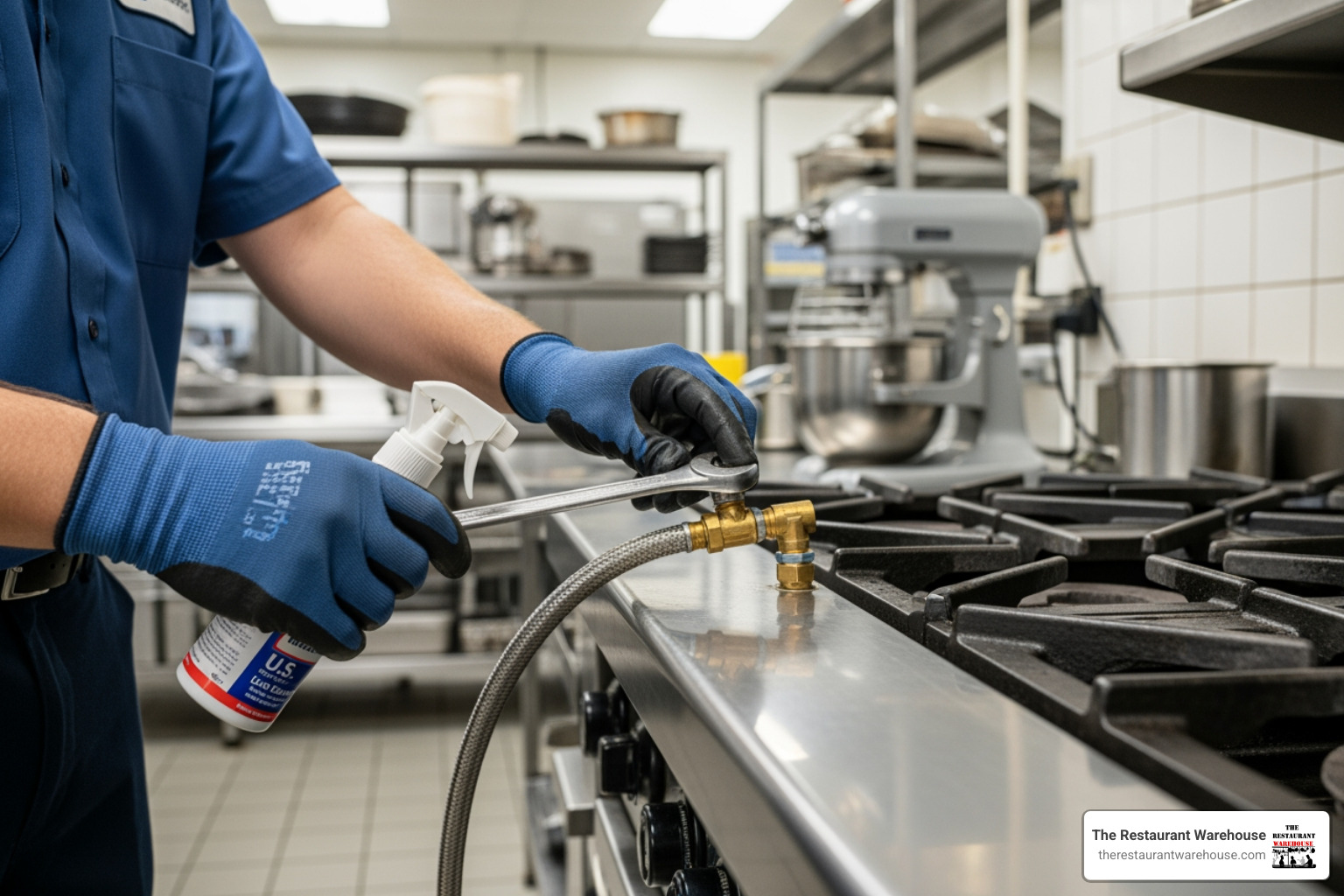
Investing in commercial gas appliances is a significant decision, and ensuring their safe, correct installation and diligent maintenance is paramount. This not only protects your staff and customers but also guarantees long-term performance and safeguards your investment.
Installation Essentials for commercial gas appliances
Proper installation is non-negotiable for commercial gas appliances. It ensures safety, compliance with local codes, and optimal performance. First and foremost, adequate ventilation is critical. Commercial kitchens require powerful exhaust hoods to remove heat, grease, smoke, and combustion byproducts. This keeps the kitchen environment safe and comfortable.
Gas line requirements are precise. Appliances must be connected to the correct gas supply (natural gas or propane) with appropriately sized lines to ensure sufficient fuel delivery. Quick-disconnect hoses are often recommended for movable appliances like fryers or ranges on casters, allowing for easy cleaning and maintenance while maintaining a secure gas connection.
Beyond gas lines, proper leveling and placement are essential. Appliances must be level for even cooking and safe operation. Clearances to combustible surfaces (walls, other appliances) must strictly adhere to manufacturer guidelines and local fire codes. For instance, some large-volume commercial water heaters require specific clearances: 18 inches at the front, 0 inches at the back and sides, and 5 inches at the top. Always consult the appliance's manual for exact specifications.
It’s wise to schedule installation during a period when you can afford some downtime. Rushing through gas line connections or skipping pressure tests to save an hour can lead to leaks, nuisance shutoffs, or worse. Build time into your opening schedule for proper testing, staff orientation, and a soft opening to confirm everything operates as intended.
Navigating Codes and Regulations
Operating a commercial kitchen means navigating a web of local fire, health, and building codes. For commercial gas appliances, compliance is not just about avoiding fines; it's about ensuring the safety of everyone in your establishment.
Local jurisdictions typically adopt some version of a fuel gas code and fire code. These regulations cover everything from ventilation requirements and gas line sizing to safety shut-off devices and appliance clearances. Following manufacturer guidelines is also crucial, as these are often designed to meet or exceed regulatory standards.
Always ensure your installations are performed by licensed professionals who are familiar with applicable local codes and can provide necessary certifications. Keeping copies of permits, inspection reports, and manuals in a single binder or digital folder will help you respond quickly to any health or fire inspection.
Maintenance and Cleaning Best Practices
To ensure the longevity and optimal performance of your commercial gas appliances, a consistent maintenance and cleaning regimen is key. Daily cleaning routines are essential. For ranges, this means wiping down surfaces, cleaning grates, and emptying crumb trays. For griddles, proper seasoning and daily scraping prevent food buildup and maintain a non-stick surface.
Fryers require specific attention. Regular filtration of oil extends its life and improves food quality. Boil-out procedures, where the fryer is filled with water and a specialized cleaning solution and brought to a boil, are necessary to thoroughly clean the interior and remove stubborn carbonized grease.
Regularly checking pilot lights on older models or ensuring electronic ignitions are functioning correctly is also important. Beyond daily tasks, annual professional servicing is highly recommended. A qualified technician can inspect gas lines, calibrate burners, check safety controls, and identify any potential issues before they become costly problems. For commercial gas water heaters, professional start-up service is often required to activate warranties and ensure maximum operating performance.
Embedding maintenance into your training program—rather than treating it as an afterthought—will keep equipment running efficiently. Simple checklists posted near each station can remind staff of end‑of‑shift tasks, while a monthly log helps you track when deeper cleaning or service is due.
Fuel Types: Natural Gas vs. Propane
Commercial gas appliances primarily run on either natural gas (NG) or liquid propane (LP). The choice between them often depends on availability and cost in your specific location. Natural gas is delivered via an underground pipeline, making it a continuous and often more affordable fuel source where available. Propane, on the other hand, is stored in tanks and delivered by truck, making it a versatile option for locations without natural gas infrastructure.
While the appliances themselves are similar, they are designed for one fuel type or the other. However, many gas appliances can be converted between natural gas and propane with a conversion kit and professional adjustment of the burners and gas pressure regulator. This flexibility is beneficial if you move locations or if fuel availability changes. Always ensure any conversion is performed by a certified technician to maintain safety and warranty validity.
Building a relationship with your gas utility or propane provider can also pay dividends. They can advise on service capacity, seasonal pricing, and any incentive programs for upgrading to more efficient appliances.
If you’re planning a new build or a major remodel and want help mapping out gas loads, fuel choice, and appliance placement, reach out to The Restaurant Warehouse for a planning consultation before you start construction. A short conversation early on can prevent costly layout changes later.
Frequently Asked Questions about Commercial Gas Appliances
We often hear similar questions from our customers when they're considering commercial gas appliances. Here are some of the most common ones, answered to help you make informed decisions.
How do I determine the right BTU output for my restaurant?
Determining the right BTU output for your restaurant involves a careful assessment of your menu, cooking style, and anticipated peak volume. For high-heat searing, rapid boiling, or wok cooking, you'll want burners with a higher BTU output, typically 30,000 BTUs or more per burner. This ensures quick recovery times and efficient cooking during your busiest hours. If your menu primarily involves simmering, sautéing, or holding items at lower temperatures, you might not need the absolute highest BTU burners across your entire range.
Consider your busiest shifts: can your current or prospective appliances keep up with demand without significant temperature drops or slow recovery? This is especially critical for fryers and griddles. A well-matched BTU output prevents bottlenecks in your kitchen and ensures consistent food quality, even under pressure.
What is the difference between a standard and a convection base on a gas range?
The primary difference lies in how heat is distributed. A standard base on a gas range uses radiant heat, typically from a burner located at the bottom of the heating cavity. This can lead to hot spots and uneven cooking, often requiring you to rotate dishes for consistent results.
A convection base, however, incorporates a fan (or multiple fans) that circulates hot air throughout the heating cavity. This forced air movement ensures more even heat distribution, faster cooking times, and better browning. Convection-style bases are particularly advantageous for baking multiple trays of cookies, roasting large cuts of meat, or any application where uniformity and speed are desired. The circulating air also helps to reduce shrinkage in meats and achieve a crispier exterior. For high-volume kitchens, the efficiency and consistency of a convection base can be invaluable.
Are there energy-efficient commercial gas appliances?
Absolutely! Energy efficiency is a significant trend for these appliances, driven by both environmental concerns and the desire to reduce operating costs. Yes, there are many energy-efficient commercial gas appliances available. We recommend looking for models that are ENERGY STAR certified.
ENERGY STAR certification indicates that an appliance meets strict energy efficiency guidelines set by the U.S. Environmental Protection Agency. For commercial gas appliances, this often means features like improved insulation, advanced burner designs that optimize fuel combustion, and electronic ignition systems that eliminate continuously burning pilot lights. All ENERGY STAR Certified gas water heaters, for instance, are condensing models, which recover more heat from combustion gases, significantly improving efficiency. While the initial investment might be slightly higher for energy-efficient models, the long-term savings on utility bills can be substantial, often paying for themselves over the appliance's lifespan.
Conclusion
As we've explored, commercial gas appliances are far more than just tools; they are the heart of a productive and profitable foodservice operation. Their inherent power, precision, and reliability make them the preferred choice for kitchens across the USA and beyond, from busy Seattle eateries to growing establishments in China. From the versatile commercial gas range that anchors your cooking line to the indispensable commercial gas water heater that keeps your operations sanitary, understanding these vital appliances is key to your success.
We've covered the primary types of appliances, dug into the technical specifications like BTU output and durable construction, and discussed crucial aspects like installation, safety regulations, fuel selection, and maintenance. The advantages of gas—instant heat, precise control, and often lower operating costs—are clear, making it a smart investment for any business.
Making an informed decision about your commercial gas appliances means considering your menu, your volume, and your budget, but it also means thinking beyond opening day. Your choices influence staff training, future menu additions, energy usage, and even how easy it will be to expand or add new locations. A well-planned lineup of gas ranges, fryers, countertop units, and water heaters gives you the flexibility to experiment with new dishes and handle sudden spikes in demand without sacrificing consistency.
Here at The Restaurant Warehouse, we pride ourselves on supplying top-quality foodservice appliances and supplies at lower prices by avoiding high commissions and retail overhead. Our goal is to provide you with affordable, wholesale pricing, ensuring you get the best value without compromising on quality or performance.
If you’re ready to turn your plans into a fully functioning line, browse our commercial gas appliances online and short‑list the models that fit your space and menu. When you’re prepared to talk specifics, contact us for wholesale pricing and a customized quote so you can launch or upgrade your kitchen with confidence.
Release the heat in your kitchen with confidence and build a gas-powered line that will serve you reliably for years to come.
About The Author

Sean Kearney
Sean Kearney is the Founder of The Restaurant Warehouse, with 15 years of experience in the restaurant equipment industry and more than 30 years in ecommerce, beginning with Amazon.com. As an equipment distributor and supplier, Sean helps restaurant owners make confident purchasing decisions through clear pricing, practical guidance, and a more transparent online buying experience.
Connect with Sean on LinkedIn, Instagram, YouTube, or Facebook.