

Finding the Right Under Counter Fridge Size
Finding the right size for an under counter fridge is a lot less complicated than you might think. Most manufacturers design their models to fit perfectly into standard cabinet openings, just like buying a ready-made suit that's cut to common measurements.
This standardization is a huge help when you're planning a kitchen layout. It means you can confidently expect a new unit to slide right into the space you've designated, whether it's for a sleek beverage center in your bar or a compact fridge for the office breakroom.
Decoding Standard Under Counter Fridge Dimensions
When you start shopping, you’ll notice that while there isn't one single, universal size, most under counter fridges stick to a pretty predictable set of measurements. They’re built to fit neatly into the spaces typically left by standard kitchen cabinets, giving you that clean, built-in look everyone wants.
This consistency takes the guesswork out of the process. You can measure your space and immediately know which models are going to be a good fit, saving you a ton of time and potential headaches.
The Most Common Measurements
Let's get into the actual numbers you'll see over and over. These dimensions are the foundation for almost every under counter fridge on the market:
- Height: Standard kitchen counters are 36 inches tall. To fit comfortably underneath, most fridges are built to be between 32 and 34.5 inches high. This leaves just enough wiggle room for installation without creating an awkward gap.
- Width: You'll generally find three go-to widths. There's the slim 15-inch model for narrow spots, the versatile 24-inch unit (which is the most popular size), and the larger 30-inch option for when you need more storage capacity.
- Depth: The magic number here is usually 24 inches. This depth allows the front of the fridge to sit flush with your surrounding cabinets, creating that seamless, integrated appearance that looks so professional.
Here’s a quick-glance table to help you visualize these common dimensions. Think of this as your cheat sheet when measuring your space.
Typical Under Counter Fridge Dimensions at a Glance
| Dimension | Common Range (Inches) | Key Consideration |
|---|---|---|
| Width | 15", 24", 30" | Match this to your cabinet opening for a snug, custom look. |
| Height | 32" – 34.5" | Ensures the unit will slide neatly under a standard 36" counter. |
| Depth | 24" | Allows the fridge to sit flush with your cabinetry. |
These figures should give you a solid starting point, making it much easier to narrow down your choices and find a unit that feels like it was custom-made for your kitchen.
The demand for these compact, efficient appliances is reshaping how we think about kitchen design. It's no wonder the global undercounter refrigerator market is expected to grow into a $5.7 billion industry by 2033. This boom is driven by modern urban living and the need for flexible, space-saving solutions in homes and businesses alike.
Armed with these baseline numbers, you can approach the shopping process with confidence. Instead of guessing, you can measure your space, know what to look for, and quickly find the right options. For a complete walkthrough on how to choose the perfect model, be sure to check out our undercounter fridges guide.
How to Accurately Measure Your Space
Moving from standard sizes to the real world of your kitchen requires a little precision. Think of it like a tailor measuring for a custom suit—getting it right the first time saves you from a world of frustration and costly fixes later. Trust me, inaccurate measurements are the number one reason an under-counter fridge installation goes sideways, so taking a few extra minutes here is absolutely crucial.
Your goal is a perfect, snug fit that still gives the appliance the vital breathing room it needs to run efficiently and safely. We're not just making space for the box itself; we're making space for it to work correctly.
The Three Critical Measurements
Before you even think about hitting that "buy now" button, grab a tape measure. You're going to record three key dimensions of your cabinet opening, a simple process that guarantees you pick the right under-counter fridge size for a seamless fit.
This visual guide breaks it all down into three simple steps.
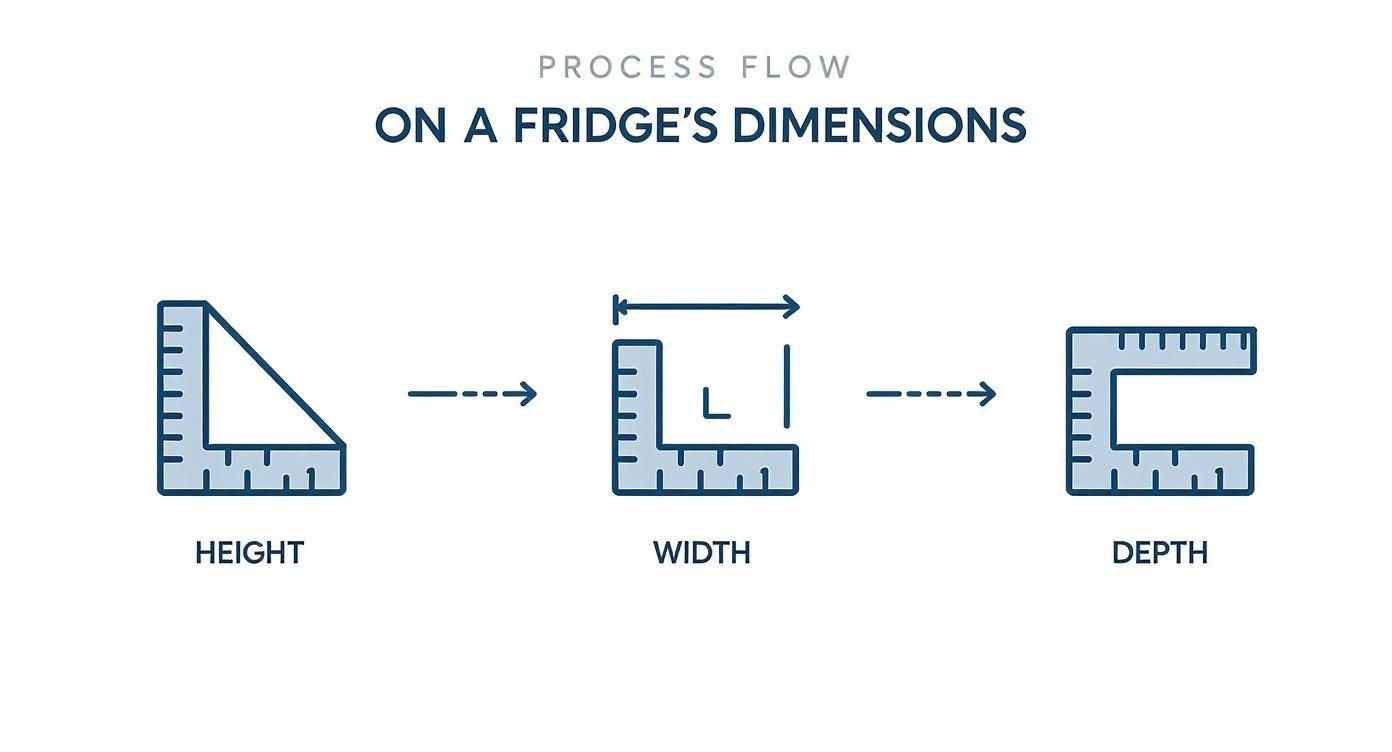
As you can see, getting the height, width, and depth right is the foundation of a successful installation. Let's walk through it.
-
Measure the Height (in Three Places): Kitchen floors and countertops are almost never perfectly level. Measure the height of your opening on the left, in the middle, and on the right. Always use the smallest of these three measurements. This is your golden rule to prevent the fridge from getting wedged under a low spot.
-
Measure the Width: Same idea here. Measure the width at the top, middle, and bottom of the opening. And again, you'll want to rely on the narrowest measurement to ensure the unit will slide in without a fight.
-
Measure the Depth: Run your tape measure from the back wall to the very front edge of your cabinets. Don't forget to peek back there and account for anything that might stick out, like pipes or electrical plugs, that could steal some of your usable depth.
Always factor in ventilation space. Most front-venting built-in models need at least 1/8 inch of clearance on the sides and top. Forgetting this buffer can cause the unit to overheat, which will shorten its lifespan.
One last thing: check your door swing. Do a little pantomime of opening a fridge door in that spot. Will it smack into a kitchen island, a cabinet handle, or create a traffic jam? Also, double-check that there's an electrical outlet within reach of the power cord. For more details on specific models, our undercounter freezer 24-inch guide offers some extra insights you might find helpful.
Key Installation and Design Factors

Choosing the right size for your under-counter fridge is a great start, but it's only half the battle. The real secret to a flawless installation comes down to understanding the crucial design differences between models—specifically, whether you need a freestanding or a built-in unit. This single choice affects everything from where you can place it to how well it performs.
Here's an easy way to think about it: a built-in model is made for a custom-fit suit, while a freestanding one is more like an off-the-rack jacket. Built-in units are engineered with front-facing ventilation grilles, which allow them to breathe properly even when they're snugly enclosed by cabinetry. This design is what makes that seamless, fully integrated look possible.
Freestanding fridges, on the other hand, push heat out from their back and sides. They absolutely need a few inches of open air all around to keep from overheating. If you slide a freestanding model into a tight cabinet space, you’re essentially trapping that heat, forcing the compressor to work overtime and setting it up for an early failure.
Planning for Perfect Integration
Beyond just ventilation, a few other details will make or break how well your new fridge works in your kitchen layout. Leveling the unit, for instance, is non-negotiable. An unbalanced fridge can prevent the door from sealing correctly, which leads to inefficient cooling and a noisy, overworked compressor.
You’ll also want to think about the workflow in your kitchen when planning the door swing. Will it open into a busy walkway or bang into other cabinet doors? Many under-counter fridges solve this with a reversible door, a fantastic feature that gives you the flexibility to adapt the unit to your specific layout.
An under-counter fridge is more than just an appliance; it's a functional part of your kitchen's ecosystem. Proper planning for ventilation, leveling, and door swing ensures it enhances your space without creating frustrating bottlenecks or operational issues down the line.
Before you finalize everything, always double-check these key details:
- Leveling: Use a spirit level to adjust the feet until the unit is perfectly balanced from front to back and side to side.
- Door Swing: Confirm the swing direction works with your layout or, better yet, choose a model with a reversible door for future flexibility.
Matching Fridge Size to Your Lifestyle
Picking the right size for an under-counter fridge isn't just about making sure it slides into an empty cabinet—it's about matching it to how you actually live. The goal is to choose a model that feels like a natural part of your routine, not just another appliance taking up space. Get this right, and it’s a seamless upgrade to your home.
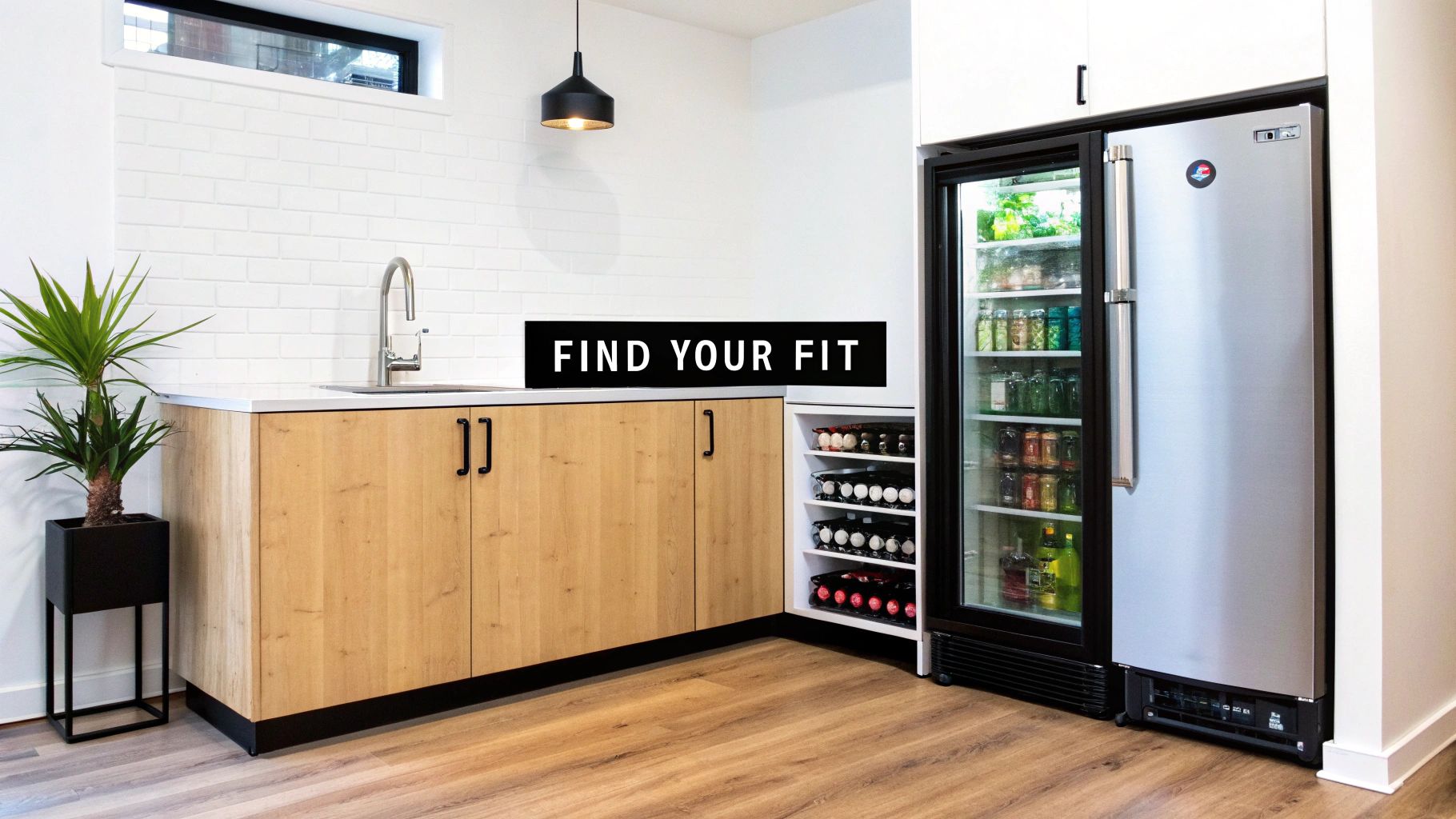
Think of these fridges as specialists. A slim 15-inch beverage center, for example, is the perfect sidekick for a home bar or media room. It’s designed specifically to keep cans and bottles perfectly chilled and right where you need them, saving you a trip to the main kitchen in the middle of a movie or a party. It’s a small addition that makes a huge difference in entertainment spaces.
From Compact Kitchens to Outdoor Patios
On the other hand, a wider 24-inch under-counter fridge offers a lot more flexibility. In a studio apartment or a guest suite, it can easily pull double duty as the main refrigerator. This size has also become a go-to for accessible kitchen designs, as it fits neatly under lower countertops, making it easier for everyone to reach.
But their usefulness doesn't stop there. These handy units can be adapted for all sorts of situations:
- Outdoor Kitchens: Look for outdoor-rated models built with tough, rust-resistant stainless steel. They're designed to handle the elements on a patio or deck without skipping a beat.
- Office Breakrooms: A commercial-grade unit is built for heavy use, providing reliable cooling for everyone's lunches and drinks.
- Specialty Storage: Some models are built as dedicated wine coolers or even dry-agers, offering the precise temperature and humidity controls you need for your hobbies.
The whole point is to line up the fridge's size with its job. A mismatched unit—like a big fridge crammed into a small bar area—just gets in the way and wastes space. The right choice, however, feels like it was always meant to be there.
To give you a clearer idea, here’s a quick breakdown of how different sizes match up with common needs.
Matching Under Counter Fridge Size to Your Needs
| Application | Typical Width (Inches) | Best For | Key Feature |
|---|---|---|---|
| Home Bar/Media Room | 15 | Storing cans, bottles, and mixers | Slim profile to fit into tight spaces |
| Primary Fridge (Studio/ADU) | 24 | Daily groceries and fresh food | Versatile shelving and good capacity |
| Outdoor Kitchen | 24 | Drinks and grilling ingredients | Durable, weather-resistant construction |
| Office Breakroom | 24 | Employee lunches and beverages | Commercial-grade for heavy, frequent use |
| Wine Storage | 15 or 24 | Preserving a wine collection | Precise temperature zones and UV protection |
Ultimately, choosing a fridge that genuinely fits your lifestyle ensures your investment pays off in convenience and daily usefulness. If you want to see what's out there, you can browse some of the best under counter fridges to get a feel for the different models available.
And while you're planning for your new appliance, it's a good idea to think about what happens down the road. Knowing about responsible appliance recycling options for when it eventually reaches the end of its life is a great way to make a more sustainable choice.
Specialized Sizing for Medical and Commercial Use
Once you step outside the home kitchen, the conversation around under-counter fridge size changes completely. In professional settings like medical labs, pharmacies, and commercial venues, precise dimensions are dictated by function and strict regulations, not just whether a unit fits neatly under a countertop. These aren't just smaller versions of a kitchen fridge; they're highly specialized tools.
Think about it: a medical-grade refrigerator has the critical job of maintaining exact temperatures to protect sensitive vaccines and biological samples. We're talking about units where features like digital temperature controls, high/low-temperature alarms, and data logging aren't just nice to have—they're non-negotiable. This specialized tech fundamentally shapes the unit's design, inside and out, making reliability the absolute top priority.
Mission-Critical Requirements
In these high-stakes environments, a standard consumer model just won't cut it. The demands are on another level entirely:
- Temperature Stability: The ability to hold a precise temperature range, often within a single degree, is absolutely crucial.
- Security and Monitoring: Features like door locks, alarms, and continuous data logging are essential for both safety and regulatory compliance.
This is why the medical and pharmaceutical sectors are such a huge part of this market, with an estimated 20 million units expected to ship globally in 2025 alone. You can dig deeper into the market data by reading the full research about undercounter refrigerator trends.
A consumer-grade beverage cooler might keep drinks cold, but a lab-grade unit is an indispensable tool for preserving life-saving materials. The wrong choice isn't an inconvenience; it's a critical failure.
It's a similar story in commercial settings, where understanding the dimensions of units like compact commercial refreshment centers is vital. Getting the size right is all about maximizing space and keeping a business running efficiently.
Common Questions About Fridge Sizing
Even after you've measured everything perfectly, a few common questions always seem to pop up when picking out an under-counter fridge. Getting these sorted out is that final step to feeling totally confident in your choice, helping you sidestep those little mistakes that could lead to a fridge that doesn't fit or just doesn't work right. Let's clear up some of the most common points of confusion.
One of the biggest temptations we see is trying to use a standard mini-fridge for a sleek, built-in look. It's an appealing idea on the surface, but it's one you should absolutely avoid.
Can I Put a Regular Mini Fridge Under My Counter
I have to be direct here: please don't try to box in a standard mini-fridge inside a tight cabinet. Freestanding units are designed to breathe from the back and sides, and they need several inches of open air to push out heat. When you enclose one, you're essentially trapping all that heat, forcing the compressor to run nonstop just to keep up.
This rookie mistake will send your energy bill through the roof, cause the fridge to fail way sooner than it should, and can even create a fire hazard. Always, always choose a model specifically designed for "built-in" or "under-counter" use. These units have a crucial front-facing ventilation system that lets them breathe properly, even when snugly installed.
What Is an ADA Compliant Under Counter Fridge
You might run across some models labeled as "ADA-compliant," which refers to specific sizing guidelines from the Americans with Disabilities Act. An ADA-compliant under-counter refrigerator has a maximum height of 32 inches.
This slightly lower profile allows it to slide perfectly under a 34-inch high countertop, which ensures the controls and everything inside are within easy reach for individuals who use wheelchairs. It's a key difference from standard under-counter models, which are usually a bit taller (around 34 inches) to line up with standard 36-inch high countertops.
Remember, the right model isn't just about fitting the space—it's about fitting the needs of the people using it. ADA compliance is a perfect example of how specific dimensions can make a space more inclusive and functional for everyone.
How Much Clearance Does an Under Counter Fridge Need
The amount of clearance a fridge needs is one of the most critical—and most misunderstood—parts of installation. The answer depends entirely on how the model is designed to ventilate, so checking the manufacturer's manual is non-negotiable.
Here’s the general breakdown:
- Built-In, Front-Venting Models: These are the pros, engineered for that seamless, flush-mount look. They typically need very little clearance, often just 1/8 inch on the sides and top to slide in easily.
- Freestanding Models: Since these units need to breathe out the back and sides, they require a lot more room. You'll often need to leave 1-2 inches of space on each side and up to 4 inches at the back for proper airflow.
Ignoring these specs is a recipe for an overworked, inefficient appliance. Always follow the guide to make sure your fridge runs smoothly for years.
Ready to find the perfect fit for your business? At The Restaurant Warehouse, we offer a wide selection of commercial-grade under-counter refrigerators designed for performance and reliability. Explore our collection today!
About The Author

Sean Kearney
Sean Kearney is the Founder of The Restaurant Warehouse, with 15 years of experience in the restaurant equipment industry and more than 30 years in ecommerce, beginning with Amazon.com. As an equipment distributor and supplier, Sean helps restaurant owners make confident purchasing decisions through clear pricing, practical guidance, and a more transparent online buying experience.
Connect with Sean on LinkedIn, Instagram, YouTube, or Facebook.