

Trailer Tales: Finding Your Perfect 14 Ft Food Trailer
Why the 14 Ft Food Trailer is a Smart Choice
Starting a mobile food business requires the right equipment. A 14 ft food trailer is a smart choice for many entrepreneurs, offering a great balance of size, capacity, and cost.
Here's a quick overview:
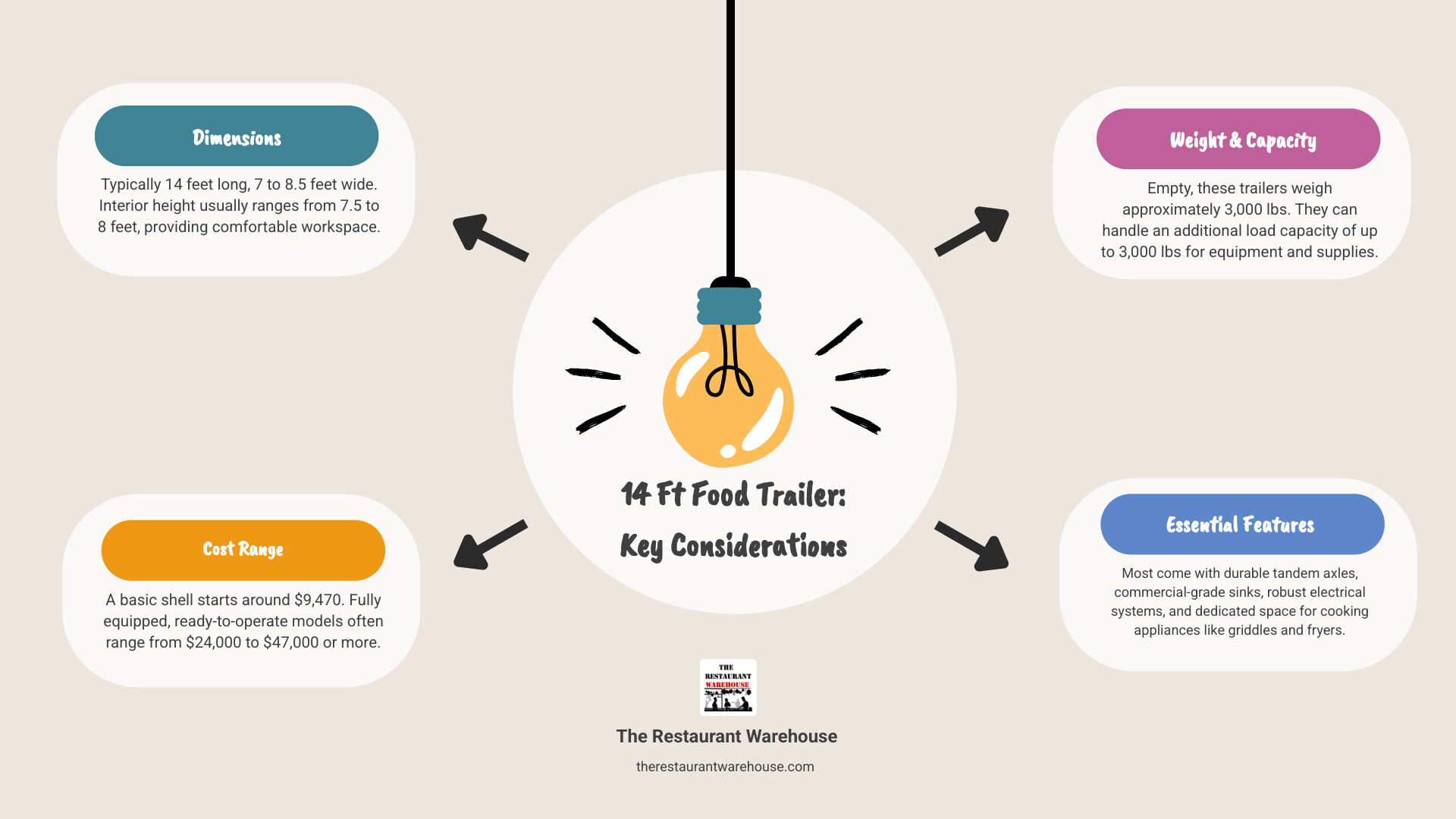
- Dimensions: Typically 14 feet long, 7 to 8.5 feet wide, with an interior height of 7.5 to 8 feet.
- Cost: A basic shell starts around $9,470, while fully equipped models range from $24,000 to $47,000 or more.
- Weight & Capacity: An empty weight of around 3,000 lbs, with a load capacity of up to 3,000 lbs.
- Key Features: Standard features often include tandem axles, commercial sinks, electrical systems, and space for cooking appliances. A/C and ventilation are common.
- Customization: These trailers are highly customizable to fit any menu concept.
This size provides excellent maneuverability and enough space for a functional kitchen, making it a solid investment.
Related content about 14 ft food trailer:
Sizing Up Your Dream: Typical 14 Ft Food Trailer Specs
Understanding the specifications of a 14 ft food trailer is crucial for planning your mobile kitchen and ensuring operational efficiency.
What are the typical dimensions and weight?
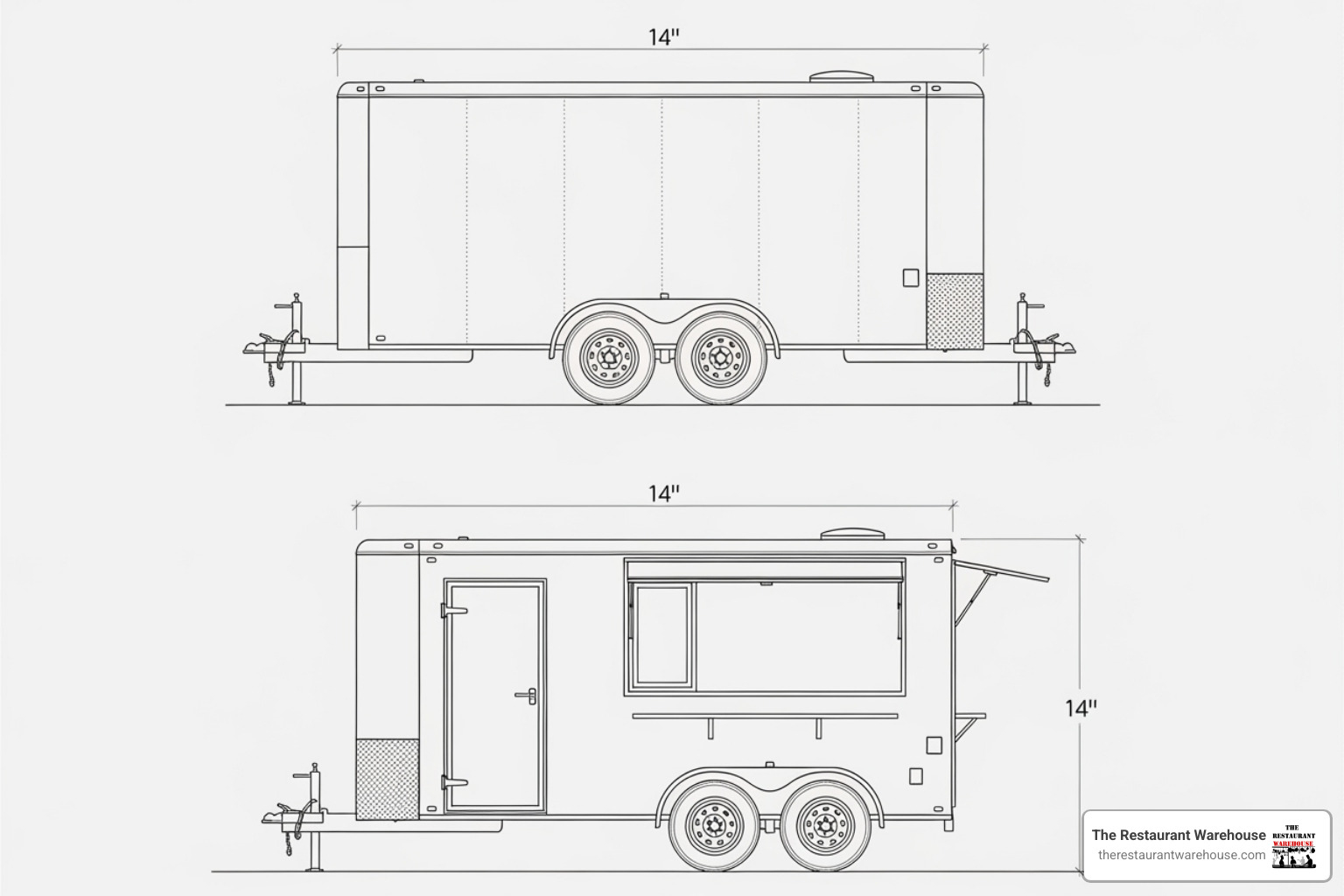
A 14 ft food trailer typically measures 14 feet long, with a width of either 7 or 8.5 feet. The 8.5-foot wide models offer more interior space, which is beneficial for workflow with multiple staff or larger equipment. Interior height usually ranges from 7 foot 6 inches to 8 feet, allowing for comfortable working conditions and overhead storage.
An empty 14 ft food trailer weighs around 3,000 lbs. The Gross Vehicle Weight Rating (GVWR)—the maximum loaded weight—is more critical. With a load capacity up to 3,000 lbs, the GVWR can reach 6,000 lbs or more, depending on its construction.
Most 14 ft trailers use tandem 3500 lb dropped leaf spring axles, providing a combined 7,000 lb capacity for stability and better weight distribution. A sturdy 2x6 steel tubular main frame provides a solid foundation.
What are the standard structural features?
The structural features of a 14 ft food trailer make it a functional mobile kitchen. Exteriors are often made from .030 gauge aluminum, sometimes with a "semi-screwless" design for a cleaner look. Diamond tread plate accents add protection.
Most trailers include at least one concession window (e.g., 3x6 feet) and a 36-inch RV-style side door for staff access.
Safety and convenience features include interior and exterior LED lights, stabilizer jacks on all four corners for leveling, and a secure propane tank holder. For towing, a triple tube tongue and a 2 5/16th front coupler are standard. Electric brakes on both axles are a crucial safety feature, and an asphalt undercoating protects the chassis from road elements.
The Price Tag: How Much Does a 14 Ft Food Trailer Cost?
The cost of a 14 ft food trailer varies significantly depending on whether you buy a basic shell or a fully-equipped, turnkey kitchen.
If you prefer a DIY approach, a basic 8.5x14 concession shell with vinyl walls, a ceiling, and an electrical package can start around $9,470.00. This provides a blank canvas for your specific vision.
For a turnkey solution, prices are higher. A 7x14 concession trailer that includes a hood range, sinks, A/C, and a complete electrical setup could be priced around $24,415.00. More comprehensive 12-14 ft models can reach up to $47,000, while some all-inclusive 14 ft food trailers with a wide array of appliances might be priced around $33,999.95.
Here’s a general comparison to help you budget for your dream 14 ft food trailer:
| Trailer Type | Average Cost | Included Features (Typical) |
|---|---|---|
| Basic Shell | $9,000 - $15,000 | Frame, exterior, basic interior walls/ceiling, electrical package, concession window, side door. |
| Partially Equipped | $15,000 - $30,000 | Shell features plus sinks, water heater, basic plumbing, some counter space, possibly A/C. |
| Fully Equipped/Turnkey | $24,000 - $47,000+ | All of the above plus cooking equipment (hood, griddle, fryer, range), refrigeration, fire suppression, generator, advanced electrical/plumbing. |
Several factors influence the final price. The choice between a new vs. used trailer is significant; new models come with warranties, while used ones may offer initial savings. The equipment package—the type, quantity, and brand of appliances—is a major cost driver. Customization costs for unique layouts or features and the material quality for finishes and construction also impact the price. Higher-grade materials increase durability and the longevity of your investment.
Investing in a 14 ft food trailer is a big step. We encourage you to explore our Restaurant Equipment Financing Guide to understand your options.
Building Your Mobile Kitchen: Essential Features and Layouts
Designing the inside of your 14 ft food trailer transforms it from an empty shell into an efficient, clean, and functional mobile kitchen. This involves selecting the right materials, planning the layout, and installing the utility systems that power your business.
Interior Finishes and Common Layouts for a 14 ft Food Trailer
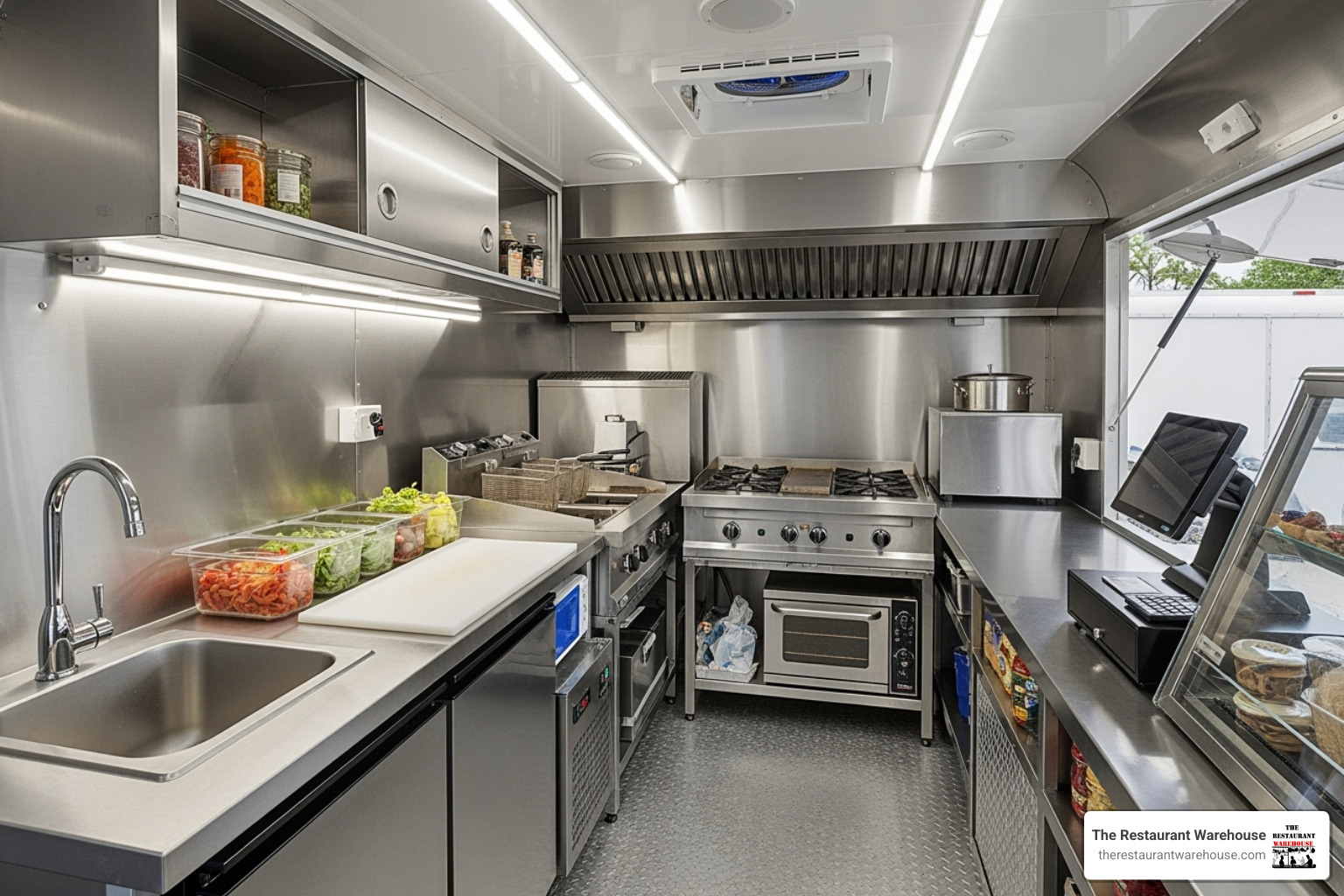
Interior materials for your 14 ft food trailer must be durable and easy to clean. Walls are often finished with white aluminum or vinyl, while stainless steel is a popular choice for cooking areas. Flooring typically starts with a 3/4" plywood subfloor covered with durable options like aluminum diamond plate or non-slip PVC material. Insulation in the walls and ceiling is crucial for temperature control.
An efficient layout is essential. Create distinct zones for different tasks:
- Prep Area: Near sinks and refrigeration with ample counter space.
- Cooking Line: Under the vent hood, housing your griddle, fryer, or range.
- Serving Area: By the concession window for customer interaction and your POS system.
- Dishwashing/Sanitation: A dedicated area for your 3-compartment and handwash sinks.
- Storage: Use overhead shelving and under-counter cabinets.
A Sample Food Truck Business Plan can provide layout inspiration.
Powering Your Passion: Utility Systems Explained
Reliable utility systems are the backbone of your 14 ft food trailer.
- Electrical Systems: A 50 Amp panel box is the heart of the system, powering outlets. A 50 Amp "Ship to Shore" cord connects to external power, while a generator (a 6.5KW quiet model is popular) provides off-grid electricity. A 13,500 BTU A/C unit with a heat strip ensures climate control. For more, see our guide on Wired For Success: Top Electrical Gear For Food Trailers.
- Water Systems: Health codes require a 3-compartment sink and a separate handwash sink. A 6-gallon electric hot water heater provides hot water. The system includes a 30-gallon fresh water tank and a larger 52-gallon grey water tank, managed by an electric water pump. Our Food Truck Sinks Guide has more details.
- Propane Systems: Many cooking appliances run on propane. A standard setup includes all necessary gas lines, regulators, and shut-off valves, with capacity for a 100 lbs LP tank stored safely outside.
Equipping Your 14 Ft Food Trailer for Success
The heart of your 14 ft food trailer is the kitchen within. Filling it with the right equipment ensures smooth operations and delicious results.
Must-Have Cooking and Refrigeration Equipment
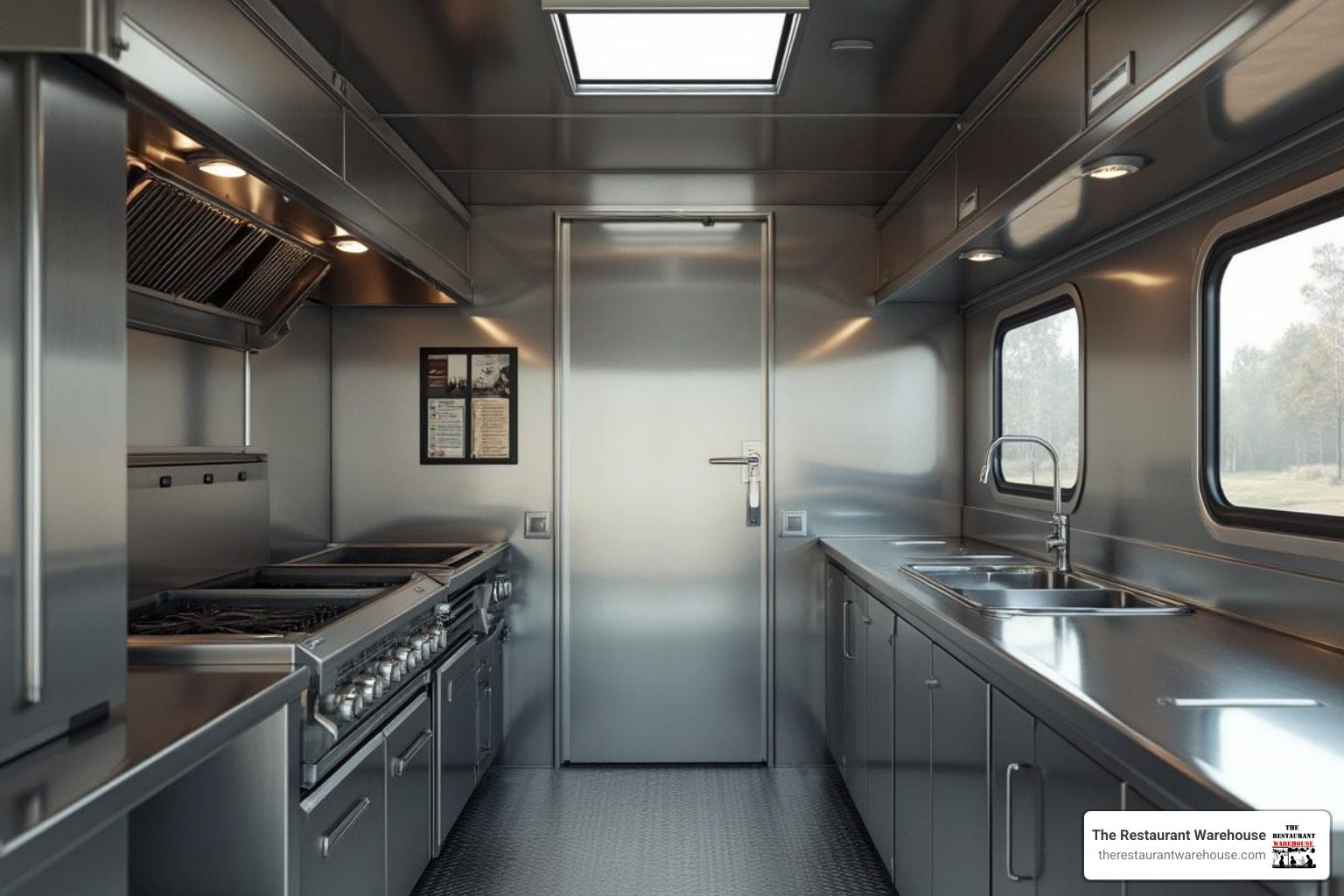
Certain equipment is fundamental for nearly any 14 ft food trailer.
- Hood Ventilation Systems: A 6 or 7-foot hood with an exhaust fan is essential for removing smoke, grease, and heat. Learn more in our Commercial Kitchen Hood Guide.
- Fire Suppression System: An automatic system is a critical, often legally required, safety feature to extinguish grease fires.
- Cooking Appliances: A 40 lb deep fryer is popular (Food Truck Fryers guide). A 24 or 36-inch griddle is highly versatile. A 4 or 6-burner gas range with an oven offers flexibility.
- Refrigeration: Options include compact workbench refrigerators or larger 23 Cu Ft stand-up models. A commercial freezer is necessary for long-term storage. See our Commercial Refrigerator For Sale Guide and Commercial Freezer For Sale Guide.
- Prep Tables: Stainless steel work tables are essential for food preparation.
Customizing Your Appliance Lineup for Your Menu
The adaptability of a 14 ft food trailer allows you to tailor your equipment to your specific menu.
- Ice Cream / Dessert Trailer: Requires soft serve machines, ice cream freezers, and dipping cabinets. Learn more in our Trailer Treats: Finding Your Perfect Ice Cream Concession Trailer.
- Coffee Truck: Essentials include a high-capacity espresso machine, grinders, and under-counter refrigeration.
- Taco/Mexican Cuisine: A heavy-duty griddle, a dedicated prep area, and a steam table are key.
- BBQ Trailer: Can house a large commercial grill, warming cabinets, and ample prep space.
- Crepe Trailer: Needs specialized crepe makers, refrigeration for batters, and a warm holding area.
We can help you find the perfect equipment to match your unique culinary vision.
The Fine Print: Navigating Regulations and the Buying Process
Acquiring a 14 ft food trailer is an exciting step, but it requires understanding the rules, regulations, and buying process to ensure a smooth launch.
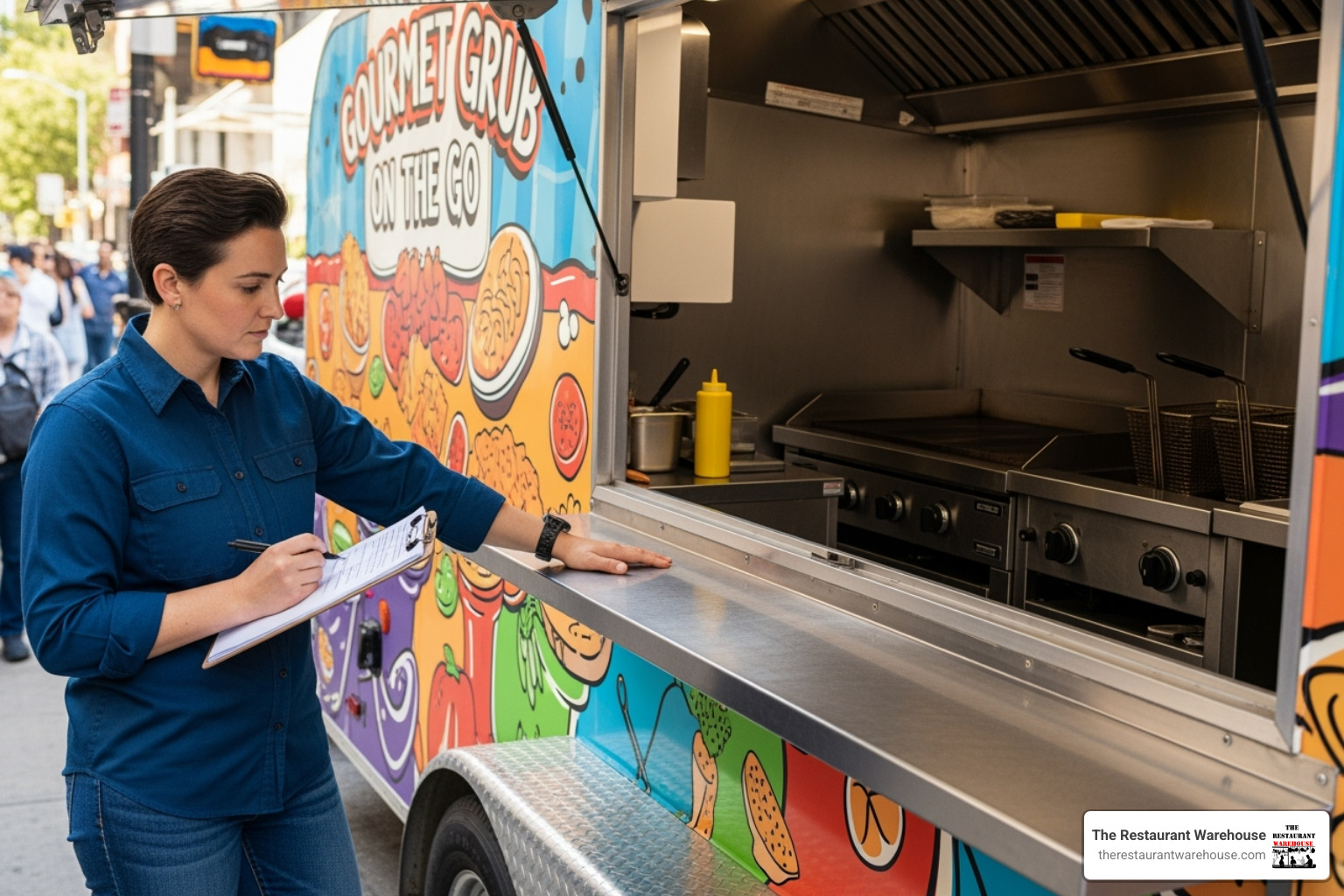
Staying Compliant: Certifications and Local Health Codes
Understanding regulations is a critical step. Every city, county, and state has specific health department rules for mobile food units. Ignoring these can lead to costly changes or prevent you from opening.
When selecting equipment or a pre-built 14 ft food trailer, look for key certifications. NSF (National Sanitation Foundation), ETL (Electrical Testing Laboratories), and UL (Underwriters Laboratories) certifications indicate compliance with public health and safety standards, which health inspectors often require.
Crucial advice: before placing an order, check your local requirements regarding food trailers. Requirements can vary dramatically by location. Your local health department is the best source for a detailed checklist. Our Food Truck Regulations article offers a general overview.
Your completed 14 ft food trailer will undergo a strict health department inspection before you receive an operating permit. For peace of mind, you can Learn more about business equipment protection.
Making the Purchase: Warranty, Shipping, and Financing
Once you understand the regulations, you can proceed with buying your 14 ft food trailer.
- Warranty: New trailers and equipment typically come with a one-year "parts-only" warranty. This covers defective parts but usually not labor or accidental damage. Always read the terms carefully.
- Shipping: Delivery is often via "hot-shot" on a flatbed truck. You will likely be responsible for unloading the trailer. Allow 5-10 business days for shipping preparation. Local pickup may be an option if you are near a hub like El Paso, Texas, United States 79927.
- Financing: Many financing options are available. The Ultimate Guide To Restaurant Equipment Financing is a great resource. Be sure to review all terms and conditions, like those found at See terms and conditions for financing, and understand the payment schedule.
Frequently Asked Questions about 14 Ft Food Trailers
How many people can comfortably work in a 14 ft food trailer?
A 14 ft food trailer can comfortably accommodate 2 to 3 people. The optimal number depends on the trailer's layout and the amount of equipment. A well-designed work space with streamlined workflow efficiency is key to ensuring everyone can work effectively.
What kind of vehicle do I need to tow a 14 ft food trailer?
Towing a 14 ft food trailer requires a capable vehicle. When fully loaded, the trailer's Gross Vehicle Weight Rating (GVWR) can be 7,000 lbs or more. You will need a heavy-duty pickup truck (e.g., Ford F-250, Ram 2500) or a large SUV with a sufficient towing capacity. Always verify your vehicle's rating against the trailer's GVWR. An electric brake controller is an essential safety device that provides necessary stopping power.
Can I start a food trailer business with just a 14 ft shell?
Yes, starting with a 14 ft food trailer shell is a great option, especially for a DIY build or if you're on a tight budget. A shell provides the basic structure, giving you full control over the equipment installation and layout. This approach offers maximum customization benefits, allowing you to design a kitchen perfectly suited to your menu. However, it requires careful planning to ensure health code compliance. Our Food Truck Equipment List can help you plan your build.
Conclusion
Choosing the right 14 ft food trailer is an exciting step into mobile entrepreneurship. This size hits the sweet spot, offering enough space for a full kitchen while remaining maneuverable for city streets and events.
We've covered the key aspects: typical specs, costs, interior layouts, utility systems, and essential equipment. We also stressed the importance of understanding local regulations and the buying process.
Your 14 ft food trailer is more than a vehicle; it's your mobile dream taking shape—a compact, powerful kitchen ready to serve your customers. At The Restaurant Warehouse, we help make those dreams a reality by offering affordable, wholesale prices on all the commercial restaurant equipment you need.
Ready to get started? Get your complete restaurant kitchen equipment checklist and begin planning your perfect mobile kitchen today.
About The Author

Sean Kearney
Sean Kearney is the Founder of The Restaurant Warehouse, with 15 years of experience in the restaurant equipment industry and more than 30 years in ecommerce, beginning with Amazon.com. As an equipment distributor and supplier, Sean helps restaurant owners make confident purchasing decisions through clear pricing, practical guidance, and a more transparent online buying experience.
Connect with Sean on LinkedIn, Instagram, YouTube, or Facebook.