

The Ultimate DIY Pizza Prep Station: A Step-by-Step Guide
Release Your Inner Pizzaiolo: The DIY Prep Table
Building your own diy pizza prep table transforms your home pizza-making experience. It provides a dedicated space, simplifies preparation, and helps you create amazing pizzas. Many people who have tasted delicious homemade pizza from a backyard oven get the "itch" to create a more organized and permanent setup. This guide will help you do just that.
Here's a quick overview of the project:
- Cost: Build a sturdy, functional table for under $250.
- Materials: You'll use common items like pressure-treated lumber (2x4s, 2x6s), plywood, and screws.
- Tools: The project requires basic tools like a miter saw, a drill, and measuring tools.
This project is about more than saving money; it's about crafting a custom workspace that perfectly fits your needs and improves your pizza-making fun. You get a station designed specifically for your pizza oven and ingredients, plus the satisfaction of building something useful with your own hands.

Planning Your Perfect Pizza Prep Station
The magic of a truly exceptional diy pizza prep table begins with thoughtful planning. This phase is the foundation for countless memorable pizza nights. When you design your workspace carefully, you're not just building furniture—you're creating the centerpiece of your outdoor culinary trips.
Why Build When You Can Buy? The DIY Advantage
Why not just buy one? The answer reveals why building your own diy pizza prep table is so rewarding. First, the cost savings are significant. A quality DIY table can be built for under $250, while pre-made outdoor carts can easily cost $500 to $1,500. That's money you can put toward better ingredients or a nicer pizza peel.
Beyond savings, building gives you complete control. You can custom fit the space to your specific pizza oven, incorporate storage for a propane tank, and set the height for your personal comfort. There's also deep satisfaction in using something you built yourself. You control the quality of every board and screw, ensuring your table will withstand the elements and look exactly as you envisioned.
Key Design Considerations for Your DIY Pizza Prep Table
Creating the perfect diy pizza prep table requires balancing form and function. Here are the essential considerations:
- Size and Dimensions: Your table must comfortably hold your pizza oven while leaving ample workspace. Measure your oven's footprint and weight. A good starting point is a surface at least 54 inches wide by 22 inches deep, but go bigger if space allows.
- Ergonomic Counter Height: Most people find 36 inches—standard kitchen counter height—to be comfortable. However, you should adjust this to your own height to avoid back strain during long pizza-making sessions.
- Workspace Depth: A depth of 22 to 24 inches usually provides a good balance, offering enough room for prep without making the table unwieldy.
- Storage Needs: Open shelving underneath is perfect for storing pizza boxes, flour, and supplies. A lower shelf can cleverly conceal your propane tank while keeping it accessible. Add hooks on the sides for peels and brushes.
- Mobility vs. Stability: Caster wheels make your station mobile, which is great for moving it around your patio. Choose heavy-duty locking casters rated for the table's total weight. For a stationary design, focus on rock-solid stability, especially on uneven ground.
Choosing the Right Countertop Surface
The countertop is where the action happens, so your choice is crucial for functionality and food safety.
- Butcher Block: This option brings natural warmth but requires regular maintenance with food-grade mineral oil to keep it safe and prevent drying out.
- Granite or Marble Remnants: These offer a luxurious look and a naturally cool surface that's great for dough. Contact local fabricators for affordable remnant pieces.
- Stainless Steel: For a professional kitchen look, stainless steel is non-porous, heat-resistant, and easy to sanitize. It's a practical and durable choice.
- Porcelain Tile: Large format tiles create a smooth, weather-resistant, and easy-to-clean surface. Ensure your base is perfectly level to prevent cracking.
Food safety is paramount. Non-porous surfaces like stainless steel, sealed stone, or porcelain are best because they resist bacteria and are easy to clean. For guidance, the FDA provides excellent food safety guidelines. When you're ready to start planning, contact our team at The Restaurant Warehouse for expert advice.
Gathering Your Materials and Tools
With a solid plan, it's time to gather your materials and tools. Having everything ready beforehand makes the building process smoother and safer. This list covers the common items you'll find at your local home improvement store.
Essential Materials List
For a robust and weather-resistant diy pizza prep table, we recommend using pressure-treated lumber.
- Frame and Legs (2x4s): You will need about sixteen 8-foot 2x4s. These will form the legs, frame, and shelf supports. For a standard 36-inch counter height, you'll cut the legs to 35 inches.
- Tabletop (2x6s): About five 8-foot 2x6s will create a sturdy 54"x22" tabletop.
- Shelving (Plywood): A sheet of 3/4-inch pressure-treated plywood is great for solid shelves. Alternatively, 1x4 or 1x6 boards can be used for a slatted look.
- Fasteners and Glue: Get a box of 2 1/2-inch decking screws for the main structure and 1 1/2-inch wood screws for thinner pieces. A bottle of outdoor-rated wood glue will add significant strength to the joints.
- Finishing Supplies: You'll need sandpaper (80, 120, and 220-grit) and an outdoor-rated stain/sealer to protect the wood from UV rays and moisture.
- Optional Materials: Consider heavy-duty locking caster wheels for mobility, hooks for tools, and your chosen countertop material if not using wood.
Recommended Tools for the Job
Using the right tools ensures accuracy and safety. Always prioritize safety when operating power tools.
- Miter Saw: Essential for making precise, repeatable crosscuts for the frame and legs.
- Circular Saw: Useful for cutting large plywood sheets for shelving.
- Power Drill/Driver: A must-have for drilling pilot holes and driving screws.
- Measuring Tape, Level, and Speed Square: These are critical for accurate measurements, ensuring the table is level, and checking for square joints.
- Orbital Sander: Speeds up the process of smoothing wood surfaces for a professional, splinter-free finish.
- Clamps: Helpful for holding pieces securely in place during assembly.
- Paintbrush or Roller: For applying your stain and sealer evenly.
- Safety Gear: This is non-negotiable. Always use eye protection, ear protection (with power saws), and gloves.
The Ultimate DIY Pizza Prep Table: A Step-by-Step Build
Now it's time to build! This guide walks you through constructing a sturdy and functional diy pizza prep table. Remember to work carefully, measure accurately, and prioritize safety.
Step 1: Building the Frame and Legs
The frame is the skeleton of your table, providing stability and defining its dimensions.
-
Cut Lumber to Size: Using a miter saw for precision, cut your 2x4s. For a 54"x22" table with a 36" height, you'll need:
- Legs: Four pieces at 35 inches.
- Long Supports: Four pieces at 54 inches.
- Short Supports: Four pieces at 19 inches (for a 22-inch total depth).
- Assemble Leg Frames: On a flat surface, lay two legs parallel. Attach two short support pieces between them—one near the top and one near the bottom—using wood glue and 2 1/2-inch decking screws. Use a speed square to ensure the corners are 90 degrees. Repeat to create a second identical leg frame.
- Join the Frames: Stand the two leg frames upright. Connect them using the long support pieces at the top and bottom, again with glue and screws. Continuously check that the entire frame is square by measuring the diagonals; they should be equal. A square frame is critical for a stable table.
Step 2: Installing Shelving and Supports
Shelving adds invaluable storage to your diy pizza prep table.
- Lower Shelf: First, attach support cleats (1x2 or 2x2 boards) horizontally on the inside of the frame where you want your shelf to sit. Ensure they are level. Then, cut your plywood or individual boards to fit and lay them on the cleats. Secure the shelf with 1 1/2-inch wood screws. If using boards, leave small gaps (about 1/4 inch) between them for drainage.
- Mid-Level or Upper Shelving: If you built your table with extended rear legs, you can add more shelves. Attach cleats between the legs at your desired height and install a shelf just as you did for the lower one. This is a great way to maximize storage for smaller items and tools.
Step 3: Constructing and Attaching the Tabletop
The tabletop is your primary workspace and must be flat and sturdy.
- Assemble the Top: If using 2x6 boards, lay them on a flat surface. Apply wood glue to the long edges where the boards meet and clamp them together. You can join them permanently using pocket holes on the underside or by screwing them to support battens.
- Secure the Top: Position your assembled tabletop on the frame, ensuring it's centered with a slight overhang (e.g., 1 inch on all sides). From underneath, drive 2 1/2-inch screws through the frame's top supports up into the tabletop. Use a level to ensure the surface is perfectly flat. If using a heavy material like granite, it can often rest on the frame secured with silicone adhesive.
Customizing and Finishing Your Creation
With the basic structure of your diy pizza prep table complete, it's time to add the finishing touches that make it uniquely yours. This is where a functional workspace becomes a personalized pizza-making command center.
Creative Features to Lift Your Pizza Station
Thoughtful details can lift your table from basic to amazing. Consider these additions:
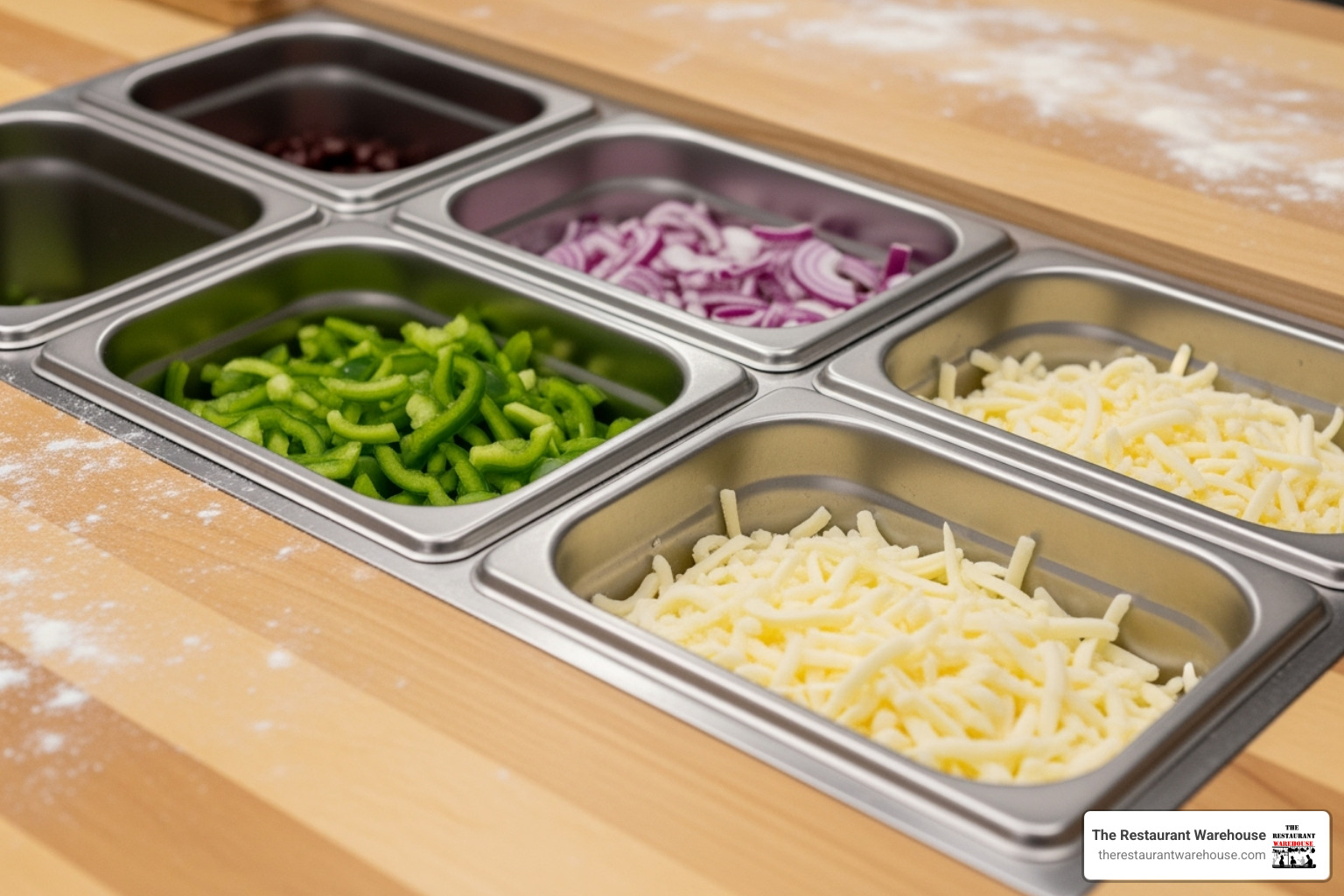
- Built-in Ingredient Holders: Cut openings in your tabletop to drop in stainless steel containers for toppings. This keeps ingredients organized and accessible.
- Tool Hooks: Install sturdy hooks on the side of the table or on a back panel to hang pizza peels, brushes, and other tools.
- Magnetic Knife Strip: Attach a magnetic strip to the side or under a shelf to hold your pizza cutter and other metal utensils safely.
- Paper Towel Holder: Mount a holder under the tabletop for easy cleanup.
- Bottle Opener: A simple but fun addition for any pizza night.
- Backsplash or Hutch: If you have extended rear legs, add a back panel with shelving for extra storage and a professional look.
Ensuring Durability: Staining and Sealing
Properly finishing your diy pizza prep table is critical for protecting it from the elements. Unfinished wood left outdoors will quickly gray, crack, and rot.
First, sand the entire table thoroughly. Start with 80-grit sandpaper to smooth rough spots, then move to 120-grit and finish with 220-grit for a silky surface. This preparation ensures your finish will apply evenly.
Next, choose a high-quality outdoor-rated stain and sealer. These products are designed to protect against UV rays and moisture. Apply multiple thin coats with a brush or roller, paying special attention to the cut ends of the lumber, which absorb the most moisture. For information on the chemicals used in these protective products, the EPA offers an overview of wood preservative chemicals.
For any surface that will have direct contact with food, such as a butcher block top, you must use a food-safe finish. Apply food-grade mineral oil or a beeswax conditioner regularly. Always refer to FDA's food safety guidelines to ensure your surfaces are safe.
Overcoming Common DIY Challenges
Even experienced builders face challenges. Here’s how to handle common issues:
- Uneven Cuts: Prevent this by using a speed square for marking and cutting carefully. Minor gaps can be filled with wood filler, but it's best to recut a piece if the error is significant.
- Warped Lumber: Inspect wood at the store and select the straightest boards. Minor warps can often be forced into place with clamps during assembly.
- Stripped Screws: Always drill pilot holes, especially in dense wood or near board ends. This prevents splitting and makes driving screws easier.
- Wobbly Structure: This is usually caused by loose or out-of-square joints. Ensure all connections are tight. Adding diagonal braces in the corners can significantly improve rigidity.
Frequently Asked Questions about DIY Pizza Prep Tables
As you start on your diy pizza prep table project, questions are bound to arise. Here are answers to some of the most common ones we hear, helping you build with confidence.
What is the best height for a DIY pizza prep table?
The ideal height for your diy pizza prep table is all about personal comfort. While 36 inches is the standard height for kitchen counters and a great starting point, the best height is one that allows you to work without straining your back. Before you cut your legs, stand at your kitchen counter and simulate stretching dough. If you find yourself hunching or reaching uncomfortably, adjust your table's height accordingly. An inch or two can make a huge difference in your comfort during a long pizza-making session.
What is the most food-safe surface for a DIY pizza prep table?
Food safety is critical. The best surfaces are non-porous, as they don't harbor bacteria and are easy to clean and sanitize.
- Stainless steel is the top choice for this reason and is used in professional kitchens.
- Sealed granite or marble remnants are also excellent, hygienic choices that stay cool, which is beneficial for working with dough.
- A dense hardwood butcher block can be used if it's sealed and regularly maintained with food-grade mineral oil or beeswax.
For authoritative information, always consult the FDA's food safety guidelines to ensure your prep surfaces are safe for you and your family.
How much does it cost to build a DIY pizza prep table?
One of the biggest advantages of a diy pizza prep table is the cost. You can build a beautiful, sturdy, and highly functional table for under $250. This estimate includes all the necessary lumber, screws, glue, and a quality outdoor finish. Your main expense will be the pressure-treated lumber, followed by hardware and finishing supplies. Even if you opt for a more premium countertop like a granite remnant, your total cost will likely be far less than the $500 to $1,500 price tag of comparable pre-made outdoor prep stations. The satisfaction of building it yourself is a priceless bonus.
Ready to start planning your build? Contact us today for personalized advice on creating the perfect outdoor cooking setup.
Conclusion: Your Gateway to Perfect Homemade Pizza
You've journeyed from a spark of inspiration to a finished project. Building your own diy pizza prep table is more than just woodworking; it's about creating a custom workspace that perfectly suits your outdoor cooking dreams. You've taken raw materials and transformed them into something functional and beautiful, saving hundreds of dollars in the process. Every time you stretch dough on its surface, you'll feel the pride that comes from building something with your own hands.
This new diy pizza prep table is the foundation for countless memorable pizza nights. Imagine your family gathered around, adding their favorite toppings from the ingredient holders you built in. Your new station eliminates the hassle of a disorganized setup, allowing everything to have its place, from the pizza peel on its hook to the propane tank tucked away on the lower shelf.
This project also opens the door to greater culinary creativity. With an efficient workspace, you'll be inspired to experiment with new recipes and host more often. The skills you've learned—measuring, cutting, assembling, and finishing—have not only built a table but have also built your confidence for future DIY endeavors.
As you enjoy your first pizza night with your new custom table, this is just the beginning. The memories you'll create and the satisfaction of a job well done will last for years to come.
Ready to take your outdoor cooking setup to the next level? Contact us today for personalized advice! Our experts are always excited to help fellow cooking enthusiasts build their perfect outdoor kitchen dreams.
About The Author

Sean Kearney
Sean Kearney is the Founder of The Restaurant Warehouse, with 15 years of experience in the restaurant equipment industry and more than 30 years in ecommerce, beginning with Amazon.com. As an equipment distributor and supplier, Sean helps restaurant owners make confident purchasing decisions through clear pricing, practical guidance, and a more transparent online buying experience.
Connect with Sean on LinkedIn, Instagram, YouTube, or Facebook.