

Stainless Steel Spatulas: Your Guide to Flipping, Scraping, and Sautéing
Why Stainless Steel Spatulas Are Essential Kitchen Tools
Stainless steel spatulas are the unsung heroes of professional and home kitchens alike. These versatile tools handle everything from flipping delicate fish fillets to scraping flavorful bits from cast iron pans with a level of precision and durability that other materials simply can't match. Their superior heat resistance makes them safe for high-heat cooking, while their robust construction ensures they won't warp, melt, or break under pressure.
Trusted by chefs in demanding kitchen environments, these spatulas are also prized for their easy maintenance, as most are dishwasher safe and rust-resistant. The thin, often beveled edges are designed to slide under food effortlessly, making them perfect for searing, flipping, scraping, and serving.
Beyond brute strength, stainless steel offers consistency and control. The rigidity of steel gives you firm leverage to press, lift, and scrape without flexing unpredictably. That translates to cleaner sear lines, intact crusts, and better-looking plates. Ergonomic handles—whether wood, composite, or stainless—improve grip and comfort during long prep sessions, while seamless or riveted construction keeps tools reliable under daily stress.
Whether you're running a busy restaurant or simply upgrading your home kitchen, understanding the different types of stainless steel spatulas and their specific uses will transform how you cook. From fish spatulas with ultra-thin blades to heavy-duty griddle scrapers, each design serves a unique purpose in creating better food. This guide will walk you through everything you need to know to choose and use the perfect spatula.
Ready to equip your line with dependable tools? Explore our kitchenware and utensils to get started today.
The Anatomy of a Spatula: Types and Their Essential Uses
When you step into any professional kitchen, you'll notice that chefs don't just grab any spatula for every task. Each type of stainless steel spatula has been designed with specific jobs in mind, and understanding these differences will transform how you cook. The term "spatula" covers a family of precision instruments that can make the difference between a perfect meal and a culinary mishap.
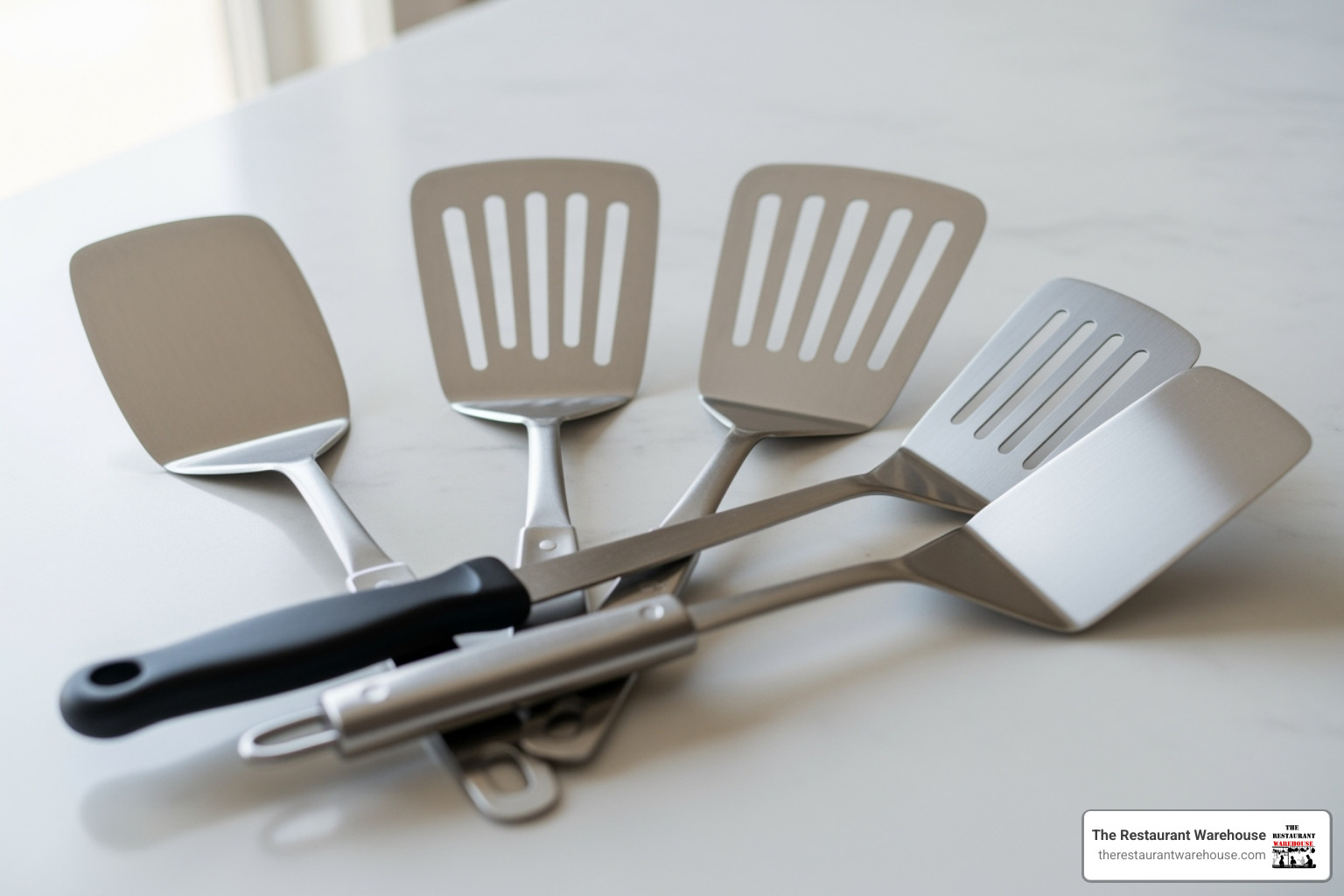
Turner Spatula (Flipper)
The turner spatula, often called a "flipper," is the workhorse that most people picture when they hear the word. It handles the daily grind of lifting, flipping, and serving food with reliable precision. Turners come in two main styles:
- Solid Turners: These feature a continuous blade that provides maximum support. They are ideal for lifting delicate items like pancakes or fish, and their solid surface is perfect for scraping up every bit of delicious fond from the bottom of a pan. They also excel at serving heavier items like burgers or lasagna, where full support is crucial.
- Slotted Turners: This style features a perforated design with holes or slots that allow excess grease and liquids to drain away. This is essential for preventing food from becoming soggy. If you've ever transferred fried eggs with a solid spatula and ended up with a puddle of grease on your plate, you'll appreciate what slots can do.
Beyond the basic choice of solid vs. slotted, note the blade profile. Wider blades support larger foods (think omelets or fillets), while narrower blades reduce drag under delicate items. Blade corners matter too: rounded corners are gentler on pan surfaces and great for curved skillets, whereas squared corners get into tight angles on flat tops and sheet pans.
Fish Spatula
The fish spatula has earned a cult following among chefs and home cooks for good reason. Its defining feature is a thin, flexible blade that is often angled and perforated. This design allows it to slide effortlessly under the most delicate fish fillets without tearing the flesh or breaking the skin. The thin edge gets under food with a gentle touch that thicker spatulas can't replicate.
However, its usefulness extends far beyond seafood. A fish spatula is incredible for sautéing vegetables, flipping omelets, and transferring warm cookies from a baking sheet. The flexible blade conforms to the surface of your cookware, making it gentler on seasoned cast iron and more effective at getting under food. Many cooks find it becomes their go-to tool for most kitchen tasks.
A note on flexibility: The best fish spatulas bend just enough to hug the pan while still offering control. Too floppy and you lose leverage; too stiff and you crush delicate foods. Look for a gentle spring-back when you press the blade against a flat surface.
Offset Spatula
The offset spatula is distinguished by its angled design, where the blade sits below the handle. This creates clearance that lets you work close to surfaces without your knuckles getting in the way. While they are most famous in baking for icing cakes and spreading batters evenly, their utility doesn't stop there. The angled design provides excellent control when working on flat surfaces, making any detailed work much easier. The thin, flexible blade allows for a level of precision that straight turners can't match.
Offset spatulas excel at delicate plating, smoothing sauces, sliding under fragile items, and even loosening the edges of brownies or bar cookies without gouging the pan. Smaller offsets (4–6 inches) are perfect for fine tasks; larger ones (8–10 inches) are better for frosting and moving bigger items.
Griddle Spatula
When you need serious power, the griddle spatula is the tool for the job. These are the heavy-duty champions of the spatula world, built for tasks that would overwhelm more delicate tools. Griddle spatulas have larger, sturdier blades with less flexibility. They are designed for heavy-duty use on flat-top grills and griddles, where their straight, squared-off edges excel at scraping residue and chopping food. These robust tools are perfect for making smash burgers, as they can handle the significant pressure needed to create crispy, caramelized edges without bending. They also work as effective scrapers for maintaining and cleaning cooking surfaces.
Pro tip for flat-top work: A slightly sharpened or beveled leading edge on a griddle spatula helps you get under crust without tearing proteins. Pair with a second, thinner turner for lift-and-flip control when handling multiple burgers or hash browns.
Understanding these differences helps you choose the right spatula for any cooking challenge. For more insights, explore our guide on Essential Kitchen Utensils.
Why Choose Stainless Steel Spatulas for Your Kitchen?
When faced with spatulas made from every material imaginable, it's clear why stainless steel spatulas have earned their reputation as the top choice for both professional chefs and discerning home cooks.
Durability and Longevity
These tools are built to last. Unlike plastic spatulas that crack or melt and wooden ones that split, stainless steel spatulas endure year after year. They won't warp on a hot grill or melt if left on a pan's edge. This durability is also economical; a single quality steel spatula can outlast several cheaper alternatives, making it a wise long-term investment.
Rust and Corrosion Resistance
High-quality stainless steel contains chromium, which creates a protective layer against rust and corrosion. This means your spatula can handle acidic tomato sauces and salty marinades without developing unsightly rust spots. An 18/10 stainless steel spatula offers particularly impressive resistance, making it perfect for the humid, demanding environment of a busy kitchen.
Superior Heat Resistance
Stainless steel truly shines when it comes to high-heat cooking. These spatulas can handle temperatures of 400°F or higher, which would turn plastic into a gooey mess. This makes them reliable partners for searing, grilling, and stir-frying, so you never have to worry about your tool failing at a critical moment.
Performance and Precision
The rigidity of stainless steel provides the leverage and control needed for demanding tasks. Whether you're scraping up flavorful brown bits (fond) from a pan or pressing down to create the perfect smash burger, a well-made stainless steel spatula delivers the precision that makes cooking more enjoyable and effective.
Non-Reactive Material for Food Safety
A crucial, often overlooked benefit is that stainless steel is non-reactive. It won't leach chemicals or absorb flavors, ensuring that your food's taste remains pure, even when working with acidic ingredients like citrus or vinegar. This property is essential for both food safety and flavor integrity. For detailed official guidance, see the FDA's overview of food-contact substances.
Sustainability and Sanitation
Stainless steel is recyclable, durable, and easy to sanitize, aligning with modern kitchen priorities around sustainability and food safety. Seamless designs reduce crevices where residue can hide, and smooth finishes clean quickly in the dish pit. In high-turn environments, this reliability reduces waste and replacement costs.
How Stainless Steel Compares to Other Materials
While other materials have their place, stainless steel spatulas offer a unique combination of benefits.
| Attribute | Stainless Steel | Silicone | Wood | Plastic |
|---|---|---|---|---|
| Durability | High - won't warp, melt, crack, or splinter | Medium - can eventually tear or degrade | Medium - can crack, splinter, absorb odors | Low - prone to warping, melting, staining |
| Heat Resistance | High - 400°F+ ideal for searing/grilling | High - up to 500°F, excellent for non-stick | Medium-High - can char at very high heat | Low - melts or warps at high temperatures |
| Best Use | Flipping, scraping, high-heat cooking, heavy foods | Non-stick cookware, mixing, delicate tasks | Stirring, serving, non-stick friendly | Low-heat cooking, light tasks |
| Maintenance | Dishwasher safe, rust-resistant, easy to clean | Dishwasher safe, non-absorbent | Hand wash, oil regularly, can absorb flavors | Dishwasher safe, can stain and retain odors |
Stock your kitchen with reliable tools built for daily service—browse our Stainless Steel Kitchen Tools for options and ideas.
Selecting a High-Quality Spatula: Features That Matter
When investing in stainless steel spatulas, knowing what separates the good from the great can make all the difference. A well-chosen spatula becomes an extension of your hand, turning cooking from a chore into a pleasure. Here are the key features that truly matter.
Material, Construction, and Design
- Material Grade: Not all stainless steel is equal. Look for markings like 18/8 or 18/10, which indicate high chromium and nickel content for superior corrosion resistance and durability. Food-grade stainless steel is non-negotiable, as it ensures your tool won't react with acidic foods or leach unwanted flavors.
- Blade Thickness and Edge: The right blade thickness depends on the task. Ultra-thin blades are perfect for sliding under delicate foods like eggs or cookies. In contrast, heavy-gauge steel provides the rigidity needed for smash burgers or scraping a pan. A beveled edge is a game-changing feature, allowing the spatula to slide under food with surgical precision, preserving crusts and making lifting effortless.
- Construction (Tang): The tang is where the blade connects to the handle, and it determines balance and longevity. Full tang construction, where the metal extends through the entire handle and is secured with rivets, offers the best strength and balance. Partial tang designs can also be effective if well-engineered.
- Handle and Balance: A spatula should feel balanced and natural in your hand. Wood handles offer a classic look and great heat insulation but require hand washing. Composite materials provide excellent ergonomics and are often dishwasher safe. Stainless steel handles offer a seamless, hygienic design popular in professional settings. The handle material and overall weight distribution should feel comfortable for your grip and cooking style.
The Advantage of a Beveled Edge on Stainless Steel Spatulas
A well-executed bevel is like a built-in pry bar that doesn't damage food. It accomplishes three things at once:
- Precision lifting: The thin leading edge gets under delicate items without crushing them.
- Clean sear: It preserves Maillard crusts by separating food from the pan in one smooth motion.
- Scraping efficiency: It removes stuck-on bits to deglaze or tidy a surface between batches.
For line cooks, this means fewer torn proteins, faster turns on the flat top, and cleaner pans for the next order.
What to Look for in Professional-Grade Spatulas
When you're ready for a truly professional-quality tool, consider these final points. The choice between stiffness vs. flexibility is crucial; heavy-duty griddle work demands stiffness, while delicate fish cookery requires flexibility. The blade size and shape should also match your typical cooking needs, with larger blades for bigger cuts of meat and smaller profiles for precise work. Finally, seamless construction offers a hygiene advantage by reducing crevices where food particles can hide.
Additional considerations for high-volume kitchens:
- Length and reach: Longer handles keep hands away from heat on large surfaces; shorter handles improve control in sauté pans.
- Texture and grip: Non-slip or contoured handles reduce fatigue and accidents when hands are wet or greasy.
- Edge profile: Micro-bevels on griddle tools vs. rounded edges on gentler turners can help tailor your tool kit to your menu.
- Maintenance demands: Tools that are fully dishwasher safe and corrosion resistant will save labor in the dish pit and last longer in rotation.
Investing in a high-quality stainless steel spatula with these features pays dividends in performance, durability, and cooking enjoyment. For more insights into selecting the right tools, explore our guide on Pro Kitchen Tools.
Explore our complete collection of professional-grade smallwares to find the perfect tools for your kitchen. Check out our Smallwares Restaurant Guide for more information!
Need help building your tool kit? Contact our team for custom recommendations for your menu and workflow.
Mastering Your Technique: Cooking and Maintenance
Having the right stainless steel spatula is only half the battle; knowing how to use and maintain it properly ensures it remains a valuable kitchen asset for years. The beauty of these tools lies in how they transform your cooking technique once you understand their capabilities.
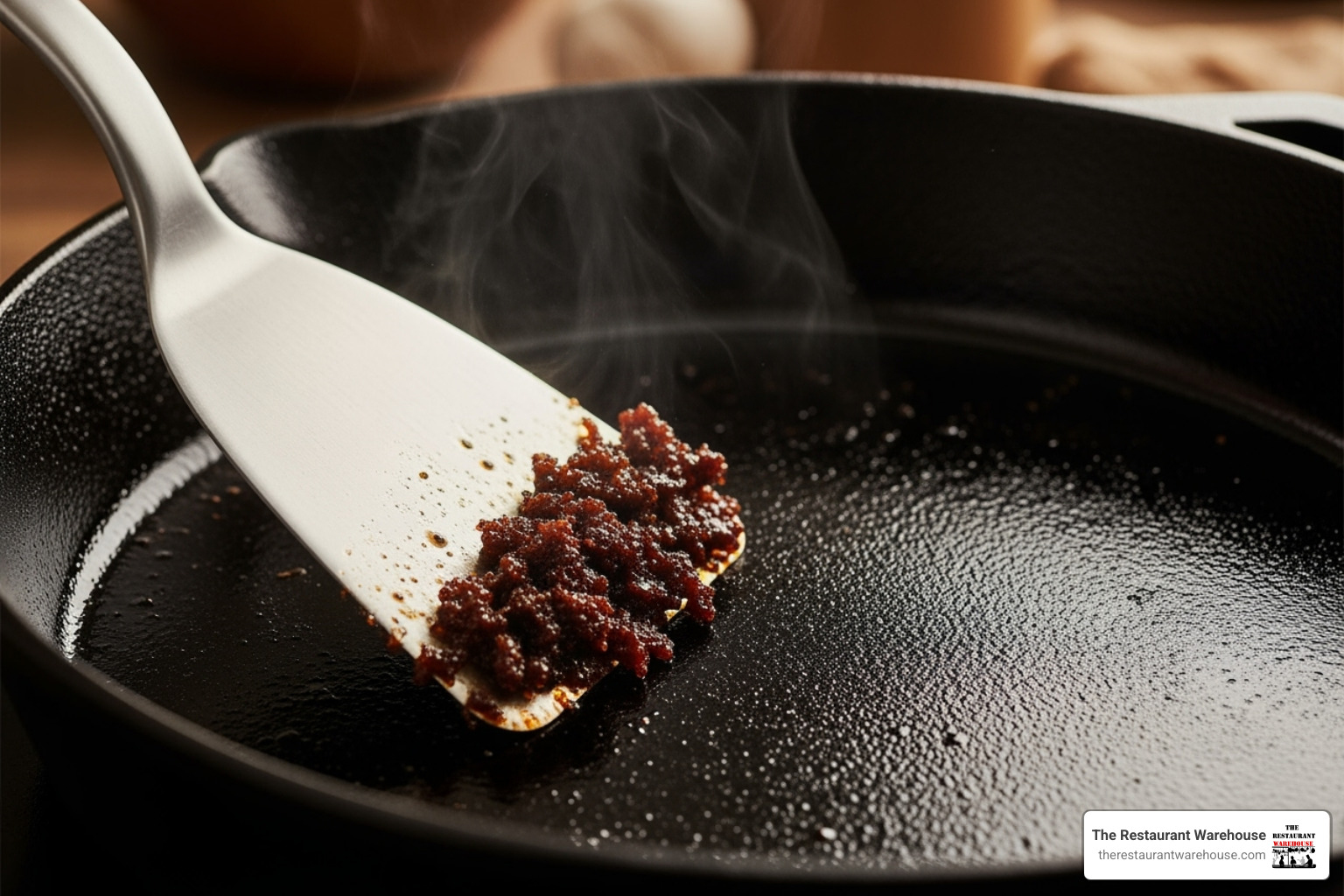
How a Stainless Steel Spatula Improves Cast Iron Cooking
Cast iron cookware and stainless steel spatulas are a perfect match. Contrary to common fears, a quality steel spatula actually helps improve your pan over time.
When you're searing meat or caramelizing onions, those brown bits that stick to the bottom are flavor gold. This fond is easily scraped up with a sturdy stainless steel spatula, ready for deglazing with wine or stock to create an incredible pan sauce. The scraping technique itself does more than just clean; a flat-edged spatula smooths the cooking surface over time, helping to level out rough spots and build up that coveted non-stick seasoning.
For delicate tasks, a fish spatula's thin, flexible profile is invaluable for getting under food without disturbing the pan's seasoning. When making smash burgers, a sturdy spatula provides the pressure needed for a crispy crust and the sharp edge to lift it cleanly.
Technique tips:
- Preheat properly: Food releases more cleanly when the pan and fat are at the right temperature. A hot surface plus a dry, beveled edge equals clean separation.
- Slide, then lift: Glide the edge under the food with gentle forward motion before lifting. This reduces sticking and preserves crusts.
- Use the corner: The square corner of a griddle spatula gets into edges and around tight spots on flat tops and sheet pans.
- Two-tool method: For fragile items, use a fish spatula to slide under and a second turner to stabilize from the top as you flip.
Essential Care and Maintenance Tips
Proper care is simple and ensures your stainless steel spatulas will last for decades.
- Cleaning: Most stainless steel spatulas are completely dishwasher safe. However, if your spatula has a wooden handle, always hand wash it to preserve the wood. For stubborn, stuck-on food, a brief soak in warm, soapy water or a paste of baking soda and water works wonders. Avoid harsh abrasive scrubbers that could scratch the finish.
- Handle Care: Wooden handles require occasional maintenance. Apply a food-grade mineral oil every few months to prevent the wood from cracking, splitting, or absorbing odors.
- Proper Storage: Protect your investment and its precision edge. Magnetic strips on a wall keep spatulas accessible and safe. Utensil holders or drawer organizers also work well, preventing the blades from banging against other tools and becoming damaged.
- Check Rivets: On spatulas with riveted handles, occasionally check that the rivets are tight. They endure significant stress, and any loosening could indicate it's time for a replacement.
Quick troubleshooting:
- Food tearing when flipping: Switch to a thinner, more flexible blade or ensure the pan is properly preheated.
- Sticking on flat tops: Re-season the surface, reduce moisture on the food before it hits the heat, and use a sharper bevel.
- Warped blades: Retire and replace; a warped edge won’t slide under food cleanly.
With proper care, your stainless steel spatulas will become trusted companions in the kitchen. For more guidance on maintaining your kitchen tools, explore our guide on Stainless Steel Kitchen Tools.
Standardize your back-of-house tools and maintenance routines with help from our team—reach out to discuss the best options for your operation.
Frequently Asked Questions about Stainless Steel Spatulas
After years of helping restaurants and home cooks choose the right tools, I've heard these questions countless times. Here are the straight answers to the most common concerns about stainless steel spatulas.
Can I use a stainless steel spatula on non-stick pans?
The short answer is no, you shouldn't use stainless steel spatulas on non-stick cookware. The hard metal edge will scratch and damage the delicate non-stick coating. These scratches not only ruin the pan's non-stick properties but can also cause particles of the coating to flake off into your food.
To protect your investment in non-stick pans, always use tools made from silicone, wood, or nylon. Silicone spatulas are an excellent choice as they are gentle on the surface but can still handle high heat.
What is the difference between a solid and a slotted spatula?
The difference comes down to a simple question: do you want to keep the liquid or let it drain away?
- Slotted spatulas have holes or slots that allow excess oil, grease, and other liquids to drain. This makes them ideal for frying bacon, lifting vegetables from a stir-fry, or removing any food from hot oil.
- Solid spatulas provide maximum support and are perfect for lifting delicate items like fish or serving lasagna. Their solid surface also excels at scraping up flavorful fond from the bottom of a pan to make sauces.
Most kitchens benefit from having both types on hand to handle any cooking task effectively.
How do I know if my spatula is made from high-quality stainless steel?
There are several telltale signs that separate quality stainless steel spatulas from cheaper alternatives.
- Grade Markings: Look for "18/8" or "18/10" stamped on the tool. These numbers indicate a higher chromium and nickel content, which translates to better corrosion resistance and durability.
- Weight and Sturdiness: A quality spatula should feel substantial and sturdy in your hand, not flimsy or easily bent. Heavy-gauge steel gives you the confidence to apply pressure when needed.
- Finish and Construction: The surface should be smooth and consistent, without rough spots or pitting. Look for full-tang construction, where the metal extends through the handle and is secured with rivets, as this is the most durable design.
When you buy from reputable suppliers who specialize in professional-grade tools, you are far more likely to get a product that is built to last. A quality spatula is an investment that will perform better and outlast cheaper options for years to come.
Are stainless steel spatulas dishwasher safe?
Most all-metal spatulas are dishwasher safe. If your spatula has a wooden handle, hand wash and dry promptly to preserve the wood. When in doubt, follow the manufacturer's care guidelines.
Which spatula should I use for smash burgers?
Choose a stiff, heavy-gauge griddle spatula with a straight, beveled edge. The stiffness lets you apply firm pressure for crust development, and the bevel helps you lift without tearing.
Conclusion: The Indispensable Tool for Every Cook
It's clear why stainless steel spatulas have earned their place as kitchen essentials. From the precision of a fish spatula to the power of a griddle scraper, their versatility is best. The durability of stainless steel means your investment will last for years, while its superior performance advantages—like high heat resistance and a non-reactive surface—transform your cooking experience.
Investing in quality tools is about recognizing that the right supplies make cooking more enjoyable, efficient, and successful. A well-made stainless steel spatula becomes an extension of your hand, offering reliability that cheaper alternatives simply can't match. While the upfront cost may be higher, the long-term value of a professional-grade spatula is evident in its consistent performance and longevity.
At The Restaurant Warehouse, we believe professional-grade kitchen supplies shouldn't come with premium price tags. Our commitment to affordable wholesale pricing means you can stock your kitchen with the same high-quality tools used in the foodservice industry without breaking your budget. We cut out the middleman to pass the savings directly to you.
Ready to upgrade your kitchen arsenal? Browse our extensive selection of kitchenware and utensils to find the high-performance tools you need at unbeatable prices.
Have questions or need a custom quote for your operation? Contact our team today to get personalized recommendations and pricing.
About The Author

Sean Kearney
Sean Kearney is the Founder of The Restaurant Warehouse, with 15 years of experience in the restaurant equipment industry and more than 30 years in ecommerce, beginning with Amazon.com. As an equipment distributor and supplier, Sean helps restaurant owners make confident purchasing decisions through clear pricing, practical guidance, and a more transparent online buying experience.
Connect with Sean on LinkedIn, Instagram, YouTube, or Facebook.