

An Essential Guide to Comparing Slushie Machines
Why Every Foodservice Business Should Consider a Slushie Machine

A slushie machine is a refrigerated appliance that freezes liquid beverages while continuously stirring them to create a smooth, semi-frozen drink with a consistency somewhere between liquid and ice. Here's what you need to know:
Key Differences at a Glance:
| Feature | Slushie Machine | Snow Cone Maker |
|---|---|---|
| Process | Freezes liquid mix while stirring continuously | Shaves or crushes solid ice cubes |
| Texture | Smooth, drinkable, almost liquid-like | Granular, chunky ice pieces |
| Serving Style | Sipped through a straw | Eaten with a spoon or straw |
| Input | Liquid syrup, juice, or beverage mix | Solid ice blocks or cubes |
When I was a kid, there was nothing quite like an ice-cold blue raspberry slushie from the local convenience store to get me through the day. That smooth, almost creamy texture with a fizzy tang is what separates a true slushie from a simple snow cone.
Why slushie machines matter for your business:
- High profit margins on frozen beverages (often 80%+ markup)
- Customer appeal across all age groups
- Versatility for multiple drink types (slushies, granitas, frozen cocktails, smoothies)
- Simple operation with minimal staff training required
- Year-round revenue, not just summer sales
The distinction is important for restaurant owners and foodservice operators. A slushie machine uses a refrigeration system with a rotating auger that constantly stirs liquid as it freezes around a chilled cylinder. This prevents the formation of solid ice and creates that signature smooth texture. Snow cone makers simply shave or crush already-frozen ice—a completely different mechanism and end result.
Commercial slushie machines range from single-bowl countertop units to massive triple-bowl floor models capable of serving hundreds of customers per hour. Some models, for example, feature two 3-gallon hoppers, while others offer a 10-gallon capacity for high-volume operations.
I'm Sean Kearney, and I've spent years helping restaurant owners and foodservice operators find the right equipment to boost their profitability without breaking the bank. Having worked with countless businesses looking to add frozen beverage programs, I know that choosing the right slushie machine can mean the difference between a profitable addition and an expensive dust-collector.
Ready to explore your options? Learn more about our commercial frozen beverage machines and frozen cocktail machines.
Understanding How a Slushie Machine Works
At its heart, a slushie machine is a marvel of thermodynamics and mechanical engineering, designed to consistently deliver that perfectly smooth, semi-frozen texture we all crave. It's a bit more complex than just putting liquid in a freezer.
The Core Mechanism of a Slushie Machine
The magic of a slushie machine lies in its ability to freeze a liquid mix without letting it turn into a solid block of ice. How does it do this? It combines a robust refrigeration system with continuous agitation.
Here’s the breakdown:
- Refrigeration System: Much like your refrigerator, a slushie machine contains a compressor, condenser, and evaporator. The liquid mix sits in bowls, often clear to showcase the colorful contents, which are in contact with cooling elements. These elements rapidly drop the temperature of the liquid.
- Freezing Cylinder: Within each bowl, there's usually a central freezing cylinder or a cold plate that gets extremely cold. As the liquid mix comes into contact with this freezing surface, it begins to crystallize.
- Auger or Mixing Paddle: This is the unsung hero of the slushie machine. A rotating auger or mixing paddle constantly scrapes the ice crystals off the freezing cylinder walls. This continuous stirring action is crucial. Without it, the liquid would simply freeze solid. This process prevents large ice crystals from forming, instead creating small, uniform crystals suspended in the unfrozen liquid, giving us that distinctive smooth, drinkable slushie texture. It's similar to how ice cream is made, but for beverages!
- Freezing Point Depression: The ingredients in the slushie mix, particularly sugar, play a vital role. Sugar lowers the freezing point of water. This phenomenon, known as freezing point depression, is what allows the mixture to remain partially liquid even at temperatures below 32°F (0°C). Commercial slushie syrups are specifically formulated with high sugar content to achieve the ideal slush consistency. You can learn more about the science behind this at educational resources like this explanation of freezing point depression from Michigan State University. (Outbound link: Michigan State University is an authoritative educational source).
The combination of rapid chilling, continuous stirring, and the science of freezing point depression ensures that every serving from your slushie machine is a perfectly textured, refreshing treat.
Types of Machines: Home Use vs. Commercial Grade
When we talk about slushie machines, it's crucial to distinguish between models designed for home use and those built for the rigors of a commercial environment. While both make delicious frozen drinks, their construction, capacity, and performance differ significantly.
Home-Use Models: These are typically smaller, more compact units designed for occasional use and personal enjoyment.
- Capacity: Smaller, often ranging from 60 to 88 ounces. For example, some popular home models have an 88-ounce capacity, making over 7 servings per batch.
- Design: Often countertop models, more aesthetically focused for kitchen integration. For instance, a typical home unit might be 16.3 by 6.5 by 17 inches and weigh 24.25 pounds.
- Features: May include preset programs for various frozen drinks like slush, spiked slush, frappé, milkshake, and frozen juice. Some home models boast as many as 5 such functions. Some advanced home models even feature "no ice needed" technology and self-cleaning functions.
- Freeze Times: Generally slower, taking between 20 to 60 minutes to freeze drinks, depending on ingredients, volume, and starting temperature.
- Wattage: Lower wattage, such as a typical home model's 200 watts, reflecting their smaller scale.
- Cost: More affordable, typically ranging from $50 to $400.
- Durability: Built for lighter, less frequent use.
Commercial-Grade Models: These machines are the workhorses of the foodservice industry, designed for high volume, continuous operation, and maximum profitability.
- Capacity: Significantly larger, with bowls ranging from 1.5 gallons to 10 gallons each. For example, some high-capacity floor models have a 10-gallon capacity, while many popular countertop units have two large 3-gallon hoppers.
- Design: More robust, often made of stainless steel, with a focus on durability and efficiency. They can be countertop or floor models.
- Features: Often come with dual or triple bowls to sell multiple flavors simultaneously, illuminated displays to merchandise products, and advanced controls for consistency and maintenance. Features like patented reversing augers, found on some high-end models, ensure rapid freeze times and reduced air mixing.
- Freeze Times: Faster initial freeze times and quicker recovery between batches to keep up with demand.
- Wattage: Higher wattage and more powerful compressors to handle larger volumes and continuous operation. They typically require dedicated electrical circuits (e.g., an independent 115-volt outlet on an independent 15-amp circuit).
- Cost: A significant investment, ranging from hundreds to several thousands of dollars, depending on capacity and features.
- Durability: Engineered for heavy-duty, daily use in demanding environments like convenience stores, restaurants, bars, and concession stands.
For businesses, investing in a commercial-grade slushie machine is essential. It ensures reliability, capacity to meet customer demand, and features designed to optimize your operation and profitability.
A Buyer's Guide to Your Next Commercial Slushie Machine
Choosing the right commercial slushie machine is a critical decision for any foodservice business. It's not just about getting a machine that makes frozen drinks; it's about investing in a piece of equipment that will reliably boost your sales and customer satisfaction for years to come.
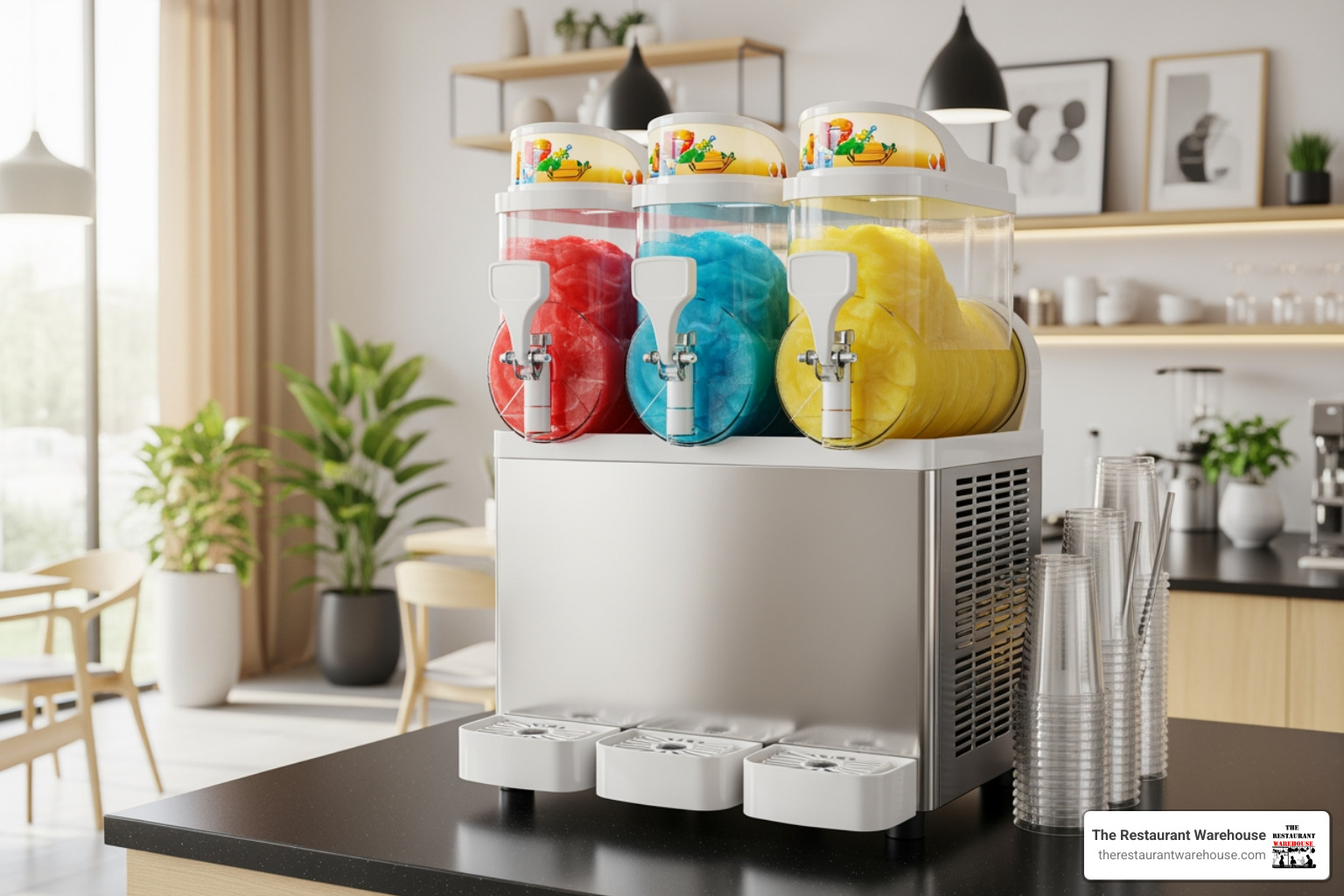
Key Features to Consider in a Commercial Slushie Machine
When we're helping our clients select a commercial slushie machine, we always emphasize looking beyond the basic function. The features built into these machines are what truly differentiate them and impact your day-to-day operations and bottom line.
- Reversing Augers for Faster Freezing: Certain high-performance models use a patented reversing auger design. This not only speeds up the initial freeze time but also ensures a consistent, smooth texture by reducing air mixing and preventing ice buildup.
- Beverage Monitoring Technology: Advanced machines come with patented beverage monitoring technology. This ensures consistent quality and alerts you to potential issues, minimizing downtime.
- LED Lighted Merchandisers: The visual appeal of colorful slushies is a huge selling point. Machines with LED lighted merchandisers draw customers in, showcasing your delicious offerings and increasing impulse buys.
- Quick Defrost Features: To maintain beverage quality and maximize uptime, a quick defrost feature is invaluable. It allows for rapid thawing and cleaning without extended periods of machine inactivity.
- User Interface for Maintenance Guidance: Some modern slushie machines feature touchpad displays that guide staff through cleaning, maintenance, and programming. This simplifies operation and helps prevent common issues, keeping your machine running smoothly.
- Gasketless Spigots: These are a dream for sanitation! Gasketless spigots reduce the number of parts that need to be cleaned and are less prone to leaks, making daily maintenance a breeze.
- Durable Construction: Look for machines made with high-quality stainless steel and robust components that can withstand constant commercial use.
- Sustainable Refrigerants: Modern commercial units are now using R290 all-natural refrigerant, which has a very low Global Warming Potential, showcasing a commitment to environmental responsibility.
Ready to upgrade your business with a top-tier slushie machine? Explore our full range of commercial frozen beverage equipment.
Evaluating Capacity and Output for Your Business
Matching the slushie machine's capacity to your business's needs is paramount. An undersized machine will struggle to keep up with demand, leading to lost sales, while an oversized one is an unnecessary expense and takes up valuable space.
-
Single, Double, or Triple Bowls:
- Single-bowl machines are great for smaller operations or for testing a new frozen beverage program. They offer one flavor at a time.
- Double-bowl machines are a popular choice, allowing you to offer two distinct flavors or even two different types of frozen drinks (e.g., a fruit slushie and a frozen coffee). A typical two-bowl machine, for instance, might have two 2.65-gallon bowls.
- Triple-bowl machines are ideal for high-volume locations or businesses that want to offer maximum variety, catering to diverse customer preferences. A three-bowl machine can offer three 2.65-gallon bowls.
- Gallons Per Bowl: Commercial bowls typically range from 1.5 to 5 gallons. Larger capacities mean fewer refills during peak hours. Some high-capacity floor models boast an impressive 10-gallon capacity, perfect for busy locations.
- Servings Per Hour: Some manufacturers specify output in terms of servings per hour. For example, a dual flavor machine can offer 29.5 quarts per hour, while others can reach up to 480 serves per hour. Consider your peak demand times.
-
Matching Machine Size to Customer Traffic:
- Low traffic (e.g., small office, cafe): A single-bowl or small double-bowl unit might suffice.
- Medium traffic (e.g., medium-sized restaurant, convenience store): Double-bowl machines are a good standard.
- High traffic (e.g., large gas station, cinema, event venue): Triple-bowl machines or multiple double-bowl units will be necessary to meet demand.
- Planning for Flavor Variety: More bowls mean more flavor options, which can increase customer engagement and sales. Consider rotating flavors seasonally to keep things fresh.
Think about the physical footprint of the machine as well. While some high-capacity units are floor models, many other commercial units are designed for countertops. Ensure you have the necessary counter space and robust counters to support the weight of a filled machine (a 10-gallon machine can weigh upwards of 150 lbs, plus the liquid).
Finally, power requirements are crucial. Most commercial slushie machines in the USA operate on a standard 115-volt outlet but require a dedicated 15-amp circuit to prevent tripping breakers, especially for larger units. Always consult the machine's specifications for exact electrical needs.
Mastering Ingredients, Recipes, and Maintenance
The journey to perfect frozen beverages doesn't end with choosing the right slushie machine. What you put into it and how you care for it are equally important for consistent quality and longevity.
Can You Make Alcoholic Slushies?
Ah, the adult slushie – icy margaritas, frosé, or a creamy piña colada. Yes, you absolutely can make alcoholic slushies in a slushie machine, but with careful consideration. The key challenge lies in alcohol's lower freezing point.
- Freezing Point Considerations for Alcohol: Alcohol doesn't freeze at the same temperature as water or sugary syrup. Too much alcohol will prevent your mix from ever reaching that desired slush consistency, leaving you with a cold, liquid cocktail instead of a frosty treat.
- Ideal Alcohol-to-Mix Ratio: The general rule of thumb is to keep the alcohol content low – typically no more than 5-7% alcohol by volume (ABV) of the total mix. For example, in a standard recipe for a Painkiller slushie serving two to three people, a quarter cup of rum is about right. This means you'll still get a delicious, refreshing frozen cocktail, but it won't be as potent as a traditional, non-frozen mixed drink. Always check your machine's manual for specific guidelines on alcoholic beverages.
-
Best Practices for Frozen Cocktails:
- Use high-quality mixers and concentrated syrups.
- Pre-chill your entire mix (including the alcohol) before adding it to the machine to speed up the freezing process.
- Be prepared for slightly longer freeze times with alcoholic mixes compared to non-alcoholic ones.
- Consider using specific frozen cocktail mixes that are formulated to work well in slushie machines.
For businesses looking to offer amazing frozen cocktails, a dedicated slushie machine is a game-changer. It ensures consistency and speed that a blender simply can't match. Discover how a dedicated machine elevates your margarita game.
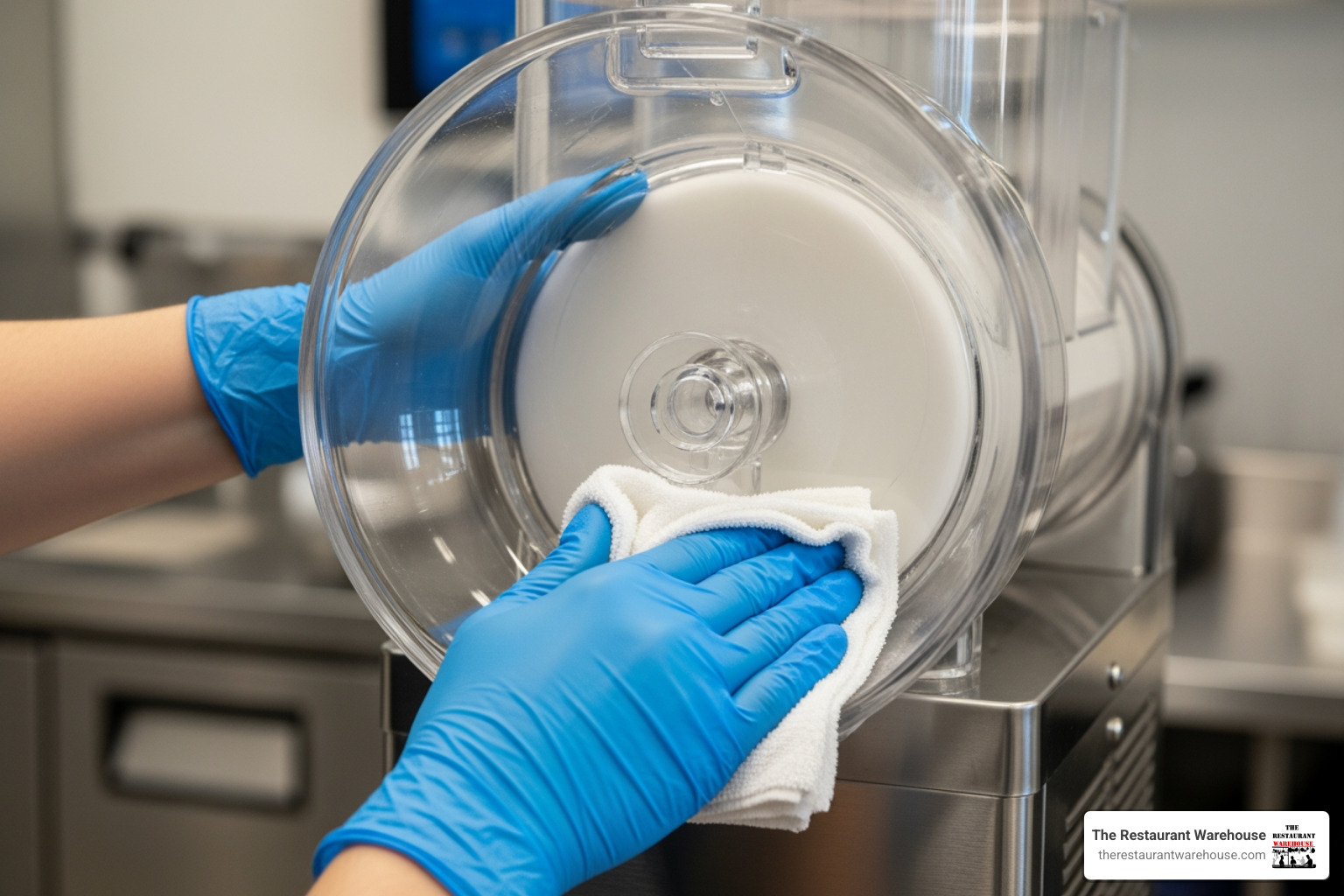
How to Clean and Maintain Your Slushie Machine
Proper cleaning and maintenance are non-negotiable for any foodservice equipment, and your slushie machine is no exception. It ensures sanitation, extends the life of your machine, and keeps those delicious drinks flowing.
-
Daily Cleaning Procedures:
- Unplug and Drain: Always, always unplug the machine before cleaning. Drain any remaining product from the bowls.
- Wash Removable Parts: Remove all detachable components such as the bowls, augers, lids, and spigots. Wash these thoroughly with warm, soapy water. Use a soft brush for hard-to-reach areas.
- Wipe Down Interior: Wipe down the interior of the bowls and any accessible surfaces with a food-safe cleaner.
- Rinse and Dry: Rinse all parts thoroughly with clean water to remove soap residue. Allow all components to air dry completely before reassembly to prevent bacterial growth. Many modern machines have a built-in rinse cycle, but manual washing is still needed for thorough cleaning.
- Sanitizing Food-Contact Parts: After washing, it’s crucial to sanitize all food-contact surfaces. Use a commercial food-grade sanitizer according to the manufacturer's instructions. This step is vital for preventing the growth of harmful bacteria.
-
Weekly Deep Cleaning:
- Disassemble Further: Once a week, perform a more thorough disassembly, including checking seals and gaskets.
- Clean Condenser: For air-cooled machines, clean the condenser fins with a brush or vacuum to ensure proper airflow. This prevents overheating and maintains efficiency.
- Inspect and Lubricate: Check all O-rings and seals for wear and tear. Replace any damaged ones. Apply food-grade lubricant to O-rings and moving parts as recommended by the manufacturer. This prevents leaks and ensures smooth operation of parts like the dispense valve.
-
Troubleshooting Common Problems:
- Leaking Dispenser: Often caused by worn or improperly seated O-rings or seals. Inspect, clean, lubricate, or replace them.
-
Inconsistent Freezing/No Slush: This could be due to several factors:
- Improper Sugar Content: The mix might not have enough sugar (Brix level) to achieve freezing point depression. Commercial syrups are formulated for this.
- Poor Airflow: Blocked condenser fins can cause the machine to overheat and not cool effectively.
- Overfilling: Too much product can hinder proper freezing.
- Ambient Temperature: A very hot environment can affect the machine's efficiency.
- Auger Not Turning: Could indicate a solid freeze-up (too much sugar or too low a temperature setting) or a motor issue. Power off, let it thaw slightly, and check for obstructions.
Regular, diligent cleaning and maintenance are the best ways to ensure your slushie machine operates efficiently, safely, and continues to churn out perfect frozen beverages, delighting your customers and boosting your revenue. Need help choosing the right machine or have maintenance questions? Contact our experts today!
Frequently Asked Questions about Slushie Machines
We often get asked a lot of questions about these fantastic machines. Here are some of the most common ones we hear from our clients in Seattle and across the US:
How long does it take for a slushie machine to make slush?
The time it takes for a slushie machine to create that perfect slush varies, but generally, commercial machines are designed for efficiency.
- Typical Timeframes: Most commercial machines can produce their first batch of slush within 20 to 45 minutes. Home-use models might take a bit longer, between 20 to 60 minutes.
-
Factors Affecting Freeze Time:
- Room Temperature: A warmer ambient temperature will naturally increase the freezing time as the machine has to work harder to cool the mix.
- Starting Temperature of the Liquid: Always pre-chill your liquids and ingredients. Adding warm liquid will significantly extend the freezing process. Pre-chilled liquids can help speed up the process considerably.
- Sugar Content (Brix Level): This is critical! The sugar in the mix lowers the freezing point. If the sugar content is too low, the mix might freeze solid. If it's too high, it might not freeze enough. Commercial slushie syrups are formulated with the optimal Brix level for consistent results.
- Machine Model and Power: More powerful commercial machines with robust refrigeration systems will freeze faster than smaller, less powerful units.
For busy establishments, understanding these factors helps in managing expectations and ensuring a steady supply of delicious slushies, even during peak hours.
Can you use real fruit in a slushie machine?
Yes, you can use real fruit in a slushie machine, but there's a trick to it to ensure your machine runs smoothly and your slushie texture is perfect.
- Best Practices for Using Fruit: The golden rule is to avoid large chunks or seeds. These can clog the auger mechanism, damage the machine, or lead to an inconsistent texture.
- Pureeing Fruit to a Smooth Liquid: For best results, always puree your fruit thoroughly until it becomes a smooth liquid. Think of it as making a very fine fruit juice or nectar.
- Mixing with Juice or Syrup for Proper Consistency: Pureed fruit alone might not have the necessary sugar content or consistency to freeze correctly. Mix your pureed fruit with traditional slushie syrup or a simple syrup (sugar dissolved in water) and possibly some fruit juice. This ensures the correct Brix level for proper freezing point depression and a desirable texture.
Using real fruit allows for endless flavor creativity, offering fresh, natural options that can differentiate your menu. Just remember to prepare it properly!
What are common problems with slushie machines and how do you fix them?
Even the most reliable slushie machine can encounter a hiccup now and then. Knowing how to troubleshoot common issues can save you time and money.
-
Machine Not Freezing:
- Check Sugar Content: As mentioned, too little sugar can cause the mix to freeze solid, while too much might prevent it from freezing adequately. Ensure you're using a mix with the correct Brix level.
- Airflow and Condenser: Ensure the machine has proper ventilation and that the condenser coils are clean and free of dust or debris. Blocked airflow can cause the machine to overheat and lose cooling efficiency.
- Ambient Temperature: If the machine is in a very hot area, it might struggle to maintain freezing temperatures.
- Refrigerant Level: If all else fails, a low refrigerant level might be the culprit, requiring a professional technician.
-
Leaking Dispenser:
- Check and Lubricate O-rings and Seals: This is the most common cause. Over time, O-rings can dry out, crack, or become dislodged. Remove the spigot, inspect the O-rings, clean them, apply food-grade lubricant, and reassemble carefully. Replace any damaged seals.
- Proper Assembly: Ensure all parts of the dispenser assembly are correctly put together and tightened appropriately.
-
Auger Not Turning:
- Solid Freeze-Up: If the mix has frozen solid, the auger can't move. This usually happens if the sugar content is too low or the temperature setting is too cold. Turn off the machine, let the mix thaw slightly, and adjust the sugar or temperature.
- Motor Issues: If the machine isn't frozen solid and the auger still isn't turning, there might be a motor or drive system issue, which would require professional service.
- Obstructions: Check for any foreign objects or large fruit chunks that might be jamming the auger.
Regular maintenance, as discussed earlier, goes a long way in preventing these common problems. When in doubt, always consult your machine's manual or contact a qualified service technician.
Conclusion: Finding the Perfect Frozen Beverage Solution
Adding a slushie machine to your foodservice operation is more than just buying a piece of equipment; it's an investment in increased profitability, customer satisfaction, and menu versatility. From the vibrant allure of a classic blue raspberry slushie to the sophisticated chill of a frozen margarita, these machines offer endless possibilities.
We've explored the fascinating mechanics behind how these machines transform simple liquids into delightful frozen treats, differentiating them sharply from their snow cone cousins. We've dug into the critical distinctions between home-use and robust commercial-grade models, emphasizing why durability, capacity, and specialized features are paramount for businesses.
For our clients, whether in Seattle or across the US, the key considerations when buying a commercial slushie machine include capacity (single, double, or triple bowls), specialized features like reversing augers and LED merchandising, and understanding the precise power requirements. We've also armed you with the knowledge to create fantastic alcoholic slushies (remember that 5-7% ABV rule!) and maintain your machine with diligent cleaning practices to ensure longevity and hygiene.
The benefits of owning a commercial slushie machine are clear: high-profit margins, broad customer appeal, and the ability to offer diverse frozen beverages year-round. Don't let common issues deter you; with proper care and troubleshooting know-how, your slushie machine will be a reliable workhorse.
At The Restaurant Warehouse, we pride ourselves on supplying top-quality foodservice equipment and supplies at lower prices by avoiding high commissions and retail overhead. We are dedicated to serving the foodservice industry, offering affordable, wholesale pricing as our unique selling point. We believe every business, big or small, deserves access to quality equipment that drives success.
About The Author

Sean Kearney
Sean Kearney is the Founder of The Restaurant Warehouse, with 15 years of experience in the restaurant equipment industry and more than 30 years in ecommerce, beginning with Amazon.com. As an equipment distributor and supplier, Sean helps restaurant owners make confident purchasing decisions through clear pricing, practical guidance, and a more transparent online buying experience.
Connect with Sean on LinkedIn, Instagram, YouTube, or Facebook.