

Slushy Machine Deals: Discover Where to Purchase Your Own
Why Finding the Right Place to Buy a Slushy Machine Matters
Deciding where to buy a slushy machine is the first step toward serving delicious frozen drinks, whether for family fun or as a business venture. The right choice depends entirely on your needs, from a simple home model to robust commercial equipment. Your purchasing decision will impact price, selection, and the level of support you receive.
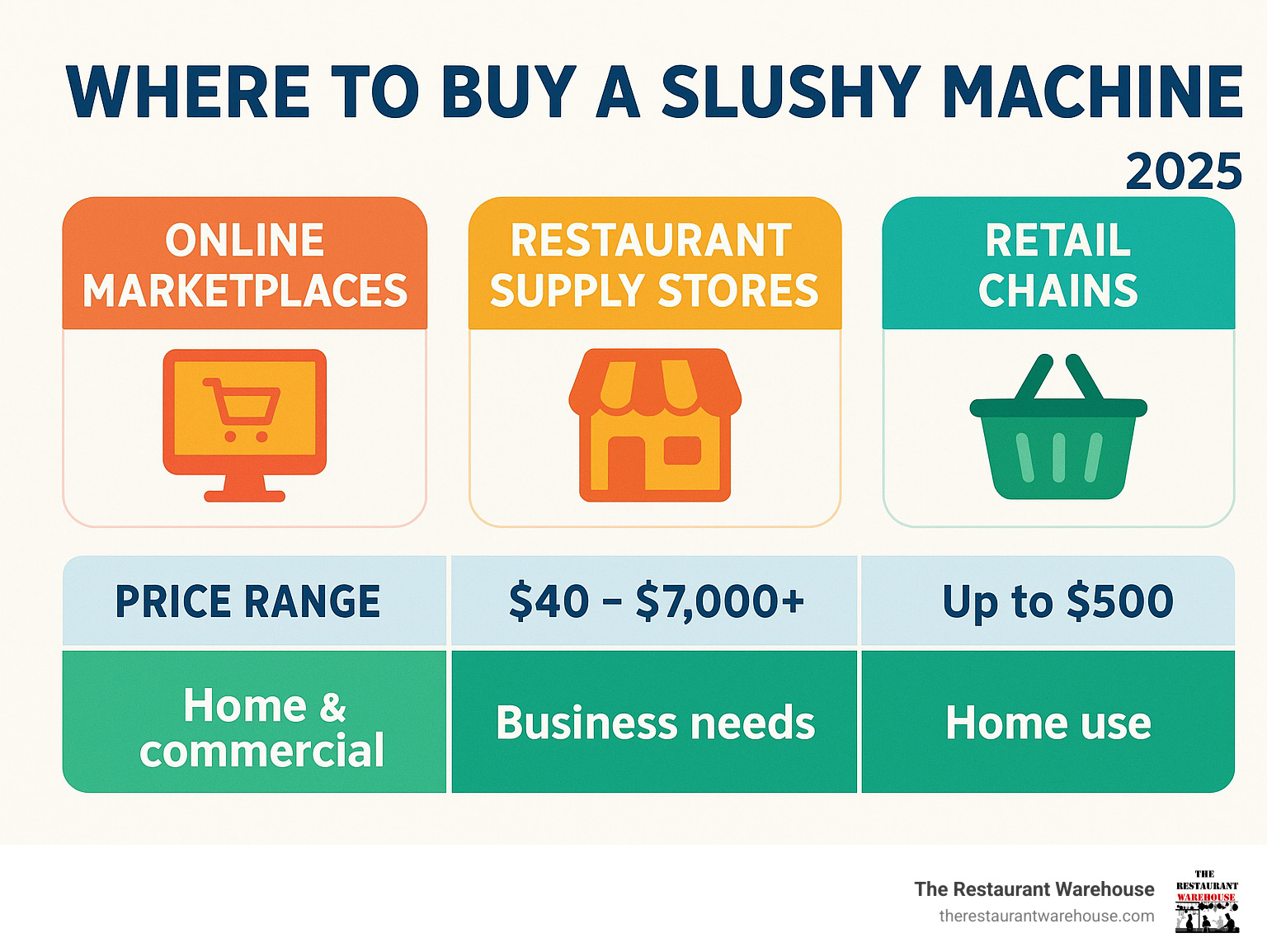
Heres a quick look at your main options:
- Online Restaurant Suppliers (like The Restaurant Warehouse): Best for commercial models, offering expert support and wholesale pricing.
- Major E-commerce Platforms: A wide selection of both home and commercial units.
- Direct from Manufacturers: Often provides the best warranty terms.
- Physical Restaurant Supply Stores: Offer professional guidance for business needs.
- Big Box & Specialty Retailers: Convenient for home models, with options for in-person viewing.
Choosing the right channel has real-world consequences beyond the sticker price. It can influence warranty length and coverage, access to technical support, the availability of spare parts, return or exchange flexibility, and even how quickly you receive the machine. For commercial buyers, the sellers ability to provide freight shipping coordination, installation guidance, and ongoing service support can make a measurable difference in uptime and profitability.
Key Price Ranges:
- Home models: $40 - $500
- Commercial single-bowl: $500 - $3,000
- Commercial multi-bowl: $1,500 - $17,000+
Those ranges reflect factors like build quality (plastic versus stainless steel), the power of the freezing system, bowl count, and brand reputation. New commercial equipment generally carries stronger warranties and support than used machines. Reconditioned or certified refurbished units can be a budget-friendly option when sourced from a reputable seller who backs the unit with a warranty and has verified the condition of critical components such as the compressor, auger, seals, and controls.
The frozen drink market is booming, and a commercial slushy machine can be a significant profit center, serving hundreds of drinks per hour. Home slushy machines are compact, countertop-friendly appliances perfect for family gatherings. In contrast, commercial units are powerful workhorses built for high-volume service, often requiring dedicated floor space and electrical circuits.
Matching your purchase location to your specific needs is key. Restaurant supply experts understand health codes and volume requirements, while online retailers offer competitive pricing. This guide will help you steer these options to find the perfect machine.
Common buying mistakes to avoid:
- Underestimating demand and buying a unit with too little capacity, leading to slow recovery times and frustrated guests or customers.
- Ignoring electrical requirements. Some commercial machines need a dedicated circuit or higher voltage; confirm your site can support the machine you buy.
- Overlooking ventilation and ambient temperature. Tight spaces and hot kitchens can reduce freezing performance; ask the seller for clearance and ambient specs.
- Forgetting the total cost of ownership. Budget not just for the machine, but also for syrups and mixes, cleaning supplies, routine seal replacements, and possible freight or service costs.
- Neglecting warranty terms. Length, whats covered, and service response times matter. A low upfront price may not be the best long-term value if support is lacking.
A quick ROI snapshot for businesses: If you sell a 12 oz drink at $3.50 with a product cost (mix, cup, lid, straw) around $0.80, you gross roughly $2.70 per drink before labor and overhead. Selling just 50 drinks per day could generate about $135 of gross profit daily. Over a busy season, the machine can pay for itself quickly, especially if you choose a model matched to your demand and keep it well-maintained.
Decoding Slushy Machines: Home vs. Commercial Models
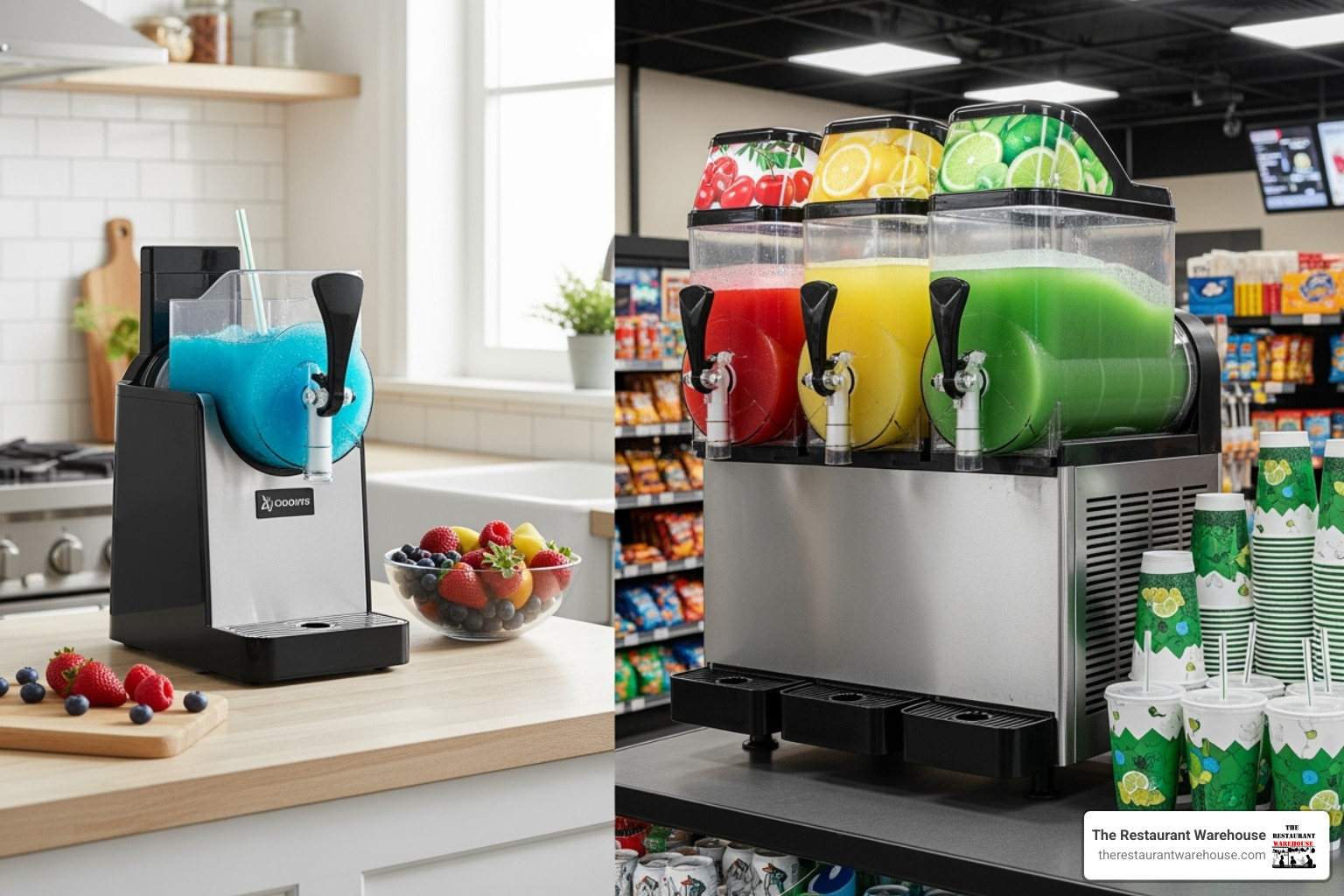
When youre figuring out where to buy a slushy machine, the most fundamental choice is between a home and a commercial model. The difference isnt just sizeit's a completely different class of appliance designed for vastly different purposes.
Home-use machines are designed for your kitchen counter and family gatherings. They are affordable, with prices ranging from $40 for basic models to $500 for more advanced units. Key features include:
- Capacity: Typically 1-3 liters, perfect for a party or a hot summer afternoon.
- Functionality: Many require pre-chilled ingredients or added ice. The freezing process is gradual.
- Power & Size: They plug into a standard outlet and are compact, similar in size to a large blender.
Commercial-grade machines are built for the demanding environment of a business. They are profit-generating workhorses designed for continuous use in restaurants, convenience stores, and event venues. Their defining characteristics are:
- Capacity: Starting at 10+ liters per bowl, with multi-bowl options for flavor variety. Some can serve up to 480 drinks per hour.
- Construction: Heavy-duty stainless steel bodies and industrial-grade components ensure durability.
- Functionality: Powerful compressors and fast-freeze technology turn liquid into slush in minutes. They often include energy-saving standby modes, adjustable thickness settings, and independent bowl controls.
- Power & Size: These units range from large countertop models to floor models that can stand over five feet tall. They often require dedicated electrical circuits (sometimes 208-230V) to handle their power needs.
Beyond the basics, it helps to understand beverage styles and how they influence your choice:
- Slushy or granita: Typically water-based with sugar or syrup. These mixtures freeze readily and are ideal for high-throughput machines with adjustable viscosity.
- Dairy or cream-based beverages: Require machines with robust compressors and fine-tuned controls to prevent over-thickening or separation.
- Frozen cocktails: Alcohol lowers the freezing point, so look for machines with alcohol-ready settings and stronger refrigeration systems to maintain texture and flow.
Ambient temperature and placement also matter. A machine set near a hot line or in direct sunlight will have to work harder. Air-cooled models need clearances around vents to breathe; keep intake and exhaust unobstructed. For especially tight or hot environments, consult a restaurant equipment expert for placement strategies and model recommendations.
Choosing Based on Your Needs
Your decision should be guided by a realistic assessment of your needs.
- For personal and family use, a home machine is the logical choice. It can handle small parties, doesnt require special installation, and is easy to store.
- For business use, a commercial machine is a necessity. A small caf E9 might start with a single-bowl countertop model, while a high-volume concession stand will need a multi-bowl floor unit to keep up with demand and offer variety.
Operational considerations for businesses:
- Capacity planning: Estimate peak-hour demand. If you expect 150-200 drinks in a short window, a multi-bowl unit with fast recovery is essential.
- Downtime planning: Machines with night or standby modes preserve product texture after hours while reducing energy use, so youre ready for the next rush.
- Cleaning workflow: Models that disassemble easily and offer rinse or self-clean cycles save labor and reduce downtime.
Start with your end goal. If youre dreaming of a profitable beverage line, invest in commercial quality from the start. If you just want to make summer more fun for your family, a home model will provide years of enjoyment without the complexity and cost of a commercial unit.
Slushy Machine Guide and Best Slushy Machine 2024 offer deeper dives into specific models and features to help you make the perfect choice.
Key Features to Consider Before You Buy
Before you decide where to buy a slushy machine, understanding the key features will help you separate a great investment from a costly mistake. This is your pre-purchase checklist for both home and commercial models.
Capacity and Bowl Count
Matching capacity to your needs is critical. Overestimate, and you waste money and space; underestimate, and youll frustrate customers or guests.
- Home Use: A single-bowl machine with 1.5-3 liters is usually sufficient for family use and small parties.
- Commercial Use: Capacity is measured in output. Small cafes might use a 6-liter tank, while high-volume venues need machines with multiple 15-liter bowls, capable of serving up to 480 drinks per hour. Multi-bowl options (double or triple) allow you to serve multiple flavors simultaneously, boosting sales and efficiency.
If youre unsure, consider your peak window. Do you need to serve 60 drinks in 30 minutes, or 60 drinks over two hours? Recovery time (how fast the machine re-freezes mix after servings) is as important as total bowl volume.
Power and Freezing System
The machines power (wattage and amperage) determines its freezing speed and consistency.
- Home Models: Typically run on standard household power. Advanced models may feature special technology, such as rapid-chill systems that can freeze liquids quickly without requiring pre-made ice.
- Commercial Models: Feature powerful compressors (from 500W to over 1100W) for rapid, consistent freezing even during peak hours. These systems require proper ventilation and may need dedicated electrical circuits.
Air-cooled vs. water-cooled: Air-cooled machines are simpler to install and are most common; maintain adequate clearance around vents. Water-cooled units (where available) can perform consistently in hot environments but require a suitable water supply and drainage, which adds complexity.
Ambient conditions: Most machines are rated for operation within a certain room temperature range. Very hot spaces slow freeze times and may require higher-output models or strategic placement away from heat sources.
Durability and Ease of Maintenance
Durability ensures your investment lasts, especially in a commercial setting.
- Construction: Look for stainless steel construction in commercial units for maximum durability. High-impact, food-grade plastic bowls are also essential.
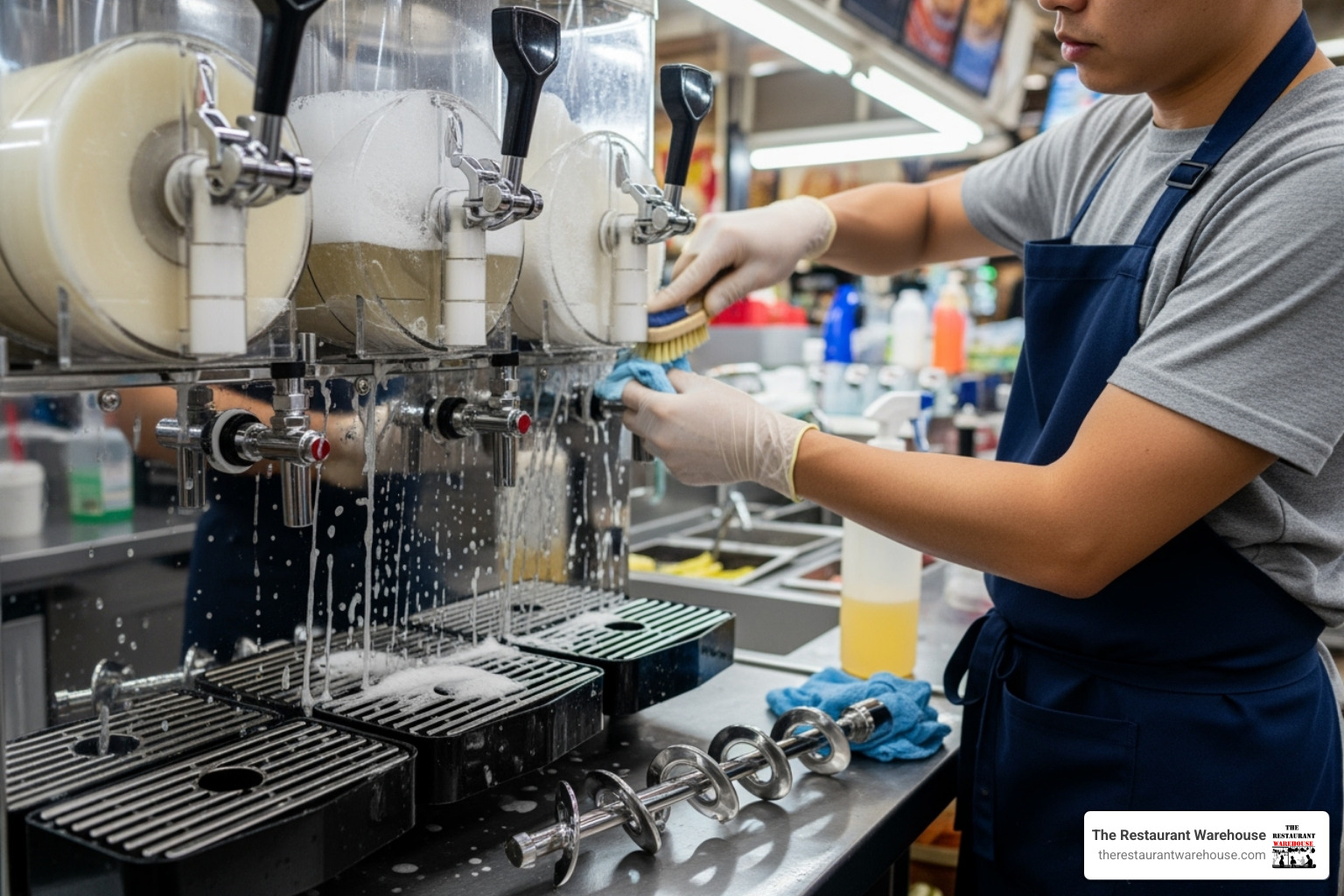
- Cleaning: Easy cleaning is a must. Features like gasketless spigots, removable drip trays, and self-cleaning/rinse cycles save significant time and effort. Dishwasher-safe parts are a huge plus for home models.
- Serviceability: Clear part diagrams, accessible components, and readily available seals and auger parts reduce downtime. Ask the seller about parts availability and typical lead times.
- Sanitation: Smooth internal surfaces and easy-disassemble components help prevent residue buildup. Follow manufacturer cleaning schedules to maintain product quality and comply with local health codes.
Crystal Clear Ice Awaits: Best Ice Machine Cleaning Solutions Reviewed
Special Features and Technology
These bells and whistles often provide significant practical benefits.
- Illuminated Lids: A great marketing tool that makes colorful drinks look irresistible to customers.
- Independent Bowl Controls: Allows you to manage each flavors consistency separately or shut one bowl down during slow periods.
- Low-Mix Indicator Lights: A lifesaver during busy times, alerting you to refill a bowl before it runs empty.
- Adjustable Viscosity: Lets you fine-tune the slushys thickness, from a thin, drinkable beverage to a thick, spoonable treat.
- Alcohol-Ready Features: Essential for businesses serving frozen cocktails, as these machines are designed to handle the different freezing points of alcoholic mixtures.
- Standby/Night Mode: Reduces energy use after hours while preserving product texture for the next service period.
- User Interface: Clear displays and intuitive controls reduce training time and user error.
Safety and compliance considerations:
- Look for certifications relevant to your region and application.
- Confirm food-contact materials are BPA-free and meet sanitation standards.
- Review electrical labeling and installation guidance to match your sites power.
Quick pre-purchase checklist:
- Capacity and number of bowls match your peak demand.
- Electrical requirements confirmed with your site (voltage, amperage, dedicated circuit).
- Ventilation and clearances available at the planned location.
- Cleaning process is manageable for your team and schedule.
- Warranty, service options, and parts availability are clear before purchase.
Where to Buy a Slushy Machine: Your Ultimate Shopping Guide
Now that you know what to look for, lets explore where to buy a slushy machine. The right retailer can make all the difference in your purchasing experience, especially when investing in commercial equipment.
Online Shopping with The Restaurant Warehouse: The Best Place to Buy a Slushy Machine for Variety
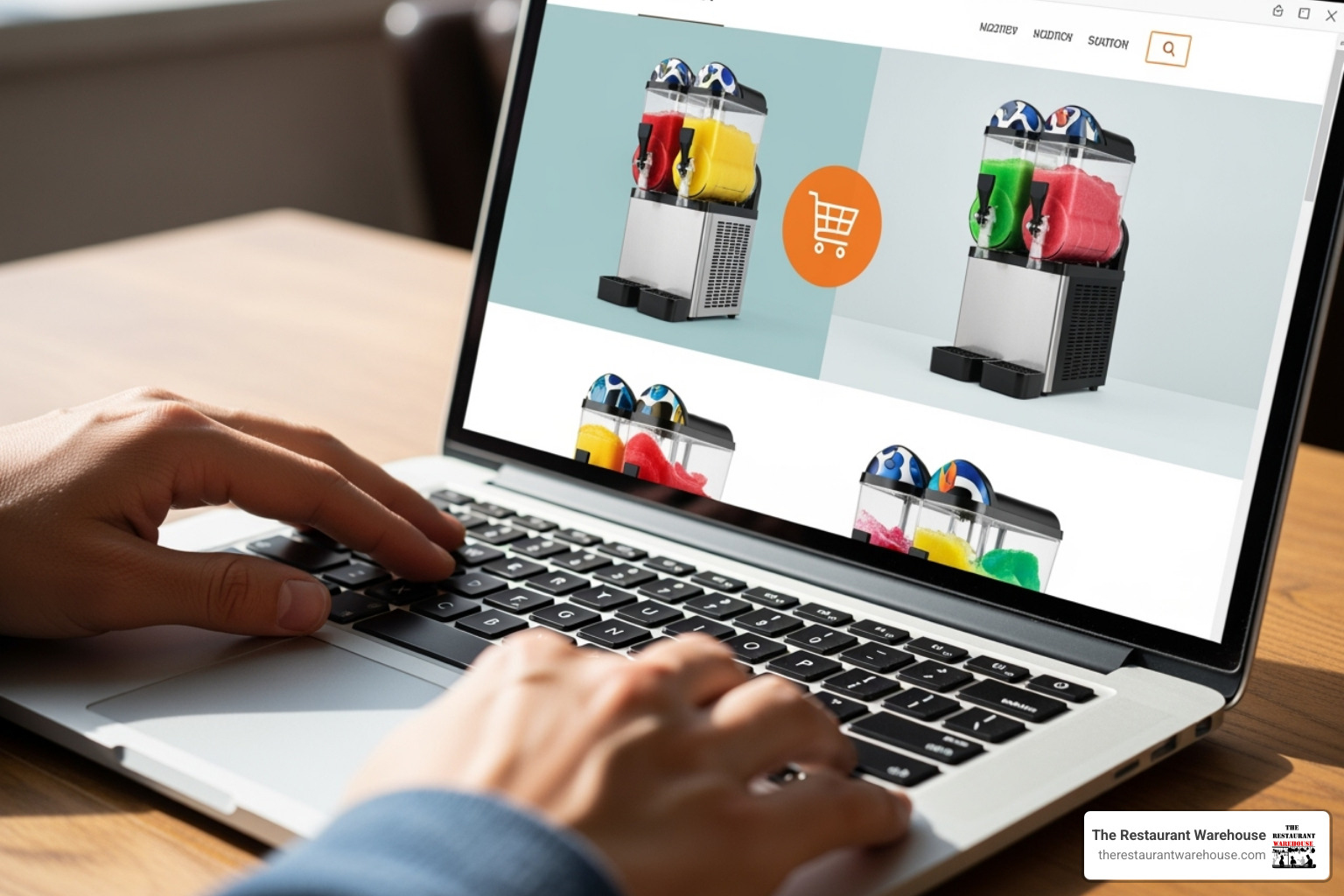
For commercial slushy machines, The Restaurant Warehouse offers a distinct advantage: genuine wholesale pricing without the retail markup. Our online platform is curated with professional-grade equipment designed for the demands of any foodservice operation.
We provide a broad selection of models, from single-bowl units for cafes to multi-bowl powerhouses for high-volume venues. Our focus is on machines that deliver consistent, reliable performance. Competitive pricing is our core promise. By eliminating middleman commissions and retail overhead, we pass the savings directly to you, ensuring you get commercial-quality equipment at a price that supports your bottom line.
We understand the importance of making an informed decision. Thats why we provide detailed specifications, high-quality images, and comprehensive descriptions for every machine. Our direct-from-manufacturer options guarantee you receive authentic equipment with full warranty coverage. The convenience of online shopping allows you to compare models and make a pressure-free decision, with streamlined ordering to get your machine shipped quickly.
Slushy Machines at The Restaurant Warehouse
Restaurant Supply Experts: Where to Buy a Slushy Machine for Your Business
Partnering with a restaurant supply expert like us provides benefits that general retailers cant match. We specialize in professional-grade equipment built for continuous operation and the rigorous standards of the foodservice industry.
Our expert guidance is invaluable. We understand health codes, electrical specifications, and operational details that are crucial for success. This support, combined with wholesale pricing opportunities and access to manufacturer incentives, ensures you get the best value. Furthermore, we prioritize brands with strong warranty and service plans, because we know that any downtime costs your business money. We also offer options for new and certified reconditioned units, providing quality alternatives for every budget.
Specialty Appliance and Retail Partners
For home use, specialty appliance stores and major retailers are a good option. They focus on affordable, convenient models for families and casual entertainment. The main advantages are the ability to see products in-store and convenient return policies. These retailers often sell machines bundled with starter kits, making it easy to get started right away. While they serve the home market well, they lack the robust equipment and specialized knowledge needed for business applications.
Direct From Manufacturers
Buying directly from a manufacturer can provide excellent warranty terms and the latest model availability. This route is often best for buyers who know exactly what they want and have the technical resources to evaluate specs, installation requirements, and service arrangements. Consider asking about lead times, training resources, and parts stocking if you choose this path.
What About Used or Auction Purchases?
Used equipment can save money upfront, but its important to weigh the risks:
- Unknown service history can hide wear on compressors, auger bushings, seals, or controls.
- Short or no warranty increases your exposure if a critical part fails early.
- Freight and repair costs can erase the initial savings.
If you do go used, prioritize sellers that fully test machines, document repair work, and provide a real parts-and-labor warranty for a defined period.
Understanding the Investment: Pricing, Financing, and Delivery
Once you know where to buy a slushy machine, its time to consider the full financial picture. This includes the initial price, potential financing, and delivery costs.
| Feature / Model Type | Home Use (Entry-Level) | Home Use (Premium) | Commercial (Single Bowl) | Commercial (Multi-Bowl) |
|---|---|---|---|---|
| Typical Price Range | $40 - $150 | $150 - $500 | $500 - $3,000 | $1,500 - $17,000+ |
| Capacity (approx.) | 0.5 - 2 Liters | 1.5 - 3 Liters | 6 - 15 Liters | 12 - 45 Liters |
| Construction | Plastic | Plastic/Metal Accents | Stainless Steel/Durable Plastic | Stainless Steel/Heavy-Duty Components |
| Power | Basic (100-200W) | Moderate (200-500W) | Powerful (500-1000W+) | Very Powerful (1000W+) |
| Key Features | Basic freezing, manual operation | Auto-freeze, some controls | Fast freeze, independent controls | High output, advanced controls, standby |
| Typical Use | Occasional home use | Regular home use, small parties | Small cafe, food truck, low-volume events | High-volume restaurants, cinemas, large events |
Price Ranges
As the table shows, prices vary widely. Home models are affordable, starting around $40 and going up to $500 for premium units with more features. Commercial machines represent a more significant investment, starting from a few hundred dollars for a small unit to over $17,000 for a high-capacity, multi-bowl machine. Key factors driving the price are capacity, number of bowls, brand reputation, material quality (stainless steel vs. plastic), and advanced features like rapid-freeze technology.
To understand total cost of ownership, consider:
- Energy usage: Larger compressors and multiple bowls consume more power. Night or standby modes can cut operating costs when traffic slows.
- Consumables: Syrups, mixes, cups, lids, and straws factor into ongoing expense.
- Maintenance: Periodic seal or gasket replacements, cleaning agents, and potential service labor should be budgeted.
- Downtime: A reliable machine and responsive support protect revenue during peak periods.
Financing and Leasing Options
For businesses, the upfront cost of a commercial machine can be significant. Financing and leasing options are a smart way to manage this expense by converting it into predictable monthly payments. This preserves your cash flow for other essential business needs like inventory and marketing.
Common structures include:
- $1 Buyout Lease: Higher monthly payments, but you own the machine for $1 at term end.
- Fair Market Value (FMV) Lease: Lower monthly payments with an option to purchase at fair market value after the term.
- Rent-to-Own Programs: Try the machine in your operation while building equity toward ownership.
- Seasonal Payment Plans: Align payments with your busiest months if your sales are seasonal.
Leasing often comes with tax advantages, as payments can be considered business expenses. Some suppliers offer rent-to-own programs, which are perfect for testing a machines profitability in your establishment before committing to a full purchase. The application process is typically fast and straightforward, often handled online with quick approvals.
Shipping and Delivery Expectations
After your purchase, its important to know what to expect for delivery.
- Home Machines: Usually ship via standard carriers (3-7 business days). Some retailers offer expedited or same-day options.
- Commercial Machines: These are large and heavy, requiring freight shipping that can take 2-12 business days. Shipping costs can be significant and should be factored into your budget.
- Freight Considerations: Clarify if you need a liftgate, inside delivery, or appointment scheduling. Accessorial fees may apply for limited-access locations or redelivery.
- Site Prep: Ensure your electrical outlet is correct for the unit, the space is cleared with proper ventilation, and a sturdy counter or floor area is ready to support the weight.
- Upon Arrival: Always inspect your machine for shipping damage before signing the delivery receipt. Check for dents, scratches, or other issues. Document any problems with photos and notes on the receipt, and contact your seller immediately. This step is critical, as your signature confirms youve accepted the equipment in good condition.
Making an Informed Choice: Brands, Reviews, and Support
When deciding where to buy a slushy machine, the brand behind the product is a key indicator of quality, reliability, and the support youll receive post-purchase.
What to Look for in a Brand
A strong brand reputation is earned through consistent performance. For commercial equipment, this is non-negotiable. Heres what to prioritize:
- Warranty: Check the length and coverage for both parts and labor. A long warranty, especially on critical components like the compressor (some offer up to 5 years), signals the manufacturers confidence in their product.
- Technical Support: Downtime costs money. Look for brands that offer responsive technical support, remote training, and fast access to parts. This level of service can turn a major problem into a minor inconvenience.
- Availability of Spare Parts: Even the best machines need maintenance. A brand with a good inventory of readily available spare parts will save you time and frustration down the road.
- Certifications and Compliance: Check for applicable safety and sanitation certifications. This is especially important for inspections and insurance.
- Documentation: Clear manuals, exploded parts diagrams, and maintenance schedules make ownership easier and reduce service time.
How to Leverage Customer Reviews
Customer reviews offer real-world insights that marketing materials cant provide. Use them wisely to inform your decision.
- Read Beyond the Stars: A detailed four-star review is often more useful than a vague five-star one. Look for recurring themes in both positive and negative feedback. If multiple users praise the easy cleaning or quiet operation, its likely true. If several mention the same part failing, its a red flag.
- Find Relevant Use Cases: If you plan to serve frozen margaritas, seek out reviews from other bar or restaurant owners. Their experience will be more relevant than that of a home user.
- Check Multiple Platforms: Compare reviews across different websites to get a balanced perspective and identify consistent patterns in feedback.
- Value Long-Term Reviews: Feedback from users who have owned the machine for months or years provides the best insight into long-term durability and reliability.
- Look for Context: Ambient temperature, duty cycle, and mix type affect performance. A review that states these factors helps you decide if the machine fits your environment.
Practical steps before you buy:
- Ask for current lead times and confirm warranty claim procedures.
- Request a list of recommended spare parts (seals, O-rings, spigots) to keep on hand.
- Verify electrical specs and ventilation requirements against your site plan.
Troubleshooting Tips for a Commercial Ice Machine Not Making Ice
Well-supported equipment, combined with realistic expectations about capacity and maintenance, leads to the best long-term results. When you buy from a restaurant supply specialist, you also gain a partner who can help you train staff, tune settings, and plan preventative maintenance to keep your slushy program running flawlessly.
Conclusion
Weve covered everything from countertop models for your kitchen to commercial powerhouses that can redefine your businesss beverage program. The journey to finding the perfect slushy machine starts with a clear understanding of your goals.
Your path is simple:
- Assess Your Needs: Are you serving family or customers? This determines whether you need a home or commercial model.
- Prioritize Key Features: Focus on the capacity, power, and durability that match your expected usage. Dont forget ease of cleaning.
- Choose the Right Purchasing Channel: While retail stores are fine for home use, a business needs a partner with industry expertise.
This is where The Restaurant Warehouse comes in. We believe owning a commercial slushy machine is an investment in creating experiences and generating profit. We cut out the high retail markups to bring you affordable, high-quality commercial equipment backed by the expertise of the foodservice industry.
When you choose us, youre not just buying a machine; youre gaining a partner dedicated to helping your investment pay off. From model selection and financing options to shipping coordination and post-sale support, our team is here to help you launch and scale a successful frozen beverage program. Whether youre introducing a signature granita, expanding into frozen cocktails, or boosting impulse sales with eye-catching flavors, the right machine and the right supplier make all the difference.
Heres to many frosty, profitable days ahead.
About The Author

Sean Kearney
Sean Kearney is the Founder of The Restaurant Warehouse, with 15 years of experience in the restaurant equipment industry and more than 30 years in ecommerce, beginning with Amazon.com. As an equipment distributor and supplier, Sean helps restaurant owners make confident purchasing decisions through clear pricing, practical guidance, and a more transparent online buying experience.
Connect with Sean on LinkedIn, Instagram, YouTube, or Facebook.