

The Ultimate 2026 Restaurant Health Inspection Checklist: 10 Critical Areas
A health inspection can be one of the most stressful events for any restaurant operator. A single critical violation can damage your reputation, lead to fines, or even temporarily shut you down. But it doesn't have to be a source of anxiety. With proactive preparation and a systematic approach, you can turn every inspection into an opportunity to showcase your commitment to safety and excellence. This guide provides a detailed, 10-point restaurant health inspection checklist, breaking down the critical focus areas for inspectors.
We'll move beyond the basics, offering actionable tips, common pitfalls to avoid, and essential documentation to help you stay compliant, protect your customers, and run a safer, more efficient kitchen. Our goal is to transform your readiness, ensuring you're prepared not just for the inspector, but for every single service.
While this guide focuses specifically on food safety and kitchen operations, a truly prepared establishment considers the entire facility. To truly transition from anxiety to readiness, it's beneficial to also understand the wider scope of a commercial building inspection checklist, which covers structural and systems integrity that can indirectly impact your food service environment. This holistic view ensures no detail is overlooked. By mastering both food-specific protocols and overall facility maintenance, you build a comprehensive culture of safety that inspectors will recognize and respect. Let’s dive into the critical checklist items that will make your next inspection a success.
1. Temperature Control and Cold Storage Equipment
Proper temperature control is the absolute cornerstone of food safety and a primary focus on any restaurant health inspection checklist. Inspectors will meticulously verify that all refrigeration units, including walk-in coolers, reach-in freezers, and refrigerated prep tables, are operating correctly. The critical temperature zones they look for are 41°F (5°C) or below for refrigerated items and 0°F (-18°C) or below for frozen foods. Maintaining these temperatures is non-negotiable, as it significantly slows the growth of harmful bacteria that cause foodborne illnesses.
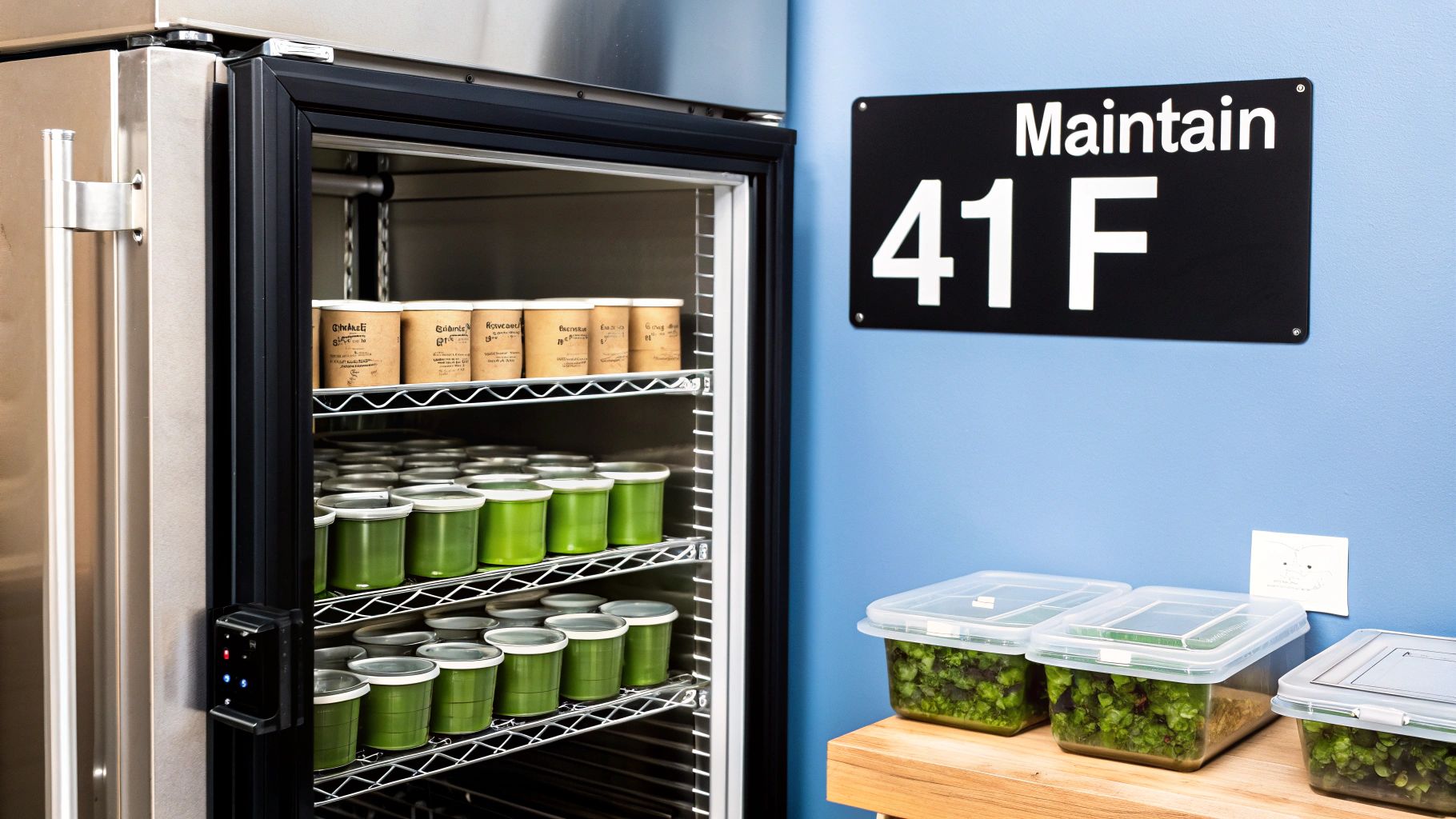
This checkpoint is number one because temperature abuse is a leading contributor to foodborne illness outbreaks. A failing compressor or an improperly sealed door can quickly turn safe ingredients into a significant public health risk, making equipment reliability and consistent monitoring essential. For more specific details on ideal settings, you can find a comprehensive guide on maintaining the correct walk-in cooler temperature.
Actionable Tips for Compliance
To ensure your equipment passes inspection and protects your customers, implement these proactive measures:
- Daily Temperature Logging: Train staff to manually check and log the temperature of every refrigeration unit at the beginning and end of each shift. Use calibrated thermometers for accuracy.
- Preventative Maintenance Schedule: Contract a qualified technician for quarterly service on all refrigeration units. This helps identify potential issues like coolant leaks or failing parts before they cause a critical failure.
- Invest in Modern Technology: Units like True or Atosa refrigeration often come with digital temperature displays and alarms that alert staff to fluctuations. Consider upgrading to ENERGY STAR certified models to also benefit from lower utility costs.
- Maintain Clear Records: Keep a dedicated binder with your daily temperature logs, thermometer calibration records, and all maintenance receipts. This documentation demonstrates due diligence to an inspector.
- Do Not Overload Units: Ensure proper airflow by not over-packing shelves. Cold air must circulate freely around all food containers to maintain a consistent temperature throughout the unit.
2. Food Storage and Separation (Cross-Contamination Prevention)
Beyond temperature, the physical organization of your food storage is a critical component of any restaurant health inspection checklist. Inspectors will scrutinize how you store and separate different food types, focusing on preventing cross-contamination. They will verify that raw animal proteins like chicken and beef are stored on the bottom shelves, below any ready-to-eat (RTE) foods such as cooked vegetables, deli meats, or desserts. This hierarchical storage system is essential to prevent drips from raw products from contaminating items that won't undergo further cooking.
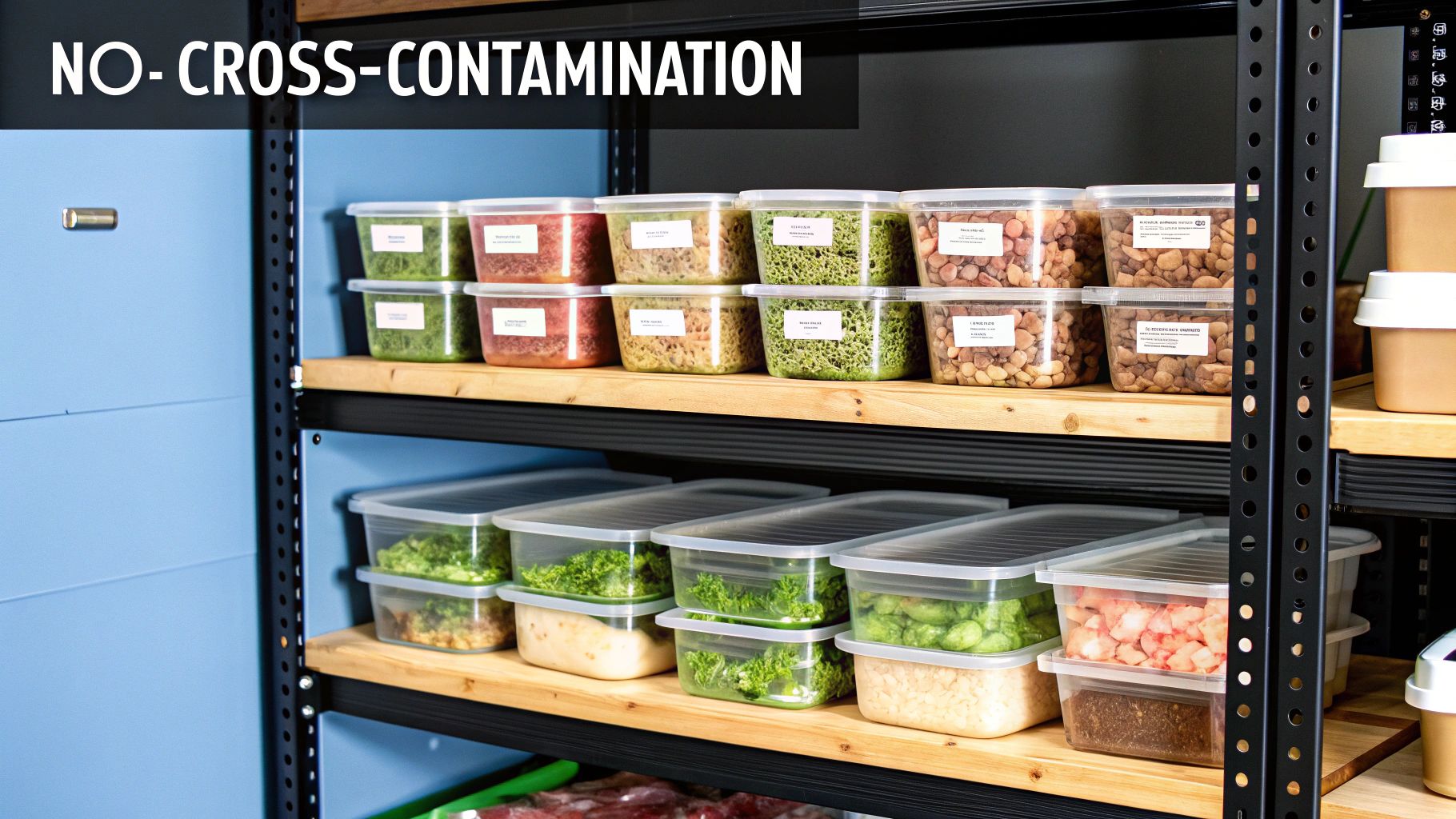
This checkpoint is ranked highly because improper storage is a direct pathway for pathogens like Salmonella and E. coli to spread. A single drop of raw chicken juice falling onto a salad mix can lead to a widespread foodborne illness outbreak. For multi-unit casual dining chains, this often means implementing system-wide color-coded storage labels, while food trucks might use compartmentalized coolers to achieve the same level of separation in a smaller space.
Actionable Tips for Compliance
To ensure your storage practices are safe and inspection-ready, implement these organizational strategies:
- Establish a Storage Hierarchy: Enforce a strict top-to-bottom storage order in all coolers and dry storage areas. From top to bottom: ready-to-eat foods, whole seafood, whole cuts of beef and pork, ground meats and fish, and whole and ground poultry.
- Implement a "First-In, First-Out" (FIFO) System: Label all food items with the date they were received or prepared. Organize shelves so older products are used before newer ones, reducing spoilage and waste while ensuring food quality.
- Create a Visual Storage Map: Design and post a clear, laminated diagram inside storage unit doors showing where each food category belongs. This visual cue helps new and busy staff members follow protocols correctly.
- Use Commercial-Grade Shelving and Containers: Invest in NSF-certified shelving and food-grade, sealed containers. This prevents chemical leaching, protects food from contaminants, and makes cleaning easier.
- Conduct Regular Staff Training: Hold monthly mini-sessions focused specifically on cross-contamination risks and proper storage protocols. Reinforce the "why" behind the rules to improve buy-in and compliance.
3. Cleanliness and Sanitation of Food Preparation Surfaces
Immaculate food preparation surfaces are a non-negotiable component of any restaurant health inspection checklist. Inspectors will thoroughly examine all food-contact surfaces, including cutting boards, prep tables, countertops, slicers, and utensils, for any signs of food debris, grease, or grime. The focus is not just on visible cleanliness but on the verified sanitization process that eliminates unseen pathogens, directly preventing cross-contamination and the spread of foodborne illness.
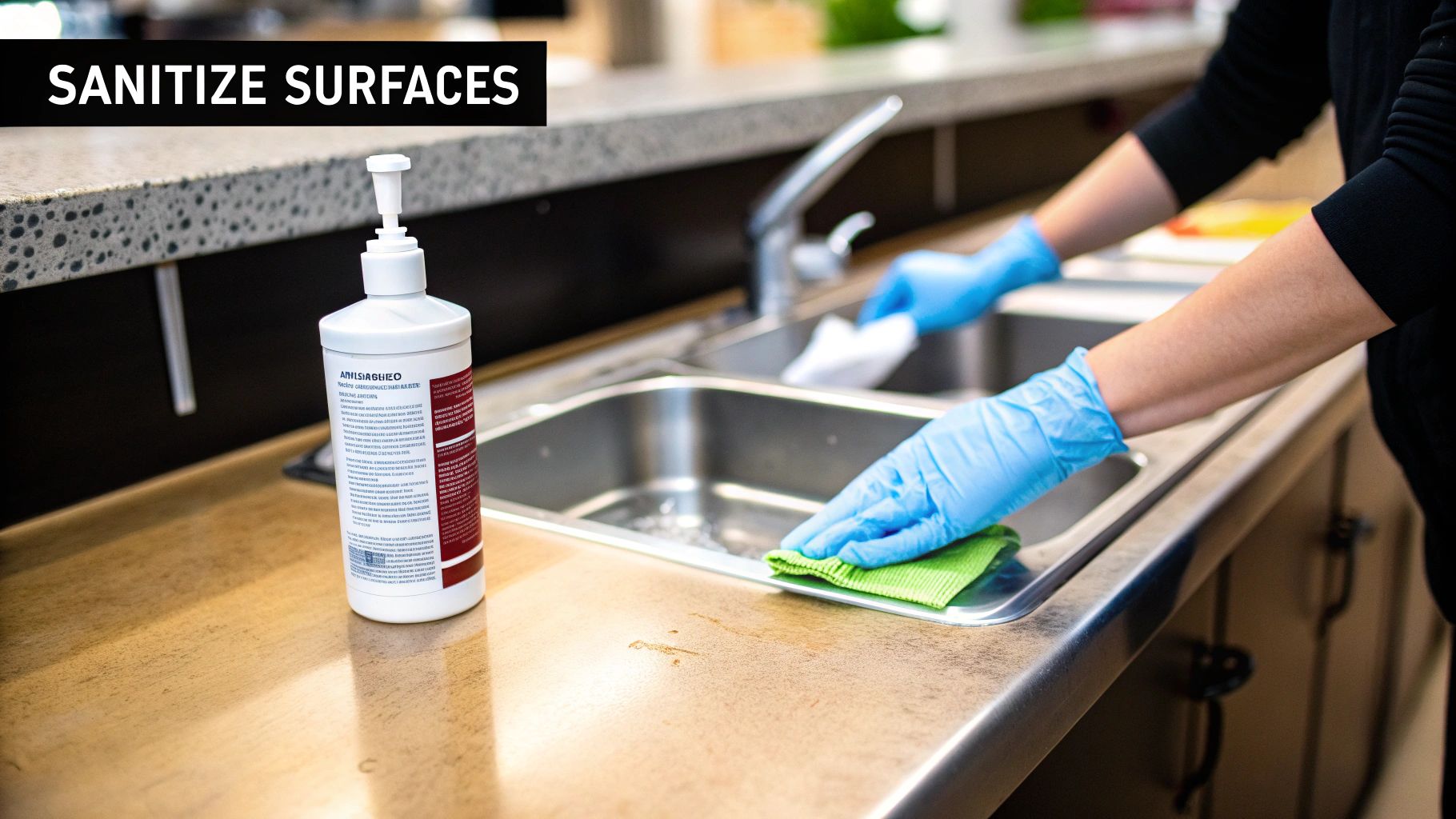
This checkpoint is crucial because direct contact between food and a contaminated surface is one of the quickest ways to introduce bacteria like E. coli or Salmonella into the food supply. A single un-sanitized cutting board can compromise an entire batch of ingredients, making rigorous cleaning protocols essential for public safety. For a deeper dive into best practices, explore this comprehensive restaurant kitchen cleaning checklist.
Actionable Tips for Compliance
To ensure your food prep areas meet and exceed health code standards, integrate these essential practices into your daily operations:
- Implement a Color-Coded System: Use color-coded cutting boards and utensils for different food types (e.g., red for raw meat, green for produce, blue for fish) to create a simple, visual barrier against cross-contamination.
- Verify Sanitizer Concentration: Keep sanitizer test strips at every station (e.g., three-compartment sink, sanitizing buckets) and train staff to check concentrations multiple times per shift. A solution that is too weak is ineffective, while one that is too strong can be a chemical hazard.
- Create Laminated Checklists: Post clear, laminated cleaning and sanitizing checklists at each workstation. This empowers staff with step-by-step instructions and creates accountability for "clean-as-you-go" policies.
- Invest in Durable Surfaces: Opt for non-porous, commercial-grade stainless steel worktables and high-quality composite cutting boards. These materials resist scratches and are easier to clean and sanitize effectively than wood or damaged plastic.
- Schedule and Document Deep Cleans: Designate specific times during off-hours or slower periods for deep cleaning all equipment and surfaces. Maintain a log to document when these tasks were completed and by whom, demonstrating a consistent commitment to sanitation.
4. Handwashing Facilities and Staff Hygiene
Impeccable staff hygiene, supported by properly equipped and accessible handwashing stations, is a non-negotiable component of food safety. Health inspectors will rigorously verify that dedicated handwashing sinks are available, strategically located, and fully stocked. This means ensuring each station provides hot and cold running water, soap, and a sanitary method for drying hands, such as single-use paper towels. The accessibility of these stations is just as crucial as their contents; they must be unobstructed and conveniently located near all food preparation, service, and dishwashing areas.
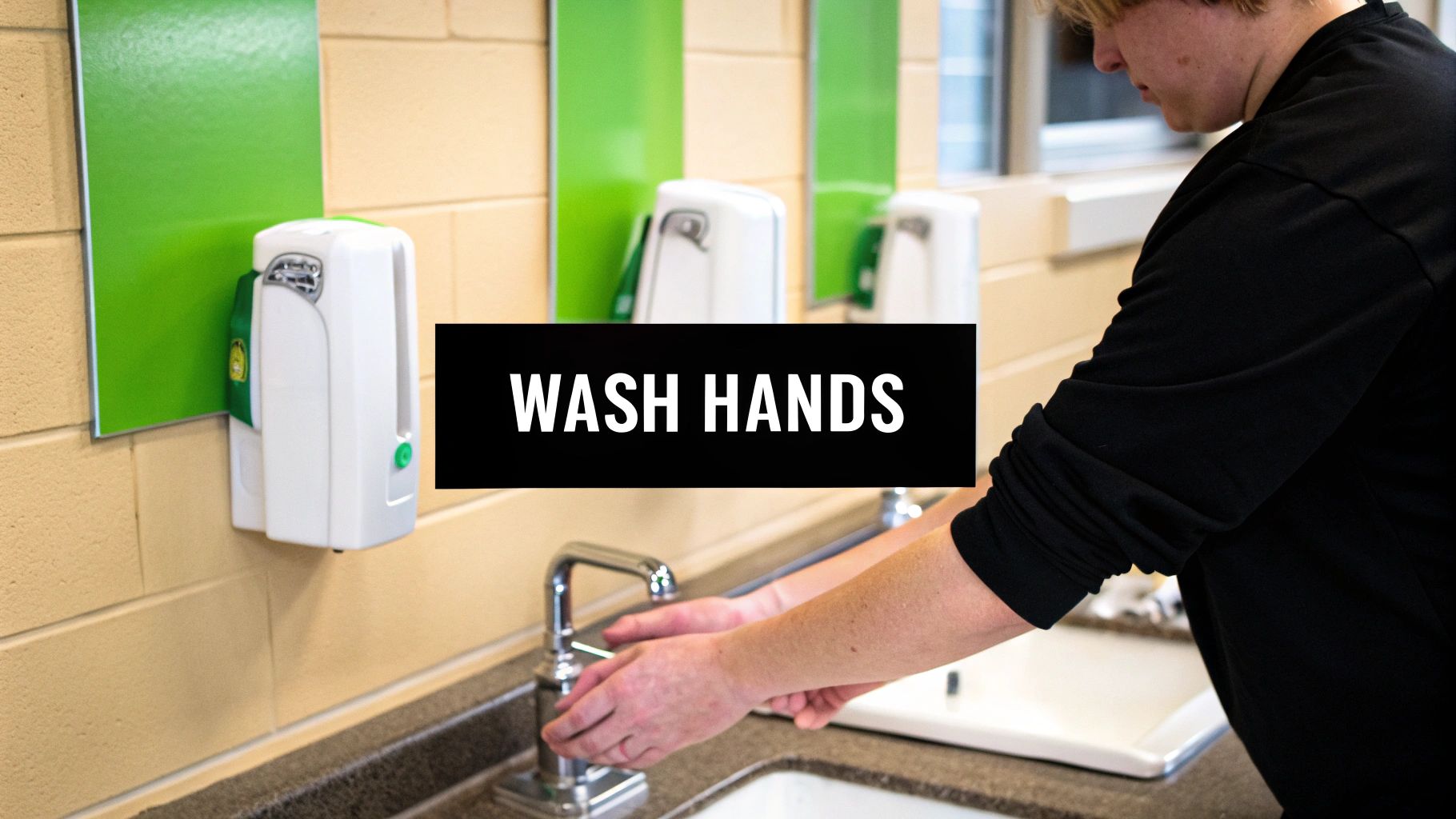
This checkpoint is a critical part of any restaurant health inspection checklist because contaminated hands are a primary vehicle for transferring pathogens like Norovirus and E. coli onto food. An inspector will not only check the facilities but will also observe employee practices, ensuring they wash their hands at critical moments: before starting work, after using the restroom, between handling raw and ready-to-eat foods, and after touching their face, hair, or phone. Failing to provide adequate facilities or enforce proper procedures is a high-risk violation that can lead to immediate corrective action.
Actionable Tips for Compliance
To ensure your handwashing protocols are a strength rather than a liability during an inspection, implement these practices:
- Strategic Placement: Install dedicated handwashing stations within 25 feet of all food prep and service areas. These sinks must be used only for handwashing and never for dumping liquids or washing utensils.
- Keep Stations Fully Stocked: Use wall-mounted, touchless dispensers for soap and paper towels to prevent them from becoming contaminated. Assign a specific staff member on each shift to check and restock all stations.
- Provide Visual Reminders: Post laminated, multilingual handwashing posters at every sink. These signs should clearly illustrate the proper 20-second washing technique as recommended by health authorities.
- Hands-Free Technology: Where possible, invest in hands-free faucets and soap dispensers. This technology significantly reduces the risk of re-contaminating clean hands when turning off the water.
- Conduct Regular Training: Implement mandatory hand hygiene training during employee orientation and conduct quarterly refreshers for all staff. Document these training sessions to show an inspector your commitment to food safety.
5. Pest Control and Prevention
Pest control is a non-negotiable component of any restaurant health inspection checklist, as pests are notorious vectors for dangerous pathogens like Salmonella and E. coli. Inspectors are trained to spot any evidence of infestation, including droppings, gnaw marks, nesting materials, or live insects and rodents. They will also meticulously check for potential entry points, such as gaps under doors or cracks in walls, and will verify that you have a proactive prevention plan in place.
The presence of pests is a direct threat to public health and can lead to immediate closure orders. A single sighting can destroy a restaurant's reputation, making a robust integrated pest management (IPM) program essential for maintaining a safe and sanitary environment. This proactive approach focuses on prevention rather than just reaction after an infestation has already taken hold.
Actionable Tips for Compliance
To ensure your establishment remains pest-free and passes inspection, integrate these critical practices into your daily operations:
- Contract with Professionals: Engage a licensed pest control operator for regular, documented service visits (monthly or quarterly is standard). Their expertise in identifying and treating potential issues is invaluable.
- Maintain Detailed Records: Keep a dedicated logbook containing all service reports, treatments applied, and findings from your pest control provider. This demonstrates a proactive stance to inspectors.
- Seal All Entry Points: Regularly inspect the building's exterior and interior for any cracks, holes, or gaps. Use caulk, weather stripping, or steel wool to seal potential entryways, paying special attention to areas around pipes and vents.
- Implement Strict Sanitation Protocols: Ensure dumpsters are kept closed and the surrounding area is clean. Store all food products in sealed, pest-proof containers at least six inches off the floor.
- Train Staff on Vigilance: Empower your team to be your first line of defense. Train them to recognize and immediately report any signs of pest activity, no matter how small, so you can address it before it becomes a major violation.
6. Cooking Temperatures and Time Controls
Cooking food to its correct minimum internal temperature is a critical control point for eliminating pathogens, making it a heavily scrutinized part of any restaurant health inspection checklist. Inspectors will carry calibrated thermometers to verify that your staff is doing the same, ensuring that different food categories reach their required safe temperatures. These non-negotiable targets are 165°F for poultry, 160°F for ground meats, and 145°F for whole cuts of beef, pork, and fish.
This checkpoint is fundamental because insufficient cooking is a direct path to causing a foodborne illness outbreak. An inspector will not only check final temperatures but may also observe your kitchen's processes, from the tools used to the staff's proficiency in measuring them. A failure here signals a major gap in food safety protocols. Following a structured system like HACCP is key to managing these critical points, and you can learn more about how to implement a HACCP food safety plan to ensure consistency and compliance.
Actionable Tips for Compliance
To guarantee your cooking processes meet and exceed health code standards, integrate these best practices into your daily operations:
- Equip Every Station: Provide each cooking station with its own calibrated, digital, instant-read thermometer. This prevents cross-contamination and ensures a tool is always within reach.
- Post Visual Guides: Create and post laminated, easy-to-read charts at each station that clearly list the minimum internal cooking temperatures for all relevant food items.
- Train for Proper Technique: Teach staff to measure the temperature in the thickest part of the food, avoiding bones or fat. For larger items like roasts, they should take readings in multiple spots.
- Implement Daily Calibration: Start each day with a mandatory thermometer calibration routine using the ice-point method (32°F in an ice slurry) to ensure accuracy. Log this activity.
- Document Temperature Checks: Use a temperature log to document the final cooking temperature of potentially hazardous foods, along with the time and the initials of the cook responsible. This creates a record of accountability.
7. Employee Health and Illness Reporting
An employee working while sick is one of the fastest ways to cause a foodborne illness outbreak, making employee health policies a critical part of any restaurant health inspection checklist. Inspectors will verify that the establishment has a clear, documented policy requiring employees to report specific symptoms and stay home when ill. They will check that staff are trained to recognize and report symptoms like vomiting, diarrhea, jaundice (yellowing of the skin/eyes), and a sore throat with fever.
This checkpoint is paramount because an infected food handler can directly transmit pathogens, such as Norovirus or Hepatitis A, to food and surfaces, potentially sickening dozens of customers. A strong, well-enforced illness policy isn't just a regulatory requirement; it's a fundamental public health safeguard that demonstrates a commitment to food safety from the top down. For guidance, the FDA provides a detailed employee health and personal hygiene handbook.
Actionable Tips for Compliance
To create a culture where reporting illness is standard practice and to satisfy inspector requirements, implement these key actions:
- Develop a Written Policy: Create a formal, written employee illness policy that clearly lists the "Big 6" foodborne illnesses and their reportable symptoms. Have every employee read and sign this policy upon hiring and annually thereafter.
- Mandatory Staff Training: Conduct regular training sessions to ensure all team members, from dishwashers to servers, understand their responsibility to report illness. Use visual aids and post reminders in employee break areas.
- Create a No-Punishment Culture: Emphasize that reporting an illness will never result in disciplinary action. Employees are more likely to be honest if they don't fear losing their job or facing punishment. Consider offering paid sick leave to remove financial barriers to compliance.
- Empower Managers to Enforce: Train managers to ask health-related questions before each shift and to confidently send sick employees home. They must enforce the policy consistently and fairly with everyone.
- Maintain Exclusion/Restriction Logs: Keep a confidential log documenting instances when employees were sent home or restricted from food handling duties due to illness. This provides tangible proof of your policy in action for the health inspector.
8. Allergen Management and Labeling
Properly managing food allergens is a critical responsibility that has gained significant attention on restaurant health inspection checklists. Inspectors will verify that your establishment has robust procedures to identify, label, and prevent cross-contact with major food allergens, including milk, eggs, fish, shellfish, tree nuts, peanuts, wheat, and sesame. They assess whether staff can accurately inform customers about ingredients and if kitchen protocols are sufficient to prevent accidental allergen exposure, which can have life-threatening consequences.
This checkpoint is crucial because undeclared allergens are a leading cause of food recalls and can lead to severe health incidents and legal liability. A well-trained team and clear, documented procedures demonstrate a commitment to customer safety and operational excellence. An inspector will look for evidence of a systematic approach, from menu labeling to back-of-house preparation, ensuring you protect vulnerable guests.
Actionable Tips for Compliance
To ensure your allergen protocols are thorough and compliant, implement these key strategies:
- Create an Allergen Matrix: Develop a detailed, easy-to-read chart or binder that lists every menu item and indicates which of the major allergens it contains. Keep this matrix accessible to both front-of-house and back-of-house staff.
- Implement Rigorous Staff Training: Use interactive training modules to educate all employees on identifying major allergens, understanding the severity of allergic reactions, and following protocols for preventing cross-contact. Document all training sessions with dates and signatures.
- Establish Clear Communication Channels: Create a system for servers to clearly communicate allergen alerts to the kitchen staff, often using a specific color on order tickets. The kitchen should have a process to acknowledge and confirm they can safely accommodate the request.
- Use Designated Equipment and Labels: When possible, use separate, color-coded cutting boards, utensils, and fryers for preparing allergen-free meals. Use bright, clear labels to identify containers with allergens in storage areas to prevent mix-ups.
- Review and Update Procedures Regularly: Menus and suppliers change. Review your allergen matrix and kitchen procedures at least quarterly to ensure all information remains accurate and effective.
9. Cleaning of Non-Food Contact Surfaces and Equipment
While food-contact surfaces get most of the attention, the overall cleanliness of your facility's "backbone" structures is just as critical on a restaurant health inspection checklist. Inspectors will thoroughly examine floors, walls, ceilings, drains, and the exteriors of equipment. They are searching for accumulated grease, food debris, dust, and grime, which can attract pests and create unsanitary conditions that compromise the entire kitchen environment.
This checkpoint is crucial because the state of your non-food contact surfaces is a direct indicator of your restaurant's overall commitment to sanitation. A greasy ventilation hood or a dirty floor drain can become a breeding ground for bacteria and pests like cockroaches and flies, which can then easily contaminate food prep areas. Neglecting these areas creates a domino effect, undermining all other food safety protocols you have in place.
Actionable Tips for Compliance
To ensure your facility's structural surfaces are immaculate and pass inspection, implement these deep-cleaning protocols:
- Create Detailed Cleaning Schedules: Assign daily, weekly, and monthly tasks. Daily tasks should include sweeping and mopping floors, while weekly tasks could involve wiping down walls and equipment exteriors. Monthly tasks should cover deep cleaning drains and ventilation hoods.
- Regular Professional Services: Contract with a professional service for regular, documented ventilation hood cleaning and grease trap pumping. This is not a task for in-house staff and often requires specialized equipment and certification.
- Use Proper Tools and Chemicals: Equip your team with commercial-grade degreasers, deck brushes, and squeegees appropriate for your kitchen's surfaces. Ensure staff is trained on proper chemical dilution and usage.
- Maintain Comprehensive Cleaning Logs: Keep a binder with detailed logs where staff can initial completed tasks. This record-keeping demonstrates a consistent and proactive approach to sanitation for the health inspector.
- Inspect and Repair Surfaces: Regularly check for and repair any damaged tiles, cracked walls, or peeling paint. These imperfections can harbor moisture and bacteria, making them difficult to clean and a flag for inspectors.
10. Water Supply and Wastewater Management
A safe and sufficient water supply, along with a properly functioning wastewater system, is a fundamental requirement on any restaurant health inspection checklist. Inspectors will verify that your water comes from an approved municipal source or a properly tested private well. They will also meticulously check for adequate hot water, ensuring handwashing stations can reach a minimum of 110°F (43°C) to facilitate effective sanitation and hygiene practices. Proper drainage and wastewater disposal are equally crucial to prevent contamination and maintain a sanitary environment.
This checkpoint is critical because contaminated water can introduce pathogens like E. coli and norovirus directly into the food supply, while wastewater backups can create unsanitary conditions that attract pests and spread disease. Issues like cross-connections, where non-potable water mixes with the clean water supply, pose a severe public health risk. Proper wastewater management, including prompt attention to unclogging drain pipes, is essential to prevent backups, foul odors, and pest issues, all critical for a clean and compliant restaurant environment.
Actionable Tips for Compliance
To ensure your water and plumbing systems meet health code standards, adopt these proactive maintenance and monitoring strategies:
- Daily Hot Water Checks: Use a calibrated thermometer to test the water temperature at handwashing sinks and dish machines at the start of each day. Document these readings to prove consistent compliance.
- Grease Trap Maintenance: Schedule professional grease trap cleaning every 3-6 months, depending on volume. Keep service records on file, as inspectors often request this documentation.
- Annual Backflow Prevention Testing: Install certified backflow prevention devices at all cross-connection points (e.g., dishwashers, ice machines) and have them tested and certified annually by a licensed plumber.
- Maintain Clear Documentation: Keep a dedicated binder for all water-related documents, including municipal water quality reports, private well test results, and all plumbing and grease trap service invoices.
- Regular Leak Inspections: Train staff to regularly inspect all faucets, pipes, and drains for leaks or drips. Promptly repair any issues to prevent water waste, potential contamination, and structural damage.
10-Point Restaurant Health Inspection Comparison
| Item | Implementation (🔄) | Resources (⚡) | Expected Outcomes (📊) | Ideal Use Cases (💡) | Key Advantages (⭐) |
|---|---|---|---|---|---|
| Temperature Control and Cold Storage Equipment | High: install, calibrate, continuous monitoring | High: refrigeration units, sensors, energy, maintenance | Stable cold chain; less spoilage; regulatory compliance | Full-service restaurants, catering, high-volume cold storage | Prevents foodborne illness; reduces waste; extends equipment life |
| Food Storage and Separation (Cross-Contamination Prevention) | Low–Moderate: reorganize, enforce protocols | Low–Moderate: shelving, containers, labels | Fewer cross-contamination incidents; improved inventory control | Kitchens mixing raw and ready‑to‑eat foods; small spaces | Eliminates major contamination risk; simplifies training |
| Cleanliness and Sanitation of Food Preparation Surfaces | Moderate: protocols, cleaning schedules, verification | Moderate: labor, sanitizers, sinks, test strips | Reduced pathogen transfer; fewer health violations | High‑contact prep stations; high‑volume shifts | Protects customer health; lowers complaints and closures |
| Handwashing Facilities and Staff Hygiene | Low–Moderate: install stations, train staff | Low: sinks/faucets, soap, towels, signage | Large reduction in disease transmission; high impact | All food service settings; small kiosks to large kitchens | Most effective single measure to prevent foodborne illness |
| Pest Control and Prevention | Moderate: facility sealing, monitoring programs | Moderate–High: professional services, traps, maintenance | Fewer infestations; protected inventory and building | Urban locations, properties near dumpsters, older buildings | Prevents contamination and reputational damage |
| Cooking Temperatures and Time Controls | Low–Moderate: thermometer checks, logs, training | Low–Moderate: calibrated thermometers, timers, logs | Properly cooked foods; reduced illness risk; documented compliance | Any kitchen cooking animal products; catering | Directly prevents common causes of foodborne illness |
| Employee Health and Illness Reporting | Low: policies, training, enforcement | Low: documentation, training materials, backup staffing | Reduced staff-to-customer transmission; fewer outbreaks | Larger staffs, multi‑unit operations, healthcare settings | Prevents sick employees from contaminating food; lowers liability |
| Allergen Management and Labeling | Moderate–High: systems, procedures, possible separation | Moderate–High: labels, training, dedicated utensils/areas | Fewer allergic reactions; reduced legal and reputational risk | Fine dining, cafés, allergy‑sensitive customer bases | Protects vulnerable customers; competitive and legal compliance |
| Cleaning of Non-Food Contact Surfaces and Equipment | Moderate: scheduled deep cleaning, log keeping | Moderate–High: labor, specialty cleaners, contractors | Reduced pests, fire risk, and structural damage; compliance | High‑volume kitchens, older facilities, heavy equipment sites | Prevents pest harborage; extends equipment lifespan |
| Water Supply and Wastewater Management | High: plumbing systems, backflow prevention, testing | High: professional plumbing, heaters, grease traps, testing | Safe potable water; prevented waterborne outbreaks; regulatory compliance | Food trucks with self‑contained systems; complex facilities | Ensures safe water supply; prevents major public‑health incidents |
Making Inspection Readiness a Part of Your Daily Culture
Passing a health inspection is not the finish line; it's a validation of the high standards you uphold every single day. The comprehensive restaurant health inspection checklist we've detailed is more than just a pre-inspection cram sheet. It's a blueprint for building a culture of excellence where food safety is an ingrained, non-negotiable part of your daily operations.
Moving from a reactive, scramble-before-the-inspector-arrives mindset to a proactive, always-ready approach is the single most impactful shift a restaurant operator can make. This transition transforms anxiety into confidence and protects your customers, your reputation, and your bottom line. It's about seeing every temperature log, every sanitized surface, and every correctly stored ingredient not as a chore, but as a commitment to quality.
From Checklist to Culture: Your Actionable Next Steps
The journey from checklist to culture involves tangible actions. Your immediate next steps should be to operationalize the insights from this guide.
- Conduct a Self-Audit: Use this detailed checklist to perform a rigorous self-inspection. Don't go easy on your team or your processes. Identify weak points with an objective eye, whether it's inconsistent temperature logging for your cold storage or a gap in your pest control documentation.
- Empower Through Training: Knowledge is the foundation of a strong food safety culture. Schedule regular, engaging training sessions based on the key areas we've covered, from allergen management protocols to the specifics of the three-compartment sink method. Make it interactive and reward team members who demonstrate exceptional adherence to standards.
- Upgrade Your Tools: Outdated or malfunctioning equipment is a common source of health code violations. A refrigerator that can't hold a consistent temperature or a prep table with deep, unsanitizable scratches are liabilities. Assess your critical equipment and create a plan for repair or replacement.
The Lasting Impact of an "Always-Ready" Operation
When your team internalizes these practices, the benefits extend far beyond a high score on an inspection report. An "always-ready" state is a hallmark of a well-run, professional establishment that values its patrons and its people.
Key Takeaway: Treat every shift as if an inspector could walk through the door at any moment. This mindset ensures that your highest standards become your everyday standards, building a resilient operation that customers trust implicitly.
This proactive stance reduces food waste from spoilage, minimizes the risk of foodborne illness outbreaks, and boosts staff morale by providing a clean, safe, and organized working environment. Customers notice this commitment, even subconsciously, in the cleanliness of your dining room, the quality of your food, and the professionalism of your staff. Ultimately, mastering the elements of this restaurant health inspection checklist isn't just about compliance; it's about building a stronger, more profitable, and more reputable brand that stands the test of time.
Ready to upgrade the equipment that forms the backbone of your food safety program? From NSF-certified refrigeration that guarantees precise temperature control to durable stainless steel work tables that make sanitation simple, The Restaurant Warehouse provides the essential tools you need to pass your next inspection with confidence. Explore our extensive inventory of new, certified equipment and take advantage of our financing and lease-to-own options at The Restaurant Warehouse today.
About The Author

Sean Kearney
Sean Kearney is the Founder of The Restaurant Warehouse, with 15 years of experience in the restaurant equipment industry and more than 30 years in ecommerce, beginning with Amazon.com. As an equipment distributor and supplier, Sean helps restaurant owners make confident purchasing decisions through clear pricing, practical guidance, and a more transparent online buying experience.
Connect with Sean on LinkedIn, Instagram, YouTube, or Facebook.