

Smallwares Explained: The Unsung Heroes of Every Commercial Kitchen
Why Restaurant Equipment Smallwares Are the Foundation of Every Kitchen
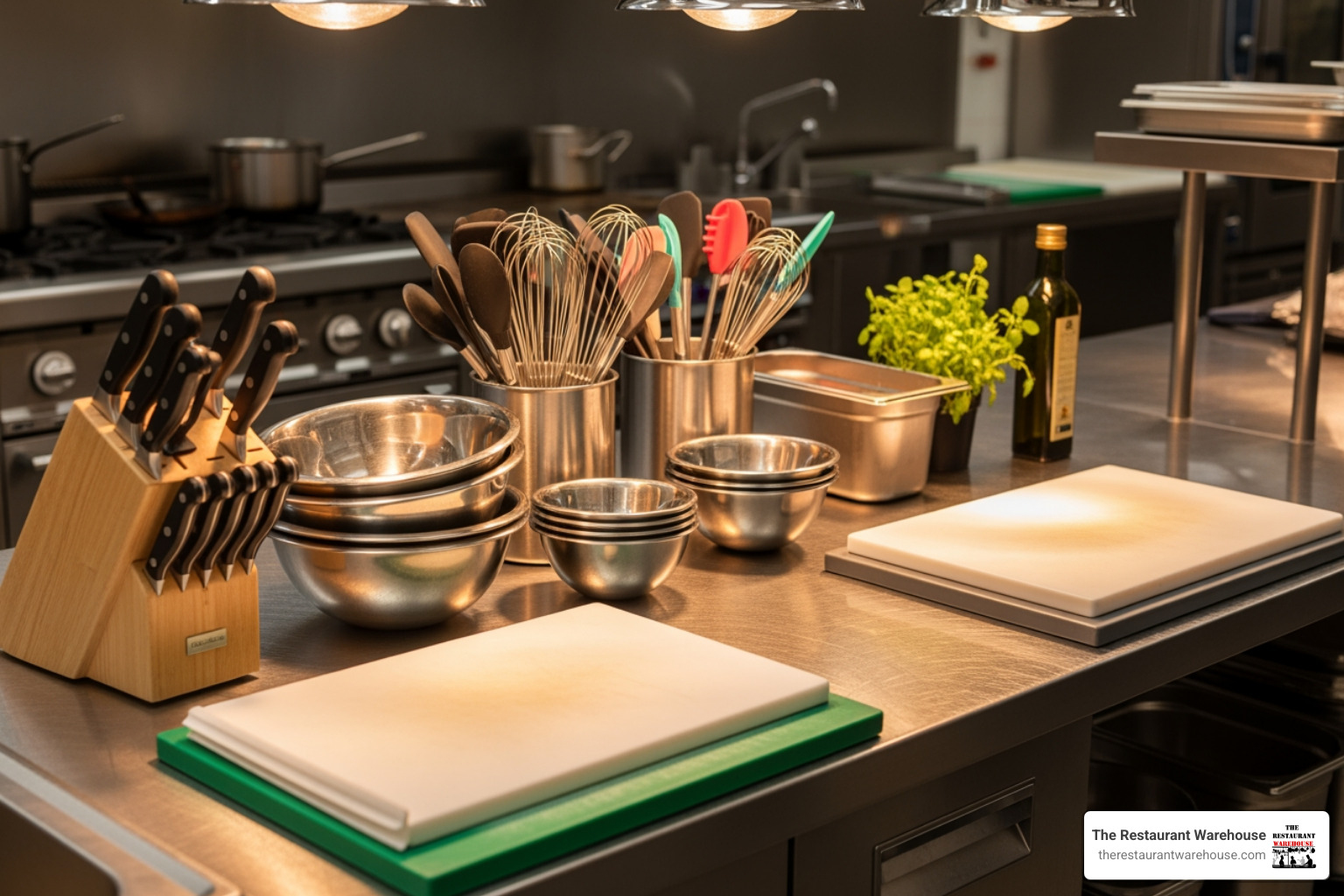
Restaurant equipment smallwares are the hand-held tools, utensils, and cookware that form the backbone of any busy kitchen. These are the unsung heroes of the culinary world. Unlike large, stationary powered machinery, smallwares are the portable, manually operated items that your staff interacts with for every single order, from preparation to plating. They are the direct link between your chef's vision and the customer's plate.
Quick Definition:
- What they are: The essential hand tools of the trade, including knives, cutting boards, pots, pans, mixing bowls, measuring cups, tongs, and spatulas.
- What they're not: Large, stationary powered machinery like mixers or fryers.
- Why they matter: They are the primary drivers of kitchen efficiency, food quality, staff productivity, and even food safety.
- Key difference: Smallwares are portable and manually operated; large equipment is typically stationary and powered.
In the controlled chaos of a busy kitchen, cooks rely on these tools for every task. A well-honed chef's knife for precise prep, a heavy-bottomed sauté pan for a perfect sear, a portion-control ladle for consistency—these items are not just helpful; they are fundamental. Without the right smallwares, readily available and in good condition, kitchen operations can quickly grind to a halt, causing service delays and inconsistent output.
Unfortunately, many new and even experienced owners treat smallwares as an afterthought. They invest heavily in large, impressive items but skimp on the very tools their staff uses most intensely. This oversight creates immediate bottlenecks, increases food waste from improper portioning or poor cooking results, and cultivates a culture of frustration among the kitchen team. When a cook has to search for a clean pair of tongs or use a dull knife, their workflow is broken, morale drops, and the quality of the final dish is compromised.
I'm Sean Kearney from The Restaurant Warehouse, and I've spent years helping restaurateurs source restaurant equipment smallwares that strike the perfect balance between professional-grade quality and a sensible budget. My experience has shown time and again that a thoughtful investment in the right tools can transform kitchen operations, boost staff morale, and improve the bottom line without breaking the bank.
To see how the right tools fit into your broader purchasing plan, explore our curated smallwares collection at:
- https://therestaurantwarehouse.com/collections/smallwares
- https://therestaurantwarehouse.com/collections/restaurant-supplies
Key terms for restaurant equipment smallwares:
CTA: Ready to build a complete, efficient toolkit for your staff? Contact us today to price out a full smallwares package tailored to your menu and volume.
For an overview of how smallwares fit into a full supplies plan, visit:
- https://therestaurantwarehouse.com/pages/restaurant-supplies
Throughout this guide, we’ll walk through the essential categories, materials, certifications, organization strategies, and purchasing tips so you can make informed decisions that support your daily service and long-term profitability.
The Essential Categories of Restaurant Smallwares
When we talk about restaurant equipment smallwares, we're referring to a vast and diverse array of items critical to every stage of a restaurant's operation. From the moment ingredients arrive to the final presentation on the plate, smallwares are in constant use. Understanding these categories is the first and most crucial step in equipping your kitchen for an optimal, efficient workflow. Think of the kitchen as a symphony and smallwares as the instruments; each piece, no matter how small, plays a vital role in creating a harmonious and successful service. Investing in the right smallwares means smoother operations, a less-stressed and happier staff, and ultimately, more satisfied customers who return again and again.
Our goal is to provide everything you need for your kitchen, offering access to thousands of smallwares. For a deeper dive into utensils in particular, check out our Kitchenware Utensils Essentials guide.
Food Preparation Tools
The journey of any dish begins with preparation, making this category of restaurant equipment smallwares the most fundamental. These are the tools that transform raw ingredients into the meticulously prepared building blocks of your menu. The quality and availability of these tools directly affect prep time and food consistency.
- Cutting Boards: Essential for safety and sanitation. Use color-coded boards (following HACCP guidelines) to prevent cross-contamination between raw meats, poultry, fish, and produce. Polyethylene boards are durable and easy to clean.
- Chef Knives, Paring Knives, Serrated Knives: A sharp, well-maintained knife set is a chef's most important tool. Each type serves a specific purpose: the chef's knife for chopping and dicing, the paring knife for intricate peeling and trimming, and the serrated knife for slicing bread or delicate items like tomatoes.
- Mixing Bowls: Available in a wide range of sizes and materials like stainless steel, plastic, or glass. Stainless steel is the industry standard for its durability, non-reactivity, and ease of sanitation. Having a nested set of various sizes is crucial for an organized prep station.
- Measuring Cups and Spoons: Precision is the key to consistency in both taste and cost control. Commercial kitchens need durable, clearly marked measuring tools for both dry and liquid ingredients to ensure recipes are replicated perfectly every time.
- Whisks: Indispensable for emulsifying dressings and sauces, aerating batters or meringues, and smoothly incorporating ingredients. Balloon whisks are for volume, while French whisks are better for sauces in smaller pans.
- Spatulas and Tongs: These are extensions of a cook's hands. Versatile tools for flipping, stirring, scraping, and serving. Heat-resistant silicone spatulas are essential for non-stick surfaces, while durable stainless steel tongs provide a secure grip on everything from steaks to delicate vegetables.
- Colanders and Sieves: Used for draining pasta, washing produce, or sifting dry ingredients for baking. A fine-mesh sieve (or chinois) is also critical for creating smooth, refined sauces and purées.
Beyond the basics, serious prep-heavy concepts (scratch kitchens, bakeries, high-volume catering) often benefit from having multiples of critical tools—three or four of the same style of tongs or spatulas per station—so staff never has to pause mid-rush to hunt for or wash a needed tool.
To get your kitchen ready, explore our guide on Prep Like a Pro: Essential Tools for Your Commercial Kitchen.
Cookware and Bakeware
Once prepped, ingredients move to the cooking line, where this set of restaurant equipment smallwares takes over. These items are designed to withstand the intense heat and rigors of a commercial kitchen while facilitating various cooking methods with precision and reliability.
- Stockpots: Large, deep pots with a heavy, thick base are essential for making stocks, soups, and boiling pasta in large batches without scorching.
- Sauté Pans: Characterized by their wide, flat bottom and sloped sides, these are perfect for quick cooking methods like sautéing, searing, and stir-frying, allowing for easy tossing of ingredients.
- Saucepans: Smaller, deeper pots with straight sides, ideal for making and reducing sauces, heating liquids, or cooking smaller portions of vegetables or grains.
- Cast Iron Skillets: Valued for superior heat retention and even heating, they create an unparalleled sear on meats and can go directly from stovetop to oven for finishing.
- Sheet Pans: The workhorse of the kitchen. These flat, rectangular pans (in full, half, and quarter sizes) are used for roasting vegetables, baking cookies, and transporting prepared items around the kitchen.
- Roasting Pans: Deeper and heavier than sheet pans, these are designed for roasting large cuts of meat or whole poultry, often featuring a rack to allow for even heat circulation.
- Muffin Tins and Cake Pans: Essential for any establishment offering baked goods, from breakfast muffins to dessert cakes, ensuring consistent size, shape, and cooking.
Choosing the right cookware is vital for consistent results. Our Commercial Cooking Utensils Guide offers more insights.
Dining and Servingware
Presentation is the final, critical step that directly impacts the customer's dining experience. This category of restaurant equipment smallwares is customer-facing and must reflect your restaurant's style, quality, and brand identity.
- Dinner Plates, Salad Bowls, Soup Bowls: The foundation of your table setting. Materials like china, porcelain, melamine, and ceramic offer different levels of durability and aesthetic appeal. The size, shape, and color of the plate can influence perceptions of portion size and food quality.
- Flatware (Forks, Knives, Spoons): Durable, commercial-grade flatware is a must. The weight and balance of the flatware contribute to the perceived quality of the dining experience. Choose a pattern that complements your restaurant's theme.
- Glassware (Water, Wine, Cocktail): The right glass enhances the aroma and taste of a beverage. Chip-resistant, commercial-grade options are best for professional use to minimize breakage and replacement costs.
- Serving Platters: Used for family-style dishes, appetizers, or buffet service, these come in a variety of shapes and materials to match your plating style.
- Serving Spoons and Ladles: Crucial for both back-of-house portion control and front-of-house presentation, ensuring neat and consistent service.
- Ramekins: These small ceramic or glass dishes are incredibly versatile, perfect for serving individual desserts like soufflés and custards, or for holding side sauces and condiments.
Thoughtfully coordinated tabletop smallwares also support branding: a casual, fast-casual concept might lean on durable melamine and minimalist flatware, while a white-tablecloth operation often gravitates toward elegant porcelain and heavier-weight flatware with more ornate patterns.
Storage and Safety Supplies
Beyond food handling, restaurant equipment smallwares also include items crucial for hygiene, safety, and organization—the pillars of a well-run, compliant kitchen.
- Food Storage Containers: Essential for organizing ingredients and adhering to food safety regulations. Clear, stackable, and square containers are ideal as they maximize shelf space and allow for quick identification. Always use them to implement a FIFO (First-In, First-Out) system.
- Ingredient Bins: Large, mobile bins with lids are perfect for storing bulk dry goods like flour, sugar, or rice, keeping them safe from pests and moisture.
- Protective Gloves: A fundamental barrier against cross-contamination during food handling. Different types (vinyl, nitrile, latex) are available for various tasks.
- Aprons and Towels: Protect clothing and provide a clean surface for wiping hands. A steady supply of clean, sanitized towels is vital for maintaining clean surfaces throughout the kitchen.
- First Aid Kits: A well-stocked, easily accessible, and OSHA-compliant first aid kit is a non-negotiable safety requirement for treating the inevitable cuts and burns of a kitchen environment.
For guidance on safe food storage temperatures and handling, the U.S. Food & Drug Administration provides detailed recommendations at https://www.fda.gov/food.
Proper organization is paramount. Our Restaurant Kitchen Supplies List provides a comprehensive overview.
CTA: Want a turnkey checklist you can hand to your manager or opening team? Download our full restaurant smallwares planning guide and request a quote to streamline your purchasing process.
Choosing the Right Smallwares: A Guide to Materials and Certification
Selecting the right restaurant equipment smallwares involves a deeper analysis than just aesthetics or price. It requires careful consideration of materials, certifications, and ergonomic design to ensure durability, safety, and long-term cost-effectiveness. The right choice is a strategic investment that directly impacts the longevity of your tools, the efficiency of your kitchen, and the well-being of your staff.
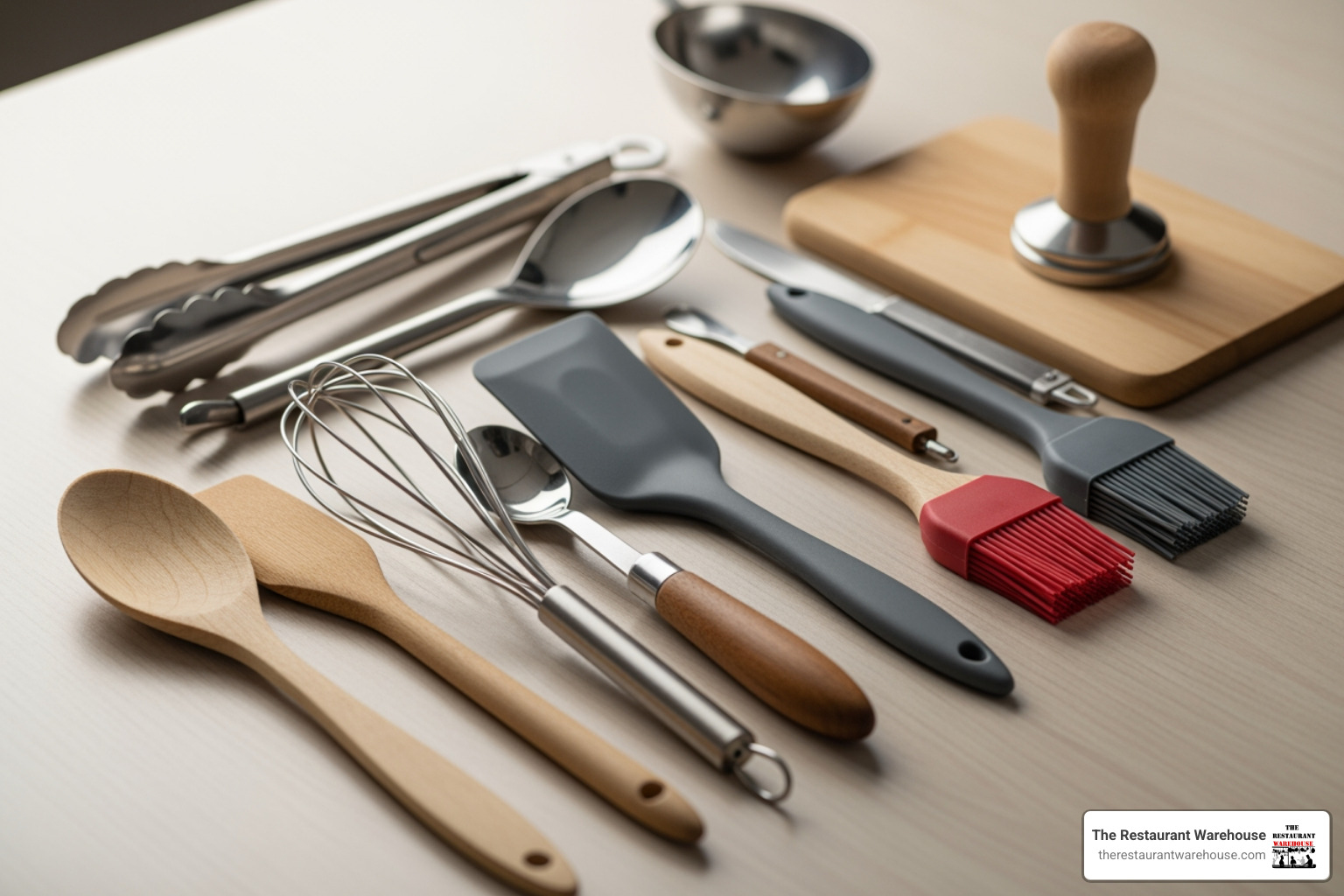
A cheaper item might seem appealing on an initial invoice, but if it needs constant replacement, warps under heat, or creates safety hazards, it's not truly cost-effective. True value comes from tools that withstand the rigors of a professional kitchen. We focus on providing top-quality supplies that offer this long-term value. For more insights, check out our Pro Kitchen Tools guide.
Common Materials: Pros and Cons
Understanding the properties of each material is fundamental to guiding your purchasing decisions. Each has a specific place and purpose in a professional kitchen.
- Stainless Steel: Pros: The industry benchmark for its high durability, non-reactive nature (won't affect the taste of acidic foods), and ease of cleaning and sanitizing. Cons: Can be more expensive upfront, and lower-quality versions can have poor heat distribution if they lack an aluminum or copper core.
- Aluminum: Pros: An excellent heat conductor, leading to quick and even cooking. It's also lightweight and affordable. Cons: It's a soft metal that can dent easily and can react with acidic and alkaline foods, potentially discoloring them. Look for anodized aluminum, which is sealed to prevent this reaction.
- Cast Iron: Pros: Exceptional heat retention and even heating, making it ideal for searing. When properly seasoned, it develops a natural non-stick surface and is virtually indestructible. Cons: It is very heavy, requires specific maintenance (seasoning) to prevent rust, and is not suitable for all cleaning methods.
- Plastic/Polycarbonate: Pros: Inexpensive, lightweight, and available in various colors, making it perfect for color-coded food safety systems (e.g., cutting boards, storage containers). Cons: Can scratch, creating crevices for bacteria to hide. It can also stain, absorb odors, and may not withstand high heat, potentially warping in commercial dishwashers.
- Silicone: Pros: Highly flexible, completely non-stick, and can withstand high temperatures, making it perfect for spatulas, baking mats, and molds. Cons: Can absorb strong odors or colors over time, and sharp utensils can easily cut or damage it.
- Ceramic: Pros: Excellent for presentation-focused dining and serving ware, as it comes in many styles and colors. It also retains heat well, keeping food warm at the table. Cons: It is fragile and can chip or break easily, leading to higher replacement costs and potential safety hazards.
- Glass: Pros: Non-reactive, so it won't interfere with flavors. It allows for visual inspection of contents, which is great for storage and mixing. Cons: Heavy, prone to breaking, and can suffer from thermal shock if temperature changes are too rapid.
When selecting among these, consider:
- Volume and menu: A high-volume steakhouse will justify heavy-gauge, fully-clad stainless steel pans for searing, while a small café's prep station may be fine with more economical polycarbonate containers.
- Cleaning systems: If your dish pit relies heavily on high-temperature warewashing, avoid plastics that warp or delicate ceramics. Choose materials that fit your existing sanitation workflow.
- Replacement strategy: Some operators intentionally choose mid-range gear they expect to replace every 1–2 years as part of their operating budget, rather than paying a premium for items that are designed to last five or more years.
The Importance of NSF Certification and Ergonomics
When outfitting a professional kitchen, two factors that should never be overlooked are NSF certification and ergonomics. They are critical for food safety, regulatory compliance, and staff well-being.
NSF Certification: This mark from the National Sanitation Foundation indicates a product meets strict public health and safety standards. NSF-certified items are designed with non-porous, smooth, easy-to-clean surfaces that have no nooks or crannies where bacteria can grow. They are rigorously tested for material safety and durability. Using NSF-certified equipment is not just a best practice; it's often a requirement by local health departments and is crucial for passing inspections. Always ensure the equipment you buy complies with all applicable safety standards, including NSF guidelines. We always recommend new, certified equipment for peace of mind and guaranteed compliance.
-
Ergonomics: This is the science of designing tools to maximize productivity by reducing operator fatigue and discomfort. In a busy kitchen where staff performs repetitive tasks for hours, ergonomic smallwares are invaluable.
- Reduce Fatigue: Well-balanced knives with comfortable, non-slip handles lessen the strain on wrists and hands during hours of chopping.
- Improve Control: Non-slip handles on tongs, peelers, and spatulas provide a better, safer grip, reducing accidents and improving precision.
- Minimize Injuries: Thoughtfully designed tools can help prevent long-term repetitive strain injuries (RSIs), leading to a healthier, happier, and more productive team with less turnover.
By prioritizing NSF-certified and ergonomic restaurant equipment smallwares, you are making a direct investment in the quality of your food and the long-term health of your staff.
Matching Smallwares to Your Restaurant Concept
The type of cuisine you serve and your service style heavily influence the specific restaurant equipment smallwares you'll need. A generic checklist isn't enough; your tools must be tailored to your menu.
- Italian Cuisine: Requires specialized tools like pasta makers or drying racks, large-diameter pizza peels, heavy-duty stockpots for sauces, microplane-style graters for hard cheeses, and precise portioning ladles.
- Asian Cuisine: Woks (carbon steel or cast iron), long-handled spider strainers, multi-level bamboo steamers, and commercial rice cookers with paddles are non-negotiable for authentic preparation.
- Bakery/Pâtisserie: Demands a wide array of precision tools, including pastry bags with various decorating tips, proofing baskets (bannetons), flexible dough scrapers, bench knives, and non-stick rolling pins.
- Steakhouse: Needs long-handled grill brushes for cleaning grates, heavy-duty steak knives for guests, high-accuracy instant-read meat thermometers, and elegant carving forks and knives for potential tableside service.
Concept alignment also extends to front-of-house items. A craft cocktail bar will need specific glassware for each type of drink (Collins, coupe, rocks), along with jiggers, shakers, and strainers. A tapas-style menu will require a large inventory of small plates, ramekins, and share platters.
Budgeting for Your Restaurant Equipment Smallwares
Budgeting for restaurant equipment smallwares requires a strategic approach that balances upfront cost with long-term value and operational reality.
- Upfront Cost vs. Long-Term Value: A higher-quality, more expensive item will almost always last longer and perform better, saving you money on replacements and preventing service interruptions over time.
- Economy vs. Premium Quality: We offer a range of products to suit different budgets. Premium quality is a wise investment for high-use, critical items in high-volume kitchens. Economy options can be suitable for lower-volume needs or items with a naturally short lifespan.
- Standardization: Standardizing SKUs (for example, choosing a single style of 8-inch chef knife and 12-inch tongs for all stations) simplifies training, reordering, and replacement. It creates a more organized and predictable environment.
- Par Levels: Establish and maintain par levels for critical items by station and by shift. For instance, a hot line station might have a par level of four tongs: two on the line, one clean backup, and one in the dish area. This ensures a tool is always available.
- Wholesale Pricing: A key benefit of working with a dedicated supplier like us is our commitment to wholesale pricing. By operating efficiently and avoiding high commissions and retail overhead, we pass those savings directly to you, allowing you to invest in higher quality items for the same budget.
For more detailed planning, you can build your list using our category pages and then submit it for a consolidated quote here:
- https://therestaurantwarehouse.com/pages/request-a-quote
Ready to equip your kitchen with the best restaurant equipment smallwares at wholesale prices? Contact us for a quote on your kitchen needs today, and let our team help you find the perfect balance of quality and affordability.
Maximizing Efficiency with Your Restaurant Equipment Smallwares
The true power of well-chosen restaurant equipment smallwares is unlocked not just by purchasing them, but by integrating them into an efficient system. A well-organized and properly maintained set of tools can dramatically improve kitchen workflow, reduce prep and cooking times, minimize food waste, and create a safer, less stressful environment for your team.
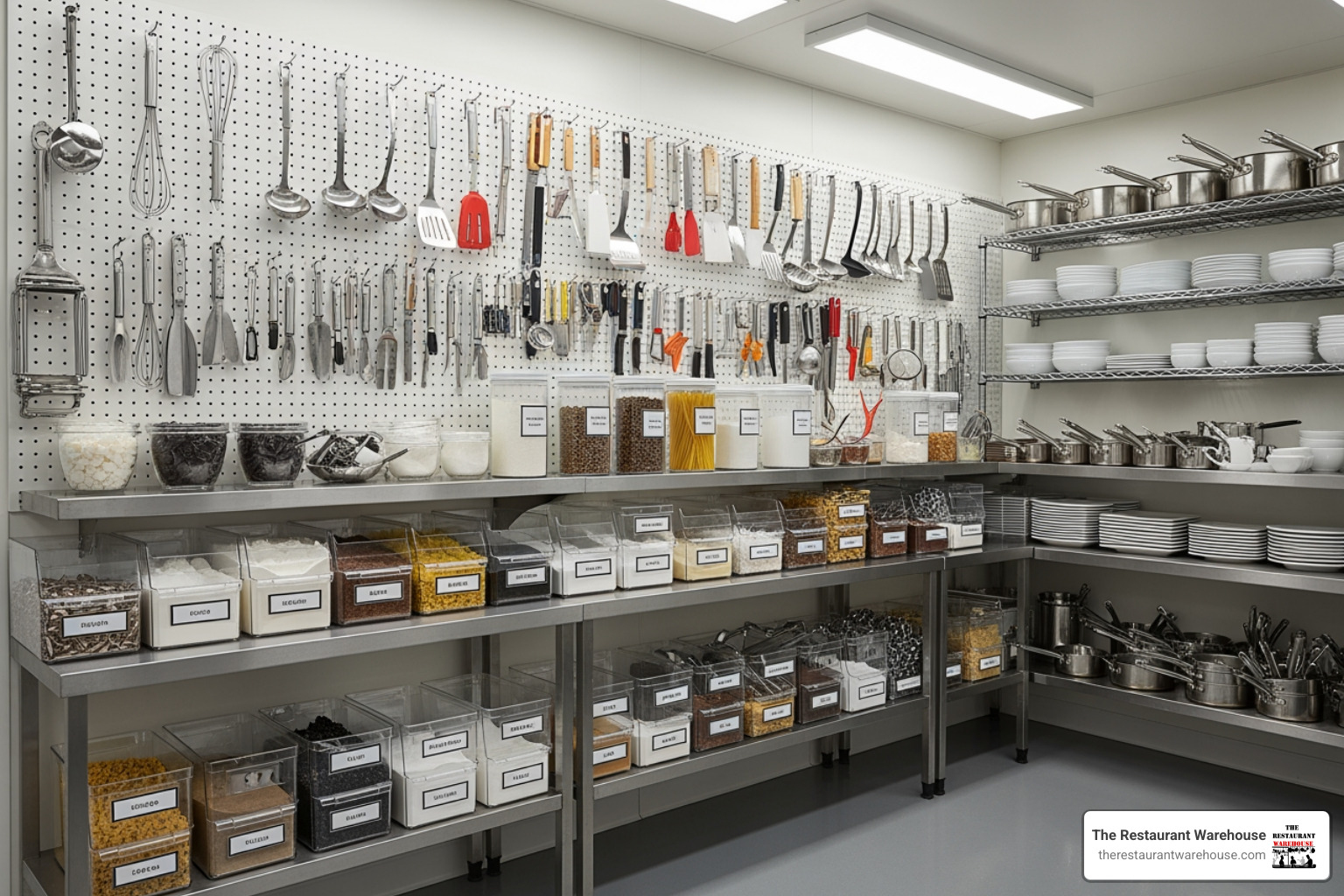
Optimizing your smallwares is not just about the items themselves, but the system you build around them for care, storage, and deployment. For more insights into essential gear, refer to our guide on Beyond the Basics: Must-Have Small Commercial Kitchen Gear.
Care and Maintenance for Longevity
Consistent care and maintenance are crucial to protect your investment and ensure your restaurant equipment smallwares last. Neglecting these simple steps leads to premature wear, decreased performance, and potential food safety hazards.
- Cleaning Procedures: Follow material-specific cleaning rules rigorously. Most stainless steel and fully-cured polycarbonate items are safe for high-temperature commercial dishwashers. However, always hand wash cast iron, wood, and sharp knives to preserve their integrity. Always check manufacturer guidelines for plastics and silicone, as harsh detergents can degrade them over time.
- Sanitizing Protocols: Beyond cleaning (removing food debris), proper sanitization (killing pathogens) is essential for food safety. Follow your local health department guidelines, which typically involve a three-compartment sink method with a chemical sanitizer or a high-temperature dishwashing cycle that reaches the required temperature.
- Knife Sharpening and Honing: A sharp knife is a safe knife because it requires less force to use, reducing the chance of slipping. Hone knives with a steel before every use to realign the blade's edge. Have them professionally sharpened every few months, depending on usage, to restore the sharp edge.
- Seasoning Cast Iron: To maintain cast iron's non-stick surface and prevent rust, it must be seasoned. After washing with minimal soap and hot water, dry it immediately and thoroughly (you can place it on a low burner). Then, wipe a very thin layer of cooking oil on the entire surface and heat it until it just starts to smoke. Let it cool.
- Proper Storage: Store smallwares correctly to prevent damage and maintain sanitation. Avoid tossing metal utensils into a drawer together where they can get dented, scratched, and chipped. Store knives on a magnetic strip or in a knife block, not loose in a drawer.
- Inspecting for Wear and Tear: Make it a routine task for managers or lead cooks to regularly inspect items for cracks, deep scratches in cutting boards, chips in dinnerware, rust, or warping in pans. Immediately remove any compromised items from service, as they can be unsafe, unhygienic, or ineffective.
Creating simple, written Standard Operating Procedures (SOPs) for cleaning and maintenance—and posting them in dish and prep areas—helps ensure consistency, especially with frequent staff turnover.
Smart Storage and Organization for a Smoother Workflow
Effective organization of restaurant equipment smallwares is a game-changer for kitchen efficiency, turning chaotic motion into purposeful action. A place for everything, and everything in its place.
- Pegboards and Magnetic Strips: Utilize vertical wall space to get tools out of drawers and off countertops. Pegboards are perfect for hanging pots, pans, and utensils. Magnetic strips are the best way to store knives safely and accessibly.
- Color-Coding: Use color-coded cutting boards, knife handles, and storage container lids to create an intuitive system for preventing cross-contamination between different food types (e.g., red for raw meat, green for produce, blue for fish).
- Labeled Bins and Containers: Use clear, labeled bins for bulk ingredients to allow for quick identification and at-a-glance inventory monitoring. For prepped ingredients, use smaller clear containers with labels detailing the item, prep date, and use-by date.
- Group by Task (Mise en Place): Organize smallwares by station and by task. Keep all prep tools (knives, bowls, cutting boards) near the prep area. Keep all cooking utensils (tongs, spatulas, ladles) near the stovetop. This principle, known as "mise en place" (everything in its place), is the foundation of an efficient kitchen, minimizing wasted steps and time.
A useful test is to watch one full service and track every time a cook has to leave their station to get a tool. Every unnecessary trip is a sign that a smallwares item should be duplicated, relocated, or better organized.
Latest Trends in Restaurant Equipment Smallwares
The world of restaurant equipment smallwares is constantly evolving, driven by new culinary techniques, a focus on sustainability, and a greater understanding of kitchen ergonomics. Keeping an eye on these trends can help your restaurant stay efficient and relevant.
- Sustainable Materials: There is a growing demand for eco-friendly materials. This includes items made from bamboo, recycled composites, and wheat straw for things like cutting boards, utensils, and disposable servingware. This not only reduces environmental impact but also serves as a positive marketing story.
- Multi-functional Tools: To save precious space in increasingly compact kitchens, tools that serve multiple purposes are becoming popular. Think spatulas with a serrated edge for cutting, or graters that have multiple grating sizes on one tool.
- Advanced Ergonomic Designs: The focus on staff well-being continues to drive the development of more comfortable, easy-to-use tools. This includes lighter-weight cast iron, soft-grip handles on more tools, and designs that reduce wrist strain.
- Smart Thermometers: Digital thermometers with Bluetooth connectivity are becoming more common. They allow chefs to monitor temperatures of multiple items remotely with extreme precision and can automatically log temperature data for HACCP compliance.
- Sous-Vide Accessories: The mainstream adoption of sous-vide cooking has led to a rise in specialized smallwares like vacuum sealer bags, container systems designed to fit immersion circulators, and racks to keep food submerged and separated.
If you’re evaluating new tools, it can be helpful to pilot them on a single station for a week. This allows you to get real-world feedback from your crew before committing budget to a full rollout.
For more on essential chef tools, explore our Chef Utensils Essentials guide.
CTA: Looking to refresh your existing tool set without overspending? Book a smallwares strategy review with our team and we’ll help you prioritize the highest-impact upgrades first.
Frequently Asked Questions about Restaurant Smallwares
We often receive questions about restaurant equipment smallwares from restaurateurs, both new and experienced. Navigating the options can be challenging, so we've compiled our expert answers to some of the most common inquiries.
What is the difference between commercial-grade and residential smallwares?
The difference is significant and goes far beyond price. Commercial-grade smallwares are specifically designed and built for the high-volume, high-stress environment of a professional kitchen, whereas residential items are not.
- Durability and Materials: Commercial items are built with more robust materials. This means higher-gauge stainless steel that resists warping, heavy-duty plastics like polycarbonate that resist breaking, and handle constructions (like triple-riveted knives) designed to withstand constant use. Residential items often use thinner metals, brittle plastics, and less secure handle attachments.
- Performance and Design: They are engineered for efficiency. A commercial pan is designed for rapid, even heating. A commercial whisk has more tines for faster aeration. A commercial cutting board is made of non-porous polyethylene that won't dull knives as quickly.
- Safety and Certification: Most importantly, many commercial smallwares are NSF certified. This means they meet strict public health standards for material safety and cleanability, which is vital for passing health inspections. Residential items rarely have this certification and can be a source of health code violations.
Using residential items in a commercial kitchen is a false economy. It will lead to rapid wear and breakage, inconsistent performance, potential health code violations, and safety hazards for your staff.
How often should I replace my restaurant smallwares?
Replacement frequency depends heavily on the item, its initial quality, the volume of your restaurant, and how well it is maintained. There is no single answer, but here are some general guidelines:
-
High-contact, high-wear items need frequent inspection and replacement. Create a schedule for checking these items.
- Plastic Cutting Boards: Replace every 6-12 months, or sooner if they become deeply scored and can no longer be effectively cleaned and sanitized.
- Non-stick Pans: In a commercial setting, the coating will likely wear out in 1-2 years. Replace immediately if the coating is scratched or peeling, as it can flake into food.
- Silicone Spatulas & Turners: Replace every 1-2 years, or when they become permanently stained, cracked, or start to lose their shape.
- Tongs: High-quality tongs can last 2-5 years, but should be replaced if the spring mechanism fails or they become bent and no longer align properly.
-
Durable items can last for many years with proper care.
- Stainless Steel Mixing Bowls & Pans: Can last a lifetime if not severely dented or damaged.
- High-Quality Chef's Knives: Can last for decades if properly honed, sharpened, and stored.
- Regularly inspect all items for cracks, chips (especially on dinnerware), rust, or warping. Proactively replacing compromised items is cheaper than dealing with a service disruption or a safety incident.
Can I wash all smallwares in a commercial dishwasher?
No. This is a common and costly mistake. While many restaurant equipment smallwares are designed to be dishwasher safe, several critical items require hand washing to preserve their integrity, performance, and lifespan.
- Dishwasher Safe (Typically): Heavy-duty stainless steel pans (without non-stick coating), durable plastic containers (check manufacturer rating), most commercial glassware and dinnerware.
-
Hand Wash Only:
- Sharp Chef's Knives: The high pressure and harsh detergents will dull the blade, damage the handle, and create a safety hazard.
- Wooden Tools: Anything made of wood (cutting boards, spoons, pizza peels) will warp, crack, or splinter in a dishwasher.
- Cast Iron Cookware: Dishwashers will completely strip the protective seasoning layer, leading to immediate rust.
- Aluminum Cookware: Can discolor and pit from the harsh detergents used in commercial dishwashers.
- Delicate Glassware: Can easily chip, break, or become cloudy (etched) from the force and chemicals.
- Non-stick Cookware: Even if labeled "dishwasher safe," hand washing with a soft sponge will dramatically extend the life of the non-stick coating.
Always check the manufacturer's recommendations for cleaning instructions. Training your dishwashing staff on what can and cannot go into the machine is crucial for protecting your investment.
Conclusion
The importance of restaurant equipment smallwares in the success of any busy kitchen cannot be overstated. They are not minor details; they are the fundamental tools that enable efficiency, ensure food safety, and contribute directly to the quality and consistency of every dish that leaves your kitchen. From the precision of a well-balanced chef's knife to the durability of a stainless steel mixing bowl, each item plays a critical, hands-on role in your daily operations.
Throughout this guide, we've covered the essential categories of smallwares, the critical importance of choosing the right materials and seeking NSF certification, and how smart organization can transform your kitchen's workflow from chaotic to streamlined. We also explored how to match your tools to your unique menu concept, plan effective budgets and par levels, and take advantage of wholesale pricing to maximize your purchasing power.
The key takeaways for any restaurant owner or manager are clear:
- Treat smallwares as strategic assets, not disposable afterthoughts. Your investment in these tools directly impacts your bottom line.
- Prioritize quality and safety. Always opt for NSF-certified, ergonomic tools made from materials that are appropriate for your menu, volume, and cleaning procedures.
- Systematize your kitchen. Organize smallwares by station and task to reduce wasted motion, minimize staff frustration, and speed up service.
- Establish and enforce routines. Create clear maintenance and cleaning protocols to ensure your investment lasts longer and your kitchen remains compliant with health regulations.
By prioritizing long-term value over short-term cost savings, you set your kitchen up for smoother services, better food quality, a safer work environment, and happier, more productive staff. This is an investment in your brand's reputation and your restaurant's future.
At The Restaurant Warehouse, we are your trusted partner in this process. We are dedicated to equipping your kitchen with the best tools by offering wholesale pricing on high-quality, commercial-grade restaurant equipment smallwares. Our mission is to empower your culinary team to create exceptional dining experiences, one perfectly executed dish at a time.
You can explore our full range of smallwares and related supplies here:
- https://therestaurantwarehouse.com/collections/smallwares
- https://therestaurantwarehouse.com/pages/restaurant-supplies
Ready to equip your kitchen for success? Find our full range of restaurant equipment smallwares and guides to improve your kitchen's performance today! Smallwares Restaurant Guide
CTA: Have a new opening, renovation, or seasonal menu refresh on the horizon? Contact us now to build a customized smallwares package and quote, ensuring your team has every single tool they need on day one.
About The Author

Sean Kearney
Sean Kearney is the Founder of The Restaurant Warehouse, with 15 years of experience in the restaurant equipment industry and more than 30 years in ecommerce, beginning with Amazon.com. As an equipment distributor and supplier, Sean helps restaurant owners make confident purchasing decisions through clear pricing, practical guidance, and a more transparent online buying experience.
Connect with Sean on LinkedIn, Instagram, YouTube, or Facebook.