

From Deli Delights to Restaurant Riches: Choosing the Perfect Display Case
Why Restaurant Display Cases Are Your Most Strategic Investment

Restaurant display cases are far more than just glass boxes for holding food—they're powerful, silent sales tools that work around the clock to drive revenue and shape customer perception. Whether you're showcasing golden croissants in a bakery, fresh deli meats in a market, or hot grab-and-go meals in a cafeteria, the right display case can dramatically boost impulse purchases, maintain critical food safety standards, and create an inviting atmosphere that keeps customers coming back.
A well-chosen display case combines three critical functions: it keeps food at proper serving temperatures for safety, it increases product visibility to drive sales, and it improves your restaurant's overall ambiance. Research shows that effective food merchandising can increase impulse purchases significantly, as well-lit, strategically placed displays are proven to attract customer attention in high-traffic areas.
Commercial display cases come in several key configurations:
- Refrigerated cases: Essential for perishables like meats, salads, desserts, and beverages, keeping them at safe temperatures (typically 33°F to 38°F).
- Heated cases: Designed to maintain hot foods like fried chicken, pizza, and prepared meals between 140°F and 180°F.
- Ambient/dry cases: Protect non-perishable items like bread, bagels, and pastries from dust and contaminants without temperature control.
In this guide, we'll walk through everything you need to know—from understanding the psychology behind visual food merchandising to selecting features that match your specific concept, maintaining your investment for longevity, and calculating the real return on investment. You'll learn how to choose display cases that work as hard as you do.
The Silent Salesperson: How Display Cases Boost Your Bottom Line
Imagine walking into a restaurant and being greeted by a vibrant array of freshly baked pastries, glistening deli meats, or perfectly chilled desserts. What's your first thought? Often, it's a desire to try one of those tempting items. This isn't accidental; it's the power of a well-used restaurant display case at work. These cases are far more than mere storage; they are strategic marketing tools that silently, yet effectively, drive sales and improve the customer experience.
The primary benefit is their role as powerful visual merchandising tools. By presenting your culinary creations in an appealing and organized manner, you immediately capture customer attention. This visibility is crucial for items that might otherwise go unnoticed on a menu. This leads directly to impulse purchases and increased sales. When customers see an attractive food item, especially one that looks fresh and ready to eat, they are far more likely to add it to their order, even if they hadn't planned to. This spontaneous buying decision is a goldmine for restaurants.
Beyond sales, restaurant display cases play a vital role in enhancing the overall ambiance and customer experience. A beautifully arranged display signals quality, freshness, and attention to detail. It can lift the perceived value of your offerings and contribute to a more sophisticated or inviting atmosphere. For instance, a sleek, modern refrigerated case filled with colorful gourmet salads can instantly convey a healthy, contemporary vibe, while a rustic, wooden-framed ambient case showcasing artisanal breads can evoke warmth and tradition.
The Psychology of "Eat With Your Eyes"
We've all heard the saying, "you eat with your eyes first," and nowhere is this more true than in a restaurant setting. The visual appeal of food is a powerful driver of appetite and purchasing decisions. Restaurant display cases capitalize on this fundamental human trait by presenting food in its most enticing form.
When food is attractively displayed, it triggers a psychological response that can significantly boost its perceived value. Customers associate a well-presented item with higher quality, freshness, and taste. For example, a bakery case with perfectly golden-brown croissants and glistening fruit tarts sends a clear message of skilled craftsmanship and deliciousness. This visual cue builds customer trust; they believe that if the food looks this good, it must taste even better. Conversely, poorly displayed food, even if it's high quality, can appear unappetizing or stale, deterring potential buyers.
Creating an Unforgettable Atmosphere
The aesthetic integration of restaurant display cases into your establishment's overall design is paramount for crafting an unforgettable atmosphere. These units should not look like isolated pieces of equipment but rather seamless extensions of your restaurant's decor. Whether your space is a cozy cafe, a busy deli, or a chic fine-dining establishment, the style, material, and placement of your display cases can significantly impact the customer's perception.
Consider the store layout: strategically placing display cases in high-traffic areas, near the entrance, or at the point of sale, maximizes their visibility and impact. A continuous departmental look, where display cases align aesthetically with other fixtures and furnishings, creates a cohesive and professional environment. Lighting design is another critical element. Proper illumination not only highlights the food but also contributes to the ambient glow of the space. Warm, inviting light can make baked goods appear even more comforting, while crisp, clear lighting can emphasize the freshness of salads or seafood.
A Guide to the Different Types of Restaurant Display Cases
Choosing the right restaurant display case means understanding the diverse range of options available and how each serves a specific purpose. Each type is designed to maintain optimal conditions for particular food items, ensuring both safety and appeal.
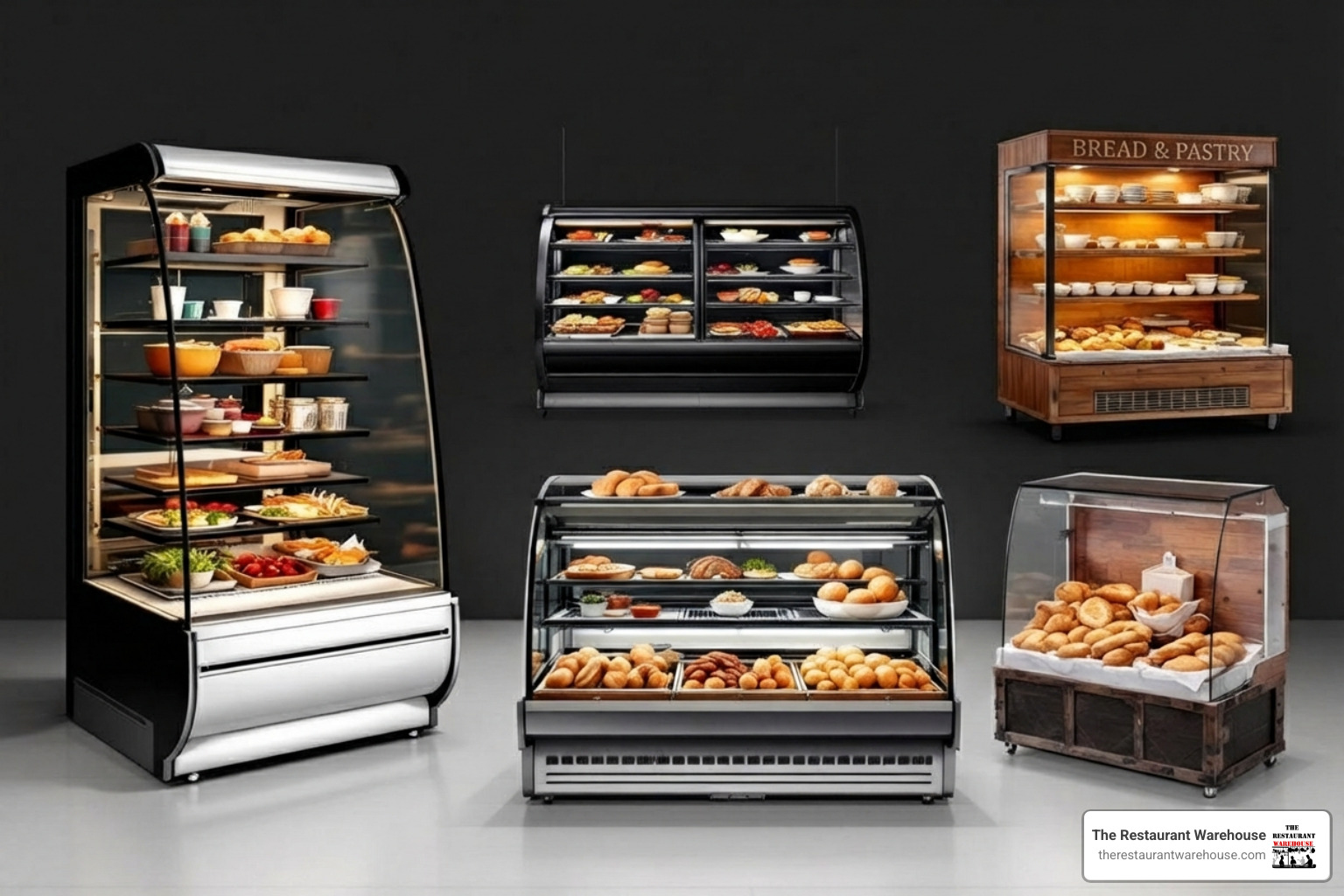
Refrigerated Display Cases
Refrigerated display cases are indispensable for any establishment serving perishable food items. Their primary function is to maintain food at safe, cool temperatures, typically ranging from 33°F to 38°F (0.5°C to 3.3°C), preventing spoilage and bacterial growth. These cases come in various configurations:
- Open-Air Merchandisers: Also known as grab-and-go units, these cases offer easy self-service access, making them perfect for busy cafes, convenience stores, and quick-service restaurants. They're ideal for bottled drinks, yogurts, fruit cups, and pre-made salads.
- Deli Cases: Specifically designed for showcasing sliced meats, cheeses, and prepared salads, these often feature curved or straight glass fronts for optimal visibility. They typically offer precise temperature and humidity control to keep products fresh.
- Bakery Cases (Refrigerated): For delicate desserts, cakes, and pastries that require refrigeration, these cases ensure items like cheesecakes, cream-filled pastries, and fruit tarts remain chilled and appealing.
- Meat and Seafood Cases: These specialized restaurant display cases are crucial for butchers and seafood markets. They often feature specific refrigeration systems to maintain optimal conditions for raw meats and fresh seafood, preventing discoloration and preserving quality.
When selecting a refrigerated display case, consider the importance of consistent temperature control and, for some items, humidity control to prevent drying out.
Heated Display Cases
For establishments serving hot, ready-to-eat food, heated display cases are essential. These units are designed to keep food at safe serving temperatures, typically between 140°F and 180°F (60°C to 82.2°C), ensuring both food safety and customer satisfaction.
- Hot Food Holding Cases: These are ideal for items like fried chicken, baked pasta, steamed vegetables, and hot sandwiches. They prevent food from cooling down, which can compromise both taste and safety.
- Countertop Warmers: Smaller, more compact units suitable for limited space, often used for items like soup, sauces, or small batches of hot snacks.
- Full-Service and Self-Service Hot Cases: Full-service cases are typically larger units where staff serve customers, often seen in cafeterias. Self-service cases are common in buffet lines, allowing patrons to help themselves.
- Radiant Heat and Humidity Systems: Many heated cases incorporate radiant heat, which directly warms the food, and some include humidity systems to prevent items from drying out, keeping them fresh and palatable for longer.
Ambient & Dry Display Cases
Not all food items require refrigeration or heating. Ambient and dry display cases are designed for products that are best stored and served at room temperature, while still offering protection from contaminants and an appealing presentation.
- Non-Refrigerated Bakery Cases: These cases are perfect for a wide range of baked goods such as breads, croissants, cookies, and muffins that don't contain perishable fillings. They prevent products from drying out too quickly.
- Countertop Models: Often seen in cafes and bakeries, these compact units sit on the counter, allowing for an enticing display of smaller items.
- Floor Models: Larger dry display cases can be used for bulk bread displays or a larger selection of pastries in high-volume bakeries.
- Protection from Contaminants: The enclosed nature of these cases shields food from dust, insects, and other environmental factors, ensuring hygiene.
The Ultimate Buyer's Checklist: Selecting the Perfect Unit
Choosing the right restaurant display case is a significant decision that impacts your operational efficiency, food safety, and ultimately, your profitability. It’s about making an informed investment that aligns with your specific needs. This checklist covers everything from technical specifications to long-term operational costs.
Key Features for Your Restaurant Display Cases
The features of a display case dictate its functionality, efficiency, and how well it meets your restaurant's demands.
- Refrigeration System: For cold cases, you’ll encounter self-contained and remote systems. Self-contained units are all-in-one and easier to install but can emit heat into your space. Remote systems have the compressor located elsewhere, reducing heat and noise but requiring more complex installation. Consider also the refrigerant type; R-290, a natural refrigerant, is gaining popularity for its lower environmental impact and energy efficiency.
- LED Lighting: Modern restaurant display cases often feature LED lighting, which is superior to traditional options. LEDs consume less energy, produce minimal heat (crucial for refrigerated items), and provide excellent color rendering to make food look vibrant and appealing.
- Adjustable Shelves: Flexibility is key. Adjustable shelving allows you to accommodate items of varying heights, from tall cakes to stacked sandwiches, maximizing your display capacity.
- Glass Type (Curved vs. Flat): This is largely an aesthetic choice. Curved glass often provides a more traditional look and can improve visibility by reducing glare. Flat glass offers a clean, modern aesthetic. Tempered glass is standard for safety and durability.
- Defrost Systems: Automatic defrost systems are a huge time-saver, preventing ice buildup and maintaining optimal cooling efficiency. Manual defrost requires more labor but can be found in some budget-friendly models.
- Digital Controls: Precision temperature control is vital for food safety. Digital thermostats and displays allow for accurate temperature monitoring and adjustment, ensuring your food stays within safe parameters. You can Find official food safety guidelines here to ensure your choices meet all necessary standards.
Sizing Up Your Space and Needs
Before you fall in love with a particular restaurant display case, measure your available footprint. Consider not just the width and depth, but also the height, especially for countertop units. Capacity planning is equally important. How much product do you need to display at any given time? Overstocking a small case looks messy and can hinder air circulation, while an oversized case for limited items looks sparse and is inefficient. Workflow integration is another critical aspect. Where will the display case be placed in relation to your prep areas and POS system? Easy access for staff to restock and for customers to view is essential.
Energy Efficiency and Long-Term Costs
The initial purchase price of a restaurant display case is just one part of the equation. Long-term operating costs, particularly energy consumption, can significantly impact your return on investment. Prioritizing energy-efficient models is a smart financial decision.
Look for restaurant display cases with ENERGY STAR ratings, which signify that the unit meets strict energy efficiency guidelines. These models typically use less electricity, leading to lower utility bills. As mentioned, systems using R-290 refrigerant are often more energy-efficient. Insulation quality also plays a huge role. Well-insulated cases maintain internal temperatures more effectively, requiring less energy from the compressor. For open-air refrigerated merchandisers, consider models with night covers to drastically reduce energy usage during off-hours.
Ready to find the perfect unit for your business? Contact us today and our team can help you select a display case that fits your needs and budget.
Maximizing Your Investment: Maintenance and Merchandising
You've invested in the perfect restaurant display case—now what? To ensure it continues to operate efficiently, maintain food safety standards, and act as the silent salesperson you intended, proper maintenance and smart merchandising are crucial. These practices not only extend the life of your equipment but also improve its ability to drive sales.
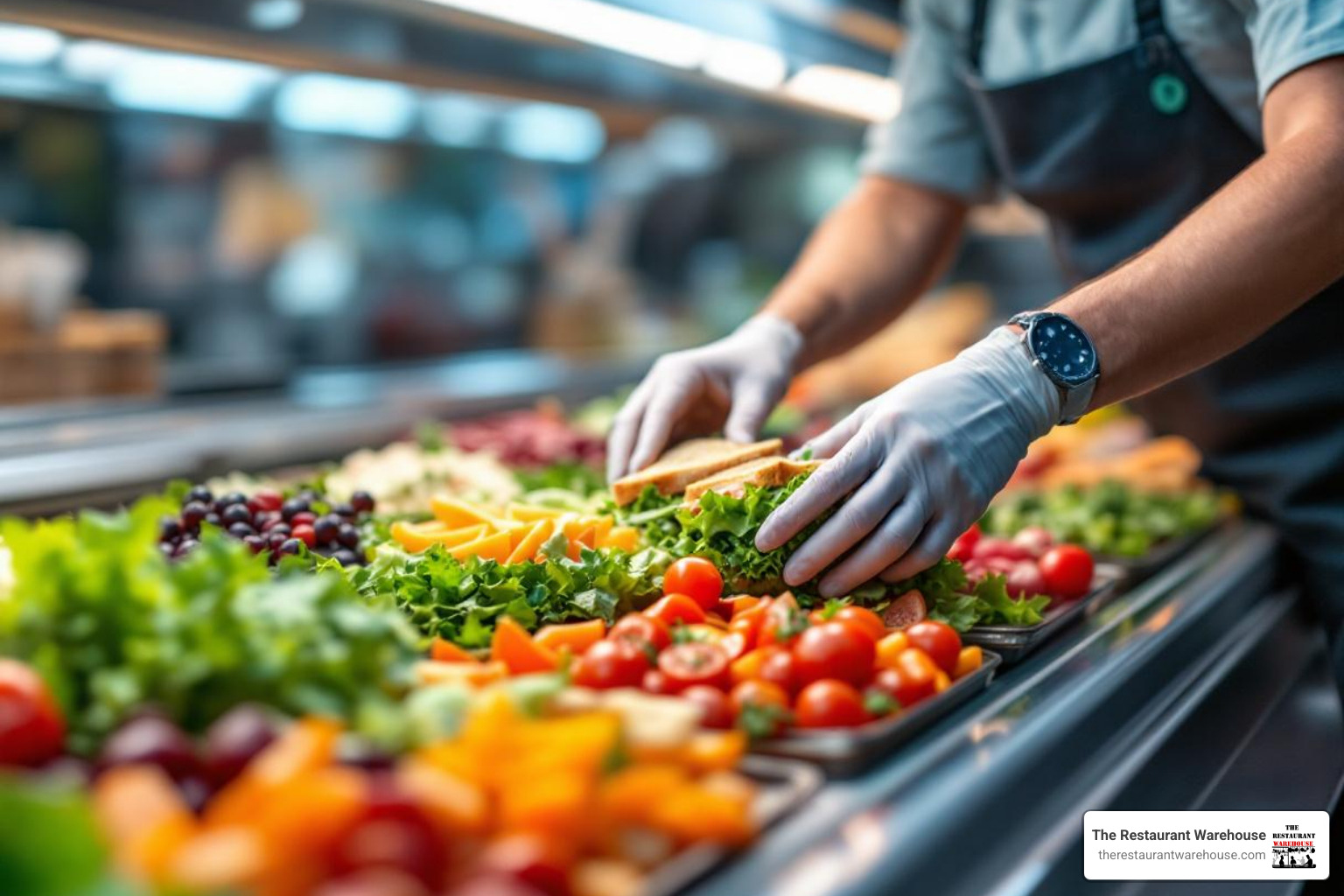
Cleaning and Maintenance for Longevity and Food Safety
A clean display case is a safe and appealing display case. Neglecting maintenance can lead to health code violations, reduced efficiency, and a diminished aesthetic. We recommend a diligent cleaning routine:
- Daily Cleaning Schedule: At the end of each day, remove all food items, wipe down all interior surfaces with a food-safe cleaner and sanitizer, and clean all glass panels. This prevents food residue buildup and maintains sparkle.
- Deep Cleaning Checklist: Weekly or bi-weekly, perform a more thorough cleaning. This includes cleaning shelves, racks, and any removable components. For refrigerated cases, clean the condenser coils to ensure optimal cooling performance. Dirty coils make the unit work harder, consuming more energy and potentially shortening its lifespan.
- Gasket Care: Inspect door gaskets regularly for cracks or tears. Damaged gaskets compromise temperature control, leading to energy waste and potential food safety issues. Clean them frequently to prevent mold and mildew.
- Ensuring Food Safety: Always follow proper food handling procedures. Ensure all food is stored in appropriate containers, labeled, and rotated to maintain freshness. Regular temperature checks with a thermometer are also essential to verify your case is holding proper temperatures.
Innovative Merchandising with Restaurant Display Cases
Beyond cleanliness, how you arrange your products in restaurant display cases can significantly influence customer behavior.
- Cross-Merchandising: Strategically place complementary items together. For example, next to your pastry case, offer individually packaged coffee beans. Near a deli case, display gourmet crackers or artisanal condiments.
- Themed Displays: Create seasonal or holiday-themed displays. During summer, feature bright, fresh fruit tarts; for fall, pumpkin spice desserts. This keeps your offerings fresh and exciting.
- Using Props: Tasteful props, such as small chalkboards with daily specials, miniature signage highlighting ingredients, or decorative stands, can draw attention and provide information. Just ensure they are food-safe and don't clutter the display.
- Storytelling Through Food: Arrange items in a way that tells a story. Perhaps a display of ingredients next to the finished product, or a progression of items from breakfast to lunch.
Matching the Case to Your Concept
The versatility of restaurant display cases means there's a perfect match for virtually any restaurant concept.
- Cafes and Bakeries: These establishments thrive on visual appeal. Refrigerated bakery cases are essential for delicate cakes and pastries, while ambient cases beautifully present breads and cookies.
- Delis and Markets: Deli cases are central to these businesses, showcasing an array of meats, cheeses, and prepared salads. Grab-and-go units are popular for quick meal solutions.
- Quick-Service and Grab-and-Go: Open-air multi-deck merchandisers are kings here. They offer easy access to pre-packaged sandwiches, salads, and beverages, facilitating speedy transactions.
Frequently Asked Questions about Restaurant Display Cases
It's natural to have questions when considering such a pivotal investment for your business. Here, we address some of the most common inquiries we receive about restaurant display cases.
How much do commercial display cases cost?
The cost of commercial display cases can vary widely, ranging from a few hundred dollars for small countertop ambient units to several thousand dollars for large, custom-built refrigerated or heated floor models. This initial investment is influenced by several factors:
- Size and Capacity: Larger units with greater holding capacity will naturally cost more.
- Features: Specialized features like advanced refrigeration systems (e.g., R-290 refrigerant), LED lighting, digital temperature controls, automatic defrost, or curved glass will increase the price.
- Type: Refrigerated and heated units are generally more expensive than ambient or dry cases due to the complexity of their temperature control systems.
Beyond the initial purchase price, it's crucial to consider operating costs. A high-quality, energy-efficient display case, while potentially more expensive upfront, can offer a better return on investment (ROI) through reduced utility bills and increased sales over its lifespan.
How do I prevent condensation on my glass display case?
Condensation is a common issue, especially in refrigerated display cases, and it can obscure your products. Here’s how to combat it:
- Proper Ventilation: Ensure adequate airflow around and within the display case. Overcrowding shelves can restrict air circulation, leading to condensation.
- Humidity Control: High ambient humidity in your restaurant can contribute to condensation. Maintaining a consistent indoor environment can help. Some advanced refrigerated cases offer humidity control features.
- Door Gaskets: Regularly inspect and clean door gaskets. Worn or dirty gaskets can prevent a tight seal, allowing warm, humid air to enter the case and condense on cold surfaces.
- Regular Maintenance: Keep your refrigeration coils clean. Dirty coils reduce cooling efficiency, which can lead to warmer internal temperatures and more condensation.
Many modern restaurant display cases are designed with features like heated glass or specialized airflow systems to minimize condensation.
What is the best lighting for a food display case?
The right lighting can make your food sparkle, enhancing its appeal and driving sales. For restaurant display cases, we firmly recommend LED lighting for several reasons:
- Energy Efficiency: LEDs consume significantly less electricity, leading to lower operating costs.
- Minimal Heat Output: Unlike halogens, LEDs produce very little heat. This is crucial for refrigerated cases, as it prevents the internal temperature from rising, reducing the strain on the refrigeration system.
- Color Temperature (CRI): Look for LEDs with a high Color Rendering Index (CRI), typically 80 or above. A high CRI accurately represents the true colors of your food, making fresh produce look vibrant, baked goods look golden, and meats look rich.
- Avoiding Food Discoloration: LEDs do not emit UV light, which can cause discoloration and degradation of certain food items over time.
Conclusion
Choosing the right restaurant display cases is a strategic decision that goes far beyond simple storage. As we’ve explored, these vital pieces of equipment are silent salespeople, tirelessly working to boost impulse purchases, maintain stringent food safety standards, and lift the overall ambiance of your establishment. From the psychological impact of "eating with your eyes" to the meticulous details of energy efficiency and maintenance, every aspect contributes to your restaurant's success.
We've dug into the diverse world of display cases, from refrigerated units keeping deli delights perfectly chilled to heated cases showcasing savory hot meals. Understanding the nuances of each type—and the critical features like LED lighting and precise temperature controls—empowers you to make informed choices that align with your unique culinary concept and operational needs.
At The Restaurant Warehouse, we are dedicated to supplying high-quality, affordable restaurant display cases and other foodservice supplies. We help businesses across the USA, from Seattle to the east coast, thrive by offering wholesale pricing and avoiding high retail overhead. Our commitment is to provide you with the tools you need to create visually stunning, safe, and profitable food displays.
Investing in the right display case is investing in your restaurant's future. It's about presenting your passion with pride and inviting customers to experience the quality you offer.
Explore our full range of display cases.
Contact us today to find the perfect display case for your business!
About The Author

Sean Kearney
Sean Kearney is the Founder of The Restaurant Warehouse, with 15 years of experience in the restaurant equipment industry and more than 30 years in ecommerce, beginning with Amazon.com. As an equipment distributor and supplier, Sean helps restaurant owners make confident purchasing decisions through clear pricing, practical guidance, and a more transparent online buying experience.
Connect with Sean on LinkedIn, Instagram, YouTube, or Facebook.