

The Secret Ingredient: Unpacking the Best Pizza Prep Tables for Sale
Why a Pizza Prep Fridge for Sale Could Transform Your Pizzeria
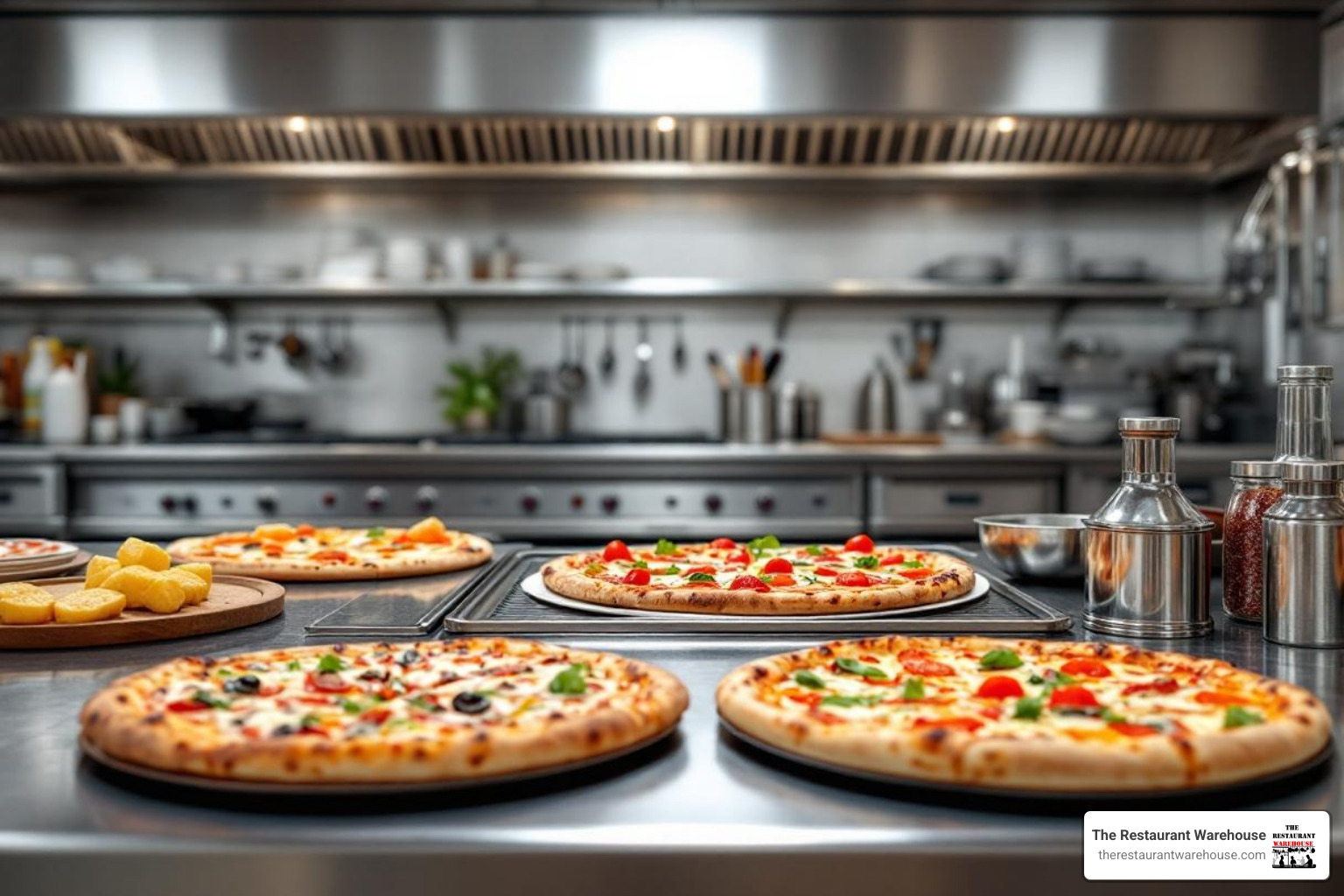
A pizza prep fridge for sale is a specialized commercial refrigeration unit designed to streamline pizza making. It combines refrigerated ingredient storage, a chilled pan rail for toppings, and a spacious cutting board into a single, integrated workstation. This setup is essential for any pizzeria looking to boost efficiency and maintain quality.
Imagine the typical chaos of a dinner rush without one: cooks are constantly weaving through the kitchen, opening and closing a walk-in cooler, letting precious cold air escape. Toppings are stored in mismatched containers on a shelf, their temperatures slowly creeping into the unsafe 'danger zone.' One cook is searching for the pepperoni while another waits for space to stretch dough. This disorganization not only slows down service but also introduces risks of cross-contamination and compromises the quality of your ingredients. A dedicated prep station eliminates this chaos, creating a calm, efficient, and safe hub for production.
Key Features of Pizza Prep Fridges:
- Refrigerated Pan Rail: Holds multiple food pans (typically 1/3 size) at a food-safe 33-40 b0F for easy access to toppings.
- Deep Cutting Board: An extra-deep surface (often 19+ inches) provides ample room for assembling large pizzas.
- Undercounter Storage: A refrigerated base with doors or drawers keeps backup ingredients perfectly chilled.
- Common Sizes: Available in 44", 60", 72", and 93" widths to fit various kitchen layouts.
During a dinner rush, speed is everything. Every second a cook spends walking to a cooler or searching for ingredients is a second a customer waits. A dedicated pizza prep fridge keeps pepperoni, cheese, vegetables, and sauces at the perfect temperature right where your team needs them. This eliminates wasted motion, reduces prep time, and keeps your production line moving at top speed, directly impacting your throughput and profitability.
The challenge for many restaurant owners is finding quality refrigeration at a fair price. A well-chosen pizza prep fridge for sale can revolutionize a kitchen's workflow, and finding an affordable supplier is key to maximizing that investment.
If you are ready to start planning your upgrade, you can contact us to discuss the right pizza prep fridge for your space and budget at https://therestaurantwarehouse.com/pages/contact-us.
To understand just how central this single piece of refrigeration can be, it helps to look beyond the hardware and focus on the overall system it supports: ingredient quality, staff productivity, food safety compliance, and customer experience. From the moment dough is stretched to the final garnish of basil, the prep station acts as the control center that keeps every step flowing smoothly.
When your ingredients are consistently cold and accessible, staff can batch tasks more effectively. Dough can be portioned and staged near the prep fridge, sauces can be rotated and labeled for first-in, first-out (FIFO) use, and toppings can be arranged to match your menu layout. All of this allows your team to work with fewer interruptions and fewer errors, which translates into faster ticket times and more satisfied guests.
A thoughtfully selected pizza prep fridge for sale also supports training and standardization. New employees can more quickly learn station setup and restocking routines when everything has a logical place within arm's reach. Over time, that consistency helps your pizzeria deliver the same great pizza during a slow weekday lunch as it does at peak weekend volume.
As you evaluate your options and consider a purchase, keep in mind that this is not just a cost but an investment that affects your brand reputation, labor utilization, and long-term profitability.
When you are ready to compare models, features, and pricing in one place, explore our pizza prep fridge lineup at https://therestaurantwarehouse.com/collections/pizza-prep-tables and start mapping out the ideal configuration for your operation.
What Makes a Pizza Prep Fridge a Pizzeria's Best Friend?
For any pizzeria, the quest for efficiency and consistent quality is relentless. This is where a pizza prep fridge for sale proves to be an indispensable ally. Unlike a standard commercial refrigerator designed for bulk storage, these units are purpose-built workstations that integrate every step of the pizza assembly process. This design minimizes movement, reduces prep time, and ensures all ingredients remain at optimal, food-safe temperatures, even during the busiest rushes.
Imagine your team quickly assembling pizzas on a wide cutting board, with perfectly chilled mozzarella, pepperoni, and fresh vegetables neatly organized in pans just inches away. This focus on workflow optimization, coupled with rigorous food safety standards, makes a pizza prep fridge a true pizzeria's best friend.

Key Differences and Unbeatable Benefits
A pizza prep fridge for sale is far more than just a cold box; it's an all-in-one station engineered for the unique demands of a pizzeria. The key differences from standard refrigerators translate directly into tangible benefits for your business:
Integrated Workspace & Accessibility: The most defining feature is the combination of a deep cutting board (19+ inches) and a refrigerated pan rail. This keeps all your toppings chilled and within arm's reach, eliminating the need to constantly open a refrigerator door or walk to a separate cooler. This improved accessibility dramatically increases speed and output, allowing your team to assemble pizzas faster and keep up with high demand. Every topping is visible and reachable, turning a multi-step process into a single, fluid motion.
Superior Food Safety & Quality: High-quality units use forced-air refrigeration to maintain a consistent temperature (33 b b bF-40 b b bF) across the pan rail and undercounter storage. Unlike static cooling systems that can create warm and cold spots, a forced-air system circulates cold air evenly around each pan, ensuring every ingredient stays out of the temperature danger zone. This precision prevents the formation of ice crystals on delicate items like fresh basil or mushrooms, preserving their texture and flavor. Reputable units are also NSF certified, meeting strict public health standards for professional food service applications, as outlined in guidelines like the FDA Food Code on safe temperature holding. This commitment to temperature control not only improves safety but also leads to better product consistency, ensuring every pizza meets your quality standards.
Optimized Kitchen & Labor Efficiency: By consolidating storage, refrigeration, and preparation into a single footprint, a pizza prep table saves valuable floor space. This streamlined workflow means staff spend less time walking around the kitchen to gather ingredients. Consider a cook who has to walk 10 feet to the cooler for cheese, 5 feet to a shelf for pepperoni, and another 10 feet back to their station. Over a hundred pizzas, this adds up to miles of wasted movement. A prep station eliminates this, saving dozens of labor hours per week. The result is a more organized kitchen and significant savings in labor costs, as your team can accomplish more in less time.
Better Ingredient Rotation & Waste Reduction: Since toppings are visible and easy to access in individual pans, staff can naturally rotate older ingredients forward and keep a constant eye on quality. This visual management system strongly supports first-in, first-out (FIFO) practices and helps reduce the likelihood of forgotten containers of ingredients spoiling in the back of a walk-in cooler. Every ounce of cheese or cup of sauce saved from spoilage is pure profit. Less waste translates directly to a stronger bottom line and more accurate inventory management.
Improved Training and Station Consistency: With a dedicated prep station, managers can create and enforce standardized setup diagrams, pan layouts, and restocking routines. New hires can be trained to follow the same logical pattern each shift, which helps maintain portion control, visual consistency across all pizzas, and predictable prep times. This systemization is the foundation of a scalable business, ensuring that the 100th pizza of the night is made with the same care and precision as the first.
From a management perspective, these benefits add up to more predictable service, fewer bottlenecks, and a reliable foundation for growth. Whether you are opening your first location or fine-tuning an established concept, a well-chosen pizza prep fridge for sale will support your long-term operational goals.
If you are evaluating options and want help matching features to your menu and volume, book a quick strategy call with our team at https://therestaurantwarehouse.com/pages/contact-us so we can help you identify the right configuration for your pizzeria.
Decoding the Options: Types of Pizza Prep Tables
When you're looking for a pizza prep fridge for sale, you'll find various configurations designed to meet different operational needs. Understanding the main types b bdistinguished by the topping rail design, undercounter storage, and even compressor location b bis crucial for selecting the perfect match for your pizzeria.
Standard Top vs. Mega Top: Which Rail is Right for You?
The design of the topping rail is a primary differentiator, influencing the quantity of ingredients you can keep on the line at one time.
| Feature | Standard Top Pizza Prep Table | Mega Top Pizza Prep Table |
|---|---|---|
| Pan Capacity | Typically one or two rows of 1/3 size pans. | Often two or three rows of 1/3 size pans for 30-50% more capacity. |
| Cutting Board Space | Generally offers a deeper cutting board (19"+). | The cutting board might be slightly less deep (16-17") to fit more pans. |
| Best Use Case | Smaller pizzerias or operations with a focused, streamlined menu. | High-volume pizzerias or those with extensive, customizable topping options. |
- Standard Top Tables: These units are the workhorses for pizzerias with a solid but not overly extensive menu. They prioritize a larger prep area with a deeper cutting board, which is ideal for hand-stretching dough and assembling extra-large pizzas without feeling cramped.
- Mega Top Tables: As the name suggests, these tables offer an expanded pan rail to hold significantly more toppings. They are the perfect solution for high-volume establishments or concepts that thrive on customization, such as build-your-own pizza bars. The ability to have every possible topping on the line at once is a massive efficiency booster.
Doors vs. Drawers: Accessing Your Cold Storage
Beneath the work surface, pizza prep tables offer refrigerated storage in two main configurations:
- Doors for Bulk Storage: Units with swing doors provide large, open compartments perfect for storing bulk items like 25-pound bags of cheese, large dough boxes, gallon containers of sauce, or backup bins of high-volume toppings. They are highly efficient for holding items needed for quick replenishment of the top rail during a rush.
- Drawers for Organized Portions: Drawer configurations are fantastic for organizing smaller, pre-portioned ingredients. They allow for easy, ergonomic access to neatly stacked 1/6 or 1/3 size pans without having to bend down and search inside a dark cabinet. This is ideal for mise en place, keeping items like sliced prosciutto, fresh mozzarella, or specialty vegetables perfectly organized.
- Combination Units: Many models offer a mix of doors and drawers, providing the ultimate flexibility. For example, a 72" unit might have one door section for bulk cheese and dough, and two drawer sections for organized, prepped vegetables and meats. This hybrid approach can optimize your workflow for different types of ingredients.
Compressor Placement: Bottom-Mount vs. Side-Mount
The location of the compressor affects maintenance, airflow, and where the unit can be placed in your kitchen.
- Bottom-Mount Compressors: This is the most common configuration. The compressor is located at the bottom of the unit, which is a cooler and less greasy area of the kitchen compared to the air near the ceiling. This can lead to better energy efficiency. However, it can also pull in more dust and flour from the floor, requiring more frequent cleaning of the condenser coils.
- Side-Mount Compressors: These units have the compressor located on one side (left or right). This placement is excellent for tight spaces where rear clearance is limited and makes the coils very easy to access for cleaning and service without moving the entire unit. The downside is that it adds to the overall width of the unit's footprint.
Additional Configuration Considerations
Beyond the basic layout, there are several details that can make a pizza prep fridge for sale better suited to your specific operation:
- Rail Lids: Lids help maintain temperature and protect ingredients from contamination. Some units have flat, hinged lids, while others feature raised or angled lids that can be insulated for better temperature retention. Insulated lids are a key feature for reducing energy consumption and keeping toppings colder during off-hours. Consider whether you prefer full-length lids or split lids that let you open only part of the rail during slower periods.
- Pan Size Flexibility: While most tables are designed for 1/3 size pans, many can accommodate different configurations using adapter bars (e.g., holding 1/6 or 1/9 size pans). If your menu frequently changes or you experiment with limited-time toppings, this flexibility will help you adapt without replacing hardware.
- Electrical Requirements: Always verify the voltage (115V or 208/230V) and plug type (e.g., NEMA 5-15P) on the unit's spec sheet. Confirm that it matches your building's available electrical service to avoid costly and time-consuming surprises during installation.
- Casters vs. Legs: Heavy-duty locking casters are almost always preferred in a pizzeria. They allow you to easily roll the unit out for deep cleaning behind and underneath it, which is essential for maintaining a hygienic kitchen. Legs offer a more fixed, permanent installation but make cleaning far more difficult.
As you compare types and configurations, it may help to map a typical shift on paper: how many topping varieties you use at once, how often you restock, and where staff stand during rush periods. Then, match those patterns to a pizza prep fridge for sale that supports your existing workflow or improves it without requiring a major redesign.
To see how these configurations translate into real-world models and pricing, you can browse our full range of pizza prep fridges at https://therestaurantwarehouse.com/collections/pizza-prep-tables and note which layouts most closely align with your current or planned setup.
How to Find the Perfect Pizza Prep Fridge for Sale
Finding the right pizza prep fridge for sale is a critical decision that impacts your kitchen's efficiency, food safety, and long-term operating costs. It's about finding the perfect fit for your unique business needs by carefully considering size, materials, certifications, and how the unit's features align with your specific pizzeria concept.
Sizing It Up: Choosing the Right Dimensions for Your Kitchen
The size of your prep table is paramount. Before you even start browsing, you must measure your available space. Account not only for the unit's width and depth but also for door swings and, most importantly, the necessary clearance for air circulation around the unit (typically 2-3 inches on the sides and back). Your choice should also be guided by your production volume and menu complexity. High-volume pizzerias will benefit from longer units (e.g., 72" or 93" wide) with more pan capacity, while smaller operations or those with a tight footprint might find a 44" or 60" unit sufficient.
When planning your layout, also consider how staff will move around the station. A 48-inch aisle is the recommended minimum for a busy commercial kitchen. Ensure there is sufficient space for team members to pass each other and access other areas like dough prep, dish areas, and service windows without creating a dangerous bottleneck. A prep fridge that is technically the right width can still feel too large if it cripples your kitchen's flow during peak hours. Also, think about the future. If you plan to expand your menu or anticipate sales growth, investing in a slightly larger unit now can save you from having to upgrade in just a couple of years.
What to Look for When Searching for a Pizza Prep Fridge for Sale
Once you know the size you need, examine the construction and components to gauge durability, performance, and ease of use.
- Material and Construction: Look for units with an AISI 304 stainless steel interior and exterior. This grade offers superior corrosion resistance, especially against acidic ingredients like tomato sauce and vinaigrettes, and is easy to sanitize. Some budget models may use 430-grade stainless steel on the exterior, which is still durable but less resistant to rust. A thick, removable polyethylene cutting board is ideal, as it's durable, won't dull knives quickly, and is easy to remove for deep cleaning. High-density, foamed-in-place polyurethane insulation is the industry standard for energy efficiency and maintaining structural rigidity.
- Refrigeration System: A balanced, forced-air refrigeration system is vital for ensuring consistent cooling from the top pan rail to the bottom of the storage cabinet. Modern, eco-friendly units often use R290 hydrocarbon refrigerant, which has a low environmental impact and is highly energy-efficient. Also, confirm the unit comes with heavy-duty casters (at least two with locks) as standard. This mobility is a must for rolling the unit away from walls for thorough cleaning and maintenance.
- Controls and Monitoring: A user-friendly digital temperature display and simple control panel are essential. This allows staff to quickly verify at a glance that the unit is operating within the safe temperature range (33-40°F). Some advanced models also offer alarms or indicator lights that alert staff when temperatures drift outside your setpoint, providing an extra layer of food safety protection.
Understanding Certifications and Energy Efficiency
Certifications are non-negotiable indicators of quality, safety, and potential cost savings.
- Food Safety Standards: NSF/ANSI 7 certification is crucial. It means the unit has been tested and certified to meet strict public health and safety standards for commercial refrigeration. Operating without NSF-certified refrigeration can lead to health code violations. You can learn more about these standards through organizations such as NSF and in public resources from agencies like the FDA.
- ENERGY STAR Rating: An ENERGY STAR rated unit is designed and tested to be 15-20% more energy-efficient than standard models. Given that refrigeration runs 24/7, this efficiency translates into significant long-term savings on your utility bills, often amounting to hundreds of dollars per year for a single unit.
Matching Features to Your Concept
Different pizzeria concepts place different demands on a pizza prep fridge for sale:
- Fast-Casual or Slice Shops: Speed and volume are king. You may prioritize a Mega Top unit with the largest possible pan rail to have every topping visible at once. Undercounter drawers for pre-portioned cheese and pepperoni can also accelerate assembly time.
- Neapolitan or Artisan Concepts: Quality and process are paramount. You might value a Standard Top with a deeper cutting board for hand-stretching delicate dough. Storage might focus on doors to accommodate larger, specific containers for high-quality imported ingredients.
- Delivery-Heavy Operations: Consistency and speed are critical. A long, 93" unit that allows two or more employees to assemble pizzas side-by-side at the same station can dramatically increase throughput during peak delivery hours.
Thinking through your menu, service style, and growth plans will help you choose features that will still make sense a few years down the road.
If you would like help translating your concept and floor plan into a specific prep fridge recommendation, reach out to our team for tailored support at https://therestaurantwarehouse.com/pages/contact-us. We can walk through your measurements, volume, and budget to identify a short list of ideal options.
Budgeting for Your Investment: Price, Maintenance, and Common Issues
Acquiring a pizza prep fridge for sale is a significant investment that requires careful financial planning. Understanding the initial cost, long-term maintenance needs, and common issues will help you make a smart, sustainable decision for your business.
The Price Tag: What to Expect for a New or Used Pizza Prep Fridge for Sale
The cost of a pizza prep table varies widely based on its size, brand, features, and condition.
- New Units: A new commercial pizza prep table typically ranges from $1,500 to $5,000. Smaller, 44-inch standard top units from value-oriented brands will be at the lower end of this spectrum. Larger, 93-inch Mega Top models with drawers from premium brands can easily exceed the high end. Factors like full stainless steel construction (304-grade), insulated lids, and extended warranties all contribute to a higher price.
-
Used Units: A used unit can offer substantial initial savings, often priced between $500 and $2,500. However, this comes with significant risks, such as a lack of warranty, an unknown service history, and the potential for unforeseen, costly repairs. If considering a used unit, a thorough inspection is non-negotiable.
Used Unit Inspection Checklist:
- Run It: Plug it in for several hours and use a thermometer to verify it holds a consistent temperature below 40°F.
- Listen: Pay attention to the compressor. Does it cycle on and off normally, or does it run constantly? Are there any loud rattling or grinding noises?
- Check Gaskets: Inspect all door and drawer gaskets for cracks, tears, or brittleness. A poor seal will waste energy and strain the compressor.
- Inspect for Rust: Check the interior and exterior for any signs of rust, especially around the base and corners.
- Examine Coils: Look at the condenser coils. Are they caked in dirt or damaged? This can indicate poor maintenance.
- Test Doors/Drawers: Ensure all doors and drawers open, close, and seal properly.
- Warranty Importance: A strong warranty is one of the most compelling reasons to buy new. Look for a warranty that offers at least 1-2 years on parts and labor and a separate, longer warranty (typically 5 years) on the compressor, which is the most expensive component to replace. This provides peace of mind and protects your investment against early failures.
When budgeting, also factor in delivery, installation, and any electrical work you may need to accommodate the new unit. While these costs are not part of the sticker price, they are essential for a realistic total project cost.
Keeping it Cool: Essential Maintenance for Longevity
Proper, consistent maintenance is the key to maximizing the performance and lifespan of your prep fridge.
- Daily: Wipe down all surfaces, including the cutting board, interior, and exterior. Remove, wash, and sanitize all food pans. Promptly clean up any food debris and spills to prevent bacterial growth and odors. Check that the digital temperature display is within the safe zone.
- Weekly: Inspect door and drawer gaskets for any cracks or tears that could cause cold air to leak. A simple test is to close the door on a dollar bill; if you can pull it out easily, the seal is weak. Verify the internal temperature is holding steady between 33 b b bF and 40 b b bF using an independent, calibrated thermometer.
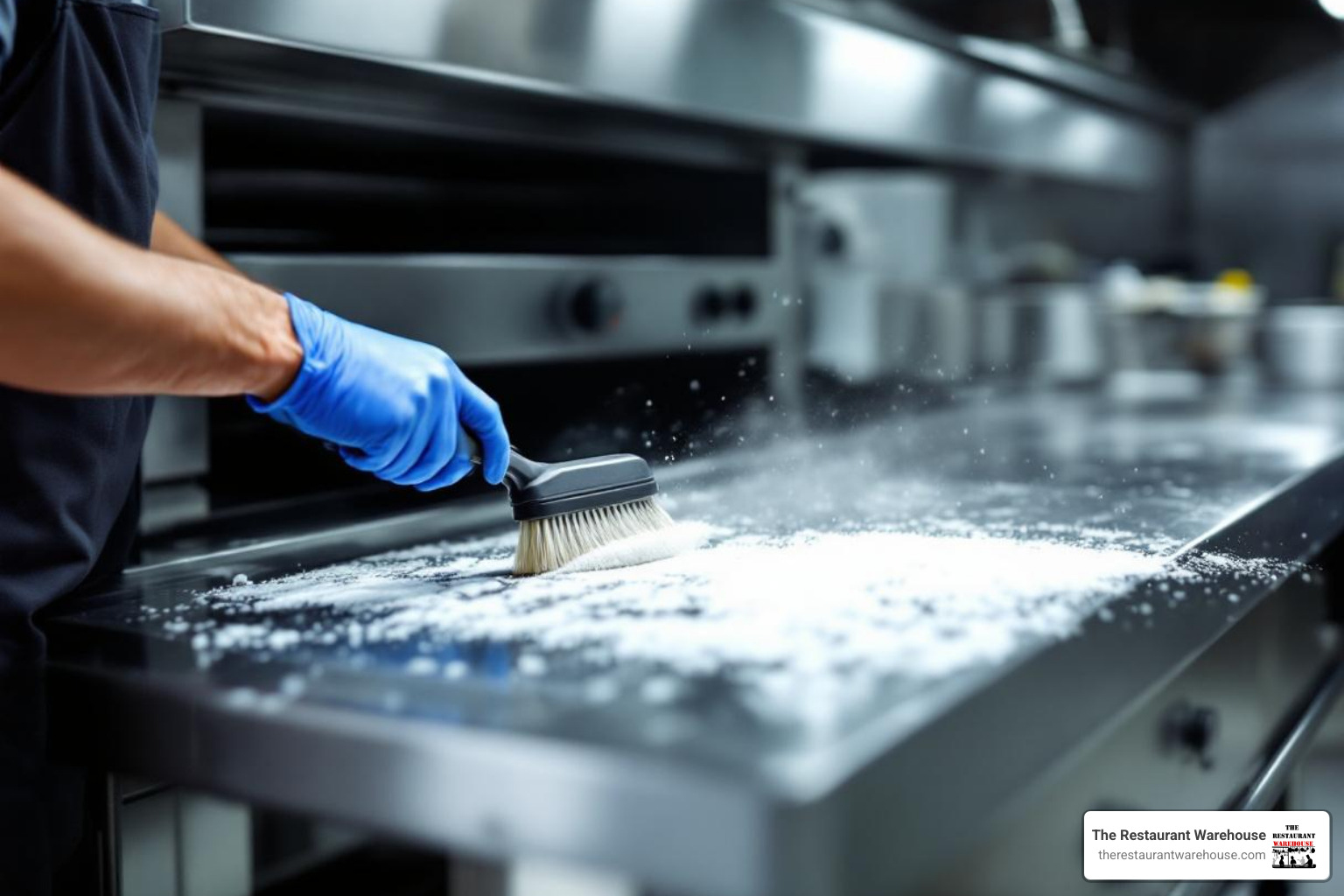
- Monthly: Clean the condenser coils. This is the single most critical maintenance task. In a pizzeria with flour, dust, and grease in the air, cleaning them every two weeks is even better. Dirty coils act like an insulator, forcing the compressor to work harder, consume more energy, and ultimately fail sooner. Always unplug the unit before brushing or vacuuming the coils.
- Quarterly: Clear the condensate drain line to prevent clogs that can cause water to leak onto the floor. Check that casters are free of debris and that the locking mechanisms work. Ensure the unit is still level so that condensation flows properly to the drain pan.
Troubleshooting 101: Common Problems and Solutions
Knowing how to handle common issues can save you from an expensive service call and prevent food loss.
- Temperature Fluctuations: This is most often caused by dirty condenser coils, blocked internal airflow (from over-stocking), or worn door gaskets. Start by cleaning the coils and ensuring nothing is blocking the vents inside the unit. Inspect gaskets for a tight seal. Also, train staff not to leave lids or doors open for extended periods.
- Water Leakage on the Floor: This is usually due to a clogged condensate drain line. Locate the line (refer to your manual), unplug the unit, and carefully clear any blockages with a pipe cleaner or compressed air. Also, ensure the condensate pan isn't cracked or overflowing.
- Excessive Frost Buildup: This can result from faulty door seals allowing moist air to enter the unit, or a problem with the automatic defrost cycle. Check gaskets first. If the problem persists, you may need a technician to inspect the defrost timer, heater, and terminator.
- Compressor Not Cooling or Running Constantly: The most common cause is dirty condenser coils. Clean them thoroughly first. If the unit still does not cool or won't stop running, it is time to call a qualified refrigeration technician, as it could be a more serious issue like a refrigerant leak or a failing compressor.
When you purchase a pizza prep fridge for sale, ask about recommended maintenance schedules, parts availability, and service support so you know exactly how to care for the unit from day one. Planning for upkeep is just as important as choosing the right size or configuration.
If you want guidance on balancing upfront price with expected energy use, maintenance, and lifespan, contact us for a personalized cost-of-ownership breakdown at https://therestaurantwarehouse.com/pages/contact-us. This can help you select a model that supports your financial goals as well as your day-to-day operations.
Frequently Asked Questions about Pizza Prep Tables
How cold should a pizza prep table be?
A pizza prep table's refrigerated sections, including the pan rail and the undercounter storage cabinet, must maintain a food-safe temperature between 33°F and 40°F (0.5°C and 4°C). This range is critical for inhibiting the growth of harmful bacteria and preserving the freshness, texture, and flavor of your ingredients. It's a best practice to use an independent, calibrated thermometer to verify the temperature daily for health code compliance and quality assurance.
Can I use a sandwich prep table for pizza?
While you technically can, it is highly discouraged and inefficient. The main, critical difference is the cutting board depth. Pizza prep tables are specifically designed with an extra-deep board (often 19 inches or more) to accommodate large, 16-inch or 18-inch pizza doughs. A standard sandwich prep table has a much shallower board (typically 10-12 inches), which makes assembling a pizza cramped, messy, and slow. For any serious pizzeria, a purpose-built pizza prep fridge for sale is always the better choice for workflow, ergonomics, and speed.
How often should I clean the condenser coils?
Condenser coils should be cleaned at least once a month as a bare minimum. However, in a typical pizzeria environment with high levels of airborne flour, grease, and dust, cleaning them every two weeks is highly recommended. Keeping the coils clean is the single most important maintenance task you can perform to ensure cooling efficiency, lower your energy bills, and dramatically extend the lifespan of the compressor and the entire unit.
How much clearance does a pizza prep fridge need for proper ventilation?
Proper clearance is essential for the refrigeration system to breathe and dissipate heat effectively. Most manufacturers recommend a minimum of 2-3 inches of clearance on the back and sides of the unit. For bottom-mount compressors, you must also ensure the front grille is never blocked. For side-mount compressors, the side with the ventilation panel needs extra space, often up to 12 inches. Insufficient clearance will cause the compressor to overheat and work much harder, leading to higher energy consumption and premature failure. Always consult the manufacturer's spec sheet for the exact clearance requirements of your specific model.
Conclusion: Your Next Step to a More Efficient Pizzeria
As we've explored, a pizza prep fridge for sale is far more than just a piece of refrigeration; it is a strategic investment that directly improves the efficiency, safety, and quality of your pizzeria's operations. By optimizing workflow, reducing food waste through better temperature control, and ensuring product consistency with an organized station, these units deliver a powerful and measurable return on investment. Choosing the right model involves a careful analysis of your space, volume, and menu, leading you to the correct size, top style (Standard vs. Mega), and storage configuration (doors vs. drawers).
Making an informed decision also means looking at the details: prioritizing durable 304 stainless steel, understanding compressor placement, and insisting on key certifications like NSF and ENERGY STAR. Committing to a routine maintenance schedule b b bespecially the frequent cleaning of condenser coils b b bwill protect your investment and ensure its longevity for years to come.
A pizza prep table is a cornerstone for any serious pizzeria aiming for peak performance and profitability. By carefully matching pan capacity, cutting board depth, and storage configuration to your menu and service style, you create a station that empowers your staff instead of slowing them down. Over time, that translates into smoother shifts, more consistent pizzas, happier employees, and a better experience for your guests.
At The Restaurant Warehouse, we are committed to providing high-quality refrigeration at affordable, wholesale prices, ensuring you can equip your kitchen for success without breaking the bank. Our selection of pizza prep fridges for sale is curated to balance durability, food safety, and operating cost so you can focus on what you do best: running and growing your business.
If you are ready to move from research to action, explore our selection of pizza prep tables today at https://therestaurantwarehouse.com/collections/pizza-prep-tables and take the next step toward a more efficient, profitable pizzeria.
For operators who prefer a more guided approach, you can also book a strategy call with our team at https://therestaurantwarehouse.com/pages/contact-us. We will help you review your space, volume, and budget so you can confidently choose a pizza prep fridge that will serve your business well for years to come.
About The Author

Sean Kearney
Sean Kearney is the Founder of The Restaurant Warehouse, with 15 years of experience in the restaurant equipment industry and more than 30 years in ecommerce, beginning with Amazon.com. As an equipment distributor and supplier, Sean helps restaurant owners make confident purchasing decisions through clear pricing, practical guidance, and a more transparent online buying experience.
Connect with Sean on LinkedIn, Instagram, YouTube, or Facebook.
Leave a comment