

Restaurant Cooking Ranges Made Easy – Heat Up Your Kitchen Game
The Beating Heart of Your Commercial Kitchen
Restaurant cooking ranges are essential pieces of equipment that serve as the primary cooking hub in commercial kitchens. They combine powerful burners with versatile ovens to handle everything from simmering sauces to searing steaks.
If you're looking to understand restaurant cooking ranges quickly, here's what you need to know:
| Feature | Commercial Range | Residential Range |
|---|---|---|
| BTU Output | 28,000-35,000 BTU per burner | 7,000-18,000 BTU per burner |
| Construction | Heavy-duty stainless steel | Lighter residential materials |
| Width Options | 24" to 72" | Typically 30" to 36" |
| Certification | NSF and CSA certified | UL residential certification |
| Duty Cycle | Continuous operation | Intermittent home use |
| Price Range | $2,000 to $16,000+ | $500 to $5,000 |
"Good cooking is really just a series of small things done well," notes one chef testimonial from our research. This perfectly captures why choosing the right commercial range matters so much - it's the workhorse that enables your kitchen team to execute those critical cooking techniques consistently.
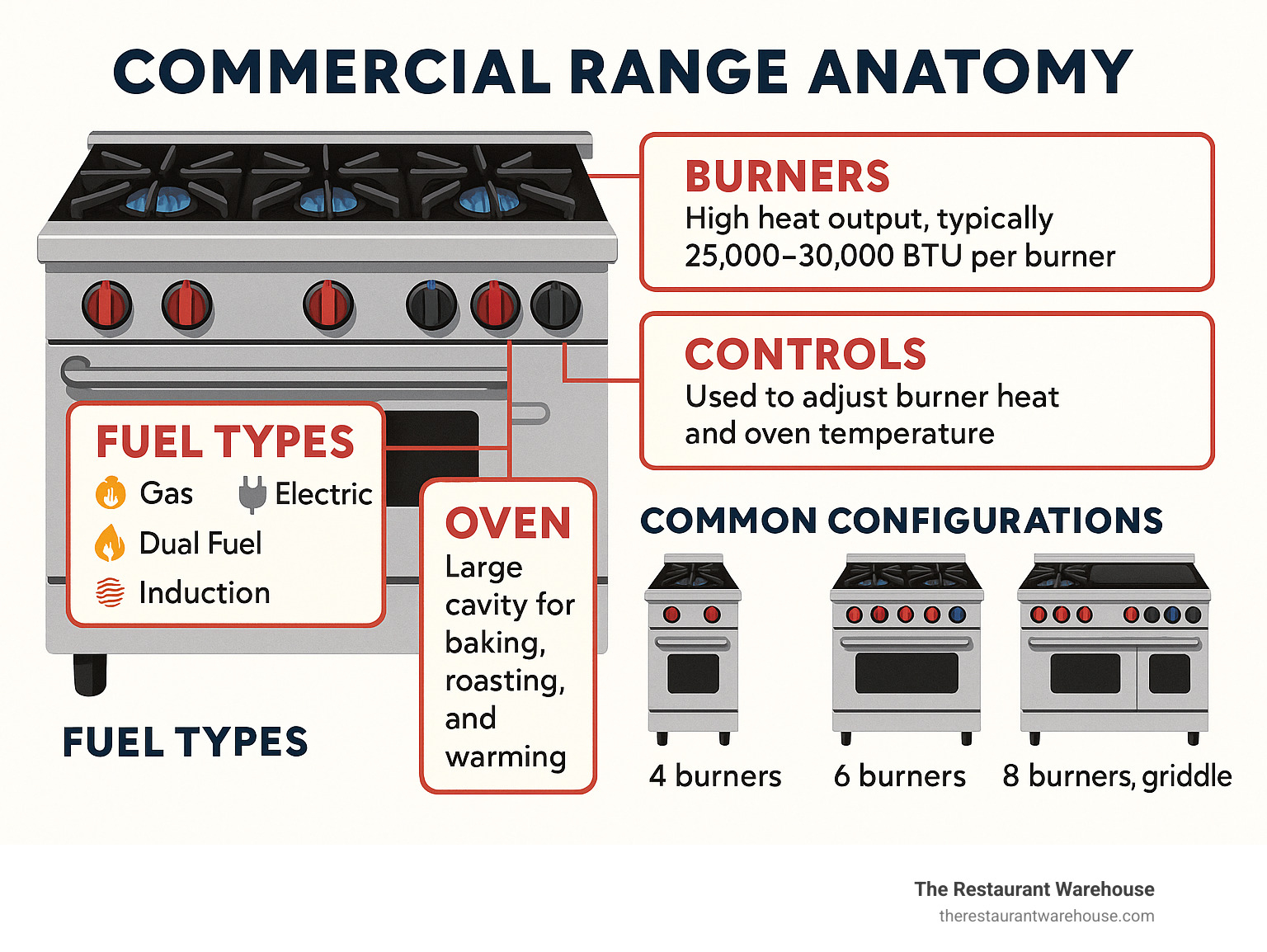
Restaurant ranges come in several configurations:
- Gas ranges - Most popular for high BTU output and precise control
- Electric ranges - Cleaner operation with no gas line required
- Dual fuel ranges - Gas cooktops with electric ovens for best of both worlds
- Induction ranges - Energy-efficient with rapid heating and cooling
Why This Guide Matters
At The Restaurant Warehouse, we understand that purchasing a commercial range is a significant investment. The right choice can boost your kitchen's efficiency by 30% or more, while a poor selection might leave you struggling with inadequate cooking power, constant repairs, or excessive energy bills.
This guide will help you steer the complex world of restaurant cooking ranges with confidence. We'll cover everything from BTU ratings to maintenance best practices, ensuring you make an informed decision that delivers both safety and return on investment.
What Are Restaurant Cooking Ranges and Why Your Kitchen Can't Live Without Them
Imagine the heart of your commercial kitchen - that's your restaurant cooking range. This multitasking powerhouse combines a versatile cooktop with one or more ovens below, creating the command center where culinary magic happens. It's not just another piece of equipment; it's the hub where most dishes begin their journey.
What makes restaurant cooking ranges so essential is their incredible versatility. While specialty equipment might excel at one specific task, your range handles it all - from boiling pasta to simmering sauces, from sautéing vegetables to roasting meats.
"The range is where the magic happens," as one kitchen designer told us. Whether you're running a cozy café or feeding hundreds in a busy hotel kitchen, your range likely works harder than anything else in your kitchen.

How Restaurant Cooking Ranges Differ from Home Models
"I tried using a 'pro-style' home range in my first restaurant," one chef shared with us. "Within three months, the knobs melted, the oven thermostat failed, and the burners couldn't keep up with dinner service. Never again."
This story highlights why commercial ranges are worth every penny. Here's what sets them apart:
Industrial-grade construction means commercial ranges can handle the punishment of 12+ hour days. All-stainless bodies, reinforced frames, and heavy-duty components stand up to the intense demands of professional kitchens.
Serious heat output transforms your cooking capabilities. Commercial burners deliver a whopping 28,000-35,000 BTU compared to residential models' modest 7,000-18,000 BTU. This dramatic difference means water boils in half the time and pans recover heat instantly between batches.
NSF certification isn't just a nice-to-have - it's essential for passing health inspections. Commercial kitchens require this certification for sanitation and safety compliance.
Customizable configurations let you design your perfect cooking station. Commercial ranges come in sizes from 24" to 72" wide with nearly endless combinations.
Open vs Sealed Burner Restaurant Cooking Ranges
When selecting your restaurant cooking range, you'll face an important choice: open burners or sealed burners?
Open burner ranges feature exposed flame ports that deliver intense, direct heat - up to 35,000 BTU per burner. Many traditional chefs prefer these for the visual feedback; you can see exactly how your flame is distributed under the pan. The tradeoff? Spills can fall directly into the burner assembly, requiring more frequent cleaning.
Sealed burner ranges have burners that are integrated with the range top, preventing spills from seeping inside. They're significantly easier to clean - just wipe the surface without disassembling anything. While they typically deliver slightly lower BTU output (21,000-30,000 BTU), they distribute heat more evenly across pan bottoms.
"Open burners give you that classic visual feedback," explains one executive chef we spoke with. "But in a high-volume kitchen with multiple cooks, sealed burners mean less maintenance and fewer clogs."
Fuel Types & Burner Styles Compared
Choosing the right fuel for your restaurant cooking ranges is like picking the perfect partner for your kitchen dance. Each option brings its own rhythm to your cooking style, affecting everything from your food quality to your monthly utility bills.
Gas vs Electric – Classic Restaurant Cooking Ranges Showdown
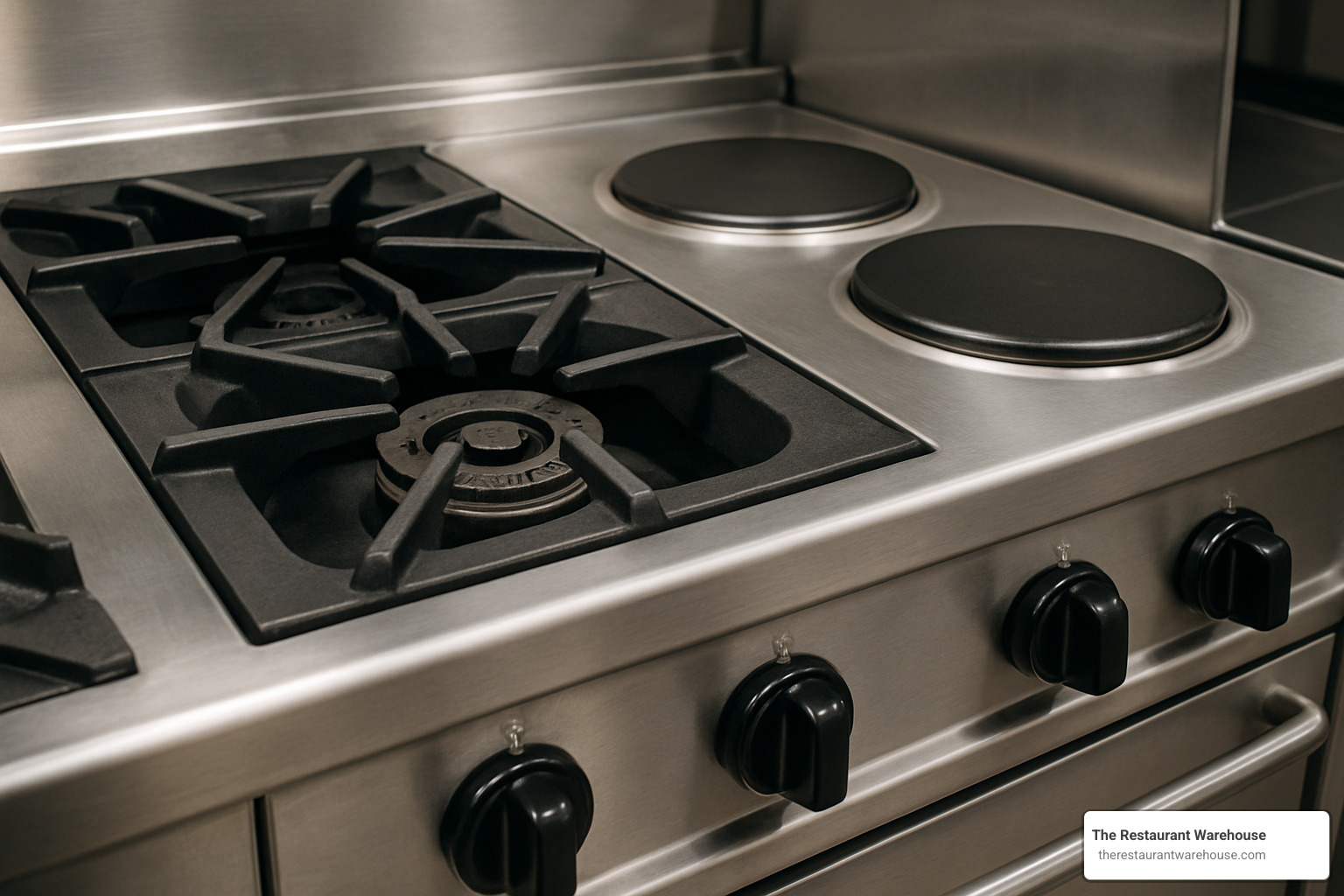
When it comes to commercial kitchens, gas ranges remain the popular choice, making up about 70% of installations—and for good reason.
Gas ranges deliver that immediate heat response that makes chefs smile. Turn the knob and boom—instant flame adjustment! With impressive firepower (typically 28,000-35,000 BTU per burner), they're perfect for high-heat cooking techniques. There's no waiting around for elements to heat up or cool down, which means your kitchen can pivot quickly during busy service.
"My cooks can go from a gentle simmer to full blast in seconds," one chef told us. "With gas, there's no recovery time needed—just instant response."
Gas ranges also shine during power outages—while the rest of the kitchen might be down, your gas range soldiers on. In most regions, gas operation costs less than electricity too.
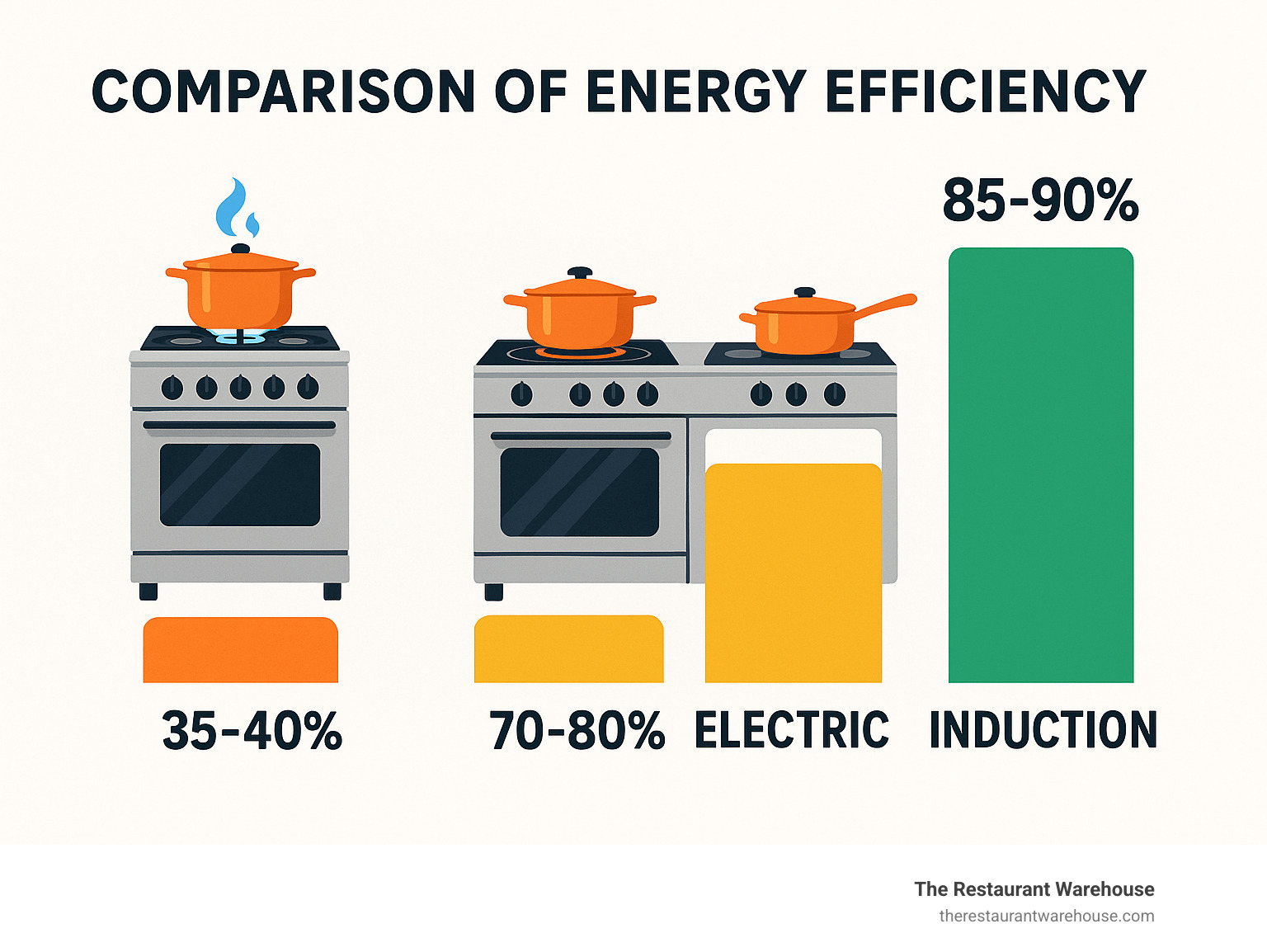
But gas isn't perfect. These ranges require proper ventilation systems and your kitchen will definitely run hotter with gas ranges. Gas ranges are also less energy efficient (about 40% efficiency) compared to their electric counterparts.
Electric ranges have come a long way and offer their own set of advantages. With no open flames or combustion concerns, they provide a safer environment for less experienced staff. Their flat surfaces are incredibly easy to clean, and they excel at maintaining consistent low temperatures—perfect for delicate sauces and chocolate work.
The electric option is significantly more energy efficient (about 70-80%), and you'll enjoy lower ventilation requirements since there's no combustion involved. However, electric ranges respond more slowly to temperature adjustments, and you'll notice a recovery time when changing settings.
Want to dive deeper into this classic showdown? Check out our guide to electric or gas restaurant equipment for more insights to help you decide.
Induction & Dual Fuel – The Future of Restaurant Cooking Ranges
While traditional options still dominate commercial kitchens, two innovative technologies are quickly gaining fans among forward-thinking chefs and restaurant owners.
Induction technology feels almost magical when you first use it. These ranges use electromagnetic fields to heat your cookware directly—not the cooking surface itself. The result? Blazing fast heating times (even faster than gas), precise temperature control, and a cooking surface that stays surprisingly cool to the touch.
According to a study by the Electric Power Research Institute, induction cooking is approximately 85-90% energy efficient compared to gas cooking's 40% efficiency, making it one of the most sustainable cooking options available today.
"Switching to induction cut our kitchen temperature by almost 15 degrees," shared one restaurant owner. "My staff used to look like they'd run a marathon by the end of service. Now they're comfortable and more productive."
The energy efficiency is where induction truly shines—at 85-90% efficiency, it blows traditional methods out of the water. This translates to significantly lower utility bills and a much cooler kitchen environment.
Dual fuel ranges offer a "best of both worlds" approach by combining gas burners on top with electric ovens below. This clever pairing gives you the responsive control and high BTU output of gas where you need it most—on the cooktop—while providing the consistent, even heating of electricity in the oven compartment.
Bakers particularly love this combination, as electric ovens deliver more stable temperatures for delicate pastries and bread.
Choosing the Perfect Commercial Range for Your Operation
Finding the right restaurant cooking range is a bit like dating – you need the perfect match for your specific needs, not just any pretty face. Let's walk through how to find "the one" that will keep your kitchen running smoothly for years to come.
High-Volume vs Small Bistro Needs
Your operation's pace and volume should guide your range selection, much like choosing the right vehicle for your lifestyle.
For high-volume kitchens (think busy downtown restaurants or hotel banquet operations), you'll want the commercial kitchen equivalent of a heavy-duty truck. Look for ranges with powerful 35,000 BTU burners that can take a beating day after day. These workhorses typically span 48"-72" wide with 8-10 burners to handle multiple dishes simultaneously.
"I learned the hard way that skimping on BTU power is like bringing a knife to a gunfight," confessed one chef who upgraded after his first restaurant's success. "During Friday night service, those extra 5,000 BTUs per burner make all the difference between keeping up and falling behind."
Medium-volume neighborhood restaurants often find their sweet spot with standard-duty ranges featuring 30,000 BTU burners. A 36"-48" configuration with 6-8 burners typically provides enough firepower without overwhelming your space or budget.
For cozy cafés and small bistros, light-duty ranges with 28,000 BTU burners in compact 24"-36" footprints often provide the perfect balance. These smaller ranges still deliver professional results while maximizing your precious kitchen real estate.
Remember – always buy for your busiest hour on your busiest day. Your range needs to handle peak demand, not just average conditions.
Key Specs Checklist Before You Buy
Before swiping your credit card on a new restaurant cooking range, make sure you've considered these critical factors:
Burner configuration matters tremendously. Count how many burners you'll need during peak service. Check the BTU output – we recommend 28,000-35,000 BTU per burner for most commercial applications. Decide between open burners (higher heat, more maintenance) or sealed burners (easier cleaning, slightly lower heat).
Oven capabilities can make or break your baking program. Standard ovens work well for basic roasting and baking, while convection ovens circulate heat for faster, more even results – especially helpful for pastries and delicate items.
Construction quality directly impacts longevity. Look for all stainless steel exteriors, cast iron grates and burners, and porcelain oven interiors. Quality insulation not only improves energy efficiency but also creates a cooler working environment.
Utility requirements need careful planning. Confirm your gas type (natural or LP) and pressure availability. Check connection sizes and locations to avoid costly modifications during installation.
For deeper insights into selecting the perfect gas range, our Commercial Gas Range Guide offers comprehensive advice custom to foodservice operations.
Customizable & Modular Restaurant Cooking Ranges
Think of modular ranges as the building blocks of your kitchen – start with the basics and expand as your business grows.
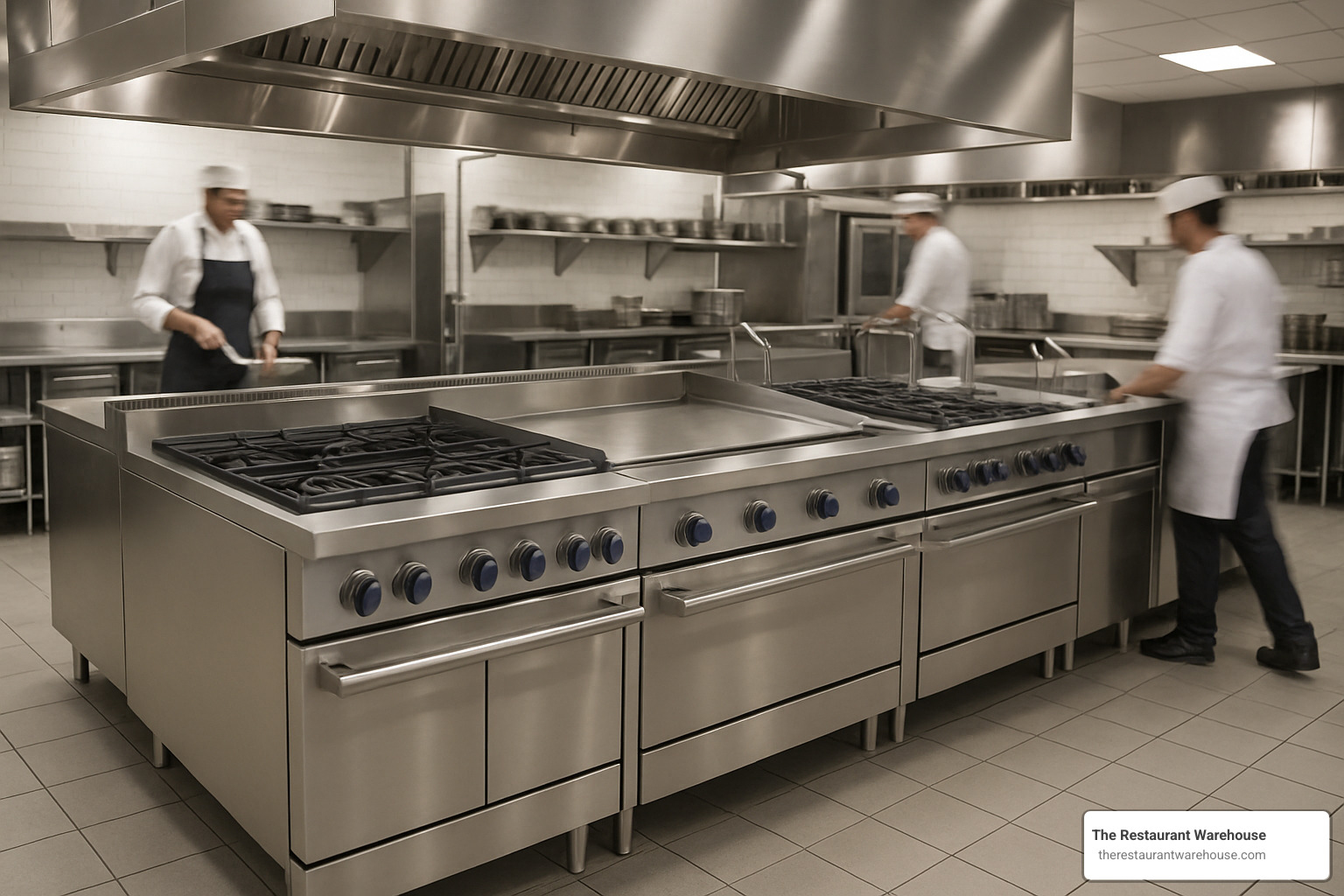
Many restaurant cooking ranges can be improved with compatible add-ons that expand functionality without requiring a complete kitchen redesign. Popular options include salamander broilers mounted above the range for finishing dishes, cheesemelters for that perfect bubbly top, and refrigerated chef bases that maximize vertical space usage.
"I started with a basic 6-burner range when we opened," shares one successful restaurant owner. "Three years later, we added a salamander above it and replaced two burners with a griddle section. It's like our range grew along with our business, without having to start from scratch."
Installation, Maintenance & Energy Efficiency
Let's face it – even the most powerful restaurant cooking range won't perform at its best without proper installation and regular TLC. Think of your range as a high-performance vehicle that needs both the right setup and ongoing care to deliver those perfect plates service after service.
When installing your new range, several critical factors need attention. First, ensure proper clearances – typically 6 inches from combustible walls and adequate space between equipment pieces for cleaning. Your gas line must be correctly sized (usually 3/4" to 1" depending on BTU load) to deliver sufficient pressure. For electric models, verify your electrical service can handle the amperage draw without tripping breakers during peak service.
Cleaning & Care Best Practices
Your daily and weekly cleaning routine makes all the difference in your range's performance and lifespan. At the end of each shift, once equipment has cooled, remove those heavy cast iron grates for washing. A good soak in hot, soapy water works wonders, but avoid harsh chemicals that can damage the seasoning.
For open burner models, pay special attention to the ports where flames emerge – even small food particles can block gas flow and reduce your cooking power. A small wire brush is your best friend here. With sealed burners, wipe down the entire cooktop surface, making sure to clean any spillover pans thoroughly.
Your oven interior needs regular attention too. That porcelain surface is designed for easy cleaning – a damp cloth with mild detergent will handle most messes. Check your door gaskets weekly for tears or food buildup that might prevent a proper seal and waste energy.
"The number one reason ranges fail prematurely is neglected maintenance," our service team often reminds customers. "Just 10 minutes of cleaning daily can prevent hours of downtime and expensive repairs."
For more detailed guidance on keeping all your kitchen equipment in top shape, our Commercial Kitchen Equipment Guide provides step-by-step instructions and preventative maintenance schedules.
Ventilation, Safety & Compliance
Your restaurant cooking range and ventilation system work as partners in a culinary dance. A properly designed hood system doesn't just remove smoke and odors – it's essential for staff comfort, equipment longevity, and code compliance.
Most commercial ranges require Type I hood systems with fire suppression capabilities. Your hood should extend at least 6 inches beyond the cooking equipment on all sides, with airflow typically between 150-300 CFM (cubic feet per minute) per linear foot of hood.
Safety features on modern ranges provide important protections. Look for flame failure devices that automatically cut gas flow if a flame goes out, preventing dangerous gas buildup. Anti-tilt brackets keep ranges stable even when heavy pots are pulled forward.
Beyond comfort, proper ventilation directly impacts energy efficiency. ENERGY STAR certified equipment can reduce utility costs by 15-30% compared to standard models. Many local utilities offer substantial rebates for energy-efficient kitchen equipment – we're happy to help you identify programs in your area that might offset your initial investment.
Frequently Asked Questions about Restaurant Cooking Ranges
What size restaurant cooking range fits a 10-foot cook line?
Planning your 10-foot (120-inch) cook line requires thoughtful consideration of your menu and workflow needs. You have several practical options to make the most of this space:
You might opt for a single large 60" range paired with 60" of complementary equipment like a griddle or charbroiler. Alternatively, two 36" ranges give you more flexibility with 48" left for specialty equipment. Many of our customers find success with a mixed approach - perhaps a 48" range, a 36" range, and 36" of specialty equipment custom to your specific menu items.
Don't forget about spacing! As one seasoned kitchen designer shared with us, "Don't fill every inch of your line with equipment. Leaving some breathing room between stations improves workflow and reduces staff collisions during service."
Do I need convection or standard ovens for most menus?
This common question really depends on what's at the heart of your menu.
Convection ovens shine when your operation features significant baking. The circulating hot air reduces cooking times by about 25% and provides more even results. They're ideal if your menu includes lots of breads and pastries, sheet pan preparations like roasted vegetables, or items needing consistent browning.
Standard ovens might be your better choice if your cooking primarily happens on the stovetop, you prepare delicate items that could be disturbed by air movement, your baking needs are minimal, or you're working with tighter budget constraints.
"The ideal setup for most restaurants," as one chef told us, "is a range with a convection oven on one side and a standard oven on the other. This gives you options for different cooking techniques."
How often should burners be deep-cleaned to maintain BTU output?
Maintaining your restaurant cooking ranges properly directly impacts their performance and longevity. For optimal results, we recommend this cleaning schedule:
Every day, your team should visually inspect burners and remove any visible food debris. Weekly, perform a basic disassembly and cleaning of removable parts. Monthly deep cleaning should include complete disassembly, soaking components in a good degreaser, and thorough cleaning of all ports and passages.
Busy operations often need more frequent cleaning. Watch for yellow or orange flames instead of clean blue ones – that's a clear signal that burners need attention, indicating clogged ports or improper air mixture.
"You can lose up to 30% of your BTU output from clogged burner ports," one of our equipment technicians often reminds customers. "That means longer cooking times, inconsistent results, and wasted gas."
Conclusion
Selecting the right restaurant cooking ranges isn't just another purchase decision—it's an investment in your kitchen's heart and soul. The perfect range becomes the cornerstone of your cooking line, bringing your menu to life while standing up to the daily demands of commercial cooking.
Throughout this guide, we've explored what makes these workhorses so essential to your success. Let's bring it all together:
First, remember to match your range to your kitchen's volume and pace. Those busy establishments need the muscle of heavy-duty ranges with 35,000 BTU burners, while moderate operations can thrive with standard-duty 30,000 BTU models. Smaller venues with lighter demands might find that 28,000 BTU ranges hit their sweet spot for both performance and budget.
Your fuel choice matters tremendously. Gas ranges deliver that immediate flame response and higher output that many chefs swear by. Electric models shine with their temperature consistency for more predictable cooking. The newer induction technology offers remarkable efficiency and precision, while dual fuel systems cleverly combine gas cooktops with electric ovens for the best of both worlds.
Personalization is key—your range should reflect your menu's unique needs. A pasta-heavy Italian concept might prioritize high-BTU burners for rapid boiling, while a breakfast spot might benefit from extensive griddle space.
"The right range feels like it was built just for your menu," as one chef told us. "It becomes an extension of your culinary vision."
Proper installation isn't optional—it's essential. Adequate ventilation, correct utility connections, and appropriate safety systems protect both your investment and your people.
Finally, accept maintenance as your range's best friend. Regular cleaning and preventative care will maximize performance and extend your equipment's life significantly.
At The Restaurant Warehouse, we understand that every kitchen tells its own story. Our team specializes in helping foodservice operations find the perfect restaurant cooking ranges at wholesale prices that respect your budget. By avoiding high commissions and retail overhead, we deliver commercial-grade equipment without the markup that strains your finances.
For more information about our selection of restaurant ranges and to receive personalized recommendations for your operation, visit our Restaurant Ranges page or reach out to our equipment specialists today.
Your range isn't just another appliance—it's where your culinary story unfolds every day. Choose wisely, care for it properly, and it will be the reliable partner in your kitchen's success for years to come.
About The Author

Sean Kearney
Sean Kearney used to work at Amazon.com and started The Restaurant Warehouse. He has more than 10 years of experience in restaurant equipment and supplies. He graduated from the University of Washington in 1993. He earned a BA in business and marketing. He also played linebacker for the Huskies football team. He helps restaurants find equipment at a fair price and offers financing options. You can connect with Sean on LinkedIn or Facebook.
Leave a comment