

Pizza Prep Table Comparison Cheat Sheet
Your Ultimate Guide to the Perfect Pizza Station
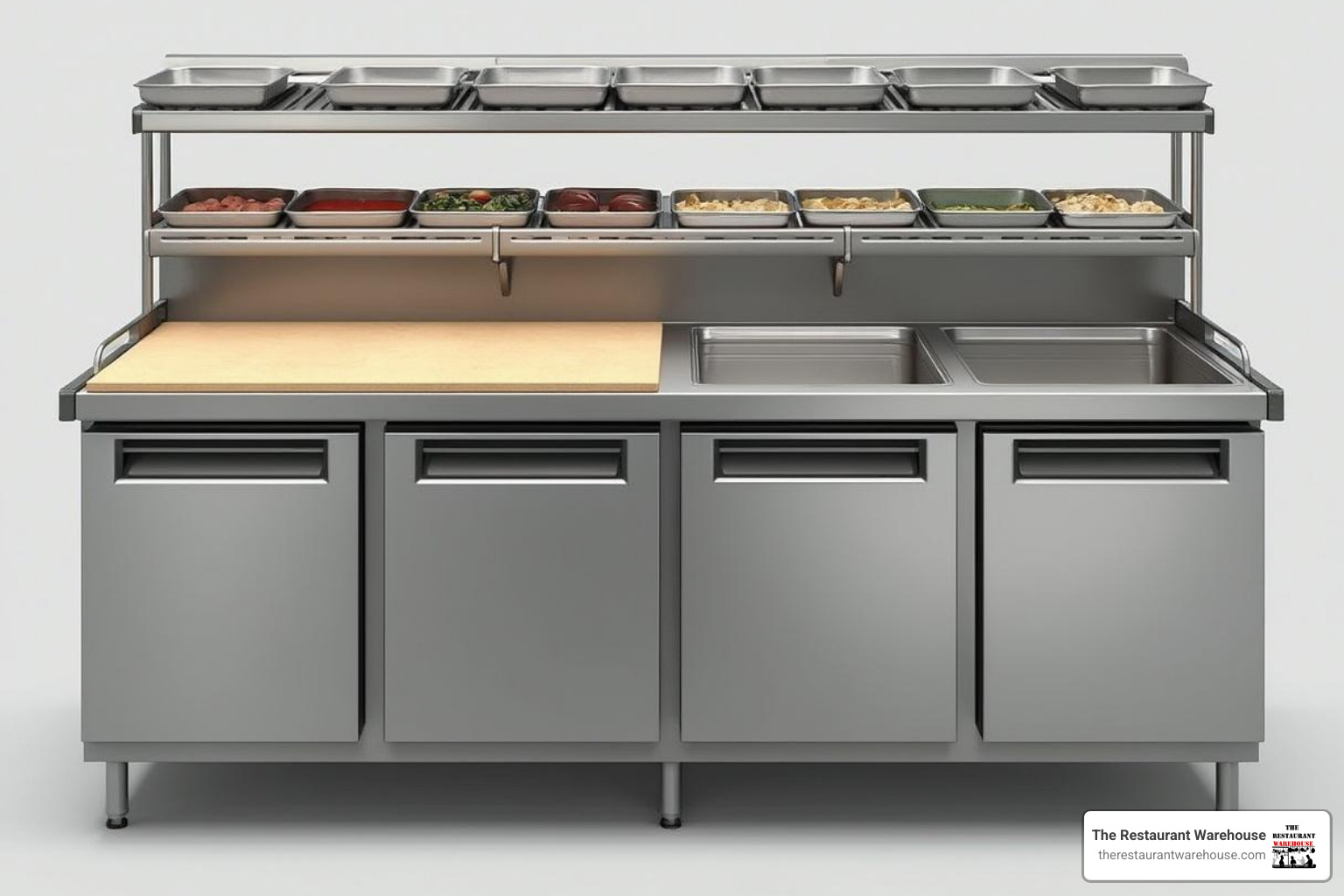
A Pizza Prep Table is far more than a simple stainless steel surface; it is a specialized, refrigerated workstation carefully engineered to be the epicenter of pizza assembly. These units are designed to streamline the entire pizza-making process by keeping a wide array of ingredients perfectly chilled, organized, and within immediate reach. At its core, a pizza prep table features a raised, refrigerated rail to hold ingredient pans, an extra-deep cutting board for dough preparation, and a spacious refrigerated base for bulk storage. This integrated design makes it the undisputed heart of any efficient and high-volume pizzeria, changing a chaotic process into a symphony of speed and precision.
Before the advent of such specialized equipment, pizza makers faced a constant battle against time and temperature. Ingredients were stored in separate refrigerators, requiring countless trips back and forth, increasing the risk of temperature abuse and cross-contamination. The modern pizza prep table solves these challenges, creating a self-contained ecosystem for quality and efficiency.
Key Pizza Prep Table Features:
- Refrigerated Rail: A chilled, often angled, compartment that holds multiple food pans at food-safe temperatures, typically between 33°F and 41°F (0.5°C and 5°C).
- Extra-Deep Workspace: A generously sized cutting board, usually 14 to 19 inches deep, providing ample room for stretching dough and assembling even the largest pizzas.
- Refrigerated Base Storage: A lower refrigerated cabinet, accessible by doors or drawers, used for storing bulk ingredients like dough boxes, bags of cheese, and backup toppings.
- Durable Stainless Steel Construction: The industry standard for hygiene and longevity, offering surfaces that are non-porous, corrosion-resistant, and easy to sanitize.
- Advanced Cooling Systems: A variety of refrigeration technologies, from forced-air to liquid cooling, each offering different benefits in terms of performance, energy efficiency, and food preservation.
Making an informed decision when choosing a prep table is a critical investment that directly impacts your kitchen's operational speed, food safety standards, and ultimately, your profitability. This comprehensive guide is designed for both new pizzeria owners building their kitchen from the ground up and seasoned operators looking to upgrade their equipment. We will dig into the essential components, break down complex cooling technologies, explore sizing and configuration options, and highlight the advanced features that deliver tangible value in a demanding commercial environment.
By the end of this guide, you will have a deep understanding of crucial aspects like NSF-7 food safety standards, the environmental and financial benefits of modern R290 refrigerants, and the subtle design differences that separate a good prep table from a great one. The right pizza prep table is the command center where fresh, high-quality ingredients are consistently and safely transformed into delicious, perfectly crafted pizzas, order after order.
Anatomy of a Prep Table: Essential Features to Look For
Understanding the core components of a Pizza Prep Table reveals its immense value in a commercial kitchen. Each element is purposefully designed to optimize the specific, repetitive, and task of assembling pizzas. A well-designed table is a study in ergonomic efficiency and food safety engineering.
The Refrigerated Rail: Your Ingredient Cockpit
The refrigerated rail is the most iconic and functionally critical feature of a Pizza Prep Table. It's a recessed, chilled compartment that holds an array of food pans, creating an organized and accessible palette of toppings. The primary function is to maintain a consistent, food-safe temperature between 33°F and 41°F (0.5°C to 5°C), preserving the freshness, texture, and safety of perishable ingredients. Many rails are raised and angled toward the user, a subtle ergonomic improvement that reduces wrist strain and makes it easier to scoop and spread toppings evenly. The configuration is flexible, typically accommodating 1/3-size pans for high-volume items like cheese and pepperoni, but can often be adapted with divider bars to hold smaller 1/6 or 1/9-size pans for less-used ingredients.
Most models feature insulated lids for the pan rail. These are not optional accessories; they are essential for performance and safety. During off-peak hours or overnight, these covers trap cold air, maintaining temperature stability, reducing energy consumption, and preventing ingredients from drying out or absorbing ambient kitchen odors. Lids can be hinged stainless steel for durability or sometimes clear polycarbonate, allowing for quick visual identification of ingredients.
The Cutting Board/Workspace: Your Assembly Zone
A Pizza Prep Table is distinguished by its extra-deep prep surface, typically ranging from 14 to 19 inches in depth. This generous space is non-negotiable for pizzerias, providing the necessary real estate to stretch large dough circles without feeling cramped. The standard material for these cutting boards is high-density polyethylene (HDPE), a durable, non-porous plastic that is gentle on knives and easy to clean. For improved hygiene and durability, some premium models offer composite boards made from pressed wood fibers and resin. These are more resistant to deep knife cuts where bacteria can hide and can often withstand higher temperatures.
The cutting board must be easily removable. This allows for thorough cleaning and sanitizing away from the prep area, a critical step in preventing cross-contamination. Some kitchens use a color-coded board system (e.g., white for general prep, red for raw meats if applicable) to align with their HACCP food safety plan.
The Refrigerated Base: Your Cold Storage Powerhouse
Beneath the workspace lies the refrigerated base, a vital cold storage area that dramatically improves workflow by minimizing trips to a distant walk-in cooler. This compartment is designed for holding bulk ingredients, backup pans of toppings, or boxes of pre-portioned dough. The base is typically equipped with adjustable, heavy-duty shelves, often coated in epoxy or made of stainless steel to withstand the weight of heavy items and resist corrosion. The configuration of this base—whether it has doors or drawers—is one of the most significant choices you'll make, profoundly impacting organization and speed.
Construction and Durability: The Foundation of Quality
The demanding environment of a commercial kitchen requires equipment built to last. The construction of a Pizza Prep Table is a key indicator of its quality and longevity. High-quality units feature a robust stainless steel exterior and interior. Look for specific grades: 300-series stainless steel (like Type 304) is superior for food-contact surfaces and interiors due to its higher nickel content, which provides excellent corrosion resistance. 400-series stainless steel is often used for exteriors as it is durable and has a polished look, though it's slightly more susceptible to corrosion. The back of the unit is often made from galvanized steel or aluminum.
Pay close attention to the details. Welded cabinet construction is more rigid and durable than screwed-together panels. High-quality insulation, such as foamed-in-place polyurethane, is crucial for maintaining temperature efficiency and structural integrity. Finally, heavy-duty casters (wheels) are a standard and invaluable feature. They provide mobility for regular cleaning underneath and behind the unit, which is essential for pest control and sanitation. Look for models with pre-installed casters that have locking mechanisms to keep the table securely in place during use.
Decoding Cooling Systems: Performance and Energy Efficiency
The cooling system is the engine of a Pizza Prep Table. The technology it employs dictates not only its ability to keep ingredients fresh and safe during a hectic service but also its long-term energy consumption and maintenance requirements. Commercial refrigeration for prep tables generally falls into four main categories, each with a unique set of advantages and trade-offs.
Forced-Air Cooling
Also known as a dynamic or fan-assisted system, forced-air cooling is one of the most common technologies. It uses one or more fans to actively circulate cold air from the evaporator coil throughout the entire cabinet, ensuring that a consistent temperature is maintained from the base storage area up to the ingredient pans in the rail. The primary advantage of this system is its rapid temperature recovery. When doors are opened or warm product is added, the fans quickly redistribute cold air to bring the temperature back down to the set point. This makes it an excellent choice for high-volume pizzerias where the rail lids are frequently open. The main drawback is that the constant airflow can have a drying effect on uncovered ingredients, making the use of insulated lids absolutely essential. To ensure proper circulation, pans in these systems are typically limited to a depth of 6 inches.
Cold-Wall (Conductive) Cooling
Cold-wall cooling, also called static or conductive cooling, takes a different approach. Instead of fans, this system embeds refrigerant lines directly into the walls of the cabinet and, crucially, around the pan rail itself. The cooling is achieved through direct contact and radiation, creating a gentler, less dehydrating environment for ingredients. A significant advantage of many cold-wall systems is the ability to have independent temperature controls for the base and the rail. This allows an operator to shut down the rail cooling during off-hours to save energy while keeping the base running. This design also provides a more sanitary barrier, as spills from the prep area are less likely to be drawn down into the storage cabinet by a fan. The trade-off for this gentle preservation is a slower temperature recovery time, making it better suited for medium-volume operations or kitchens with very consistent workflows.
Liquid Cooling (Glycol)
Liquid cooling represents a premium, high-performance technology. In these systems, a food-safe liquid, typically propylene glycol, is chilled by a refrigeration unit and then continuously circulated by a pump through tubes located directly beneath the ingredient pans. This method provides exceptionally precise and stable temperature consistency across the entire rail with minimal fluctuations. A major operational benefit is its frost-free operation, which eliminates the need for defrost cycles that can temporarily warm ingredients. Because cooling is delivered directly to the pans from below and doesn't rely on airflow, these systems can often accommodate deeper ingredient pans (up to 8 inches), increasing topping capacity. The primary considerations for liquid-cooled tables are a significantly higher initial investment and potentially more complex maintenance if the pump or lines require service.
Single-Cavity Cooling
This is the most basic and budget-friendly cooling design. In a single-cavity system, a single refrigeration system cools the main storage cabinet, and the pan rail is chilled simply by the natural convection of cold air rising from the base. There is no separate cooling mechanism for the rail. Its main appeal is its simplicity and low upfront cost. However, temperature management is a significant challenge. It can be difficult to achieve a balanced temperature, as the base may become too cold while the rail struggles to stay below the food-safe threshold of 41°F. To meet the NSF-7 standard, pans in these systems must be kept covered at all times when not in active use. Another major drawback is sanitation; any spills or food debris from the rail can easily fall directly into the storage area below, creating a contamination risk.
Here's an expanded comparison of these four cooling systems:
| Cooling System | Temperature Consistency | Energy Efficiency | Product Freshness | Temp Recovery Speed | Initial Cost | Best For |
|---|---|---|---|---|---|---|
| Forced-Air | Good | Moderate | Good (can dry out) | Excellent | Moderate | High-volume kitchens with frequent lid opening. |
| Cold-Wall (Conductive) | Very Good | Good (especially with independent controls) | Excellent | Fair to Good | Moderate-High | Medium-volume kitchens; preserving delicate ingredients. |
| Liquid Cooling | Excellent | Excellent | Excellent | Excellent | High | Demanding, high-end operations needing ultimate performance. |
| Single-Cavity | Fair | Moderate | Fair (prone to temp swings) | Poor | Low | Very low-volume applications or tight budgets. |
Choosing the right system requires a careful evaluation of your pizzeria's expected volume, menu, budget, and commitment to food quality.
How to Choose the Right Pizza Prep Table for Your Kitchen
Selecting the ideal Pizza Prep Table is a strategic decision that reverberates through your kitchen's daily operations, influencing everything from workflow efficiency to staff morale. This section provides a detailed roadmap for navigating the critical choices of sizing, base configuration, and the advanced features that can give your operation a competitive edge.
Sizing Your Unit: A Matter of Space and Volume
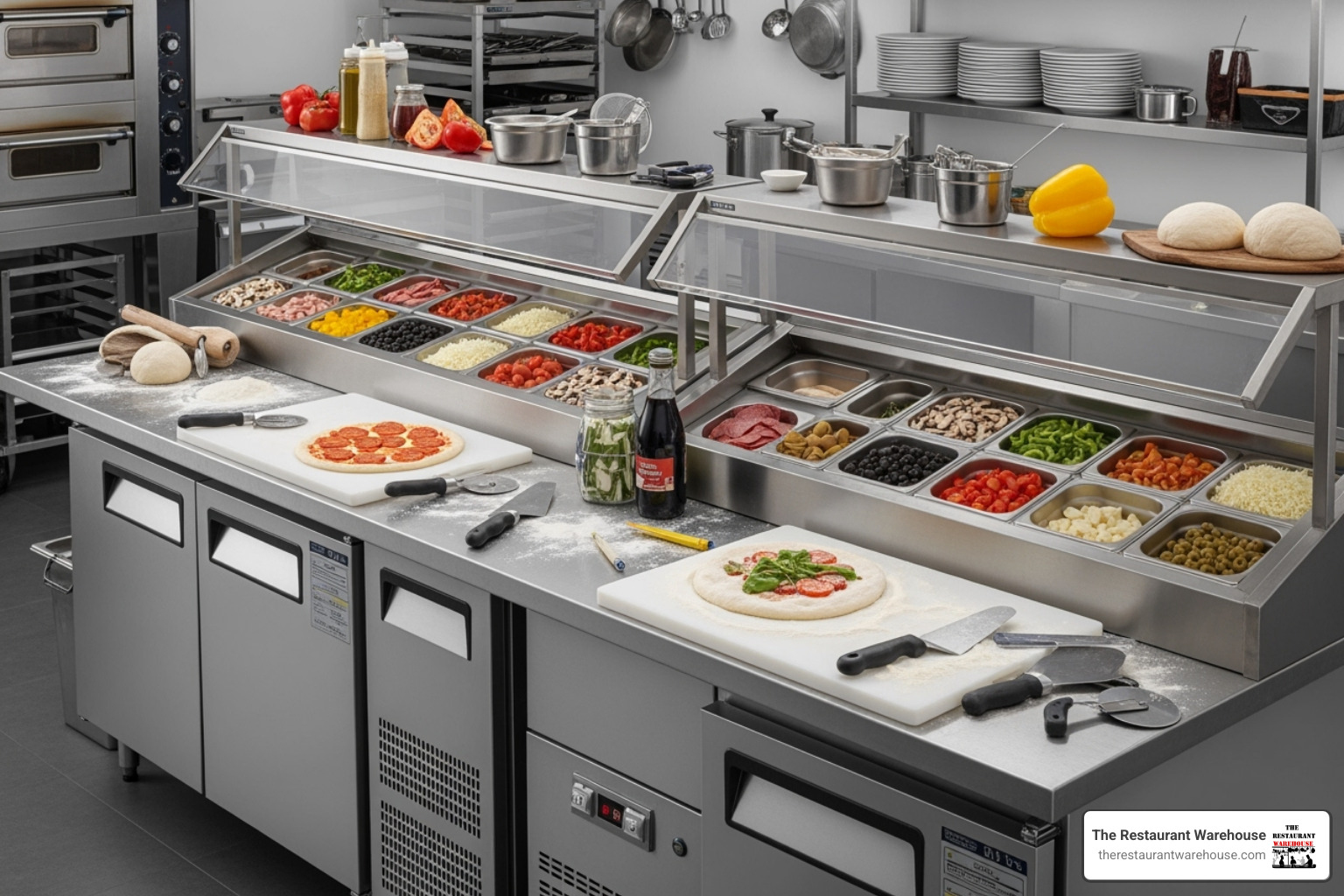
Size is arguably the most important initial consideration. You must balance your kitchen's physical constraints with your production demands. Pizza Prep Tables are available in a vast range of widths, from compact 27-inch models suitable for a small café to massive 119-inch units that can anchor the line in a large-scale pizzeria. Begin by carefully measuring your available space. Remember to account for not just the width, but also the depth (typically 31.5 to 33 inches) and height (around 42-44 inches to the top of the rail). Crucially, you must also plan for clearance: most units require several inches of space at the back and sides for proper ventilation to prevent the compressor from overheating. A critical feature for kitchens with tight layouts is a front-breathing compressor. These units draw in and dissipate air from the front grille, allowing them to be installed flush against a back wall and next to other equipment, maximizing your usable floor space.
Your production volume is the other half of the sizing equation. A larger unit provides more workspace, a higher pan capacity in the rail, and greater refrigerated storage in the base. This translates to fewer interruptions and less time spent restocking during a busy service. As a general guideline:
- Low-Volume (e.g., small cafes, bars): A 48-inch to 60-inch table may be sufficient.
- Medium-Volume (e.g., standard pizzerias): A 67-inch to 93-inch model is often the sweet spot, offering a good balance of workspace and storage.
- High-Volume (e.g., large, busy pizzerias): A 93-inch or even a 119-inch model is necessary to support multiple cooks and a high output of pizzas per hour.
Doors vs. Drawers: A Critical Workflow Decision
The configuration of the refrigerated base—solid doors, drawers, or a combination—has a profound impact on your kitchen's workflow and organization.
Doors:
- Best for Bulk & Irregular Storage: The open cabinet space with adjustable shelving is ideal for storing large, bulky items like 50-lb bags of cheese, large sauce containers, or stacks of dough boxes.
- Maximum Flexibility: Shelves can be removed or repositioned to accommodate items of various shapes and sizes.
- Lower Initial Cost: Door models are generally more budget-friendly than their drawer-equipped counterparts.
- Potential Downsides: It can be harder to keep smaller items organized, leading to a "first-in, last-out" problem where older stock gets pushed to the back. More cold air is lost each time a large door is opened.
Drawers:
- Best for Pan Storage & Organization: Drawers are specifically designed to hold food pans (e.g., 1/6 or 1/3 size), making it incredibly efficient to grab a fresh pan of toppings to restock the rail. This creates a seamless workflow.
- Ergonomic Advantages: Staff can access items with a simple pull, reducing the need to bend down and reach into a deep cabinet.
- Improved Energy Efficiency: Opening a single drawer exposes a much smaller portion of the refrigerated interior, minimizing cold air loss.
- Potential Downsides: Drawers have a significantly higher upfront cost. They offer less flexibility for storing large, non-pan items.
For many operations, a hybrid model that combines one or two door sections with a bank of drawers offers the perfect compromise, providing both organized pan storage and flexible bulk capacity.
Advanced Features for a Modern Prep Station
Today's Pizza Prep Tables offer a suite of technological advancements designed to improve efficiency, simplify maintenance, and improve food safety.
Energy & Maintenance Savers:
- Adaptive or \"Smart\" Defrost: Traditional defrost cycles run on a fixed timer, often activating when unnecessary. Adaptive defrost systems use sensors to initiate a defrost cycle only when actual ice buildup is detected, saving significant energy and maintaining more stable product temperatures.
- Self-Cleaning Condensers: The condenser coil is a magnet for kitchen grease and dust. A clogged coil forces the compressor to work harder, increasing energy bills and leading to premature failure. A self-cleaning condenser mechanism, often a rotating brush that sweeps the coil daily, drastically reduces this maintenance task and protects your investment.
- High-Efficiency Compressors: Modern units often feature smaller, more efficient compressors that may include variable-speed technology. These compressors adjust their output to match the cooling demand, consuming far less energy than older single-speed models.
Improved Usability & Safety:
- Composite Cutting Boards: An upgrade from standard polyethylene, these boards are more durable, less prone to deep scratches, and can be more hygienic over the long term.
- Digital Temperature Controls with Alarms: Precise digital thermostats allow for easy temperature setting and monitoring. Many include audible and visual alarms that alert staff if the cabinet temperature rises into the food safety danger zone.
- Self-Closing Doors/Drawers: A simple but crucial feature. Spring-loaded hinges automatically pull the door or drawer shut, preventing it from being left ajar accidentally. Most also include a stay-open feature that engages past 90 degrees for easy loading and unloading of product.
Upholding Standards: Food Safety, Certifications, and Sustainability
In any commercial food service operation, food safety is the paramount concern. It is a legal requirement, an ethical obligation, and the foundation of your business's reputation. Your Pizza Prep Table is on the front lines of this effort, acting as a critical tool for safeguarding ingredients and ensuring compliance. To make a wise investment, understand the standards for hygiene, the meaning behind certifications, and the growing importance of sustainability.
How Your Prep Table Champions Food Safety
A Pizza Prep Table is a fortress for your perishable ingredients. Its primary food safety function is to maintain the cold chain by holding all toppings and stored goods at a consistent, safe temperature, which is strictly defined as being between 33°F and 41°F (0.5°C and 5°C). This temperature range is critical because it significantly slows the growth of harmful foodborne bacteria like Salmonella, E. coli, and Listeria. The temperature range above 41°F and below 135°F is known as the 'Temperature Danger Zone,' where bacteria can multiply rapidly.
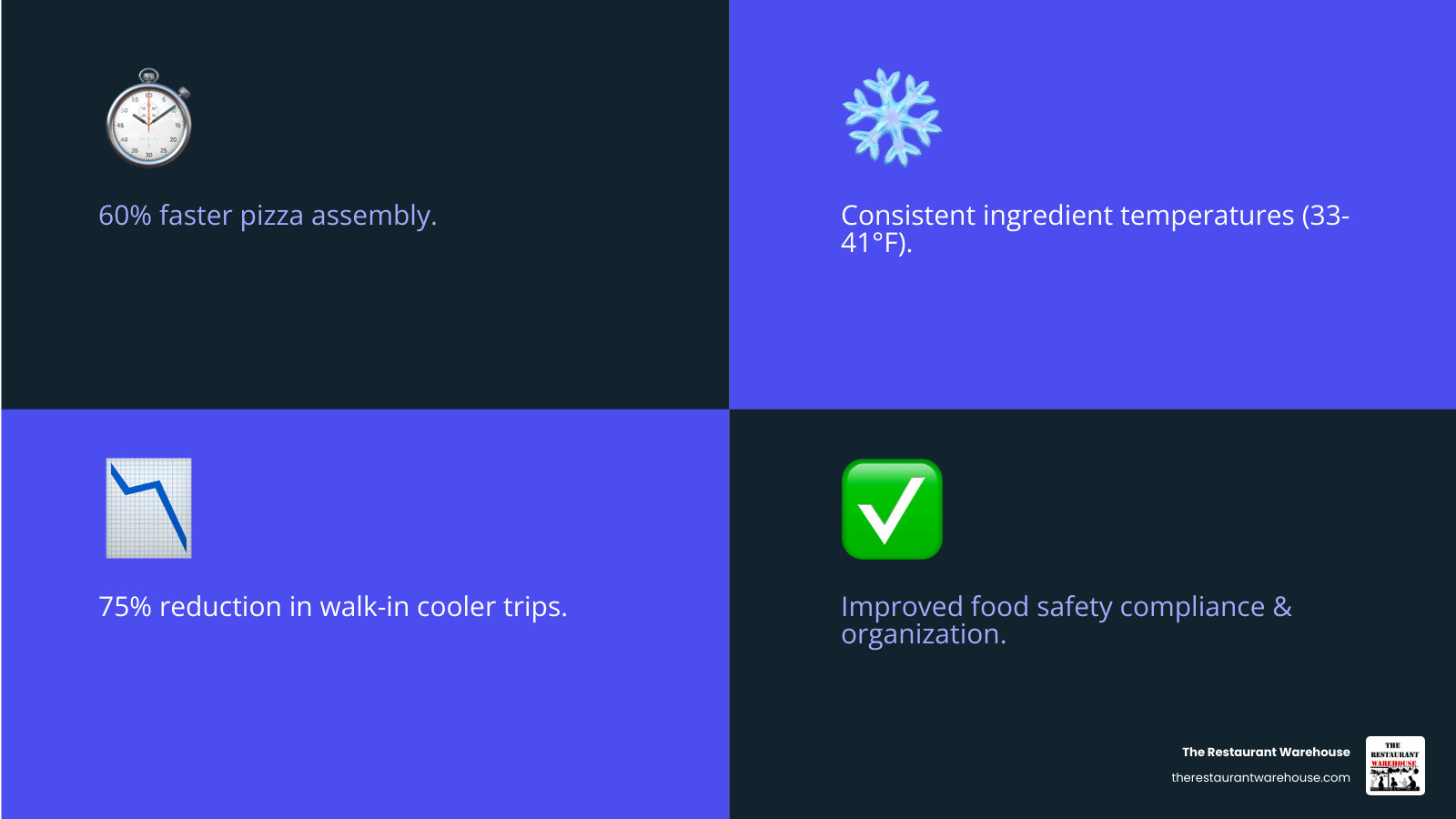
A well-designed unit also enforces a safer operational workflow. By consolidating all necessary cold ingredients in one organized station, it drastically reduces the number of trips staff must make to a walk-in cooler. This simple change minimizes the time ingredients spend in the warmer ambient air of the kitchen and lowers the risk of cross-contamination between different areas. For businesses that follow a formal HACCP (Hazard Analysis and Critical Control Points) plan, a certified prep table serves as a vital Critical Control Point (CCP). Its reliable temperature performance, digital monitoring capabilities, and easy-to-clean surfaces simplify the process of monitoring, documenting, and verifying that food safety protocols are being met.
Decoding Certifications and Warranties
Certifications from third-party organizations are not just logos on a spec sheet; they are your assurance that a piece of equipment has been rigorously tested and proven to meet stringent public health and safety standards.
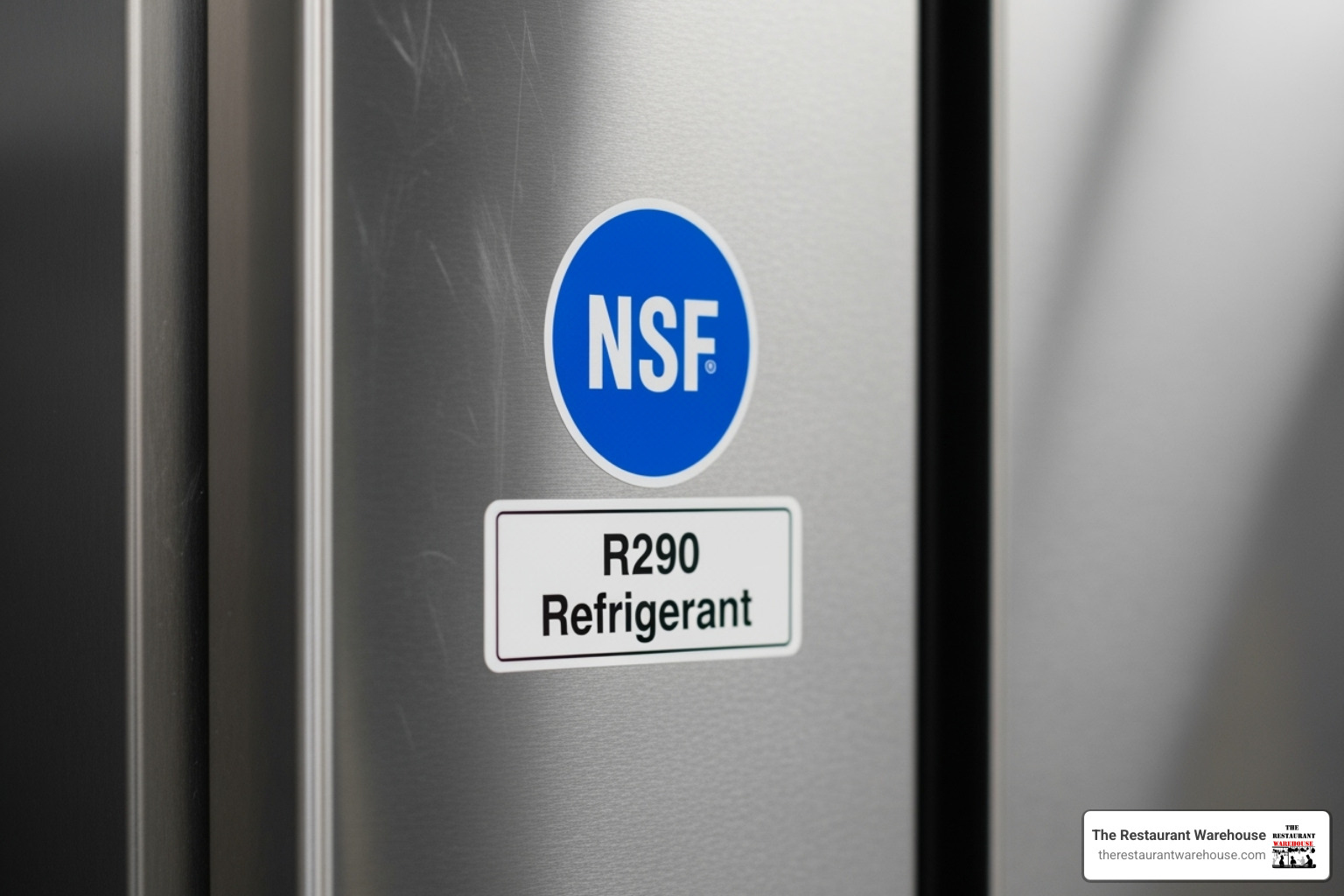
- NSF Certification: The most important mark to look for on a Pizza Prep Table is NSF-7. This specific standard from the National Sanitation Foundation is for commercial refrigerators and freezers. It certifies two key things: 1) The unit is designed and constructed with materials that are safe, non-toxic, and easy to clean (e.g., coved corners, sealed joints). 2) The unit has the performance capability to maintain food at or below 41°F (5°C), even in a demanding, hot kitchen environment. You can find more authoritative information on NSF's public resources. Authoritative information on NSF standards.
- ETL Sanitation Mark: The ETL mark from Intertek is another widely recognized certification. An ETL Sanitation listing indicates that the product has been tested by an independent laboratory and complies with the same North American sanitation standards as NSF. It is considered an equivalent mark of compliance by most health departments.
A manufacturer's warranty is a direct reflection of their confidence in the product's durability and reliability. A strong warranty is a crucial part of your investment. Look for a clear, two-part warranty:
- Parts and Labor: This covers the cost of replacement components and the technician's time to fix any defects. A comprehensive 3-year parts and labor warranty is a strong indicator of quality.
- Compressor: The compressor is the most expensive component of the refrigeration system. Manufacturers typically offer a separate, longer warranty on this part. A 5-year or even 7-year compressor warranty provides significant long-term peace of mind.
The Eco-Friendly Imperative: R290 Refrigerant
The commercial refrigeration industry has undergone a significant change, moving away from older refrigerants that harmed the environment. The new standard is R290, a natural hydrocarbon refrigerant that is essentially a highly purified, food-grade propane.
This shift was driven by international agreements like the Montreal Protocol (phasing out ozone-depleting CFCs and HCFCs) and the Kigali Amendment (targeting high-GWP HFCs). R290 is the solution for a sustainable future.
Key Benefits of R290:
- Zero Ozone Depletion Potential (ODP): It has absolutely no impact on the Earth's protective ozone layer.
- Extremely Low Global Warming Potential (GWP): R290 has a GWP of 3, compared to older refrigerants like R134a (GWP of 1,430) or R404A (GWP of 3,922). This means it has a negligible impact on climate change if released.
- Improved Energy Efficiency: R290 absorbs and releases heat more effectively than older refrigerants. This thermodynamic property means that R290 systems require less energy to achieve the same cooling effect, directly translating to lower monthly utility bills.
While some may have concerns about using a propane-based refrigerant, these systems are designed with stringent safety standards, using very small, sealed charge sizes and spark-free components. Choosing a Pizza Prep Table with R290 refrigerant is not only an environmentally responsible choice but also a smart financial decision that future-proofs your kitchen against changing regulations and rising energy costs.
Frequently Asked Questions about Pizza Prep Tables
Investing in a piece of equipment as central as a Pizza Prep Table naturally brings up many questions. Getting clear answers is key to selecting the right unit and operating it effectively for years to come. Here are detailed answers to some of the most common inquiries.
How is a pizza prep table different from a sandwich prep table?
While they look similar and share the same basic concept of refrigerated prep, these two tables are purpose-built for different tasks, and using the wrong one can lead to frustration and inefficiency. The primary differences are:
- Cutting Board Depth: This is the most significant distinction. A Pizza Prep Table features an extra-deep workspace, typically 14 to 19 inches from front to back. This generous depth is essential for accommodating the large diameter of pizza dough, allowing a cook to stretch, sauce, and top a pizza without it hanging off the edge. A sandwich prep table, by contrast, has a much shallower board, usually 8 to 10 inches deep, which is perfectly adequate for slicing bread and assembling sandwiches but completely impractical for pizza.
- Rail Design and Ergonomics: Pizza prep tables often have a raised, angled pan rail. This ergonomic design brings the toppings closer to the cook and provides a better angle for scooping and spreading ingredients across a wide pizza base. Sandwich prep tables typically have a flatter rail design, optimized for picking and placing smaller, individual items.
- Standard Pan Configuration: Pizza Prep Tables are designed to hold larger 1/3-size food pans to accommodate high-volume ingredients like shredded mozzarella, sauce, and pepperoni. Sandwich tables are usually configured for smaller 1/6-size or 1/9-size pans, suitable for a wider variety of smaller-quantity toppings like sliced tomatoes, onions, and pickles.
Can I use a pizza prep table for other foods like salads or burritos?
Yes, absolutely! The versatile design of a Pizza Prep Table makes it an excellent multi-purpose workstation for any menu item that requires the assembly of multiple cold ingredients. Its deep workspace and large-capacity refrigerated rail are perfectly suited for a high-volume salad station, a build-your-own burrito or taco bar, or even a complex wrap station. For example, the deep cutting board provides ample space for large salad bowls, while the rail can hold various greens, vegetables, proteins, and dressings. For a burrito station, it can hold pans of rice, beans, meats, cheeses, and various salsas. Its ability to streamline any cold prep process makes it a highly adaptable and valuable asset in many types of kitchens.
What are the most important maintenance tasks for a pizza prep table?
Consistent, proactive maintenance is the key to ensuring your prep table's longevity, energy efficiency, and, most importantly, food safety. Neglecting these tasks can lead to poor performance, expensive emergency repairs, and potential health code violations. Here is a practical maintenance schedule:
-
Daily Tasks:
- Clean All Surfaces: At the end of each day, thoroughly clean and sanitize the cutting board, pan rail, lids, and all interior and exterior stainless steel surfaces.
- Wipe Gaskets: Clean the rubber door and drawer gaskets with a mild soap and water solution. Food debris can degrade the gasket material and prevent a proper seal, while moisture can lead to mold growth.
-
Weekly Tasks:
- Deep Clean Cutting Board: Remove the cutting board and wash it thoroughly in a three-compartment sink or commercial dishwasher if it is dishwasher-safe. This removes embedded particles that daily wiping might miss.
- Clear Drain Lines: Check and clear the interior condensation drain line to prevent clogs and water backup inside the unit.
-
Monthly Tasks:
- Clean the Condenser Coil: This is the single most important preventative maintenance task. Unplug the unit and use a stiff brush and a vacuum to remove all dust, grease, and debris from the condenser coil fins. A clogged coil suffocates the refrigeration system, causing it to run hot and inefficiently. (Note: This task is simplified but not eliminated if you have a self-cleaning condenser).
-
Quarterly Tasks:
- Check Gaskets for Damage: Perform a thorough inspection of all gaskets for any cracks, tears, or loss of flexibility. A simple test is to close the door on a dollar bill; if it pulls out easily, the gasket may need to be replaced.
- Calibrate Thermometer: Use a calibrated food thermometer to check the accuracy of the unit's digital display. Ensure temperatures in both the base and rail are holding steady in the 33°F-41°F range.
What are the electrical requirements for a pizza prep table?
Most pizza prep tables, from smaller units up to around 72 inches, operate on a standard 115V electrical connection and can be plugged into a common NEMA 5-15P outlet. However, it is highly recommended that the prep table be on a dedicated circuit. This prevents other high-draw equipment from tripping the breaker and shutting down your refrigeration. Larger units, especially those 93 inches or wider with multiple compressors, may require a higher-amperage circuit (e.g., 20 amps) or even a 208-230V connection. Always check the manufacturer's specification sheet for the exact voltage, amperage, and NEMA plug configuration before purchase to ensure your kitchen's electrical system is compatible.
Conclusion: Investing in the Heart of Your Pizzeria
Throughout this guide, we have explored the intricate details that make a Pizza Prep Table an indispensable asset for any serious pizzeria. It is far more than a piece of refrigerated storage; it is a highly specialized command center engineered for speed, safety, and consistency. From its ergonomically designed refrigerated rail and expansive deep cutting board to the sophisticated cooling systems that power its performance, every aspect of the table is designed to streamline the creation of the perfect pizza.
Making the right choice involves a thoughtful analysis of your specific needs. You must consider the physical size that fits your space and the production volume it must support. You need to decide on a base configuration of doors or drawers that best matches your operational workflow. And you should weigh the long-term benefits of advanced features like adaptive defrost and self-cleaning condensers against their initial cost.
The cornerstones of a sound investment, however, are food safety and sustainability. Insisting on equipment that meets the rigorous NSF-7 certification is non-negotiable for protecting your customers and your business. Furthermore, opting for a unit that uses modern, eco-friendly R290 refrigerant is a forward-thinking decision that demonstrates corporate responsibility, lowers your energy costs, and ensures compliance with future environmental regulations.
Selecting the right Pizza Prep Table is a foundational investment in the success and profitability of your pizzeria. A well-chosen unit directly leads to faster assembly times, more consistent ingredient quality, reduced food waste, and a less stressful environment for your staff. It empowers your team to execute their craft with confidence and efficiency, changing high-quality ingredients into exceptional pizzas, time and time again.
Armed with this comprehensive knowledge, you are now well-equipped to evaluate the options on the market and select the perfect heart for your pizza station—one that will serve you reliably for years to come.
About The Author

Sean Kearney
Sean Kearney is the Founder of The Restaurant Warehouse, with 15 years of experience in the restaurant equipment industry and more than 30 years in ecommerce, beginning with Amazon.com. As an equipment distributor and supplier, Sean helps restaurant owners make confident purchasing decisions through clear pricing, practical guidance, and a more transparent online buying experience.
Connect with Sean on LinkedIn, Instagram, YouTube, or Facebook.