

Beyond the Basics: What Every Commercial Kitchen Needs
Why the Right Kitchen Supply Makes or Breaks Your Commercial Operation
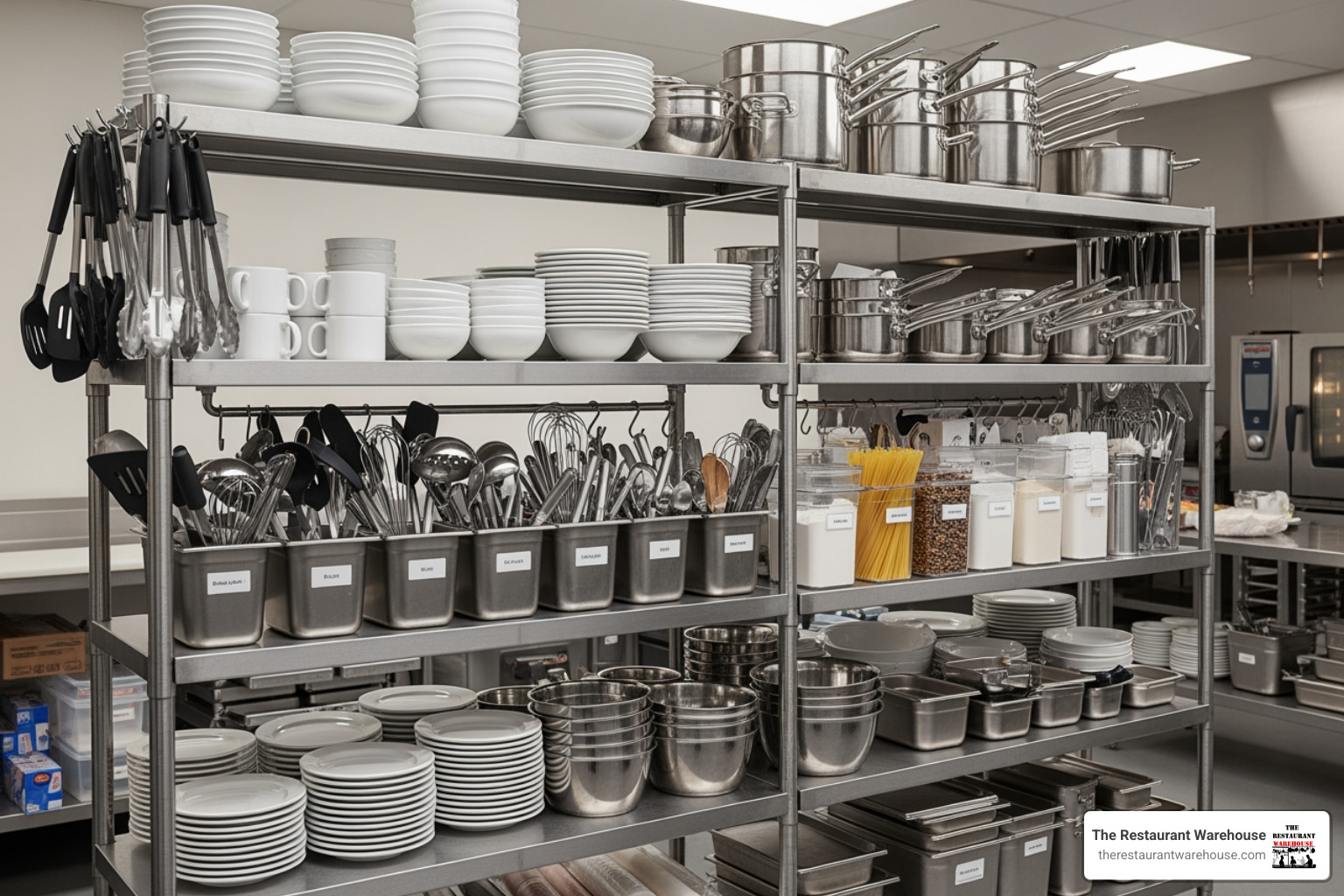
The success of a commercial kitchen hinges on more than just the menu. The kitchen supply you choose—from prep tools to cookware—directly impacts food safety, workflow efficiency, and your bottom line. Equipping your team with the right tools is not a luxury; it's a fundamental investment in your operation's productivity and profitability. A high-quality chef's knife makes prep faster and safer, while color-coded cutting boards are essential for preventing cross-contamination.
Essential commercial kitchen supply categories include:
- Food Preparation Tools: Knives, cutting boards, mixing bowls, measuring tools, whisks, spatulas, and tongs.
- Cookware & Bakeware: A range of pans, pots, and baking sheets designed for high-volume use.
- Safety & Precision Tools: Thermometers, timers, gloves, and non-slip mats to ensure a safe, compliant workspace.
- Storage & Organization: Food storage containers, ingredient bins, and shelving to maintain freshness and order.
- Cleaning & Sanitation: Professional-grade sanitizing solutions and cleaning supplies.
The primary challenge for many operators is sourcing reliable, commercial-grade supplies without paying inflated prices. Traditional suppliers often include high commissions and retail overhead, making essential tools more expensive. Smart restaurateurs seek transparent, wholesale pricing on durable supplies that are built to last, avoiding the cycle of constant replacement and saving money in the long run.
Book a Strategy Call to discover how we can help you source the right supplies at wholesale prices.
The Foundation: Core Food Preparation Supplies
Walk into any thriving commercial kitchen, and you'll see prep stations humming with efficiency. This is the result of having the right foundational kitchen supply at every workstation. These core items are used hundreds of times a day, and their quality directly affects speed, consistency, and safety. Investing wisely in these tools sets the stage for culinary success and ensures a smooth service.
Essential Kitchen Supply Categories for Prep
These are the workhorses of any busy kitchen—the fundamental supplies that make professional cooking possible.
Knives: A chef's most personal tool. A versatile chef's knife is essential for chopping and dicing, while a paring knife handles delicate trimming and peeling. A serrated knife is perfect for slicing bread and tomatoes without crushing them. When selecting knives, forged blades, made from a single piece of steel, offer superior durability and balance for commercial use, while high-quality stamped blades can be a more affordable, flexible option.
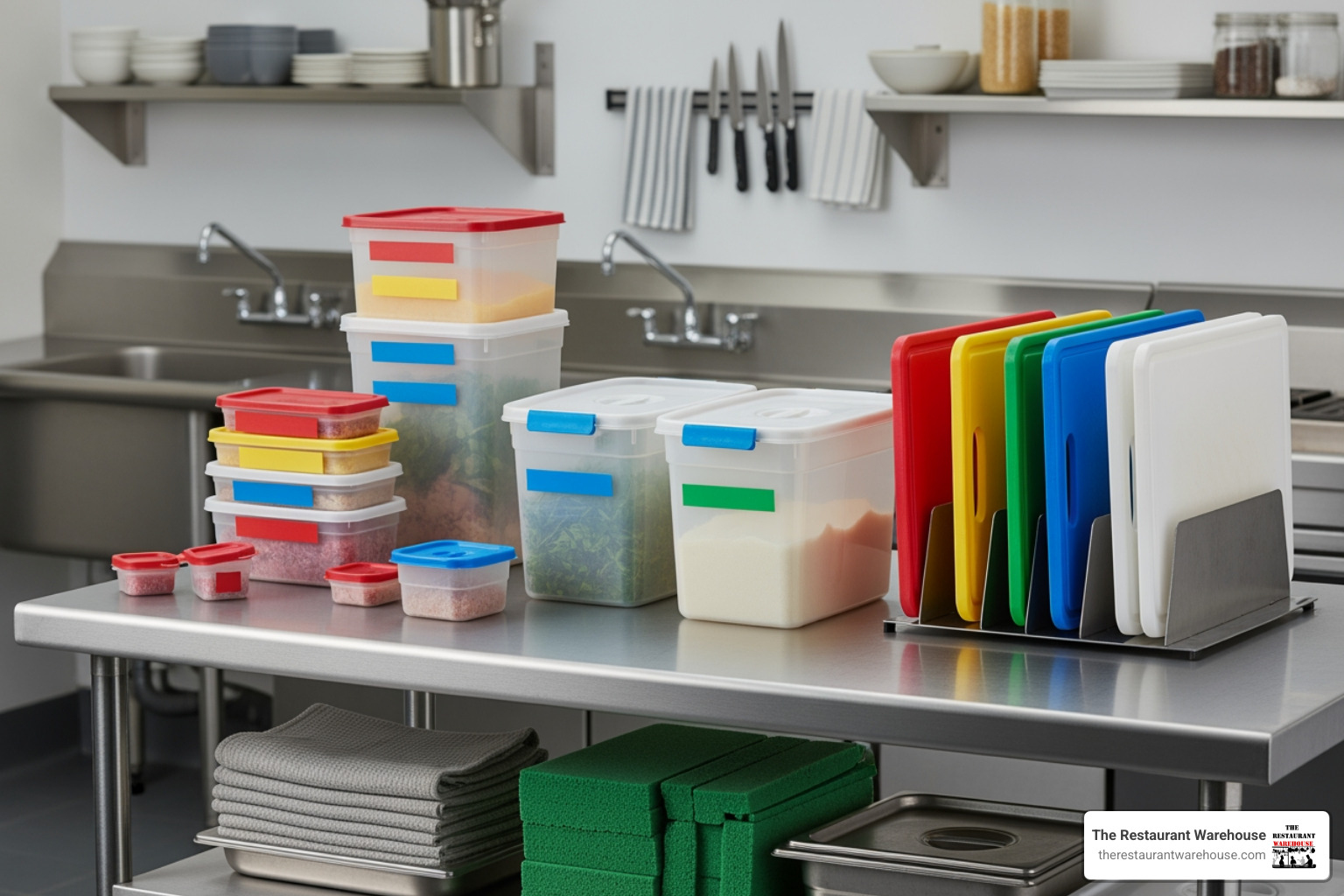
Cutting Boards: These are critical tools for hygiene. While wood boards are gentle on knives, plastic boards are the standard in commercial kitchens due to their durability and ease of sanitization. Color-coded cutting boards are an absolute must for preventing cross-contamination and supporting food safety programs like HACCP. The standard system (e.g., red for raw meat, green for produce) is a simple yet powerful way to prevent foodborne illness.
Mixing Bowls, Measuring Tools, and Utensils: Stainless steel mixing bowls are a kitchen staple because they are lightweight, durable, and non-reactive with acidic ingredients. A range of sizes is essential for various tasks. Measuring cups and spoons are paramount for recipe consistency, ensuring every dish meets your standards. Essential utensils like whisks for aerating, flexible spatulas for reducing waste by scraping bowls clean, and sturdy tongs for handling hot food are indispensable for an efficient workflow.
Explore our full catalog of prep supplies to find exactly what your kitchen needs.
How Quality Tools Impact Cooking Results
High-quality kitchen supply directly influences the efficiency, safety, and success of your culinary operation.
Precision and Consistency: Sharp, well-balanced knives allow for uniform cuts, which ensures even cooking and improves plate presentation. Accurate measuring tools guarantee that recipes are consistent from batch to batch, a key factor in customer satisfaction.
Food Safety: Easily sanitized tools, especially color-coded cutting boards, are your first line of defense against cross-contamination. Durable, well-designed tools are easier to clean, encouraging staff to adhere to strict hygiene protocols.
Workflow Speed: The right tools improve efficiency dramatically. A sharp knife glides through vegetables, a sturdy whisk emulsifies a sauce quickly, and well-designed tongs move food without dropping it. This collective efficiency speeds up prep and service, which is crucial during peak hours.
Durability and Ergonomics: Commercial kitchens are tough on tools. High-quality supplies are built to withstand rigorous use, reducing replacement costs. Ergonomically designed tools with comfortable grips reduce staff fatigue and strain, leading to higher productivity and fewer injuries.
Ready to upgrade your prep station with professional-grade tools? Contact us for a consultation and we'll help you select the right supplies for your operation's specific needs.
The ROI of Quality: Choosing the Right Kitchen Supply
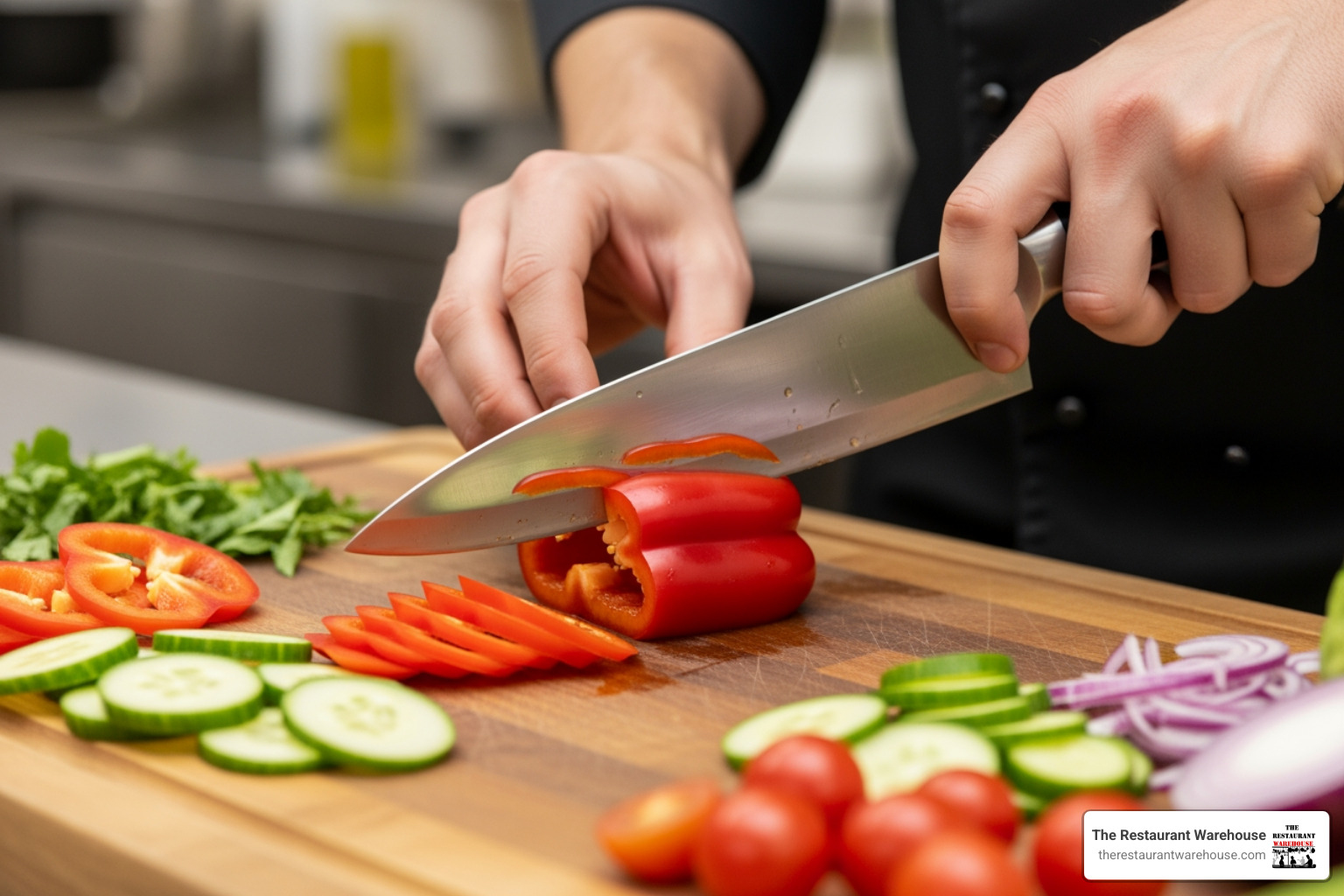
When stocking a commercial kitchen, it's tempting to choose the cheapest option. However, budget-friendly today often becomes expensive tomorrow. Flimsy pans that warp and dull knives that need constant replacement end up costing more in the long run through replacements, frustrated staff, and inconsistent food quality.
Quality kitchen supply is an investment that pays dividends every shift. Durable, well-designed tools lead to faster prep times, safer working conditions, and a healthier bottom line. A knife that lasts ten years is far more cost-effective than one that fails in ten months. For guidance on standards for food-contact surfaces and materials, the Food Code 2017 - Chapter 4 from the FDA provides essential principles that inform smart purchasing decisions.
Material Matters: From Stainless Steel to Silicone
Understanding why certain materials excel in commercial settings helps you make smarter purchasing decisions.
- Stainless Steel: The workhorse of cookware, stainless steel is incredibly durable, non-reactive with acidic foods, and easy to sanitize. It's ideal for stock pots, saucepans, and saut e9 pans.
- Aluminum: Valued for its exceptional heat conductivity and light weight, aluminum is perfect for bakeware like sheet pans, ensuring even browning. Anodized or clad aluminum is best to prevent reactions with acidic foods.
- Cast Iron: Best in heat retention, cast iron is perfect for searing and frying. A well-seasoned pan develops a natural non-stick surface and can last for generations with proper care.
- Non-Stick Surfaces: Essential for delicate items like eggs and fish, quality non-stick pans allow for clean food release with less oil. They require gentle handling to preserve the coating.
- High-Carbon Steel: Often the professional's choice for knives, these blades hold an incredibly sharp edge for precise cuts. They require more care to prevent rust but offer superior performance.
- Polypropylene: This material dominates commercial cutting boards because it's non-porous, durable, and easy to sanitize, making it ideal for color-coded safety systems.
- Silicone: Heat-resistant, flexible, and non-scratching, silicone utensils are perfect for scraping bowls and use with non-stick pans.
Durability and Ergonomics for a Professional Environment
In a commercial kitchen, tools must withstand constant, heavy use. Durability and ergonomic design are absolute necessities.
- Construction: Look for full-tang knives, where the blade metal extends through the handle for superior strength and balance. Riveted handles ensure a secure connection that won't loosen over time.
- Certification: NSF certification indicates a product meets strict public health and safety standards, assuring you of its commercial-grade quality.
- Design: Comfortable, slip-resistant handles are a critical safety feature, preventing accidents when hands are wet or greasy. A balanced weight in tools like knives reduces wrist and arm fatigue during long shifts.
- Long-Term Value: Investing in durable, commercial-grade kitchen supply means consistent performance and fewer replacements. This "buy once, cry once" approach saves significant money over time. At The Restaurant Warehouse, we focus on providing these quality supplies at wholesale pricing, helping you invest wisely without the retail markup.
Specialized Supplies for Efficiency and Safety
Beyond basic prep tools, a truly efficient kitchen relies on specialized supplies that streamline processes and ensure food safety. These items are the supporting cast that allows your culinary team to deliver consistent, safe results day after day. From precise temperature control to personal protection, these elements of your kitchen supply are designed to optimize every aspect of your operation.
Upholding Safety and Precision Standards
Food safety and precision are the foundation of a successful kitchen. The right specialized kitchen supply ensures compliance with health regulations and consistency in every dish.
- Temperature Control: This is non-negotiable. Digital thermometers provide quick, easy-to-read measurements. Probe thermometers are essential for checking the internal temperature of thick cuts of meat, while infrared thermometers are perfect for verifying surface temperatures without contact.
- Timing and Organization: A reliable kitchen timer helps manage multiple cooking times simultaneously. Color-coded systems should extend beyond cutting boards to storage containers and utensils to reinforce HACCP principles and prevent allergen cross-contact.
- Personal Protective Equipment (PPE): Nitrile gloves provide a hygienic barrier to protect both food and hands. For high-volume prep, cut-resistant gloves are essential for preventing serious injuries from knives or mandolines. Aprons protect clothing and prevent contamination, while non-slip mats in high-traffic areas reduce the risk of falls and provide ergonomic support. A well-stocked first-aid kit is also a practical and legal necessity.
For comprehensive food safety guidelines and temperature control standards, the USDA Food Safety and Inspection Service provides essential resources that every commercial kitchen should follow.
Cookware and Bakeware for Every Task
The right pots, pans, and baking vessels are the workhorses that execute your culinary vision.
- Pans for the Stovetop: Sauté pans with sloped sides are perfect for quick cooking and tossing ingredients. Stock pots, with their tall design, are ideal for simmering large batches of soups and stocks. Saucepans are versatile for everything from boiling to preparing delicate sauces.
- Pans for Baking: Heavy-duty roasting pans are essential for cooking meats and vegetables, providing even heat distribution. Sheet pans (or bun pans) are arguably the most versatile item, used for baking, roasting, and more. Aluminum is the preferred material for its excellent heat conductivity.
- Specialty Bakeware: For operations serving pizza, pizza screens help create a crispy crust by allowing air to circulate. Muffin tins are perfect for portion-controlled items like muffins, cupcakes, or individual frittatas.
Choosing the right material for each task—whether it's aluminum for even baking or cast iron for superior heat retention—is key to achieving professional results. To ensure you have every piece of kitchen supply your operation needs, explore our full catalog of supplies.
Smart Purchasing and Maintenance Strategies
Acquiring the right supplies is only half the battle. A strategic approach to purchasing and a consistent maintenance routine are essential for managing costs and maximizing the lifespan of your kitchen supply, ensuring your investment pays off for years to come.
Making an Informed Kitchen Supply Purchase
Every dollar spent on kitchen supply should be a strategic investment. A thoughtful approach prevents costly mistakes and ensures you get the best value.
- Assess Needs and Budget: Prioritize essential items your staff will use daily. While it's tempting to opt for the cheapest options, quality correlates with longevity. A slightly higher upfront cost for a durable tool often results in a lower total cost of ownership.
- Balance Price vs. Quality: A $150 chef's knife that lasts ten years is a better investment than a $30 knife that needs replacing annually. At The Restaurant Warehouse, we provide commercial-grade quality at wholesale pricing, helping you avoid the retail markups that inflate costs.
- Analyze Intended Use: A sauté pan used every shift requires a greater investment in durability than a specialty pan used once a month. Match the quality of the tool to its frequency of use.
- Choose Smart Solutions: Multi-functional tools and space-saving solutions like stackable bowls and wall-mounted storage are ideal for optimizing smaller kitchens, reducing clutter, and improving efficiency.
- Read Product Specifications: Before buying, carefully review materials, dimensions, and certifications like NSF. These details confirm whether a product is built to withstand a commercial environment.
Ready to make informed purchasing decisions? Contact us for a consultation to discuss your kitchen's specific needs.
Best Practices for Care and Longevity
The lifespan of your kitchen supply is directly tied to how well you maintain it. Consistent, proper care makes all the difference.
- Proper Cleaning: Not everything is dishwasher-safe. High-carbon steel knives and cast iron cookware must be hand-washed to prevent rust and damage. Always check manufacturer guidelines. Hand-washing is gentler on many materials and allows for inspection of wear and tear.
- Knife Care: A dull knife is a dangerous knife. Use a honing steel daily to realign the blade's edge and maintain sharpness. Schedule regular professional sharpening or use an in-house sharpener to keep blades in top condition.
- Proper Storage: Protect your tools when not in use. Store knives in blocks, on magnetic strips, or in sheaths to protect the blades. Use pan protectors when stacking non-stick cookware to prevent scratches.
- Material-Specific Maintenance: Seasoning cast iron by baking on thin layers of oil creates a natural non-stick surface and prevents rust. For all steel items, drying them promptly and thoroughly after washing is the simplest way to prevent corrosion.
- Regular Inspection: Routinely check for wear and tear, such as deep grooves in cutting boards, loose handles on pots, or peeling non-stick coatings. Addressing minor issues promptly prevents them from becoming major problems.
Frequently Asked Questions about Kitchen Supplies
What are the most overlooked kitchen supplies for a new restaurant?
New operators often focus on major purchases and overlook the small essentials that are critical for daily operations. The most commonly overlooked items fall under food safety and sanitation. This includes a comprehensive set of color-coded cutting boards and containers to prevent cross-contamination, which is a cornerstone of any HACCP plan. Another is having multiple calibrated food thermometers readily accessible at every station, not just one for the entire kitchen. Finally, personal protective equipment (PPE) like cut-resistant gloves is often an afterthought but is crucial for preventing serious injuries during high-volume prep.
How do I choose between different materials for cookware?
The best choice depends on the cooking task. It's not about finding one "best" material but about building a versatile arsenal.
- Stainless Steel: A durable, non-reactive all-rounder ideal for saucepans and stock pots.
- Aluminum: An excellent and lightweight heat conductor, perfect for sheet pans and other bakeware where even cooking is critical.
- Cast Iron: Offers superior heat retention, making it the champion for searing steaks and frying.
- Non-Stick Surfaces: Indispensable for delicate foods like eggs and fish that are prone to sticking. A well-equipped kitchen will have a mix of these materials, allowing chefs to select the right tool for each specific job.
How can I make my kitchen supplies last longer?
Extending the life of your kitchen supply comes down to consistent maintenance habits. Three practices have the biggest impact:
- Proper Washing: Hand-wash sensitive items like high-carbon steel knives and cast iron cookware. Never leave tools to soak, and always dry them thoroughly to prevent rust and corrosion.
- Dedicated Knife Care: Keep knives sharp. Hone blades daily with a honing steel to maintain the edge, and have them professionally sharpened regularly. A sharp knife is safer and more efficient.
- Correct Storage: Don't toss tools into a drawer. Use knife blocks or magnetic strips to protect blades. Stack pans with protectors in between to avoid scratching surfaces. Proper storage prevents damage and keeps your kitchen organized.
If you need guidance on building a durable, efficient setup, contact us for a consultation. We're here to help you make smart investments.
Conclusion
Running a successful commercial kitchen is about mastering the details, and the most important detail is your kitchen supply. While large headline tools are noticeable, it's the knives, cutting boards, pans, and utensils used every minute that form the true backbone of an efficient, safe, and profitable operation.
As we've explored, investing in high-quality, durable tools is not an expenseit's a strategy. It leads to better consistency, improved safety, and higher staff morale. Smart purchasing that balances price with longevity, combined with a commitment to proper maintenance, ensures your tools will perform for years, delivering a significant return on your investment. A well-equipped kitchen reduces waste, improves food quality, and empowers your team to perform at their best.
We understand that finding commercial-grade kitchen supply at prices that fit your budget is a major challenge. The Restaurant Warehouse was founded to solve this problem. By cutting out the high commissions and retail overhead, we offer wholesale pricing on the durable, professional tools your kitchen deserves. You shouldn't have to compromise between quality and affordability.
Don't let overlooked supplies hold your operation back. Equip your team for success and watch how it transforms your kitchen's performance.
Ready to build a more efficient and profitable kitchen? Contact us for a consultation today, and let our experts help you select the right supplies at the right price.
About The Author

Sean Kearney
Sean Kearney is the Founder of The Restaurant Warehouse, with 15 years of experience in the restaurant equipment industry and more than 30 years in ecommerce, beginning with Amazon.com. As an equipment distributor and supplier, Sean helps restaurant owners make confident purchasing decisions through clear pricing, practical guidance, and a more transparent online buying experience.
Connect with Sean on LinkedIn, Instagram, YouTube, or Facebook.