

How to Open a Small Restaurant A Founder's Guide
Opening a small restaurant all starts with two things: a killer concept and a rock-solid business plan. This is the stage where you turn your passion for food into a real, strategic roadmap that will pull in customers, guide your day-to-day, and, most importantly, secure funding.
Crafting Your Restaurant Concept and Business Plan
Before a single ingredient gets ordered or a table is set, your restaurant is just an idea. The most successful spots are built on a crystal-clear, well-defined concept that clicks with a specific crowd. This is way more than just deciding on a type of cuisine; it’s about crafting an entire experience. What story are you trying to tell? How do you want people to feel when they walk through your door?
Think of your concept as the soul of your restaurant. It drives every single decision, from the menu and the decor to the service style and price point. A strong concept is your north star, keeping everything consistent and helping you stand out in a ridiculously crowded market.
Defining Your Niche and Target Audience
The first thing you have to do is get specific. Really specific. Instead of "Italian food," think "rustic, family-style Sicilian trattoria." Instead of just "sandwiches," maybe it's "gourmet grilled cheese with locally sourced ingredients." A tight focus is what attracts a dedicated, loyal customer base.
So, who are these customers? Are they college students grabbing a quick, affordable lunch? Families celebrating a birthday? Or are they professionals looking for a swanky spot for business dinners?
Understanding your ideal customer is absolutely crucial. I always recommend creating a detailed customer profile—an "avatar"—to help you visualize who you're actually serving. Think about their:
- Demographics: Age, income level, and family status.
- Psychographics: Lifestyle, values, and what they do for fun.
- Pain Points: What are they looking for in a dining experience that they just can't find anywhere else nearby?
This visualization from our team shows how solid market research and planning are the true foundation of any successful restaurant launch.

As you can see, a business plan grounded in real data is the essential first step—long before any construction begins.
Analyzing the Local Market
Once you know who you want to serve, you need to figure out where you'll be serving them. Market analysis is all about scoping out the local landscape to spot opportunities and potential roadblocks.
Start by researching competitors in your target neighborhood. What are they doing well? Where are their weaknesses? A simple SWOT analysis (Strengths, Weaknesses, Opportunities, Threats) can bring a ton of clarity.
It's also essential to understand market segmentation. For instance, quick-service restaurants (QSR) dominate the U.S. restaurant market, holding about 47% of the share because they're so convenient. Fast-casual spots are next at 23%, blending speed with higher-quality food. Casual and fine dining make up the rest. This data helps you see exactly where your concept fits in the bigger picture.
Key Takeaway: Your restaurant concept has to solve a problem or fill a gap in the local market. Don't just try to be different; be better or more specialized in a way that actually matters to your target audience.
Building Your Business Plan: The Strategic Roadmap
With your concept dialed in and your market research done, it's time to build your business plan. This document is your strategic guide for launching and growing your restaurant. It's also the most critical tool you'll have for securing loans or wooing investors.
Before you commit serious money, it’s also wise to conduct a thorough financial and operational feasibility study to make sure your project is truly viable.
A strong business plan is more than just a collection of ideas. It needs to include detailed financial projections, a concrete marketing strategy, and a clear operational outline. This document is your blueprint, detailing every crucial aspect of your venture.
Our team put together this table to break down the most important sections you'll need.
Key Components of a Restaurant Business Plan
| Section | Key Objective | Critical Questions to Answer |
|---|---|---|
| Executive Summary | To provide a concise, compelling overview of your entire plan. | What is your restaurant's mission? What makes it unique? What are your high-level financial goals? |
| Company Description | To detail the legal structure, history, and core values of your business. | What is your legal entity (LLC, sole proprietorship)? Who are the owners? What problem are you solving? |
| Market Analysis | To demonstrate a deep understanding of your industry, market, and competitors. | Who is your target audience? What is the market size? Who are your direct and indirect competitors? |
| Organization & Management | To outline your team's structure and expertise. | Who is on your management team? What experience do they bring? What are the roles and responsibilities? |
| Menu & Services | To describe your core offerings and what makes them special. | What is your menu concept? What are your signature dishes? What is your pricing strategy? |
| Marketing & Sales Strategy | To detail how you will attract and retain customers. | How will you promote your restaurant before and after opening? What is your social media plan? |
| Financial Projections | To present a realistic forecast of your revenues, expenses, and profitability. | What are your startup costs? What is your break-even point? What are your projected profits for 3-5 years? |
| Funding Request | To clearly state how much capital you need and how it will be used. | How much funding do you need? How will you allocate the funds (equipment, rent, etc.)? |
While crafting this document can feel like a huge task, there are plenty of resources out there to help you structure it effectively. For a deeper dive, check out our guide on https://therestaurantwarehouse.com/blogs/restaurant-equipment/how-to-write-a-restaurant-business-plan.
Remember, your plan should be a living document that you revisit and adjust as your business grows. It’s not just a formality for the bank; it’s the blueprint for your success.
Getting Funded and Staying Legal
You’ve got a killer restaurant concept and a business plan that’s ready to wow. Now comes the part that feels the most like jumping into the deep end: the money and the mountain of paperwork. Securing capital and cutting through the red tape are two of the biggest make-or-break moments for any new restaurateur. But with a solid game plan, you can get through it without losing your mind.
Startup costs can be a real shock to the system, and they’re almost always higher than you first guess. One of the classic rookie mistakes is budgeting for the big stuff—the oven, the rent—and completely forgetting about the dozens of smaller expenses that bleed you dry before you even open.
These "hidden" costs add up faster than you can say "grand opening." We’re talking about security deposits for your lease, stocking your pantry for the very first time, paying lawyers and accountants, and having a cash cushion to survive those first few lean months.
What It Really Costs to Open
To get a real-world number, you have to break down every single potential expense. A detailed, line-by-line budget is your absolute best friend, especially when you’re sitting in front of a loan officer or an investor. They need to see you’ve thought through where every single dollar is going.
Your main cost categories will likely be:
- Commercial Kitchen Equipment: This is usually the biggest check you'll write. It covers everything from your walk-in cooler and cooking range down to prep tables and the warewasher.
- Leasehold Improvements: These are the costs to build out or renovate your space to match your vision and, just as importantly, to meet all the local health and building codes.
- Initial Inventory: All the food, booze, and supplies you need to get through your first week of service.
- Licenses and Permits: Fees for health permits, a business license, and especially a liquor license can vary wildly depending on where you are.
- Technology: Your Point-of-Sale (POS) system, any reservation software, and security cameras.
Getting this calculation right is critical for your business plan to be taken seriously. To help you build a budget that covers all your bases, a detailed restaurant startup costs calculator is an invaluable tool.
Finding the Money
With a clear, realistic budget in hand, you can start the hunt for funding with confidence. Most small restaurant owners stitch together the capital they need from a few different places. There’s no single "right" way to do it; the best path for you depends on your personal finances, your business plan’s strength, and how much risk you're willing to take.
One of the most popular routes is an SBA (Small Business Administration) loan. These government-backed loans are often a bit more forgiving than what you'd get from a traditional bank, which makes them a fantastic option for new entrepreneurs. Be warned, though: the application process is intense and demands a perfect business plan.
Another option is to look for angel investors or venture capitalists. These are individuals or firms who provide cash in exchange for a piece of your business. You’ll be giving up some ownership, but you can also gain incredible mentorship and industry connections. Your pitch has to be rock-solid and focused on how you're going to make them a serious return on their investment.
Pro Tip: Don't write off the power of friends and family or even crowdfunding. The checks might be smaller, but these sources can help close a funding gap without the crazy-strict requirements of banks. Just make sure you treat every dollar, no matter where it comes from, with a professional contract and crystal-clear expectations.
Your Legal Checklist: Getting It Done
Getting the money is only half the fight. The other half is making sure your restaurant is 100% legal and compliant. The paperwork can feel like it’s never going to end, but if you tackle it one step at a time, you’ll avoid expensive delays later. Before you can get any official approvals, you'll have to navigate the local commercial building permit requirements to ensure your restaurant plans are fully up to code.
Your legal to-do list is going to be specific to your city and state, but here are the big ones pretty much every restaurant needs:
- Business License: This is the most basic permit you need to operate legally in your town.
- Food Service License: Your local health department will issue this after an inspector confirms your kitchen meets all safety and sanitation rules.
- Employer Identification Number (EIN): A federal tax ID you absolutely need if you’re going to hire employees.
- Certificate of Occupancy: This confirms your building is safe for the public and that you’re not violating any zoning laws.
- Liquor License: If you plan on serving alcohol, this is non-negotiable. The process can be incredibly long and expensive, so you need to start this one as early as possible.
Getting through all this requires organization. I recommend creating a master checklist with every permit, the agency you get it from, contact info, and deadlines. It’s a bit of work upfront, but being proactive like this is the secret to opening on time and without any last-minute legal drama.
Building Your Restaurant From the Ground Up
Alright, you've got a solid plan and the funding is lined up. Now for the exciting part: turning that vision into a real, brick-and-mortar restaurant. This is where concepts on paper become concrete realities, and it all starts with the single most important decision you'll make—your location.
Picking the right spot can feel like catching lightning in a bottle. It can act as a magnet for customers, pulling them in without you spending a dime on marketing. The wrong one? It can feel like an anchor, dragging you down no matter how amazing your food is.
Choosing a location is so much more than spotting a "For Lease" sign. You have to become a neighborhood detective, making sure the area’s vibe fits your brand and the people you want to serve. A high-end bistro is going to have a tough time in a college town full of quick-service joints, just like a rowdy sports bar might not get a warm welcome in a sleepy, residential block.
Scouting and Securing the Perfect Location
Your search for the perfect site needs to be a strategic hunt, not a desperate scramble. Look past the simple foot traffic numbers and dig into the complete picture of a potential space. Visibility is huge. Can people easily spot your restaurant from the main road, or is it tucked away in a corner that’s impossible to find?
And don't forget about accessibility. Is there plenty of parking, or is it close to public transit? A major parking headache can be enough to make potential diners throw their hands up and go somewhere else, no matter how much they wanted to try your food.
Here are a few critical factors to weigh for every spot you consider:
- Neighborhood Demographics: Does the local crowd match the customer profile you spent all that time building in your business plan?
- Zoning and Regulations: Before you get too excited, confirm the location is actually zoned for restaurant use. You also need to know if you can get all the necessary permits, especially a liquor license, in that specific area.
- The Competition: Scope out the other restaurants nearby. A little friendly competition is healthy, but opening your Italian place next to three others is just asking for a fight you might not win.
- History of the Location: Do some digging. Find out what businesses were there before you. If a string of restaurants has failed in that exact spot, it could be a major red flag that something is off with the location itself.
Key Insight: Don't fall in love with a space before you do your homework. An emotional decision can blind you to practical problems that will cost you dearly down the road. Treat site selection like an investor, not just a passionate chef.
Equipping Your Commercial Kitchen for Success
Once you've locked down your location, your focus pivots to the heart and soul of the operation: the kitchen. This is where your menu truly comes to life, and the equipment you choose will directly impact your team's efficiency, the quality of your food, and your bottom line.
Building out a commercial kitchen is a serious investment, so every single piece needs to earn its spot.
Start by making a list of the absolute essentials based on your menu. A steakhouse is going to need a top-notch charbroiler, while a pizzeria's most important asset is its oven. It's incredibly easy to get carried away with shiny new gadgets, but stick to the must-haves first. You can always add the fun specialty stuff later on.
The real challenge here is balancing your budget with the need for durable, reliable equipment. Buying used can save you a ton of cash upfront, but it's not without its risks. Always inspect used items thoroughly and try to buy from reputable dealers who offer some kind of warranty. For the real workhorses like refrigeration and cooking ranges, buying new often provides better long-term value and peace of mind.
Designing a Smart and Efficient Layout
Your kitchen's layout is just as important as the equipment sitting in it. A poorly designed workflow is a recipe for chaos during a busy dinner rush, leading to slow ticket times, a frustrated crew, and inconsistent food. The goal is to create a logical flow, from the moment a delivery arrives to prep, cooking, plating, and finally, out to the service window.
A well-thought-out layout minimizes the number of steps your chefs have to take and prevents traffic jams. For instance, your refrigerators and dry storage should be close to the prep stations, which should then flow right to the cooking line. You can get a much better sense of how to create an effective workflow by checking out different examples of a commercial kitchen floor plan.
Ultimately, launching a small restaurant that lasts requires sharp financial planning and the right tools to stay competitive. The top chains are only projecting a 2.8% sales increase, which shows just how tight the margins are and why efficiency is so critical. Restaurants that embrace modern tools like digital ordering and inventory management systems are in a much stronger position to control costs and keep customers happy.
Designing a Profitable Menu and Hiring Your Core Team
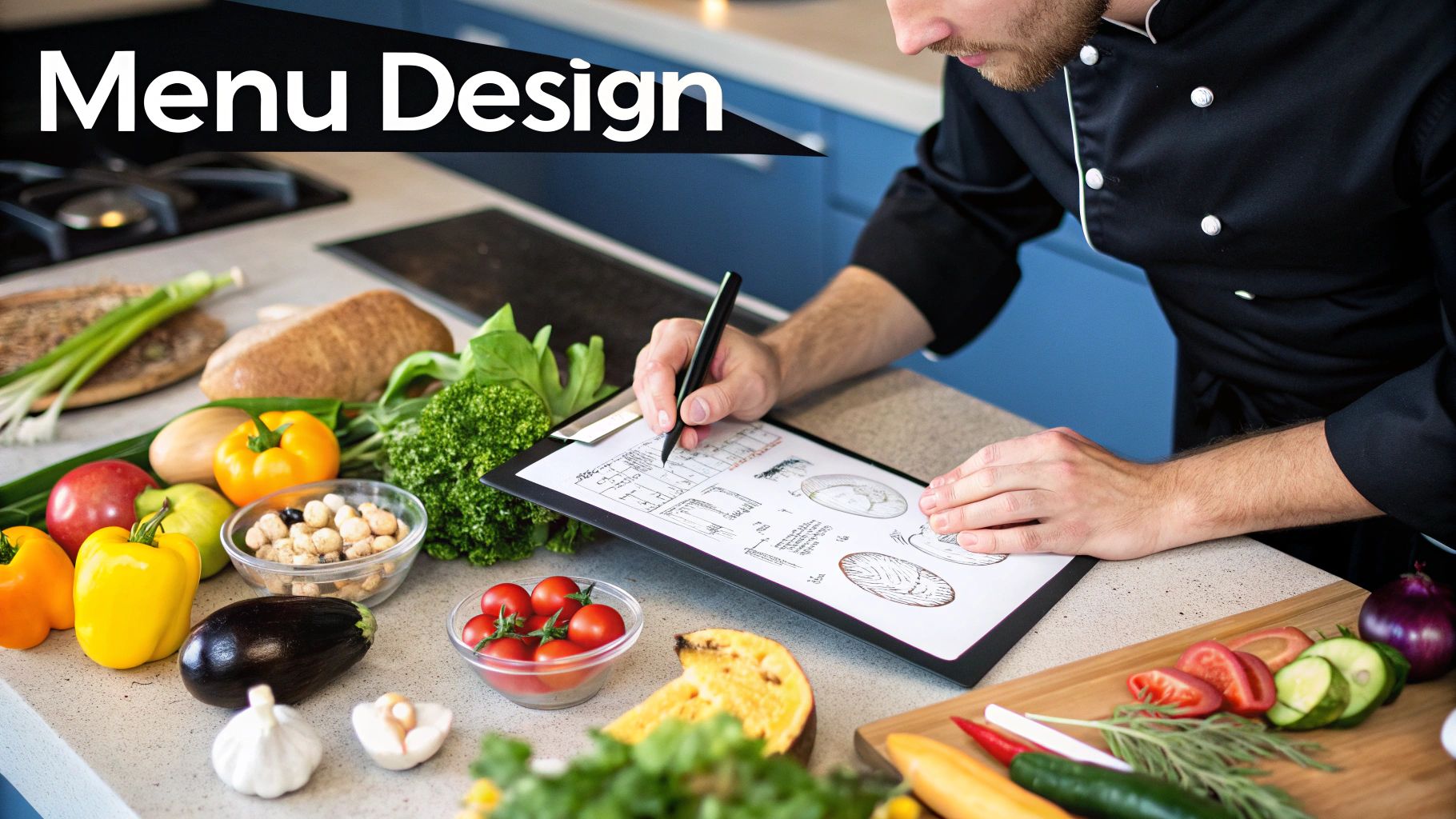
Let's talk about two of the most critical pieces of your restaurant puzzle: your menu and your people. Your menu is so much more than a list of food; it's your number one marketing tool and the financial engine driving your entire operation. At the same time, the team you hire is the soul of the place, turning your concept into a living, breathing experience for every guest who walks through the door.
Getting both of these right isn't just important—it's everything. It's the foundation for building a restaurant that doesn't just scrape by but actually thrives.
Engineering a Menu That Actually Makes Money
This is where your culinary passion has to meet financial reality. A dish might be a stroke of creative genius, but if it’s too complicated for your cooks to nail every time during a dinner rush, or if the ingredients cost a fortune, it can quietly bleed your business dry.
Menu engineering is the art of designing a menu that subtly guides customers toward your most profitable items. It all starts with knowing the true cost of every single plate that goes out. I mean every cost—down to the pinch of salt and the swirl of olive oil.
Once you’ve meticulously costed out each recipe, you can set prices that protect your profit margin. A healthy target for food cost in most restaurants is somewhere between 28% and 35%. So, if the ingredients for a dish cost you $5, you’ll want to price it between $14 and $18 to cover labor, rent, utilities, and still have something left over.
Think of your menu as a strategic mix of items:
- Stars: High profit, high popularity. This is your signature burger that everyone raves about and also happens to have a fantastic margin. Feature these loud and proud.
- Plow Horses: Super popular, but with lower profit margins. Can you make them more profitable by tweaking a side dish or adjusting the portion slightly?
- Puzzles: High profit, but nobody's ordering them. They might need a more mouth-watering description, a better photo, or a strong recommendation from your servers.
- Dogs: Low profit and low popularity. Don't be sentimental. Get these off the menu to make room for a potential new star.
Your menu has to be manageable for your kitchen. A shorter, flawlessly executed menu will always beat a giant one that your team struggles to produce with consistent quality.
Building Your A-Team From Scratch
You can have the most incredible food in the city, but if the service is bad, your reputation will tank. The challenge isn't just finding staff; it's finding the right people who get your vision and are excited to bring it to life every single shift.
When you’re first opening, you’re not just hiring employees—you're building a restaurant family. You need a core group that’s resilient, adaptable, and genuinely passionate. These first hires are crucial because they will set the tone and culture for everyone who follows.
Here's a look at the essential roles you'll need to fill and what really matters when you're hiring for them.
Essential Restaurant Staffing Roles
| Position | Primary Responsibilities | Key Hiring Trait |
|---|---|---|
| Executive Chef/Kitchen Manager | Oversees all kitchen operations, menu creation, inventory, and food costing. | Creativity & Leadership: Look for a talented cook who is also a strong, calm leader capable of managing a team under intense pressure. |
| Line Cooks | Responsible for preparing specific dishes on the line during service. | Consistency & Speed: This role demands someone who can replicate dishes perfectly and work efficiently in a fast-paced environment. |
| General Manager | Manages all front-of-house operations, staffing, customer service, and daily financials. | Problem-Solving: Your GM needs to be an organized leader who can handle any issue that comes up with grace and authority. |
| Servers/Bartenders | Act as the primary point of contact for guests, taking orders and creating a positive dining experience. | Personality & Empathy: You can train skills, but you can't train attitude. Hire naturally friendly people who genuinely enjoy hospitality. |
When you're interviewing, ditch the generic questions like, "What's your biggest weakness?" Get real with them. Ask a server candidate, "A guest says their steak is overcooked, but it looks perfect to you. What do you do?" Their answer will reveal more about their hospitality instincts than any resume ever could.
A positive culture starts with you, from day one. Be crystal clear about your expectations, provide great training, and lead by example. A happy, respected team is the real secret ingredient to creating that exceptional service that turns first-time visitors into regulars.
Launching and Building Long-Term Success
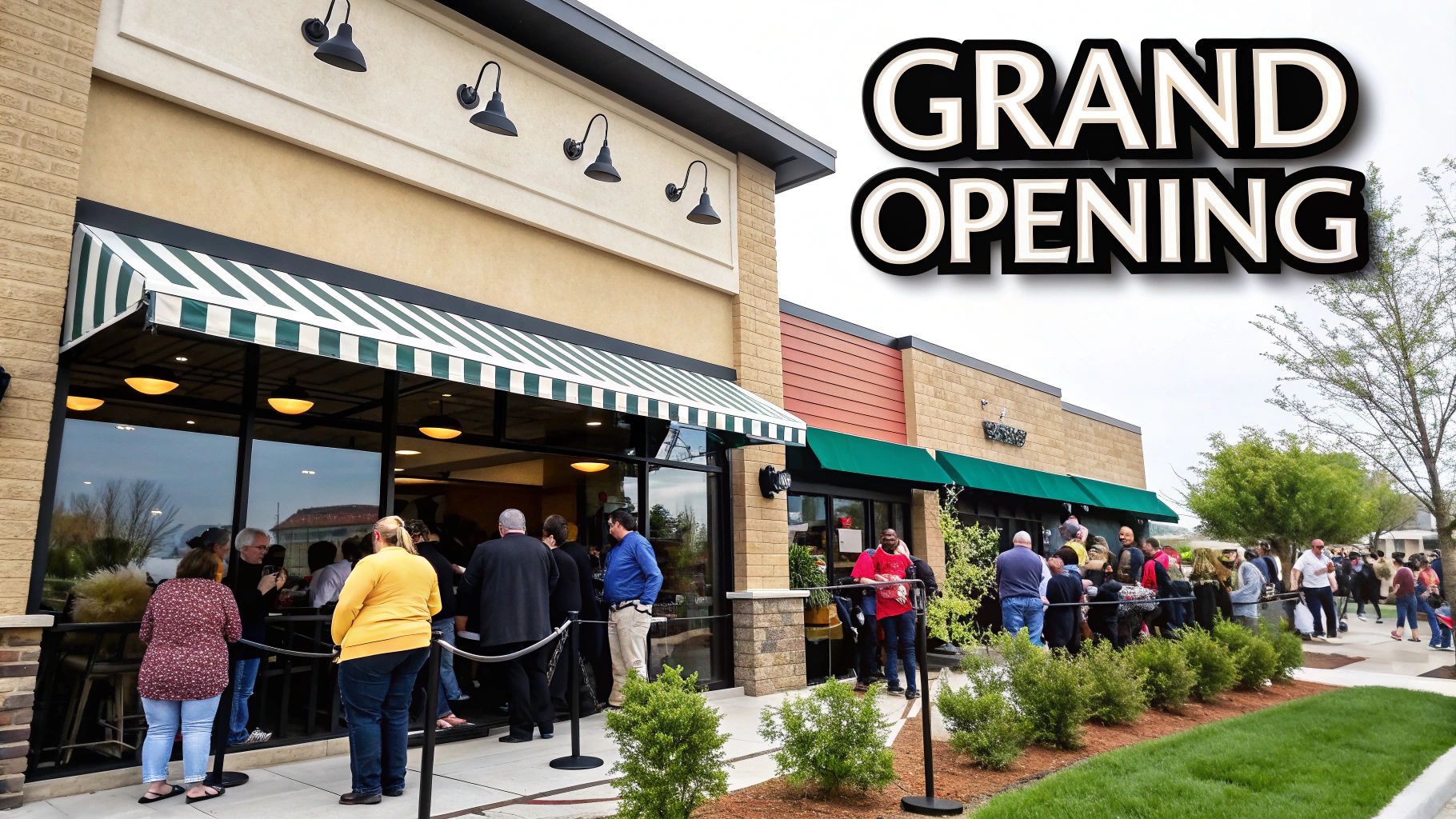
The paint is dry, the kitchen is humming, and your team is ready to go. It’s easy to think of opening night as the finish line, but trust me, it’s just the starting block. The real work isn’t just about unlocking the doors; it’s about creating a launch that builds momentum and then sustaining that energy for the long haul.
Your grand opening is a massive milestone, for sure. But the strategies you put in place before and after that first service are what will truly define your restaurant's future. It's all about creating a memorable beginning and then nurturing that initial excitement into genuine, lasting customer loyalty.
Creating Buzz Before You Open
You don’t need a huge marketing budget to make a splash. Smart, targeted pre-launch marketing is all about building anticipation and getting your name on the community's radar before anyone even takes a single bite. Think of it as setting the stage for a packed house on day one.
First, get your digital footprint in order. Set up your Google Business Profile with high-quality photos and accurate info. Claim your social media handles and start posting sneak peeks—shots of the renovation, a glimpse of a signature dish being tested, or quick intros to your key team members. This behind-the-scenes content makes people feel invested in your journey.
A soft opening is one of the most valuable things you can do before the big day. This isn't your grand opening; it’s a full-on dress rehearsal.
- Invite Friends and Family: Host a limited, invitation-only event for people you trust to give honest, constructive feedback.
- Test Your Systems: This is your chance to see how your kitchen workflow, POS system, and service staff handle real-world pressure in a low-stakes environment.
- Gather Crucial Feedback: Ask your guests what they loved and where you can improve. This insight is gold for ironing out kinks before you open to the public.
By running these tests, you work out the operational bugs, allowing your team to feel confident and prepared for the real deal.
Nurturing a Loyal Following After Launch
Once the initial excitement of opening week fades, the focus has to shift from attraction to retention. Turning first-time visitors into devoted regulars is the secret to long-term stability and profitability in this tough industry. And the foundation of that loyalty is an exceptional guest experience, every single time.
This means actively listening to your customers. Encourage feedback, whether it's through comment cards, social media DMs, or just by chatting with guests at their tables. When you get criticism, view it as a gift—it's a free consultation on how to get better.
Key Takeaway: Acknowledge all online reviews, both positive and negative. Thanking someone for a glowing review is great, but responding to a negative one with empathy and a genuine offer to make things right can turn an unhappy customer into one of your biggest advocates.
Managing your online reputation on sites like Yelp, Google, and TripAdvisor is a daily task, not an afterthought. It's your digital storefront, and it needs constant attention.
Using Data to Drive Smart Decisions
Your gut instinct as a chef or owner is important, but hard data is what will truly help you scale and adapt. Your Point-of-Sale (POS) system is a goldmine of information that can guide your most critical business decisions. It’s not just a cash register; it’s your analytical powerhouse.
Dive into your sales reports regularly to see what's really happening:
- Identify Best-Sellers: Which dishes are flying out of the kitchen? These are your "stars."
- Spot the Underperformers: What items are consistently being ignored? It might be time to take these "dogs" off the menu.
- Analyze Peak Hours: When are you busiest, and when are you slow? This data is key to optimizing staff schedules and controlling labor costs.
- Track Server Performance: See which staff members are excelling at upselling high-margin items like specials or desserts.
This data-driven approach removes the guesswork. It allows you to refine your menu, manage inventory more effectively, and make operational tweaks that directly boost your bottom line.
Success in this business means navigating a fiercely competitive landscape. The global foodservice market is projected to exceed $3.09 trillion, yet profitability remains slim for many. While top performers might see net profit margins near 10%, the industry average hovers between a tight 3% and 5%. This reality highlights why you have to maintain tight cost controls and focus on efficiency to thrive. You can explore more of these crucial industry benchmarks from Sculpture Hospitality.
Ultimately, building a successful restaurant is an ongoing cycle of launching, listening, and learning. By generating that pre-opening buzz, fostering genuine customer relationships, and using data to make informed choices, you build a foundation strong enough to not just survive, but flourish for years to come.
Answering the Tough Questions About Opening a Restaurant
Starting a restaurant is an incredible journey, filled with passion, creativity, and… a ton of questions. No matter how solid your business plan is, there are always a few big concerns that keep new owners up at night. Let's tackle those head-on.
Getting clear answers to these common questions can be the difference between moving forward with confidence and feeling stuck. From profit margins to standing out in a sea of competitors, here’s what you need to know.
How Much Profit Can a Small Restaurant Realistically Make?
This is always the million-dollar question, isn't it? The honest answer is that restaurant profit margins are notoriously thin. While you might hear about high-end spots hitting 10% margins, the reality for most small, independent restaurants is closer to 3% to 5%.
So, what does that actually look like? For every $100,000 in sales, you might only pocket $3,000 to $5,000 after every single bill is paid. Success in this business isn’t just about making sales; it’s about ruthlessly managing your costs. You have to get obsessed with two things:
- Food Costs: This means meticulous inventory, smart menu pricing, and minimizing waste. It's a non-negotiable part of the daily grind.
- Labor Costs: Efficient scheduling and a well-trained, productive team are your best friends here. Overstaffing, even for one shift, can kill your margin for the day.
Profitability in this business comes down to operational excellence. The owners who succeed are the ones who live and breathe their numbers, managing their prime costs—food and labor—with surgical precision.
Making a healthy profit is absolutely achievable, but it requires a deep dive into your financials from day one and a constant focus on efficiency.
What Is the Single Biggest Mistake New Owners Make?
By far, the most common—and often fatal—mistake is underestimating how much cash you need to get started. Many first-time owners create a budget for the big stuff, like kitchen equipment and a security deposit, but they completely forget about working capital.
Working capital is the lifeblood of your new restaurant. It’s the cash you need on hand to cover all your operating expenses for the first few months before you start turning a profit. This includes payroll, rent, inventory, and utilities.
A good rule of thumb is to have enough cash reserves to cover at least six months of operating expenses.
Without that buffer, one unexpected plumbing issue or a slower-than-expected opening month can spiral into a full-blown financial crisis. You need that cushion to give your restaurant a real shot at building momentum.
How Can a New Restaurant Stand Out in a Crowded Market?
Let’s be honest: just having great food isn’t enough anymore. To really make a mark, you have to create a memorable brand experience. This goes way beyond your logo. It’s the entire story you tell and the feeling a guest has from the moment they find you on Instagram to the second they walk out your door, already planning their next visit.
Here are a few ways to carve out your own space:
- Get Hyper-Specific with Your Concept: Don't try to be everything to everyone. A restaurant specializing in authentic, regional Oaxacan cuisine is far more memorable than another generic "Mexican restaurant." Own your niche.
- Deliver Hospitality, Not Just Service: Anyone can take an order. True hospitality is about making a genuine, personal connection. Train your staff to be more than servers; they should be ambassadors for your brand who are excited to share its story.
- Become a Neighborhood Hub: Host a tasting with a local brewery, feature art from a nearby artist, or build your menu around ingredients from the local farmers' market. When you become a valued part of the community, you build a loyal following that big chains can only dream of.
Your unique story and the authentic experience you offer are your most powerful weapons against the competition.
At The Restaurant Warehouse, we know that getting your kitchen ready is a massive step in this process. We provide top-quality commercial equipment with flexible financing options to help you manage your startup costs and build the restaurant you’ve always dreamed of.
About The Author

Sean Kearney
Sean Kearney is the Founder of The Restaurant Warehouse, with 15 years of experience in the restaurant equipment industry and more than 30 years in ecommerce, beginning with Amazon.com. As an equipment distributor and supplier, Sean helps restaurant owners make confident purchasing decisions through clear pricing, practical guidance, and a more transparent online buying experience.
Connect with Sean on LinkedIn, Instagram, YouTube, or Facebook.