


How to Clean Stainless Steel Grill Grates: Pro Tips for Clean, Safe Grilling
Here's the rewritten section, crafted to sound like it was written by an experienced kitchen professional.
The quickest way to clean your stainless steel grates? Do it while they’re hot. Just crank up the heat for 10-15 minutes to burn off any leftover food, then give the hot grates a good, firm scrub with a stainless steel or brass bristle brush. This simple technique is the most effective daily habit for any commercial kitchen. For the really tough, baked-on grime, an overnight soak in hot, soapy water or a paste made from baking soda will do the trick.
Why Flawless Grill Grates Are Your Secret Ingredient

In a bustling professional kitchen, pristine grill grates are far more than just another item on the closing checklist. They’re the foundation of consistent flavor, food safety, and ultimately, your restaurant's bottom line. The difference between a perfectly seared steak and a disappointing, unevenly cooked dish often comes down to the condition of the surface it was cooked on.
Caked-on carbon and grease don't just look unprofessional; they actively work against your culinary goals. This buildup can cause flare-ups, create inconsistent hot spots, and lead to unwanted flavor transfer—imagine the taste of last night’s salmon lingering on today’s grilled vegetables. A well-maintained grate ensures clean, distinct sear marks and pure, unadulterated flavor every single time.
The Superiority of Stainless Steel in Commercial Kitchens
There's a good reason stainless steel is the material of choice for high-volume grilling. Its durability and non-porous surface make it resistant to rust, corrosion, and the extreme temperature swings that are just part of the job in a commercial setting. Unlike cast iron, it doesn’t require meticulous seasoning rituals to prevent decay.
In a professional environment, efficiency and longevity are paramount. Stainless steel grates deliver on both fronts, simplifying daily maintenance while standing up to the rigorous demands of back-to-back services.
Imagine firing up your commercial charbroiler for a busy Friday night rush—those stainless steel grill grates are the unsung heroes, searing hundreds of steaks and burgers weekly. According to grill maintenance experts, stainless steel grates are 40% easier to clean than brittle, crack-prone porcelain-coated ones.
It’s no surprise, then, that a recent industry survey revealed 85% of restaurant operators reported fewer replacements when switching to stainless steel, saving an average of $500 per unit annually. You can get more insights on professional grill care from the folks at Schweid & Sons.
This guide will walk you through the practical daily and deep-cleaning protocols you need to master their upkeep.
Assembling Your Professional Cleaning Toolkit
Using the right tools isn't just about getting the job done faster; it's about protecting the significant investment you've made in your commercial grilling equipment. When your team has the proper toolkit, it prevents damage, locks in food safety, and makes that end-of-service cleanup a whole lot smoother. This isn't just a generic shopping list—it's an arsenal built for the high demands of a professional kitchen.
The cornerstone of your entire kit is a high-quality bristle-free grill brush. For years, wire brushes were the standard, but the serious liability of a stray metal bristle ending up in a customer's food is a risk no restaurant can afford. Modern coiled or woven stainless steel brushes give you the same aggressive cleaning power without that critical safety hazard. They're tough enough to power through baked-on carbon but won't scratch the grate’s protective chromium oxide layer.
Essential Cleaning Agents and Supplies
Beyond the brush, your toolkit needs a few key players. Having these on deck means you’re ready for both a quick daily scrub and a more intensive deep clean.
- Heavy-Duty Scouring Pads: When it's time for a deep-clean soak, you'll need non-metallic, abrasive pads for scrubbing. Whatever you do, never use steel wool. It can leave behind tiny particles that will rust and pit the stainless steel surface over time.
- Food-Safe Degreaser: For that stubborn, greasy buildup that seems glued on, a commercial-grade, food-safe degreaser is a lifesaver. It works on a chemical level to break down polymerized fats that simple scrubbing just can't touch.
- Baking Soda and White Vinegar: Sometimes, simple is best. These kitchen staples create a powerful, non-toxic cleaning solution. A thick paste of baking soda and water, or a quick spray of vinegar, can tackle tough grime without any harsh chemicals.
Remember, the goal is to clean effectively without compromising the integrity of the stainless steel. Harsh abrasives and improper chemicals cause micro-scratches that trap more food particles, making future cleaning cycles progressively harder.
When you're mixing up commercial degreasers, getting the ratios right is critical for both safety and effectiveness. You can learn more with this helpful guide to chemical dilution to make sure you're preparing your solutions correctly.
Finally, round out your toolkit with the gear that makes the whole process safe and organized. This includes a designated soaking tub large enough to fully submerge the grates, heavy-duty rubber gloves to protect your staff's hands from hot water and cleaning agents, and a good supply of clean, dry cloths for the final wipe-down and polish. Being prepared really does make all the difference.
The 10-Minute Post-Service Cleaning Method
In any professional kitchen, the best cleaning strategies are the ones that are fast, consistent, and baked right into your daily workflow. For your stainless steel grill grates, this means tackling the mess the moment service ends. It's a technique we call the "clean-while-hot" method, and it’s your best defense against the kind of stubborn, caked-on grime that turns deep cleaning into a nightmare.
This whole approach is about letting the grill’s own heat do most of the heavy lifting for you. Instead of letting grease and food particles cool down and harden like cement, you blast them right away. This simple process, known as a burn-off, turns all that sticky residue into a brittle ash that’s surprisingly easy to scrape off.
Harnessing Heat for a Faster Clean
The process couldn't be simpler. As soon as the last order is off the grill, crank the heat up to high for a solid 10 to 15 minutes. If your grill has a lid, close it. This traps the heat and really intensifies the cleaning effect. This short burst of high heat is all it takes to carbonize any leftover sauces, marinades, or bits of food clinging to the grates.
After the burn-off, kill the heat. While the grates are still screaming hot, grab your heavy-duty, bristle-free grill brush and give them a firm, thorough scrub. The goal here is to knock away all that ashen residue. Always work in the same direction as the grate bars to get into the grooves—you’ll be amazed at how easily the buildup flakes away.
This quick visual guide lays out the essential toolkit for both your daily and deep cleaning routines, moving from the initial scrub to finishing touches.
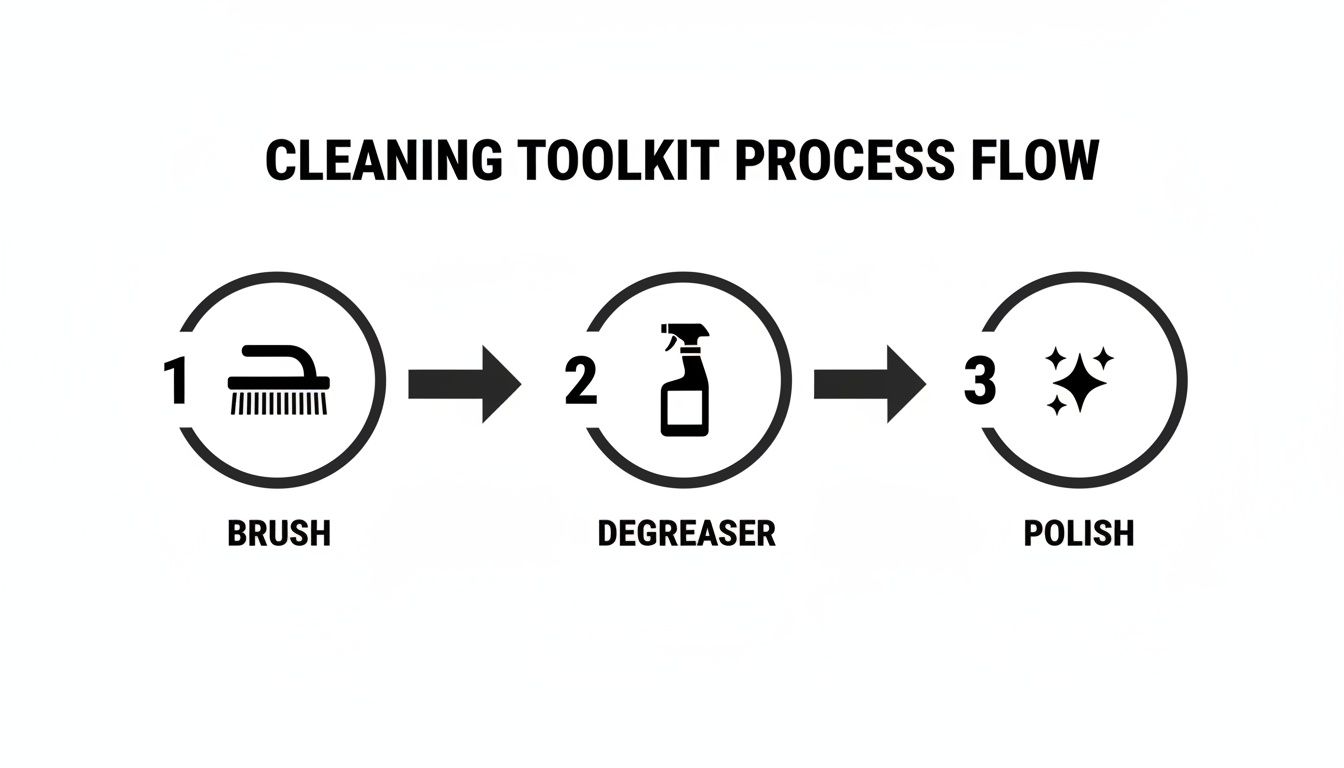
This process shows a logical flow: start with mechanical cleaning (the brush), move to chemical help (degreaser), and finish with protection (polish) for complete grate care.
To make this end-of-day task a no-brainer for your team, here’s a quick breakdown of the routine.
Daily Cleaning Routine At a Glance
| Step | Action | Time Required | Purpose |
|---|---|---|---|
| 1. Burn-Off | Crank grill to high heat. | 10–15 minutes | Incinerates food residue into brittle ash. |
| 2. Scrape | Turn off grill; scrub hot grates with a wire-free brush. | 2–3 minutes | Removes the carbonized ash and debris. |
| 3. Final Wipe | Lightly coat a rag in high-temp oil; wipe grates. | 1 minute | Seasons the steel and prevents rust. |
Making this simple table part of your closing checklist ensures consistency and keeps your equipment in prime condition.
Insider Tricks for a Pristine Finish
Looking for an extra cleaning boost, especially on mobile units or outdoor setups? Try the old-school onion trick. Just spear half an onion on a long fork and rub the cut side vigorously over the hot grates. The water in the onion creates steam that dislodges stubborn bits, while its natural acids help break down any remaining grease.
This method is surprisingly effective. In fact, some field tests have shown this technique can loosen residues 60% faster than soap alone by essentially mimicking a high-heat pyrolysis cleaning process that burns off nearly 99% of organics.
Key Takeaway: The 10-minute post-service clean isn't just about looks. It directly impacts your flavor consistency and food safety by stopping carbon buildup and preventing flavor transfer between different foods.
Integrating this quick task into your kitchen's closing procedures is a must. When it becomes a non-negotiable part of the routine, your grill is always ready for the next service, preventing long-term damage and those costly, time-sucking deep cleans. For more tips on building efficient end-of-day habits, check out our comprehensive restaurant kitchen cleaning checklist. This is the real secret to keeping your stainless steel grill grates in peak condition for years.
Deep Cleaning Techniques for Stubborn Buildup
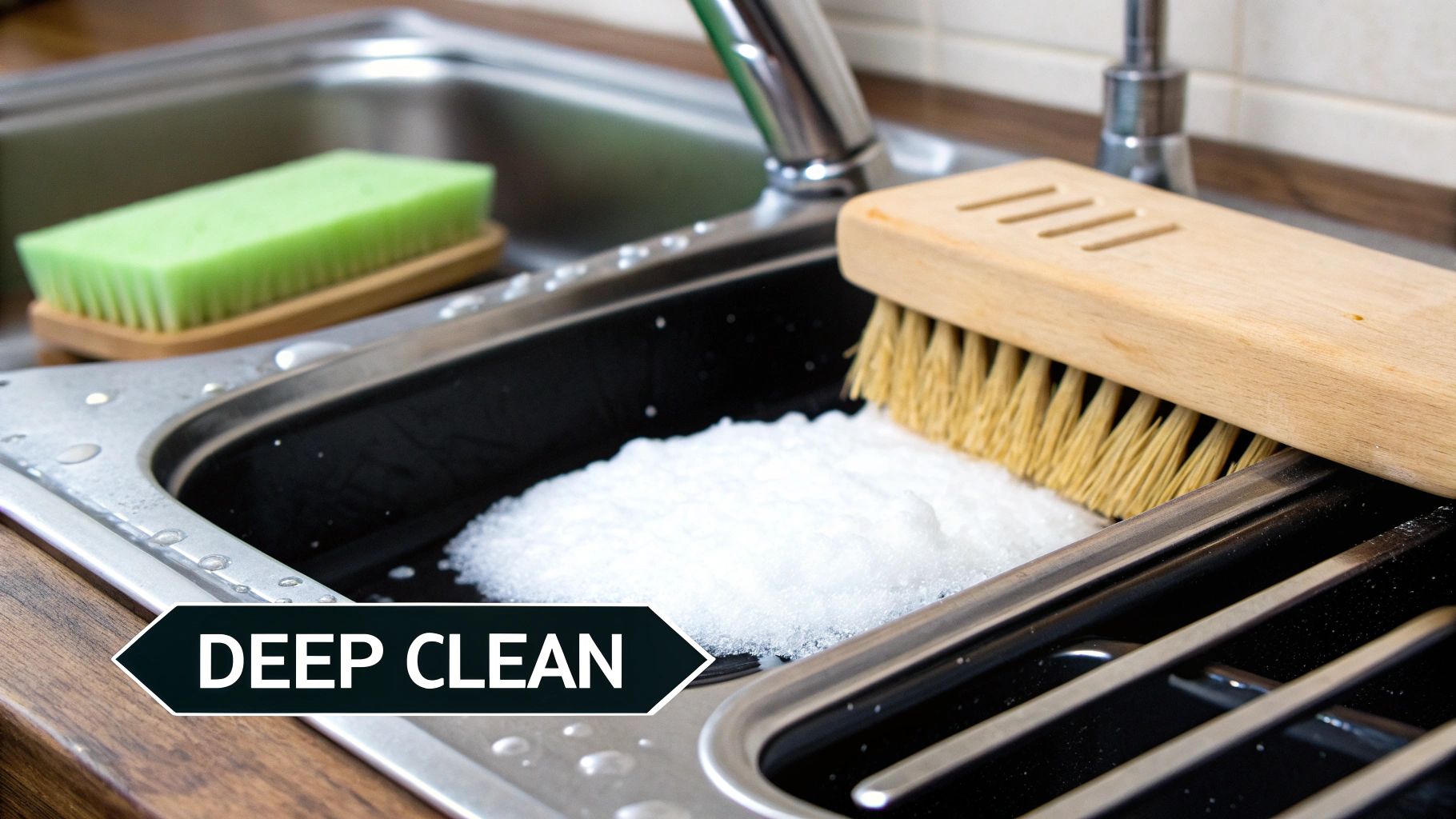
The daily burn-off and scrape is your first line of defense, but let's be real—in a high-volume kitchen, there comes a time when that’s just not enough. Marinades, sugars, and rendered fats eventually carbonize into a stubborn crust that a quick brush-down won't touch.
When you hit that point, a periodic deep clean isn’t just an option; it's essential. It’s what restores your grates to peak performance, ensures even cooking, and upholds the sanitation standards your kitchen is built on.
Think of it this way: daily brushing is like wiping down the counters after service, while deep cleaning is like getting on your hands and knees to scrub the entire kitchen floor. Both are necessary, but they serve very different purposes. These methods are designed for busy operations that need solid results without damaging valuable equipment.
The Simple Overnight Soak Method
One of the most effective, low-effort techniques is a good old-fashioned overnight soak. This method is perfect for the end of a long week, letting time and hot, soapy water do the heavy lifting for you.
Grab a bus tub or find a deep sink large enough to fully submerge the grates. Fill it with the hottest water you can get from the tap and add a generous amount of a quality, grease-cutting dish soap. Carefully place the cool grates into the solution and just let them be.
By morning, the hot water and soap will have worked their magic, softening and breaking down even the most baked-on grime. A quick scrub with a heavy-duty, non-metallic scouring pad is usually all it takes to get them looking fantastic again.
The Baking Soda and Vinegar Power Paste
For a more targeted and non-toxic approach, you can’t beat a simple paste made from baking soda and vinegar. It’s incredibly effective and a great option for kitchens that prefer to avoid harsh commercial chemicals. It's also perfect for those times when an overnight soak just isn't practical.
Here’s how it works:
- Make the Paste: In a bowl, mix baking soda with just a little water until you have a thick paste, something like the consistency of toothpaste.
- Coat the Grates: Liberally apply the paste all over the cool grill grates. Don't be shy—pay extra attention to the spots with the heaviest buildup.
- Activate with Vinegar: Lightly spray the paste-covered grates with white vinegar. You’ll see it start to foam and bubble. That chemical reaction is what’s lifting the gunk right off the steel.
- Let It Work: Give the paste 15 to 20 minutes to do its thing.
- Scrub and Rinse: Grab a stiff, non-metallic brush or scouring pad and scrub away all the loosened residue. Finish by rinsing the grates thoroughly with hot water.
This method is a favorite in many pro kitchens because it's cheap and it works. Data from U.S. restaurant trials actually found that these vinegar-activated baking soda pastes can bubble off 85% of stubborn buildup, making them twice as effective as soap alone. Its effectiveness and zero-cost appeal make it a go-to for budget-conscious operations like food trucks.
Critical Warning: Never, ever use harsh oven cleaners or bleach on your stainless steel grates. These products contain caustic chemicals that can permanently strip away the protective chromium oxide layer, leading to pitting, discoloration, and rust.
What to Avoid During a Deep Clean
Knowing how to clean stainless steel grill grates is just as much about what not to do. Besides steering clear of oven cleaners, you should also avoid using steel wool or any carbon steel brushes.
These tools can shed tiny metallic particles that get embedded in the surface of the grates. Before you know it, you’ll have rust spots that are nearly impossible to remove.
For those also handling broiler maintenance, similar rules apply. You might find our guide on properly cleaning a broiler helpful for keeping all your cooking surfaces in top shape.
Finally, while it might be tempting to run your grates through a high-temperature commercial dishwasher, it's best to check your manufacturer's guidelines first. The combination of intense heat and harsh detergents can sometimes cause discoloration or damage, depending on the grade of stainless steel. When in doubt, the manual methods we’ve covered here are always your safest bet.
Protecting Your Grates for Long-Term Performance
Smart maintenance is preventative maintenance. After you’ve put in all that work for a deep clean, the final steps you take are what will protect your investment and make every future service that much easier. It's all about building simple habits that prevent serious problems down the road, saving you from costly replacements and ensuring your stainless steel grates last for years.
The single most important step after a deep clean is re-seasoning. When you strip away all that built-up grime, you're also removing the protective, non-stick layer you’ve worked so hard to build. Re-seasoning restores this essential barrier, which is critical for both cooking performance and easier cleaning. It’s a simple process that pays huge dividends.
The Crucial Step of Re-Seasoning Your Grates
Think of re-seasoning as creating a fresh, non-stick shield on the metal. This process fills in the microscopic pores of the stainless steel, creating a slick, polymerized surface. The result? Food releases cleanly, you get those perfect sear marks, and post-service cleanup becomes significantly faster.
To get your grates properly re-seasoned:
- Make Sure They're Clean and Bone-Dry: After their deep clean, the grates must be completely dry. Any lingering moisture will mess with the oil and can lead to rust.
- Pick the Right Oil: You need an oil with a high smoke point. Good choices include canola, grapeseed, or sunflower oil. Steer clear of oils with low smoke points like olive oil—they’ll just burn and get sticky.
- Apply a Thin Coat: Lightly dampen a clean cloth or a sturdy paper towel with your chosen oil. You're aiming for a very thin, even layer, not a dripping mess. Too much oil creates a gummy, unpleasant buildup.
- Heat to Polymerize: Put the oiled grates back on the grill. Crank the heat to medium-high for about 15-20 minutes, or until the oil stops smoking. This heating process is what polymerizes the oil, bonding it to the metal to create that protective, non-stick surface.
This is the same core principle used when prepping any new cooking surface. For a deeper dive into this foundational kitchen skill, our guide on how to season a charbroiler offers more detailed steps and professional insights.
Pro Tip: Make a light re-oiling part of your daily closing procedure. After the post-service scrape-down, a quick wipe with an oiled rag while the grates are still warm reinforces the seasoning and protects against overnight corrosion.
Polishing and Proper Storage Practices
For kitchens that want to maintain that pristine, like-new look, a final polish can make a real difference. After cleaning and seasoning, just use a soft, dry microfiber cloth and a small amount of a food-safe stainless steel polish. Wiping in the direction of the metal's grain will buff away any water spots and bring back that signature shine.
Proper storage is also key, especially for operations with multiple sets of grates or mobile units. Always store clean grates in a dry, well-ventilated spot to keep moisture from building up. If you need to stack them, place a clean, dry towel between each one to prevent scratching and allow for some air circulation.
For those particularly challenging, burnt-on residues that often plague grill grates, exploring effective methods for removing stubborn burnt food from cookware can provide some valuable extra solutions. By working these protective steps into your maintenance schedule, you shift from just cleaning your grates to actively preserving their performance and longevity.
Got Grill Grate Questions? We've Got Answers
Even in the most dialed-in kitchens, there are always questions about the finer points of equipment care. And when it comes to something as central as your grill, getting those details right is what separates a good service from a great one. Let's tackle some of the most common questions we hear about keeping stainless steel grill grates in top shape.
My goal here is to give you straight, no-nonsense answers that will help you sidestep some common—and often costly—mistakes. Think of this as a quick reference guide to protect your investment and streamline your cleaning process.
Can I Use Oven Cleaner on My Stainless Steel Grill Grates?
Let’s make this simple: No. Absolutely not.
Oven cleaners are packed with seriously harsh chemicals like lye, formulated for baked-on enamel surfaces, not the high-grade stainless steel of your grates. Using that stuff will chemically strip away the protective layer that prevents corrosion.
What happens next? Pitting, ugly discoloration, and eventually, rust. And it's not just a cosmetic problem. You're creating a rougher surface that grabs onto food, making every future cleaning session a bigger headache and wrecking your investment. Stick to safer methods, like a hot water soak or a simple baking soda paste. It works, and it won't destroy your equipment.
How Often Should a Busy Restaurant Deep Clean Its Grates?
There's no magic number here—it all comes down to your menu and how hard you're running that grill. But we can set some solid benchmarks.
- High-Volume Use: If you're a steakhouse or a burger joint where the grill is constantly fired up, you should be deep cleaning weekly. This is non-negotiable for preventing the kind of heavy carbon buildup that messes with heat distribution and causes flare-ups.
- Moderate Use: For a café that’s just grilling chicken for salads or a restaurant with a more diverse menu, a deep clean every two weeks or once a month is probably enough.
The real indicator is always performance. When you notice that your daily brushing isn't cutting it anymore, or you can see thick, flaky gunk that refuses to budge, it's time. Don't wait until it becomes a massive project.
Is Oiling the Grates After Cleaning Really Necessary?
Yes, 100%. This is a critical step you can't afford to skip, especially right after a deep clean. All that scrubbing and soaking strips away the grime, but it also takes the existing seasoning with it.
Re-seasoning with a high-smoke-point oil (think canola or grapeseed) creates a fresh, non-stick surface. This process fills in the microscopic pores of the metal, and that accomplishes three things: it keeps food from sticking, helps you get those beautiful, consistent sear marks, and makes your next daily cleaning cycle so much easier. Getting into the habit of a quick, light re-oiling before each service is a fantastic pro move, too.
What Is the Best Type of Brush to Use?
You’ve got two great options: a quality stainless steel brush or a brass bristle brush. The key is that both of these metals are softer than your grates, so they’ll clean effectively without leaving scratches. Most pros lean toward stainless steel brushes for their durability and resistance to corrosion.
Here’s the golden rule: Never, ever use a standard carbon steel brush or steel wool. Tiny particles can break off, embed themselves in the surface of your grates, and introduce rust spots that are a nightmare to remove. It's a simple mistake that can quickly ruin the quality and shorten the life of your equipment.
At The Restaurant Warehouse, we know that having the right equipment is only half the battle; knowing how to maintain it is what really drives success. For everything from commercial charbroilers to the essential supplies that keep your kitchen humming, we're here to help. Explore our full catalog of professional-grade equipment today at https://therestaurantwarehouse.com.
About The Author

Sean Kearney
Sean Kearney used to work at Amazon.com and started The Restaurant Warehouse. He has more than 10 years of experience in restaurant equipment and supplies. He graduated from the University of Washington in 1993. He earned a BA in business and marketing. He also played linebacker for the Huskies football team. He helps restaurants find equipment at a fair price and offers financing options. You can connect with Sean on LinkedIn or Facebook.
Leave a comment