
Gas Hoses

Atosa WA300001 Hose Kit for Propane and Natural Gas Units - 48 inch
Atosa
Original price
$415.00
Original price
$415.00
-
Original price
$415.00
Original price
$415.00
Current price
$300.00
$300.00
-
$300.00
Current price
$300.00
Gas hoses are very important. They safely and efficiently deliver propane and natural gas to appliances in restaurants and food trucks. The Atosa ...
View full details
Original price
$415.00
Original price
$415.00
-
Original price
$415.00
Original price
$415.00
Current price
$300.00
$300.00
-
$300.00
Current price
$300.00
Save 28%
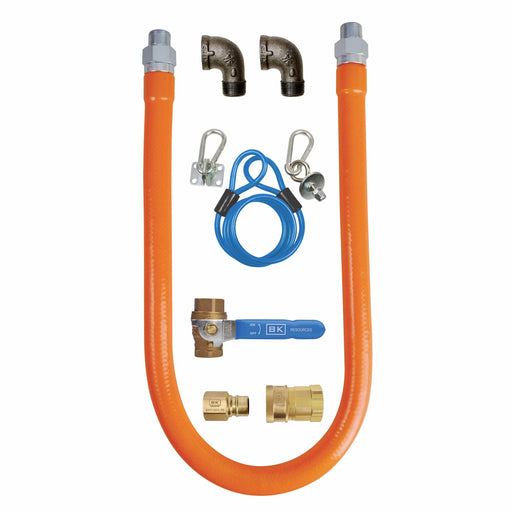
BK Resources Fryer Hose Kit for Natural Gas and Propane Deep Fryers
BK Resources
Original price
$386.00
-
Original price
$386.00
Original price
$386.00
$386.00
-
$386.00
Current price
$386.00
BK Resources Fryer Hose Kit for Natural Gas and Propane Deep Fryers (BKG-GHC-7548-SCK3, 3/4-Inch x 48-Inch, cCSAus Certified) This BK Resources ga...
View full details
Original price
$386.00
-
Original price
$386.00
Original price
$386.00
$386.00
-
$386.00
Current price
$386.00
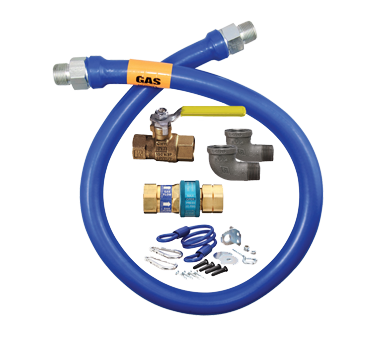
Commercial Gas Hoses and Quick Disconnect Kits
Choose a commercial gas hose around the appliance, fuel supply and way the equipment will be used. A fryer on casters needs a connection arrangement that accounts for controlled movement during cleaning, while a fixed installation has its own requirements. Hose diameter and length are important, but they are only part of the selection: fittings, flow capacity, operating pressure, shutoff, restraint and the approved application must work together.
This collection includes the Atosa WA300001 and a BK Resources commercial fryer hose kit. Both are listed in a 3/4-inch by 48-inch configuration, but matching those two dimensions does not establish that the kits are interchangeable in every installation. Have a qualified gas installer confirm the complete assembly before ordering and installing it.
This is a buying and maintenance-planning guide, not a do-it-yourself gas installation procedure. Installation, commissioning and leak testing should be performed by qualified personnel in accordance with the supplied manufacturer's instructions and applicable local requirements. Commercial gas connector manufacturers expressly require qualified installation and testing.
Compare the Commercial Gas Hose Kits
Start with the exact model number and package contents rather than a generic description such as “fryer hose.” Confirm the current supplied kit, the installation manual and any additional components required for the appliance. A hose kit is not a complete design for the building's gas supply.
| Kit | Listed size | Selection details |
|---|---|---|
| Atosa WA300001 Gas Hose Kit | 3/4 inch × 48 inches | Atosa identifies WA300001 as a gas flex hose with quick disconnect. The product listing describes a gas valve, restraining device and two elbows; confirm the supplied package before installation. |
| BK Resources Fryer Hose Kit | 3/4-inch inside diameter × 48 inches | Listed as BKG-GHC-7548-SCK3, with hose, shutoff valve, quick disconnect, restraining cable and hardware, and two male-to-female 90-degree elbows. |
Atosa's size and quick-disconnect description are documented in its equipment reference guide. For the BK Resources BKG-GHC-7548-SCK3, use the documentation supplied with the ordered kit as the installation reference.
Do not assume optional swivel fittings, an appliance regulator or every adapter required at your site are included. Similar hose model numbers can identify different packages. Compare the written contents with the installer's equipment list, and use the product cards for current price and availability.
What Each Part of a Gas Connection Kit Does
A gas quick disconnect kit combines components that serve different functions. The manual shutoff, quick disconnect and restraining cable are not substitutes for one another. Understanding that distinction helps you order the right package and give your installer complete information.
| Component | Purpose in the installation | What to confirm |
|---|---|---|
| Flexible gas connector | Connects the approved appliance to the gas supply arrangement | Fuel, pressure, diameter, length, rated flow and suitability for the appliance's movement |
| Manual shutoff valve | Provides a means to manually isolate the gas supply | Approval, accessibility and location under the applicable instructions and code |
| Quick disconnect | Provides an approved coupling for disconnection and reconnection | Compatible coupling halves, flow direction, capacity and operating procedure |
| Restraining cable and hardware | Limits appliance travel so the connector is not used as the restraint | Correct attachment, adjustment and reconnection before service |
| Elbows or other fittings | Help establish the approved connection arrangement | Thread type, size, orientation and suitability of the complete assembly |
| Swivel accessory, where specified | Provides movement at an approved fitting | Whether it is included, required or compatible with the exact connector |
Commercial connector installation manuals typically show the shutoff, coupling and restraint as separate parts of the arrangement. Follow the instructions supplied with your kit rather than combining components from different manufacturers.
Choosing Gas Hose Diameter and Length
Inside Diameter Is Not the Same as Connection Compatibility
A 3/4-inch gas hose listing may describe the connector's inside diameter. The appliance connection also needs to be checked for its actual size, thread type and approved mating components. A matching number on a hose and an appliance does not establish the available gas flow or validate every fitting between them.
Give the installer the appliance model and data-plate information, not just the name of the equipment category. Different fryers, ranges and griddles can require different supply conditions. Do not choose a connector solely because another appliance on the line uses the same size.
A 48-Inch Hose Is Not a 48-Inch Movement Allowance
Measure the installation with the appliance in its working position and review the access needed for cleaning or service. The connector must be routed according to its instructions, with enough appropriate space for the assembly rather than being stretched tight, trapped or sharply bent. The length printed on the package does not tell you how far a caster-mounted appliance can safely travel.
The manufacturer's movement and restraint requirements control the permitted travel. Commercial connector instructions typically warn against overextending the assembly, kinking or twisting it, and allowing a connector to be crushed beneath casters. Apply the instructions for the actual kit, rather than using a universal extra-length formula.
A longer connector is not automatically a better choice, and a shorter one should not be forced to reach. Ask the installer to select the approved length and routing together. Do not improvise an extension by joining connectors or adding unapproved adapters.
Read the Connector Label, Not Just Its Color
When comparing a commercial gas hose connector, ask for the model identification, approved application and certification documentation. Do not use the color of the outer coating, stainless-steel appearance or the word “flexible” as proof that a connector is suitable for movable cooking equipment. Check the complete assembly against the intended use rather than substituting a residential or industrial hose that looks similar.
Ask the supplier to identify any claimed excess-flow, thermal-shutoff or other protective feature in the exact model's documentation. Do not assume every quick-disconnect kit includes those features, or that an accessory replaces the required shutoff, restraint or inspection routine. Keep the written specifications with your equipment order so the installer can review what will actually be supplied.
Check the Route, Heat Exposure and Cleaning Environment
Give the installer a view of the whole equipment position, including adjacent hot surfaces, sharp edges, wiring, casters and the cleaning access route. Ask them to check the connector's operating-pressure and temperature limits against those conditions. A protective braid or coating is not permission to expose the assembly to any temperature or cleaning chemical.
Commercial connector instructions commonly prohibit concealing the connector within, or running it through, a wall, floor or partition, and require the gas outlet to be in the appliance's room. They also commonly warn against damaging chemical exposure and contact with sharp edges or wiring. Have the qualified installer apply the actual kit's instructions and local requirements; do not use a flexible appliance connector to solve an unsuitable supply-outlet location.
BTU Capacity: Check the Complete Assembly
Start with the appliance's total rated gas input and the supply conditions required by its manufacturer. Then obtain the connector manufacturer's capacity information for the exact diameter, length and installed configuration. Ask whether a listed rating applies to the hose alone or to the assembly with its shutoff and quick disconnect.
A capacity number is useful only when its test conditions are understood. Have the installer check the fuel, pressure conditions, permitted pressure drop and accessory configuration behind the rating. Do not carry a number from another hose length or another brand into the purchase decision.
The same principle applies when replacing a cooker with a larger one. A connector that served the previous appliance is not automatically suitable for the replacement, even if it physically connects. Review the supply and connector as part of the new equipment specification rather than making the hose an afterthought.
| Information to provide | Why the installer needs it |
|---|---|
| Exact appliance model and total BTU/hour input | Identifies the load the connection must support |
| Natural gas or propane designation | Establishes the fuel for the appliance and connection review |
| Required and available supply pressure | Allows comparison with the equipment and connector limits |
| Connector model, diameter and length | Identifies the relevant manufacturer's specification |
| Shutoff, quick disconnect and other proposed fittings | Ensures the assembly is reviewed, not just a bare hose rating |
| Other connected loads and supply arrangement | Lets the installer evaluate the wider gas system where necessary |
Do not select a gas hose based on an unsupported claim that one brand “flows better.” A useful comparison uses documented configurations and equivalent rating conditions. Where those details are unavailable, ask for the current specification rather than assuming compatibility from the product photo.
Natural Gas and Propane Connection Planning
Check the exact connector's approved gases and operating pressure as well as the appliance's fuel designation. A hose described for natural gas and propane does not convert an appliance between fuels or replace its required regulator. Fuel conversion, where permitted, is a separate manufacturer-directed service task.
Do not treat a commercial appliance connector as a direct propane-cylinder hookup simply because propane appears in its description. A cylinder installation involves its own approved regulation, piping and equipment requirements. For a food truck or concession trailer, have a qualified installer assess the mobile installation rather than assuming a restaurant connection arrangement transfers unchanged.
Keep the hose, regulator and appliance roles separate in your ordering notes. Confirm which components are supplied with the cooking equipment and which are part of the connector package. Avoid ordering a duplicate component or omitting a required one because the word “kit” suggests everything is included.
Quick Disconnects and Manual Shutoff Valves
A quick disconnect can support a planned cleaning and maintenance routine, but it does not make gas work risk-free. The coupling must be approved for its application, correctly oriented and used with compatible components. Follow the supplied operating procedure rather than connecting parts simply because they appear to fit.
Do not substitute the quick disconnect for the required manual shutoff. Commercial connector instructions distinguish the coupling from the primary gas shutoff and typically require an accessible upstream manual shutoff arrangement. The installer must apply the requirements of your actual kit and jurisdiction; a generic distance quoted in a buying guide is not a complete code review.
Do not assume coupling halves from different manufacturers are interchangeable. Likewise, thermal shutoff or other safety features documented for one branded coupling should not be attributed to every quick disconnect. Specify the complete approved assembly and keep its instructions with the equipment records.
Why Caster-Mounted Equipment Needs a Restraint
The restraining device limits appliance movement independently of the gas connector. The hose should not be the component that stops an appliance being pulled away from the line. A quick disconnect does not perform the restraint's job.
Restraint instructions typically require the device to be connected whenever the appliance is in service, and the restraint must be restored as part of returning equipment to service. Use the actual manufacturer's attachment and adjustment instructions; do not assume one fixed cable length or a universal mounting location is right for every appliance.
Have the installer demonstrate the permitted movement and operating procedure to the staff responsible for cleaning. Marking a normal equipment position may help your internal routine, but it does not replace a properly installed restraint. Include the cable and attachment condition in the inspection plan.
Gas Hoses for Fryers, Griddles, Charbroilers and Ranges
When ordering a connector for a commercial deep fryer, provide the complete fryer model, gas type and rated input. For a bank of fryers, have the installer review the connection and supply arrangement rather than assuming one kit can serve several appliances. Also plan the access needed for the manufacturer's cleaning and servicing procedure.
For charbroilers and hot plates, check both the gas requirements and the physical route behind or beneath the equipment. Heat exposure, adjacent appliances and cleaning access all belong in the installation review. A connector selected for one cooking appliance is not automatically an approved replacement on another.
The same checks apply to gas griddles, ranges and ovens: appliance identity, fuel, rated load, pressure, fittings, movement and local installation requirements. Buying by equipment category alone leaves too many details unresolved. Keep the connector specification with the equipment quote so both are reviewed before delivery.
Maintenance and Inspection Planning
Build inspection into the equipment's existing cleaning and service routine. Staff should know the approved movement procedure and what changes require the appliance to be taken out of service for assessment. Maintenance should follow the supplied instructions, not an assumption that a protective coating makes the hose maintenance-free.
| Inspection area | What to look for | Appropriate response |
|---|---|---|
| Connector routing | Pinching, crushing, sharp bending, twisting or contact with casters | Stop the unsafe movement and have the arrangement assessed |
| Hose and outer covering | Visible damage, corrosion or deterioration | Obtain qualified inspection; do not patch the connector |
| Restraining device | Missing connection, damage or loose attachment | Do not return the appliance to service until the required restraint is correctly restored |
| Coupling and fittings | Damage, contamination or abnormal operation | Follow the manufacturer-directed service process; do not force or modify components |
| Shutoff access | Obstruction or uncertainty about the isolation point | Keep required access clear and train the responsible staff |
Keep cleaning chemicals and methods within the connector manufacturer's instructions. Connector manufacturers warn against damaging chemical exposure and against inserting tools into the coupling valve. Antimicrobial coating claims, where documented, concern the product surface and do not replace cleaning or gas-safety checks.
If a gas leak is suspected, do not continue operating the appliance or attempt an improvised repair. Follow your facility's gas-emergency procedure and obtain assistance from the gas supplier or emergency services as appropriate. Never use an open flame to look for a leak; the final assembly must be tested by qualified personnel using the approved procedure.
Keep a Gas Hose Inspection and Service Record
Assign responsibility for the inspection routine and keep a short record with the appliance's service file. Include the connector model, installation date, manufacturer instructions, inspection observations, any changes to equipment position, and qualified service or replacement work. Set the inspection schedule from the manufacturer's guidance and your facility's operating conditions rather than adopting a universal weekly or monthly interval.
Record concerns and the action taken, not simply a checked box. A maintenance log does not authorize staff to tighten leaking fittings, patch a damaged hose or modify a coupling; stop using equipment with a suspected unsafe connection and obtain qualified assistance. Keep replacement guidance and warranty terms for the exact connector, without treating the warranty period as its guaranteed safe service life.
Comparing Atosa and BK Resources Gas Hose Kits
Use a model-by-model comparison rather than a blanket ranking of gas hose brands. Begin with approved use, size, documented capacity, connection requirements and package contents. Then compare warranty terms, replacement support and total installed cost.
Compare construction, flexibility, flow and fittings using the documentation for the exact models under consideration. Look for equivalent specifications or testing conditions rather than assuming that one brand offers better flow or longer service life in every application. Shop the Atosa and BK kits above, and confirm the selected model's requirements with your installer.
Review the relevant listings and current documentation with your installer. Commercial movable-appliance connector and quick-disconnect standards are separate: ANSI Z21.69/CSA 6.16 covers movable-appliance connectors, and ANSI Z21.41/CSA 6.9 covers quick-disconnect devices. Confirm the exact product's certification instead of assuming another manufacturer's listing applies to the kit you buy.
Commercial Gas Hose Buying Questions
Is a 3/4-inch × 48-inch gas hose right for every fryer?
No. That size identifies an option to evaluate, not universal compatibility. Confirm the fryer's fuel, input rating, pressure requirements, fittings and installation arrangement against the exact connector documentation.
Does a quick disconnect replace the manual shutoff?
No. Treat them as separate functions and have the installer confirm the required shutoff arrangement. Connector manufacturers expressly warn against using the quick disconnect as the primary shutoff.
Can I move equipment while the hose remains connected?
Only within the movement and restraint limits approved for the actual assembly. Follow the manufacturer's operating procedure for cleaning and service; never pull an appliance until the hose becomes its restraint.
Can I reuse a hose when replacing an appliance?
Do not assume reuse is permitted. Check the connector manufacturer's instructions and have the replacement installation assessed; commercial connector instructions commonly prohibit reuse on another appliance or at another location.
Does “natural gas and propane” mean the hose converts the equipment?
No. Connector fuel compatibility and appliance fuel configuration are separate checks. Any permitted appliance conversion must follow that appliance manufacturer's requirements and be handled by qualified personnel.
Should I compare price or BTU capacity first?
Establish suitability first, including documented capacity under the applicable conditions. Compare prices only among assemblies that meet the installation requirements, accounting for included hardware and professional installation.
What should I send when asking which kit to buy?
Provide the appliance model and data-plate information, fuel type, proposed location, existing connection details and whether the appliance moves on casters. Ask your installer to confirm connector size, length, rating and required components before ordering.