

Unlocking Efficiency: A Comprehensive Guide to Commercial Induction Ranges with Integrated Ovens
Why Commercial Induction Ranges with Integrated Ovens Are Changing Professional Foodservice Operations
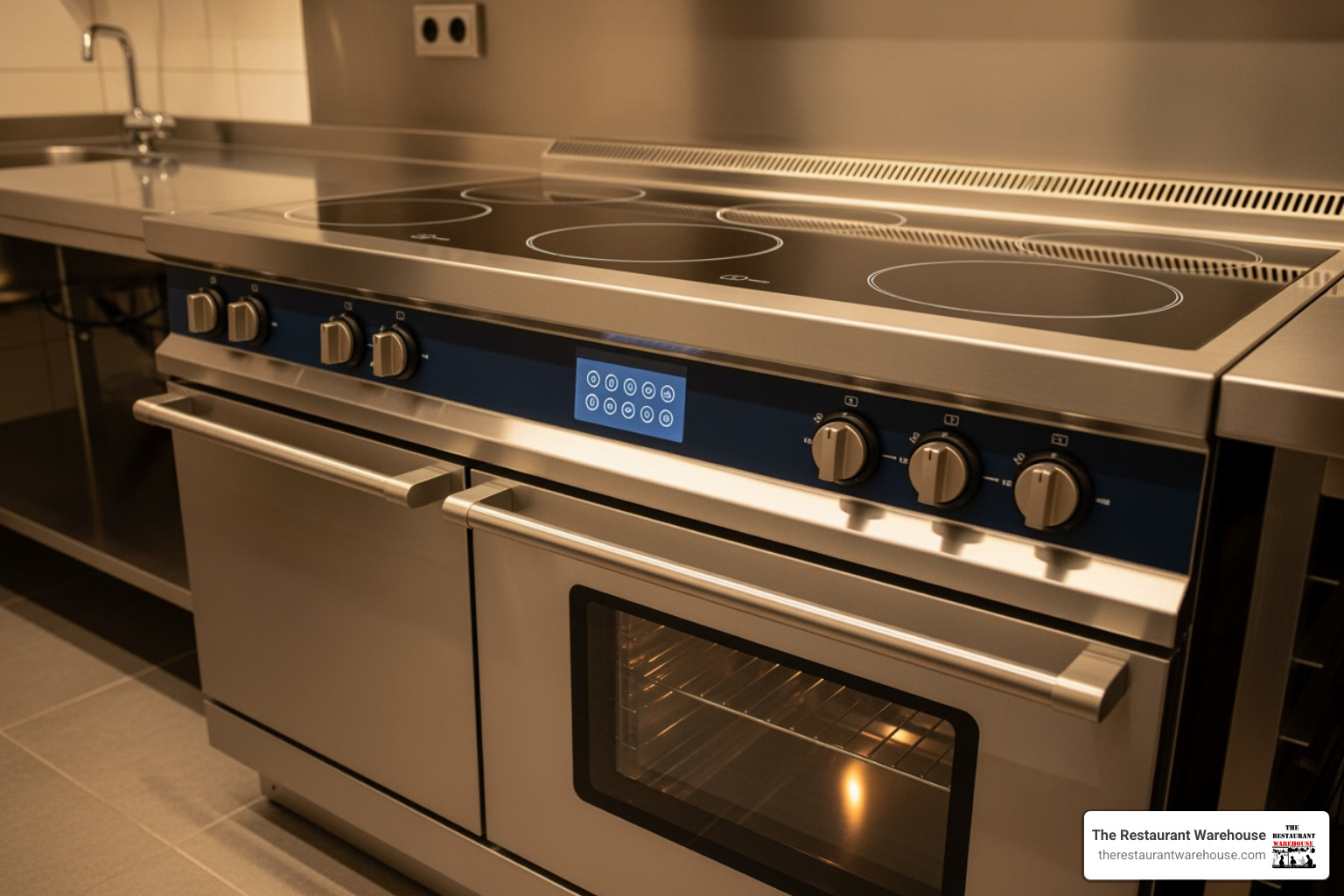
A commercial induction range with oven is a professional cooking unit that combines electromagnetic induction cooktop technology with a built-in convection or standard baking compartment, offering rapid heating, precise temperature control, and superior energy efficiency compared to traditional gas or electric ranges. Here's what you need to know:
Key Benefits:
- Energy Efficiency: 85-90% of energy transfers directly to cookware vs. 40-55% for gas/electric
- Speed: Induction boils water up to 40% faster than conventional methods
- Safety: Cool-to-touch surface with no open flame reduces burn and fire risks
- Precision: Instant heat response from gentle simmer to high-power sear
- Easy Cleaning: Smooth ceramic glass surface wipes clean in seconds
What to Look For:
- Power output (typically 1,400W-3,700W per zone)
- Baking compartment capacity (3.5-6.9 cubic feet)
- Bridge functions for larger cookware
- Forced-air systems for even baking
- Self-cleaning features
- Electrical requirements (40-50 Amp, 208-240V)
If you're launching a new restaurant or upgrading your cooking line on a tight budget, understanding how induction technology works can help you make a smarter appliance investment. Unlike gas ranges that waste heat warming your workspace, or electric coil burners that respond slowly to temperature changes, induction ranges generate a magnetic field that induces heat directly in the pan—resulting in efficient, even heat transfer and astonishing speed.
This technology isn't just faster and more efficient. It fundamentally changes how your operation functions. Spills wipe off easily from the slick ceramic glass surface. The cooktop stays cool enough to touch even when a pot is boiling. And because heat goes straight into your cookware instead of radiating into the room, your workspace stays cooler, your HVAC costs drop, and your staff works more comfortably during long shifts.
For budget-conscious restaurant owners, the math is compelling. While the initial investment for a commercial induction range with oven might seem higher than a basic gas unit, the energy savings, reduced cooling costs, and lower maintenance quickly offset the difference. Independent testing and standards organizations such as the U.S. Department of Energy and resources summarized on Energy Star highlight how high-efficiency electric cooking technologies can cut utility usage over time.
Plus, modern induction ranges come with features once reserved for high-end professional settings—dual convection baking compartments, air fry modes, telescopic racks, and precise power controls—making them accessible to startups and small operations.
I'm Sean Kearney from The Restaurant Warehouse, and I've spent years helping restaurant owners find appliances that deliver real value without hidden markups or unnecessary commissions. Throughout my career working with foodservice businesses of all sizes, I've seen how choosing the right commercial induction range with oven can transform operational efficiency and profitability. Let me walk you through everything you need to know to make the best choice for your operation.
Ready to explore your options? Contact our team today for personalized recommendations tailored to your specific needs and budget.
The Core Advantages: Why Induction Reigns Supreme
When it comes to outfitting a professional cooking space, the choice of cooking appliances is paramount. A commercial induction range with oven offers a suite of benefits that often surpass traditional alternatives, making it a game-changer for efficiency, safety, and precision. We're not just talking about minor improvements; we're talking about a fundamental shift in how a foodservice operation functions.
The primary benefits of using a commercial induction range with oven compared to other professional cooking appliances include:
- Best Energy Efficiency: Induction technology is incredibly efficient, converting a high percentage of energy directly into heat for your cookware. This translates to significant savings on utility bills.
- Superior Speed and Power: Induction delivers instant heat and remarkably fast boiling times, accelerating food preparation and increasing throughput during busy service hours.
- Precise Temperature Control: Chefs gain unparalleled control over cooking temperatures, allowing for delicate simmering, rapid searing, and consistent results every time.
- Improved Workspace Safety: The absence of open flames and a cool-to-the-touch cooking surface drastically reduces the risk of burns and fires, creating a safer environment for your staff.
- Easy Cleaning and Maintenance: The smooth, flat ceramic glass surface of an induction cooktop is a breeze to clean, requiring just a quick wipe-down.
- Cooler Workspace: With minimal heat escaping into the cooking area, the ambient temperature remains lower, leading to increased staff comfort and reduced HVAC costs.
Let's dive deeper into some of these transformative advantages.
Best Energy Efficiency
The efficiency of a commercial induction range with oven is arguably its most compelling economic advantage. Traditional gas and electric ranges waste a considerable amount of energy heating the air around the pan or the cooktop surface itself. In contrast, induction cooking uses electromagnetic fields that induce heat directly within the ferromagnetic cookware.
The result? An astonishing 85-90% of the energy generated is transferred directly to the pan. Compare this to gas ranges, which typically convert only 40-55% of their energy into usable heat, or traditional electric radiant cooktops with similar efficiency. This direct heat transfer means virtually no wasted heat, significantly reducing your energy bills. Pots heat more quickly, often boiling water up to 40% faster than conventional methods. Beyond the immediate savings on cooking fuel, this efficiency also means less heat radiating into your cooking area, which in turn reduces the workload on your HVAC system, leading to even further cost reductions. It's a win-win for your budget and the environment.
Improved Safety and Cleanliness
Safety is paramount in any professional cooking environment, and a commercial induction range with oven excels in this area. Unlike gas ranges that feature an open flame, or electric coil burners that glow red hot, induction cooktops generate heat directly in the pan, leaving the cooktop surface itself relatively cool to the touch. This dramatically reduces the risk of accidental burns to your staff.
The absence of an open flame also translates to a significantly reduced fire risk, a critical consideration in a busy professional environment. Many induction units come with automatic pan detection, meaning the heat only activates when a compatible pan is placed on the zone and switches off once removed. This intelligent feature prevents accidental heating and further improves safety.
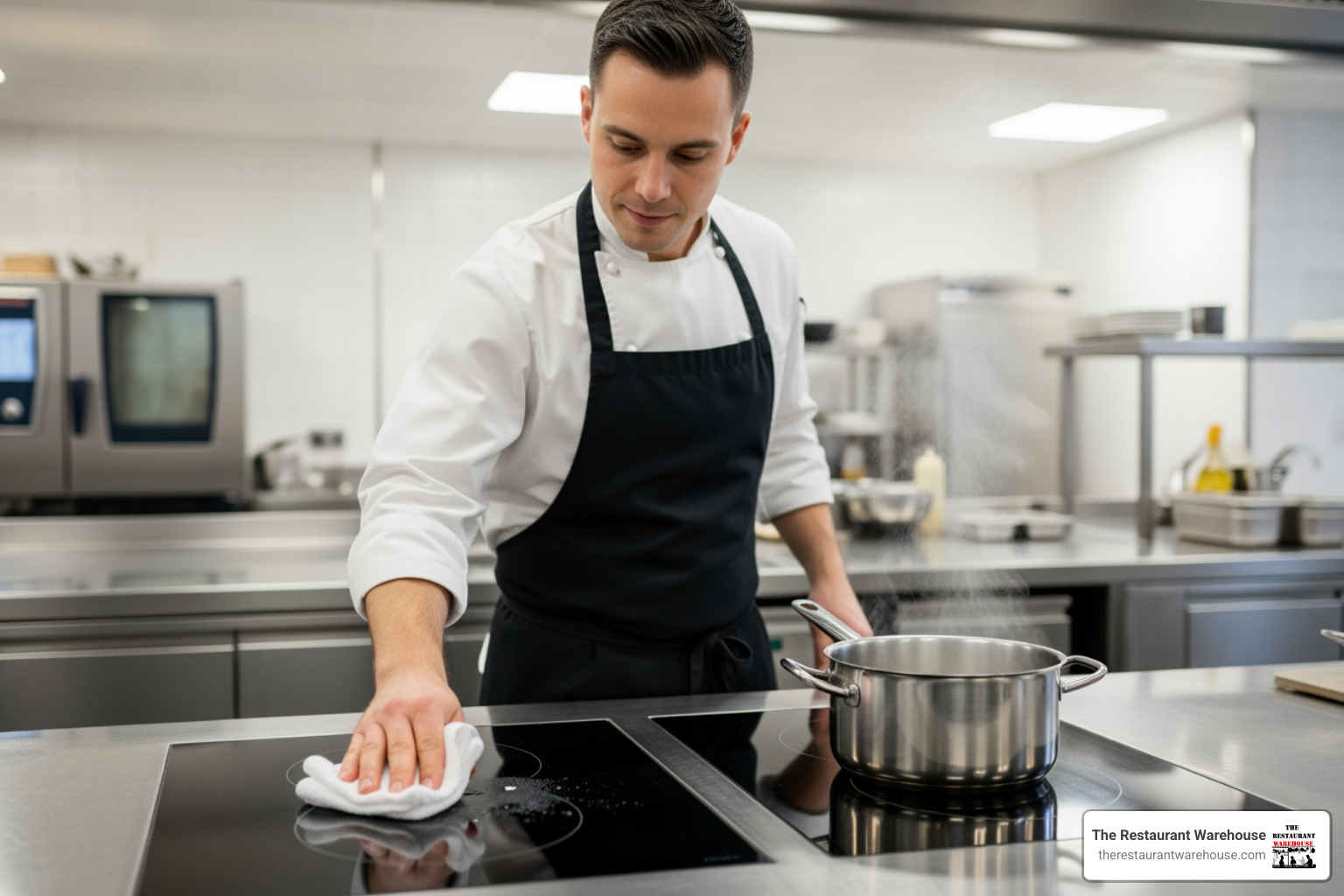
Cleaning is another area where induction shines. The slick, ceramic glass surface is non-porous and completely flat, making spills incredibly easy to wipe away. There are no grates to lift, no crevices for food to get trapped in, and no baked-on residue from spilled food burning onto a hot surface. A quick wipe is often all that's needed, saving valuable time and labor in a busy cooking area. Spill containment features on some models further simplify cleanup by preventing liquids from spreading across the entire surface. This combination of reduced burn risk, lower fire hazard, and effortless cleaning contributes to a safer, more hygienic, and more pleasant workspace for your culinary team.
Key Features to Look For in a Commercial Induction Range with Oven
When considering a commercial induction range with oven, it's crucial to look beyond the basic concept and understand the specific features that will best serve your operation. These appliances come with a range of capabilities that can significantly impact performance, efficiency, and ease of use.
Specific features one should look for in a commercial induction range with oven include:
- Power Output: The wattage of induction burners and the total electrical input for the baking compartment.
- Size and Number of Burners: From compact 30-inch models with four zones to larger 48-inch units with multiple burners and griddles.
- Baking Compartment Capacity and Type: Cubic footage, single or double compartment configurations, and forced-air capabilities.
- Special Functions: Features like bridge zones, power boost, air fry modes, and temperature probes.
- Build Quality: Durable materials like stainless steel and robust construction for professional use.
- Control Interface: Intuitive knobs or touchscreen displays for precise adjustments.
Evaluating the Cooktop on a commercial induction range with oven
The cooktop is the heart of your commercial induction range with oven, and its features dictate much of your cooking flexibility and speed.
- Power Output (Wattage): Look for high wattage per cooking zone, typically ranging from 1400W for smaller zones up to 3700W for powerful boosters. Higher wattage means faster heating and more intense searing, crucial for high-volume cooking. Some models boast powerful 5,500W elements for maximum power on larger zones.
- Number of Cooking Zones: Ranges commonly offer four to six induction cooking zones. Consider your typical volume and the number of dishes you prepare simultaneously.
- Bridge Functions: This is a game-changer for versatility. Many advanced induction cooktops allow two cooking zones to be "bridged" or combined into one larger heating area. This is perfect for accommodating oversized pots, griddle pans, or braising pans, ensuring even heat across the entire surface.
- Power Boost Mode: For those times you need extreme speed, a power boost function temporarily channels extra power to a single zone, boiling water up to 40% faster or rapidly heating cookware for searing. Bubbles can appear within seconds of activation.
- Pan Detection Technology: This safety and efficiency feature ensures that heat is only generated when a compatible pan is correctly placed on the cooking zone. It automatically shuts off if the pan is removed or if an incompatible pan is detected, saving energy and preventing accidental heating.
- Control Types (Knobs vs. Touch): Some chefs prefer the tactile feedback of traditional knobs, often with halo illumination for visual cues. Others appreciate the sleek, easy-to-clean surface and precise digital read-outs of touch controls or ergonomic tilted displays. Many modern units offer a hybrid, with knobs for main control and a convenient read-out interface on the glass worktop.
Understanding the Integrated Baking Compartment in a commercial induction range with oven
The baking and roasting component of a commercial induction range with oven is just as critical as the cooktop, providing versatile cooking options for baking, roasting, and more. Modern integrated baking compartments in these ranges offer advanced features that ensure consistent results and ease of use.
- Forced-Air Systems (True, Dual-Fan): Forced-air systems use a fan to circulate hot air evenly throughout the cavity, reducing hot and cold spots and promoting consistent, multi-rack cooking. Dual-fan forced-air systems, featuring two fans, provide even better airflow and more balanced temperatures, ideal for baking multiple trays of cookies or roasting large items. This ensures dishes on the top shelf turn out just as perfect as food cooking on the bottom shelf.
- Compartment Capacity (Cubic Feet): Compartment capacities can range from 3.5 cu ft in more compact models up to 6.9 cu ft in larger, dual-compartment configurations. Some are lauded as having the "largest in its class," such as a 5.7 cubic feet self-cleaning compartment with a dual-fan forced-air system, offering ample space for professional needs. Consider whether a single large compartment or a dual-cavity unit (e.g., 4.8 cu ft main and 2.1 cu ft secondary) best suits your operation's demands for cooking different dishes at varying temperatures simultaneously.
- Self-Cleaning Functions: A high-temperature self-cleaning function is a major convenience, breaking down food residue into a light ash that's easily wiped away. Some models even feature self-clean proof side racks that don't need to be removed during the cycle.
- Temperature Probes: An integrated digital temperature gauge and food temperature probe allow you to monitor the internal temperature of meats and other dishes precisely, ensuring perfect results every time.
- Telescopic Gliding Racks: Smooth telescopic glides or roll-out extension racks make it easier and safer to maneuver heavy or large bakeware in and out of the hot cooking cavity, even with your hands full.
-
Specialized Cooking Modes: Beyond standard bake and roast, look for modes like:
- Air Fry Mode: A healthier cooking technique that combines maximum ventilation with intense heat to create perfectly crisp food without deep frying, often with a dedicated steel mesh basket.
- Proofing: Ideal for dough.
- Pizza Bake: Optimized for crispy crusts.
- Dehydrate: For making dried fruits or vegetables.
- Keep Warm/Simmer/Melt: Preset induction modes that automatically set the correct temperature for specific tasks.
- Soft-Close Doors: A small but appreciated feature, soft-close doors prevent slamming, adding a touch of quiet refinement to a busy cooking area.
Performance and Cost: A Comparative Analysis
When making a significant investment in cooking appliances, understanding how a commercial induction range with oven stacks up against its gas and electric radiant counterparts is essential. This comparison isn't just about initial price; it's about long-term operational costs, performance, and overall value.
Performance Comparison
| Feature | Commercial Induction Range with Oven | Commercial Gas Range | Commercial Electric Radiant Range |
|---|---|---|---|
| Energy Efficiency | 85-90% (Direct heat to pan) | 40-55% (Heat loss to air) | 50-65% (Heat loss to cooktop/air) |
| Heat-Up Speed | Extremely Fast (Boils water 40% faster) | Fast (Open flame) | Moderate to Slow (Heating element) |
| Temperature Precision | Instant, extremely precise control | Good (Adjustable flame) | Moderate (Slower response time) |
| Workspace Heat Output | Very Low (Cooktop stays cool) | High (Radiant heat, open flame) | Moderate (Radiant heat from cooktop) |
| Safety | High (No open flame, cool surface) | Moderate (Open flame, hot grates) | Moderate (Hot cooktop surface) |
| Cleaning | Very Easy (Smooth glass surface) | Moderate (Grates, spills) | Easy (Smooth glass surface, but can burn spills) |
| Cookware | Ferromagnetic only (Cast iron, magnetic stainless) | Any heat-safe cookware | Any heat-safe cookware |
| Baking Compartment Performance | Often dual forced-air, advanced modes | Forced-air or conventional | Forced-air or conventional |
For operators who want to dive deeper into lab-tested comparisons of energy use for different cooking fuels, the U.S. Environmental Protection Agency provides useful background and efficiency criteria within its commercial foodservice appliance resources.
Energy Cost Savings
The energy efficiency of commercial induction ranges with ovens directly translates into lower operating costs. With 85-90% efficiency, compared to 40-55% for gas, you're getting more bang for your buck from every unit of energy consumed. This can lead to significant savings on your utility bills over the lifespan of the appliance, particularly in regions with higher electricity costs. Moreover, because induction generates less ambient heat, your workspace's air conditioning system won't have to work as hard, further reducing energy consumption and related expenses.
Initial Investment Factors
It's true that the initial purchase price for a high-quality commercial induction range with oven can be higher than a comparable gas or electric radiant model. Prices can vary widely based on size, features, and brand, with typical price ranges stretching from a few thousand dollars to well over $10,000 for top-tier, multi-function units. Factors influencing the cost include:
- Number of induction zones and their power output.
- Baking compartment capacity and type (single vs. double, forced-air vs. conventional).
- Specialized features like air fry modes, bridge functions, and advanced control interfaces.
- Overall build quality and brand reputation.
Because The Restaurant Warehouse focuses on wholesale-style pricing and avoids high retail commissions, you can often access these higher-spec models at a lower upfront cost than traditional dealers. Get a personalized quote to compare specific models and build a realistic total cost of ownership estimate for your operation.
Long-Term ROI
Despite a potentially higher upfront cost, the long-term Return on Investment (ROI) for a commercial induction range with oven is often superior. The combination of reduced energy bills, lower HVAC costs, faster cooking times (leading to increased productivity), and a safer, more comfortable work environment contributes to a healthier bottom line. The durability of these units, often constructed with professional-grade materials, also means less frequent repairs and a longer operational lifespan.
For restaurant owners evaluating the financial impact, government and utility efficiency programs frequently publish rebate and incentive information related to high-efficiency electric appliances. Reviewing those resources alongside your quotes from The Restaurant Warehouse can help you determine payback periods and decide when it makes sense to upgrade.
Ready to calculate your potential savings? Request a consultation and our team will walk you through options that match your menu, budget, and volume.
Installation and Maintenance Essentials
Bringing a commercial induction range with oven into your professional cooking space requires careful consideration of installation requirements and a commitment to proper maintenance. These steps ensure optimal performance, longevity, and compliance with safety standards.

Electrical and Ventilation Requirements
Unlike gas ranges that require a gas line, commercial induction ranges with ovens operate solely on electricity, and they demand a robust electrical supply.
- Amperage and Voltage: Most professional models require a 208V or 240V dedicated circuit. The amperage requirement can range from 40A for smaller units to 50A for larger, more powerful ranges, especially those designed to allow simultaneous use of all burners and the baking compartment.
- NEMA 14-50P Plug or Hardwiring: Many ranges come with a NEMA 14-50P power cord for plug-and-play installation into a compatible outlet. However, some larger professional units may require hardwiring directly into your electrical system.
- Professional Installation: Due to the high power requirements and the need for proper grounding, professional installation by a licensed electrician is highly recommended to ensure safety and compliance with local electrical codes in the USA.
- Ventilation Hoods: While induction cooktops release less ambient heat than gas or electric radiant models, proper ventilation is still essential, especially when the baking component is in use or for heavy-duty cooking. A professional-grade ventilation hood system should be installed above the range to effectively remove steam, smoke, and cooking odors, adhering to local building and health codes in places like Seattle, Washington, and other parts of the USA.
- Proper Placement: Ensure adequate clearance around the range as specified by the manufacturer for safe operation and maintenance.
Need help coordinating installation? Contact The Restaurant Warehouse for guidance on power requirements, hood capacity, and clearances before you finalize your purchase. Our team regularly helps operators across the United States coordinate with local electricians and inspectors.
Care and Compatible Cookware
Maintaining your commercial induction range with oven is surprisingly simple, primarily due to its design.
- Daily Wipe-Down: The smooth ceramic glass surface of the cooktop only needs a quick wipe after use. Spills don't bake on, making cleanup effortless.
- Non-Abrasive Cleaners: Use mild soap and water or specialized ceramic cooktop cleaners to preserve the surface's integrity. Avoid abrasive pads or harsh chemicals that could scratch the glass.
- Self-Clean Cycles: For the integrated baking compartment, use the self-cleaning function regularly. These high-temperature cycles break down food residue, leaving a light ash that's easy to remove with a damp cloth. Check if your model has self-clean proof racks that can remain in the compartment during the cycle.
-
Ferromagnetic Cookware: This is the most crucial aspect of induction cooking. Induction technology works by creating a magnetic field that interacts with iron in the cookware. Therefore, you need pots and pans made of ferromagnetic materials.
- Compatible Materials: Cast iron, magnetic stainless steel, and enamelled steel are all excellent choices.
- Incompatible Materials: Aluminum, copper, glass, and non-magnetic stainless steel will not work unless they have a bonded magnetic base.
- The Magnet Test: The easiest way to check if your existing cookware is compatible is to stick a magnet to the bottom. If the magnet sticks firmly, your pan will work on an induction cooktop.
Investing in high-quality, induction-compatible cookware ensures you get the most out of your new range's efficiency and performance. Browse our selection or speak directly with our team for custom cookware recommendations that pair perfectly with your new induction range.
Frequently Asked Questions
What kind of cookware do I need for an induction range?
You need cookware with a ferromagnetic base, such as cast iron or magnetic stainless steel. A simple way to check is to see if a magnet sticks firmly to the bottom of the pan. If the magnet adheres, the cookware is compatible. Cookware made of aluminum, copper, or glass will not work unless it has a bonded magnetic base of iron or steel. Many modern cookware sets are explicitly marked "Works with Induction," making the selection process easier.
Is an induction range safer than a gas range?
Yes, induction is generally considered safer in a professional cooking environment. There is no open flame, which significantly reduces fire risk and eliminates the danger of gas leaks. Furthermore, the cooktop surface stays much cooler because heat is generated directly in the pan, minimizing the chance of accidental burns to staff members. Many units also feature automatic shut-off when a pan is removed or when the cooktop is left unattended, further enhancing safety protocols and reducing potential hazards.
Can I use all the burners and the baking compartment at the same time?
This depends on the specific model's power management system and your electrical circuit. High-end commercial induction ranges with ovens, especially those designed for demanding professional use, are often engineered to handle simultaneous operation of multiple burners and the baking compartment. These models typically require a robust electrical connection, often a 50 Amp dedicated circuit, and feature smart power routing software to distribute power efficiently. It's crucial to verify the unit's specifications and ensure your electrical setup can support the maximum load to avoid tripping breakers or damaging the appliance. Always consult the manufacturer's guidelines and a licensed electrician during installation.
Conclusion
The commercial induction range with oven represents a significant leap forward for professional cooking operations, offering a compelling blend of efficiency, control, and safety that traditional cooking appliances struggle to match. We've seen how this technology translates into tangible benefits: from remarkable energy savings and a cooler, more comfortable work environment to incredibly precise temperature control and effortless cleanup. The integrated baking compartment, often equipped with advanced forced-air systems and specialized cooking modes like air fry, further improves versatility, making it a powerhouse for any culinary operation.
While the initial investment may be higher, the long-term ROI is clear through reduced utility bills, increased productivity, and improved safety for your staff. For modern professional cooking operations in the USA, from busy restaurants in Seattle to expanding catering businesses, choosing a commercial induction range with oven is not just an upgrade; it's a strategic investment in efficiency, sustainability, and culinary excellence.
Take the next step toward transforming your operation's efficiency. Explore our selection of cooking solutions today to compare models and pricing without the high retail markups that come with traditional dealers.
When you are ready to move forward—or if you just want a second opinion on specs, power requirements, and model choices—contact us to discuss your project. Our team can help you choose the right commercial induction range with oven so you can open up new levels of efficiency and profitability in your professional cooking space.
About The Author

Sean Kearney
Sean Kearney is the Founder of The Restaurant Warehouse, with 15 years of experience in the restaurant equipment industry and more than 30 years in ecommerce, beginning with Amazon.com. As an equipment distributor and supplier, Sean helps restaurant owners make confident purchasing decisions through clear pricing, practical guidance, and a more transparent online buying experience.
Connect with Sean on LinkedIn, Instagram, YouTube, or Facebook.