

What to Look For in a Commercial Fruit Slicer
Don't let the name fool you. A commercial fruit slicer is a true kitchen workhorse that handles much more than just apples and oranges. From firm cheeses and dense root vegetables to onions and bell peppers, this versatile machine can process a huge variety of ingredients. With interchangeable blades, you can create perfect slices, dices, julienne strips, and wedges with one piece of equipment. This saves valuable counter space and reduces the need for multiple specialized tools. In this post, we’ll cover the full range of what these machines can do and help you find one that meets all your kitchen’s needs.
Tired of Tedious Produce Prep?
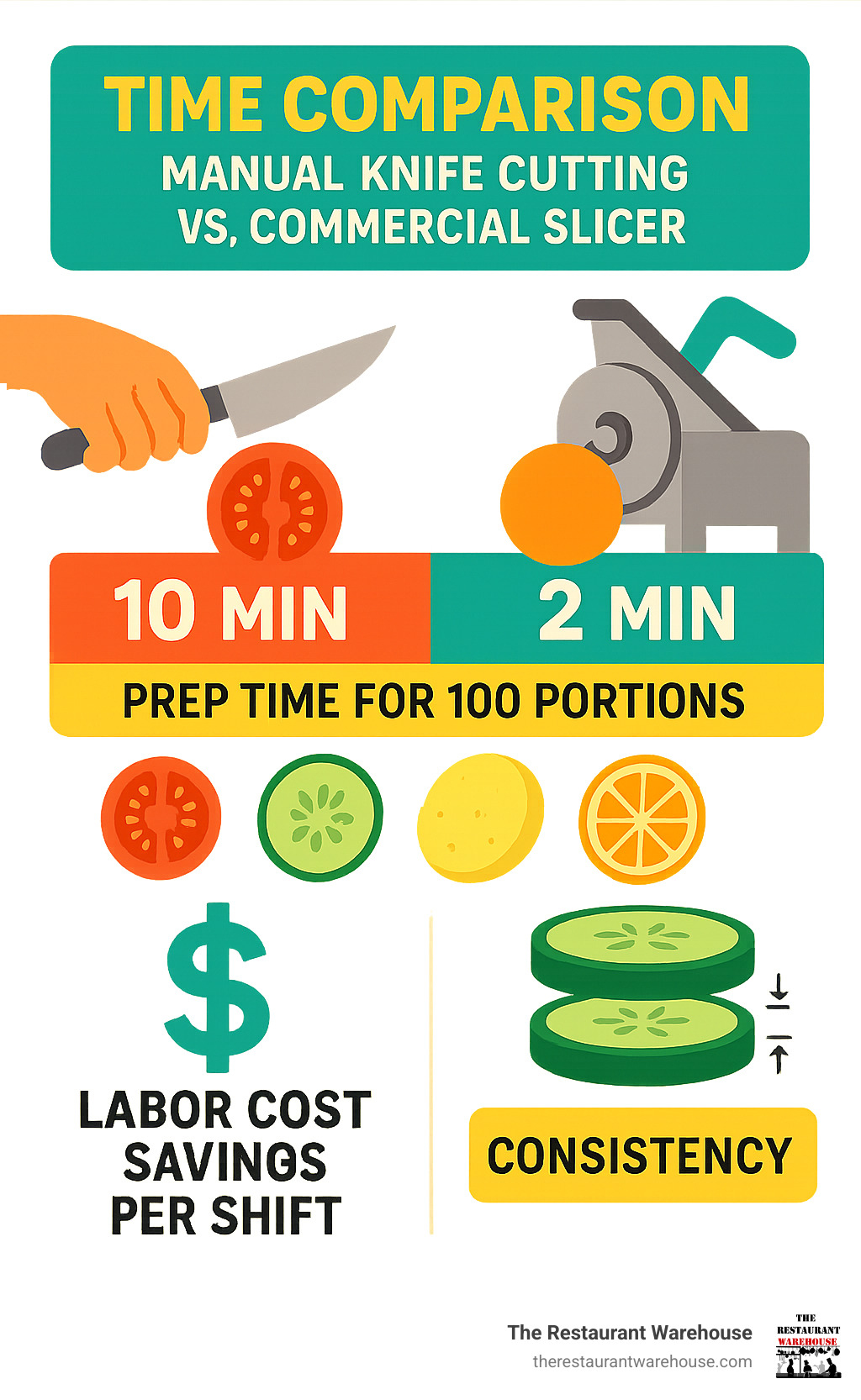
A commercial fruit slicer machine transforms tedious kitchen prep into efficient, consistent production. For any busy restaurant, juice bar, or catering operation, these machines deliver uniform cuts while slashing labor costs and prep time.
Key Benefits of Commercial Fruit Slicers:
- Speed: Process hundreds of slices per minute vs. manual cutting
- Consistency: Perfect uniform cuts every time for better presentation
- Labor Savings: One machine does the work of multiple prep cooks
- Versatility: Handle fruits, vegetables, and firm cheeses with interchangeable blades
- Safety: Keep hands away from sharp blades with proper feed systems
The numbers tell the story. Industrial slicers can produce up to 120 strokes per minute per lane, with high-capacity models processing 2,000-3,500 kg per hour. Even manual models are highly efficient—one handle rotation equals 12 cuts, far outpacing knife work.
From soft tomatoes to firm potatoes, modern commercial slicers handle it all. You can create thin slices, thick wedges, julienne strips, or precise dices with simple blade changes. The result is faster prep times, lower labor costs, and picture-perfect consistency that lifts your food presentation.
One restaurant owner shared their experience: "This slicer saved us hundreds of hours on cutting veggies. The adjustable blade is a must have." It's not uncommon for these machines to deliver long-term value, with some operators reporting their units lasting almost 20 years with proper care.
Commercial fruit slicer machine terms made easy:
- heavy duty kitchen equipment
- commercial kitchen stainless steel tables
- restaurant equipment wholesale
Why Your Kitchen Needs a Commercial Fruit Slicer
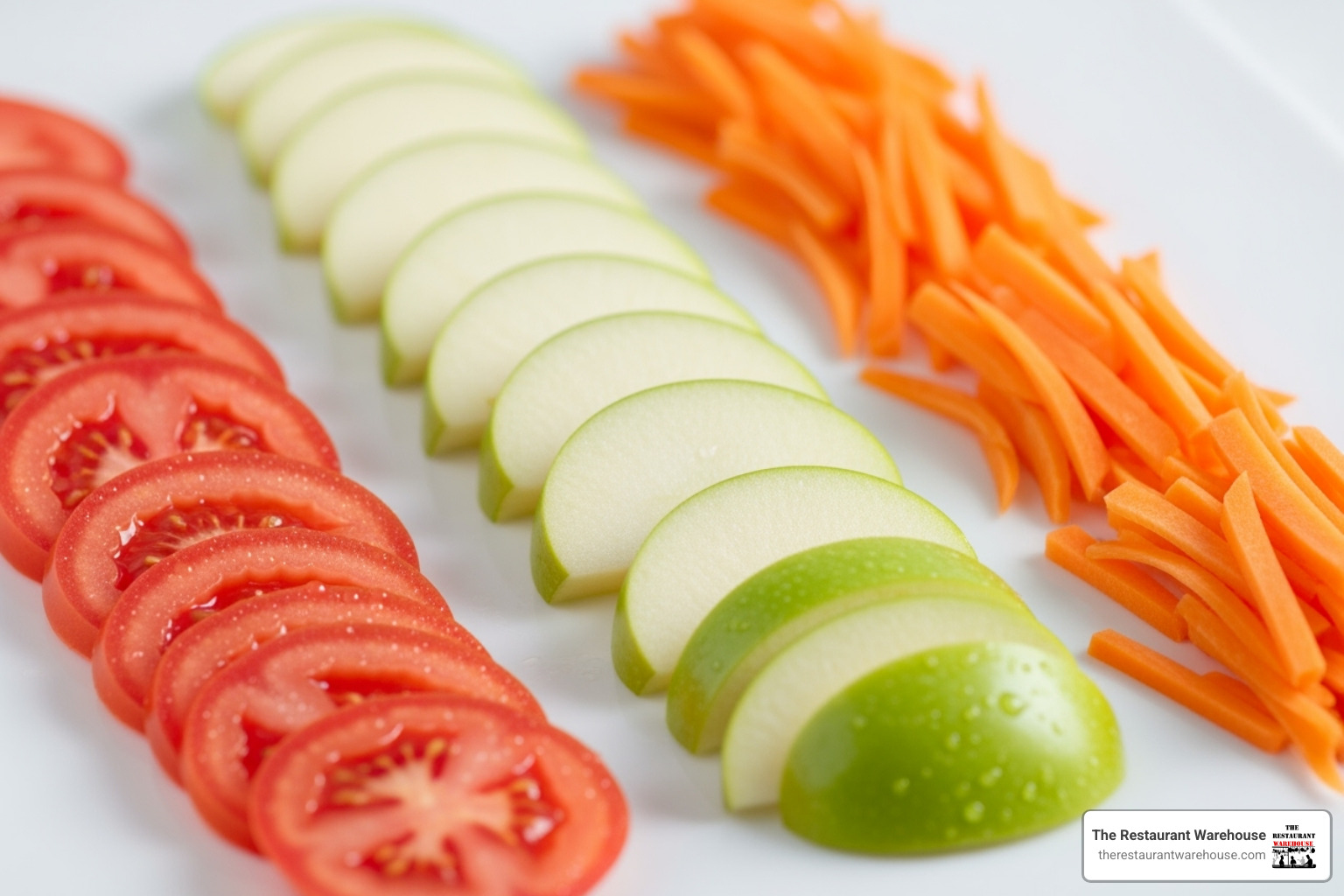
Slicing vegetables for hours is a major drain on any restaurant. A commercial fruit slicer machine changes this equation, turning a prep headache into a secret weapon. The change is immediate. These machines deliver increased efficiency, freeing up your team for more important tasks. You'll see drastically reduced labor costs and achieve product consistency that lifts every dish.
Crucially for your bottom line, improved food safety comes standard. Less handling reduces contamination risks, and the speed and output of processing hundreds of slices per minute keeps pace with the busiest rushes. The versatility to handle everything from delicate tomatoes to sturdy potatoes means better yield and less waste. You'll also see reduced worker fatigue and injury risk, as slicers eliminate the strain of repetitive knife work.
Save Time and Reduce Labor Costs
Imagine turning a week's worth of manual vegetable prep into a job that takes minutes. That's the power of a commercial fruit slicer machine. The labor savings are game-changing, allowing you to reallocate staff to skilled tasks like sauce prep or plating. The ROI calculation is compelling, as one employee's output gets multiplied dramatically.
Consider this: one rotation equals 12 cuts on many manual models, while electric models produce hundreds of slices per minute. This pace is impossible to match with a knife. These time savings create a ripple effect: faster prep leads to smoother service and happier customers and staff, touching every part of your business.
Get Consistent, Perfect Cuts Every Time
The professional look of a dish often comes down to consistency, and that's where commercial slicers shine. Uniform slice thickness and consistent wedges and dices lead to predictable cooking times, better flavor control, and effortless portion control. When every tomato slice is identical, your sandwiches look professional.
This improved food presentation builds customer confidence and loyalty. For multi-location businesses, brand standardization becomes possible, ensuring your signature salad looks the same everywhere. This is the kind of reliability that builds empires. Plus, consistent cuts eliminate guesswork from cooking, so your kitchen runs smoother, your food tastes better, and your stress levels drop.
What Can a Commercial Slicer Do for You?
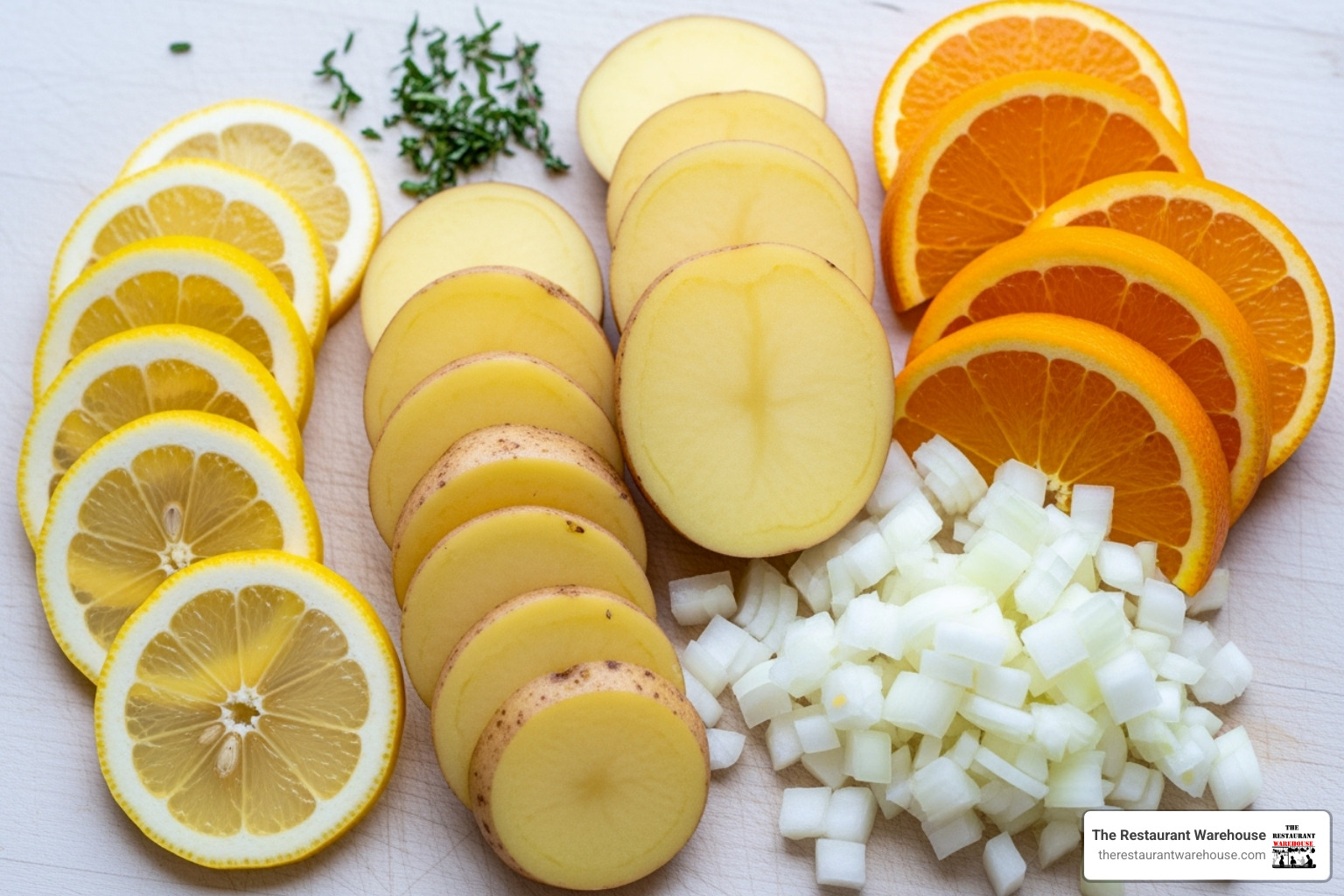
One of the key appeals of a commercial fruit slicer machine is its incredible versatility. These workhorses handle a wide range of produce and create numerous cuts, making them indispensable in any commercial kitchen. From delicate tomatoes to firm potatoes, a good slicer tackles it all. Understanding blade edges is crucial for maximizing potential; for more on this, explore our guide on understanding different blade edges.
Slice More Than Just Fruit
A commercial fruit slicer machine can process a diverse range of produce, making it a true kitchen multi-tasker. The key is to use firm produce with pits removed to protect the blades. This versatility ensures your machine is ready for any task, from fruit platters to bulk processing.
Here's a comprehensive list of items that can be efficiently processed:
- Fruits: Apples, oranges, lemons, limes, strawberries, bananas, pineapples, kiwi fruit, mangoes, and even more delicate options like bitter gourd. For citrus specifically, sectionizers are excellent.
- Vegetables: Potatoes, sweet potatoes, cassava, taro, yam, radish, carrots, cucumbers, bell peppers (green, red), lettuce, red cabbage, tomatoes, zucchinis, onions, lotus root, eggplant, and even tougher items like Kudzu root and Burdock.
- Others: Firm cheeses (like cheddar or mozzarella) and even cooked meats can be sliced with the right blade configuration. Hard-boiled eggs are also easily processed into consistent slices or wedges.
Master Different Cuts: Slices, Dices, and Wedges
A single commercial fruit slicer machine can be configured for a variety of cuts, making it a flexible tool for diverse menus. The ability to switch cutting styles with interchangeable blade assemblies or adjustable settings is a major advantage.
Here are the primary types of cuts you can achieve:
- Slices: The most common cut, with adjustable thickness from a paper-thin 1 mm up to a substantial 20 mm for precision with any ingredient.
- Wedges: Perfect for citrus, apples, or tomatoes, these machines create precise wedges, commonly in configurations of 4, 6, 8, or 10 sections.
- Dicing: Some machines offer dicing attachments for uniform cubes, ideal for salads, salsas, or prepared vegetable mixes.
- Julienne Strips: Thin, matchstick-like cuts, perfect for stir-fries, salads, or garnishes.
- Shredding: For items like cabbage or cheese, shredding attachments are available.
- Coring: Essential for fruits like apples and pineapples, coring blades remove the core while slicing or wedging.
- French Fry Cuts: Specific attachments can create the classic French fry shape from potatoes.
This range of cuts ensures your commercial fruit slicer machine can adapt to any recipe, enhancing both efficiency and aesthetics.
Is a Commercial Slicer Right for Your Business?
The benefits of a commercial fruit slicer machine apply across the foodservice sector. Any business processing significant amounts of fresh produce stands to gain from this equipment.
Here are the typical users and industries that benefit most:
- Restaurants: For consistent garnishes and bulk prep for daily specials.
- Juice and Smoothie Bars: Rapidly processing fruits for beverages.
- Catering Companies: Handling large volumes of produce for events with speed.
- Hotels: Preparing ingredients for multiple dining outlets and banquets.
- Salad Bars: Ensuring a constant supply of freshly sliced ingredients.
- Food Processing Operations: For large-scale production of pre-cut packaged goods.
- Supermarket Delis: Preparing produce for salad bars and fruit platters.
- Pizzerias: Slicing large quantities of toppings like onions and peppers.
- Sandwich Shops: Ensuring consistent slices of tomatoes and onions.
- Centralized Kitchens: For high-volume, standardized production for schools or hospitals.
If your business relies on fresh produce and consistency, a commercial fruit slicer machine is an indispensable asset.
How to Choose the Right Commercial Fruit Slicer
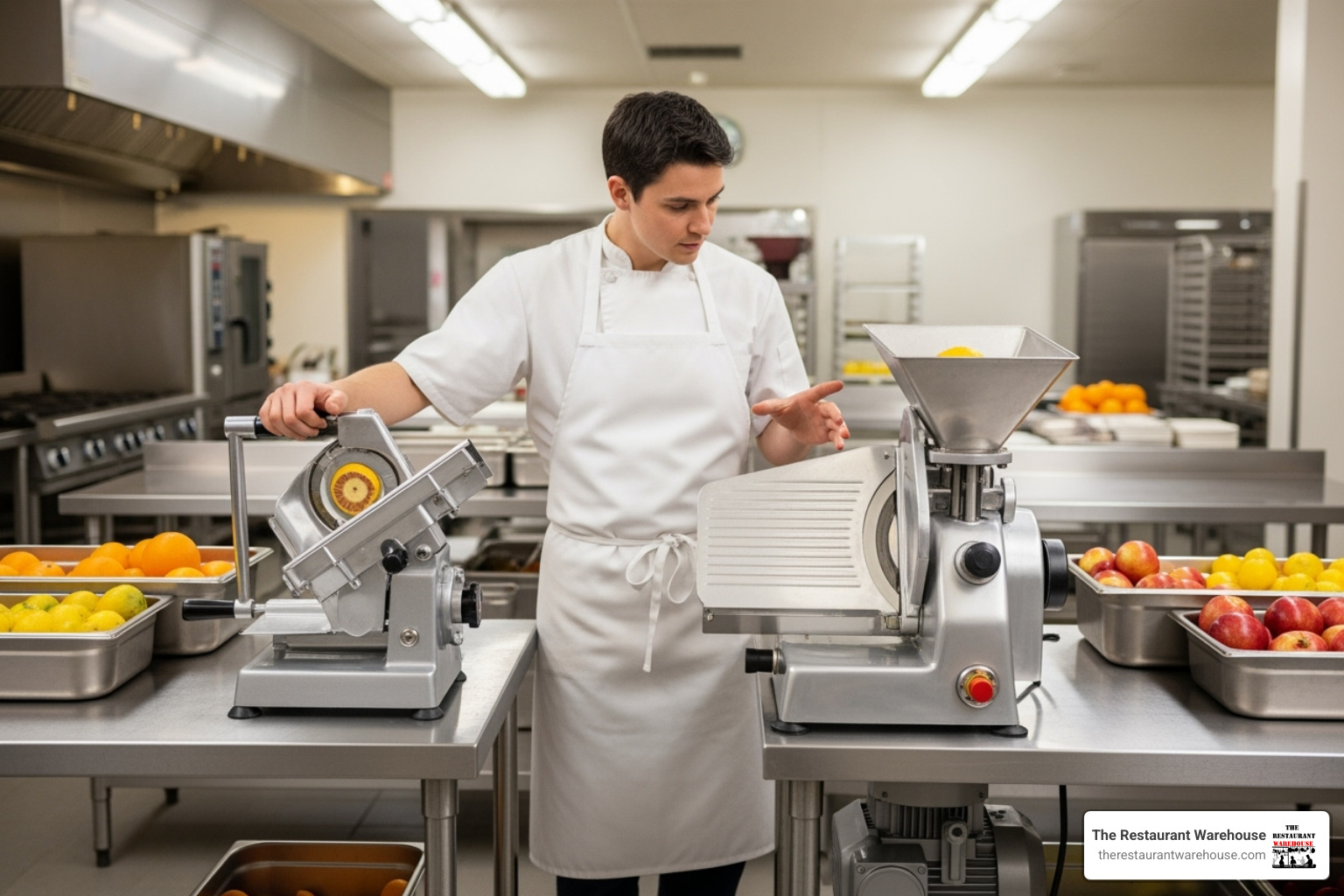
Choosing the right commercial fruit slicer machine isn't overwhelming. The key is matching the machine to your business needs, focusing on reliability and efficiency over flashy, unused features. At The Restaurant Warehouse, our wholesale pricing provides professional-grade equipment without the retail markup. We know the perfect slicer is one that fits your specific volume, space, and budget.
The most important factors are manual versus electric operation, capacity needs, and construction quality. Get these right, and your machine will serve you for years. For more planning insights, our Restaurant Appliances Equipment Guide offers valuable context.
Manual or Electric: Which Slicer Is for You?
The choice between manual and electric power depends on your volume and workflow. Manual slicers offer lower upfront costs, portability, and simple operation. They are remarkably durable and excel at targeted tasks like creating citrus wedges or handling moderate prep volumes. They are ideal for cafes, small sandwich shops, and bars needing consistency without massive volume, and also serve as excellent backup units. The trade-off is more physical effort and potentially less precision than electric models over high volumes.
Electric slicers are high-volume workhorses, delivering superior speed and consistency with minimal physical effort. Capacities range from 300-600 kg per hour for standard models to 2,000-3,500 kg per hour for industrial units, easily handling peak rushes. These models are perfect for busy restaurants, catering operations, and institutional kitchens. The higher initial investment pays off quickly in labor savings and throughput. For more comparisons, see our Best Food Slicer guide. When evaluating electric models, consider the motor's drive system. Belt-driven slicers are common in light- to medium-duty machines. They operate more quietly, but the belt is a wear-and-tear item that will eventually need replacement. Gear-driven slicers, typically found in heavy-duty models, offer more torque and durability for slicing dense products like cheese or root vegetables. They are built for high-volume, continuous use but can be louder and carry a higher price tag.
Finding the Right Size and Capacity
Proper capacity planning for your commercial fruit slicer machine is crucial. Assess your peak demand and plan for reasonable growth to find the sweet spot.
- Low-capacity slicers (up to 60 kg/hr) are perfect for smaller operations with moderate volumes. These compact units fit on prep tables and meet daily needs without breaking the budget.
- Medium-capacity machines (300-600 kg/hr) are the sweet spot for most restaurants and caterers. They handle busy rushes and event prep, offering professional performance at a manageable size and cost.
- High-capacity industrial slicers (over 2,000 kg/hr) are built for food processing plants and large centralized kitchens, with some reaching 8,000 kg/hr. They require significant space and dedicated electrical setups.
Beyond raw capacity, consider your physical space constraints. Countertop models integrate into existing workflows easily, while floor models offer greater capacity but need dedicated space. To accurately estimate your capacity needs, analyze your menu and peak production hours. Calculate the total weight of produce you slice during your busiest period. For instance, if your lunch rush involves making 100 sandwiches, each with 50g of tomato and 50g of onion, you need to process 10 kg of produce quickly. While a low-capacity machine rated for 60 kg/hr seems adequate on paper, a medium-capacity model (300-600 kg/hr) provides a crucial buffer, prevents the motor from being overworked, and accommodates future menu growth or catering orders. Plan your layout for efficiency, not bottlenecks. Our Restaurant Prep Table Guide helps you plan effective workspaces.
Key Features and Specs to Look For
Technical specifications are a roadmap to finding reliable equipment. Focus on the specs that impact your daily operations.
- Power requirements: Ranging from 0.75 kW to 3 HP or more, higher power handles tougher produce and heavy loads.
- Voltage and electrical phase: Must match your facility's supply (110V/60Hz, 220V/50Hz, or 3-phase power). Verify your capacity before buying to avoid installation issues.
- Construction materials: Look for food-grade stainless steel for blades and contact surfaces, with cast aluminum for structural components to ensure durability and food safety.
-
Blade quality and versatility: The best machines feature interchangeable blade assemblies and adjustable thickness settings with high-quality stainless steel blades for consistent results. Diving deeper into blade specifics can further refine your choice:
- Blade Edge: The standard blade is a smooth, fine-edged blade, perfect for getting clean cuts on vegetables and cooked meats. A serrated blade is better suited for slicing crusty bread or produce with tough skins and soft interiors, as it saws through the exterior without crushing the inside.
- Blade Size: Blade diameter, measured in inches, often corresponds to the slicer's duty level. Smaller slicers might have a 9- or 10-inch blade, while heavy-duty models feature 12- or 13-inch blades that can handle larger products.
- Feed Chute/Carriage Size: The size of the product tray or feed chute determines the maximum size of the food you can slice. A larger carriage reduces the need to pre-cut large items like roasts or heads of cabbage, saving valuable prep time.
- Safety features: Non-negotiable features include blade guards, interlock switches, and emergency stop buttons. NSF certification is also essential, confirming the machine meets public health standards. Our NSF Rated Equipment guide explains why this matters.
By focusing on these key specifications, you'll invest in a commercial fruit slicer machine that improves your kitchen's efficiency for years to come.
Understanding Blade Types and Materials
The blade is the heart of your slicer, and its design directly impacts the quality of your cuts. High-quality stainless steel is the industry standard for good reason—it holds a sharp edge, resists corrosion, and is simple to sanitize. When choosing a blade, the main difference you'll find is the edge. A standard smooth, fine-edged blade is your go-to for delivering clean, precise cuts on everything from firm vegetables to cooked meats. For ingredients with a tough exterior and soft interior, like a ripe tomato or crusty bread, a serrated blade is the better choice. It uses a sawing motion to slice through the skin without crushing the delicate inside. Understanding which blade to use is a key part of mastering your kitchen tools and getting professional results.
The Advantage of Disposable Blades
Keeping slicer blades perfectly sharp is a constant maintenance task that costs time and requires specialized skill. Disposable blades offer a modern, efficient alternative. These single-use blades, like the AccuBand® blades from Grote Company, are engineered to be exceptionally sharp and durable for their entire lifespan. Instead of sending a dull blade out for sharpening, you simply discard it and install a fresh one. This system eliminates downtime, removes the safety risks tied to manual sharpening, and guarantees a perfectly consistent cut every time. For any high-volume kitchen, this convenience ensures your slicer always performs at its peak without adding another maintenance chore to your list.
Exploring Different Slicer Types
Beyond the manual versus electric debate, commercial slicers come in various forms designed for specific kitchen tasks. While a general-purpose electric slicer is a versatile workhorse, some operations benefit from more specialized tools. Mandolines offer unmatched precision for delicate work, while high-volume slicers are built for industrial-scale production. Understanding these categories helps you build a prep station that is perfectly equipped for your menu, ensuring you have the right tool for every job, from crafting elegant garnishes to processing hundreds of pounds of produce for a large-scale catering event.
Mandoline Slicers: For Precision and Finesse
For tasks requiring exceptional precision, a mandoline slicer is an invaluable tool. While not designed for high-volume bulk prep, they excel at creating consistently thin and even slices that are difficult to achieve with a knife. According to Food & Wine, mandolines are great for making paper-thin cuts for things like potato chips, delicate vegetable carpaccio, or uniform garnishes. In a commercial kitchen, a high-quality mandoline provides finesse for specific dishes where presentation is paramount. It’s the perfect companion to a larger electric slicer, handling the detailed work while the workhorse tackles the bulk prep, giving your chefs the control they need for picture-perfect plating.
Specialized Slicers for High-Volume Ingredients
When your operation moves beyond standard restaurant volumes, you enter the realm of specialized, high-capacity slicers. These machines are engineered for food processing plants, large central kitchens, and commissaries that prepare ingredients for multiple locations. Manufacturers like the Grote Company design equipment to process thousands of pounds of produce per hour, focusing on maximizing yield and reducing waste on an industrial scale. These slicers often feature conveyor belts and automated feed systems to handle continuous production, helping to streamline operations and manage labor challenges effectively. They represent a significant investment but are essential for businesses where speed and massive throughput are critical.
Top Brands to Consider
When you start shopping for a commercial slicer, you'll encounter a wide range of brands, each with its own strengths. Some are known for their heavy-duty, all-purpose machines, while others specialize in precision tools like mandolines. The key is to find a brand that aligns with your kitchen's specific needs for volume, durability, and budget. At The Restaurant Warehouse, we focus on providing equipment that delivers exceptional value, ensuring you get the performance and reliability you need without overspending. We carefully select brands that have a proven track record in demanding commercial environments.
General-Purpose Commercial Slicers
For most restaurants, a reliable general-purpose slicer is the cornerstone of the prep line. Many suppliers offer a wide array of slicers, dicers, and wedgers to fit different needs. Instead of overwhelming you with endless options, we focus on providing durable, efficient machines that offer the best return on your investment. Our selection of restaurant equipment is curated to meet the real-world demands of busy kitchens. We believe in quality and affordability, so you can equip your team with the tools they need to succeed without compromising your budget. We prioritize slicers made from high-quality materials that are easy to clean and maintain for long-term performance.
High-Quality Mandoline Slicers
Not all mandoline slicers are created equal, especially when it comes to the rigors of a commercial kitchen. While a basic model might suffice for home use, a professional setting demands durability and safety. The best commercial-grade mandolines are sharp, safe, and easy to use, featuring sturdy stainless steel construction, non-slip feet, and comprehensive hand guards. Investing in a quality mandoline ensures it can withstand daily use while providing the consistent, precise cuts your menu requires. Look for models with adjustable thickness settings and interchangeable blades for julienne or crinkle cuts to maximize its versatility in your kitchen.
Smart Shopping and Ownership Tips
Making a smart investment in a commercial slicer goes beyond just picking a model. It involves thinking about how the machine will fit into your workflow, its long-term maintenance needs, and ensuring it’s the right fit before you buy. A little extra research upfront can save you significant time and money down the road. Considering factors like user-friendly features, parts availability, and financing options will help you choose a machine that serves your business well for years to come. This approach ensures your new equipment is an asset, not a liability.
Look for Practical, User-Friendly Features
When selecting a slicer, prioritize practical features that enhance safety and ease of use for your kitchen staff. Safety is non-negotiable; look for robust blade guards, safety switches that prevent operation if components are misaligned, and a stable, non-slip base. Ease of cleaning is another critical factor. A machine that is difficult to disassemble and clean can become a food safety hazard. Look for models with smooth, seamless construction and removable parts that are dishwasher-safe. These user-friendly features not only protect your staff but also streamline your daily operations and sanitation procedures, making for a more efficient and safer kitchen.
Check the Availability of Parts and Accessories
A commercial slicer is a long-term investment, and its value depends on your ability to maintain it. Before purchasing, confirm that replacement parts and accessories are readily available. Blades will eventually dull and need sharpening or replacing, and belts on belt-driven models will wear out over time. Being able to easily source these components is crucial for minimizing downtime. Reputable suppliers can provide information on parts availability and help you order what you need to keep your equipment in top condition. This foresight ensures your slicer remains a productive part of your kitchen for its entire lifespan.
Ask About Testing Equipment Before You Buy
For a significant equipment purchase like a high-capacity slicer, it’s wise to see it in action with your specific products if possible. Some manufacturers invite potential buyers to test equipment at their facilities to ensure it meets their needs. While this isn't always feasible, you should always ask your supplier detailed questions about the machine's performance with the types of produce you use most. For larger investments, exploring your payment options is also a smart move. Programs like restaurant equipment financing can make it easier to acquire the ideal machine for your business without a prohibitive upfront cost, allowing you to get the right tool for the job now.
Safety First: Operating Your Slicer Correctly
A commercial fruit slicer is a powerhouse of efficiency, but its speed and sharp blades demand respect. Integrating one into your kitchen workflow means making safety a top priority from day one. While modern machines are designed with safety in mind, the most important safety feature is always a well-trained operator who understands the equipment. Proper procedure isn't about slowing down; it's about working smart to prevent accidents and keep your kitchen running smoothly. This means combining the right personal protective gear with a solid understanding of the slicer's built-in safety mechanisms. Following these fundamental practices ensures you get all the benefits of speed and consistency without compromising the well-being of your team.
Essential Safety Gear and Practices
Your approach to using the slicer is the first line of defense against injury. It starts with basic but non-negotiable habits that protect your hands and ensure you have full control during operation. The two most critical practices involve wearing the right gear and properly maintaining the blade. These steps are simple, but they make a world of difference in preventing the most common types of accidents. Think of it as the same level of essential prep as washing your hands or cleaning your station—it's a foundational part of the job that sets you up for a safe and productive shift.
Why Cut-Resistant Gloves Are a Must-Have
Even with a food pusher or hand guard, your hands can get dangerously close to the blade. That's why cut-resistant gloves are an absolute must-have. They provide a crucial layer of protection that can prevent a severe injury if a slip-up occurs. When operating the slicer, always use the food guard to push produce through, keeping your hand flat and well away from the blade's path. The gloves are your backup plan. Remember not to apply excessive force; a properly sharpened blade will do most of the work for you, reducing the risk of the food item slipping unexpectedly.
A Sharp Blade is a Safe Blade
It might sound counterintuitive, but a razor-sharp blade is significantly safer than a dull one. A sharp blade slices through produce with minimal effort, allowing you to maintain smooth, controlled movements. When a blade is dull, you have to push much harder to get it to cut. This extra force increases the likelihood of the product slipping or your hand losing its grip, which can lead to a serious accident. Make blade inspection and sharpening a regular part of your kitchen's maintenance routine. Taking your time and letting the sharp blade do its job is the key to both safety and perfect, uniform cuts.
Built-in Safety Features to Look For
When you shop restaurant equipment, you're investing in tools designed for a professional environment, and that includes built-in safety features. A well-designed commercial slicer will have several mechanisms to protect the operator. These can include blade guards that shield the cutting edge when not in use, interlock switches that prevent the machine from running if components are not properly assembled, and clearly marked emergency stop buttons. Familiarizing yourself and your staff with these features is just as important as knowing how to turn the machine on. They are engineered to prevent accidents before they happen.
The Importance of Non-Slip Feet
One of the most fundamental safety features of any countertop machine is stability. A slicer that vibrates, shakes, or slides during operation is a major hazard. Look for models equipped with non-slip feet, often made of rubber or featuring suction cups that grip the work surface. This simple feature ensures the entire unit remains securely in place, even when processing tougher vegetables or operating at high speeds. A stable machine allows you to work with confidence, knowing that your movements won't cause the slicer to shift unexpectedly. It’s a small detail that provides a critical foundation for safe operation.
Keeping Your Slicer in Top Condition
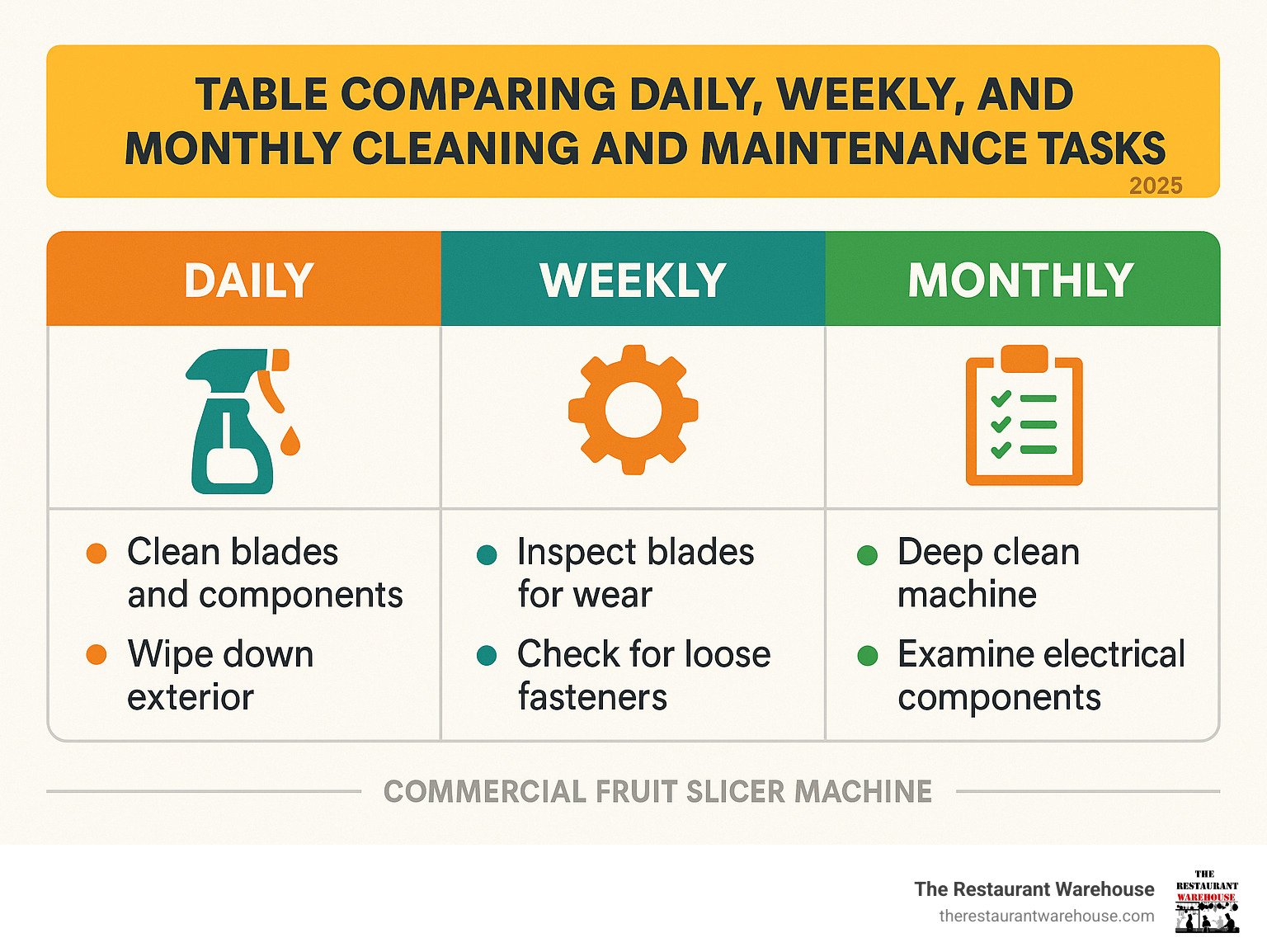
Proper care of your commercial fruit slicer machine is essential for longevity, food safety, and quality. A consistent maintenance routine is a small investment that pays huge dividends. Modern slicers are designed for easy cleaning, with easy disassembly and dishwasher-safe components. The key is establishing a simple routine for your staff.
Daily cleaning is a must. Always start by unplugging the machine for safety. Carefully disassemble all removable parts like blades, plungers, and chutes. Wash these components with warm, soapy water and a food-safe detergent, paying close attention to crevices where food particles can hide.
After washing, sanitize all food-contact surfaces with an approved solution to meet hygiene standards. Air dry all parts completely before reassembly to prevent bacteria growth. Finally, wipe down the main unit's exterior with a damp, sanitized cloth, avoiding electrical components.
Weekly maintenance involves a deeper inspection. Blade care is critical; inspect blades for nicks or dullness. While some can be sharpened, many are designed for replacement to ensure optimal performance and hygiene. Lubricate moving parts with food-grade lubricant to keep the machine running smoothly. For electric models, check the v-belt for wear.
On a monthly or quarterly basis, perform a full inspection of all components, including the motor, cords, and safety features. Tighten any loose fasteners and consider professional maintenance for complex models. This proactive approach prevents small issues from becoming major problems.
Blade Care and Cleaning Best Practices
Your slicer's blade is its most critical component, and treating it right is the key to consistent performance and kitchen safety. A dull or dirty blade doesn't just produce sloppy cuts; it's a hazard that can lead to accidents and food contamination. Establishing a simple, daily routine for blade care and cleaning protects your investment, ensures your food looks professional, and keeps your team safe. Think of it less as a chore and more as a core part of your prep process. These next steps will walk you through exactly how to keep your slicer's blade in perfect working order.
How to Keep Your Blades Sharp
A sharp blade is a safe blade. It glides through produce with minimal effort, giving you clean, uniform slices while reducing the risk of slipping. Make it a habit to inspect your blade daily for any nicks, dings, or signs of dullness. While some heavy-duty slicer blades can be professionally sharpened, many modern machines use blades designed for replacement. This approach guarantees you always have a perfectly honed, hygienic edge, which is crucial for performance. Always consult your slicer’s manual for specific guidance on sharpening or replacing the blade. If it's time for an upgrade or a replacement, you can shop restaurant equipment that features easily replaceable parts.
Safe and Effective Cleaning Techniques
Proper daily cleaning is non-negotiable for food safety. Start by unplugging the slicer—this is the most important step. Wearing cut-resistant gloves, carefully disassemble all removable parts, including the blade, food chute, and plunger. Wash these components thoroughly in a three-compartment sink with warm, soapy water, using a brush to clean any hard-to-reach areas where food particles can get trapped. After rinsing, immerse the parts in a food-safe sanitizing solution according to its instructions. Finally, allow everything to air dry completely on a clean surface before reassembling the machine. This simple process prevents bacteria growth and ensures your slicer is always ready for service.
How to Fix Common Slicer Problems
Even with perfect maintenance, you may occasionally encounter issues. Knowing how to troubleshoot common problems can save you time and a service call.
- Inconsistent or Tapered Slices: If your slices are coming out uneven, the cause is often related to the blade or product feed. First, check if the blade is dull or needs sharpening. A dull blade will pull or tear at the food instead of cutting cleanly. Second, ensure you are applying even, consistent pressure with the food pusher. Avoid forcing the product into the blade. Finally, make sure the slicer is on a level, stable surface.
- Machine is Jamming or Stalling: This usually indicates the machine is being overworked. You may be feeding the product too quickly or trying to slice something too dense for the motor's horsepower. Slow down your pace. If slicing hard cheese or dense root vegetables, give the motor a moment to recover between slices. If it persists, the product may be too demanding for your slicer's duty rating.
- Food is Shredding, Not Slicing: This is a classic sign of a dull blade. It's particularly noticeable with delicate items like ripe tomatoes. Sharpen or replace the blade immediately. Using the wrong type of blade (e.g., a serrated blade on a soft cheese) can also cause shredding.
- Motor is Overheating: Electric slicers are designed with thermal protection to prevent motor burnout. If the machine shuts off during use, it has likely overheated. Unplug it and let it cool down for at least 15-30 minutes. Overheating is caused by prolonged, continuous use beyond its duty cycle, or by a motor struggling with a product that is too tough. Respect the manufacturer's recommended run times to prevent this.
Crucial safety rules: never put metal objects or hands into the feed inlet during operation. Always wash produce beforehand to prevent sand and grit from damaging the blades.
Consider spare parts availability when choosing your machine. Quality manufacturers maintain good stock levels for replacements. Most commercial fruit slicer machines come with a standard one-year warranty covering manufacturing defects, giving you peace of mind. A well-maintained slicer is a long-term asset for any kitchen.
Frequently Asked Questions about Commercial Fruit Slicers
Investing in a commercial fruit slicer machine brings up questions about safety, function, and maintenance. Here are answers to the most common questions to help you get the most from your investment.
How to Use a Commercial Slicer Safely
Safety is paramount when operating a commercial fruit slicer machine. With proper protocols and a culture of safety awareness, these machines are incredibly safe. Key practices include:
- Proper training: Every operator must be thoroughly trained on the machine's functions, safety features, and cleaning procedures.
- Use food pushers: Always use the provided food pusher or plunger. Never use hands or other tools to feed produce into the machine.
- Keep hands clear: Never put hands near the feed chute while the machine is plugged in.
- Use safety guards: Ensure all safety guards are properly in place before operation.
- Know the E-stop: Make sure staff know the location and function of the emergency stop button.
Can One Slicer Make Different Cuts?
Yes. Versatility is a key benefit of a quality commercial fruit slicer machine. They are designed to handle multiple cutting tasks, saving you from needing several different tools. This is achieved through:
- Interchangeable blade assemblies: Most slicers accommodate various blade sets for different cuts, such as wedges, slices, julienne strips, or dices.
- Adjustable thickness settings: Many models allow you to dial in the precise thickness you need, from 1mm to 20mm.
- Multi-functional units: Some advanced models can slice, shred, dice, and grate with the right attachments, making them a true prep line workhorse.
What's the Best Way to Clean Your Slicer?
Proper cleaning protects your investment and ensures your commercial fruit slicer machine lasts. Once you establish a routine, the process is simple. The basic steps are:
- Unplug the machine: This is the most important safety step.
- Disassemble: Carefully remove all washable parts, such as blades, chutes, and plungers.
- Wash: Use warm water and a food-safe detergent to clean all parts, using a brush for tight spaces.
- Rinse: Thoroughly rinse away all soap residue.
- Sanitize: Apply an approved commercial sanitizer according to the manufacturer's instructions.
- Air Dry: Allow all parts to air dry completely before reassembling to prevent corrosion and bacteria growth.
Always wash produce before slicing to prevent grit from damaging the blades and to simplify the cleaning process.
Ready to Find Your Perfect Slicer?
The journey to finding your perfect commercial fruit slicer machine doesn't have to be overwhelming. It's about understanding your kitchen's unique needs and matching them with the right equipment. Whether you're slicing hundreds of tomatoes for a busy lunch rush or preparing neat fruit garnishes for an upscale dinner service, the right slicer transforms tedious prep work into effortless efficiency.
At The Restaurant Warehouse, we've built our reputation on a simple principle: great equipment shouldn't cost a fortune. We cut out the middleman, bypass hefty retail markups, and bring you wholesale pricing that makes sense for your bottom line. No high commissions, no unnecessary overhead - just honest pricing on equipment that works as hard as you do.
Maximizing your kitchen's potential starts with smart equipment choices. A quality commercial fruit slicer machine is an investment that pays dividends every day through reduced labor costs, consistent results, and faster service. When your prep cook can slice a case of onions in minutes instead of hours, they can focus on more skilled tasks that move your business forward.
We serve foodservice operations of every size, from cozy neighborhood cafes to large-scale catering companies. Our high-quality selection means you'll find everything from compact manual slicers to industrial-grade electric models. Every machine we carry meets our strict standards for durability, safety, and performance.
Investing in the right equipment means thinking beyond the purchase price. It's about reliability, ease of maintenance, and long-term value. We connect our customers with equipment that truly serves their business goals.
Ready to revolutionize your prep line? Your perfect commercial fruit slicer machine is waiting, and we're here to help you find it. For comprehensive guidance on outfitting your entire kitchen with the right equipment, explore our detailed Commercial Kitchen Equipment Guide - because great food starts with great tools.
Key Takeaways
- Think beyond fruit: A commercial slicer is a kitchen workhorse that processes vegetables, firm cheeses, and more, saving valuable counter space and reducing labor costs by replacing multiple single-use gadgets.
- Choose your slicer based on your kitchen’s real-world needs: Manual slicers are perfect for smaller volumes and specific cuts, while electric models are the go-to for high-speed, high-volume prep in busy restaurants.
- Prioritize safety and proper maintenance from day one: Using cut-resistant gloves and all built-in guards is non-negotiable, and a consistent daily cleaning routine is the key to ensuring food safety and extending the life of your equipment.
Related Articles
About The Author

Sean Kearney
Sean Kearney is the Founder of The Restaurant Warehouse, with 15 years of experience in the restaurant equipment industry and more than 30 years in ecommerce, beginning with Amazon.com. As an equipment distributor and supplier, Sean helps restaurant owners make confident purchasing decisions through clear pricing, practical guidance, and a more transparent online buying experience.
Connect with Sean on LinkedIn, Instagram, YouTube, or Facebook.