

Why a Commercial Fridge Lease Can Be a Smart Move
Your business isn't static, so why should your equipment be? Menus evolve, customer demand shifts, and kitchen layouts get reconfigured. Buying a commercial refrigerator locks you into that specific piece of technology for years, even if your needs change. A commercial fridge lease, on the other hand, is built for adaptation. It provides the equipment you need now with the flexibility to upgrade to a newer, larger, or more efficient model at the end of your term. This ensures your kitchen can always keep up with your vision, preventing you from being stuck with outdated assets that no longer serve your business goals.
How a Commercial Fridge Lease Can Transform Your Business
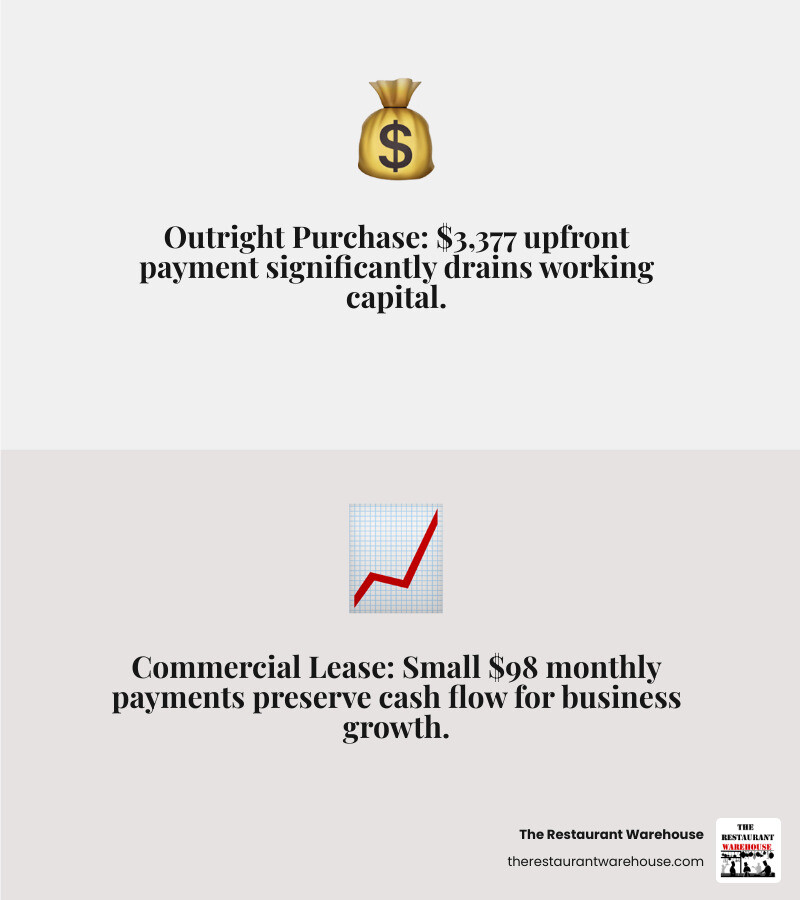
A commercial fridge lease offers food service businesses a path to premium refrigeration without the massive upfront investment. Instead of paying $3,377 for a commercial reach-in refrigerator, you can lease the same equipment for approximately $98 per month over 60 months, changing a major capital expense into a manageable operating cost.
Key Leasing Advantages:
- Low Monthly Payments: Conserve capital with payments as low as $98/month.
- Flexible Terms: Choose from 1-5 year options to match your business plan.
- Tax Benefits: Rental payments are often 100% tax-deductible.
- End-of-Lease Options: Purchase, return, or upgrade your equipment.
- Accessible Financing: Credit requirements are often more flexible than traditional loans.
Running a successful food service operation means keeping products fresh while managing tight budgets. Leasing provides immediate access to professional-grade refrigeration, spreading costs into predictable monthly payments. This approach optimizes cash flow, freeing up capital for inventory, payroll, and growth. Many agreements also include maintenance and upgrade options, giving budget-conscious owners a strategic advantage in building a sustainable business.
Why Lease a Commercial Fridge? The Financial Perks
For any restaurant or food service business, managing finances is a daily priority. When it comes to essential equipment like refrigeration, a commercial fridge lease can be a game-changer for your bottom line, offering benefits that go far beyond simply spreading out payments.

Keep Your Cash and Stay Flexible
The most significant advantage of leasing is avoiding massive upfront costs. Instead of spending $3,377 on a new refrigerator, you can lease it for about $98 per month. This keeps thousands of dollars in your bank account, available for inventory, marketing, or unexpected expenses. These predictable monthly payments make budgeting simple and accurate, eliminating financial surprises.
Freeing up capital is especially crucial for new businesses. Rather than draining startup funds on equipment, you can invest in areas that directly drive revenue. A lease's financing structure is often more favorable than small business loans, as the equipment itself serves as collateral, potentially leading to better terms and lower interest charges.
Get Better Equipment with Potential Tax Breaks
From a financial planning perspective, leasing offers powerful advantages. Lease payments are typically 100% tax deductible as an operating expense, which can significantly reduce your overall tax burden. Every payment you make lowers your taxable income, effectively giving you a discount on your equipment that compounds over the lease term. Always consult your accountant to understand how these benefits apply to your specific business.
Leasing also provides access to better equipment than you might otherwise afford. You can get a high-quality, energy-efficient unit that improves food safety and lowers utility bills, rather than settling for a basic model. With a lease, the leasing company absorbs the risk of depreciation, not your business. This arrangement often qualifies as off-balance-sheet financing, strengthening your financial statements for future lending or investment opportunities. At the end of the term, you have the flexibility to upgrade to newer technology, purchase your unit, or simply return it, ensuring your equipment always meets your evolving needs.
How Do Lease Payments Affect Your Taxes?
- Fixed payments help you forecast cash needs, compare scenarios, and plan for seasonality. Some providers also offer step payments that start lower and rise as your revenue grows.
- The type of lease you choose (for example, fair market value vs. $1 buyout) can affect accounting classification and end-of-term options. While both can conserve cash, the tax and balance-sheet treatment may differ. Your CPA can help match the structure to your goals.
- Because payments are typically deductible as operating expenses, the effective after-tax cost of a lease can be lower than the sticker price suggests. The ability to expense the payment, rather than depreciate a purchase over time, is a key driver of financial flexibility for many operators.
The Smart Business Case for Leasing
Leasing isn’t just about affordability—it’s also about positioning your business to adapt quickly.
- Access to new, energy-efficient models can reduce utility costs and support food safety with tighter temperature control.
- You can align lease terms with your growth plans—expanding to a larger unit as you add menu items or open additional locations.
- Upgrading at the end of your lease helps you avoid being locked into aging equipment and keeps your operation modern and reliable.
Combined, these advantages help you preserve cash, reduce risk, and maintain the operational agility needed to compete in a fast-moving foodservice environment.
Lease, Rent, or Buy? Which Is Best for You?
When acquiring commercial refrigeration, you have three main options: leasing, renting, or buying. Understanding the key differences is crucial for making a cost-effective decision that aligns with your business goals. The right choice depends on your cash flow, long-term vision, and operational needs.

What's the Difference? Lease, Rent, and Buy
Let's clarify what each term means for your business:
Leasing: This is a long-term agreement, typically 1-5 years, for the use of equipment. You make fixed monthly payments and often have the option to purchase the equipment at the end of the term. It's ideal for businesses needing reliable equipment without a large upfront cost.
Renting: This is a short-term solution, from days to months. It offers maximum flexibility for temporary needs like special events, seasonal peaks, or testing a new concept. Rental rates are higher than lease payments, but there's no long-term commitment.
Buying: This involves paying the full purchase price upfront to gain immediate ownership. It's best for established businesses with sufficient capital and stable, long-term equipment needs. You are fully responsible for maintenance and repairs.
Comparing Your Options Side-by-Side
This table highlights the key differences to help you decide:
| Feature | Leasing (Commercial Fridge Lease) | Renting (Commercial Fridge Rental) | Buying (Outright Purchase) |
|---|---|---|---|
| Cost Structure | Predictable monthly payments, no large upfront cost | Higher daily/weekly/monthly rates, often requires a deposit | Large upfront capital investment, no ongoing equipment payments |
| Term Length | Medium to long-term (1-5 years typical) | Short-term (days, weeks, months), highly flexible | Indefinite (until equipment is replaced or sold) |
| Ownership | Lessor retains ownership, option to purchase at end of term | Lessor retains ownership, no path to ownership | Full ownership by the business |
| Maintenance | Often included or negotiable in agreement, responsibilities vary | Typically included in rental agreement | Full responsibility of the business |
| Tax Implications | Payments often 100% tax deductible as operating expense | Payments often 100% tax deductible as operating expense | Depreciation can be deducted, potential tax credits |
| Best Use Case | Long-term use, cash flow management, access to new tech, potential ownership | Temporary needs, testing equipment, emergency solutions, events | High capital availability, long-term stable needs, full control |
Considering Used Equipment Leases
Leasing isn't just for brand-new items; a used equipment lease can be an incredibly savvy move, especially when you're focused on maximizing every dollar. This approach combines the low monthly payments of leasing with the reduced cost of pre-owned gear, making professional-grade equipment even more accessible. It frees up significant capital that you can redirect toward inventory, marketing, or other growth areas. Instead of a large upfront purchase, you get a high-quality, reliable piece of equipment with predictable payments that are easier on your budget. This gives you financial agility from day one and allows you to get better equipment than you might otherwise afford.
Beyond preserving cash, leasing used equipment offers other powerful financial perks. The payments are often fully tax-deductible as an operating expense, which can lower your overall tax bill (it's always smart to check with your accountant). At the end of the term, you have options: you can upgrade to a newer model, purchase the unit, or simply return it. This flexibility ensures your kitchen can adapt as your business evolves. Exploring different restaurant equipment financing solutions, including leases for new or used gear, is a strategic way to build a capable kitchen without draining your resources.
When Is a Commercial Fridge Lease Your Best Option?
A commercial fridge lease is often the smartest choice in several common scenarios:
New Businesses and Startups: Leasing preserves critical working capital. Instead of spending thousands on a purchase, that money can fund inventory, payroll, or marketing during the crucial launch phase.
Businesses on a Budget: Whether you're expanding, recovering from a slow season, or investing elsewhere, leasing provides needed equipment without straining your cash flow.
Testing and Evaluation: Leasing allows you to "try before you buy." You can test a high-end display merchandiser to measure its impact on sales or support a new menu concept without a permanent investment.
Long-Term Needs with Flexibility: Even if you need refrigeration for years, a lease provides access to modern technology and the option to upgrade at the end of the term. This prevents you from being locked into outdated, inefficient equipment as technology and your business evolve.
Calculating the True Cost of Ownership
Buying may look cheapest over a long horizon, but the total picture includes:
- Cash timing: Upfront purchase ties up capital immediately; leasing spreads costs and preserves liquidity.
- Maintenance exposure: Leases can include service; when you own, all repairs are your responsibility.
- Energy consumption: Newer leased units can deliver utility savings that help offset payments.
- Obsolescence risk: Technology and regulations evolve; a lease with upgrade options reduces the risk of being stuck with inefficient equipment.
A Simple Checklist to Help You Decide
Ask yourself:
- How much working capital do I need to retain for inventory, payroll, and marketing in the next 6–12 months?
- Is my concept evolving quickly enough that upgrade flexibility is valuable?
- Do I prefer consistent monthly operating expenses over a single large capital outlay?
- Do I want maintenance built into the agreement to simplify operations?
If you answered “yes” to most of these, a lease may align best with your strategy.
Mistakes to Avoid When Choosing
- Committing to a term longer than your location’s lease or your business plan’s visibility.
- Overlooking end-of-term conditions (purchase price, return logistics, or upgrade paths).
- Assuming maintenance is included—verify scope, response times, and coverage limits.
- Ignoring energy efficiency when comparing models; utility savings compound over time.
Beyond Leasing: Other Financing Options to Consider
While leasing is a fantastic tool for managing cash flow, it’s not the only way to get the equipment you need. Depending on your business’s financial health and long-term goals, other financing routes might be a better fit. Understanding these alternatives, like traditional equipment loans or more flexible working capital loans, ensures you can make the most strategic decision for your kitchen. Exploring all your options helps you find the perfect balance between affordability, ownership, and operational flexibility, setting your business up for success from day one.
Equipment Loans
If your goal is to own your equipment outright, an equipment loan is a direct path to getting there. Unlike a lease, where you pay to use the asset, a loan provides the funds to purchase it immediately. You then make fixed monthly payments over a set term until the loan is paid off. This approach is often preferred by established businesses that want to build equity in their assets. Securing restaurant equipment financing not only gets you the gear you need but also helps establish a strong credit profile for your business, which can be valuable for future growth.
Working Capital Loans
Sometimes your financial needs are broader than a single piece of equipment. A working capital loan provides a lump sum of cash to cover various day-to-day operational expenses, including inventory, payroll, marketing, or equipment purchases. This flexibility is its greatest strength. Instead of tying up cash in a new refrigerator or deep fryer, you can use a working capital loan to cover the cost while keeping your own funds free for more immediate operating needs. This option is especially useful for new businesses or those undergoing an expansion, providing the capital to support growth without sacrificing liquidity.
What to Look for in Your Lease Agreement
Once you've decided a commercial fridge lease is right for you, it's time to dive into the agreement details. A clear understanding of the lease term, end-of-lease options, and your supplier's reputation will ensure a smooth and beneficial partnership.
How to Choose the Right Lease Length
Lease terms typically range from one to five years, and your choice impacts both your monthly payment and total cost. Shorter terms (e.g., 24 months) have higher monthly payments, while longer terms (e.g., 60 months) offer lower payments but may have a higher total cost due to accumulated interest. Your decision should balance your monthly budget with your long-term financial plan. Consider your business's stability and future plans. A shorter term offers flexibility if you anticipate changes, while a longer term provides predictability for a stable operation.
What Happens When Your Lease Ends?
A key benefit of leasing is the flexibility you have when the term ends. Common options include:
- Purchase Clause: Many leases allow you to buy the equipment for its remaining value. This is great if the fridge has performed well and you want to own it.
- Fair Market Value (FMV) Lease: You can purchase the equipment for its appraised market value at the end of the term.
- $1 Buyout Lease: This is structured like a financing agreement, allowing you to purchase the equipment for a nominal fee (e.g., $1) at the end of the term.
- Equipment Return & Upgrade: If your needs have changed or you want newer technology, you can simply return the unit. Many suppliers offer attractive upgrade programs to transition you into a new lease.
- Rent-Try-Buy: Some programs let you apply a portion of your rental payments toward the purchase price if you decide to buy, making ownership more affordable.
How to Find a Reputable Leasing Supplier
Your leasing partner is as important as the equipment itself. Look for a supplier with these qualities:
- Transparency: Contracts should be clear and easy to understand. The supplier should willingly explain all clauses and fees.
- Maintenance and Repair Support: Clarify who is responsible for service. A good supplier offers prompt, professional repair support to minimize downtime.
- Customer Service: Responsive and knowledgeable staff are a good indicator of the support you'll receive throughout the lease.
- Equipment Quality: The supplier should offer reliable, commercial-grade equipment from trusted manufacturers.
- Industry Expertise: A partner who understands the foodservice industry can help you select the right equipment for your specific needs, considering menu, volume, and space.
Using Platforms to Compare Offers
To find the best deal, you need to compare offers, but calling multiple suppliers can be time-consuming. This is where online equipment leasing platforms come in handy. Services like KWIPPED allow you to submit a single request and get quotes from a network of different lenders and suppliers. You can specify your exact needs—from the number of doors on a refrigerator to its condition—to ensure the offers are tailored to your business. Using a platform streamlines the comparison process, giving you a clear overview of your options without the legwork. While these tools are great for casting a wide net, remember to also check directly with trusted suppliers who may offer competitive restaurant equipment financing and personalized service.
Reading the Fine Print: What to Watch For
- Documentation and origination fees: One-time admin charges that may be due at signing.
- Delivery, installation, and removal: Clarify who schedules and pays for freight, placement, and end-of-term pickup.
- Site-prep requirements: Electrical, ventilation, or floor-load needs should be verified before delivery to avoid rescheduling costs.
- Insurance: Many lessors require proof of coverage for the equipment; ask if you can add it to your existing policy.
- Return condition standards: Note cleaning, packaging, and timing requirements to prevent surprise fees.
Payment Structures: Beyond Monthly Plans
When you're looking at a commercial fridge lease, it's easy to focus only on the monthly payment, but the structure itself is a powerful tool for managing your finances. Leasing transforms a major capital expense into a predictable operating cost. Instead of paying around $3,377 upfront for a new commercial refrigerator, you can lease it for about $98 a month, keeping cash in your business for inventory or payroll. Agreements also offer flexible terms, usually from one to five years, so you can find a plan that fits your strategy. This is especially helpful for new restaurants that need quality equipment without draining startup funds. Many agreements also include maintenance and upgrade options, so you can avoid surprise repair bills and aren't stuck with outdated technology. Plus, lease payments are often 100% tax-deductible, adding another financial benefit. Exploring restaurant equipment financing can give you a clear picture of how these advantages can work for you.
Who Handles Insurance, Delivery, and Installation?
Confirm lead times and delivery details early, especially if you’re coordinating a grand opening or remodel. Ask whether the lease includes curbside delivery only or inside placement, and whether installation, leveling, and initial calibration are included. Ensure your insurance meets the lessor’s requirements and that certificates are on file before shipment.
Exploring Full-Service Lease Agreements
A full-service lease is more than just a rental; it's a complete equipment solution designed for operational peace of mind. With this type of agreement, the leasing company typically handles everything from delivery and installation to all ongoing maintenance and repairs. This means no surprise repair bills and predictable monthly costs, allowing you to focus on running your business. A full-service lease also gives you access to higher-quality, energy-efficient refrigerators or freezers than you might otherwise afford, which can lower utility bills and improve food safety. Better yet, these payments are often 100% tax-deductible as an operating expense. It’s a strategic move that keeps your kitchen running smoothly without the headaches of equipment ownership.
What If You Need to Move or End Your Lease Early?
If you plan to move or expand, ask how relocation works—some agreements allow equipment moves with prior approval. If early termination might be necessary, request clarity on any fees or payoff terms so you understand the cost of exiting the agreement.
Your Final Checklist Before You Sign
- Match the lease term to your business plan and real-estate lease length.
- Verify maintenance coverage, response times, and service network.
- Confirm energy-efficiency specs and expected utility impact.
- Understand end-of-term options and exact buyout language.
- Clarify all fees, insurance, and delivery/installation responsibilities.
More Than Money: The Everyday Benefits of Leasing
Beyond the financial advantages, a commercial fridge lease delivers operational and social benefits that can improve your business. The right equipment can boost sales, improve efficiency, and build a positive brand reputation.
Increase Sales and Keep Customers Happy
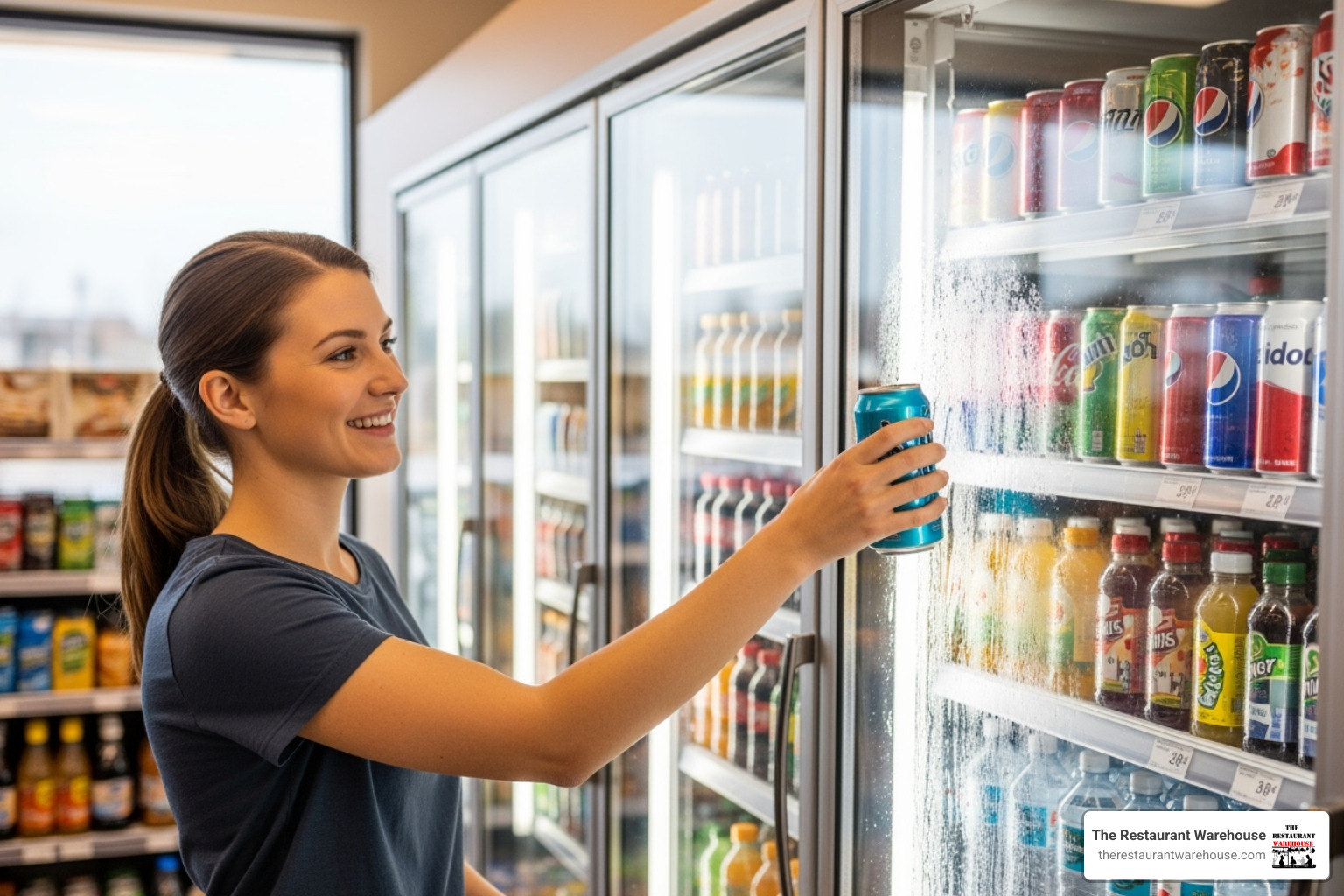
The right refrigeration can directly increase revenue. A gleaming glass-door merchandiser encourages impulse purchases by attractively displaying chilled beverages and grab-and-go items. This convenience is highly valued by busy customers. Modern, reliable equipment also ensures product quality and freshness, improving the customer experience. A clean, professional display makes your products look more appealing, while the reliability of newer leased units prevents frustrating breakdowns and lost sales, building customer trust.
In addition, many contemporary units feature digital temperature controls, door alarms, and LED lighting that showcases products while lowering energy usage. These operational upgrades can improve merchandising, reduce food waste through more consistent temperatures, and simplify daily opening and closing procedures for your staff.
Save Money and Reduce Your Environmental Footprint
A commercial fridge lease is a smart way to run a more efficient and environmentally friendly operation. Leasing provides access to modern, energy-efficient models without the high upfront cost. These units can significantly reduce your utility bills, with savings that help offset the monthly lease payment. For businesses serious about sustainability, we recommend exploring ENERGY STAR certified commercial refrigerators to see the potential savings and environmental benefits.
Choosing energy-efficient equipment also demonstrates corporate social responsibility, which appeals to today's environmentally conscious consumers. Furthermore, many lease agreements include maintenance and repair services. Professional maintenance keeps equipment running at peak efficiency, extending its life, preventing food spoilage, and reducing waste—all of which benefit your bottom line and the planet.
Operationally, energy-efficient refrigeration can also support compliance objectives. Stable temperatures and better insulation can help keep food within safe holding ranges more consistently, reducing the risk of spoilage and supporting food safety protocols. When your equipment is newer and professionally maintained, you spend less time troubleshooting and more time serving customers.
What Types of Commercial Refrigeration Can You Lease?
Leasing is available for nearly every type of commercial refrigeration, allowing you to get the exact equipment you need. Common options include:
- Reach-In Refrigerators & Freezers: The standard for kitchen ingredient storage.
- Walk-In Coolers & Freezers: For high-volume storage needs.
- Display Fridges & Merchandisers: To showcase products to customers.
- Undercounter & Worktop Units: For maximizing efficiency in compact spaces.
- Refrigerated Prep Tables: Combining refrigerated storage with a workspace.
- Bar Coolers: For keeping beverages perfectly chilled and accessible.
When evaluating models, consider capacity, footprint, door style (solid vs. glass), shelving configuration, and temperature range. Also review warranty terms, availability of parts, and service network coverage in your area.
Popular Brands to Look For
When you're leasing, you still want equipment that's built to last. Look for brands known for reliability and performance in commercial kitchens. Industry workhorses like True, Beverage Air, and Traulsen are always solid choices, trusted for their durability and consistent temperature control. At The Restaurant Warehouse, we stand by the quality and value of Atosa, which offers a fantastic range of dependable refrigerators and freezers that meet rigorous commercial standards without the premium price tag. Choosing a reputable brand ensures your leased unit will handle the daily demands of your business, minimizing downtime and protecting your valuable inventory.
Key Physical Features and Customizations
Commercial refrigerators aren't one-size-fits-all. The right features can make a huge difference in your kitchen's workflow. Consider the capacity you need, with options ranging from compact 19 cu. ft. units to massive 72 cu. ft. models. Door configuration is another key choice—do you need a single door, double doors, or even space-saving half-doors? You can also select between solid doors for maximum insulation or glass doors to merchandise products and allow for quick inventory checks. For prep stations, units with built-in drawers can keep ingredients organized and easily accessible. Thinking through these physical details ensures you get a piece of equipment that fits your space and your process perfectly.
Essential Add-Ons: Door Locks and Self-Closing Doors
A couple of small features can have a big impact on your daily operations and peace of mind. Self-closing doors are a must-have in a busy kitchen, preventing energy waste and temperature fluctuations that can compromise food safety. They ensure the door is never accidentally left ajar during a rush. Door locks are another crucial add-on, providing security for your inventory after hours. This simple feature protects against theft and unauthorized access, safeguarding valuable products like high-end meats or alcohol. These add-ons aren't just conveniences; they are practical tools for improving efficiency and protecting your assets.
Leasing for Specialized Needs and Events
Sometimes your equipment needs go beyond the day-to-day operations of a permanent kitchen. Leasing and short-term rentals are excellent solutions for temporary situations like catering a large event, exhibiting at a trade show, or setting up a pop-up shop. This flexibility allows you to access professional-grade equipment for a specific period without a long-term commitment. For these short-term gigs, renting is often the answer. However, if your "specialized need" is part of a long-term business plan, such as adding a permanent catering arm to your restaurant, exploring equipment financing might be a more cost-effective path to ownership.
Solutions for Retail, Trade Shows, and Events
For businesses that participate in farmers' markets, food festivals, or industry trade shows, having reliable refrigeration on-site is non-negotiable. Renting a display merchandiser for a weekend event can help you showcase your products safely and attractively. Catering companies can also rent entire portable kitchens to execute large-scale events off-site. This model provides access to top-tier equipment exactly when and where you need it, allowing you to scale your capabilities for specific jobs. It’s a practical way to support growth and take on new opportunities without the logistical burden of transporting your own permanent equipment.
Beyond Refrigeration: Leasing Ovens, Griddles, and Portable Kitchens
Your equipment needs don't stop at keeping things cold. The same flexibility offered for refrigeration often extends to cooking equipment. You can lease or rent everything from commercial ovens and griddles to full portable kitchen setups. This is ideal for testing a new menu concept that requires a specific piece of equipment, like a high-capacity fryer, before committing to a purchase. If you find that a new item is a hit and you're ready to invest, The Restaurant Warehouse has a wide selection of affordable, high-quality cooking equipment, including deep fryers and prep tables, to make that new menu item a permanent star.
Frequently Asked Questions about Commercial Fridge Leases
Deciding on a commercial fridge lease can bring up many questions. We've helped countless foodservice businesses steer these decisions. Here are clear, straightforward answers to the most common concerns.
Do I Need a Good Credit Score to Lease a Commercial Fridge?
Not necessarily. The credit requirements for a lease are often more flexible than for a traditional bank loan because the equipment itself serves as collateral. This makes leasing an excellent option for new businesses without an extensive credit history or for those with developing credit. Making on-time lease payments can even help build your business's credit profile. While some situations might require a security deposit or personal guarantee, leasing remains one of the most accessible financing paths for acquiring essential equipment.
What Happens if My Leased Fridge Breaks Down?
This is a major advantage of leasing. Most full-service lease agreements include maintenance and repair coverage. If the equipment fails, you simply contact the leasing company. They arrange for professional, timely repairs, often through a network of qualified technicians. This minimizes downtime and saves you from unexpected, costly repair bills. The leasing company owns the asset, so they are motivated to keep it in excellent working condition. Be sure to read your agreement to understand the specific terms and your responsibilities for routine care.
Can I Upgrade My Equipment During the Lease Term?
Yes, many leasing companies offer upgrade options to accommodate your business's evolution. As your business grows, your refrigeration needs may change. You might need a larger unit, a different type of display, or want to take advantage of technology advancements like improved energy efficiency. Upgrade flexibility allows you to swap your current unit for one that better suits your new requirements, often by rolling into a new lease agreement. Discuss these possibilities with your provider upfront, especially if you anticipate growth, to ensure your equipment always supports your business goals.
Is Delivery and Installation Included in the Lease?
It depends on the agreement. Some leases are equipment-only, while others bundle delivery, inside placement, installation, and initial calibration. Ask for a detailed scope of services so you know who handles freight, uncrating, leveling, and hauling away packaging. If installation isn’t included, you can usually coordinate it with your dealer or a qualified technician.
What Kind of Insurance Do I Need?
Most lessors require proof of insurance covering the leased equipment against damage or loss. You can often add the unit to your existing business policy. Request the lessor’s insurance requirements early so your agent can issue certificates before delivery.
What End-of-Term Costs Should I Expect?
If you return the unit, you may be responsible for cleaning, proper packaging, and pickup coordination. Some agreements include a modest return fee. If you buy the unit, your cost will follow the contract’s purchase option (e.g., FMV or a set buyout amount). Clarify these figures at signing to avoid surprises later.
Fair Market Value vs. $1 Buyout: Which Is Better?
- Fair Market Value (FMV): Usually offers the lowest monthly payment and flexibility to return or upgrade, with the option to purchase at market value.
- $1 Buyout: Functions more like financing with a nominal ownership transfer at the end; payments are typically higher, but your path to ownership is straightforward.
The best choice depends on whether you prioritize the lowest monthly payment and flexibility (FMV) or long-term ownership ($1 buyout).
Can I End My Lease Early or Prepay?
Some providers allow early payoff or prepayment, but terms vary. Ask about any early termination fees, payoff schedules, and whether prepayment reduces total cost. If your business plan may change, negotiate flexible terms in advance.
How Fast Can I Get Approved?
Many providers offer streamlined applications and quick decisions. Having basic financials, business details, and equipment specs ready can speed things up. Lead times for delivery depend on stock availability and your installation needs.
Am I Responsible for Equipment Maintenance?
Yes. Even when maintenance coverage is included, you may be responsible for routine care such as cleaning condenser coils, keeping door gaskets intact, and ensuring proper ventilation. Following manufacturer recommendations helps avoid downtime and supports warranty coverage.
Can I Lease Equipment for a Pop-Up or Seasonal Business?
Yes. Seasonal operators often prefer leasing because it limits upfront costs and can align term lengths with operating windows. Shorter terms or rent-try-buy programs can be especially helpful if you’re testing a new concept.
If you have a unique use case—multi-site rollouts, franchise standards, or rapid expansion—ask about scalable programs that can accommodate multiple units and staggered deliveries.
Is a Commercial Fridge Lease Your Next Smart Move?
In the competitive foodservice industry, a commercial fridge lease is a strategic tool for sustainable growth. It transforms a major capital expenditure into a predictable, manageable operating cost, allowing you to preserve vital cash flow for other critical areas of your business.
By leasing, you gain immediate access to high-quality, reliable equipment. The benefits are clear: you avoid a large upfront payment of around $3,377 in favor of small monthly payments of about $98. These payments are often 100% tax-deductible, further reducing your costs. This financial flexibility allows you to invest in inventory, staff, and marketing to drive growth.
Operationally, modern leased equipment leads to lower energy bills, fewer breakdowns, and improved product presentation, which boosts customer satisfaction. The ability to upgrade technology at the end of your term ensures you're never stuck with outdated machinery. You maintain control, with options to purchase, return, or upgrade your equipment as your business evolves.
Choosing to lease is a smart financial decision that balances affordability, flexibility, and performance. It empowers you to build your business on a solid foundation, joining successful restaurateurs who know that preserving capital and accessing the best equipment are keys to long-term success. By carefully evaluating your needs and selecting a reputable leasing partner, you can secure the refrigeration essential for your operation while maintaining the financial agility needed to thrive.
Key Takeaways
- Keep Your Cash Flowing: Instead of a large upfront purchase, leasing allows you to get essential equipment with small, predictable monthly payments, freeing up your capital for inventory, marketing, and other growth-focused investments.
- Future-Proof Your Kitchen: Leasing gives you the power to upgrade your equipment at the end of the term, ensuring your kitchen always has modern, efficient technology and can adapt as your menu and business grow.
- Simplify Operations and Reduce Risk: Many lease agreements include maintenance and repairs, which means less downtime and no surprise costs when equipment breaks, while also giving you access to energy-efficient models that lower utility bills.
Related Articles
About The Author

Sean Kearney
Sean Kearney is the Founder of The Restaurant Warehouse, with 15 years of experience in the restaurant equipment industry and more than 30 years in ecommerce, beginning with Amazon.com. As an equipment distributor and supplier, Sean helps restaurant owners make confident purchasing decisions through clear pricing, practical guidance, and a more transparent online buying experience.
Connect with Sean on LinkedIn, Instagram, YouTube, or Facebook.