

Coffee Shop Equipment Cost: A No-Nonsense Guide
Choosing your espresso machine and grinders is one of the most exciting parts of opening a café. But that excitement can quickly turn to sticker shock. The total coffee shop equipment cost is a serious number, often landing between $30,000 and $100,000. Don't let that figure scare you. Think of it as a financial hurdle, not a stop sign. With a clear plan, you can get the high-quality gear you need to get your doors open without draining your savings. We'll break down exactly what to expect.
This initial investment is the foundation of your business, covering everything from the espresso machine that will become the heart of your bar to the grinders, refrigerators, brewers, and point-of-sale system that keep everything running. Your final number will really depend on the scale of your vision, your menu's complexity, and whether you decide to go with brand-new or used gear.
A Realistic Look at Coffee Shop Equipment Costs
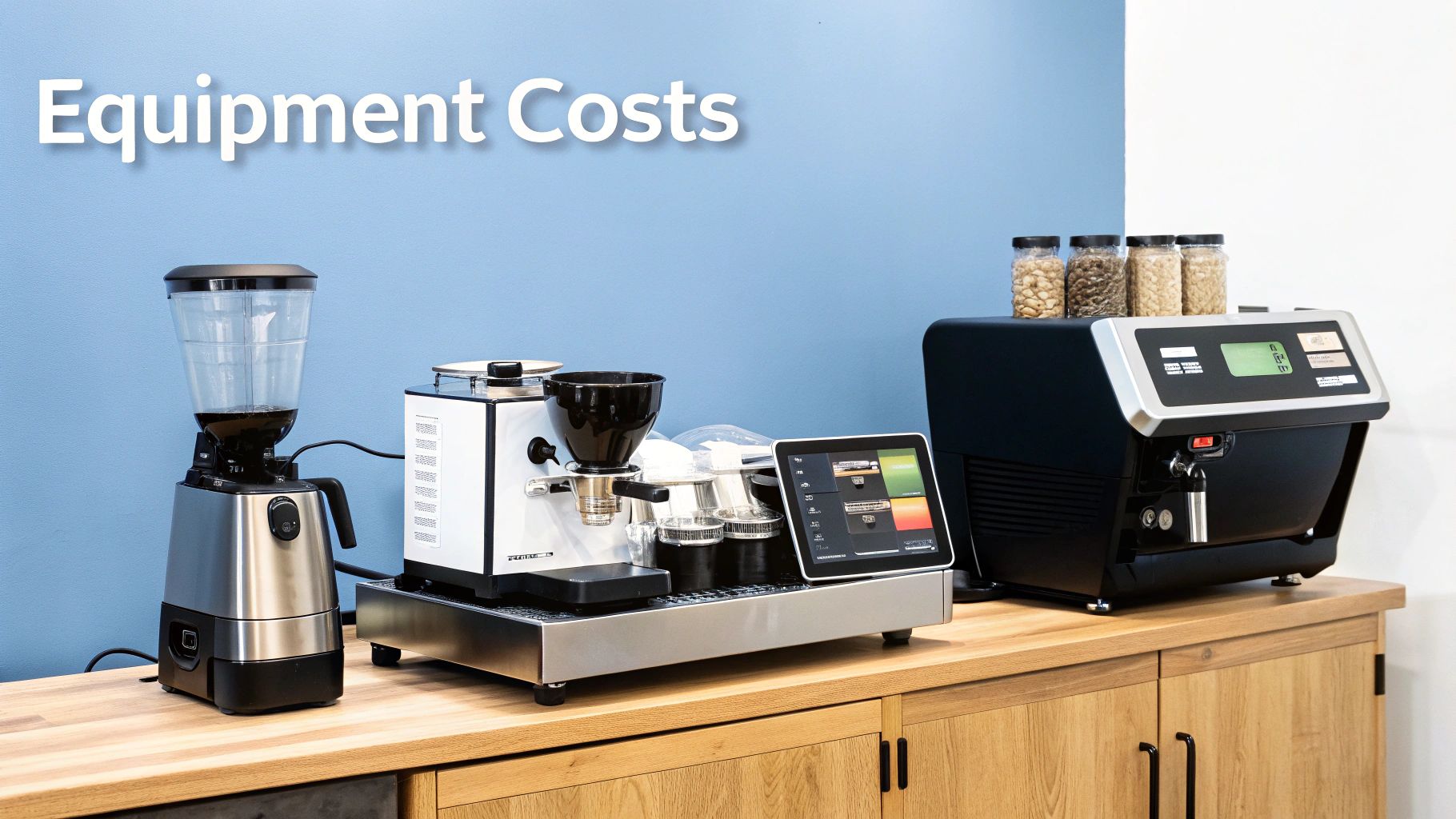
When you start budgeting for your new café, that equipment list can feel a mile long. It's so much more than just a beautiful espresso machine; it's an entire ecosystem of tools that have to work together perfectly to churn out fantastic drinks, day in and day out. Breaking down that total cost into smaller, more manageable categories is the best first step toward creating a realistic financial plan.
Think of your equipment as the engine of your coffee shop. A reliable, high-performance engine means you can fly through the morning rush without a hitch, keep your drinks consistent, and ultimately, give customers a reason to come back. Trying to cut corners on the essentials often backfires, leading to frustrating downtime, expensive repairs, and lost sales.
Pricing Your Core Brewing and Grinding Gear
This is the heart and soul of your operation and, not surprisingly, often the biggest slice of your budget. The quality of these machines will directly shape the taste of your coffee and the speed of your service.
- Commercial Espresso Machine: This is your primary workhorse. For most small to mid-sized shops, a solid two-group machine will run you $5,000 to $15,000. If you're planning for high volume or diving deep into specialty coffee, you might invest $20,000+ for a machine with more advanced features.
- Espresso Grinder: A top-notch grinder is every bit as crucial as the espresso machine itself. Expect to spend between $1,500 and $4,000 for a consistent, durable grinder that can handle a commercial workload.
- Drip Coffee Brewer: You'll need a commercial brewer for your batch brew. These systems, including the servers or airpots, typically cost between $500 and $2,500.
- Bulk Coffee Grinder: A separate grinder for your drip coffee and retail beans is a must. This will cost around $500 to $1,500.
The right equipment is a non-negotiable investment. Commercial espresso machines and grinders alone typically range from $5,000 to $20,000 or more, forming the core of any serious café setup. Add in drip coffee brewers, blenders for frappes, and refrigeration units, and you're looking at a total equipment outlay of $30,000 to $100,000 for a modest shop.
Budgeting for Refrigeration and Food Prep
Proper refrigeration is absolutely critical for food safety, quality, and managing your inventory. Your needs here will grow right alongside your food menu.
- Undercounter Refrigerators: These are essential for keeping milk, creams, and other daily-use items right at the bar. Budget $1,500 to $4,000 for each unit.
- Reach-In Refrigerator/Freezer: For back-of-house storage of food, syrups, and bulk milk supplies. A good commercial unit costs $2,000 to $6,000.
- Ice Machine: A must-have for iced lattes, cold brew, and blended drinks. A commercial ice maker can run anywhere from $1,500 to $5,000.
- Commercial Blender: For smoothies and frappes, a powerful blender with a sound enclosure is key. This will set you back $500 to $1,500.
- Food Prep Equipment: If you plan on serving pastries or sandwiches, you'll want to consider a convection oven ($1,000 - $4,000) or a panini press ($300 - $800).
The Little Things That Add Up: Sinks, POS, and Smallwares
Beyond the big-ticket items, there are countless smaller pieces you'll need to run a smooth operation. These are the details that make a difference.
- Water Filtration System: Protecting your expensive machines from scale buildup is a must. A proper system costs $500 to $2,000.
- POS System: A modern point-of-sale system, including hardware like a terminal, cash drawer, and receipt printer, can range from $1,200 to $4,000 for the initial setup, plus monthly software fees.
- Dishwashing: To meet health codes, you'll need a commercial dishwasher or a three-compartment sink setup. Budget $2,000 to $7,000 for this.
- Smallwares: This is the catch-all category for everything from milk steaming pitchers and tampers to scales, timers, knock boxes, and servingware. Plan to spend at least $1,000 to $3,000 to get your bar fully stocked.
To help you get organized, we've put together a sample budget that breaks down these costs.
Planning for Major Infrastructure Costs
Beyond the gear you use to make coffee, you'll need to budget for the foundational systems that keep your shop running safely and comfortably. These infrastructure costs are often less glamorous but are absolutely essential for your daily operations and can represent a significant part of your startup budget. Planning for them early on prevents surprises down the road and ensures you're building your business on a solid foundation. From the air your customers breathe to the specialized equipment that sets your brand apart, these big-ticket items deserve careful consideration in your financial plan.
HVAC and Ventilation Systems
Proper ventilation is crucial in a coffee shop to ensure a comfortable environment for both customers and staff. You want to clear out steam from the espresso machine and any cooking odors while keeping the air fresh. An effective HVAC system can range from $5,000 to $15,000, depending on the size of your space and the complexity of the installation. This isn't just about comfort; it's about creating a welcoming atmosphere that encourages guests to stay and enjoy their coffee. A stuffy or overly warm café can turn customers away, so think of this as an investment in the overall customer experience.
In-House Coffee Roasters
If you dream of creating your own signature blends, roasting coffee in-house is a powerful way to stand out. This move gives you complete control over quality and adds a unique selling point to your café. However, it's a serious financial commitment. A commercial coffee roaster can cost anywhere from $10,000 to $50,000, depending on its capacity and features. This kind of major purchase often requires careful financial planning, which is why many new owners explore restaurant equipment financing to manage the upfront cost without draining their working capital. It's a big step, but one that can truly define your brand.
Dedicated Hot Water Dispensers
While it might not be as glamorous as an espresso machine, a dedicated hot water dispenser is a workflow game-changer. It's vital for brewing tea, making Americanos, and preparing other hot beverages quickly without tying up your main machine. This frees up your baristas to focus on crafting lattes and cappuccinos, especially during the morning rush. These essential units typically cost between $500 and $2,000, depending on the model and capacity. It's a relatively small investment that pays off big in terms of speed and efficiency, keeping your line moving and your customers happy.
So, What's the Grand Total? A Sample Budget
| Equipment Category | Essential Items | Estimated Cost Range |
|---|---|---|
| Brewing & Grinding | Espresso Machine, Grinders, Drip Brewer | $8,500 - $23,000 |
| Refrigeration | Undercounter, Reach-In, Ice Machine | $5,000 - $15,000 |
| Food Preparation | Blender, Oven, Panini Press | $1,800 - $6,300 |
| Systems & Sinks | Water Filtration, POS System, Sinks/Dishwasher | $3,700 - $13,000 |
| Smallwares | Pitchers, Tampers, Scales, Servingware, etc. | $1,000 - $3,000 |
| Total Estimated Cost | All Categories Combined | $20,000 - $60,300+ |
This table gives you a solid starting point for your budget. Remember, these are ranges, and your final costs will depend on the brands you choose and whether you buy new or used.
As you build out your own budget, using a detailed checklist is the best way to make sure nothing gets forgotten. To help you get organized, our comprehensive coffee shop equipment checklist is an invaluable tool. For another great perspective, you can also check out this essential coffee shop equipment list for 2025 to compare notes and make sure you've covered all your bases.
Beyond the Beans: Budgeting for Your Total Startup Costs
While your equipment is the engine of your coffee shop, it’s only one part of the total investment. Getting your doors open involves a wide range of other expenses, from legal paperwork and rent to your first big inventory order. The total startup cost for a coffee shop typically falls between $80,000 and $300,000. This number can feel huge, but understanding where every dollar goes is the first step to building a solid financial plan. Breaking down these costs will help you see the full picture and prepare for the financial realities of launching your dream café.
The Big Picture: Overall Startup Cost Ranges
The final price tag for opening a coffee shop varies widely based on your location, the size of your space, and the extent of renovations needed. A small coffee kiosk or cart might only require an investment of $50,000 to $75,000, while a full-service café with a large seating area in a prime location can easily push past $300,000. This range accounts for everything: equipment, construction, legal fees, initial inventory, and working capital. Because these costs can add up quickly, exploring options like restaurant equipment financing can help you manage your cash flow and secure the high-quality gear you need without draining all of your upfront capital.
Covering Your Bases: Business, Legal, and Licensing Fees
Before you can serve a single latte, you need to handle the administrative side of the business. These costs are non-negotiable and essential for operating legally. You’ll need a business license, which can cost anywhere from $50 to $500, depending on your city. You'll also need a food service license from your local health department, which typically runs between $100 and $1,000. Don't forget to budget for other potential permits, like signage permits or zoning applications. It’s a good practice to check with your local small business association or city hall to get a complete list of requirements so there are no surprises down the road.
Building Your Space: Rent Deposits and Renovation Costs
Your physical location is one of your biggest ongoing expenses. When you sign a lease, expect to pay a security deposit, which is often equal to one or two months' rent. With commercial rent ranging from $1,000 to $5,000 per month or more, this can be a significant upfront cost. Beyond the deposit, you’ll need to budget for renovations. If you’re lucky enough to find a space that was previously a café, your build-out costs will be lower. However, converting a standard retail space involves plumbing, electrical work, and construction that can quickly become one of your largest startup expenses.
Stocking the Shelves: Your Initial Inventory Budget
You can't open with empty shelves. Your initial inventory order is a crucial startup cost that ensures you're ready for customers on day one. For coffee alone, you should plan on spending around $1,000 for your first month's supply. But it doesn't stop there. This budget also needs to cover milk, dairy alternatives, syrups, sugar, pastries, and any other food items on your menu. You’ll also need a full stock of paper goods, including cups, lids, sleeves, and napkins. This is the fuel for your business, so creating a detailed list and getting quotes from suppliers is key to an accurate budget.
Planning Ahead: Your Financial Safety Net and Insurance
Even the best-laid plans can hit a snag. That’s why having a financial cushion is so important. Set aside an emergency fund of $5,000 to $10,000 to cover unexpected costs, like a critical piece of equipment breaking down or a slower-than-expected opening month. This fund provides peace of mind and prevents a minor issue from becoming a major crisis. You’ll also need to purchase business insurance, including general liability and property insurance, to protect your investment. Think of this as a non-negotiable cost that safeguards everything you’ve worked so hard to build.
Keeping the Lights On: Ongoing Costs and Profitability
Once your coffee shop is up and running, your financial focus shifts from one-time startup costs to managing your monthly operating expenses. These are the recurring costs that you’ll need to cover every month to keep the business humming and the coffee flowing. Understanding and controlling these expenses is the key to achieving long-term profitability. A well-managed budget ensures you can handle the natural ups and downs of the business cycle, from busy holiday seasons to slower summer months. This is where you move from building a business to running a sustainable one.
Your Monthly Operating Budget
Beyond the Beans: Budgeting for Your Total Startup Costs
While your equipment is the engine of your coffee shop, it’s only one part of the total investment. Getting your doors open involves a wide range of other expenses, from legal paperwork and rent to your first big inventory order. The total startup cost for a coffee shop typically falls between $80,000 and $300,000. This number can feel huge, but understanding where every dollar goes is the first step to building a solid financial plan. Breaking down these costs will help you see the full picture and prepare for the financial realities of launching your dream café.
The Big Picture: Overall Startup Cost Ranges
The final price tag for opening a coffee shop varies widely based on your location, the size of your space, and the extent of renovations needed. A small coffee kiosk or cart might only require an investment of $50,000 to $75,000, while a full-service café with a large seating area in a prime location can easily push past $300,000. This range accounts for everything: equipment, construction, legal fees, initial inventory, and working capital. Because these costs can add up quickly, exploring options like restaurant equipment financing can help you manage your cash flow and secure the high-quality gear you need without draining all of your upfront capital.
Covering Your Bases: Business, Legal, and Licensing Fees
Before you can serve a single latte, you need to handle the administrative side of the business. These costs are non-negotiable and essential for operating legally. You’ll need a business license, which can cost anywhere from $50 to $500, depending on your city. You'll also need a food service license from your local health department, which typically runs between $100 and $1,000. Don't forget to budget for other potential permits, like signage permits or zoning applications. It’s a good practice to check with your local small business association or city hall to get a complete list of requirements so there are no surprises down the road.
Building Your Space: Rent Deposits and Renovation Costs
Your physical location is one of your biggest ongoing expenses. When you sign a lease, expect to pay a security deposit, which is often equal to one or two months' rent. With commercial rent ranging from $1,000 to $5,000 per month or more, this can be a significant upfront cost. Beyond the deposit, you’ll need to budget for renovations. If you’re lucky enough to find a space that was previously a café, your build-out costs will be lower. However, converting a standard retail space involves plumbing, electrical work, and construction that can quickly become one of your largest startup expenses.
Stocking the Shelves: Your Initial Inventory Budget
You can't open with empty shelves. Your initial inventory order is a crucial startup cost that ensures you're ready for customers on day one. For coffee alone, you should plan on spending around $1,000 for your first month's supply. But it doesn't stop there. This budget also needs to cover milk, dairy alternatives, syrups, sugar, pastries, and any other food items on your menu. You’ll also need a full stock of paper goods, including cups, lids, sleeves, and napkins. This is the fuel for your business, so creating a detailed list and getting quotes from suppliers is key to an accurate budget.
Planning Ahead: Your Financial Safety Net and Insurance
Even the best-laid plans can hit a snag. That’s why having a financial cushion is so important. Set aside an emergency fund of $5,000 to $10,000 to cover unexpected costs, like a critical piece of equipment breaking down or a slower-than-expected opening month. This fund provides peace of mind and prevents a minor issue from becoming a major crisis. You’ll also need to purchase business insurance, including general liability and property insurance, to protect your investment. Think of this as a non-negotiable cost that safeguards everything you’ve worked so hard to build.
A premium machine, on the other hand, is built for battle. It’s constructed with commercial-grade stainless steel, brass, and copper, all chosen for their ability to maintain thermal stability during relentless use. Getting to know these differences is the first step in figuring out your true coffee shop equipment cost and making an investment that pays off.
Built to Last: How Quality Affects the Price Tag
The biggest price driver is, without a doubt, the quality of the construction. It’s the same reason a handcrafted oak table costs more than something you assemble from a flat-pack box.
- Materials Used: High-end machines are packed with heavy-duty stainless steel frames, brass group heads, and copper boilers. These aren't just for looks; these materials are fantastic at holding and stabilizing heat, which is absolutely critical for pulling a consistent shot of espresso. Cheaper models often cut corners with plastic parts or thinner, lower-grade metals that wear out faster and bleed heat.
- Boiler Technology: The boiler is the heart of any espresso machine. An entry-level model might have a single boiler trying to do two jobs at once—brewing espresso and steaming milk. It just can't keep up. Pricier machines solve this with dual-boiler or multi-boiler systems, giving you precise, independent temperature control for both functions. The result? Better-tasting coffee and faster service.
The global coffee machine market shows just how much demand there is for this kind of quality. It was valued at $6.56 billion in 2024 and is expected to hit $7.59 billion by the end of 2025, ballooning to an incredible $25.26 billion by 2030. This growth is fueled by the café boom and the demand for smarter tech. You can read more in this global coffee market industry trend report.
Volume vs. Value: Finding the Right Performance Level
Keeping the Lights On: Ongoing Costs and Profitability
Once your coffee shop is up and running, your financial focus shifts from one-time startup costs to managing your monthly operating expenses. These are the recurring costs that you’ll need to cover every month to keep the business humming and the coffee flowing. Understanding and controlling these expenses is the key to achieving long-term profitability. A well-managed budget ensures you can handle the natural ups and downs of the business cycle, from busy holiday seasons to slower summer months. This is where you move from building a business to running a sustainable one.
Your Monthly Operating Budget
Your monthly operating budget is the financial heartbeat of your café. This includes all the predictable expenses required to keep your doors open. Key items include rent, staff salaries, and the cost of goods sold (like coffee beans and milk), which can run from $1,000 to $2,000 or more depending on your volume. You’ll also have utility bills for electricity and water, which typically range from $200 to $500 per month. Other costs to factor in are marketing, software subscriptions for your POS system, and cleaning supplies. Tracking these expenses carefully will help you understand your cash flow and make smart decisions about where to invest or cut back.
Rent and Staff Salaries
Your two largest and most consistent monthly expenses will almost always be rent and payroll. Your lease payment is a fixed cost you can count on every month. Payroll, however, can fluctuate based on your staffing levels, seasonality, and employee hours. When budgeting for your team, remember to account for more than just hourly wages. You also need to factor in payroll taxes, workers' compensation insurance, and any benefits you might offer. Managing these two major expenses effectively is fundamental to your coffee shop's financial health and stability.
Marketing and Supplies
While rent and payroll are the giants of your budget, smaller recurring costs like marketing and supplies are just as important to track. Your marketing budget might include social media ads, local event sponsorships, or loyalty program costs. Even a small, consistent investment can help attract new customers and keep regulars coming back. Your supplies budget covers all the consumables you use daily, from coffee filters and cleaning chemicals to receipt paper and lightbulbs. These costs can vary with sales volume, so keeping a close eye on your inventory helps prevent waste and protect your profit margins.
Key Financial Metrics: Profit Margins and Your Break-Even Point
To measure the financial success of your coffee shop, you need to understand two key metrics: your break-even point and your profit margin. The break-even point is when your revenue equals your total costs, meaning you are no longer losing money. For most new coffee shops, reaching this milestone takes about 12 to 24 months. Once you’ve broken even, you can focus on your profit margin, which is the percentage of revenue you keep after all expenses are paid. A well-run coffee shop can achieve a healthy profit margin of 10% to 25%, turning your passion into a profitable venture.
What Can a Coffee Shop Owner Earn?
The question every aspiring café owner wants to know is, "How much can I actually make?" The answer depends entirely on the success and profitability of your shop. An owner's salary is typically drawn from the business's profits. With a typical profit margin of 10% to 25%, your potential earnings are directly tied to your sales volume and your ability to manage costs effectively. In the early years, many owners reinvest a significant portion of the profits back into the business to fuel growth, upgrade equipment, or build a stronger financial safety net. As the business matures, a successful coffee shop can provide a comfortable and rewarding income.
A mobile cart or a tiny kiosk is all about efficiency in a small footprint. The goal here is to serve fantastic core coffee drinks, fast, with minimal overhead. Your equipment choices have to be strategic, focusing on compact, reliable machines that can punch well above their weight. This model is perfect for farmers' markets, office lobbies, or busy street corners.
The total equipment investment for this lean model typically falls between $15,000 and $25,000.
- Core Equipment Focus: A single-group professional espresso machine and a high-quality grinder are the heart of your entire operation.
- Refrigeration Strategy: Undercounter refrigerators are your best friend, maximizing every square inch for milk and cold brew storage.
- Menu Limitations: This budget is built for a focused menu of espresso-based drinks and batch brew. Blenders, ovens, and extensive food prep gear are generally off the table.
The Community Hub: Budgeting for a Mid-Size Cafe
This is the classic neighborhood coffee shop—a welcoming space with seating, Wi-Fi, and a more developed menu that might include pastries or simple sandwiches. This model demands a more robust equipment package to handle both drink and food orders without creating a bottleneck at the counter. The investment reflects a larger operational scale and the need for greater versatility.
You can expect the equipment budget for a mid-size cafe to range from $30,000 to $75,000.
This business model is really the sweet spot for many new owners. It allows for a full coffee program and light food service, creating multiple revenue streams without the complexity of a full kitchen. Success here depends on equipment that perfectly balances performance with cost-effectiveness.
You'll need a two-group espresso machine, multiple grinders (for espresso, decaf, and drip), and a commercial batch brewer. Refrigeration needs also expand to include both front-of-house undercounter units and a larger back-of-house reach-in cooler. You’ll also start adding essential food prep items like a commercial blender, a panini press, or a small convection oven.
The chart below breaks down the primary cost drivers for what will likely be your biggest purchase: the espresso machine.
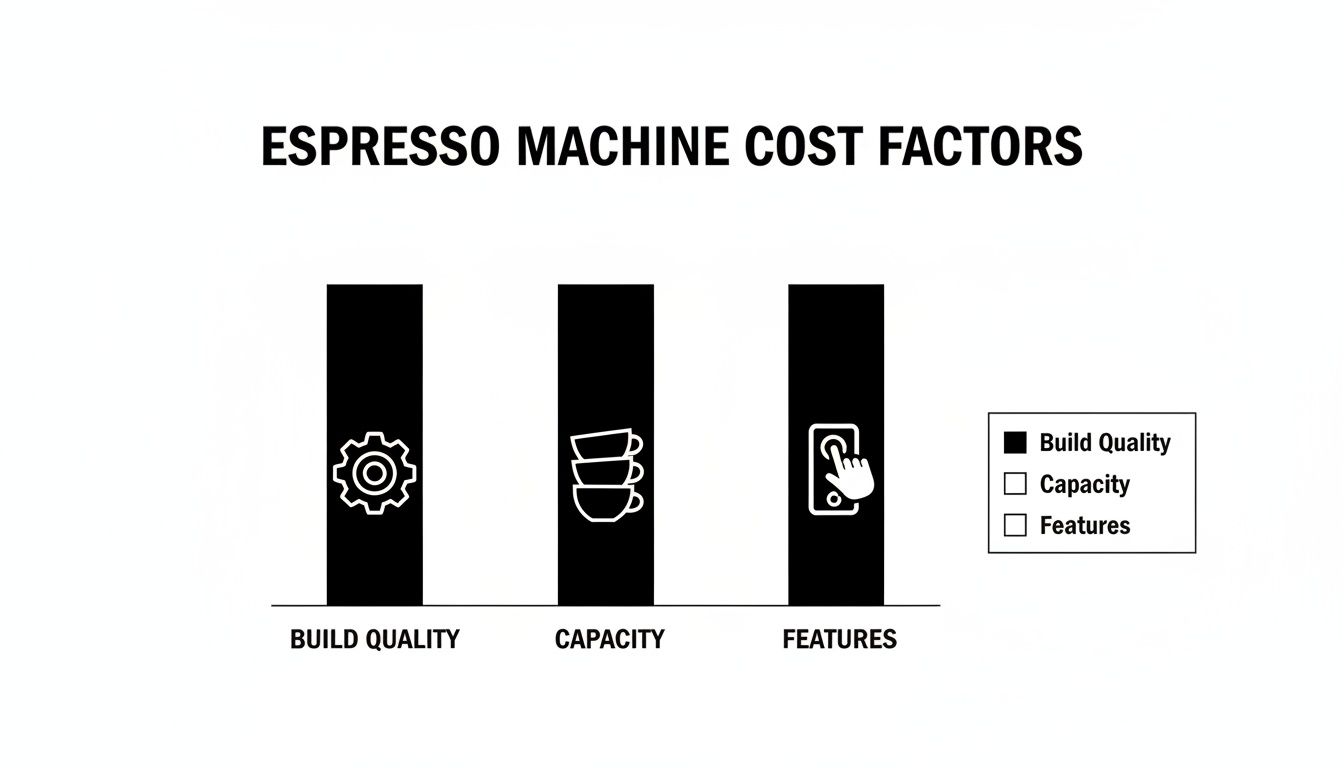
As you can see, higher costs are directly tied to better build quality, greater production capacity, and more advanced features.
The Full-Service Destination: Outfitting a Large Coffee House
A large, full-service coffee house is more than a place to grab a latte; it's a destination. This model often includes a full food menu, lots of seating, and maybe even evening service with beer and wine. The equipment needs are substantial, requiring high-volume machines and a fully equipped food prep line to run smoothly during the busiest hours.
The coffee shop equipment cost for a full-service model can range anywhere from $80,000 to $200,000+.
This budget has to accommodate a powerful two or three-group espresso machine, multiple grinders, and high-capacity brewers. The checklist also grows to include:
- High-Capacity Ice Machine: Absolutely essential for a wide range of iced beverages.
- Commercial Dishwasher: This is non-negotiable for handling a high turnover of ceramic mugs, plates, and glassware.
- Walk-In Cooler: Necessary for storing the larger inventory of milk, food ingredients, and kegs.
- Extensive Cooking Equipment: This could include commercial ovens, ranges, and ventilation hoods, depending on how complex your menu gets.
This level of investment supports a business built for high volume and diverse offerings, one that can become a cornerstone of its community. By understanding these distinct models, you can build a realistic budget that lines up your financial plan directly with your business goals.
See the Numbers: Sample Budgets for Every Cafe Type
To give you a clearer picture, we've put together a table that summarizes the estimated equipment costs for each of these three coffee shop models. This should help you visualize how the scale of your operation directly impacts your initial investment.
| Business Model | Key Equipment Needs | Estimated Total Cost |
|---|---|---|
| Coffee Cart / Kiosk | 1-Group Espresso Machine, Grinder, Undercounter Fridge, POS | $15,000 - $25,000 |
| Mid-Size Cafe | 2-Group Espresso Machine, Multiple Grinders, Brewer, Reach-In Fridge, Blender, Light Cooking | $30,000 - $75,000 |
| Full-Service Coffee House | 2-3 Group Espresso Machine, High-Capacity Brewers, Walk-In Cooler, Ice Machine, Dishwasher, Full Cook Line | $80,000 - $200,000+ |
As you can see, the jump in cost between models is significant, driven by the need for higher capacity, greater variety, and more specialized equipment. Use these figures as a starting point to frame your own detailed budget.
Don't Forget the Hidden Costs of Coffee Shop Equipment
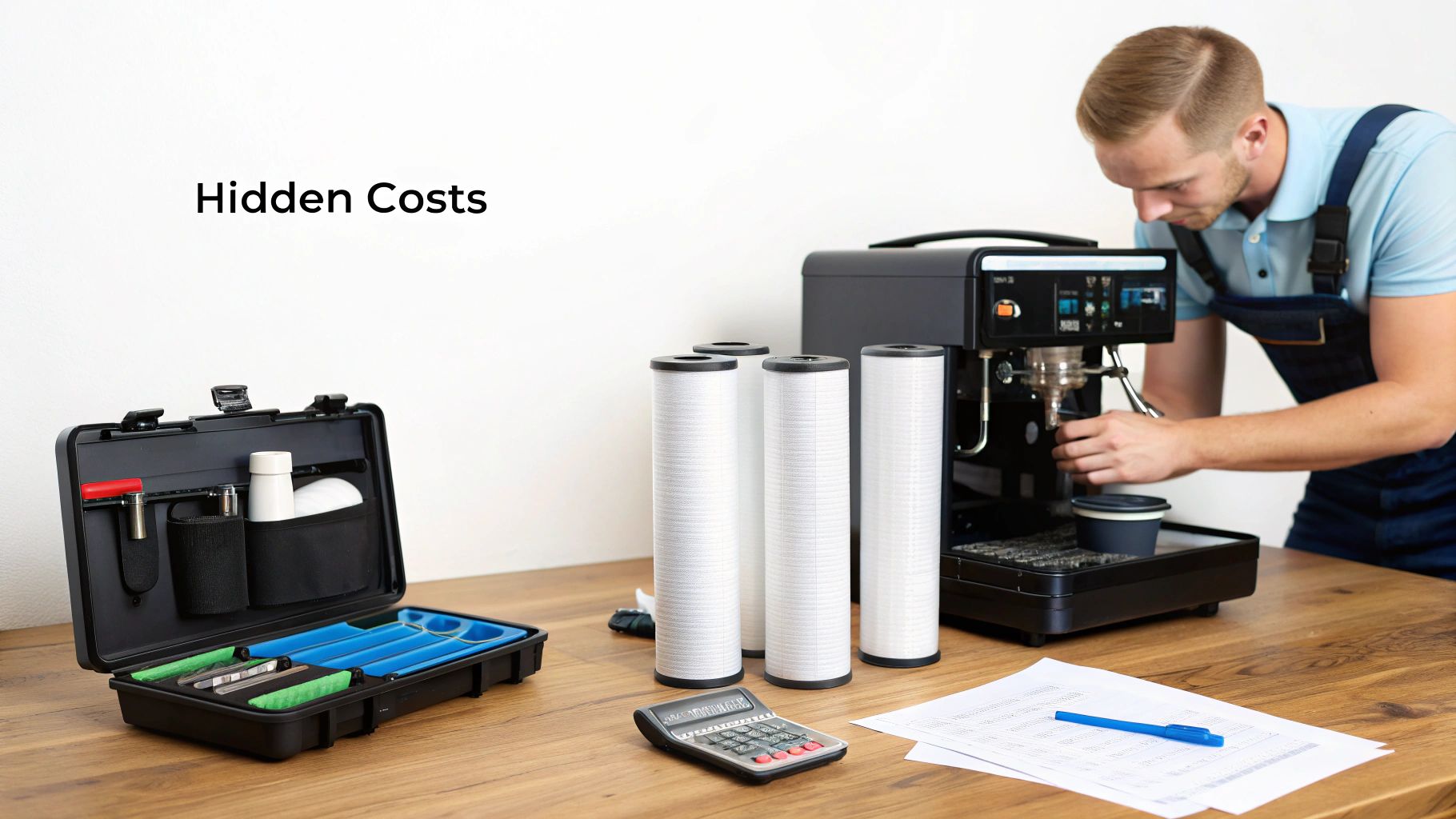
That initial invoice for your shiny new espresso machine? It's just the tip of the iceberg. To get a truly accurate picture of your coffee shop equipment cost, you have to look past the sticker price and account for everything it takes to keep your gear running safely and smoothly day in and day out.
Forgetting to plan for these "hidden" costs is a classic misstep for new owners. It’s a lot like buying a high-performance car but forgetting to budget for premium fuel, oil changes, or insurance. You might have the asset, but you can't actually use or protect it properly. Forecasting these expenses from day one builds a much stronger, more resilient financial foundation for your shop.
Getting It All Set Up: Installation and Training Fees
Getting your equipment from the shipping pallet to your front counter isn't always a simple plug-and-play affair. Commercial coffee equipment has some serious utility requirements that almost always call for professional help.
- Specialized Electrical Work: A powerful two-group espresso machine can't just run on a standard wall outlet. It needs a dedicated 220V or 240V circuit, and getting an electrician to install one can cost anywhere from $500 to $2,000, depending on your building’s current wiring.
- Professional Plumbing: Your espresso machine, ice maker, and batch brewers all need direct water lines and proper drainage. A commercial plumber will likely charge between $500 to $1,500+ to run these lines and make sure everything is up to code, which is crucial for preventing leaks and water damage.
These aren't just recommendations; they are essential for operational safety and for passing your local health and building inspections. Budgeting for these pros upfront will save you from expensive delays and last-minute chaos during your build-out.
Keeping Things Running: Maintenance and Supply Budgets
Your equipment is the engine of your business, and just like any engine, it needs regular tune-ups to perform at its best. These recurring costs are an essential line item in your operating budget.
Think of preventative maintenance as an investment, not an expense. A $300 annual service call can prevent a $3,000 emergency repair and the thousands more lost in sales during unexpected downtime. Neglecting maintenance is one of the fastest ways to turn a valuable asset into a liability.
Here are the regularly scheduled expenses you absolutely must account for:
- Preventative Maintenance Plans: A technician will come in to inspect, clean, and replace worn parts like gaskets and screens. A typical service plan runs $300 to $800 per year for your primary machines.
- Water Filters: Protecting your equipment from scale buildup is completely non-negotiable. Plan on replacing the cartridges for your water filtration system every 6-12 months, which will cost $100 to $300 each time.
- Cleaning Supplies: You’ll need a steady supply of specialized detergents for backflushing your espresso machine, cleaning grinders, and sanitizing steam wands. Set aside $50 to $100 per month for these essentials.
The True Cost of Power: How Equipment Affects Utility Bills
Finally, don't forget about your equipment's appetite for energy and water, which directly hits your monthly utility bills. An energy-efficient machine might have a higher purchase price, but it can easily save you hundreds of dollars a year in running costs.
When you're comparing models, look beyond the price tag to the machine’s energy and water usage specs. A less efficient espresso machine or ice maker can easily add $50 to $150 to your monthly utility bills. Over the five-to-ten-year lifespan of the equipment, a more efficient model often pays for the initial price difference and then some, truly lowering your total cost of ownership.
Smart Strategies for a Successful Launch
Navigating the path from a great idea to a grand opening requires more than just passion for coffee; it demands sharp business sense and meticulous planning. Your success hinges on the strategic decisions you make long before you serve your first customer. This means understanding the industry, creating a bulletproof business plan, and knowing where you can save money without sacrificing the quality that will define your brand. Building a solid foundation from the start is the best way to ensure your coffee shop not only survives but thrives.
Why Industry Experience Matters
There's a romantic idea about opening a coffee shop, but the day-to-day reality is a fast-paced, demanding business. Having hands-on experience, even as a barista, gives you an incredible advantage. You’ll understand the natural workflow behind the bar, anticipate customer needs during a morning rush, and know firsthand which equipment features are essential versus which are just nice to have. This insight is invaluable when you're making significant financial decisions. The right equipment is a non-negotiable investment. Commercial espresso machines and grinders alone typically range from $5,000 to $20,000 or more, forming the core of any serious café setup. Experience helps you confidently choose the right tools for the job, ensuring your investment directly supports your operational goals.
The Importance of a Detailed Business Plan
Your business plan is much more than a document to show potential investors; it's your operational playbook. It forces you to think through every detail, from your target audience and menu concept to your marketing strategy and financial projections. This plan directly informs your equipment budget. To get a truly accurate picture of your coffee shop equipment cost, you have to look past the sticker price and account for everything it takes to keep your gear running safely and smoothly day in and day out. Your plan should forecast these "hidden" costs, including installation, maintenance, and increased utility bills. Budgeting for these pros upfront will save you from expensive delays and last-minute chaos during your build-out, making your launch much smoother.
Cost-Saving Tips for New Owners
Being smart with your startup capital is crucial, but that doesn't mean always choosing the cheapest option. One of the best ways to manage large expenses is through restaurant equipment financing, which allows you to get high-quality gear without draining your cash reserves. Another key strategy is to prioritize upkeep from day one. Think of preventative maintenance as an investment, not an expense. A $300 annual service call can prevent a $3,000 emergency repair and the thousands more lost in sales during unexpected downtime. Forgetting to plan for these ongoing costs is a classic misstep for new owners. It’s a lot like buying a high-performance car but forgetting to budget for premium fuel, oil changes, or insurance. Smart planning ensures your equipment remains a reliable asset, not a financial burden.
How to Pay for Your Equipment (Without Emptying Your Pockets)
After you've mapped out every last grinder, brewer, and refrigerator, the final number for your coffee shop equipment cost can be a bit of a shock. Seeing a figure like $30,000 or more is enough to give any new entrepreneur a moment of pause.
But that big number isn't a stop sign. It's just a financial hurdle you need a smart way to clear. The good news? You don't need all that cash sitting in the bank to get your doors open.
Smart financing is what bridges the gap between the dream shop in your head and the funds you have on hand. By using other people's money strategically, you can hold onto your own precious capital for the things you can't finance—like payroll, that big grand opening marketing push, and keeping the lights on for the first few critical months.
Should You Buy or Lease Your Equipment?
When it comes to funding, most of us immediately think of a traditional bank loan. That's definitely a solid route if you have a strong credit history and an iron-clad business plan, but it's far from the only game in town. To get your shop equipped without putting a huge strain on your finances, it's worth looking into all the different funding options for asset acquisition.
For many new coffee shop owners, equipment leasing or lease-to-own programs offer a much more accessible and flexible path forward.
- Traditional Business Loan: You borrow a lump sum from a bank and buy all the equipment outright. You own everything from day one, but this route often requires a hefty down payment and can involve a long, drawn-out approval process.
- Equipment Leasing: This works more like a long-term rental. You make fixed monthly payments to use the gear for a set period (say, 36 or 60 months). At the end of the lease, you often have the option to buy the equipment, upgrade to newer models, or simply return it.
The biggest advantage of leasing is how it protects your cash flow. Instead of one massive upfront hit, you have a predictable, manageable monthly payment. This frees up your cash to handle all those little surprise costs that inevitably pop up when you're launching a new business.
Think of it this way: Leasing transforms a massive capital expenditure into a simple, manageable operating expense. That $30,000 equipment package might turn into a monthly payment of around $650—a number that's far easier to build into your budget than a five-figure upfront cost.
Lease-to-Own: The Best of Both Worlds?
Lease-to-own programs, like the ones we offer through The Restaurant Warehouse, give you the best of both worlds. You get the low upfront cost and easy monthly payments of a lease, but with a clear path to actually owning the equipment when the term is up. For a startup, this is an incredibly powerful tool.
This approach brings several key benefits to the table:
- Preserves Startup Capital: Keep your cash ready for inventory, hiring, and marketing. Having that financial buffer is absolutely critical for surviving the crucial first six months of operation.
- Potential Tax Advantages: Lease payments can often be written off as a business operating expense, which could lower your overall tax bill. It's always a good idea to chat with an accountant to see how this applies to your specific situation.
- Access to Better Equipment: Leasing allows you to get the high-quality, reliable machines you need from day one, instead of settling for cheaper, less effective options that could hurt your coffee quality and your business in the long run.
By financing your equipment, you aren't just taking on debt; you're making a strategic investment in the future of your business. It’s what allows you to build your dream cafe with professional-grade tools right from the start. For a more detailed look at these strategies, our ultimate guide to restaurant equipment financing takes an even deeper dive into all the options available to you.
Exploring Alternative Funding Options
While financing and leasing are fantastic tools for acquiring your big-ticket items, they aren't the only paths to funding your dream. Sometimes, the best approach involves a bit more creativity. Thinking beyond traditional debt can open up opportunities to not only secure the capital you need but also to build a community around your brand before you even brew your first cup. These alternative routes require a different kind of effort—often more focused on marketing and networking—but they can provide the financial runway you need to get off the ground successfully.
Finding Investors
Bringing on an investor means selling a small piece of your company in exchange for capital. This isn't a loan you have to pay back; it's a partnership. The right investor can bring much more than just a check—they might offer invaluable mentorship and industry connections. This strategy allows you to use other people's money for the heavy equipment costs, letting you save your own cash for the things you can't finance, like payroll and your grand opening marketing push. The SBA provides resources on finding investment capital, which can be a great place to start your research on this path.
Using Crowdfunding Platforms
Crowdfunding platforms like Kickstarter and Indiegogo offer another powerful way to raise money. The model is simple: you raise small amounts of money from a large number of people online, typically in exchange for future rewards like merchandise, free coffee, or an invite to a VIP launch party. This approach carries less financial risk than a traditional loan, but it demands a strong marketing plan to succeed. A great campaign does more than just raise funds; it validates your business idea and builds a dedicated community of supporters. Learning how to plan your campaign is the first step to turning your future customers into your first investors.
Common Questions About Coffee Shop Equipment Costs
Alright, let's talk about the financial side of things. When you're dreaming up your perfect coffee shop, the numbers can feel a little daunting. How much do I really need to get started? Is that shiny, expensive espresso machine actually worth it? These are the questions that keep new owners up at night.
Getting clear answers is the key to building a business plan you can feel good about. So, think of this section as a final chat over coffee. We'll tackle the most common questions I hear from aspiring owners, cutting through the noise to give you practical, straightforward advice based on real-world experience.
What Is the Minimum I Can Spend to Equip a Small Coffee Kiosk?
For a bare-bones setup focused purely on slinging great coffee, you can realistically get started for somewhere between $15,000 and $25,000. This lean approach is all about getting your foot in the door, though it does mean you'll have some menu limitations.
This budget covers the absolute essentials: a reliable single-group commercial espresso machine, a quality grinder, a batch brewer for drip coffee, and some basic undercounter refrigeration. It's the perfect setup for a small kiosk, a farmers market stand, or a mobile cart where speed and a focused menu are everything. Financing can make this number much less intimidating, breaking it down into manageable monthly payments so you can save your cash for opening day.
Should I Buy New or Used Coffee Shop Equipment?
This is the classic dilemma, and honestly, the smartest answer is usually a strategic mix of both. Used equipment can slash your upfront costs significantly—often by 30-50%—but it’s a bit of a gamble. You’re usually looking at no warranty and the risk of unexpected repair bills popping up at the worst possible time.
New equipment, on the other hand, is a bigger check to write upfront, but you’re paying for reliability. It comes with a full manufacturer's warranty and the peace of mind that it’s not going to die on you during the morning rush. Plus, modern machines are way more energy-efficient, which will save you real money on your utility bills over time.
Here’s the hybrid strategy that I always recommend: Invest in a new espresso machine and your primary grinder. These are the absolute heart of your operation. Downtime here is catastrophic. For less critical items like prep tables, sinks, or storage shelves, certified used or refurbished is a fantastic way to save.
How Do I Justify the Cost of an Expensive Espresso Machine?
It’s easy to get sticker shock looking at a $15,000 espresso machine. But you have to stop thinking of it as a cost and start seeing it as a revenue-generating asset. A high-end machine is an investment that pays for itself through speed, consistency, and quality—all things that directly fatten your bottom line.
Think about it. Its speed allows you to serve more customers during your busiest hours, which means more sales. Its incredible consistency means every drink is perfect, justifying a premium price and building a loyal following of customers who will happily pay for the best coffee in town.
Let’s do some quick math. If that fancy machine helps you sell just 20 extra drinks a day at a $3 profit margin, that’s an extra $1,800 in your pocket every month. At that rate, the machine pays for itself in under a year, all while making your shop the place to go for amazing coffee.
What Are the Biggest Equipment Mistakes New Owners Make?
So many first-time owners stumble into the same preventable traps when buying their equipment. Sidestepping these common mistakes can save you thousands of dollars and a mountain of stress.
Here are the biggest errors I see time and time again:
- Underestimating Your Volume: Buying a machine that can't keep up with your morning rush is a fatal flaw. It creates a bottleneck at the counter, leads to lost sales, and frustrates customers who probably won't come back. Always buy for the volume you want to have, not just what you expect on day one.
- Forgetting Installation Costs: This one gets people all the time. You have the perfect machine, but you forgot to budget for the professional plumbing and electrical work needed to hook it up. This can easily add an unexpected $1,000 to $3,500 (or more!) to your startup costs, creating a financial crunch right before you open.
- Buying Residential-Grade Gear: Trying to save a buck by using cheaper, non-commercial equipment is a false economy. Those machines are not built for the constant grind of a cafe. They will break down, leading to expensive downtime, emergency replacements, and potentially even health code violations.
By thinking through these questions and learning from the mistakes of others, you can walk into the equipment buying process with your eyes wide open, ready to make smart choices that set your coffee shop up for success.
Ready to build your dream coffee shop with reliable, top-tier equipment without draining your startup capital? At The Restaurant Warehouse, we offer a huge selection of new commercial equipment and flexible financing options designed for businesses just like yours. Explore our inventory and get a quote today to turn your vision into a reality.
What Are the Most Common Business Mistakes to Avoid?
Beyond the initial purchase, some of the costliest mistakes are rooted in business strategy, not just the equipment itself. One of the biggest is failing to design an efficient workflow. You can have the best espresso machine on the market, but if your baristas have to take five extra steps between the grinder and the milk fridge for every latte, you're losing precious seconds that add up to lost sales during a rush. Another common pitfall is neglecting preventative maintenance. It's easy to treat it as an afterthought, but it should be a scheduled, budgeted part of your operations. A simple $300 annual service call can prevent a $3,000 emergency repair, saving you from unexpected downtime and protecting your revenue-generating assets from failure.
Key Takeaways
- Budget for the total cost of ownership, not just the sticker price: A realistic financial plan must include funds for professional installation, ongoing maintenance, and essential supplies like water filters to prevent unexpected expenses and protect your investment.
- Align your equipment budget with your business model: A lean coffee cart requires a different set of tools and a smaller investment than a full-service cafe. Buying for your specific concept ensures you don't overspend or under-equip your shop for its daily volume.
- Preserve your startup capital by financing your equipment: Leasing allows you to get the high-performance machines you need to succeed without draining your cash reserves, ensuring you have money for crucial operating costs like payroll and inventory.
Related Articles
About The Author

Sean Kearney
Sean Kearney is the Founder of The Restaurant Warehouse, with 15 years of experience in the restaurant equipment industry and more than 30 years in ecommerce, beginning with Amazon.com. As an equipment distributor and supplier, Sean helps restaurant owners make confident purchasing decisions through clear pricing, practical guidance, and a more transparent online buying experience.
Connect with Sean on LinkedIn, Instagram, YouTube, or Facebook.