

Your Commercial Frose Machine Buyer's Guide
While the name suggests one specialty, a commercial frose machine is one of the most versatile pieces of beverage equipment you can own. Beyond the popular frozen rosé, these machines are perfect for crafting high-margin frozen margaritas, daiquiris, piña coladas, and even non-alcoholic slushies for a broader audience. This flexibility allows you to diversify your menu and adapt to changing customer tastes without buying multiple appliances. This guide covers the key considerations for selecting a machine that can handle a variety of recipes, helping you maximize your creative potential and your profits from a single investment.
Why Frozen Drinks Are a Menu Must-Have
A commercial frose machine is a specialized frozen beverage dispenser designed for the high-volume production of popular frozen drinks like frosé, margaritas, slushies, and smoothies. These machines are indispensable assets in modern bars, restaurants, and cafes aiming to capitalize on the frozen drink trend. When you begin exploring commercial options, it is essential to understand the key features that differentiate models and ensure you select a unit that aligns with your business needs.
| Key Feature | What to Consider |
|---|---|
| Capacity | Hoppers typically range from 6 to 45 liters each; your choice should correspond to your projected sales volume to avoid constant refilling or wasteful over-production. |
| Number of Hoppers | Models come with 1 to 3 hoppers, allowing you to offer a variety of flavors simultaneously and cater to diverse customer preferences. |
| Cooling System | Most units are air-cooled, which is simpler to install, but water-cooled options exist for hotter environments. The compressor power, measured in horsepower (HP), affects freezing speed and recovery. |
| Build Quality | Look for durable stainless steel construction for the body and food-grade, high-impact plastic for the tanks to ensure longevity and safety. |
| Certifications | NSF and ETL approvals are important for meeting food safety and electrical safety standards in a commercial setting. |
| Power Requirements | Many machines use a standard 110-120V outlet but often require a dedicated circuit due to a high amperage draw (typically 12-14 amps). |
| Production Rate | Commercial-grade models are often engineered to produce well over 100 drinks per hour, helping you keep up with demand during peak business hours. |
The frozen beverage market is expanding quickly. The global slush machine segment alone has been projected to grow from around $1.2 billion in 2023 to about $1.7 billion by 2028, fueled by consumer demand for refreshing, convenient options, particularly during summer. For food and beverage establishments, frozen drinks represent a significant profit opportunity, commonly yielding markups between 500-1000% on sales.
Frosé—a blend of frozen rosé wine and fruit—has evolved from a social media trend into a staple on summer menus. Customers are drawn to these photogenic pink drinks, while business owners appreciate the strong margins. These machines extend far beyond frosé, capable of serving frozen margaritas, smoothies, frozen coffees, and non-alcoholic slushies, making them a powerful menu diversification tool that can deliver a rapid return on investment.
However, not all commercial frose machines are created equal. The market includes compact countertop models and higher-capacity floor units, each offering different features, capacities, and levels of reliability. Selecting an inadequate machine can result in frequent breakdowns, inconsistent product quality, disappointed customers, and lost revenue during your busiest periods.
This guide is designed to cut through the marketing jargon and highlight what truly matters when selecting a commercial frozen beverage machine. We cover essential features, key technical considerations, maintenance basics, and the certifications you should know about so you can make a confident investment that serves your business for many seasons to come.
Related content about commercial frose machine:
- Beyond the Blender: Crafting Epic Margaritas With a Dedicated Machine
- Where to Buy a Slushy Machine
Is a Commercial Frose Machine a Smart Investment?
Investing in a commercial frose machine is a strategic move to improve your establishment's appeal and profitability, not just a way to keep up with trends. In a competitive landscape, offering unique, high-quality beverages sets your business apart and drives substantial revenue. The right equipment can transform a menu, attracting new customers and delighting regulars. Demand for frozen beverages, including slushies and granitas, remains consistently high, especially in warmer climates and throughout the summer months. A dedicated machine enables you to meet this demand efficiently. The visual appeal of a machine churning out vibrant, frosty drinks is also an instant attraction that can draw customers in from the street.
Increase Sales and Profit Margins
The financial benefits are significant. As noted earlier, a typical markup of 500-1000% on frozen beverage sales is a realistic expectation for many operations. That means for every dollar invested in ingredients, you may earn five to ten dollars in return when pricing is set appropriately for your market.
The cost per serving for a frozen drink is usually low, particularly compared with intricate cocktails or many specialty coffee beverages. Despite the low cost of production, customers are often willing to pay a premium for a refreshing, visually appealing frozen drink. This dynamic positions frozen beverages as a high-demand, low-cost item that can drive impulse purchases.
By placing your commercial frose machine in a visible, high-traffic location, you increase the odds that guests add a frozen drink to their order. Customers who may have arrived for a meal or a standard beverage are frequently enticed by the visual of a slowly turning, frosty mix. Capturing these incremental sales is one of the simplest ways to lift your average check size.
Calculating Your Potential Profit
Let's talk numbers, because that's what really matters. The profit potential from frozen drinks is impressive, largely due to the low cost of ingredients versus the premium price customers are happy to pay. With markups often landing between 500% and 1000%, a commercial frose machine can pay for itself surprisingly fast. Think about it: the core ingredients for a frosé are rosé wine, a bit of sugar, and maybe some fruit purée. The cost per serving is minimal, yet you can price the final product competitively while still enjoying a healthy margin. This isn't just about one popular drink; this machine is a versatile workhorse for creating a whole menu of high-margin frozen cocktails, mocktails, and slushies that appeal to a wide range of customers.
Acquisition Options: Buying vs. Financing
Once you've decided a commercial frose machine is the right move, the next step is figuring out how to acquire it. The two primary paths are buying it outright or financing the purchase. Buying the machine means it's yours from day one—a long-term asset for your business. This is a great option if you have the capital available for a new equipment purchase and prefer to avoid monthly payments. It simplifies your accounting and, over time, is the most cost-effective way to own your equipment. Owning the machine gives you complete control, with no strings attached.
However, not every business has the cash on hand for a large purchase. That's where financing comes in as a smart, flexible alternative. Financing allows you to get the equipment you need now and pay for it over time through manageable monthly installments. This approach keeps your cash free for other essential expenses like inventory, payroll, or marketing campaigns. It makes top-tier equipment accessible without a major upfront financial hit, allowing the machine to start generating revenue and essentially pay for itself from the first drink sold. Both options are valid; the best choice depends entirely on your business's current financial situation and long-term strategy.
Exploring Restaurant Equipment Financing
If you're leaning towards financing, the process is more straightforward than you might think. Restaurant equipment financing is designed to help you get the tools you need to grow your business without draining your bank account. By spreading the cost of a new frose machine over a set term, you can maintain healthy cash flow while immediately adding a profitable new item to your menu. This option is perfect for new businesses looking to conserve capital or established restaurants wanting to upgrade their equipment without a significant upfront investment. It’s a strategic way to make your new machine start working for you right away, turning a capital expense into a manageable operational cost.
Create an Experience Customers Love
Beyond the financial gains, a commercial frose machine can lift your customer experience. On a hot day anywhere in the United States, few things are more enticing than a perfectly chilled, smooth frosé or a brilliantly colored frozen margarita.
These machines are engineered to deliver consistent texture and temperature, helping ensure that each drink tastes like the last. That consistency is crucial for building guest loyalty, encouraging positive reviews, and generating word-of-mouth referrals.
Multiple hoppers also let you offer a diverse range of flavors, from classic frosé and margaritas to innovative frozen cocktails and non-alcoholic options. This flexibility allows you to serve families, groups with mixed preferences, and guests avoiding alcohol, all from the same machine.
During peak service hours, speed matters. Instead of blending one drink at a time, a commercial machine lets you dispense drink after drink with minimal wait. Faster service reduces lines, supports a smoother workflow for your staff, and contributes to a better overall guest experience.
If you are considering adding frozen drinks to your menu, this is an ideal time to explore your options. You can browse the full range of frozen beverage machines available at The Restaurant Warehouse and identify units that match your budget and volume goals.
What to Look For in a Commercial Frose Machine
Choosing the right commercial frose machine is like selecting a business partner—you need reliability, efficiency, and room to grow. This section breaks down the essential features that distinguish a good machine from a great one so your investment serves you well for years.
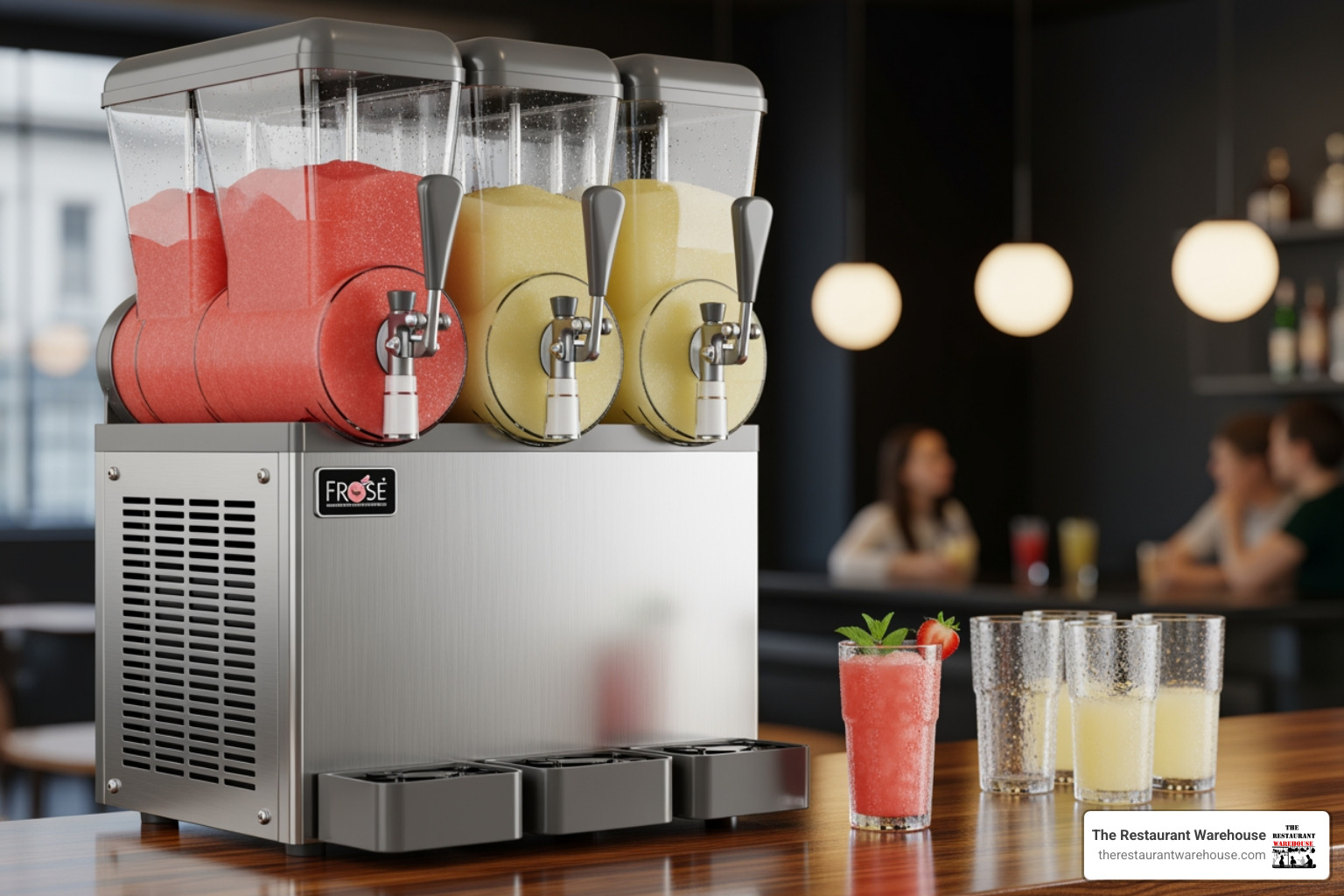
You can explore our collection of frozen beverage dispensers to see many of these features in action and compare models side by side.
Finding the Right Size and Capacity
Capacity refers to the total volume of liquid your machine can hold and freeze at one time, usually measured in liters or gallons per hopper. Commercial frose machines typically range from 6 to 45 liters (about 1.5 to 12 gallons) per hopper.
Match capacity to your expected traffic:
- A small cafe or tasting room may be comfortable with a single 6–10 liter hopper.
- A busy bar, restaurant, or event venue will usually need two or three hoppers with larger capacities to avoid frequent refills.
The number of hoppers determines how many flavors you can run at once. A single-hopper machine may be enough if you plan to feature only a signature frosé. Two- or three-hopper units allow you to offer combinations such as frosé, margaritas, and a non-alcoholic fruit slush simultaneously.
Physical footprint also matters. Countertop units save floor space but may have lower capacity. Larger models require more room but better support high volume. Always check height, width, and depth, and confirm you can provide the ventilation clearance specified by the manufacturer so the unit runs efficiently.
Evaluating Power, Speed, and Cooling
The cooling system is the heart of any commercial frose machine. It determines how quickly your mix freezes and how consistently it maintains the ideal slushy texture.
Key considerations include:
- Compressor power (HP): More horsepower generally means faster freeze times and better recovery after heavy dispensing.
- Refrigerant type: Many newer machines use refrigerants with lower Global Warming Potential (GWP) such as R452A, reflecting a broader industry shift toward more environmentally responsible options.
- Freeze time and recovery: Freeze time is how long it takes a fresh batch of mix to reach serving consistency. Recovery is how quickly the machine refreezes after pouring multiple drinks. Fast recovery is crucial during rushes so you do not run out of ready product.
- Air-cooled vs. water-cooled: Air-cooled units are common and easy to install but need good airflow. Water-cooled systems can perform better in hot environments but require plumbing.
Many machines now include consistency controls that let you adjust product thickness to suit different recipes. This is especially important when working with varying sugar levels or alcohol content.
Comparing Brands, Models, and Costs
Once you have a clear idea of the capacity and power you need, it’s time to start comparing specific brands and models. The market for commercial frose machines is broad, with options available for every type of business and budget. Taking the time to research different manufacturers and understand the price landscape will help you find a machine that offers the best value for your specific needs. Think about not just the initial purchase price, but also the long-term reliability and features that will make your daily operations smoother and more profitable.
Popular Frose Machine Brands
You’ll quickly come across established names in the frozen beverage industry. For example, BUNN offers a wide array of commercial frozen granita and slushy machines, with nearly 20 different models to choose from. Another major player, Taylor Freezer, provides equipment capable of producing everything from fruity slushies to frozen alcoholic cocktails. While these brands are well-regarded, they are just the starting point. Many other manufacturers produce high-quality, reliable machines that might be a better fit for your budget or space. Exploring a wide range of restaurant equipment from various brands ensures you see the full picture before making a decision.
Understanding the Price Range
The cost of a commercial frose machine can vary dramatically, with prices ranging from under $1,000 for a small, entry-level unit to over $20,000 for a high-capacity, feature-rich model. The final price tag depends on factors like the number of hoppers, the power of the compressor, the brand’s reputation, and the overall build quality. While a higher price often correlates with greater durability and faster production, you don't always need the most expensive option. For many businesses, the significant upfront cost can be a barrier. That’s where restaurant equipment financing can be a game-changer, allowing you to get the machine you need now and pay for it over time as it generates revenue.
Exploring Special Features and Technology
Beyond the core specifications, many modern frose machines come with special features and advanced technology designed to improve ease of use, expand your menu, and protect your investment. These innovations can make a real difference in a busy commercial kitchen or bar, saving your staff time and helping you deliver a consistently great product. When comparing models, look for these value-added features that go beyond just freezing a liquid. They often justify a slightly higher price point by streamlining your workflow and opening up new creative possibilities for your beverage program.
User-Friendly Innovations
Some manufacturers focus on making their machines as simple to operate as possible. For instance, you might find models with a "Pull & Hold" dispensing mechanism for easy pouring or a "Constant Flow Valve" that ensures a consistent product texture with every serving. One of the most helpful features for high-volume establishments is a "Liquid Autofill" system, which automatically refills the hoppers from a connected bag-in-box syrup supply. This technology minimizes downtime and frees up your staff from the constant task of manually mixing and refilling batches during a rush, letting them focus on serving customers instead.
Flavor Expansion Options
If menu variety is a top priority, look for machines that offer flavor expansion capabilities. Some brands have developed innovative systems that can dramatically increase the number of flavors you can offer from a single unit. For example, Taylor Freezer’s "Flavor Burst" program can turn a two-flavor machine into a ten-flavor powerhouse by injecting concentrated syrups into the base mix as it's dispensed. This allows you to offer a rotating menu of unique and exciting options without having to invest in a larger machine with more hoppers, keeping your offerings fresh and enticing for repeat customers.
Warranties and Manuals
A commercial frose machine is a significant piece of equipment, and you want to make sure your investment is protected. Always check the warranty details before you buy. A strong warranty that covers parts and labor for at least a year provides peace of mind and protects you from unexpected repair costs. Additionally, make sure the manufacturer provides clear and comprehensive user manuals. Easy access to documentation for operation, cleaning, and basic troubleshooting will save you time and help you keep your machine running smoothly for years to come, ensuring it remains a profitable asset for your business.
Commercial vs. Home Models: Why It Matters
It can be tempting to consider a low-cost home slushy maker for a small operation, but the differences between a home unit and a true commercial frose machine are substantial.
- Durability and Build Materials: Commercial models are designed for continuous, heavy-duty use. They often feature stainless steel cabinets and high-grade, food-safe polycarbonate tanks. Home units typically rely on lighter plastics and components intended for only occasional use.
- Capacity and Cooling Power: Home machines may only produce a few servings at a time and can be slow to freeze and recover. Commercial units offer significantly larger hoppers (often 6–45 liters per tank) with powerful compressors that can support high drink volumes per hour.
- Certifications: Equipment intended for commercial use in the United States is expected to meet specific safety and sanitation standards. Reputable machines carry certifications such as NSF for food contact and ETL or UL for electrical safety, which are important for passing inspections and protecting guests and staff.
- Motor Strength and Design: Commercial motors are engineered to churn thick, dense mixes for hours without overheating. Some models incorporate features such as torque control or specialized auger designs to keep texture consistent.
- Price Point and Value: Commercial machines cost more upfront, but the added capacity, speed, and durability generally deliver a stronger long-term return. Attempting to rely on a home unit in a commercial environment often leads to breakdowns, inconsistent product, and lost sales.
If you are unsure which tier of machine you need, you can reach out to The Restaurant Warehouse for guidance based on your projected drink volume and menu plans.
Understanding Tech Specs and Certifications
Understanding the technical specifications of your commercial frose machine is essential for smooth installation, safe operation, and compliance with health regulations. Addressing power and safety requirements upfront helps you avoid disruptions later and protects your business and your guests.
Power and Installation Requirements
Before purchasing and installing a commercial frose machine, review its power requirements carefully. Many commercial units in the United States are designed for a standard 110–120V electrical supply, but the amperage draw is often in the 12–14 amp range or higher.
In practice, this usually means you should:
- Plan for a dedicated circuit so the machine does not share power with other high-draw appliances.
- Confirm the correct voltage, amperage, phase (often single phase), and frequency (typically 60 Hz in the US) on the spec sheet.
- Verify the plug type (for example, NEMA 5-15P or 5-20P) so it matches your existing outlets or planned electrical work.
Some advanced models include liquid autofill features, which require basic plumbing connections, often through a 1/4" male flare fitting and a specified water pressure range. This setup automates water mixing with concentrates and reduces manual refilling.
Ventilation is just as important as power. Air-cooled machines release warm air while operating, and if that heat cannot escape, cooling performance drops and energy use climbs. Follow the manufacturer’s guidelines for clearance on the sides, rear, and top of the unit.
If you are placing a machine on a countertop, confirm that the surface can support the full weight of the unit when filled with product. Some commercial units can easily exceed 100 lbs once the hoppers are loaded.
Voltage and Wattage Considerations
When it comes to installing new equipment, let's talk about power. Most commercial frose machines in the U.S. run on a standard 110–120V outlet, but the real detail to watch is their high amperage draw, which is often 12 to 14 amps or more. This high power demand means your machine will almost certainly need a dedicated circuit. Trying to share power with other workhorses like a commercial freezer or a deep fryer is a recipe for tripped breakers and poor performance during your busiest hours. Before you commit, always review the machine’s spec sheet to confirm the exact voltage, amperage, phase (usually single), and frequency (60 Hz in the U.S.). Don't forget to check the plug type, too—it’s a small detail that ensures your installation day goes off without a hitch.
Why Commercial Certifications Matter
For foodservice operators, certifications are critical indicators of sanitation, safety, and overall build quality. When selecting a commercial frose machine for use in the United States, look for the following marks on product literature or labels:
- NSF (National Sanitation Foundation): NSF International develops standards for public health and safety. NSF-certified machines have been tested for correct materials, hygienic design, and cleanability. Using NSF equipment makes it easier to follow food code requirements and maintain a sanitary operation. You can learn more about food equipment certification from NSF International.
- ETL (Intertek): The ETL Listed mark indicates that a product has been evaluated and found in compliance with nationally accepted safety standards for electrical equipment. This reduces the risk of hazards such as electrical shock.
- UL (Underwriters Laboratories): Like ETL, UL is an independent testing organization. A UL mark signifies that a product meets established safety and performance criteria recognized across North America.
Choosing a machine bearing these certifications helps ensure you are investing in equipment that meets industry expectations for food contact safety and electrical reliability. That in turn supports smoother health inspections, protects your staff and guests, and contributes to the long-term dependability of your frozen beverage program.
Your Guide to Daily Use, Care, and Recipes
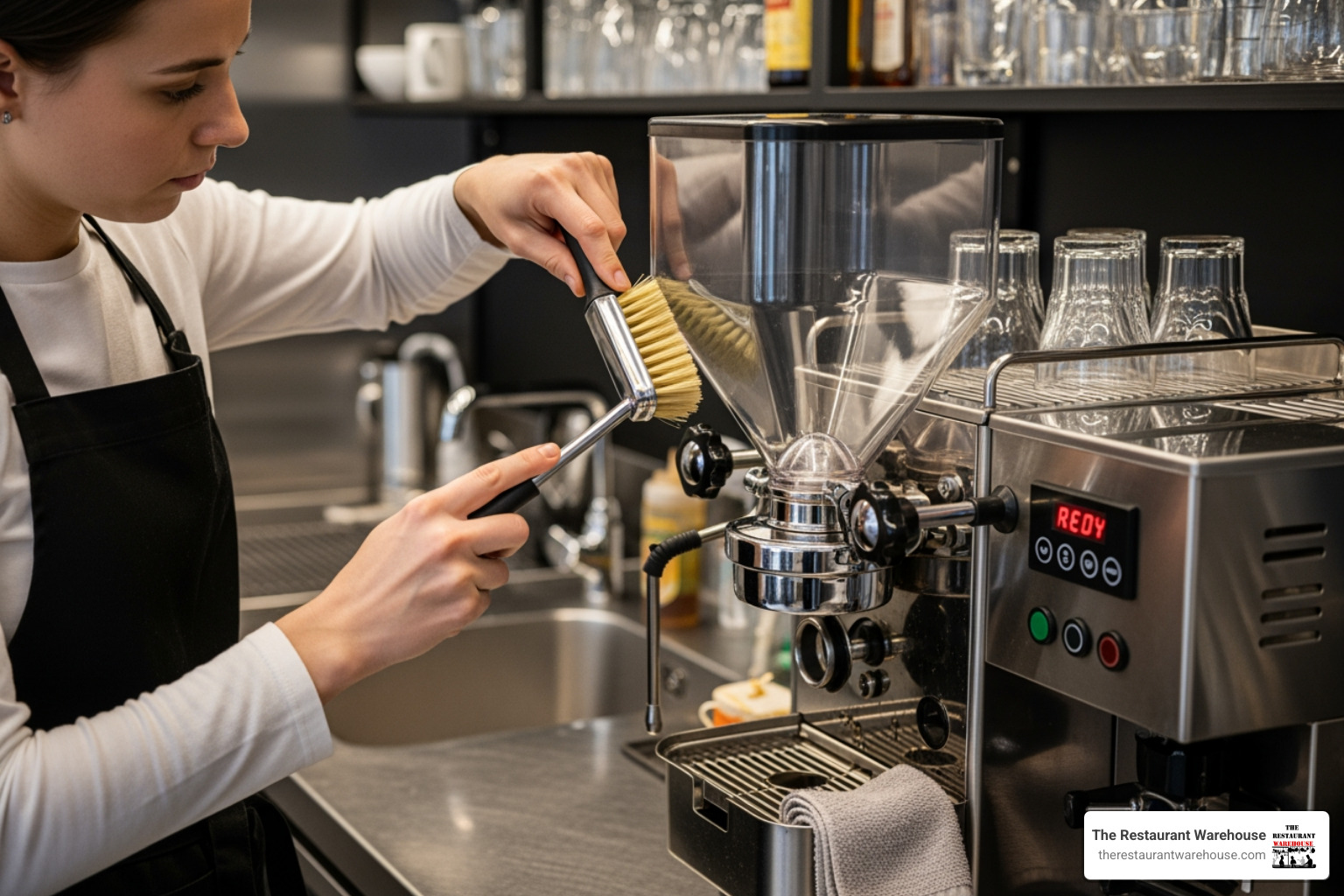
Proper operation and maintenance are crucial for maximizing the lifespan and performance of your commercial frose machine. A consistent routine keeps your drinks tasting great, helps prevent downtime, and protects your investment.
Simple Maintenance for a Long-Lasting Machine
A well-maintained commercial frose machine is far less likely to suffer breakdowns or produce inconsistent drinks. A basic maintenance schedule should include:
- Daily Cleaning: At closing, empty remaining mix from the hoppers and dispose of or store it according to your food safety plan. Rinse the hoppers with warm water, then wash with a mild, food-safe detergent. Clean the dispensing valves and drip trays, which can collect sticky residue, and wipe the exterior surfaces with a damp cloth.
- Weekly Deep Cleaning: Once a week, disassemble food-contact components such as hoppers, augers, seals, and valves. Wash them in hot, soapy water, then sanitize them with an approved food-grade sanitizer. Allow all parts to air dry before reassembly and inspect for worn or cracked seals that may need replacement.
- Lubricating Seals and Gaskets: Apply a food-grade lubricant to the designated seals and gaskets at the interval recommended by the manufacturer. This helps maintain a proper seal, prevent leaks, and extend component life.
- Monitoring Auger and Motor: Listen for unusual noises while the machine is running. Grinding or straining sounds can be an early warning sign and should be investigated before a minor issue becomes a major repair.
- Troubleshooting Basics: Keep the user manual accessible and train staff to recognize common problems such as mix that is too thin or too icy, slow freezing, or inconsistent flow. Many issues can be traced back to mix formulation, cleaning, or ventilation.
- Periodic Professional Service: Even with diligent in-house care, consider having a qualified technician inspect the unit once or twice a year to check refrigerant levels, clean condenser coils, and verify overall system performance.
A simple, written checklist helps ensure that cleaning and checks are completed on schedule, even when you have new or rotating staff.
The Value of Professional Service and Support
While your team's daily cleaning is the first line of defense, scheduling periodic professional service is key to protecting your long-term investment. A qualified technician can spot subtle issues that staff might overlook, like improper ventilation straining the compressor or mix formulation problems that lead to inconsistent quality. The main goal is to prevent unexpected downtime—a machine that breaks down during a busy Saturday in July can cost you dearly in lost sales. These routine inspections help ensure your equipment remains reliable when you need it most. Even machines designed for low maintenance benefit from an expert eye checking refrigerant levels and cleaning condenser coils. This small, recurring expense is an investment in operational stability, giving you peace of mind and keeping your customers happy.
How to Make Perfect Frosé Every Time
A commercial frose machine is only as good as the recipes you run through it. Once your equipment is set up and dialed in, you can experiment with flavor combinations that match your brand and clientele.
- Classic Frosé: A typical base combines rosé wine, a sweetener such as simple syrup or fruit purée, and sometimes a touch of citrus for balance. For most machines, aim for a mix with a 13–15% Brix sugar level and a finished alcohol by volume (ABV) below 10% so it freezes to a smooth slush instead of remaining liquid.
- Sugar Content (Brix): Sugar level has a major impact on texture. Too much sugar can keep the mix from freezing, leading to a thin or soupy consistency. Too little sugar can result in a rock-hard product that is difficult to dispense and unpleasantly icy.
- Pre-Made Mixes vs. House Recipes: Pre-formulated mixes are designed to freeze reliably in commercial machines and simplify staff training. House-made recipes offer more flexibility and can highlight local or seasonal ingredients. Whichever approach you choose, test batches before service to confirm the machine settings and flavor balance.
- Frozen Margaritas and Other Cocktails: Tequila, lime, and an orange liqueur form the base of a classic frozen margarita. Similar strategies apply to other frozen cocktails like daiquiris or piña coladas—keep sugar and alcohol within recommended ranges so the machine can maintain the right texture.
- Non-Alcoholic Options: Fruit-based slushies, lemonades, and other non-alcoholic creations can broaden your audience and appeal to families, designated drivers, and daytime crowds.
- Garnishes and Presentation: Simple touches such as citrus wedges, fresh berries, mint sprigs, or a sugar rim can turn a standard frozen drink into something that is camera-ready and more memorable.
As you refine your recipes, track which drinks sell best and during which dayparts. Over time, this data helps you decide which flavors to keep, rotate, or replace.
If you are planning a new frozen drink lineup or upgrading from a smaller unit, you can browse frozen beverage machines at The Restaurant Warehouse and match capacity and features to your menu strategy.
Frequently Asked Questions about Commercial Frose Machines
Here are answers to a few common questions operators ask when considering a commercial frose machine.
How long does it take to freeze a batch?
Freeze time varies with compressor power, ambient temperature, and the starting temperature and formulation of your mix. Many commercial units are designed to freeze a full batch of room-temperature mix in roughly 45 to 90 minutes under typical conditions.
Higher-performance models with stronger compressors and efficient cooling systems may chill and recover more quickly, which is especially helpful when you are serving continuous rounds of drinks during a busy service.
Can I use any wine to make frosé?
You can experiment with different wines, but some styles perform better in frozen applications than others. Dry to off-dry rosés with good acidity are a popular starting point. For best results, aim for a finished mix with a 13–15% Brix sugar level and an alcohol by volume (ABV) under 10%. Higher alcohol levels depress the freezing point and make it harder for the machine to produce a stable slush.
What's the daily cleaning process like?
Daily cleaning is essential for food safety and product quality. At the end of each day:
- Empty any remaining product from the hoppers.
- Rinse the hoppers with warm water.
- Wash interior surfaces with a mild, food-safe detergent, following the manufacturer’s instructions.
- Clean the dispensing valves and drip trays, paying close attention to any areas where sugary residue can build up.
- Wipe exterior surfaces with a clean, damp cloth.
Some models include an automatic rinse or cleaning mode to help with these steps, but you should still follow the specific guidelines in your machine’s manual.
Ready to Choose the Right Machine?
Choosing the right commercial frose machine is a proven way to boost sales and improve guest satisfaction. The growing popularity of frozen beverages, coupled with strong margins and broad customer appeal, makes these machines a valuable addition to many bars, restaurants, and cafes across the United States.
By weighing key factors such as capacity, number of hoppers, cooling power, technical requirements, and certifications like NSF and ETL, you can select a machine that delivers consistent, high-quality frozen drinks and supports a strong return on investment. A true commercial unit is built to handle sustained demand and meet regulatory expectations, which is why relying on home-use equipment in a professional environment is rarely a sound long-term choice.
Once installed, following straightforward cleaning and maintenance routines keeps your machine reliable and your drinks tasting their best. With the right setup, you can serve crowd-pleasing frosé, margaritas, and non-alcoholic slushies that encourage repeat visits and higher check averages.
At The Restaurant Warehouse, the focus is on supplying high-quality foodservice equipment and supplies at affordable, wholesale-style pricing by avoiding high commissions and unnecessary retail overhead. If you are ready to add or upgrade a frozen beverage program, you can contact our equipment experts today for a personalized recommendation based on your space, budget, and expected volume.
You can also browse our selection of frozen beverage machines online to compare capacities, features, and price points at your own pace and move one step closer to serving signature frozen drinks your customers will remember.
Key Takeaways
- One Machine, Many Profitable Drinks: Look past frosé and use your machine for a full lineup of frozen beverages. Offering margaritas, piña coladas, and slushies expands your customer base and significantly improves your profit margins on a single piece of equipment.
- Choose Features That Fit Your Volume: Select a machine based on your real-world needs. Pay close attention to hopper capacity to avoid constant refills, compressor power for quick recovery during a rush, and proper certifications (NSF/ETL) for safety and compliance.
- Great Drinks Require a Great Routine: The key to consistent quality is a combination of proper maintenance and a balanced recipe. Follow a daily cleaning schedule and carefully manage the sugar-to-alcohol ratio to ensure a perfect slushy texture and keep your machine running smoothly.
About The Author

Sean Kearney
Sean Kearney is the Founder of The Restaurant Warehouse, with 15 years of experience in the restaurant equipment industry and more than 30 years in ecommerce, beginning with Amazon.com. As an equipment distributor and supplier, Sean helps restaurant owners make confident purchasing decisions through clear pricing, practical guidance, and a more transparent online buying experience.
Connect with Sean on LinkedIn, Instagram, YouTube, or Facebook.