

Where to Find Cheap Commercial Fridges: A Buyer's Guide
Why Finding an Affordable Refrigerator Matters for Your Home
For any household, from a busy family home to a single-person apartment, managing the budget is a constant balancing act. When you're moving into a new home or upgrading your existing appliances, refrigeration represents one of the most significant and critical investments you'll make. An affordable refrigerator doesn't mean you have to settle for poor quality or unreliable performance. In fact, making a smart, budget-conscious choice is about understanding true value over the long term.
You depend on consistent, food-safe temperatures to protect your groceries, keep your family safe, and avoid costly waste. At the same time, appliance prices can add up quickly and put real pressure on your household budget. This guide focuses on how to find a refrigerator that supports your lifestyle goals without draining your savings.
- Price Range: Most affordable refrigerators fall between the $500 and $1,000 price range, offering solid value without compromising on core functions.
- Best Styles: The most cost-effective and reliable styles are consistently top-freezer and bottom-freezer models, which offer the lowest upfront costs due to their simpler design.
- Energy Efficiency: Always look for the Energy Star certification. These models are proven to use at least 9% less energy, translating into direct savings on your monthly utility bills.
- Total Cost: A savvy buyer considers the total cost of ownership, which includes maintenance, potential repairs, and energy bills, not just the initial sticker price.
- Key Features: Focus on practical features that improve usability and food safety, such as adjustable shelves, solid temperature control, and a capacity that matches your storage needs.
While the average refrigerator today can cost around $1,500, you do not need to spend that much to secure reliable, consistent performance. Many high-quality top-freezer and bottom-freezer models often cost under $1,000, with a wide selection of excellent options available for well under $800. The primary challenge for any homeowner is navigating the market to find an appliance that is genuinely affordable without sacrificing the day-in, day-out reliability your household depends on.
A refrigerator that breaks down can have serious consequences, costing you far more than any initial savings. The costs of food spoilage, emergency repair services, and the inconvenience during downtime can quickly hurt your budget. The good news is that budget-friendly does not have to mean risky. In home appliances, simpler models with fewer complex features often prove to be more durable because there are fewer components that can fail.
A basic top-freezer refrigerator with robust mechanical controls and no internal ice maker can be one of the most reliable, long-lasting fridges you can buy—a true workhorse for your home.
This guide will walk you through the essentials of finding an affordable refrigerator that actually delivers value. We will look at the real cost of ownership, which features matter most for a home environment, and how to spot the difference between a smart budget choice and a false economy that will cost you more in the long run.
I'm Sean Kearney TRW, and I've spent years helping homeowners and families find the right appliances for their specific needs. Whether you're outfitting a new apartment or replacing aging units in your established home, I've seen how choosing the right affordable refrigerator can make or break a household budget.
Ready to explore your options? Book a Strategy Call with our appliance experts today to find the perfect refrigerator for your needs and budget.
Let me show you how to make the smart choice for your home's future.
What Defines an "Affordable Refrigerator" in Today's Market?
When we talk about an affordable refrigerator in today's market, we're looking far beyond the initial price tag. That number is merely the "sticker price," and it only tells a small fraction of the story. For a household, true affordability is measured by the total cost of ownership (TCO) over the entire lifespan of the appliance.
This comprehensive calculation includes the upfront purchase cost, but it also heavily weighs critical long-term factors like daily energy consumption, routine maintenance costs, and potential repair expenses. A cheap refrigerator that guzzles electricity or breaks down frequently will quickly become a financial burden, negating any savings you thought you made at the time of purchase.
Market data indicates that the average cost of a new refrigerator today hovers around the $1,500 mark. However, for homeowners specifically seeking an affordable refrigerator, many excellent models are available for $1,000 or less, with a significant portion even priced under $800. For smaller needs, some compact or mini-fridge options can be found for under $500.
These attractive price points are most common in specific styles that prioritize function over frills, which we'll dig into shortly. The key takeaway is that reliability itself is a powerful cost-saving measure. A refrigerator that consistently and quietly performs its core function—keeping your valuable food safely cold—without constant fuss or failure is, by definition, affordable in the long run.
It protects your food costs, reduces household headaches, and keeps your home running smoothly and efficiently.
Key Characteristics of a Budget-Friendly Home Refrigerator
A truly budget-friendly refrigerator still needs to meet high standards for reliability and performance. The defining characteristics almost always revolve around simplicity and core functionality. These models typically feature basic, straightforward designs without the advanced bells and whistles found in higher-end or specialty units.
You can expect:
- Sturdy construction with durable materials that handle frequent opening and closing.
- Easy-to-clean interiors that support food safety and hygiene.
- Proven cooling systems that maintain consistent, food-safe temperatures.
Mechanical controls are often a hallmark of these more affordable units. While digital displays with touch screens offer precise readouts and a modern look, mechanical dials are robust, far less prone to electronic failure, and easier and cheaper to repair if issues arise.
Standard finishes like classic white or black are common, which also contributes to their lower price point compared with premium, fingerprint-resistant stainless steel. The most budget-friendly styles are consistently top-freezer and bottom-freezer models. These configurations have been in production for decades, proving their efficiency and dependability over time.
Their design is inherently simpler, which means fewer complex components that could fail. This deliberate focus on core functionality and proven engineering means you're investing in reliability and longevity rather than in features that do not contribute to your household's needs.
According to the U.S. Department of Energy, proper refrigerator selection and maintenance can significantly impact household energy consumption. Learn more about energy-efficient appliances at https://www.energy.gov/energysaver/appliances-and-electronics/kitchen-appliances.
The Trade-Offs: Budget vs. High-End Models
Choosing an affordable refrigerator means making some trade-offs compared with premium, high-end models. The key is to distinguish between sacrificing essential functionality and simply skipping luxury features that do not impact your core household needs.
You will generally see:
- Fewer smart-technology integrations, such as Wi-Fi connectivity or internal cameras.
- More basic materials and finishes instead of heavy-gauge, specialty stainless steel.
- Simpler shelving systems with fewer slide-out or specialty shelf options.
- Occasionally, manual defrost options on the very lowest-priced units.
These differences help keep costs down. In a busy household environment, complex tech features can introduce more potential failure points without meaningfully improving your daily life.
The ultimate goal of an affordable refrigerator is to excel at its primary job: keeping your food, ingredients, and beverages at safe, consistent temperatures. By focusing on this core function and understanding where costs can be trimmed without compromising performance, you can find a reliable unit that fits your budget well.
Contact Us today to discuss your specific refrigerator needs and get personalized recommendations from our appliance specialists.
A Buyer's Guide to Your Next Affordable Refrigerator

Navigating the market for an affordable refrigerator can feel overwhelming, but with a clear, focused strategy, you can make an informed decision that benefits your household for years. This buyer's guide highlights the most critical aspects to consider so you prioritize what truly matters for demanding daily use.
When we advise our clients, we emphasize features that directly impact food safety, household efficiency, and long-term durability. That means looking beyond appearance and focusing on internal mechanics and build quality.
Key factors to weigh include:
- Size and capacity for your daily and peak storage needs.
- Energy efficiency and long-term operating cost.
- Exterior finish and durability.
- Warranty terms and service support.
- Installation and delivery path details.
Getting these fundamentals right from the start can save you time, money, and stress down the road.
Sizing Up Your Needs: Capacity on a Budget
Choosing the right size and capacity for your affordable refrigerator is a core decision in any home where space is at a premium and food storage needs vary.
Refrigerator capacity is typically measured in cubic feet. Residential guidelines suggest about 4-6 cubic feet per person in the household, though this can vary based on shopping habits, cooking frequency, and entertaining needs. A family that meal preps weekly, for instance, will have different needs than a household that shops daily for fresh ingredients.
Before browsing models:
- Measure your available space. Note the height, width, and depth of the intended area at multiple points to account for uneven walls or trim.
- Allow for ventilation. Plan at least about an inch of clearance on the back and sides (or follow the manufacturer's specific guidance). Adequate airflow helps prevent overheating and improves efficiency.
- Check the delivery path. Measure all doorways, hallways, and any tight turns between the delivery area and the fridge's final location. A unit that fits the alcove but cannot get through a stairwell or doorway creates avoidable delays and costs.
Many space-efficient bottom-freezer refrigerators typically start at 24 inches wide and can go up to 33 inches, making them suitable for tighter spaces. However, every home is different.
The Long-Term Savings of an Energy-Efficient Affordable Refrigerator
When discussing an affordable refrigerator, the initial purchase price is only one part of the equation. The true affordability of an appliance shows up over its operational lifespan, and energy efficiency is a major contributor to those long-term savings.
Energy-efficient models may cost slightly more upfront but can save hundreds of dollars in electricity over their lifetime. According to the U.S. Environmental Protection Agency's Energy Star program, certified refrigerators are typically at least 9 percent more energy efficient than standard models that only meet minimum federal requirements. For a household running a refrigerator 24/7, this reduction adds up on every bill.
Features that improve efficiency often include:
- High-efficiency compressors that adjust cooling output based on demand.
- Improved insulation and door gaskets that reduce cold air loss.
- Modern, climate-friendly refrigerants such as R600a, which have lower global warming potential than older alternatives.
To estimate operating costs, check the EnergyGuide label on prospective models. The label typically lists estimated annual energy use in kilowatt-hours (kWh). Multiply that number by your local cost per kWh to approximate yearly operating expenses. Comparing two or three candidate models this way can clarify which unit is truly the most affordable over time.
Essential Features vs. Unnecessary Extras for an Affordable Refrigerator
When selecting an affordable refrigerator for your home, it is crucial to distinguish between essential features that improve functionality and durability, and extras that raise the price without offering meaningful value.
Features to prioritize include:
- Adjustable shelves: Let you reconfigure storage to handle tall containers, platters, or bulk groceries.
- Humidity-controlled crisper drawers: Help extend the life of fresh produce and reduce waste.
- Reversible doors (where available): Provide flexibility when working around existing walls or cabinetry.
- Reliable temperature controls: Clear, accurate controls—mechanical or digital—support food safety and help you verify that products stay within safe ranges.
On the other hand, certain features tend to add cost and complexity without being critical for most users:
- Built-in ice makers inside standard refrigerators. These often involve water lines, valves, and motors that are prone to leaks, clogs, and breakdowns.
- In-door water dispensers. While convenient, they add components that can fail and increase maintenance needs.
For an affordable refrigerator, opting for a model without integrated ice or water functions can significantly boost long-term reliability and reduce maintenance costs. If you rely heavily on ice, a separate, dedicated ice maker is usually more robust.
As you narrow down options, keep asking: "Does this feature directly help us store food safely, access items faster, or save money over time?" If the answer is no, it is usually safe to skip on a budget-focused purchase.
Book a Strategy Call with our team to get expert guidance on selecting the right features for your specific needs and budget.
Top Styles of Budget-Friendly Refrigerators for Your Home
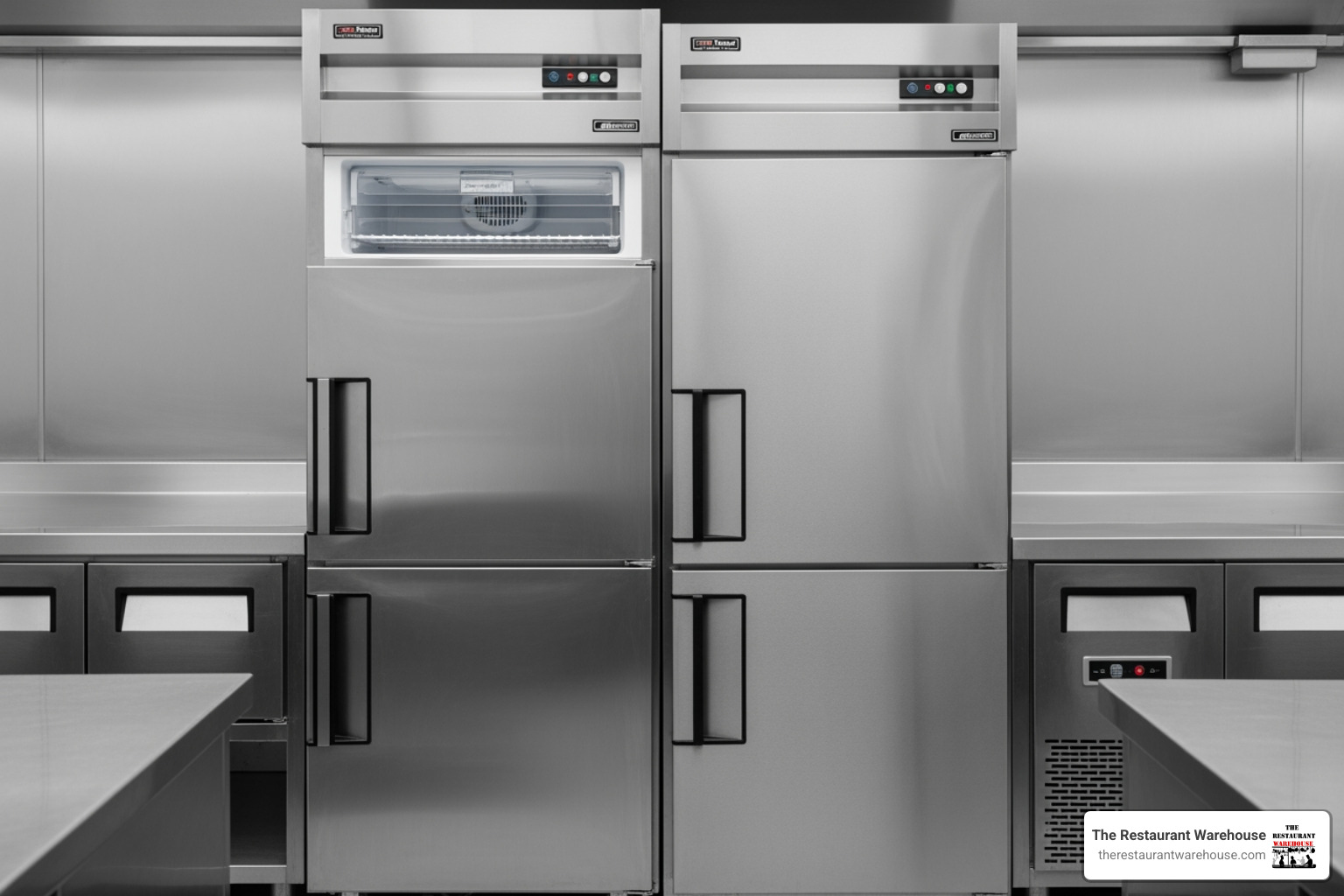
When we narrow down the field of options to find an affordable refrigerator for your home, two styles consistently rise to the top: top-freezer and bottom-freezer models. These classic designs offer proven reliability and cost-effectiveness, especially when compared with more elaborate configurations like French door or side-by-side models at similar price points.
Beyond these two mainstays, compact refrigerators and freezerless all-refrigerator models can be useful for specific household needs. Compact models are ideal for dorm rooms, home offices, wet bars, or as supplemental storage for beverages. Freezerless units are well suited for households that already have a separate chest or upright freezer and primarily need additional refrigerated space for fresh foods.
Each style has trade-offs in space efficiency, accessibility, and cost. Understanding those trade-offs will help you match a unit to your lifestyle.
The Workhorse: Top-Freezer Models
The top-freezer refrigerator is the quintessential affordable refrigerator and a workhorse in many homes. This classic design is typically the most budget-friendly style you can buy, with many models costing under $1,000 and some even under $700.
Its popularity comes from its simplicity:
- Fewer complex components that might fail.
- Widely available replacement parts.
- Straightforward, familiar layout.
Top-freezer models are also often energy efficient, partly because cold air from the freezer compartment naturally flows down into the refrigerator section. This can reduce the need for extra fans or complicated air-management systems.
The internal layout is flexible enough for general-purpose storage in a family kitchen, garage, or basement. They may not deliver a high-end, designer look, but they provide robust performance at a very low cost of ownership.
If you are outfitting a home on a tight budget and need a reliable, no-frills solution, a top-freezer refrigerator is frequently the best starting point. To see how pricing and specifications compare across sizes, you can shop our collection of affordable refrigerators.
The Ergonomic Choice: Bottom-Freezer Models
For households where family members frequently access fresh ingredients, the bottom-freezer refrigerator offers an ergonomic alternative that still falls within the affordable range.
Bottom-freezer advantages include:
- Eye-level access to the most-used items: produce, dairy, drinks, and leftovers.
- Reduced bending and reaching for fresh foods, which makes finding ingredients easier and more comfortable.
- A roomy freezer compartment that often uses a pull-out drawer or wide shelving, making it easier to organize and store bulkier frozen items like pizzas or turkeys.
While bottom-freezer units are usually a bit more expensive than top-freezer models, many still fall under or around the $1,000 mark. For busy families who are constantly in and out of the refrigerator section, the improved accessibility can be worth the modest premium.
Reliability scores for many bottom-freezer models also tend to be higher than more complex multi-door designs from the same manufacturers. This suggests that the basic bottom-freezer layout strikes a good balance between functionality and durability.
These units are generally space efficient, with widths typically starting at about 24 inches and going up to around 33 inches, making them viable in a wide range of home kitchen layouts.
Compact and Freezerless Refrigerators: Niche Budget Solutions
Two additional styles can be useful in specific household scenarios without breaking your budget:
- Compact refrigerators: Ideal for dorm rooms, home offices, game rooms, or as backup storage for beverages and snacks. They are usually the least expensive option but have limited capacity.
- Freezerless (all-refrigerator) units: Designed only for refrigeration, they maximize usable shelf space when you already have adequate freezer capacity elsewhere, such as a dedicated chest or upright freezer in the garage or basement.
Compact units should be reserved for lighter-duty or supplemental use rather than as your primary refrigerator in a family kitchen. Freezerless units, on the other hand, can be a smart way to add capacity for fresh groceries, especially for large families or those who buy in bulk, without paying for freezer space you do not need.
Matching one or more of these styles to your family's needs, shopping habits, and home layout will give you the best combination of affordability, reliability, and day-to-day efficiency.
Frequently Asked Questions about Affordable Refrigerators
Purchasing an affordable refrigerator for your home raises important questions. It is a significant investment, and you need it to perform reliably for years to come. Below are answers to some of the most common questions we hear from homeowners.
What is the best time of year to buy a refrigerator?
Timing your purchase can meaningfully affect how much you pay for an affordable refrigerator. Retailers and distributors typically run their strongest promotions during major holidays and in periods when they are clearing out older inventory.
Historically, months like May, July, September, and November often feature strong appliance sales and closeout pricing. Reasons include:
- Memorial Day and mid-summer promotions that drive appliance sales.
- End-of-model-year clearances as new product lines launch in the fall.
- Black Friday and Cyber Monday events that bring some of the steepest discounts of the year.
Beyond those months, shorter three-day-weekend events (such as Presidents Day and Labor Day sales) can also offer worthwhile savings.
If your current fridge is starting to show its age but still operating, planning ahead and targeting one of these sale windows can help you upgrade to a higher-quality unit while staying within budget.
How can I ensure a budget refrigerator will last?
Ensuring that an affordable refrigerator provides long-term service is a combination of buying wisely and maintaining it consistently.
On the buying side:
- Favor models with simple, proven designs such as top-freezer and bottom-freezer configurations.
- Consider mechanical dial controls instead of elaborate touchscreens, especially in high-use environments.
- Avoid unnecessary add-ons like built-in water dispensers that can introduce extra failure points.
On the maintenance side, a straightforward routine can extend service life significantly:
- Clean condenser coils every 3–6 months with a vacuum or soft brush to remove dust and debris.
- Inspect and clean door gaskets monthly. Replace them if they crack, tear, or no longer seal tightly.
- Verify airflow and spacing around the unit and keep vents unobstructed.
For more detailed food storage and safety guidance, including recommended temperature ranges, the U.S. Food & Drug Administration offers useful reference material: https://www.fda.gov/food/buy-store-serve-safe-food/refrigerator-thermometers-cold-facts-about-food-safety.
A basic, well-maintained refrigerator often lasts longer than a complex, feature-heavy model that is neglected. Building a quick checklist into your regular cleaning routine is one of the most cost-effective ways to protect your investment.
Contact Us today for personalized recommendations on models that balance price with durability for your specific needs.
Are stainless steel finishes worth it on a budget model?
The choice of finish for your affordable refrigerator involves balancing durability, appearance, and price.
Stainless steel is widely used in modern homes because:
- It offers strong resistance to bumps, scrapes, and frequent cleaning.
- It presents a sleek, modern look that complements many kitchen designs.
- It is non-porous and straightforward to sanitize.
However, standard stainless finishes often show fingerprints and smudges more easily, requiring more frequent wiping to maintain a polished look.
White or black finishes usually cost less and can be a smart option for utility areas or when appearance is less critical. A white finish can make small spaces feel brighter, while black can create a sleek, modern appearance but may show dust or light scuffs.
For many homeowners on a tight budget, choosing a white or black finish on a reliable model is a practical way to keep costs down while still getting the performance you need. If your refrigerator will be a focal point in your kitchen design, the added investment in stainless steel can be justified as part of your home's aesthetic.
Either way, prioritize internal quality and energy efficiency first. The finish should support your lifestyle and aesthetic goals, but the core value of an affordable refrigerator always starts with temperature performance, reliability, and operating cost.
Conclusion: Making the Smart, Affordable Choice
Finding an affordable refrigerator that meets the demands of your household is not about cutting corners. It is about making informed, strategic decisions that balance upfront cost with long-term value.
Throughout this guide, we have looked at how true affordability includes:
- The total cost of ownership, not just purchase price.
- Energy efficiency, which can lower utility bills year after year.
- Simple, proven designs like top-freezer and bottom-freezer models that minimize failure points.
- Essential features that support food safety and daily use, rather than nonessential extras.
By carefully measuring your space, evaluating capacity needs, and considering your household's lifestyle, you can match a refrigerator style—top-freezer, bottom-freezer, compact, or freezerless—to the actual demands of your home. Avoiding complex add-ons such as integrated water dispensers and focusing on robust controls, solid construction, and good ventilation will help your fridge serve reliably for many years.
The goal is straightforward: give households access to reliable appliances that protect food, support food safety, and contribute to long-term savings. When you invest in quality within your budget, you're making a decision that will benefit your family for years to come.
Ready to find your perfect affordable refrigerator? Book a Strategy Call with our appliance experts today for personalized recommendations tailored to your specific needs and budget.
By combining careful planning with expert guidance, you can select an affordable refrigerator that keeps your food fresh, supports your family's needs, and protects your budget for years to come. The right choice today means peace of mind tomorrow, knowing that you've invested wisely in one of your home's most essential appliances.
About The Author

Sean Kearney
Sean Kearney is the Founder of The Restaurant Warehouse, with 15 years of experience in the restaurant equipment industry and more than 30 years in ecommerce, beginning with Amazon.com. As an equipment distributor and supplier, Sean helps restaurant owners make confident purchasing decisions through clear pricing, practical guidance, and a more transparent online buying experience.
Connect with Sean on LinkedIn, Instagram, YouTube, or Facebook.