

Maximize Your Margins: The Ultimate 3-Bowl Slush Machine Buyer's Guide
Why a 3-Bowl Slush Machine is Your High-Margin Profit Engine
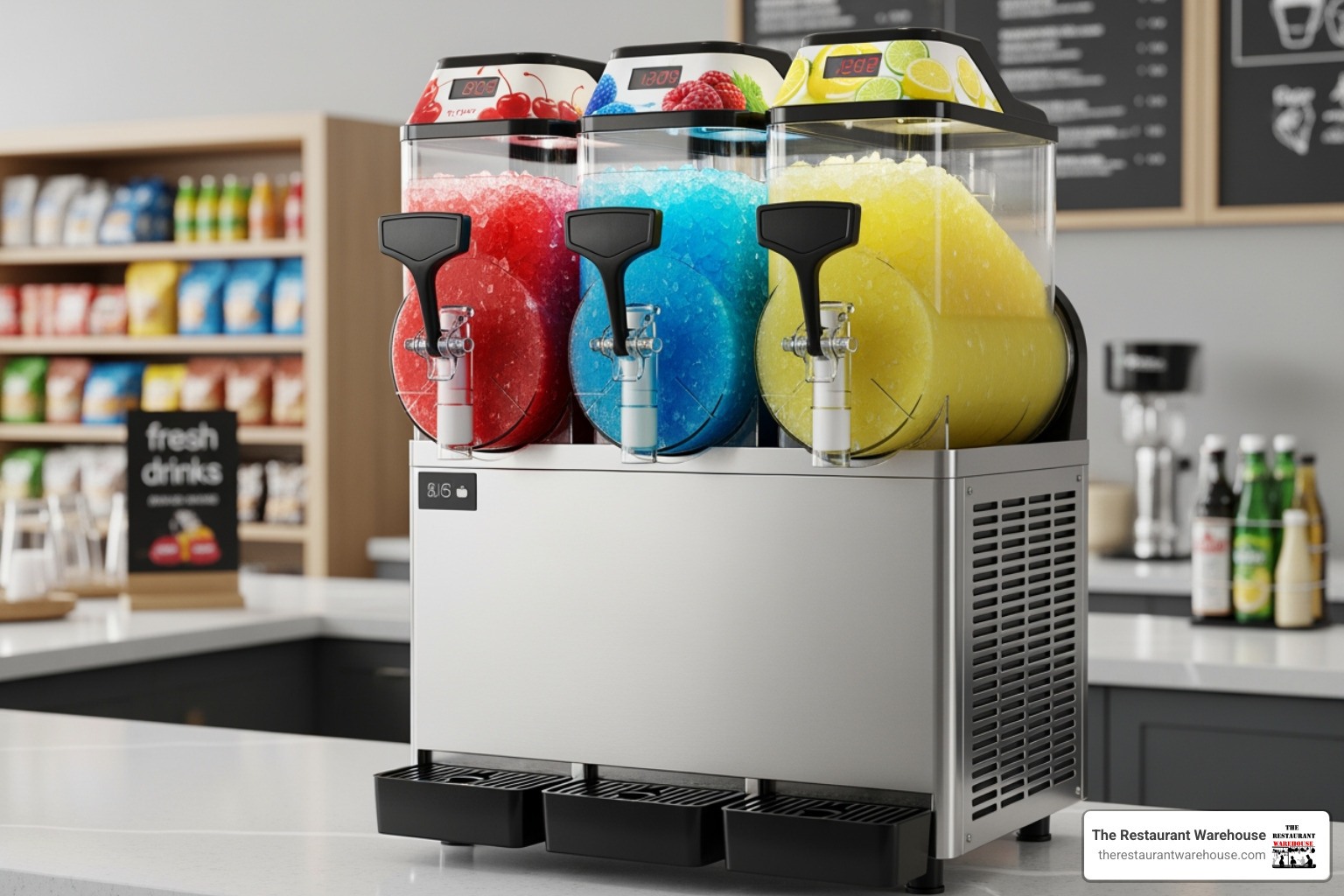
A 3 bowl slush machine can transform your beverage program from a simple add-on into a serious profit center. With the potential for 85-90% gross profit margins, this single piece of equipment is an investment in a powerful revenue stream.
Whether you run a convenience store, bar, quick-service restaurant, family entertainment center, or food truck, frozen beverages are one of the easiest ways to boost sales without adding complexity to your operation. A thoughtfully selected 3-bowl unit lets you serve multiple customer groups at once—kids, coffee lovers, and cocktail fans—while keeping labor low and consistency high.
Quick Selection Guide:
| Priority | What to Look For | Why It Matters |
|---|---|---|
| Capacity | 2.6-3.2 gallons per bowl | Serves high-volume locations without constant refills |
| Power | 115V / 15-amp dedicated circuit | Uses standard electrical, no special wiring needed |
| Build Quality | Stainless steel base, polycarbonate bowls | Durability and product visibility drive long-term sales |
| Cooling System | 0.75-1.3 HP compressor | Keeps up with rush periods and warm conditions |
| Controls | Independent bowl controls | Lets you run different products in each bowl |
| Price Range | $2,200–$6,000 | Balance features with your budget and volume needs |
When evaluating options, you're not just buying equipment—you're investing in profitability. Slush machines offer some of the highest margins in foodservice, with the cost per serving often under $0.50 while selling for $3–$5 or more.
Triple-bowl machines are especially effective because they let you serve classic fruit flavors, premium options like frozen coffee, and adult cocktails simultaneously. This variety drives impulse purchases and increases the average ticket size, especially during peak hours.
How a 3-Bowl Slush Machine Fits Different Business Types
A 3-bowl unit can be custom to many concepts:
- C-Stores & Gas Stations: Use two bowls for staple kid-friendly flavors and reserve one for rotating seasonal or energy slushes.
- Bars & Nightlife Venues: Dedicate all three bowls to frozen cocktails at different price tiers and alcohol contents.
- Cafés & Bakeries: Offer one fruit slush, one coffee or mocha frappé, and one dessert-style drink like a frozen hot chocolate.
- Family Entertainment Centers & Theaters: Keep three core flavors running nonstop to minimize lines and boost concession sales.
- Food Trucks & Pop-Ups: Run compact, high-output flavors that can be served quickly in limited space.
Each setup changes your menu strategy and pricing—but the underlying principle is the same: high-margin, visually appealing frozen drinks that require minimal prep.
If you're ready to compare specific models and pricing, you can explore 3-bowl units at:
- https://therestaurantwarehouse.com/collections/slush-machines
Or, if you want help matching capacity and features to your concept, contact our team for a no-pressure equipment consult: https://therestaurantwarehouse.com/pages/contact-us.
Profitability Snapshot: Turning Mix into Margin
To see how quickly a 3 bowl slush machine can pay for itself, consider this rough example for a high-traffic location:
- Average serving size: 16 oz
- Average menu price: $4.00
- Product cost per serving (mix, cup, lid, straw): ~$0.75
- Gross profit per serving: ~$3.25
At 80 servings per day:
- Daily gross profit: $260
- Monthly gross profit (30 days): $7,800
Even accounting for electricity, waste, and occasional promos, the payback period for a $3,000 machine can be very fast if you place it where customers see it and staff is trained to suggest it with every order.
Why Choose a 3-Bowl Slush Machine? The Triple-Threat Advantage
When it comes to expanding your frozen beverage offerings, a 3 bowl slush machine offers unprecedented versatility and profitability. It's not just about having more capacity; it's about creating a dynamic menu that boosts sales and customer satisfaction. Compared to single or double-bowl models, a triple-bowl machine provides a clear advantage by allowing you to cater to a wider audience without compromising on availability or requiring constant staff attention.
Here’s how a 3 bowl slush machine gives you a competitive edge:
- Maximize Menu Diversity: The most compelling benefit is the ability to offer something for everyone, all at once. You can dedicate bowls to a classic fruit slush, a trendy seasonal flavor, and a premium frozen cocktail. This keeps your menu fresh and exciting while expanding your target demographic to include families and adults.
- Boost Sales with Visual Appeal: Three bowls of vibrant, swirling colors create a powerful visual display that acts as a silent salesperson. This eye-catching presentation naturally draws attention and encourages impulse buys, a crucial driver for high-margin items like slushies. It’s a merchandising tool built right into your equipment.
- Increase Operational Efficiency: With a total capacity often ranging from 7.8 to 9.6 gallons, you can serve a continuous stream of customers during peak hours without constant refills. This means less downtime for your machine, faster service for your customers, and more sales for your business.
- Improve Profitability: The combination of low ingredient costs and high consumer demand makes slushies incredibly profitable. By offering tiered pricing—a standard fruit slush, a mid-range frozen coffee, and a premium frozen cocktail—you can easily upsell customers and increase your average ticket size. The return on investment is often realized within a few months, making it one of the smartest investments for your beverage program.
Triple-Bowl Versus Single and Double Units
If you’re debating whether to step up to three bowls, consider the practical differences:
- Single-bowl units are best for limited menus or testing one flagship flavor. They’re simple but can’t capture different dayparts or demographics at once.
- Double-bowl units allow some variety, but when one bowl runs a top seller, the second often can’t cover all remaining demands (e.g., you must choose between coffee or cocktail, kid-friendly or adult-only).
-
Three-bowl units let you:
- Dedicate one bowl to a dependable best-seller all year
- Use the second for rotating or seasonal flavors
- Reserve the third for specialty beverages like frozen coffee or adult cocktails
This structure ensures you always have a reason for customers to return—there’s something familiar and something new every visit.
Strategic Flavor Planning for Higher Sales
To maximize the value of your 3 bowl slush machine, think in terms of a flavor strategy, not just random choices:
- Anchor Flavor (Bowl 1): A reliable favorite like cherry, blue raspberry, cola, or lemonade that appeals to the broadest audience.
-
Rotating Seasonal (Bowl 2): Limited-time offerings such as:
- Summer: watermelon, mango, tropical punch
- Fall: caramel apple, pumpkin spice granita
- Winter: peppermint, cranberry, frozen hot chocolate base
- Spring: strawberry lemonade, mixed berry
- Premium or Adult-Targeted (Bowl 3): Higher-margin choices like frozen coffee, piña colada base (with or without alcohol added at service where permitted), or frosé-style wine slushes.
Clear signage and color-coding cups or menu inserts for “Premium” or “Signature” drinks help your staff confidently upsell.
Using Your Machine to Drive Daypart Revenue
With three bowls, you can align flavors with different times of day:
- Morning: Frozen coffee, mocha, or chai drinks to capture commuters.
- Afternoon: Bright fruit slushies and energy-based flavors for students and families.
- Evening: Frozen cocktails where legally permitted, or upscale mocktails and dessert slushes.
By adjusting what’s in each bowl as your audience changes throughout the day or week, you make the most of your machine’s footprint.
For a deeper dive into frozen treats and how these machines fit into your business, explore the Slushy Ice Machine Guide on our site:
- https://therestaurantwarehouse.com/blogs/restaurant-equipment/slushy-ice-machine-guide
If you want personalized guidance on which configuration would work best for your concept, book a quick strategy call with our team: https://therestaurantwarehouse.com/pages/contact-us.
Essential Features of a High-Quality Frozen Beverage Dispenser
When selecting a 3 bowl slush machine, it's important to look beyond just the number of bowls. Investing in a durable and efficient unit requires a close look at the critical components and specifications that ensure reliable performance for years to come.
Capacity and Construction: Built for Volume and Durability
The foundation of a great 3 bowl slush machine lies in its capacity and build quality. These factors directly impact efficiency and longevity.
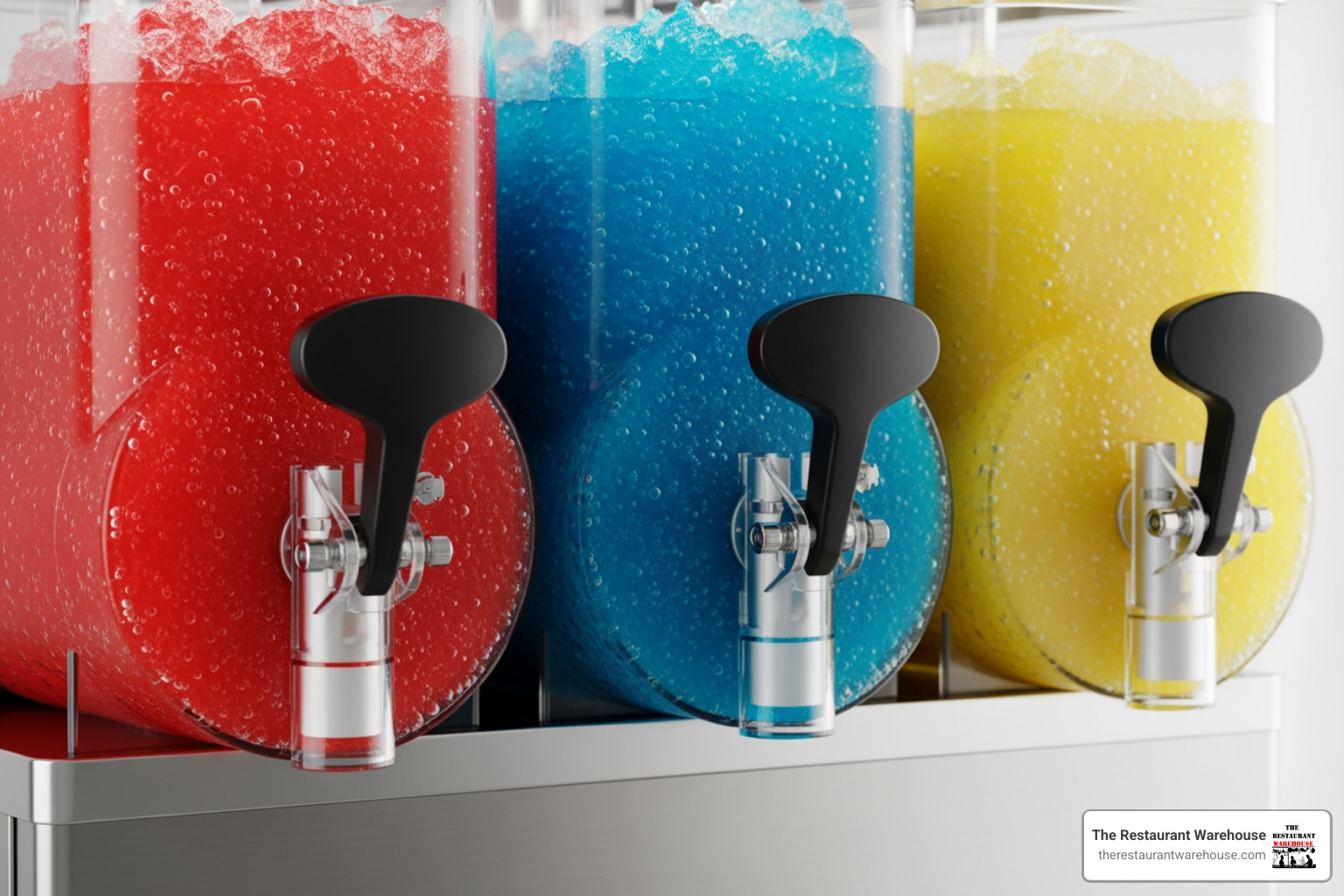
- Bowl and Total Capacity: Individual bowl capacities typically range from 1.6 to 3.2 gallons. High-traffic locations benefit from larger bowls to minimize refills. Your total machine capacity dictates how many servings you can offer before preparing a new batch, which is crucial for maintaining service during peak hours.
- Durable Materials: Look for models with a robust stainless-steel base and food-grade polycarbonate bowls. Stainless steel resists corrosion and is easy to clean, meeting commercial foodservice standards. Shatter-resistant polycarbonate provides excellent product visibility, helping to merchandise your colorful beverages and attract customers.
- Footprint and Weight: A 3 bowl slush machine is a substantial piece of equipment. Carefully measure your counter space to ensure a proper fit, leaving adequate clearance on all sides for ventilation. These machines are also heavy, which adds to stability but requires a sturdy counter for support.
Cooling, Mixing, and Dispensing Technology
The internal technology is the heart of your machine, dictating performance, reliability, and the quality of your final product.
- Cooling System: The compressor is the engine of the machine, with horsepower (HP) typically ranging from 0.75 to 1.3 HP. A more powerful compressor generally leads to faster freezing and better performance in warm environments. Look for machines with fast freezing cycles (some as quick as 20-40 minutes) to keep up with demand.
- Mixing System: An effective mixing system, usually an auger or paddle, is essential for creating a smooth, consistent texture. It continuously stirs the beverage to prevent ice buildup. Some premium models feature magnetic drive systems, which reduce wear and tear on seals and simplify cleaning.
- Adjustable Controls: The ability to fine-tune the thickness of your frozen beverages is a key feature. Adjustable consistency or temperature controls allow you to create everything from a light slush to a thick granita, giving you precise control over your product.
- Dispensing Spigots: Look for spigots designed for easy, drip-free dispensing. Some models feature gasketless spigots, which simplify cleaning and maintenance by reducing the number of parts that can wear out or leak.
Usability Features That Reduce Labor
Beyond core mechanics, certain usability features have a direct impact on your labor costs and training time:
- Clear, backlit control panels that make it obvious when each bowl is in freeze, chill, or clean mode.
- Independent bowl controls so you can turn off an underused flavor to save energy, keep one bowl in refrigeration mode for beverages that shouldn't fully freeze, or defrost and clean one bowl while the other two continue selling.
- Built-in timers or programmable modes that automatically shift from freeze to standby overnight.
- Simple disassembly for end-of-day cleaning, with as few small parts as possible.
When you compare models on https://therestaurantwarehouse.com/collections/slush-machines, look closely at product photos of the control panels and exploded diagrams for cleaning. Machines that are intuitive to operate will be used correctly more often, which supports product quality and longevity.
For more insights into choosing the right equipment within the slush category, explore our guide on the Best Commercial Slushie Machines:
- https://therestaurantwarehouse.com/blogs/restaurant-equipment/best-commercial-slushie-machines
Opening up Your Menu's Potential: Beverages, Pricing, and Profit
A 3 bowl slush machine is a versatile platform that opens up a world of profitable menu possibilities. It allows you to cater to diverse tastes and maximize your revenue streams, moving far beyond just classic fruit slush.
Beyond the Slushie: A World of Frozen Creations
The true magic of a 3 bowl slush machine lies in its versatility. With three independent compartments, your menu can become a canvas for innovation. Consider offering an array of frozen delights:
- Classic Slushies & Granitas: Perennial favorites like cherry and blue raspberry are always a hit, while Italian-style granitas offer a more gourmet, crystalline texture.
- Frozen Cocktails: This is where major profit potential lies. Margaritas, frosé (frozen rosé), daiquiris, and piña coladas can be prepared in large, consistent batches, ensuring speed of service (where alcohol service is legal and properly licensed).
- Frozen Coffees & Frappés: Capitalize on the booming coffee market with refreshing frozen coffee drinks. Creamy, milk-based frappés offer a popular dessert-like indulgence.
- Smoothies & Frozen Yogurt: While some prep may be needed, a slush machine can hold pre-made smoothie bases or mixes designed to create a soft-serve-like frozen yogurt.
Certain machines are certified safe for milk products, allowing you to confidently offer creamy beverages without worrying about sanitation issues. To explore even more frozen beverage options and machine styles, review our Slushies Machine Guide:
- https://therestaurantwarehouse.com/blogs/restaurant-equipment/slushies-machine-guide
Sample Menus for Different Concepts
Here are practical 3-bowl lineups you can plug into your own operation:
1. Family Restaurant or Entertainment Center
- Bowl 1: Cherry or blue raspberry slush (kid favorite)
- Bowl 2: Lemon-lime or cola slush (appeals to teens and adults)
- Bowl 3: Seasonal flavor—e.g., watermelon in summer, cranberry in winter
2. Coffee Shop or Bakery
- Bowl 1: Frozen latte or mocha base
- Bowl 2: Vanilla or caramel frappé
- Bowl 3: Non-coffee fruit or tea slush (peach tea, strawberry lemonade)
3. Bar or Patio Concept (Licensed Locations)
- Bowl 1: Margarita base (can be served virgin or with tequila at the bar)
- Bowl 2: Piña colada-style base
- Bowl 3: Rotating signature cocktail (frosé-style, rum punch, or sangria slush)
In all cases, clear labeling and price tiering help steer guests toward your highest-margin options.
Pricing Structures That Protect Margin
When pricing frozen drinks, consider:
- Portion size: Offer at least two sizes (e.g., 12 oz and 16 oz) with a clear price gap.
- Premium upgrades: Charge more for larger sizes, "add a flavor shot" or "add energy boost" options, creamier recipes (milk, cream, or non-dairy alternatives), and alcohol additions where legally allowed.
- Bundle deals: Create combos such as "Slush + snack" pricing, "Kids meal + slush upgrade", or "Happy hour" frozen drink specials at slower times of day.
Analyze your ingredient cost per ounce, and target a menu price that delivers at least 70-85% gross margin. For custom sugar levels and consistency, you can use Brix guidance from neutral sources like Clemson University's overview of Brix and pH in fruits to help you balance sweetness and freezing performance.
Understanding the Investment in a 3-Bowl Slush Machine
Investing in a 3 bowl slush machine is a strategic business decision. Prices for commercial models typically range from approximately $2,200 to $6,000, depending on brand, capacity, and features. Factors influencing the cost include brand reputation, build quality, warranty terms, and advanced features like magnetic drive systems or independent bowl controls.
While the initial investment might seem significant, calculating your ROI demonstrates the immense revenue potential. Given the high-profit margins of frozen beverages, a well-placed and well-used 3 bowl slush machine can often pay for itself within a few months, turning the machine into a pure profit generator thereafter.
Simple ROI Calculator You Can Use Today
To estimate your own payback period:
- Estimate average daily servings per bowl (start conservatively—e.g., 20-40 per bowl).
- Multiply by your average selling price.
- Subtract estimated product and packaging costs.
- Divide your machine cost by your projected daily profit.
Example:
- Daily servings total: 90
- Average price: $3.75
- Daily revenue: $337.50
- Estimated daily product cost (25% of sales): ~$84.40
- Daily gross profit: ~$253.10
If your 3-bowl unit costs $3,000:
- $3,000 ÷ $253.10 ≈ 12 days of full operation to break even.
Even if your actual volume is half of this estimate, you still see a short payback period in a busy location.
Ready to explore options that fit your budget and boost your bottom line? Browse our current lineup here:
- https://therestaurantwarehouse.com/collections/slush-machines
Or reach out to our team for custom recommendations and a custom quote: https://therestaurantwarehouse.com/pages/contact-us.
Installation, Operation, and Maintenance Essentials
Maximizing the lifespan and performance of your 3 bowl slush machine hinges on proper setup, correct operation, and diligent maintenance. Following these essentials will ensure your machine remains a reliable source of revenue for years to come.
Setup, Space, and Power Requirements
Before your new machine arrives, it's crucial to prepare its home. Proper setup is key to efficient and safe operation.

- Space and Ventilation: A 3 bowl slush machine requires a dedicated, sturdy counter. Measure your space and ensure you leave adequate clearance (typically a few inches) around the sides and back of the unit. These machines use air-cooled condensers and need sufficient airflow to dissipate heat and prevent overheating.
- Electrical Specifications: This is a critical point. Most commercial models in the US operate on a standard 115V supply but are power-hungry, often requiring a dedicated 15-amp circuit. A dedicated circuit helps prevent tripped breakers and ensures the machine receives consistent power for optimal freezing.
- Initial Setup: Once in place, let the machine sit upright for at least two hours before its first use. This allows the compressor's lubricants and refrigerants to settle, helping protect internal components during startup.
For more detailed technical insights into slush units and how to compare them, visit our Best Slushy Machine 2024 guide:
- https://therestaurantwarehouse.com/blogs/restaurant-equipment/best-slushy-machine-2024
The Sweet Science: How Sugar Content Affects Performance
Understanding the role of sugar in your slush mix is paramount to achieving the perfect consistency and protecting your machine.
- The Role of Sugar: Sugar acts as an antifreeze, lowering the freezing point of water. Without enough sugar, the mix will freeze into a solid block of ice, straining the motor and gears. Too much sugar will prevent it from freezing enough, resulting in a watery drink.
- Optimal Brix Levels (11-14%): Commercial slush machines are engineered to work with a sugar concentration (Brix) of about 11-14%. Adhering to this range helps create the desired slushy texture without overworking the machine. For custom mixes, a Brix refractometer is an invaluable tool for measuring sugar content.
- Alcoholic Recipes: Alcohol also inhibits freezing. When creating frozen cocktails, you must balance the recipe to ensure the total sugar and alcohol content allows the mixture to freeze correctly within the machine's optimal range. Many operations use pre-formulated bases designed specifically for frozen cocktail machines to simplify this balance.
If you need a neutral reference on sugar and beverages, general nutrition and ingredient information is available from sources like the U.S. Department of Agriculture.
Daily Care for Your 3-Bowl Slush Machine
Consistent daily care ensures hygienic operation and extends the lifespan of your investment.
- Daily Cleaning: At the end of each day, empty, rinse, and sanitize the bowls, lids, and dispensing spigots. Most machines are designed for easy disassembly. Wash all removable parts with warm, soapy water, then sanitize with a food-grade solution and allow them to air dry completely before reassembly.
- Drip Trays: Empty and clean the removable drip trays daily to maintain a clean and hygienic serving area.
- Night/Standby Modes: Many machines feature a night or standby mode that keeps the product chilled but not frozen overnight. This can save energy, reduce wear on the machine, and simplify startup the next day.
- Routine Checks: Periodically inspect seals and moving parts for wear, listen for unusual noises from the compressor or agitators, and wipe down exterior surfaces. Check the condenser air intake for dust and debris and clean according to the manufacturer's recommendations.
Weekly and Monthly Maintenance Tips
Building a recurring checklist into your staff routine helps prevent downtime:
- Weekly: Perform a more thorough cleaning of gaskets, spigots, and handles. Verify that bowl seals are snug and not cracked. Confirm that all indicator lights and control settings work as expected.
- Monthly: Inspect power cords and plugs for damage. Examine auger shafts and bushings for wear. Clean the condenser coils (following manufacturer instructions) to maintain efficient cooling.
Always follow safety information and any applicable product warnings provided by your local jurisdiction and health department.
Have questions about maintenance for your specific model or want help creating a cleaning checklist for your staff? Reach out to The Restaurant Warehouse experts for model-specific guidance:
- https://therestaurantwarehouse.com/pages/contact-us
Making Your Final Decision
Choosing the right 3 bowl slush machine involves balancing features, capacity, and budget with your specific operational needs to ensure a profitable and long-lasting investment.
Protecting Your Investment: Warranty and Support
A comprehensive warranty and reliable customer support are critical when purchasing a commercial 3 bowl slush machine. This equipment is a workhorse, and knowing you're covered provides invaluable peace of mind.
- Warranty Coverage: Commercial machine warranties typically cover parts and labor for a set period, with separate, often longer, coverage for the compressor. For example, a common warranty might be 1–2 years on parts, 1 year on labor, and 5 years on the compressor. Always read the terms carefully to understand what is covered.
- Support and Parts: Choose a supplier that offers robust customer support and has a readily available supply of replacement parts. This ensures that if an issue arises, you can resolve it quickly with minimal downtime.
To learn more about the specifics of different machines and how performance can vary, you can review our detailed product guides and specification breakdowns on our blog:
- https://therestaurantwarehouse.com/blogs/restaurant-equipment/best-commercial-slushie-machines
Key Questions to Ask Before You Buy
Before you commit, ask yourself these critical questions to guide you toward the perfect model for your business:
- What is my estimated daily volume of frozen drinks?
- What variety of beverages do I plan to offer (e.g., slushies, cocktails where legal, coffee, dairy-based drinks)?
- What are my available countertop dimensions and electrical capacity?
- What is my budget for the initial investment and ongoing supplies?
- How important are features like fast freezing or energy efficiency to my operation?
- What kind of warranty and after-sales support is offered?
Matching Features to Your Concept
Consider the following when narrowing down options:
- High-volume venues (large convenience stores, stadiums, amusement centers) should prioritize larger bowl capacities, powerful compressors, and rugged construction.
- Smaller cafés or bakeries might trade maximum capacity for a smaller footprint and quieter operation.
- Alcohol-focused venues should verify that the machine can handle products with lower freezing points and that bowl sizes align with cocktail prep volumes.
- Operations with rotating menus will benefit from easy cleaning, quick-freeze capabilities, and intuitive controls so staff can swap flavors without excessive downtime.
From Research to Purchase: Your Next Steps
- Clarify your menu and volume goals. Decide which three categories of drinks (e.g., kid-friendly, coffee, cocktail) matter most.
- Measure your space and check your power. Confirm counter dimensions and that you have a suitable circuit.
- Compare models and pricing. Use capacity, compressor size, and warranty as your main comparison points.
- Plan your launch. Design menu boards, cup sizes, and pricing before the machine arrives so you can start selling immediately.
A well-chosen 3 bowl slush machine doesn’t just pour frozen drinks—it anchors a profitable, visually engaging beverage program that can scale with your business over time.
If you’re ready to move from research to action, you can:
- Compare 3-bowl slush machines and shop current pricing: https://therestaurantwarehouse.com/collections/slush-machines
- Contact us for a tailored quote and rollout plan: https://therestaurantwarehouse.com/pages/contact-us
Conclusion
A 3 bowl slush machine is a powerful tool for enhancing your beverage menu and driving profits. By prioritizing key features like durable construction, efficient cooling, independent bowl controls, and ease of maintenance, you can select a machine that delivers consistent quality and a significant return on investment. The ability to offer a diverse range of frozen beverages simultaneously—classic slushies, premium coffees, and even cocktails where permitted—helps you cater to a wider customer base and encourages impulse purchases, directly impacting your bottom line.
When you align bowl capacity, flavor strategy, and pricing with your concept and traffic levels, a triple-bowl machine becomes more than just another appliance—it becomes one of your most reliable revenue engines. Thoughtful installation, routine cleaning, and attention to sugar levels (Brix) protect both beverage quality and the longevity of your investment.
At The Restaurant Warehouse, we understand the importance of making smart equipment choices for your beverage program. We provide a wide selection of affordable options to help your business thrive, ensuring you get commercial-grade equipment without an inflated price tag.
To continue your research or take the next step:
-
Explore our full selection of slush machines, including 3-bowl models:
- https://therestaurantwarehouse.com/collections/slush-machines
-
Dive into our ultimate Slushy Machine Guide for a complete overview of features and use cases:
- https://therestaurantwarehouse.com/blogs/restaurant-equipment/slushy-machine-guide
-
Contact our team for help choosing the right 3-bowl slush machine and planning your rollout:
- https://therestaurantwarehouse.com/pages/contact-us
Invest wisely, serve consistently delicious frozen beverages, and watch your margins grow with a well-chosen 3-bowl slush machine at the heart of your beverage lineup.
About The Author

Sean Kearney
Sean Kearney is the Founder of The Restaurant Warehouse, with 15 years of experience in the restaurant equipment industry and more than 30 years in ecommerce, beginning with Amazon.com. As an equipment distributor and supplier, Sean helps restaurant owners make confident purchasing decisions through clear pricing, practical guidance, and a more transparent online buying experience.
Connect with Sean on LinkedIn, Instagram, YouTube, or Facebook.