

What Is a Deck Oven and How Does It Perfect Your Craft
Ever wonder how an artisan pizzeria gets that perfect, leopard-spotted char on the bottom of their crust? Or how a bakery achieves that incredible “oven spring” that makes a loaf of sourdough stand tall and proud? The secret weapon is often a deck oven.
Think of a deck oven as the modern, precision-engineered version of an old-world brick hearth. It’s all about creating intense, direct heat from the bottom up. The magic happens on the ‘decks’—super-hot surfaces made of stone or steel that transfer powerful, conductive heat straight to whatever you’re baking.
This direct contact is what creates that signature crisp crust that’s impossible to get any other way.
Understanding the Heart of the Bakery
So, what exactly is a deck oven doing that other ovens can't? It’s all about mastering a specific kind of heat. Unlike a convection oven that blasts hot air around with fans, a deck oven uses a powerful one-two punch of conductive and radiant heat.
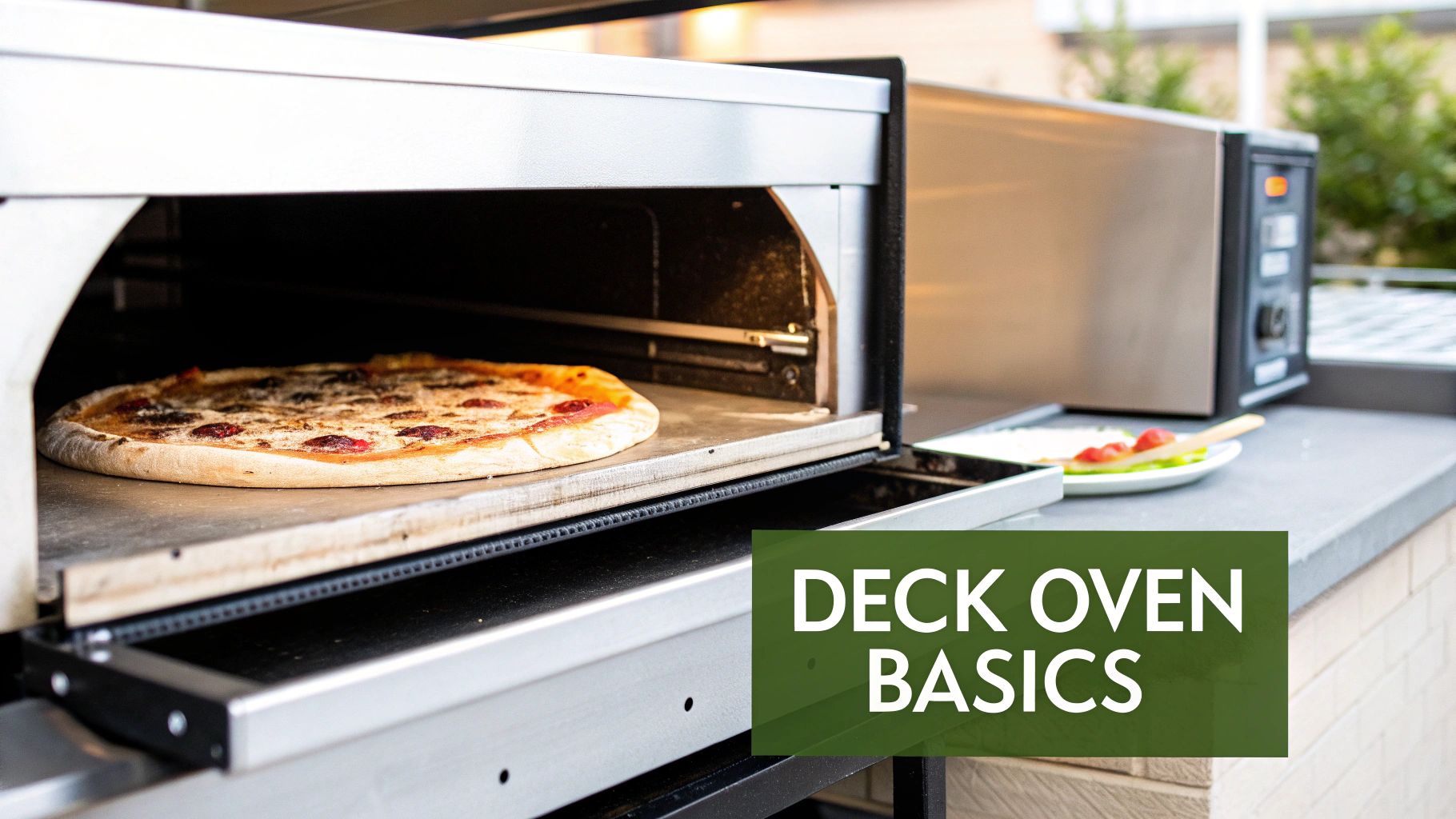
Imagine placing your dough directly onto a hot stone. That’s conductive heat at work. The deck itself becomes a searing surface, pulling moisture out of the bottom of the dough and creating that incredible texture we all crave.
At the same time, radiant heat from the oven’s ceiling and walls cooks the top of your product evenly. This combination is why a deck oven can produce results that are tough to replicate with other types of industrial ovens for baking. It’s a true workhorse, built for exceptional quality over sheer speed.
Deck Oven at a Glance Key Features and Benefits
To help you get a quick handle on what makes these ovens so special, here’s a simple breakdown of their core features and the direct benefits they bring to a professional kitchen.
| Feature | Description | Primary Benefit for Your Business |
|---|---|---|
| Direct-Heat Baking | Heat is transferred directly from the hot deck surface to the product. | Unmatched crust development for pizzas and artisan breads. |
| Stone or Steel Decks | Made from materials that excel at retaining and evenly distributing heat. | Consistent, reliable baking performance and excellent heat recovery. |
| Independent Controls | Top and bottom heating elements can often be controlled separately. | Precise command over the final bake, from bottom crisp to top browning. |
| Superior Insulation | Heavily insulated to trap and maintain high temperatures efficiently. | Lower energy consumption during operation and a more stable baking environment. |
| Steam Injection | (Optional) Introduces moisture into the baking chamber at key moments. | Essential for creating the perfect crust and texture on artisan breads. |
This table shows that a deck oven isn't just a simple box that gets hot; it's a specialized tool designed to give chefs and bakers ultimate control over their craft.
The global deck oven market, valued at USD 2.5 billion in 2023, is expected to keep growing, thanks in large part to the booming foodservice industry. This number really drives home how much pizzerias, bakeries, and high-end restaurants depend on these ovens to deliver the quality their customers expect.
A deck oven gives you a level of control that’s unmatched for certain products. It’s not just about cooking; it’s about crafting a specific texture and finish that customers can see and taste.
The Science Behind a Perfect Bake
Ever wondered how a deck oven manages to produce such incredible results with what seems like pretty simple technology? It's all about mastering the physics of heat. The magic really comes down to a perfect trio of forces working together: conduction, radiation, and convection.
Imagine you’re cooking a pizza directly on a hot stone. That powerful, direct heat transfer from the searing hot deck right into the dough is conduction. It's the key player responsible for pulling moisture from the bottom of the dough, creating that amazing crispy, airy crust that defines true artisan-quality baked goods.
Next, you have the intensely hot walls and ceiling of the oven chamber radiating heat downward. Think of this radiant heat kind of like the sun, cooking the top of your product evenly. This ensures your toppings are perfectly melted and browned without ever burning the base.
The Gentle Touch of Convection
Finally, even though a deck oven isn't fan-forced like other ovens, gentle convection currents naturally begin to circulate the hot air inside the enclosed chamber. This subtle air movement helps balance the temperature from front to back, getting rid of any hot spots that could ruin a perfect bake.
This precise combination of intense bottom heat (conduction) and balanced top heat (radiation) is what truly sets a deck oven apart. It delivers a baking environment that fan-driven ovens simply cannot replicate.
This controlled environment is a world away from the aggressive, drying effect you get with fan-forced air. If you're weighing your options, understanding how a commercial convection oven functions can provide a helpful contrast to the deck oven's unique method. This fundamental difference is why deck ovens remain the undisputed champions for products requiring a delicate balance of crispiness and moisture.
This scientific dance is what gives you that perfect "oven spring" for bread, where the rapid heat from the deck causes the dough to expand dramatically. It’s also what creates the beautiful leopard-spotted char on a Neapolitan pizza crust. By mastering these three types of heat, a deck oven gives chefs incredible control over the final texture and finish of their products.
Choosing the Right Deck Oven for Your Kitchen
Picking out the perfect deck oven isn’t a one-size-fits-all kind of deal. It’s really about matching the equipment to your menu, your kitchen’s workflow, and even your building’s infrastructure. Not all deck ovens are created equal, and digging into the key differences is the first step toward making a smart investment that’ll serve your business for years to come.
The choices you make right here will directly impact everything from your utility bills and installation costs to the final texture of your signature pizzas or breads. It's a critical decision that really requires a clear-eyed look at the options and how they line up with what you’re trying to achieve in the kitchen.
This simple decision tree can help you visualize which oven type is the right tool for the job.
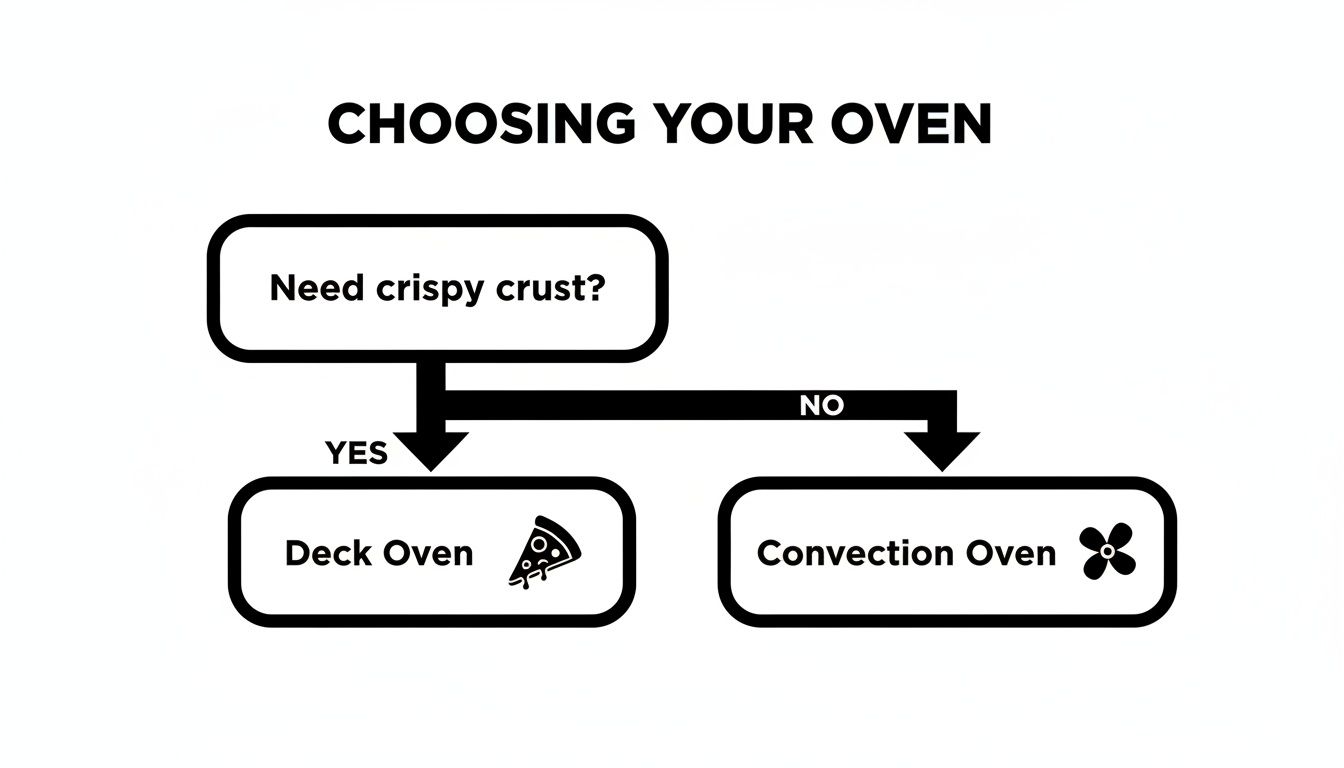
As you can see, if that perfectly crisp, hearth-baked crust is an absolute non-negotiable for your core menu items, a deck oven is the way to go. It’s the specialist you call in for that specific job.
Gas vs. Electric Heat Sources
One of the first big forks in the road is deciding between a gas or an electric model. Gas ovens get a lot of love for their rapid heat-up times and potentially lower long-term operating costs, which makes them a favorite in high-volume pizzerias. You do need to factor in professional installation and proper ventilation, though, which can add to the initial setup expense.
Electric deck ovens, on the other hand, are known for their exceptionally precise and consistent temperature control. This makes them ideal for delicate pastries or breads that need a super stable baking environment to rise properly. While they might take a bit longer to preheat, that even, predictable heat is a huge advantage. Understanding the core differences between electric and gas ovens is essential before you commit one way or the other.
Stone Decks vs. Steel Decks
The actual material of the deck itself plays a massive role in how your final product turns out.
- Stone Decks: Typically made from cordierite or similar materials, stone is porous. It’s incredible at absorbing moisture right out of the dough, which results in that exceptionally crisp, airy crust you want for Neapolitan-style pizza and artisan loaves. Stone holds onto heat like a champ but can crack if you shock it with a sudden temperature change.
- Steel Decks: Steel heats up much faster than stone and is a lot more durable. It provides a powerful, searing heat transfer that’s fantastic for certain types of pizza and flatbreads that need a quick, high-temperature blast.
The choice between stone and steel often comes down to what you’re primarily baking. For that classic, old-world bake, stone is king. For durability and rapid-fire heat, steel is a formidable contender.
Single vs. Multi-Deck Configurations
Finally, you have to think about your output. How much do you need to bake at once? A single-deck oven is a compact, efficient choice for smaller cafes, food trucks, or restaurants with a more limited baking menu. It's a fantastic entry point into the world of deck baking without taking up a massive footprint.
A multi-deck oven, which is often stackable, is the true workhorse of busy bakeries and high-volume pizzerias. These units let you bake different products at different temperatures all at the same time, which dramatically increases your production capacity within the same square footage. For a deeper dive into how these configurations stack up against other equipment, check out our practical guide to comparing commercial oven options. It’ll help you decide if a stacked unit is the right strategic move for your business’s growth.
Deck Ovens in Action Across the Industry
Let's move from theory to the real world, because that's where you see just how versatile a deck oven can be. These machines are the unsung heroes in a huge range of kitchens, each using the oven's unique heating style to create the signature products that put them on the map. They're so much more than just a pizza-making tool; for many, they're the cornerstone of their entire culinary operation.
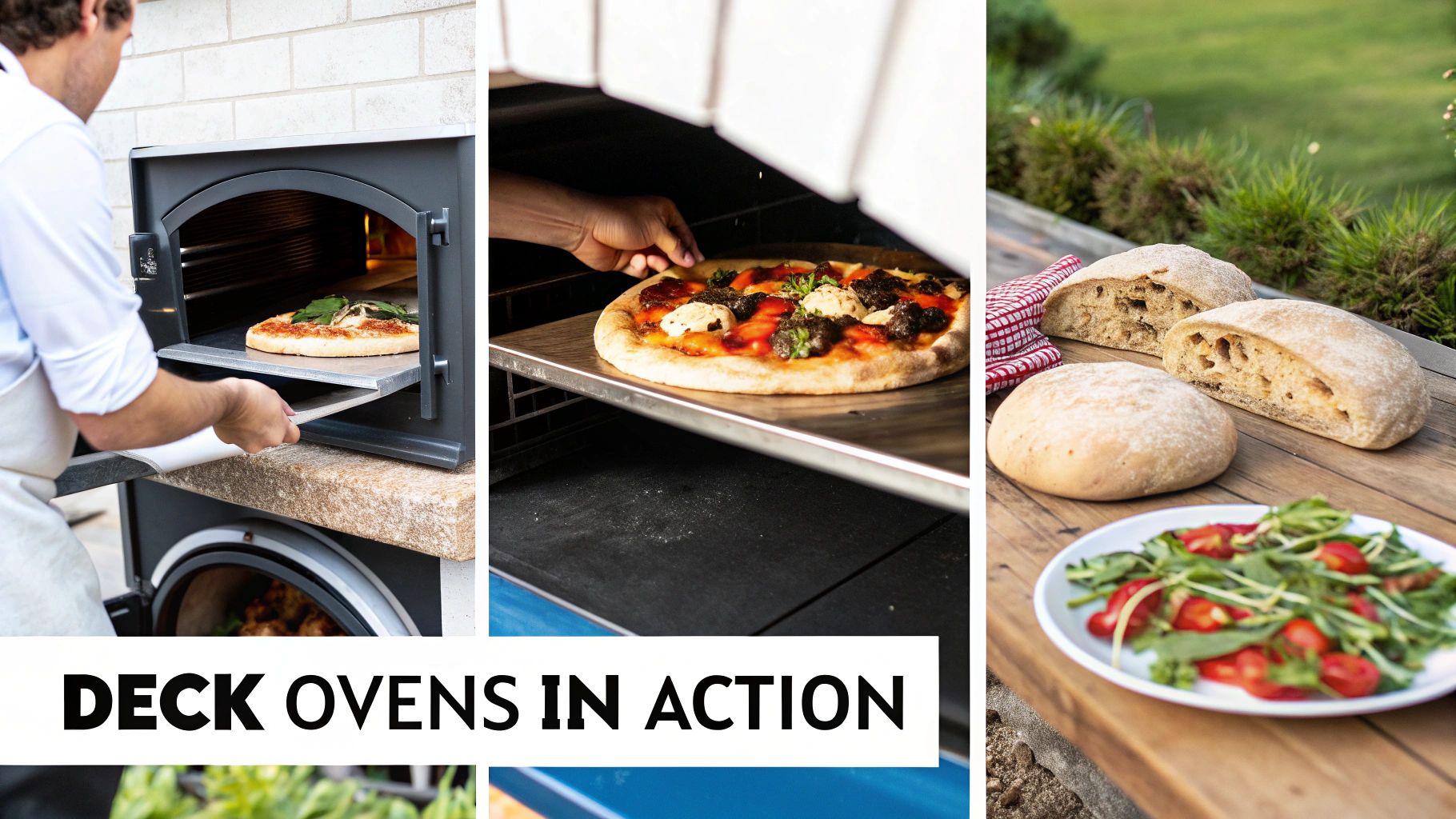
From a bustling city pizzeria to that quiet neighborhood bakery everyone loves, the deck oven consistently proves its worth. Its ability to deliver intense, stable heat makes it an invaluable asset for any business that's serious about quality.
Pizzerias: The Quest for the Perfect Crust
For any pizzeria worth its salt, the crust is everything. This is where a deck oven truly shines. Picture a classic New York-style spot that needs a crisp, sturdy base that can hold up to a mountain of toppings. The stone deck is a master at pulling moisture from the dough, creating that iconic, foldable texture without fail, slice after slice.
This is exactly why deck ovens are a major force in the pizza oven market. The global industry, valued at a whopping USD 1.77 billion in 2022, is projected to hit USD 2.64 billion by 2030, with the deck oven segment playing a starring role. Their knack for mimicking traditional brick hearths delivers the authentic results customers are always looking for, a finding you can explore in this comprehensive market analysis.
Artisan Bakeries: Crafting the Ideal Loaf
In an artisan bakery, consistency and control are the name of the game. Bakers lean on deck ovens to produce hundreds of sourdough loaves with that perfect "oven spring" and a deeply caramelized, crackly crust. Many models even feature steam injection, a critical tool for achieving the glossy finish and airy interior that defines a high-quality loaf.
The deck oven’s stable, radiant heat allows bakers to control the baking process with incredible precision, ensuring every single loaf meets their high standards. It’s less about speed and more about repeatable perfection.
Beyond Baked Goods: Restaurants and More
But the applications don't stop at bread and pizza. High-end restaurants put the intense, even heat of a deck oven to work for all kinds of tasks:
- Roasting Meats: That powerful radiant heat creates a beautiful sear on meats like chicken and pork, locking in juices for an incredibly tender result.
- Finishing Dishes: It's perfect for gratins or baked pasta, giving you a golden-brown top without overcooking the dish itself.
- Vegetable Cookery: Roasting vegetables at high heat caramelizes their natural sugars, enhancing their flavor in a way other methods just can't match.
Even food trucks are getting in on the action, using compact single-deck models to offer fresh, high-quality baked goods on the go. This adaptability is what makes a deck oven such a smart, strategic investment for almost any kitchen.
Key Considerations Before You Invest
Choosing a deck oven is a major commitment. Let's be honest, it's a big piece of equipment and a significant investment, so you want to get it right the first time. This isn't just about picking a model you like; it’s about making a smart decision that aligns with your menu, your kitchen layout, and your production goals.
Getting these details sorted out before you start browsing will save you from a world of headaches down the road. You need to think critically about your day-to-day reality in the kitchen. Answering the right questions now ensures the oven you bring in will be a powerful asset, not a logistical nightmare.
Sizing Up Your Space and Capacity
First things first: space and output. You absolutely have to measure your available kitchen space, and I don't just mean the oven's footprint. You need to account for the required clearance on all sides for proper ventilation and safety. This is non-negotiable. These ovens are big, heavy, and require professional installation, so there's no "winging it."
Next, you have to translate your menu into hard numbers.
- Deck Size: How many standard sheet pans or 16-inch pizzas can you realistically fit on a single deck? This is your batch capacity, plain and simple.
- Total Capacity: If you're looking at a multi-deck unit, how does that total capacity line up with your busiest dinner rush? A bustling pizzeria might need a three-deck beast to keep the orders flowing, while a small artisan bakery could thrive with a single-deck model.
Thinking through these logistics will help you build a shortlist of ovens that are actually the right size for your operation.
Matching Technical Specs to Your Menu
Once you've figured out the size and capacity you need, it's time to dive into the technical specs. This is where you make sure the oven can actually produce your food to the quality standards you're aiming for.
A huge factor here is the temperature range. An oven that tops out at 550°F is fantastic for many types of bread, but it's a non-starter for Neapolitan-style pizza, which demands temperatures climbing upwards of 800°F. Always check that the oven's maximum sustainable temperature can handle your most ambitious menu item.
Remember, the control system is how you'll interact with this machine every single day. Simple manual dials offer rock-solid reliability and are incredibly easy to use. On the other hand, precise digital interfaces give you programmable settings for consistent, repeatable results—which is vital for delicate pastries or complex baking schedules.
Finally, you have to tackle the non-negotiables: utilities and ventilation. A gas oven is going to require a dedicated gas line and a serious ventilation hood (usually a Type I hood) to safely handle grease and combustion byproducts. Electric models might need specific high-voltage connections. Always, always consult your local health and fire codes and bring in licensed professionals for the installation. This ensures your setup is safe, legal, and efficient from day one.
A deck oven is a serious long-term asset, and protecting that investment is the key to its success in your kitchen. Proper maintenance isn't just about extending the oven's lifespan; it's about making sure it performs consistently, delivering the high-quality results your customers will come to expect. A simple but effective upkeep schedule is your best defense against costly downtime and frustrating repairs.
This all starts with daily care, especially for those delicate stone decks. Once the oven has cooled down completely, get in there with a stiff brush or scraper to clear away any food debris. This simple step prevents that burnt, carbon buildup that can really mess with the taste of your food.
Caring for Your Stone Decks
Taking proper care of your stone decks is absolutely crucial for performance and longevity. Before you ever bake your first loaf or pizza, the stone needs to be "cured" by heating it up gradually. This process gently removes any leftover moisture from manufacturing and prevents the stone from cracking under the thermal shock of high temperatures.
Most importantly, never use soap or chemical cleaners on the stone surface.
A baking stone is porous, meaning it will soak up chemicals like a sponge. Those chemicals can then transfer nasty flavors to your food or even release fumes when heated. The oven's own intense heat is the best tool you have for burning off any stubborn spills.
Managing Energy and Financial Costs
Beyond the daily maintenance, understanding the operational efficiency of a deck oven reveals another layer of its value. Thanks to their superior insulation and heat-soaking decks, these ovens are remarkably energy-efficient once they're up and running. After they get to temperature, they hold onto that heat exceptionally well. That means the burners or elements don't have to kick on nearly as often to recover heat, even when you're opening and closing the door during a busy service.
This excellent heat retention can lead to lower utility bills compared to ovens with less insulation. However, we know the initial investment for a high-quality deck oven can be substantial. To make this essential equipment more accessible, smart financing and lease-to-own programs are a great option. Here at The Restaurant Warehouse, we offer flexible plans that let you get the best oven for your business while managing your cash flow effectively. This approach lets you start turning out superior products from day one, without draining your capital.
Common Questions About Deck Ovens
Even after going over all the features and specs, you probably still have a few lingering questions. It’s one thing to read a product sheet, but it’s another to imagine a piece of equipment in your own kitchen, day in and day out. We get it.
That’s why we’ve pulled together the most common questions we hear from chefs and restaurant owners. Think of this as your final gut-check before you make a move.
Can I Cook More Than Just Pizza in a Deck Oven?
Absolutely. While deck ovens are legendary for producing incredible pizza and artisan bread, thinking of them as just a "pizza oven" is selling them short. That powerful, even heat makes them shockingly versatile.
You can get a perfect sear on roasted meats, caramelize vegetables, bake off casseroles, or finish pasta dishes beautifully. With a little practice, you can even nail delicate pastries. The key is learning to manage that intense bottom heat, usually by using pans to create a bit of a buffer between your food and the hot deck. It’s a true workhorse, not a one-trick pony.
What Are the Space and Ventilation Needs?
This is the big one you can’t afford to get wrong. Let’s be clear: deck ovens are heavy, bulky pieces of equipment that demand a serious footprint. Always, always check the spec sheet for the exact dimensions and, just as importantly, the required clearances you need to leave on all sides for safety.
Proper ventilation isn't just a suggestion—it's non-negotiable. For a gas model, you will almost certainly need a Type I or Type II commercial kitchen hood, depending on what you’re cooking and what your local fire codes demand. Do yourself a favor and bring in an HVAC professional before you buy, not after.
Is a Stone Deck Difficult to Maintain?
It’s not difficult, just different. A stone deck needs a little respect, but the upkeep is actually pretty simple. The most critical step is "curing" the deck before you ever cook on it, which just means heating it up gradually to burn off any moisture from the factory and prevent it from cracking down the line.
For daily cleaning, wait until the oven cools down and just use a stiff brush to sweep out any debris. Never, ever use soap or chemical cleaners on the stone. It’s porous and will absorb them, which will make your food taste terrible. If you have a really stubborn, baked-on spill? No problem. Just use the oven's own intense heat to incinerate it to ash.
Ready to bring the unmatched quality of a deck oven to your kitchen? At The Restaurant Warehouse, we offer a wide selection of top-tier ovens and flexible financing options to fit your budget. Explore our collection and find the perfect model for your business today!
About The Author

Sean Kearney
Sean Kearney is the Founder of The Restaurant Warehouse, with 15 years of experience in the restaurant equipment industry and more than 30 years in ecommerce, beginning with Amazon.com. As an equipment distributor and supplier, Sean helps restaurant owners make confident purchasing decisions through clear pricing, practical guidance, and a more transparent online buying experience.
Connect with Sean on LinkedIn, Instagram, YouTube, or Facebook.