

The Ultimate Guide to Comparing Commercial Prep Tables
The Backbone of Your Kitchen: An Introduction to Prep Tables
Commercial prep tables are the unsung heroes and foundational workhorses of any professional foodservice kitchen. They are far more than just a surface; they are the central stage where culinary creativity begins, where ingredients are meticulously chopped, measured, mixed, and assembled before the cooking process even starts. Whether you're operating a high-volume restaurant, a bustling café, a specialized bakery, a nimble food truck, or a modern ghost kitchen, the right prep table is a critical asset. Choosing wisely can dramatically improve your kitchen's workflow, elevate your food safety standards, reduce staff fatigue, and ultimately boost your bottom line.
What You Need to Know About Commercial Prep Tables:
- Material: The choice of material is paramount. Stainless steel is the industry gold standard for its unmatched durability, non-porous surface, and hygienic properties. Common grades include 18-gauge or the heavier 16-gauge steel, with Type 304 or 430 alloys offering different levels of corrosion resistance. For tasks involving heavy knife work or dough preparation, poly top tables provide a softer, more forgiving surface.
- Types: The variety of prep tables is vast, each tailored for specific functions. Options range from standard all-purpose work tables and refrigerated prep tables (like sandwich/salad units and pizza prep models) to highly flexible mobile prep carts and sturdy equipment stands.
- Key Features: Functionality is enhanced by specific features. Look for adjustable undershelves to maximize storage, integrated backsplashes to maintain cleanliness, rounded "bullnose" edges for staff safety, and the non-negotiable NSF certification to ensure compliance with public health codes.
- Sizing: Accurate measurement is crucial. Tables are available in a wide array of sizes, from compact 24-inch units perfect for tight spaces to expansive 72-inch, 96-inch, or even larger models designed for high-volume production lines.
Traditional restaurant equipment suppliers often obscure the true cost of these essential items with high markups, hidden fees, and sales commissions, making it challenging to acquire high-quality prep tables at a fair price. You need a table that is robust enough to withstand the daily rigors of a commercial kitchen—one that won't wobble under pressure, develop rust, or cause you to fail a health inspection. However, you shouldn't have to overpay for this reliability. Understanding the nuanced differences in materials, construction, features, and sizing can save you thousands of dollars and prevent years of operational frustration. This comprehensive guide will walk you through every critical detail, empowering you to find the perfect commercial prep tables that fit both your operational needs and your budget.
Decoding Prep Table Construction: Materials and Durability
The long-term value of a commercial prep table is determined by the quality of its materials and the integrity of its construction. A thoughtful investment in a well-built, durable table will pay dividends for years in performance and reliability, whereas a cheaper, poorly constructed alternative can quickly become a liability—wobbling, rusting, and failing to meet food safety standards.
Material Matters: Stainless Steel vs. Poly Top
Stainless steel reigns supreme in commercial kitchens for a host of reasons. Its primary advantage is its non-porous surface, which is exceptionally easy to clean and sanitize, preventing the growth of bacteria and eliminating the risk of cross-contamination. Unlike wood or other materials, it does not absorb odors, stains, or moisture, making it the ideal surface for a wide range of tasks, from dicing acidic tomatoes and portioning raw proteins to assembling delicate pastries and plating finished dishes. Its inherent durability means it can withstand constant use and rigorous cleaning protocols without degrading.
Poly top tables, which feature a high-density polyethylene (HDPE) cutting surface mounted on a sturdy stainless steel base, are the preferred choice for butchers, bakers, and any operation involving intensive knife work. The poly top is significantly gentler on knife edges, extending the life of expensive cutlery. Its non-stick properties are also perfect for kneading and rolling out dough. Many kitchens utilize color-coded poly tops as part of their HACCP plan to prevent cross-contamination, using one color for raw meat and another for fresh produce. The choice ultimately depends on your primary tasks: stainless steel for general-purpose prep and plating, and poly top for dedicated cutting, butchery, or baking.
Below the work surface, the table's base is just as important. Most quality tables use galvanized steel legs and undershelves as a cost-effective, corrosion-resistant solution suitable for most dry environments. However, for high-humidity areas like dish rooms, walk-in coolers, or kitchens in coastal regions with salt in the air, upgrading to an all-stainless-steel construction provides superior, long-lasting protection against rust. Features like adjustable bullet feet are essential for leveling the table on uneven floors, preventing dangerous wobbling. For enhanced safety and comfort, rounded edges (often called bullnose edges) are a must-have, preventing bumps and scrapes in a fast-paced environment. For maximum stability, look for tables with patented uni-lok gussets—heavy-duty, mechanically interlocking corner brackets that provide exceptional strength and prevent legs from loosening during heavy-duty tasks like tenderizing meat or operating heavy mixers.
Understanding Steel Gauge and Type
When selecting a stainless steel table, you will encounter two critical specifications: gauge and type.
Steel gauge refers to the thickness of the steel. In a counterintuitive system, a lower gauge number indicates thicker, stronger, and more durable steel. 16-gauge stainless steel is the heavy-duty champion, ideal for supporting heavy countertop items or for use as a primary work surface in high-volume kitchens that endure constant, rigorous use. 18-gauge stainless steel is the industry standard, offering an excellent balance of durability and affordability. It is more than sufficient for general food prep, assembly, and storage, making it a popular choice for most applications.
Stainless steel type refers to the specific alloy composition, which dictates its resistance to corrosion and its suitability for food contact.
- Type 304 stainless steel, also known as 18/8 stainless steel for its 18% chromium and 8% nickel content, is the premium choice for food-contact surfaces. The high nickel content gives it exceptional resistance to rust and corrosion, even when exposed to acidic foods (like citrus juices and vinegar) and harsh cleaning chemicals. It is considered the gold standard for food safety and longevity.
- Type 430 stainless steel is a more economical, yet still highly durable, alternative. It contains a significant amount of chromium but has a negligible nickel content, making it slightly less resistant to certain corrosive acids and chlorides. It is an excellent and safe material commonly used for table legs, undershelves, and budget-friendly tabletops. With proper care and maintenance, a Type 430 table can provide many years of reliable service in most commercial settings.
For an optimal balance of performance, longevity, and affordability, a configuration featuring a Type 304 stainless steel top with a Type 430 base (legs and undershelves) is an excellent and widely recommended choice.
A Tour of Commercial Prep Tables and Their Uses
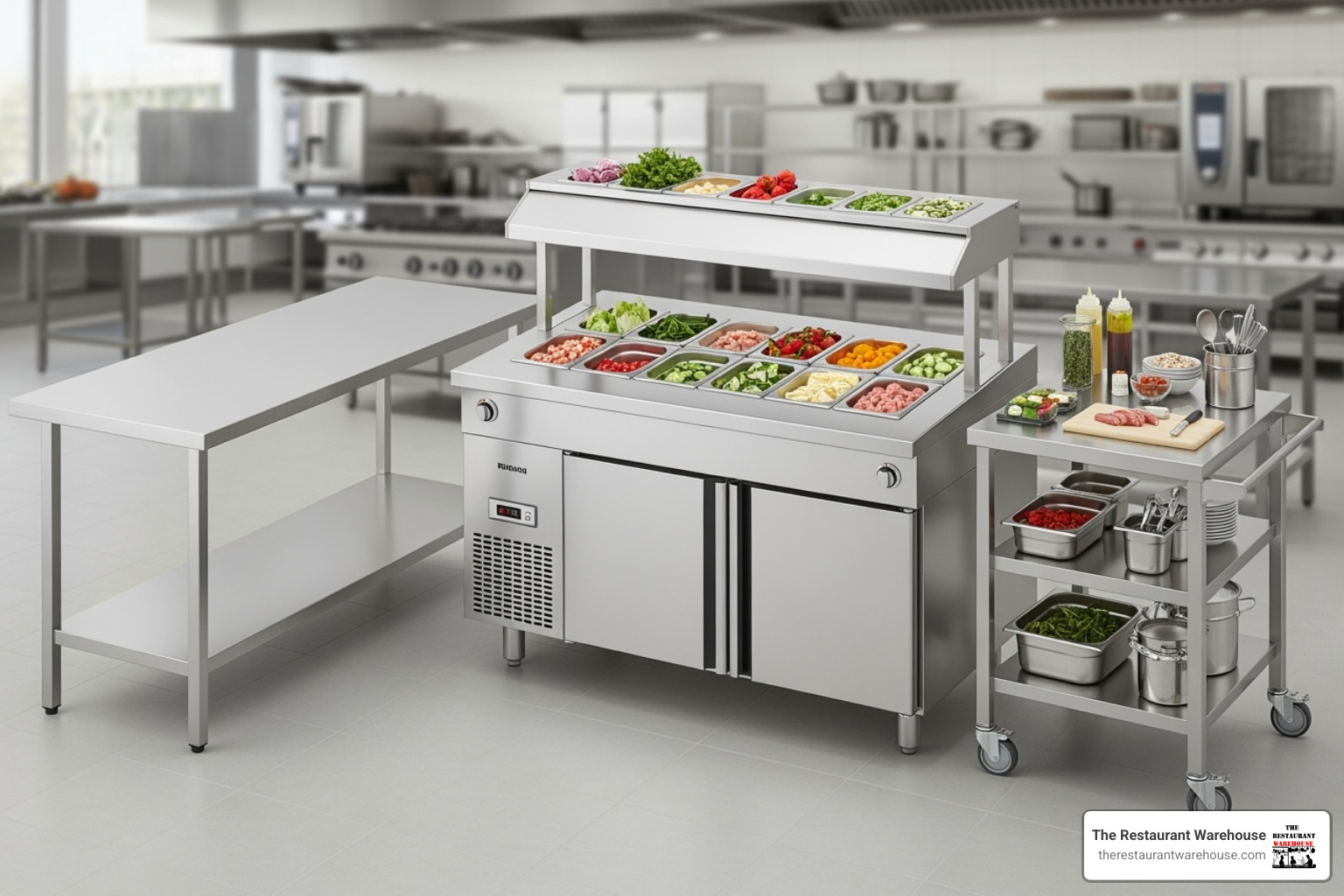
Commercial prep tables are not a one-size-fits-all solution. They come in a diverse range of types, each meticulously designed to optimize specific kitchen tasks, streamline workflow, and enhance overall efficiency. Understanding the distinct advantages of each option allows you to select the perfect tool for every job in your kitchen.
Standard Work Tables: The All-Purpose Solution
The standard work table is the quintessential foundation of nearly every commercial kitchen operation. These sturdy, flat-surfaced tables, most commonly constructed from durable stainless steel, serve as the primary space for general preparation. This includes everything from chopping vegetables and portioning ingredients to mixing sauces and assembling dishes. A key feature of many work tables is the inclusion of adjustable undershelves, which provide invaluable and convenient storage space for frequently used supplies, containers, and small appliances. Models equipped with backsplashes are essential when placed against a wall, as they help maintain a high level of cleanliness by preventing food particles and liquids from splashing onto walls or falling into hard-to-clean gaps. Available in a vast array of various sizes, from small 24-inch models to large 96-inch versions, they are a versatile and indispensable component of any efficient and organized kitchen.
Ready to find the perfect general-purpose surface for your kitchen? Browse our selection of commercial work tables.
Refrigerated Prep Tables: Keeping It Cool and Fresh
For any kitchen that handles perishable ingredients, refrigerated prep tables are an absolute necessity. These innovative units brilliantly combine a durable work surface with convenient undercounter refrigeration, keeping essential ingredients perfectly chilled and within arm's reach. This integration dramatically improves both operational efficiency and food safety. Common types include:
- Sandwich/Salad Units: These feature a refrigerated top rail designed to hold multiple food pans, keeping toppings, sauces, and condiments organized and cold. They typically include a shallow cutting board that runs the length of the unit for rapid sandwich or salad assembly.
- Pizza Prep Tables: Similar to sandwich units but designed with a deeper cutting surface to provide ample space for stretching and working with pizza dough. They also feature a raised refrigerated rail with a larger capacity for holding a wide variety of toppings.
- Mega Top Units: An enhanced version of a sandwich/salad unit, these tables provide an extra row of pans (or a deeper pan configuration), offering an even greater variety of chilled ingredients for complex menu items like burritos or custom salads.
- Chef Bases: These are low-profile refrigerated drawers designed to hold and store proteins, sauces, and other ingredients directly within the cooking line. Their sturdy tops are designed to support other countertop items, creating a highly efficient and consolidated workstation.
Mobile Carts and Specialized Prep Stations
In dynamic kitchens where space is at a premium or layouts need to be flexible, mobile prep carts offer unparalleled versatility. Outfitted with heavy-duty casters, these tables can be effortlessly moved to create additional workspace wherever it's needed, transport ingredients from storage to the prep line, or serve as a crucial component in a catering or food truck setup. For operations with highly specific, repetitive tasks, specialized prep stations—such as those designed for battering and breading or custom assembly lines—can be implemented to streamline workflow, improve ergonomics, and maximize output in even the smallest of spaces.
Essential Features to Maximize Functionality and Workflow
Beyond the fundamental choice of material and type, a range of specific features can transform a simple commercial prep table into a highly efficient, multi-functional workstation. Thoughtfully selecting these additions can have a significant positive impact on daily kitchen operations by improving storage, enhancing mobility, and increasing safety.
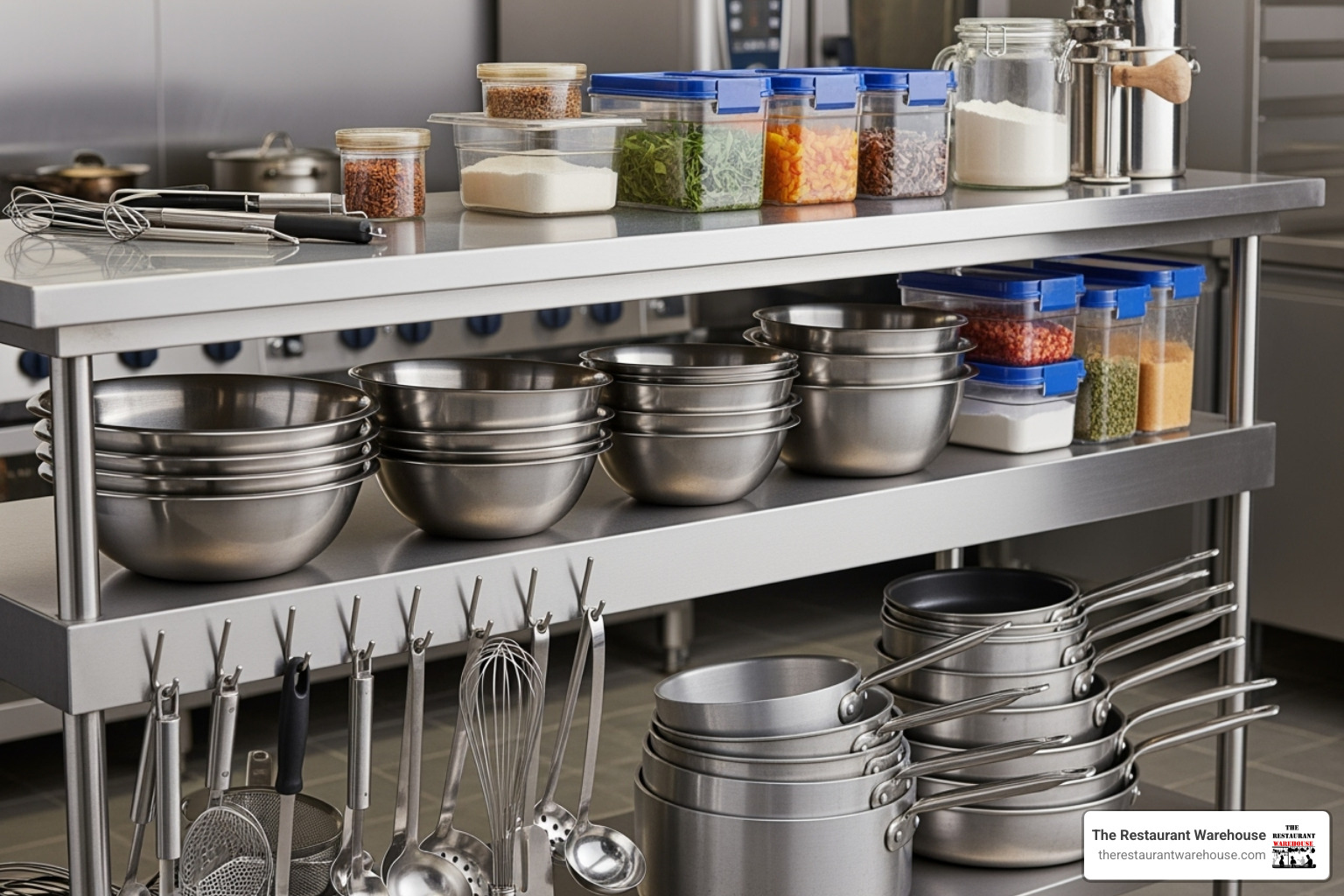
Storage and Organization
An organized kitchen is a productive kitchen, and effective storage is the key to organization. Adjustable undershelves are a critical feature for maximizing the vertical space beneath the work surface. They allow you to customize the height to perfectly accommodate everything from large stock pots and food processors to stacks of sheet pans and ingredient bins. When choosing an undershelf, consider the type: solid shelves provide a stable, flat surface ideal for small items that might fall through gaps, while wire or louvered shelves promote better air circulation, which is beneficial in humid environments or for cooling items. For organizing smaller, essential tools like thermometers, portion scoops, and whisks, integrated drawers are invaluable. Available in various configurations, they keep critical items protected from spills, neatly organized, and always within easy reach, saving precious seconds during busy service periods. Look for drawers with smooth, ball-bearing slides for reliable, long-lasting performance.
Mobility and Safety
Heavy-duty casters are a game-changing feature, converting a stationary table into a mobile workstation. This mobility allows for effortless repositioning to adapt to changing workflow needs and makes thorough floor cleaning significantly easier. When selecting casters, look for durable, non-marking polyurethane wheels and ensure that at least two of the casters have reliable locking brakes to keep the table stable and secure during use. Backsplashes are another crucial feature for both hygiene and safety, especially for tables placed against a wall. They create a physical barrier that prevents food, liquids, and utensils from falling into the difficult-to-clean space behind the table, while also protecting walls from moisture and grease damage. For prep areas dealing with significant liquids, marine edges—a raised, V-shaped lip around the perimeter of the tabletop—are an excellent addition for spill containment, keeping liquids from running onto the floor and creating a slip hazard. Finally, never underestimate the importance of rounded edges (also known as bullnose edges) on the tabletop. This simple design element significantly reduces the risk of painful bumps, bruises, and scrapes in a crowded, fast-paced kitchen, improving operator comfort and overall workplace safety.
Ready to upgrade your kitchen with prep tables that work as hard as your team does? Contact us today to discuss which features will make the biggest difference in your operation.
How to Choose the Perfect Commercial Prep Table
Selecting the right commercial prep tables is a strategic decision that profoundly impacts your kitchen's layout, your staff's efficiency, and the speed of your service. By engaging in thoughtful planning and considering your unique operational needs, you can choose a table that will serve as a valuable and reliable asset for many years to come.
Sizing for Your Space: From Food Trucks to Restaurants
Your first step is to meticulously measure your available space. However, a common and costly mistake is to measure only the footprint of the table itself, forgetting to account for workflow and clearance. As a rule of thumb, ensure there is at least 3 feet (36 inches) of clearance around the table to create safe and efficient walkways. This prevents dangerous bottlenecks during busy periods and often complies with local fire and safety codes.
- Small Operations (Food Trucks, Cafes, Delis): In tight quarters, maximizing utility is key. Compact tables between 24 and 48 inches in length are often sufficient. A 30-inch table can provide a dedicated station for an espresso machine and pastry prep, while a 48-inch table can comfortably accommodate one cook for general prep.
- Mid-Sized Restaurants: For a typical restaurant kitchen, tables in the 48 to 72-inch range usually provide enough workspace for one or two cooks to work side-by-side without interference. A 60-inch or 72-inch table is one of the most common and versatile sizes.
- High-Volume Kitchens (Hotels, Catering, Institutions): In large-scale operations, multiple 72-inch or 96-inch tables are often necessary. These can be arranged to create long, continuous production lines, allowing several staff members to work in sequence on complex assembly tasks.
Standard table height is typically 34-36 inches, which is an ergonomic height for most standing tasks. However, it's also important to consider accessibility. ADA-compliant tables, which have a surface height of 29-30 inches and adequate knee clearance, are available and may be required to accommodate all staff members comfortably.
The Importance of NSF Certification for Commercial Prep Tables
For any piece of equipment used in a commercial foodservice environment, NSF certification is a non-negotiable requirement. This mark, issued by NSF International (an independent public health and safety organization), is your guarantee that the table meets rigorous standards for material safety, hygienic design, and durable construction.
NSF-certified tables are specifically designed for ease of cleaning and sanitation. Inspectors look for key features like smooth, non-porous surfaces, sealed welds, and coved corners (rounded joints where surfaces meet). These design elements eliminate cracks, crevices, and other hard-to-clean areas where bacteria could otherwise hide and multiply. Using non-certified tables is a significant risk that can lead to failed health inspections, costly fines, and even forced closures. For more detailed information on these standards, you can review the official NSF Certification Information. Investing in NSF-certified tables is an investment in food safety, legal compliance, and peace of mind.
Configuring Your Table for Peak Efficiency
Proper configuration and strategic placement are just as important as the table itself. To maximize efficiency, arrange your prep station to mirror the task's workflow. For example, a sandwich assembly line should be laid out logically: bread station, then proteins, then vegetables, then sauces, moving in a clear sequence toward the service or packaging area. Ergonomics is also paramount; ensure the table height is appropriate for the task and the staff member to reduce physical strain, minimize the risk of repetitive stress injuries, and combat fatigue.
Utilize adjustable undershelves to create an organized system. Keep frequently used tools and backup ingredients within immediate arm's reach to minimize unnecessary steps and wasted motion. Finally, always consider the overall traffic flow of the kitchen. A well-placed prep table facilitates a smooth, logical path for raw ingredients coming in from storage and finished dishes going out to the service line, preventing chaos and collisions during the busiest service periods.
Explore our complete restaurant prep table guide for more detailed recommendations.
Care and Maintenance for a Lifetime of Service
A prep table's true lifespan and performance depend heavily on consistent and proper care. While commercial prep tables are engineered to be tough, a disciplined maintenance routine is essential to protect your investment, ensure unwavering food safety, and maintain a professional appearance. A few minutes of dedicated care each day can add years of reliable service to your table's life.
Cleaning Protocols for Optimal Hygiene
Daily Cleaning: This is a non-negotiable end-of-shift task. Wipe down all stainless steel and poly top surfaces with a soft cloth, warm water, and a mild, food-safe detergent. Thoroughly rinse the surface to remove any detergent residue. Next, apply a food-safe sanitizer according to the manufacturer's instructions and allow the surface to air dry completely. Don't forget to wipe down the legs and undershelves and perform a quick visual check of the casters for any tangled string or debris that could jam the wheels.
Weekly Deep Cleaning: Once a week, perform a more thorough cleaning. Use a soft-bristled nylon brush to gently scrub all surfaces, paying special attention to seams, corners, and the area around the backsplash where grime and food particles can accumulate. Clean the legs, gussets, and the entire underside of the tabletop to maintain a high standard of overall kitchen hygiene. This is also the time to address any minor issues before they become major problems.
Long-Term Care and Protecting Your Investment
To keep your prep tables in pristine condition for years, integrate these long-term care practices into your maintenance schedule:
- Avoid Harsh Chemicals and Abrasives: Never use chlorine bleach, oven cleaners, abrasive scouring powders, or steel wool on stainless steel. These substances can permanently scratch the surface and, more importantly, destroy the passive protective layer, leading to rust and corrosion. Always stick to mild detergents or specialized cleaners formulated for stainless steel.
- Wipe with the Grain: When cleaning or polishing your stainless steel table, always wipe in the direction of the faint, brushed lines in the metal. This simple technique prevents streaking, minimizes the appearance of minor scratches, and helps maintain a clean, professional finish.
- Understand Passivation: Stainless steel's corrosion resistance comes from a thin, invisible layer of chromium oxide on its surface. This layer can be damaged by scratches or harsh chemicals. You can help restore it through a process called passivation. Periodically cleaning with a citric acid-based cleaner can help remove contaminants and rebuild this protective layer.
- Address Scratches and Rust Promptly: Minor scratches are a normal sign of a well-used kitchen. For deeper scratches that could harbor bacteria, or if you see any small rust spots (often called "tea staining"), address them immediately. Use a non-abrasive pad and a cleaner containing oxalic acid to gently remove the spot, then rinse thoroughly and dry.
- Ensure Stability: On a regular basis, check that the table is level and stable. Tighten any loose leg gussets and adjust the bullet feet as needed. A wobbly table is a serious safety hazard that can lead to spills and injuries.
If you're ready to invest in prep tables that are built to last and easy to maintain, browse our selection of affordable commercial prep tables to upgrade your kitchen today.
Frequently Asked Questions about Commercial Prep Tables
Here are straightforward, detailed answers to some of the most common questions we receive from foodservice professionals about choosing and using commercial prep tables.
What is the best material for a commercial prep table?
The best material is entirely dependent on the table's primary function in your kitchen. For all-purpose use, stainless steel is the undisputed industry standard. Its durability, exceptional hygiene, and resistance to corrosion make it perfect for general prep, mixing, and plating. For food-contact surfaces, Type 304 stainless steel offers the highest level of protection against rust and acidic foods, making it a premium, long-term investment. Type 430 stainless steel is a reliable and more cost-effective option that performs excellently for table bases, legs, and general-use tops in less corrosive environments. For tasks involving heavy, repetitive cutting, butchery, or working with dough, a poly top table is the superior choice. Its softer polyethylene surface is much gentler on knife edges, prolonging their sharpness, and its non-stick quality is ideal for bakers.
How do I know what size prep table to buy?
Choosing the right size involves a two-step process. First, carefully measure your available kitchen space, but critically, you must also account for workflow by leaving at least 3 feet of clearance around the table for safe and efficient walkways. Second, consider your operational scale and menu. A small food truck or coffee shop might only need a compact 24-inch or 36-inch table for one person's tasks. A mid-sized restaurant will likely require one or more 60-inch or 72-inch tables to accommodate several staff members. A large-scale operation like a hotel or catering kitchen may need multiple 96-inch tables arranged in lines for high-volume production. Also, factor in whether you need surface area for small items like scales or mixers.
Do I really need a table with a backsplash?
If the prep table will be placed against a wall, then yes, a backsplash is highly recommended and often essential. A backsplash serves as a critical barrier that prevents food particles, liquids, and utensils from falling into the narrow, hard-to-clean gap between the table and the wall. This simple feature vastly improves sanitation, makes daily cleaning much faster and more effective, and protects your walls from moisture damage, stains, and grease buildup. Health inspectors often look for backsplashes as a clear indicator of a kitchen's commitment to maintaining a hygienic environment.
How much weight can a commercial prep table hold?
The weight capacity of a prep table varies significantly based on its construction. Key factors include the gauge of the steel (thicker 16-gauge holds more than 18-gauge), the quality of the welds, and the design of the leg-to-top connection (gussets add significant strength). A standard-duty 18-gauge table can typically hold between 400-600 pounds of evenly distributed weight. A heavy-duty 16-gauge table can often support 700-900 pounds or more, making it suitable for holding heavier items.
Can I put hot pans directly on a stainless steel table?
While stainless steel has a high melting point and can tolerate heat well, it is generally not recommended to place extremely hot pans or pots (e.g., directly from a high-heat cooking surface) onto the table. Extreme and rapid temperature changes can cause thermal shock, which may lead to temporary or even permanent warping of the metal surface. For best practice and to preserve the flatness of your work surface, it is always advisable to use trivets or sheet pans as a buffer.
Conclusion: Building a More Efficient Kitchen
The right commercial prep table is far more than just a surface to work on—it is the strategic foundation of an efficient, safe, and profitable kitchen. By carefully considering the critical factors—material science (gauge and type), functional design (standard vs. refrigerated), size and placement, and essential features like NSF certification and mobility—you can make a smart, long-term investment that will fundamentally improve your daily operations.
From a durable 18-gauge stainless steel work table for general prep to a specialized refrigerated unit that keeps ingredients fresh and accessible, the correct choice streamlines your entire workflow. It empowers your staff to work more effectively, upholds the highest standards of food safety, and reduces physical strain. Proper configuration and placement transform your prep area from a simple space into a finely tuned hub of productivity. Furthermore, a commitment to routine care and maintenance ensures that your investment will continue to serve you reliably for many years to come.
At The Restaurant Warehouse, we are founded on the belief that acquiring essential, high-quality equipment shouldn't involve navigating a maze of inflated retail prices, dealer commissions, and hidden fees. We are committed to offering wholesale pricing directly to you on durable, NSF-certified commercial prep tables that are designed to withstand the intense rigors of a professional kitchen without breaking your budget.
Your prep table is where your culinary vision takes shape. It is a critical component of your success that deserves careful consideration, and you deserve a solution that works as hard and as efficiently as you do.
Ready to upgrade your kitchen's foundation? Browse our selection of affordable commercial prep tables to find the perfect fit for your operation today. For personalized advice and layout strategies, Book a Strategy Call with our team to discuss your kitchen's unique needs and build a more efficient operation from the ground up.
About The Author

Sean Kearney
Sean Kearney is the Founder of The Restaurant Warehouse, with 15 years of experience in the restaurant equipment industry and more than 30 years in ecommerce, beginning with Amazon.com. As an equipment distributor and supplier, Sean helps restaurant owners make confident purchasing decisions through clear pricing, practical guidance, and a more transparent online buying experience.
Connect with Sean on LinkedIn, Instagram, YouTube, or Facebook.