

Reverse Osmosis in the Emerald City: Is it Right for Your Seattle Home?
Why Clean Water Matters More Than Ever in Seattle
When considering water filters Seattle residents trust, it's important to understand what's in your tap. While the Emerald City enjoys some of the nation's cleanest municipal water from protected mountain watersheds, that's not the end of the story. Aging infrastructure, necessary chlorine treatment, and in-home plumbing can mean your water isn't as pure as you think when it reaches your glass.
Seattle's tap water begins its journey in the pristine Cedar and Tolt River watersheds and undergoes rigorous municipal treatment. However, that journey through miles of pipes can introduce contaminants like lead, rust, and sediment. The chlorine used for disinfection, while essential for safety, often leaves an unpleasant taste and smell.
Beyond basic safety, water quality directly influences your everyday experience at home. It affects your morning coffee and tea, how your ice tastes, how your skin and hair feel after a shower, and how long your dishwasher and water heater last. Even small amounts of sediment can clog aerators and showerheads. Dissolved minerals can leave crusty white deposits, reducing efficiency and causing premature wear.
Whether you're a homeowner focused on health or someone who simply wants better-tasting water, understanding water filters Seattle options—from simple pitcher filters to comprehensive reverse osmosis systems—is essential. The right system can target specific contaminants, improve taste, extend appliance life, protect plumbing, and provide lasting peace of mind.
Quick Answer: Best Water Filter Options for Seattle Homes
- For taste improvement: Pitcher or faucet-mounted filters (affordable, removes chlorine)
- For lead/heavy metals: Under-sink reverse osmosis systems (removes 90+ contaminants)
- For whole-home protection: Point-of-entry filtration systems (treats all water)
- For hard water: Water softeners (prevents mineral buildup, extends appliance life)
- For health-conscious families: Reverse osmosis with remineralization (maximum purification)
Ready to find the perfect water filtration solution? Contact us today at https://therestaurantwarehouse.com/ to discuss your specific needs and budget.
Seattle's Water Profile: What's Really in Your Tap?
Seattle's tap water starts in two protected mountain watersheds—the Cedar and Tolt Rivers—giving it a reputation for excellence. Seattle Public Utilities treats this water to meet or exceed federal safety standards set by the EPA. But the journey from the treatment plant to your faucet can introduce issues, which is why many residents invest in water filters Seattle providers offer.
Traveling through miles of underground pipes, some decades old, water can pick up unwanted hitchhikers. The most common complaint is chlorine taste and smell. Chlorine is a necessary disinfectant that keeps water safe from bacteria, but its swimming-pool odor is a major reason people seek filtration.
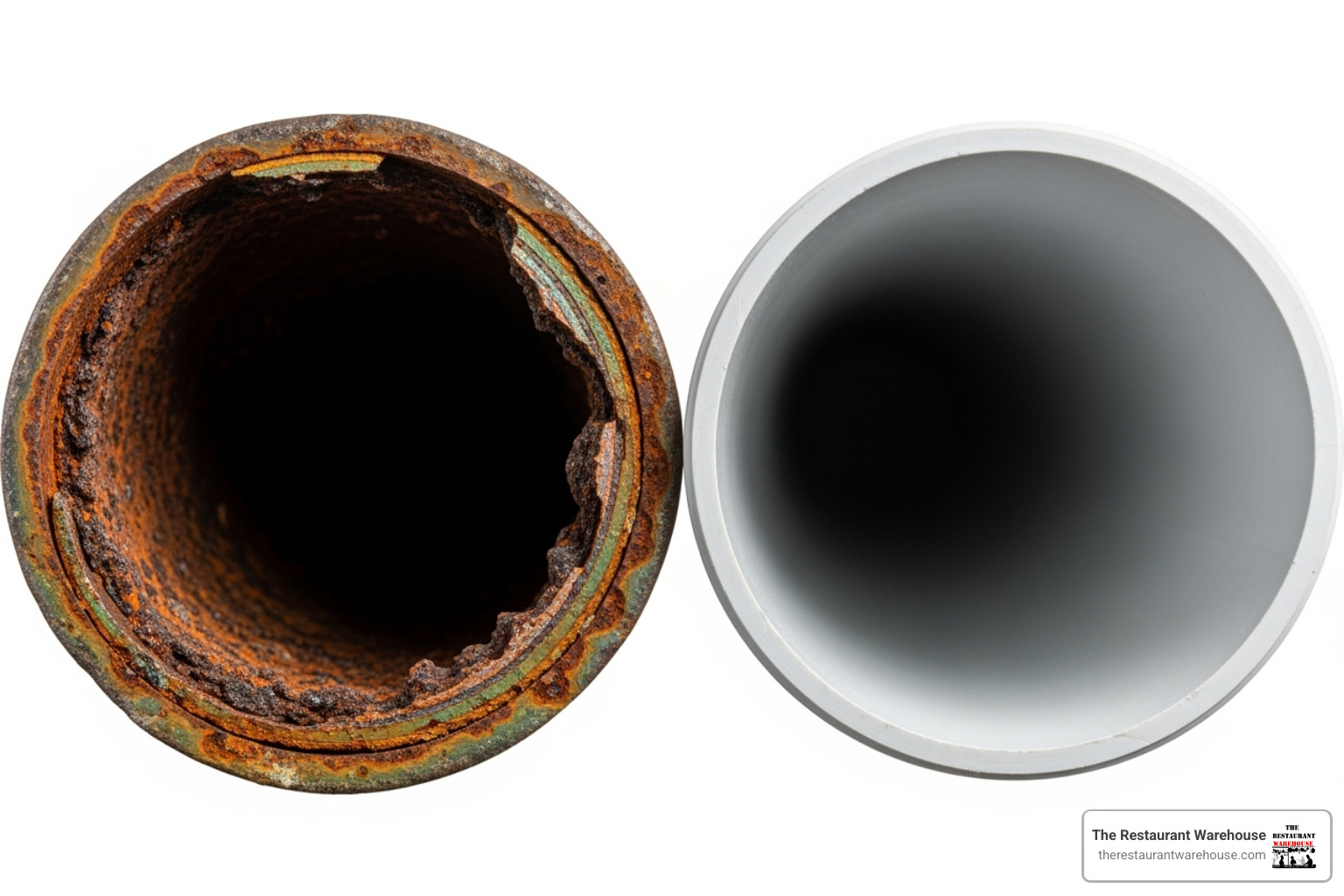
A more serious concern is lead from aging pipes. Homes built before 1986 may have lead service lines or lead-based solder in their plumbing. Lead is invisible and has no taste, but even small amounts can cause significant health problems, especially for children. Sediment and rust particles are other common travelers in old pipes, causing cloudy water, gritty residue, and stains in sinks and toilets.
Even with Seattle's soft source water, some areas experience hard water, which contains calcium and magnesium. This isn't a health risk, but it causes soap scum on shower doors, spots on glasses, and crusty mineral buildup on faucets. This limescale also forms inside pipes and water heaters, reducing their efficiency and lifespan.
Understanding Contaminants and Water Reports
Every year, Seattle Public Utilities releases a Consumer Confidence Report (CCR) detailing water quality. While these reports are useful, they measure water at the treatment plant, not at your tap. Your home's plumbing can significantly alter the water's final composition. When reviewing these reports, it's helpful to understand the key contaminants of concern:
- Lead: No level is safe. It typically enters water from older pipes and plumbing fixtures.
- Chlorine: Used for disinfection, it affects taste and smell and can dry out skin and hair.
- Sediment: Particles of rust and dirt that make water cloudy and can damage appliances.
- Disinfection Byproducts (DBPs): Compounds formed when chlorine reacts with organic matter. The EPA regulates them, but some people prefer to filter them out.
- PFAS: Known as "forever chemicals," these industrial compounds are an emerging concern nationwide.
- Volatile Organic Compounds (VOCs): Chemicals from industrial or agricultural sources that can enter the water supply.
Ready to find out what's really in your tap water? Contact us today at https://therestaurantwarehouse.com/ to discuss water testing options and filtration systems that address your specific concerns.
A Comprehensive Guide to Water Filters Seattle
When shopping for water filters Seattle, you'll find two main approaches: treating water where you use it (Point-of-Use) or filtering all water entering your home (Point-of-Entry). Understanding the difference is key to finding the right solution for your needs and budget.
Point-of-Use (POU) systems are installed at a single fixture, like a kitchen sink or shower. They are affordable, typically easy to install, and focus filtration on the water you consume or use for bathing.
Point-of-Entry (POE) systems, or whole-house filters, are installed on your main water line. They treat every drop of water in your home, protecting plumbing and appliances from sediment, chlorine, and minerals.
Point-of-Use (POU) vs. Point-of-Entry (POE) Systems
Let's break down the common options:
Pitcher and Faucet Filters: These are simple, affordable entry points. Using activated carbon, they are effective at removing chlorine taste and odor. They are ideal for renters or those wanting to improve drinking water taste without installation.
Under-Sink Filters: Installed out of sight, these systems offer more robust filtration than pitchers. They can range from simple carbon filters to multi-stage units that reduce lead, sediment, and VOCs.
Shower Filters: These easy-to-install filters remove chlorine from your shower water, which can lead to softer skin and healthier hair.
Whole-House Filters and Water Softeners: POE systems provide total protection. A sediment filter can extend the life of all water-using appliances, while a carbon filter removes chlorine from every tap.
| Feature | Point-of-Use (POU) | Point-of-Entry (POE) |
|---|---|---|
| Initial Cost | $20–$500 | $1,000–$5,000+ |
| Installation | Mostly DIY | Professional Recommended |
| Maintenance | Frequent filter changes (1–12 months) | Less frequent changes (3–12+ months) |
| Coverage | Single faucet or shower | Entire home |
| Best For | Targeted drinking water purification | Whole-home protection, appliance longevity |
Is Reverse Osmosis (RO) the Right Choice for Seattle?
Reverse osmosis (RO) is the most thorough filtration method available for home use. An RO system forces water through a semi-permeable membrane with microscopic pores. This process removes over 90% of total dissolved solids (TDS).
RO systems are certified to reduce a vast list of contaminants, including:
- Heavy metals like lead, arsenic, and mercury
- Fluoride
- Nitrates and nitrites
- Chlorine and chloramines
- PFAS "forever chemicals"
For Seattle residents, an RO system provides a final, definitive barrier against any contaminants picked up in aging pipes, such as lead. It offers peace of mind for health-conscious families, especially those with young children or immunocompromised members.
Ready to explore whether reverse osmosis is right for your home? Contact us at https://therestaurantwarehouse.com/ for a consultation on your specific water quality needs.
Tackling Specific Water Issues with the Right Filtration
Some Seattle homes face water challenges that go beyond basic taste and odor improvement. Whether it's hard water leaving spots on your dishes or concerns about specific additives, a targeted filtration solution can dramatically improve your daily life.
Seattle's overall source water is relatively soft, but hardness can vary by neighborhood and even between buildings, depending on plumbing materials and how long water sits in pipes. If you notice film on your glassware, scale around faucets, or lower-than-expected lather from soaps, evaluate hardness before choosing a solution.
Choosing the Best Water Softeners and Filters for Hard Water
Hard water contains a high concentration of dissolved minerals, primarily calcium and magnesium. While not a health hazard, it can be a nuisance. The signs of hard water are unmistakable:
- Soap scum: A stubborn white film on shower doors and tiles.
- Spotty dishes: A cloudy residue on glassware, even after washing.
- Dry skin and dull hair: Minerals interfere with soap, leaving a residue.
- Limescale buildup: A hard, crusty deposit inside water heaters, coffee makers, and pipes that reduces efficiency and shortens appliance lifespan.
Water softeners solve this problem using a process called ion exchange. As water flows through a resin tank, the hardness minerals (calcium and magnesium) are swapped for sodium ions. The result is soft water that flows to every tap in your home.
The benefits are significant. Appliances last longer and run more efficiently. You'll use less soap, shampoo, and detergent. Your laundry will feel softer, and your skin and hair will feel cleaner. For true water softening, salt-based ion exchange systems are the most effective technology.
What about salt-free solutions? These are typically scale conditioners that alter the way minerals crystallize so they are less likely to adhere to surfaces. They can reduce visible spotting and help protect fixtures, but they don't remove hardness and are not a substitute for ion exchange when true softening is required.
How to size and select a softener:
- Test your water's hardness (measured in grains per gallon, gpg). Then choose a system capacity that aligns with your gpg, household size, and expected usage.
- Consider regeneration type (metered on-demand is efficient) and salt type (sodium chloride vs. potassium chloride) based on preferences.
- Plan for maintenance: periodic salt refills, occasional resin cleaning, and annual checkups keep your system running smoothly.
Specialized Filtration: Removing Fluoride and Other Additives
Some people prefer to remove fluoride, which is intentionally added to most municipal water supplies for dental health. This is a personal choice, but it requires a specific type of filtration, as standard carbon filters are not effective at removing it.
The most reliable method for removing fluoride is reverse osmosis (RO). An RO system can reduce fluoride levels by 90% or more, along with a wide spectrum of other contaminants. This makes it a popular choice for Seattle residents who want comprehensive control over their drinking water.
Alternatives you might encounter include activated alumina and certain specialty medias. These can target fluoride and arsenic but often require careful monitoring of flow rates and replacement intervals to maintain effectiveness. If you decide to go this route, verify the product's performance data and certification for the exact contaminant you care about.
When selecting any specialized filtration system, it's crucial to verify its performance claims. Look for products certified for the specific contaminants you want to remove. Understanding your water issues and choosing a system designed to address them ensures you are investing in a solution that works.
If you are dealing with specific water quality issues, contact us for a consultation at https://therestaurantwarehouse.com/. We can help you find the right water filters Seattle residents rely on to solve their unique water problems.
Making the Right Choice: Selecting and Installing Your System
Choosing the best water filters Seattle has to offer means matching the system to your specific problems, budget, and home. It's a decision that pays off in better-tasting, safer water for years to come.
How to Get a Water Quality Test in Seattle
Before you buy, get your water tested. You can't solve a problem you don't understand. Testing provides hard data about what's coming out of your tap, so you don't waste money on the wrong solution.
- Professional Consultations: Many local water treatment specialists offer in-home water assessments, testing for common issues like chlorine, pH, and hardness on the spot.
- DIY Test Kits: Available at hardware stores and online, these kits can screen for basics like chlorine, lead, and nitrates.
- Certified Labs: For the most thorough analysis, send a water sample to a state-certified laboratory.
Interpreting results:
- Prioritize health-related contaminants first (lead, nitrates, arsenic, PFAS), then address aesthetic concerns (chlorine taste, odor) and maintenance issues (sediment, hardness).
- Align filter certifications with your results. A filter certified for taste and odor (NSF 42) may not address your lead concern (NSF 53) or your RO needs (NSF 58).
Key Factors for Choosing Your Filter
With your test results in hand, you can make an informed decision. Prioritize these factors:
NSF Certification: This is your guarantee of performance. As the CDC recommends, look for filters certified by NSF International to standards that match your needs.
Contaminant Removal: Check the manufacturer's performance data sheet. If your main concern is lead, ensure the system is specifically certified for lead reduction.
System Capacity and Flow Rate: The system must meet your household's water demand. A whole-house system's flow rate, measured in gallons per minute (GPM), should be sufficient to avoid pressure drops during peak usage.
Budget and Maintenance Costs: Consider the total cost of ownership. This includes the initial purchase price, installation, and the ongoing cost of replacement filters.
Installation: Pitcher and faucet filters require no installation. Under-sink systems are often a manageable DIY project. However, for whole-house systems and water softeners, professional installation is strongly recommended.
Need help choosing the right system and planning installation? Start a conversation at https://therestaurantwarehouse.com/ and we'll help you match a certified solution to your needs.
The CDC recommends filters certified by NSF International
Frequently Asked Questions about Seattle Water Filtration
We've had countless conversations with Seattle residents about their water. Here are answers to the most common questions we hear.
Do I really need a water filter if Seattle's water is so good?
It's true that Seattle's source water from the Cedar and Tolt River watersheds is excellent. However, the water that leaves the treatment plant isn't always what comes out of your tap. The journey through miles of aging pipes can introduce contaminants like lead, rust, and sediment. Additionally, the chlorine used for disinfection creates a taste and smell many people dislike. A water filter acts as a final barrier, providing peace of mind and ensuring the water you drink is pure and great-tasting.
What is the most effective system for removing the widest range of contaminants?
For the most comprehensive protection, reverse osmosis (RO) systems are the gold standard. An RO system uses an ultra-fine membrane to remove more than 90 different contaminants. This includes serious health concerns like heavy metals (lead, arsenic), fluoride, nitrates, and PFAS "forever chemicals." It also eliminates chlorine, dramatically improving the taste of your water. If you want the highest level of purification for your drinking water, RO is the answer.
How much does a whole-house water filtration system cost in Seattle?
The cost of a whole-house system varies widely. A basic sediment filter might cost a few hundred dollars plus installation, while a comprehensive multi-stage system with a water softener can cost several thousand. Key factors influencing the price include the system's complexity, its capacity and flow rate, and the difficulty of the installation. It's also important to factor in the long-term cost of replacement filters. The best way to get an accurate price is to schedule a consultation with a water treatment professional who can assess your specific needs and provide a detailed quote.
How often should I replace filters?
It depends on the system and your water quality. Pitcher filters can be monthly, faucet filters every 2–3 months, under-sink cartridges every 6–12 months, and whole-house media anywhere from 6 months to several years. Check the manufacturer's gallon rating and monitor taste and flow—slower flow or off flavors often mean it's time to change.
Is RO water too pure for drinking? Do I need remineralization?
RO water is very low in dissolved minerals, which many people describe as crisp and clean. Some prefer a slight mineral addition for mouthfeel and taste. Remineralization cartridges restore small amounts of calcium and magnesium, helping stabilize pH and improving flavor for coffee and tea.
Do RO systems waste a lot of water?
All RO systems discharge some water during filtration, but modern designs have significantly improved efficiency. Systems often list a waste ratio (for example, 2:1). If conservation is a priority, look for higher-efficiency models and be sure prefilters are clean to maintain optimal performance.
I'm a renter—what are my options?
Pitcher filters, faucet-mounted filters, and countertop systems require little to no permanent modification and can move with you. If your landlord allows, an under-sink system with a simple adapter can provide a more robust solution without major changes.
What maintenance should I plan for a whole-house system?
Plan periodic sediment filter replacements, annual checks on carbon media performance, and routine salt refills if you have a softener. Keep a maintenance log: dates, parts replaced, and observed changes in taste or water pressure. This simple habit preserves performance and helps you spot issues early.
Can I install an under-sink system myself?
Many under-sink carbon filters and some RO systems are DIY-friendly if you're comfortable turning off water, drilling for a faucet if needed, and following the manufacturer’s instructions. If you prefer, hire a professional for a clean, leak-free install. Either way, take your time to route tubing neatly and label shutoff valves.
Will filtration change the taste of my coffee and tea?
Yes—in a good way. Removing chlorine and sediment improves clarity and flavor. With RO, remineralization often produces a balanced profile that many find ideal for brewing. If taste is a top priority, start with carbon filtration and consider RO with remineralization if you want maximum consistency.
Still have questions or need a second opinion on test results? Reach out for a customized recommendation: https://therestaurantwarehouse.com/
We understand that choosing the right system can be confusing. If you have questions about your water quality or what filtration solution is right for you, contact us for a consultation. We're here to help you make the right choice for your home.
Conclusion: Pure Water and Peace of Mind in the Emerald City
Seattle is blessed with some of the nation's best source water, originating in pristine mountain watersheds. Yet, the journey from the mountains to your home is long, and the water that arrives at your tap may carry unwanted passengers. Chlorine from treatment, lead from old pipes, and sediment from aging infrastructure can all impact the quality and taste of your water.
This is where a reliable filtration system makes all the difference. Whether you choose a simple point-of-use filter for better-tasting drinking water or a comprehensive whole-house system to protect your entire home, you are taking control of one of the most essential elements of your daily life. For those seeking the highest level of purity, reverse osmosis systems offer an unparalleled defense against a vast array of contaminants.
The benefits go beyond just health and safety. Filtered water simply tastes better, which encourages your family to stay hydrated. Your coffee, tea, and cooking will improve. By ditching single-use plastic bottles for great-tasting water from your tap, you also reduce plastic waste and shrink your environmental footprint.
Making an informed decision starts with understanding your water. Get your water tested, look for systems with NSF certification to verify performance, and consider your household's needs and budget. The right water filters Seattle residents choose provide not just clean water, but also the invaluable peace of mind that comes with it.
If you’re ready to take the next step, our team is here to help you compare options, understand certifications, and plan installation. Start the conversation today: https://therestaurantwarehouse.com/
Ready to improve your water quality? Whether you're a homeowner looking for a simple solution or need a robust system to tackle specific issues, we're here to help you find the perfect fit. Contact us today for a consultation, and let's work together to ensure you're getting the cleanest, best-tasting water possible.
About The Author

Sean Kearney
Sean Kearney is the Founder of The Restaurant Warehouse, with 15 years of experience in the restaurant equipment industry and more than 30 years in ecommerce, beginning with Amazon.com. As an equipment distributor and supplier, Sean helps restaurant owners make confident purchasing decisions through clear pricing, practical guidance, and a more transparent online buying experience.
Connect with Sean on LinkedIn, Instagram, YouTube, or Facebook.
Leave a comment