


Restaurant Equipment for Rent A Business Guide
Renting restaurant equipment can be a seriously smart financial move, especially for new restaurants, pop-ups, and catering businesses trying to get professional-grade gear without a massive upfront investment. It frees up your cash for other essentials—like marketing and inventory—while giving you the flexibility to pivot as your business grows and changes.
Why Smart Restaurants Rent Equipment
Let's be honest, launching a restaurant comes with some pretty big financial hurdles, and kitchen equipment often tops the list as one of the largest initial costs. Instead of tying up thousands of dollars in assets that start losing value the second they're installed, renting offers a powerful alternative.
Think of it as having access to a fully-stocked, professional toolkit for a manageable monthly fee. This allows you to funnel your precious capital toward what really matters in the early days: growing your business.
This strategy is a game-changer for new spots that are still testing a concept, but it's also a lifesaver for established restaurants trying to manage cash flow. It gives you the power to equip your kitchen with top-tier ovens, high-capacity fryers, or specialty refrigeration that might otherwise be completely out of reach. This isn't just a temporary fix; for many, it's a core strategy for staying agile and financially healthy in a tough industry.
Gaining a Financial Edge
The number one benefit of renting is capital preservation. Instead of draining your bank account on equipment purchases, you can invest that money in:
- Marketing and Branding: Building a strong brand identity and getting those crucial first customers in the door.
- High-Quality Ingredients: Making sure your menu starts strong without having to compromise on quality from day one.
- Hiring and Training Staff: Assembling a skilled, passionate team is absolutely essential for a successful launch.
This isn't just a niche idea; it's a model that's gaining serious steam. The global market for restaurant equipment rentals is projected to more than double, hitting $8.9 billion by 2033. This growth points to a major shift in how modern foodservice businesses are thinking about growth and financial planning. You can explore more about the benefits of restaurant equipment financing to see how these strategies support a healthy business.
By renting, you're not just saving money upfront; you're buying flexibility. When your menu evolves or a piece of equipment doesn't quite fit your workflow, you can swap it out without being stuck with a costly purchase.
This agility allows you to respond quickly to market trends, test new menu items with specialized gear like sous-vide machines or combi ovens, and scale your operations up or down as needed. It transforms your equipment list from a fixed, long-term liability into a dynamic, adaptable asset.
The True Cost of Renting Versus Buying
Choosing between renting and buying equipment isn't just a simple math problem of a monthly payment versus a big purchase price. It’s really about understanding the total cost of ownership—a concept that pulls back the curtain on the hidden financial realities behind each path. Making the right call means looking way beyond the sticker price to see the long-term impact on your cash flow and, ultimately, your profitability.
When you buy a shiny new commercial oven or freezer, you're not just paying for the unit itself. You're also signing up for a whole series of future expenses that can sneak up on you and add up fast. Honestly, these are the often-overlooked costs where a lot of new restaurant owners can get into a real financial bind.
On the other hand, finding the right restaurant equipment for rent has its own set of numbers to consider, like the monthly payments, deposits, and insurance. The key is to weigh these predictable costs against the unpredictable, and sometimes chaotic, expenses of ownership to figure out which approach truly aligns with your business's financial health.
Unpacking the Hidden Costs of Ownership
Purchasing equipment might feel like you're making a solid investment, but it comes with a long tail of financial responsibilities. These are the expenses that don't show up on the initial invoice but will absolutely hit your bottom line down the road.
Think about these factors:
- Ongoing Maintenance: Just like your car, commercial kitchen equipment needs regular check-ups to perform reliably. Budgeting for this tune-up work is what keeps minor hiccups from turning into major, operation-stopping disasters.
- Unexpected Repairs: Even with perfect maintenance, things break. A critical fryer going down during the dinner rush isn't just an inconvenience; it's a gut-punch of an emergency repair bill plus all the revenue you're losing while it's down.
- Depreciation: The second you install that new piece of equipment, its value starts to drop. This depreciation is a real, tangible loss of asset value on your balance sheet.
- Disposal Fees: When it’s finally time to upgrade, you can't just drag that old commercial refrigerator to the curb. You'll almost certainly face fees for its proper, environmentally-safe disposal and removal.
This decision tree infographic is a great way to visualize whether renting or buying aligns better with your business model, whether you're just starting out or have been around for a while.
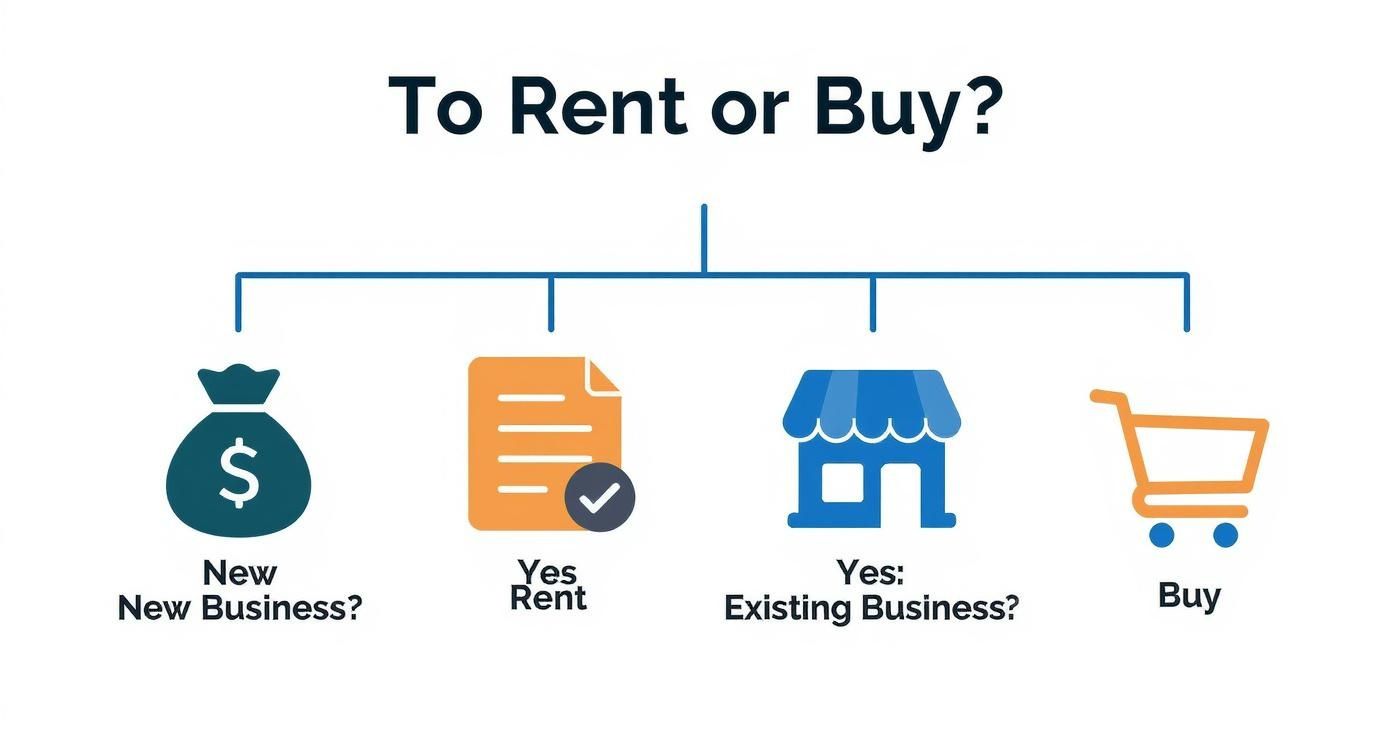
As you can see, the visualization clearly shows how renting is often the more strategic move for new businesses that need to protect their cash, while more established operations might be in a better position to purchase.
A Clear Financial Comparison
To really make an informed decision, you need to see things side-by-side. Renting gives you predictable, manageable monthly expenses, which is a massive advantage for keeping your cash flow healthy and stable. Buying, in contrast, demands a huge initial cash outlay, followed by variable and often unpredictable long-term costs.
The core difference really boils down to risk. Renting transfers the risk of equipment failure and depreciation over to the rental company. Buying means you absorb all of that risk yourself.
Let's break down the financial implications a bit more clearly. For a startup, tying up $100,000 to $300,000 in initial equipment costs can be absolutely crippling. Renting transforms that massive capital expenditure into a manageable operating expense. This frees up your precious funds for things like marketing, inventory, and payroll—the very things that actually drive growth in your business.
To help you see the financial differences at a glance, we've put together a simple comparison table. This breaks down the key financial factors you'll face with both renting and buying.
Financial Comparison Renting vs Buying Commercial Equipment
| Financial Factor | Renting Equipment | Buying Equipment |
|---|---|---|
| Upfront Cost | Low (first month's rent + security deposit) | High (full purchase price or large down payment) |
| Monthly Payments | Fixed and predictable monthly payments | None (or loan payments if financed) |
| Maintenance & Repairs | Typically included in the rental agreement | Owner's full responsibility and cost |
| Depreciation | Not a concern for the renter | A direct financial loss for the owner |
| Flexibility & Upgrades | Easy to swap or upgrade equipment | Locked into the purchased asset until sold |
| Tax Implications | Rental payments are usually tax-deductible | Purchase cost is depreciated over time |
As the table shows, the choice has a significant impact on your cash flow and financial flexibility. While buying builds equity in an asset, renting preserves capital and minimizes the financial risks associated with ownership, making it a powerful strategy for many restaurant owners.
Essential Equipment You Can Rent Today
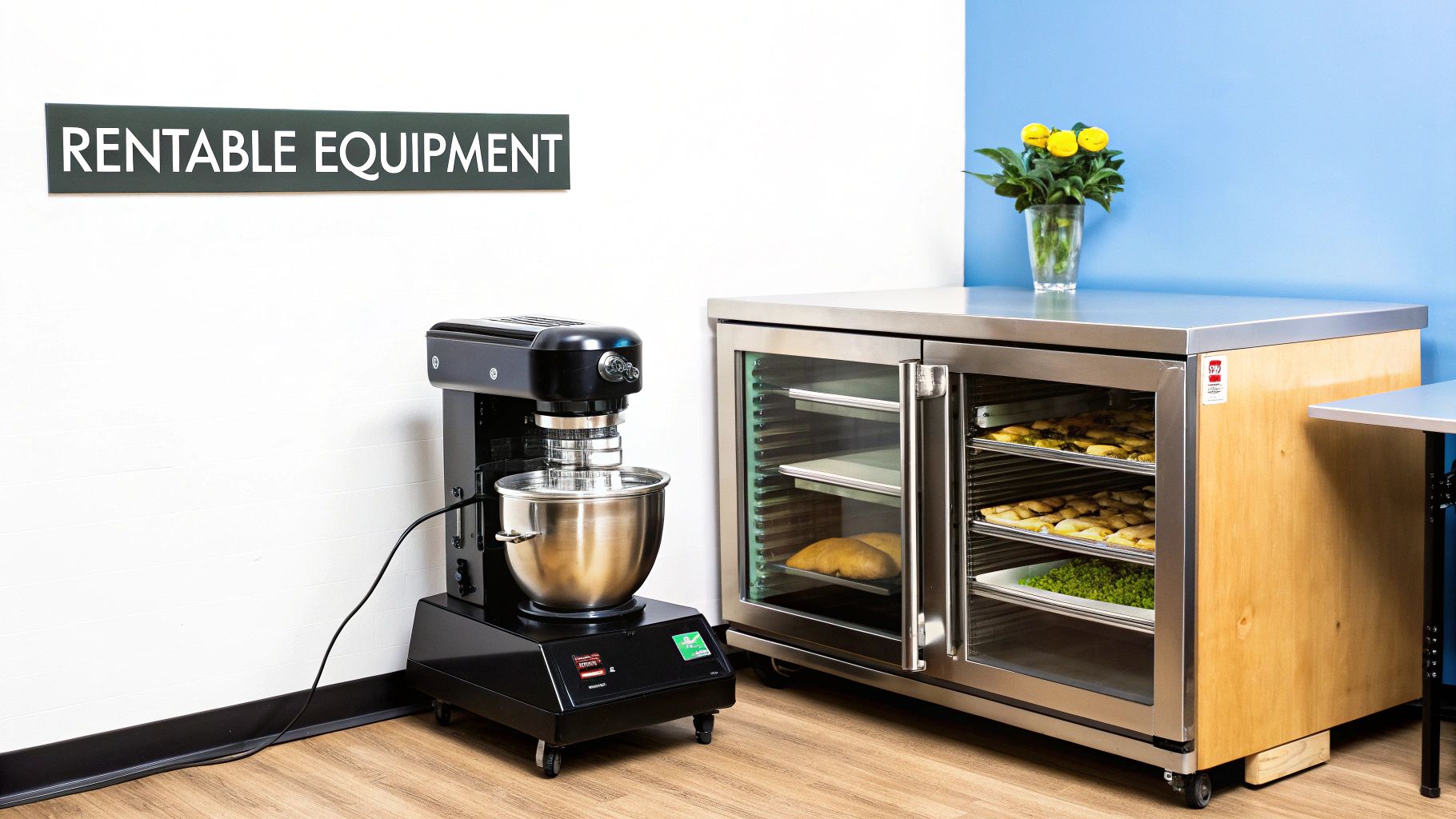
When you start looking into restaurant equipment for rent, you’ll discover a massive world of options that covers just about every corner of your kitchen. This isn't just about grabbing a temporary fix for a broken machine. It's a strategic way to equip your entire operation for peak performance without the massive financial hit of buying everything outright.
The sheer variety available is what makes it so powerful. Need a high-capacity fryer just to get through the summer festival season? You can rent one. Want to test out a new pizza concept for a few months before committing? Rent a specialty oven. This kind of flexibility is a game-changer for modern restaurant owners.
Core Cooking and Refrigeration Rentals
The workhorses of any kitchen—the cooking and refrigeration units—are the most commonly rented items, and it makes perfect sense. These big-ticket items are expensive to buy and can be a real headache to maintain, making them prime candidates for rental agreements that often roll in service and repairs.
Just think about the essential gear that keeps your doors open every day. Most rental partners have a deep inventory of these critical pieces, so you can get exactly what your menu calls for.
- Cooking Equipment: This bucket includes everything from standard gas ranges and convection ovens to more specialized gear like high-volume fryers, charbroilers, and griddles. Renting often gives you access to premium brands that might otherwise be way out of your budget.
- Refrigeration Units: Walk-in coolers, reach-in freezers, and under-counter fridges are non-negotiable for food safety and inventory control. You can also easily rent ice machines, a piece of equipment that's notorious for needing frequent, specialized maintenance.
The real beauty of renting these core items is that you're offloading the stress of unexpected breakdowns. When a rental freezer gives up the ghost, the rental company is on the hook to fix or replace it, which drastically cuts down your operational downtime.
And it's not just about the back-of-house. A smart operator also thinks about optimizing the customer experience. For instance, while you're equipping the kitchen, it's also a good time to explore solutions for customer-facing items like modern menu boards.
Food Prep and Warewashing Solutions
A truly efficient kitchen runs smoothly long after the food comes off the line. Food prep and cleanup are just as crucial, and renting equipment for these tasks can dramatically boost your workflow and hygiene standards without a huge cash outlay.
This is the perfect way to fill any gaps in your operational flow. Thinking about launching a new baking program but not sure if you have the volume? Renting a powerful commercial mixer is the perfect way to test the waters.
Common Prep & Cleaning Rentals:
- Food Preparation: Commercial mixers, meat slicers, and food processors are all readily available. Renting this kind of gear lets you scale your prep capabilities up or down based on real-time demand.
- Warewashing: High-temperature commercial dishwashers and glasswashers ensure you're meeting sanitation standards without slowing down service. These are complex machines, and rental agreements typically include the necessary maintenance to keep them humming along.
Choosing to rent these pieces frees up your capital while ensuring your team has the professional-grade tools they need to deliver quality and consistency—from the first prep cut to the final polished plate.
Finding the Right Equipment Rental Partner
Choosing a company to rent restaurant equipment from is a lot like hiring a key member of your kitchen staff. This isn't just another transaction. Think of it as a partnership that has a direct impact on your kitchen’s uptime and, ultimately, your restaurant's success. The right partner provides reliable gear and is there for you in a pinch, while the wrong one can leave you dealing with costly downtime and chaos during a dinner rush.
Your goal is to find a provider whose business style meshes perfectly with your kitchen’s needs. This means you have to dig a little deeper than just the monthly price tag. A slightly higher rental fee might be a bargain if it includes a rock-solid maintenance plan and a guarantee for swift service when a critical piece of equipment dies mid-service.
Vetting Potential Rental Companies
Before you even think about signing on the dotted line, you have to do your homework. Treat this like an interview process for a long-term business relationship. You need to ask sharp, targeted questions that tell you everything about the quality of their inventory, the fairness of their contracts, and how reliable their support really is.
Start by getting the real story on their inventory and its condition. Don’t be shy about asking for specifics.
- Inventory Quality: Do they offer new or well-maintained used equipment from brands you trust? Ask about the average age of the equipment they rent out.
- Maintenance History: Can they show you the maintenance logs for the exact piece of equipment you're looking at? This proves they’re serious about proactive care.
- Inspection Policy: Are you allowed to inspect the equipment before it shows up at your restaurant? Seeing it with your own eyes can prevent arguments later over damage that was already there.
A rental partner who has nothing to hide will welcome these questions. If a company gets cagey about maintenance or the condition of their equipment, consider it a massive red flag. It’s a sign of future headaches for your kitchen.
Beyond the physical gear, the contract itself is your best friend in protecting your business. You need to understand every single clause before you commit, as this document will dictate everything from installation to what happens when you want to end the agreement.
Key Questions to Ask About Contracts and Service
The rental agreement is where the true nature of the partnership really comes out. Vague terms or restrictive clauses can trap you in a bad situation. You should be focused on flexibility, service response times, and having a clear exit strategy. Getting these questions answered is a crucial step if you're looking to lease restaurant gear locally.
Here's a practical checklist to guide you through the conversation:
- What is your guaranteed response time for emergency repairs? Get a specific timeframe in writing (like, within 4-6 hours) to make sure a broken freezer doesn't spoil thousands of dollars in inventory.
- What are the exact terms of the maintenance agreement? Get clear on what’s included—preventative maintenance, parts, labor—and what might cost you extra.
- Are there penalties for early contract termination? Business needs can change on a dime. Understand your options and the costs involved if you need to end the lease early.
- What happens if the equipment needs to be replaced? If a machine is toast, how quickly will they get you a replacement, and who’s picking up the tab?
Securing clear, favorable answers to these questions will help you forge a partnership that actually supports your operations, minimizes your risk, and lets you get back to focusing on what you do best—making incredible food.
From Renting to Owning Your Equipment
Renting is a fantastic way to keep cash in your pocket, but let's be honest—for most restaurant owners, the end game is ownership. What if those monthly rental payments could be doing more than just buying you time? That's exactly where lease-to-own programs come in, creating a smart bridge that turns your rental fees into a direct path toward building assets.
Think of it like a rent-to-own agreement for a house, but built for your commercial kitchen. Every payment you make chips away at the total price, letting you gradually buy the gear your business relies on without that huge upfront cash hit. It’s the best of both worlds: the immediate affordability of renting with the long-term payoff of ownership.
Understanding Lease to Own Agreements
A lease-to-own agreement, sometimes called a rent-to-own plan, is basically a contract that lets you use equipment for a set amount of time with the option to buy it when the term is up. These programs are structured to make owning your equipment a reality, especially for new or growing restaurants that need to be strategic with their cash flow.
The real magic here is that you're not just spending money on a rental; you're investing it in your business's future. Over time, that shiny new oven or walk-in cooler becomes a tangible asset on your balance sheet, strengthening your financial footing.
Typically, a chunk of each monthly payment gets credited toward the final purchase price. This simple shift turns a regular operating expense into a capital investment. For a deeper dive into how these agreements are structured, you can learn more about lease-to-own kitchen gear without getting burned and find out what to watch for in a contract.
Capital Leases vs. Operating Leases
As you start looking into financing, you'll bump into two main types of leases that work very differently from an accounting perspective. Getting the distinction is crucial for your books and your long-term financial game plan.
- Operating Lease: This is your standard rental. You use the equipment for a specific period, and your payments are treated as a simple operating expense. When the lease is over, you have no ownership rights.
- Capital Lease: This one acts a lot more like a loan. It's a longer-term deal where the clear intention is for you to own the equipment at the end. For accounting purposes, the equipment and the debt are recorded on your balance sheet right from the start.
So, which one is right for you? It all comes down to your goals. An operating lease gives you maximum flexibility if you know you’ll want to upgrade equipment often. A capital lease, on the other hand, is the perfect move when you’re committed to a piece of equipment and want your payments to build equity. It’s a calculated strategy for turning restaurant equipment for rent into a permanent part of your kitchen.
Best Practices for Managing Rented Equipment
Treating your restaurant equipment for rent with care isn't just about being a good partner—it's a smart financial move. When you manage it right, that gear is a reliable asset. When you don't, it can quickly become an operational headache, leading to surprise fees, costly downtime, and a tense conversation with your provider when the contract is up.
It all starts the moment a new piece of equipment rolls through your door.
Before you even think about plugging it in, do a thorough walk-around. Document everything—and I mean everything—with photos and detailed notes. Pay close attention to any pre-existing scratches, dents, or little operational quirks you notice. This initial inspection creates a baseline, an objective record that can protect you from being on the hook for damage you didn't cause.
Setting Your Team Up for Success
Your staff is on the front lines, using this equipment day in and day out. That makes their training the single most important factor in preventing misuse and damage. A quick five-minute rundown just won't cut it. You need to establish clear, consistent standards for every rented piece in your kitchen.
To get everyone on the same page, try these simple but effective training protocols:
- Create Simple Checklists: Laminate some easy-to-read instructions for daily startup, shutdown, and cleaning, and post them directly on or near each machine. Visual reminders work wonders.
- Demonstrate Correct Usage: Don't just tell them; show them. Walk your team through exactly how to operate the equipment, highlighting common mistakes that lead to breakdowns. For example, show them the right way to clean a fryer without damaging the sensitive heating elements.
- Review the "Don'ts": Be crystal clear about what actions will void the warranty or violate the rental agreement. This could be anything from using harsh cleaning chemicals to attempting unauthorized DIY repairs.
Proper training is your first line of defense against preventable damage. A well-informed team is far less likely to make a costly error that could shut down your line during the middle of a dinner rush.
Staying Ahead of Maintenance and Communication
That rental agreement in your file cabinet is more than just a legal contract; it's your operational playbook. It clearly outlines the maintenance schedule you're responsible for, like daily cleaning or regular filter changes. A great tip is to create a shared digital calendar with reminders for these tasks to ensure nothing ever falls through the cracks.
This proactive approach is everything. Keeping up with your responsibilities shows good faith and helps the equipment run at its best. On top of that, if you notice any issues—even minor ones—report them to your provider right away. Quick and clear communication keeps small problems from snowballing into major failures, keeping your kitchen humming and your partnership strong.
Got Questions About Renting Equipment? We’ve Got Answers.
Even after laying out a plan, it's natural to have a few questions rattling around. It’s a big decision, after all. Let's tackle some of the most common queries we hear from restaurant owners, clearing up any final uncertainties so you can move forward with confidence.
Can I Rent Used Equipment?
You absolutely can. In fact, most rental companies have a solid inventory of both new and well-maintained used equipment. Going with used gear is a fantastic strategy for trimming those monthly payments even more, making it a perfect fit for startups or anyone on a super-tight budget.
The key is to do your homework before you sign anything. A trustworthy rental partner will be completely upfront about the age and service history of any piece you're considering. Make sure you give it a good inspection yourself.
Opting for used restaurant equipment for rent can knock an additional 15-30% off your monthly costs compared to brand-new models. Just remember that savings comes with the responsibility of being extra diligent during the inspection process.
What Happens If a Rented Piece of Equipment Breaks Down?
This is honestly one of the biggest perks of renting. If a machine fails from normal wear and tear, the rental company is on the hook for the repairs or replacement. It’s their job to get you back up and running. Your rental agreement should spell out their guaranteed response time for service calls.
This setup shields you from those surprise, budget-busting repair bills and keeps kitchen downtime to a minimum. Just be clear on your end of the deal, which usually includes routine cleaning, so you don't get stuck with a bill for damage caused by neglect.
Is It Possible to Rent for Just a Short Time?
Yes, and it's a total game-changer for so many situations. Short-term rentals are widely available, with most companies offering daily, weekly, or monthly rates. It’s the perfect solution for things like:
- Catering a big wedding or a local food festival.
- Getting through a seasonal rush, like renting an extra ice machine for a hot summer.
- Trying out a new menu concept that needs specialized gear before you commit to buying.
- Keeping the kitchen running while your main oven is out for repairs.
These short-term options give you incredible flexibility without tying you down to a long-term contract.
Ready to get your kitchen fitted with the best gear while keeping your cash flow healthy? Explore flexible financing and lease-to-own options with The Restaurant Warehouse to find a solution that’s just right for your business. Visit us at https://therestaurantwarehouse.com to get started today.
About The Author

Sean Kearney
Sean Kearney used to work at Amazon.com and started The Restaurant Warehouse. He has more than 10 years of experience in restaurant equipment and supplies. He graduated from the University of Washington in 1993. He earned a BA in business and marketing. He also played linebacker for the Huskies football team. He helps restaurants find equipment at a fair price and offers financing options. You can connect with Sean on LinkedIn or Facebook.
Leave a comment