

R-290 Refrigerant Explained in Under 3 Minutes: What to Look for in Commercial Refrigerators for Sale

Efficiency Meets Bottom-Line Growth: Why Your Next Fridge Should Run on R-290
When you’re browsing for commercial refrigerators for sale, you’re likely looking at two things: the price tag and the dimensions. But there’s a small, three-digit number on the spec sheet that might actually be the most important factor for your monthly bank statement: R-290.
If you’ve spent any time in a professional kitchen, you know that your refrigeration is the heartbeat of the operation. If it goes down, your prep is trashed. If it runs poorly, your electricity bill looks like a phone number. R-290, also known as high-purity propane, is the industry’s answer to both of those problems. It’s a natural refrigerant that’s taking over the market, and for a good reason.
Let’s break down why this "green" tech is actually about making more "green" for your business.
What is R-290 and Why Should You Care?
In the simplest terms, R-290 is a hydrocarbon refrigerant. For decades, the industry relied on HFCs (hydrofluorocarbons) like R-134a or R-404A. While they kept things cold, they were essentially "heavy" on the environment and, quite frankly, "heavy" on your compressor.
Think of it like the difference between driving a heavy, old-school truck and a modern, high-performance sports car. Both get you to the destination, but the sports car does it with less effort and less fuel. R-290 has superior thermodynamic properties, meaning it can move heat out of your refrigerator much faster than older gases.
Because it’s so efficient, the refrigeration system doesn't have to work nearly as hard. For you, that means the compressor runs less frequently, it stays cooler while it’s running, and it lasts significantly longer.
The Direct Link Between R-290 and Your ROI
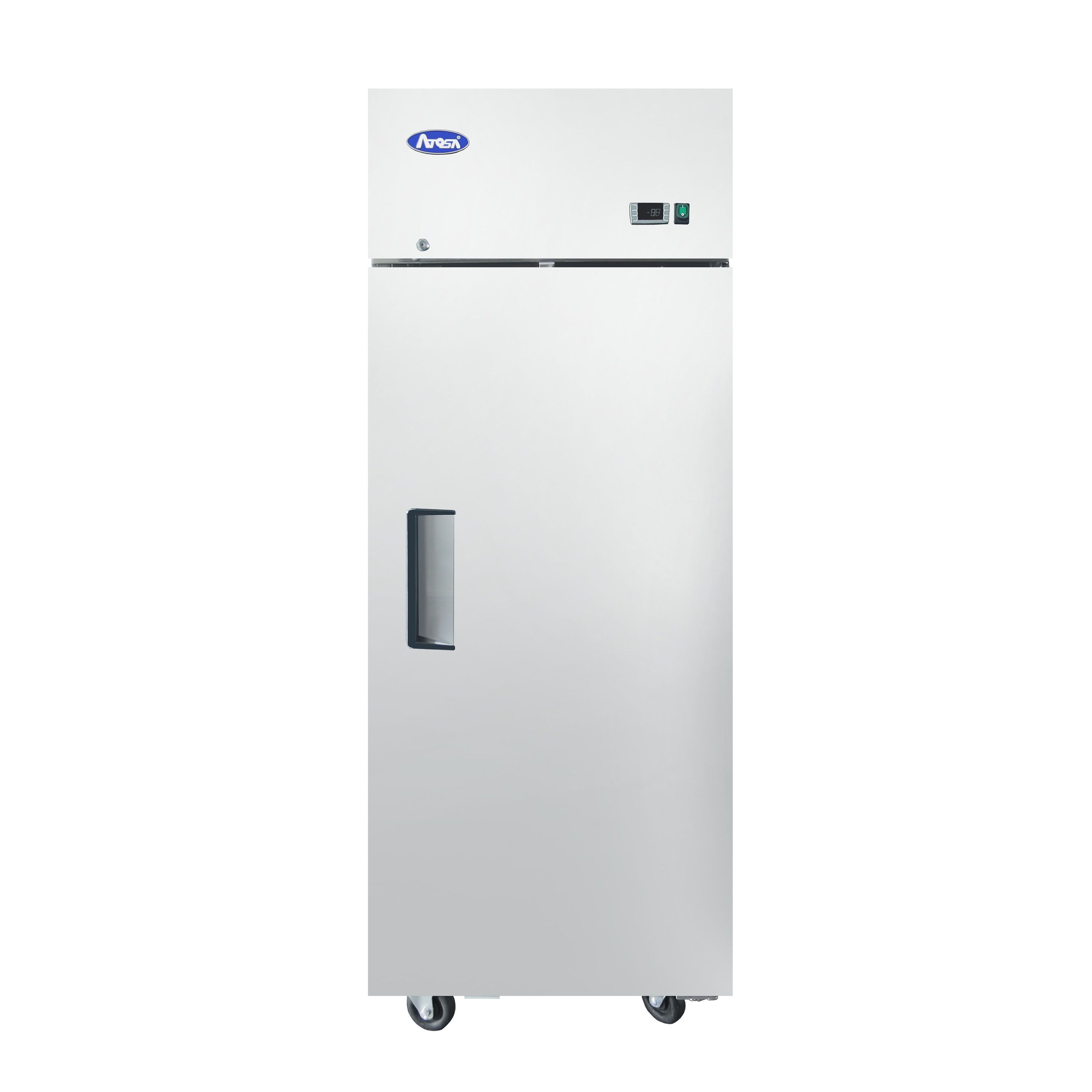
Every time you look at Atosa catering equipment, you’ll notice that almost the entire line has shifted to R-290. This isn't just about meeting government regulations; it’s a strategic business move for restaurant owners.
1. Lower Energy Bills Field tests have shown that units running on R-290 can save you between 30% and 50% on electrical consumption compared to legacy systems. If you’re running a busy line with three or four reach-ins, those savings pay for the cost of a new unit faster than you’d think.
2. Faster Temperature Recovery In a "live" kitchen, those doors are flying open every thirty seconds. Older refrigerants struggle to pull the temperature back down quickly, leaving your ingredients in the "danger zone" longer than they should be. R-290 recovers temperature almost instantly. It’s like having a refrigerator that can "breathe" better.
3. Less Maintenance Stress Because the system operates at lower pressures, there’s less strain on the mechanical parts. This means fewer service calls for blown gaskets or burnt-out compressors. When you buy commercial kitchen equipment, you want something that just works. R-290 units are built for that "set it and forget it" lifestyle.
Safety First: Addressing the "Propane" Elephant in the Room
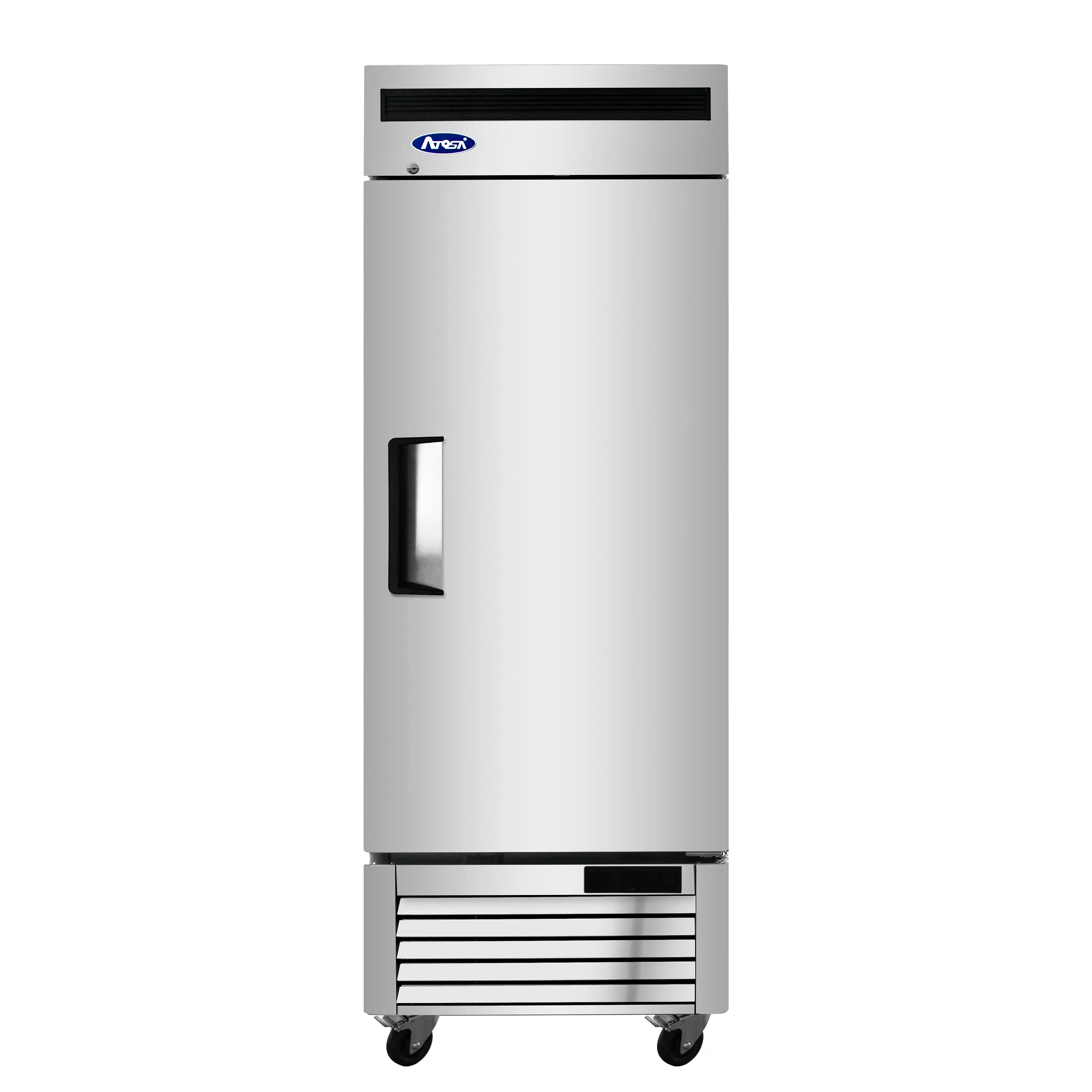
Yes, R-290 is propane. And yes, propane is flammable. But before you worry about a localized explosion in your pantry, let’s look at the facts. The amount of R-290 used in a unit like the Atosa MBF8004GR is roughly equivalent to the amount of fuel in two standard lighters.
The systems are hermetically sealed and built under strict safety standards. You are in more danger from the open flame on your range or the fryer oil in your vat than you are from the refrigerant in your reach-in. In a professional commercial setting, it is incredibly safe and highly regulated.
Key Benefits of R-290 Systems
- Maximum Efficiency: Uses significantly less energy to maintain consistent temperatures.
- Eco-Friendly: Global Warming Potential (GWP) of 3, compared to 1,430+ for older refrigerants.
- Smaller Charge: Requires less refrigerant mass to get the job done, making the units lighter and more compact.
- Longer Equipment Life: Reduced pressure on the compressor translates to years of extra service life.
- Future-Proof: Unlike HFCs, R-290 isn't being phased out by the EPA. Your investment is safe for the long haul.
Is It Time to Upgrade?
If you are currently nursing an old R-134a unit that sounds like a jet engine and makes your electric meter spin like a top, the answer is a resounding yes. We often see customers who are "cash strapped" and hesitant to make the jump, but that’s exactly why we offer restaurant equipment financing and lease-to-own programs.
When you factor in the 40% savings on your energy bill, the financing often pays for itself. You’re essentially trading a high utility bill for a high-performance piece of equipment that will actually protect your food and your reputation.
Key Takeaways for Restaurant Owners
- Look for the R-290 Label: When searching for commercial refrigerators for sale, prioritize units using this hydrocarbon.
- Think Long-Term: The initial cost is comparable to older units, but the operational cost is where you win.
- Atosa Leads the Way: We recommend Atosa because they’ve mastered the R-290 integration, providing reliable, NSF-certified units that handle the heat of a real kitchen.
- Fast Shipping Matters: If your current unit just died, you don't have weeks to wait. We offer 1-3 day delivery from our 12 distribution centers because we know that a broken fridge is a direct hit to your daily profit.
Frequently Asked Questions
Does R-290 require special tools for repair? Yes and no. A qualified technician will need tools rated for flammable refrigerants, but because R-290 is so common now, almost every commercial HVAC pro is already equipped for it.
Can I retro-fit my old fridge to use R-290? Absolutely not. R-290 systems are specifically designed for the lower pressures and specific oil types required by the gas. Trying to swap gases in an old unit is a safety hazard and will destroy your compressor instantly.
Are these units louder because they are more powerful? Actually, they are often quieter. Because the compressor doesn't have to work as hard, the overall decibel level in your kitchen usually drops when you switch to modern Atosa units.
What happens if there is a leak? The charge is so small that it would likely dissipate into the air before it could ever reach a concentration level that would be dangerous. However, most modern units have sensors and sealed electronics to mitigate any risk.
If you’re ready to stop overpaying for electricity and start investing in the future of your kitchen, check out our full selection of Atosa Refrigerators today. Whether you need a massive three-section reach-in or a compact undercounter refrigerator for your prep station, we’ve got the R-290 powered gear to keep your cool and your cash.
SEO Meta Description: Confused by R-290? Learn why this natural refrigerant is the gold standard for commercial refrigerators for sale. Discover how Atosa equipment saves you up to 50% on energy costs while keeping your kitchen running at peak efficiency.
About The Author

Sean Kearney
Sean Kearney is the Founder of The Restaurant Warehouse, with 15 years of experience in the restaurant equipment industry and more than 30 years in ecommerce, beginning with Amazon.com. As an equipment distributor and supplier, Sean helps restaurant owners make confident purchasing decisions through clear pricing, practical guidance, and a more transparent online buying experience.
Connect with Sean on LinkedIn, Instagram, YouTube, or Facebook.