

Natural gas to propane stove conversion kits: Safe, fast guide for restaurants
Deciding to switch your commercial stove from natural gas to propane isn't just a simple fuel swap—it’s a smart business move. For a lot of restaurant and food truck operators, natural gas to propane stove conversion kits are the key that unlocks a new level of freedom and ensures you've always got a reliable energy source, especially in places where tapping into a natural gas line just isn't an option.
Why Convert a Commercial Stove to Propane?
Here’s an easy way to think about it: natural gas is like a landline phone. It’s powerful and dependable, but it’s stuck in one spot. Propane, on the other hand, is like a high-powered satellite phone, giving you energy independence no matter where your business takes you.
This kind of flexibility is the main reason so many restaurant owners and food truck operators choose to convert their equipment.
For a mobile business like a food truck or a pop-up catering service, this conversion is an absolute game-changer. It means you can set up shop at festivals, farmers' markets, or remote events without ever having to hunt for a natural gas hookup. Your entire kitchen becomes a self-sufficient operation, powered by portable propane tanks you can take anywhere.
Unlocking New Opportunities
This operational freedom isn't just for businesses on wheels. Imagine you’ve found the perfect spot for a new brick-and-mortar restaurant in a beautiful rural area, but the municipal natural gas lines don't reach that far. A propane conversion guarantees you have a consistent, powerful energy source, making that dream location a viable reality.
The decision to convert usually boils down to a few major perks:
- Location Independence: You can run your kitchen from literally anywhere—a bustling city corner, a remote wedding venue, you name it—without being chained to utility infrastructure.
- Energy Reliability: With propane, you have a stable, on-site fuel supply. This protects your kitchen from potential disruptions in the local natural gas grid.
- Consistent Performance: When the conversion is done right with a quality kit, your stove will perform exactly like it did on natural gas, giving you the same powerful heat and precise control you rely on.
A proper conversion empowers your kitchen to function at its best, regardless of its physical address. It turns a fixed piece of equipment into a mobile, adaptable powerhouse ready for any opportunity that comes your way.
Ultimately, choosing to convert is about solving your kitchen's unique energy puzzle. Whether you're chasing mobility or working around location-based limits, these kits offer a safe and effective solution.
While the two fuels have their own characteristics, a good conversion ensures your equipment adapts seamlessly. To really get a handle on the differences, you can check out this detailed comparison of natural gas vs propane for commercial kitchens. This guide will help you weigh the operational benefits and technical details to figure out if this strategic switch is the right move for your business.
How a Conversion Kit Actually Works
So, what’s really going on inside one of these kits? And why can’t you just hook a propane tank up to your natural gas stove and call it a day? The whole answer boils down to two huge differences in how these fuels behave: pressure and energy density.
Think of it this way: natural gas coming through a pipeline is like a calm, steady stream. It’s delivered at a pretty low, consistent pressure. Propane, on the other hand, is basically a high-pressure fire hose. It’s crammed into a tank under immense pressure and packs way more energy into a smaller space.
A natural gas to propane stove conversion kit is the essential translator that bridges this massive gap. Without that translator, connecting a high-pressure propane source to a low-pressure stove would be a recipe for disaster. It would shove a huge amount of fuel through openings designed for a gentle flow, creating dangerously large, out-of-control flames and a serious fire risk.
The Science Behind the Switch
At its heart, a conversion kit doesn't change the stove itself; it just changes how the stove receives and handles its fuel. It makes two fundamental adjustments to tame the power of propane and make it safe to use.
The kit really boils down to two main parts working together:
- New Orifices (or Spuds): These are tiny, precision-drilled brass fittings that act like gatekeepers, controlling exactly how much gas gets to the burner. Since propane is so much more energy-dense, you actually need less of it to get the same amount of heat. The new orifices in the kit have much smaller openings to choke back the flow.
- A Propane Pressure Regulator: This piece is your first line of defense. It takes that intense pressure from the propane tank and steps it down to a safe, manageable level that your stove’s internal parts can actually handle.
This diagram shows how the kit acts as that crucial middleman, adapting one fuel source to work in a machine built for another.
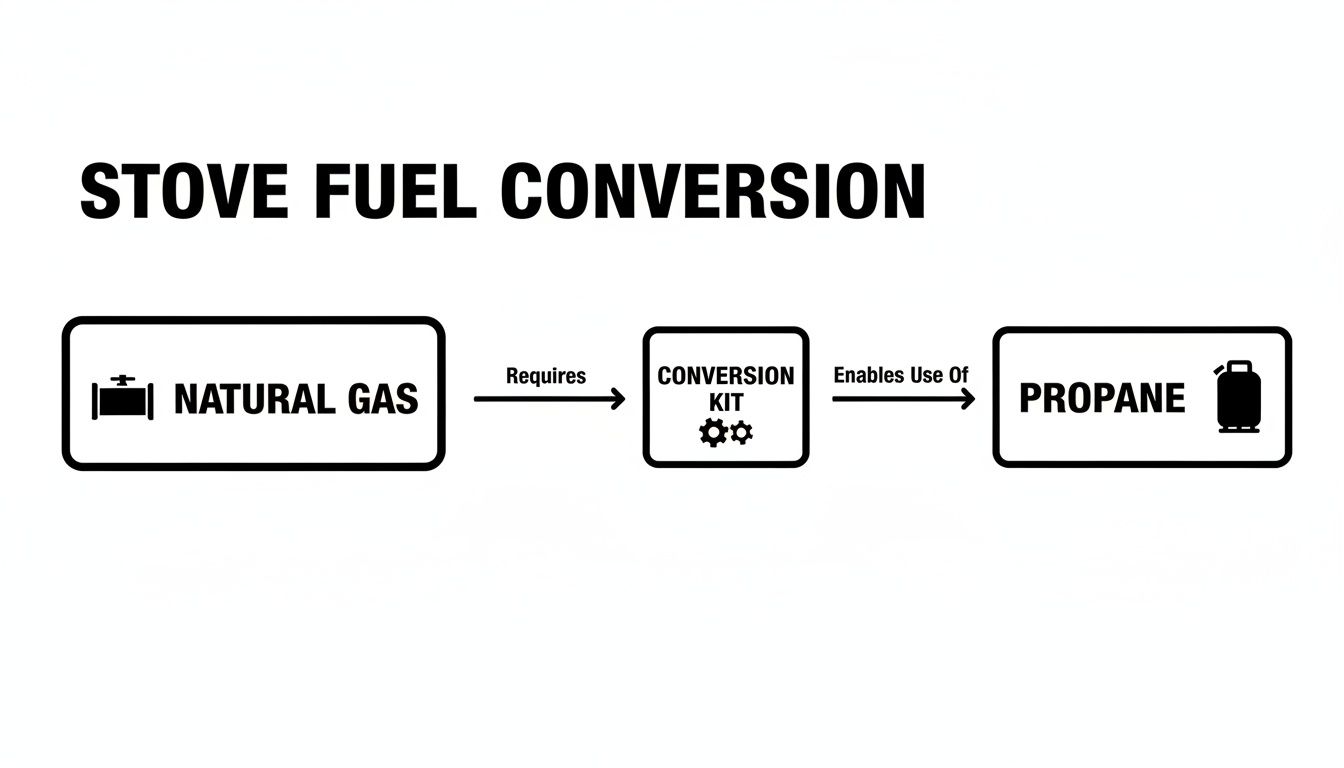
It’s all about safely adapting that high-pressure, energy-packed propane for a stove that was originally designed for the gentle flow of low-pressure natural gas.
To really get why a conversion kit is non-negotiable, it helps to see how different natural gas and propane are side-by-side.
Natural Gas vs Propane Key Differences for Commercial Kitchens
| Characteristic | Natural Gas (NG) | Propane (LP) | Why It Matters for Your Stove |
|---|---|---|---|
| Energy Content | Approx. 1,030 BTUs per cubic foot | Approx. 2,500 BTUs per cubic foot | Propane delivers 2.5x the heat, so you need a much smaller flame. The kit’s smaller orifices achieve this. |
| Delivery Pressure | Low (4-7 inches WC) | High (11 inches WC) | The stove is built for low pressure. The kit’s regulator is critical to step down propane’s high pressure to a safe level. |
| Gas Density | Lighter than air | Heavier than air | This is a safety factor. An NG leak rises, while a propane leak pools on the floor, creating a bigger fire hazard. |
| Storage | Piped in directly | Stored in pressurized tanks | Propane’s high storage pressure is precisely why a special regulator is needed to prevent overwhelming the stove. |
Understanding these fundamental differences makes it clear: simply connecting a propane tank is not an option. You have to re-calibrate the entire fuel system.
Pressure and BTU Ratings Explained
To truly grasp why this is so important, let's look at the numbers. We measure gas pressure in "inches of water column" (WC). Propane is typically supplied at around 11 inches WC, while natural gas cruises in at a much lower 4-7 inches WC. That pressure difference is huge, and it demands the right parts to prevent what would basically be like plugging a 120-volt appliance into a 240-volt outlet. It's a guaranteed way to fry the system.
You can learn more about why this precision is so critical and the big risks of using generic kits by checking out this in-depth guide on gas stove conversions. Swapping to those smaller burner orifices ensures you release less fuel to get the same amount of heat, measured in BTUs (British Thermal Units).
A successful conversion isn't just about making the flame light up; it's about re-calibrating the entire fuel delivery system to match propane's unique properties, ensuring both safety and optimal cooking performance.
The end goal is to maintain your stove's original BTU rating. If your burner is rated for 30,000 BTUs with natural gas, the conversion kit makes sure it still delivers that same 30,000 BTUs with propane—it just does it with less fuel because propane is so much more potent. This precise calibration is exactly why using a manufacturer-specific OEM kit is an absolute must in a commercial kitchen.
Choosing the Right Propane Conversion Kit
Picking the right natural gas to propane stove conversion kit isn't like grabbing a generic accessory off the shelf. Think of it more like choosing official, manufacturer-spec parts for a high-performance engine instead of a one-size-fits-all component from a general auto parts store. One choice guarantees safety, peak performance, and compliance. The other introduces a massive, unnecessary risk right into the heart of your kitchen.
The only reliable choice is an OEM (Original Equipment Manufacturer) kit. This is the kit designed and sold by the same company that built your stove. It’s engineered to the exact specifications of your appliance, making sure every single component fits and functions perfectly. Generic or "universal" kits are a gamble no professional kitchen can afford to take.
Using a non-OEM kit can lead to improperly sized orifices, incorrect pressure regulation, and a dangerously inefficient flame. These aren't just minor performance issues; they can create serious safety hazards, including gas leaks and the production of deadly carbon monoxide.
Why OEM Kits Are Non-Negotiable
An OEM kit is your guarantee of a perfect match. It’s the difference between a custom-tailored suit and one you pull off the rack. The tailored suit is cut to your exact measurements for a flawless fit, while the generic one might bunch up in some places and be too tight in others.
For your stove, this "perfect fit" means:
- Precise Orifice Sizing: The orifices are drilled to the exact diameter needed to deliver the correct amount of propane for your stove’s specific BTU rating.
- Correct Regulator Calibration: The pressure regulator is calibrated to step down propane pressure to the precise level your appliance was designed to handle safely.
- Guaranteed Compatibility: All fittings, threads, and components are guaranteed to match your stove, eliminating the risk of leaks from ill-fitting parts.
- Warranty Protection: Using an OEM kit ensures you don't void your manufacturer’s warranty, which is an almost certain consequence of using third-party parts.
At The Restaurant Warehouse, grabbing an OEM conversion kit for your Atosa griddle or fryer ensures precise orifice sizing for your stove's BTU rating, avoiding safety nightmares like carbon monoxide leaks from generic knockoffs. Real talk: one study showed improper conversions cause 15% of gas appliance fires in commercial settings.
Locating Your Stove’s Model and Serial Number
Before you can order the right OEM kit, you need to play detective and find some critical information on your stove. The two most important details are the model number and serial number. This information is the unique identifier for your appliance—it’s what the manufacturer uses to pinpoint the exact conversion kit you need.
You'll usually find these numbers on a metal plate or sticker, often called a data plate, located somewhere on the appliance itself.
Pro Tip: Check these common spots for the data plate on a commercial stove:
- Inside the oven door frame
- On the back of the unit, often near the gas inlet
- Underneath the control panel or cooktop
- On one of the side panels
Once you have the model and serial numbers, you hold the key to ordering the right kit. This one small step prevents the costly and frustrating mistake of getting a kit that simply won’t work with your equipment.
The Critical Factor of Altitude
There's one more crucial piece of information you need before you place your order: your kitchen's altitude. Cooking at elevations above 2,000 feet requires special consideration because the air is thinner, meaning there's less oxygen available for proper combustion.
If you use a standard, sea-level conversion kit at a high altitude, you'll end up with an improper fuel-to-air mixture. This creates an inefficient, sooty yellow flame that produces carbon monoxide and doesn't heat effectively. To fix this, manufacturers provide specific high-altitude kits or modified orifices that are even smaller, ensuring the flame gets the right amount of oxygen to burn cleanly and blue. Always tell your supplier your elevation when you order.
To make sure you have everything you need, run through this final checklist. For a deeper dive into the nuances of cooking with propane, you can also explore our comprehensive propane cooking stove guide, which covers everything from fuel efficiency to best practices. This will help you fully prepare for the switch.
The Professional Conversion Process Explained
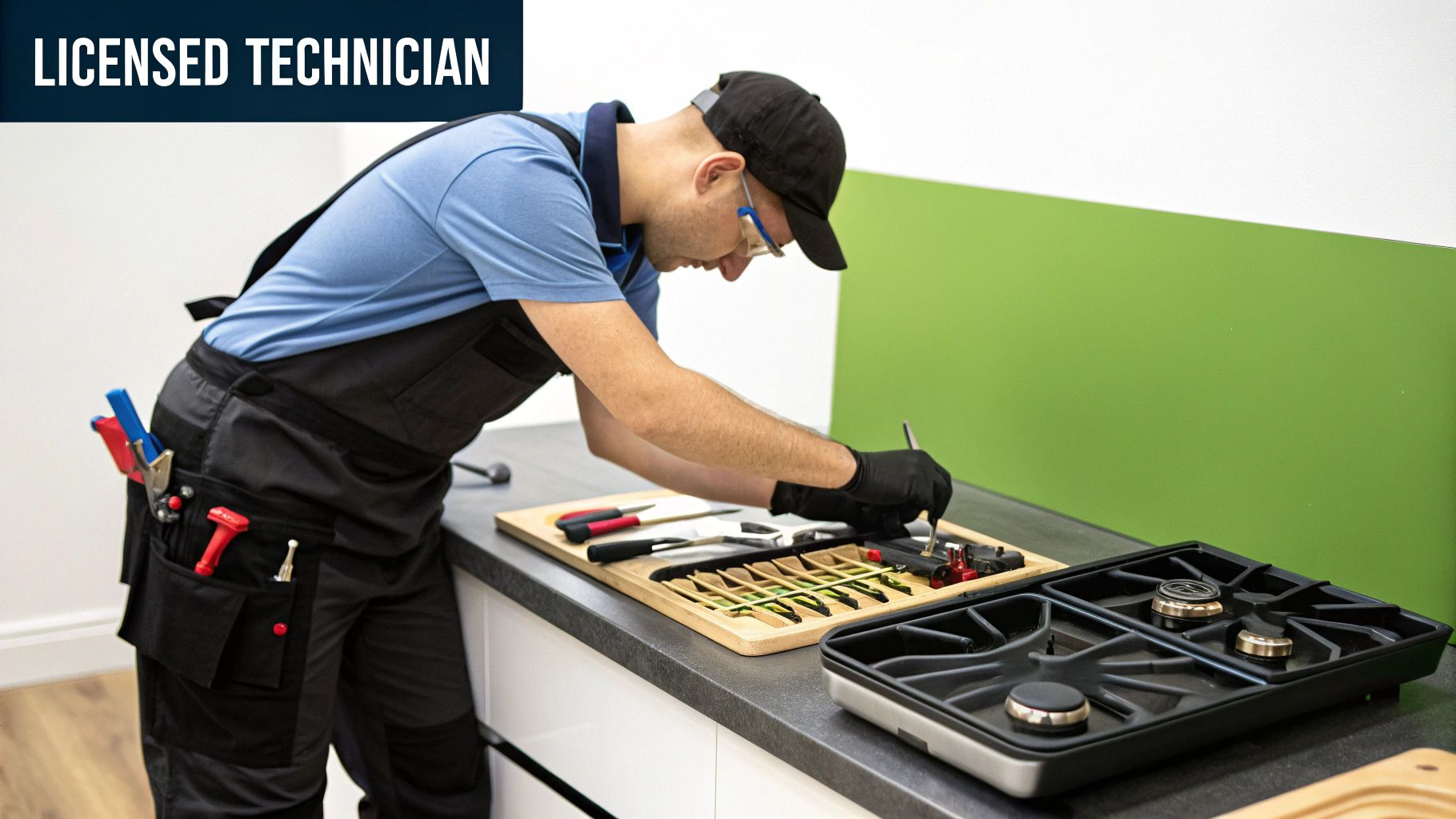
While converting a commercial stove from natural gas to propane is a job that absolutely must be left to a licensed professional, understanding the process is a huge advantage for any kitchen operator. Knowing what a qualified technician does empowers you to ask the right questions, confirm the job is done correctly, and appreciate the level of precision needed for a safe, high-performing appliance.
This isn’t just a quick part swap. It’s a methodical, three-phase procedure that puts safety and accuracy above all else. A pro will follow a strict protocol that breaks down into meticulous preparation, precise component exchange, and thorough testing. Every single step is critical to the long-term safety and efficiency of your stove.
Phase 1: Safety Preparation and Disassembly
Before a single tool even touches your stove, the first and most important priority is securing the work area. A professional technician will always start by completely shutting off the gas supply at the main valve feeding the appliance. This is non-negotiable; it's the most critical safety measure to prevent any gas from flowing while components are being changed out.
With the gas off, the technician makes sure the kitchen is well-ventilated to clear out any residual gas that might be lingering in the lines. They will then disconnect the stove from the existing natural gas line and carefully take apart the necessary sections of the cooktop and oven to get access to the burner assemblies and the pressure regulator.
Phase 2: The Component Exchange
This is the heart of the conversion, where the physical parts from the natural gas to propane stove conversion kit are installed. It’s a job that demands a high level of precision because the components for natural gas and propane are fundamentally different.
The technician will systematically work through these key steps:
- Swap the Orifices: Every burner—including the ones for the oven and broiler—has a small brass fitting called an orifice (or a spud) that meters the gas flow. The technician will remove the larger natural gas orifices and replace them with the much smaller propane orifices that come in the OEM kit.
- Install the New Regulator: The existing natural gas pressure regulator will be replaced or adjusted specifically for propane. Propane operates at a much higher pressure (around 11 inches WC compared to natural gas's 4-7 inches WC), so this new regulator is absolutely essential to step the pressure down from the tank to a level the stove can safely use.
- Adjust the Air Shutters: Each burner has an air shutter, which is a small adjustable collar that controls how much oxygen mixes with the gas. The technician will carefully adjust these shutters to get the fuel-to-air ratio just right for propane, which is what ensures a clean, efficient blue flame.
A common mistake amateurs make is over-tightening the new brass orifices. Brass is a soft metal, and using too much force can easily crack the fitting. This creates a hidden and extremely dangerous gas leak. A professional knows to tighten them just enough to create a secure seal without causing any damage.
Phase 3: Final Commissioning and Testing
With the new components installed, the final phase is all about verification. This is where the technician confirms the conversion was a success and the appliance is 100% safe to operate. The process starts by reconnecting the stove to the new propane supply line.
Next comes a meticulous leak check at every single connection point. The technician will apply a soapy water solution to all fittings and joints. If bubbles start to form, it’s a clear sign of a leak that must be fixed immediately before moving forward.
Once the system is confirmed to be leak-free, the technician will ignite each burner, one by one. They'll be watching the flame closely, looking for a steady, vibrant blue flame with a small, darker blue inner cone. A yellow, lazy, or sooty flame is a dead giveaway that the air shutter needs more adjustment. This final calibration is crucial for both cooking performance and preventing the production of deadly carbon monoxide. Only after every burner is perfectly tuned and all safety checks are passed is the job truly complete.
Understanding Safety and Code Compliance
When you're dealing with gas lines in a commercial kitchen, safety isn't just a suggestion—it's the absolute, number one rule. Converting a stove from natural gas to propane involves a lot more than just swapping out a few parts. You’re stepping into a world of strict safety protocols and legal codes designed to protect your staff, your customers, and your entire business. This is one area where cutting corners is simply not an option.
Trying to DIY a conversion on a commercial stove is a massive gamble, and one you're almost certain to lose. Local fire codes, which usually follow National Fire Protection Association (NFPA) standards, are crystal clear: any work on a gas appliance must be handled by a licensed and insured gas fitter. This isn't just red tape; it's a critical safety measure to prevent fires, gas leaks, and other catastrophic accidents.
On top of that, your business insurance policy almost certainly has a clause requiring all equipment to be installed and maintained by the book—meaning according to manufacturer specs and local codes. A DIY conversion instantly voids that coverage. If an accident were to happen, you would be on the hook personally and financially for all damages, injuries, and any legal fallout.
The Role of a Licensed Professional
Hiring a licensed technician isn't an expense; it's the single most important safety investment you'll make in this process. These pros are trained to understand the delicate dance between gas pressure, proper ventilation, and safe combustion. They don’t just install the natural gas to propane stove conversion kits; they make sure the entire system works together safely.
A professional's checklist includes:
- Verifying Kit Compatibility: They'll confirm the OEM kit is a perfect match for your stove's specific model and BTU rating.
- Performing Meticulous Leak Checks: Using specialized tools, they test every single connection point for microscopic leaks that could lead to a disaster.
- Calibrating for Perfect Combustion: They expertly adjust the air shutters to achieve a clean, efficient blue flame, which is crucial for preventing the creation of deadly carbon monoxide.
Think of it this way: a licensed gas fitter is your safety inspector, installation expert, and compliance officer all rolled into one. Their sign-off is your guarantee that the conversion is not just working, but is also 100% compliant with all safety and legal standards, protecting your business from devastating risks.
Making the choice between hiring a pro and tackling the job yourself comes down to weighing risk. To put it in perspective, here’s a straightforward comparison of what’s at stake.
Professional vs DIY Conversion Risk Assessment
| Consideration | Professional Installation | DIY Installation |
|---|---|---|
| Safety | High. Performed by a trained, licensed expert following strict protocols. Includes professional leak testing and combustion calibration. | Extremely High Risk. Danger of gas leaks, fire, explosion, and carbon monoxide poisoning. |
| Code Compliance | Guaranteed. The technician ensures the work meets all local, state, and national fire and building codes. | Non-compliant. Voids equipment certification and violates local codes, leading to fines and shutdown orders. |
| Insurance Coverage | Preserved. Your business insurance remains valid as the work is done to code by a certified professional. | Immediately Voided. Any incident related to the DIY work will not be covered, leaving you 100% liable. |
| Equipment Warranty | Maintained. The manufacturer's warranty remains intact. | Voided. Unauthorized modifications will nullify any warranty on your expensive commercial stove. |
| Liability | The technician's insurance covers any potential issues or damages resulting from the installation. | Full Personal & Business Liability. You are personally responsible for all damages, injuries, and legal costs. |
| Peace of Mind | High. You can operate your kitchen with confidence, knowing the equipment is safe and compliant. | Low. Constant worry about safety, potential legal issues, and equipment failure. |
As you can see, while the upfront cost of a professional might seem like an expense, the potential financial and safety costs of a DIY attempt are in a different league entirely. Protecting your business, your team, and your customers always starts with making the safe, compliant choice.
Essential Post-Conversion Safety Checks
Once the conversion is done, the job still isn't finished. A series of final checks is needed to confirm the appliance is absolutely safe to operate. Proper ventilation is at the top of the list. Propane is heavier than air, so any potential leak could pool near the floor, creating a serious fire hazard. Your kitchen's ventilation system has to be up to the task. You can get a better handle on this by reviewing these crucial commercial kitchen ventilation requirements to make sure your setup is compliant.
For the stove to work safely and reliably, the propane supply system itself needs to be in perfect order. This is especially true for your pressure regulator, which is a critical safety device. If you're using a mobile setup or a standalone tank, understanding your essential RV propane gas regulators can be really helpful, as the principles are similar. A pro will ensure the regulator is correctly installed and calibrated for your stove.
Finally, the ultimate safety check is a thorough leak detection test. This is done by applying a soapy water solution to every single joint and fitting in the gas line. If bubbles appear, there's a leak. Only after every connection passes this test can you confidently fire up your newly converted stove.
Caring for Your Newly Converted Propane Stove
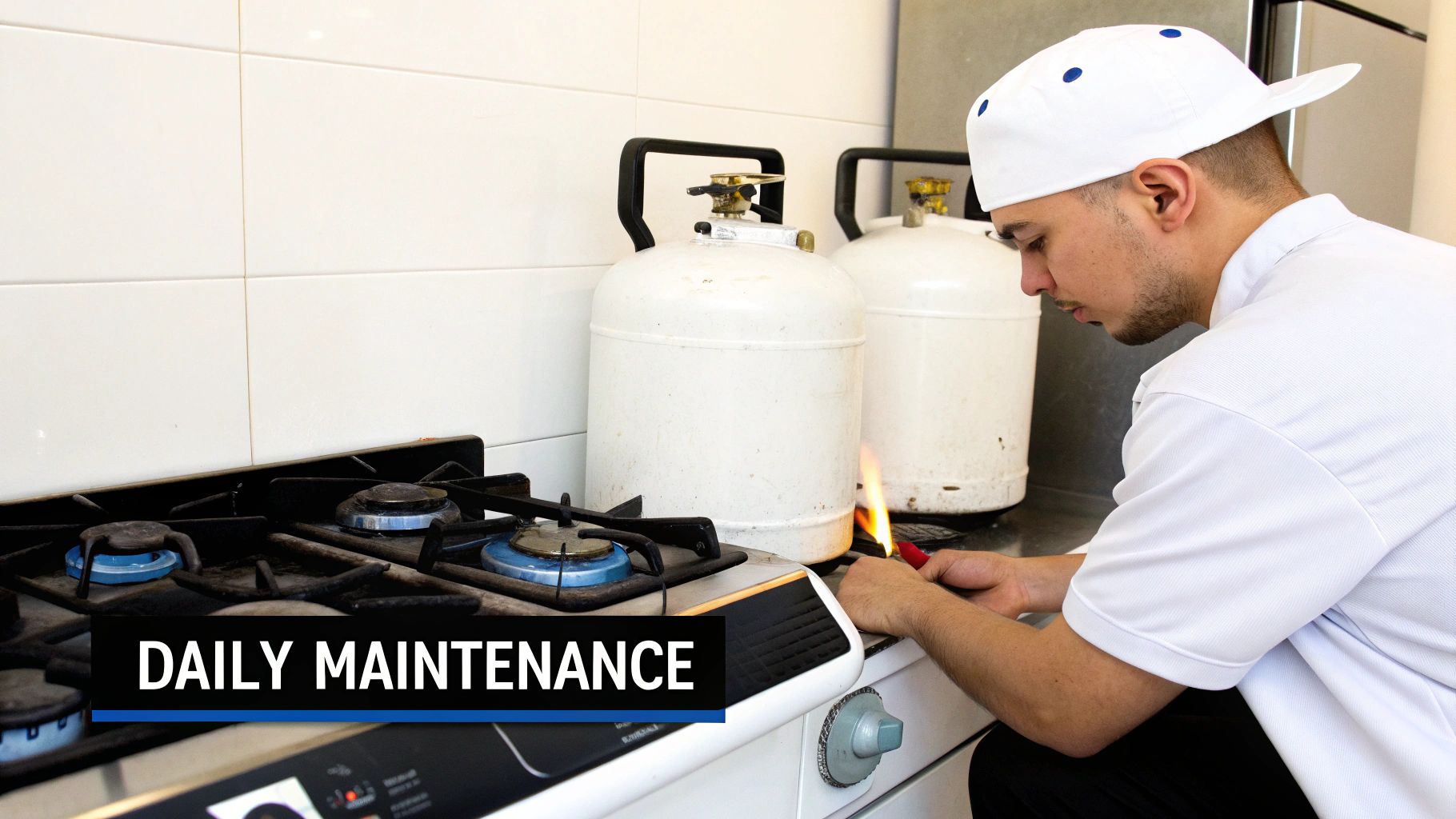
So, your stove's conversion from natural gas to propane is done and dusted. But the work doesn't stop once the technician packs up their tools. Consistent, proactive maintenance is what will keep your equipment running safely, efficiently, and reliably for years to come. Think of it like a daily tune-up for a high-performance engine; a few simple checks can prevent major headaches down the road.
This ongoing care turns your kitchen staff into the first line of defense against potential problems. By performing quick daily inspections, they can spot small issues before they blow up into bigger ones, protecting both the safety of your kitchen and the lifespan of your valuable appliance.
Daily Checks for Optimal Performance
The single most important visual cue for a healthy propane stove is the flame itself. A properly functioning burner should produce a steady, vibrant blue flame with a darker blue inner cone. This is the sign of complete and efficient combustion, meaning you’re getting the most heat out of your fuel without creating nasty byproducts.
On the flip side, a yellow or orange flame is a clear warning sign. This lazy, sooty-looking flame points to incomplete combustion, which not only wastes fuel but can also produce soot and dangerous carbon monoxide. If you see yellow flames, stop using the stove and call your service technician right away.
Propane Tank Safety and Handling
Managing your propane supply correctly is a critical part of daily operations. When you're dealing with propane tanks, safety has to be the number one priority, no exceptions.
- Always Store Upright: Propane tanks must always be stored and transported in a secure, upright position. This is non-negotiable, as it prevents the pressure relief valve from malfunctioning.
- Keep Away from Heat: Never store tanks near sources of heat or ignition—that includes the stove itself, fryers, or other hot equipment. Find a cool, well-ventilated spot away from the main kitchen line.
- Check for Leaks: Before hooking up a new tank, give the valve and connections a quick once-over for any signs of damage or debris. A quick soapy water test on the connection after you've installed it will confirm you have a tight seal.
A well-maintained stove with a perfect blue flame is a sign of a safe and efficient kitchen. A yellow, sooty flame isn't just a performance issue—it's a serious safety alert that demands immediate professional attention.
Simple Troubleshooting Guide
While a lot of issues need a licensed technician, your team can often identify and sometimes even resolve minor hiccups. Knowing the difference between a simple fix and a major problem is crucial.
Common Problem: Pilot light won't stay lit.
- Possible Cause: The thermocouple, which is a safety sensor, might be dirty or have gotten knocked out of position.
- What to Do: First, make sure the tip of the thermocouple is sitting directly in the pilot flame. If it's positioned correctly but still won’t stay lit, it’s time to call in a pro.
Common Problem: Weak or low flame on burners.
- Possible Cause: The propane tank could be running on empty, or there might be an issue with the regulator.
- What to Do: The first and easiest step is to try connecting a full propane tank. If the flame is still weak after that, do not attempt to adjust the regulator yourself. This is a job for a qualified technician, as messing with the regulator can be extremely dangerous.
Got Questions? We've Got Answers
Thinking about a fuel conversion for your stove? You're not alone. It's a common move for food trucks and restaurants without access to a natural gas line. Here are some of the most common questions we hear from operators just like you.
Can I Convert Any Natural Gas Stove to Propane?
Not quite. While most modern commercial stoves are designed with this kind of flexibility in mind, it’s definitely not a universal feature. You have to confirm that your specific model is approved for conversion by the manufacturer.
The safest place to check is the appliance's data plate or the user manual. If it's good to go, you absolutely must use the official OEM (Original Equipment Manufacturer) kit built for your stove. Trying to rig up a generic kit or convert a stove that isn't designed for it is a recipe for disaster. It's not just dangerous—it will instantly void your warranty and your business insurance.
What's the Typical Cost for a Conversion?
You’ll want to budget for two things: the conversion kit itself and the professional who installs it. The manufacturer's natural gas to propane stove conversion kit usually runs between $50 and $150.
The bigger slice of the pie is the labor. Hiring a licensed gas technician can cost anywhere from $150 to $400, depending on where you are and how complex your stove is. It might be tempting to save a few bucks and try a DIY job, but for a commercial kitchen, the risk of fire, leaks, and massive liability just isn't worth it. Professional installation is the only way to go.
A proper conversion is an investment in safety and compliance, not just an operational expense. The cost of a professional ensures the job is done right, protecting your staff, customers, and business from catastrophic failure.
Will My Stove Cook Differently with Propane?
Nope! If the conversion is done correctly by a pro, you won't notice any difference in your stove's performance. The whole point of the kit is to perfectly regulate the propane flow to match the exact same BTU output you were getting from natural gas.
A properly converted stove gives you a steady, powerful, and clean blue flame. If you see yellow flames, soot building up on your pans, or notice hot spots, those are red flags. It means the installation wasn't done right, and you should call a qualified technician immediately to get it sorted out.
Do I Need a Special Kit for High-Altitude Locations?
Yes, absolutely. Once you get above 2,000 feet, the air gets thinner, meaning there's less oxygen for the flame. This throws off the ideal fuel-to-air ratio needed for clean and efficient combustion.
Using a standard kit at high altitude will cause all sorts of problems, like sooty yellow flames and, more dangerously, the production of carbon monoxide. Manufacturers know this, so they offer special high-altitude kits or different orifices designed for these conditions. Always let your supplier know your kitchen's elevation when you order—it's a critical safety step.
Equipping your kitchen for success starts with the right parts and professional guidance. At The Restaurant Warehouse, we provide the OEM conversion kits and expert advice you need to power your business safely and efficiently. Explore our full range of commercial cooking equipment and supplies today.
Find the right equipment for your kitchen at The Restaurant Warehouse
About The Author

Sean Kearney
Sean Kearney is the Founder of The Restaurant Warehouse, with 15 years of experience in the restaurant equipment industry and more than 30 years in ecommerce, beginning with Amazon.com. As an equipment distributor and supplier, Sean helps restaurant owners make confident purchasing decisions through clear pricing, practical guidance, and a more transparent online buying experience.
Connect with Sean on LinkedIn, Instagram, YouTube, or Facebook.